Dr. Abhijeet Ghadge is an Associate Professor of Supply Chain Management and Co-Director of the Open Programme in Supply Chain Management at Cranfield School of Management, Cranfield University. He holds a PhD from Loughborough University and degrees from IIT Kharagpur and Aeronautical Society of India. His research focuses on Industry 4.0/5.0 applications, supply chain resilience, and digital transformation in logistics. He has published extensively in journals like IJOPM, IJPE, and SCMIJ, and actively collaborates with industry leaders such as Rolls-Royce and DHL. Education: PhD in Operations and Supply Chain Management, Loughborough University MTech in Industrial Engineering and Management, IIT Kharagpur BEng in Aeronautical Engineering, Aeronautical Society of India Research interests emphasize digital twin implementation, blockchain in food and pharmaceutical supply chains, and climate change impact mitigation. He serves on editorial boards of journals like International Journal of Logistics Management and Computers & Industrial Engineering, and advises organizations like the Logistics Research Network and UK Critical Imports Council. Recent projects include an Innovate UK-funded IoT-Blockchain platform for maritime shipping and a study on post-Brexit supply chain strategies. His work addresses critical risks like cybersecurity, counterfeit goods, and pandemic disruptions. Awards include Fellowship from the Higher Education Academy and membership in CILT (UK). Grants and collaborations total over £1.5M, with interdisciplinary projects involving SMEs and global firms. His advisory role in the Critical Imports Council underscores his leadership in national supply chain resilience initiatives. Labs/Teams: Leads research in Cranfield’s Centre for Logistics, Procurement, and Supply Chain Management, focusing on resilience, Industry 4.0 integration, and sustainable practices.
Dr. Graydon Raymer is a Professor and Dean of the Faculty of Education and Professional Studies at Nipissing University. He established the Bachelor of Physical and Health Education program in 2007 and leads the varsity Cross-Country Running Team. His research focuses on exercise physiology, mathematical modeling of physiological phenomena, and physical activity measurement. He has secured over $700k in Canadian Foundation for Innovation funding to equip his state-of-the-art research laboratory with advanced equipment like environmental chambers, metabolic carts, and motion capture systems. Education: BPHE, Queen's University BSc (Life Sciences), Queen's University MSc (Kinesiology), University of Western Ontario PhD (Medical Biophysics), University of Western Ontario His research areas include children's 24-hour movement patterns, high-performance sports physiology, and innovative dietary studies. He collaborates with institutions like the Children’s Hospital of Northeastern Ontario and Queen’s University. Recent projects explore low-cost school-based physical activity initiatives and physiological impacts of nose-breathing running programs. Awards & Grants: CIHR grants totaling $704,010 for children’s movement studies CFI funding ($700k) for laboratory equipment Dr. Raymer advises 1-2 graduate students annually in Nipissing’s Master of Science in Kinesiology program. He served on the College of Kinesiologists of Ontario Council (2017-2022) and currently oversees the $13M Centre for Physical and Health Education facility.
Dr. Shaojun Feng is an Honorary Principal (Professorial) Research Fellow at the Centre for Transport Studies within the Department of Civil and Environmental Engineering, Faculty of Engineering, Imperial College London. He is a leading expert in Global Navigation Satellite Systems (GNSS), with over thirty years of research experience focusing on GNSS integrity, high-accuracy positioning, augmentation systems, and functional safety for autonomous and safety-critical applications. His research interests span a wide range of topics including GNSS integrity monitoring, precise point positioning (PPP), real-time kinematic (RTK), ionospheric modeling, spoofing detection, software-defined receivers, and integrated navigation systems. He has made pioneering contributions to the development of GNSS correction services with integrity, enabling lane-level navigation in smartphones and certified use in autonomous vehicles. His work bridges theoretical advances with real-world deployment, notably through a commercial service benefiting over 1.5 billion users. The recent publications highlight a strong focus on ionospheric modeling and correction using machine learning (e.g., LSTM, ConvLSTM), sparse reconstruction techniques in tomography, and integrity-aware positioning for autonomous systems. There is a clear trend toward integrating AI with GNSS, improving real-time accuracy, and ensuring safety through robust integrity monitoring—especially in multi-constellation environments (GPS, Galileo, BeiDou). Dr. Feng has been recognized with several prestigious honors: Michael Richey Medal, Royal Institute of Navigation ESA certification for leading Galileo receiver development Recognition by UK Space Agency for UK leadership in Galileo adoption SGS certification for safety-critical GNSS correction service He is actively involved in the academic and standards communities, serving as Associate Editor for the Journal of Navigation and GPS Solutions , and as Chairman of WG3 in RTCM Special Committee 134, which develops international standards for GNSS integrity monitoring. He is a Chartered Engineer (CEng) and Fellow of both the Institution of Engineering and Technology (FIET) and the Royal Institute of Navigation (FRIN), the latter presented by HRH Prince Philip. His leadership in research, editorial roles, and standardization underscores his significant impact on the field of navigation and positioning. Dr. Feng leads research initiatives at Imperial College London with strong industry and agency collaborations, including with the European Space Agency and SGS. His work on integrity-certified GNSS services represents a major advancement in positioning for autonomous systems, with implications for future smart mobility, transportation safety, and resilient navigation infrastructure.
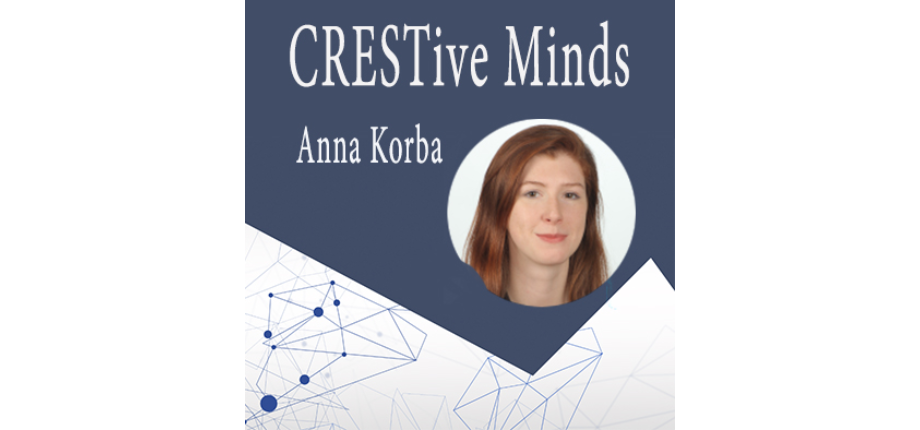
Anna Korba is an Assistant Professor at CREST-ENSAE Paris within the Statistics Department. She holds an ENSAE Engineering degree in Data Science and a Master's in Mathematics, Vision & Learning (MVA) from ENSAE Paris. Her career includes a Ph.D. in Machine Learning at Télécom ParisTech, followed by a postdoctoral position at UCL's Gatsby Unit. Her research focuses on sampling techniques, Bayesian inference, optimal transport, and generative modeling, with recent work on constrained sampling and fairness integration. She contributes to collaborative efforts at the intersection of machine learning, dynamical systems, and PDEs. Notably, she co-presented tutorials on Wasserstein gradient flows at ICML 2022. Her work addresses unsolved challenges in sampling efficiency and fairness constraints. She is actively involved in CREST research initiatives and academic mentorship.
Dr. Gareth Conway is a Senior Lecturer at Queen's University Belfast's School of Electronics, Electrical Engineering and Computer Science, associated with the Institute of Electronics, Communications & Information Technology (ECIT). His research focuses on wearable and implantable antennas, wireless medical sensors, and electromagnetic propagation for healthcare applications. He holds over 40 publications and five antenna-related patents, with industry collaborations enhancing wearable system performance. Awards include the 2014 Early Career Researcher Impact Prize and the Mobile World Scholar Award (2018). Education: PhD from Queen's University Belfast (2005-2008) Roles: Research & Development Engineer at Wireless Fibre Technologies (2008-2011) Research Fellow at QUB (2011-2013) Senior Lecturer at ECIT (2013-present) Research Interests: Wearable/implantable antennas, human tissue-physics modeling, printable microwave materials, wireless medical sensors, and computational electromagnetism for body-centric networks. His work aligns with UN SDG 3 (Good Health) and SDG 9 (Industry/Innovation). Key Projects: EPSRC grant EP/P000983/1 (implantable antenna repeaters), KTP project with Creagh Concrete (sensor-based concrete production). He organizes conferences like the All-Ireland Workshop on Wearable/Implantable Antennas. Grants/Awards: QUB Vice Chancellor's Early Career Researcher Impact Prize (2014) Mobile World Scholar Award (2018) Award for Sensor-based Digitisation in Concrete Production (2022) Students: Supervised 3 PhD students (e.g., on implantable antennas, frequency-selective surfaces, and wearable identification systems). Labs/Teams: Centre for Wireless Innovation at ECIT, collaborating with industry partners like Sensata Technologies.
Quentin Cappart is an Associate Professor at Polytechnique Montréal since 2020, specializing in artificial intelligence , combinatorial optimization , and constraint programming . His work integrates machine learning and operations research to solve complex industrial problems, particularly in transportation , logistics , and healthcare . Affiliations: Co-founder and Head of the Combinatorial Optimization and Reasoning in Artificial Intelligence Laboratory (CORAIL) Interuniversity Research Centre on Enterprise Networks, Logistics and Transportation (CIRRELT) IVADO researcher Affiliate member of MILA Researcher at IMC2 institute Research focus: Hybrid algorithms combining logical reasoning , machine learning , and operations research to enhance decision-making tools. His group emphasizes accessibility for non-experts and small companies. Scientific Awards: 2025: Early Career Engineer Award (Ordre des ingénieurs du Québec) 2025: Early Career Professor Award (Polytechnique Montréal) 2025: Prix Méritas (Polytechnique Montréal) 2024: Early Career Researcher Award (ACP) 2024: Best Paper Award (ACP Machine Learning track) 2023: Winning approach for Citylearn challenge (NeurIPS) Teaching: Courses include INF8175: Artificial intelligence - methods and algorithms and INF6102: Local search and metaheuristics . He also teaches at ACP Summer/Winter Schools.
Stuart Clare is an Associate Professor at the University of Oxford , affiliated with the Nuffield Department of Clinical Neurosciences and the Wellcome Centre for Integrative Neuroimaging . He serves as Director of Operations for the Oxford Centre for Industrial Collaboration in Imaging Neuroscience (OxCIN) and leads the Centre’s core team. His research focuses on advancing functional Magnetic Resonance Imaging (fMRI) and Ultra-High Field MRI technologies, particularly through innovations like dynamic shimming to improve image quality. Since 2011, he has pioneered the use of a state-of-the-art 7 Tesla MRI scanner, enabling unprecedented insights into brain structure and function. His recent publications highlight interdisciplinary work spanning neuroimaging , clinical trials , and scientific methodology , with a focus on harmonizing protocols across institutions, understanding neurodegenerative diseases, and improving reproducibility in lab practices. He also actively promotes public engagement with science , collaborating with schools and creating educational animations.
Dr. Haoran Duan is a Senior Lecturer and an ARC Industry Fellow at the Water Research Centre, School of Civil and Environmental Engineering, University of New South Wales (UNSW). He obtained his Ph.D. in 2019 from the Advanced Water Management Centre (AWMC) at the University of Queensland (UQ). Prior to joining UNSW, he worked as a Senior Research Fellow at the Australian Centre for Water and Environmental Biotechnology (UQ). Dr. Duan's educational background includes: Ph.D. (2019) - Advanced Water Management Centre, University of Queensland (UQ), Australia Dr. Duan's research focuses on carbon and energy efficient wastewater treatment technologies, greenhouse gas emissions from wastewater treatment processes, and excess sludge management. His work spans multiple areas including nitrous oxide emissions, denitrification processes, sludge management, and resource recovery from wastewater. He has made significant contributions to understanding nitrogen removal processes, particularly in the context of mainstream partial nitritation-anammox systems and nitrous oxide mitigation strategies. Analysis of Dr. Duan's recent publications (2023-2025) reveals strong trends in sustainable wastewater treatment, with particular emphasis on greenhouse gas emissions reduction, resource recovery from waste streams, and innovative sludge management approaches. His work increasingly integrates advanced modeling techniques with experimental validation, and shows growing interest in emerging contaminants and microplastics in water systems. Dr. Duan has received several notable scientific awards: Environmental Science & Technology Best Papers award (2018) Named in the "Stanford/Elsevier Top 2% Scientists (2024)" Dr. Duan serves as an editor for Water Research X and is actively involved in research supervision. He is a member of several professional organizations including the International Water Association (IWA), Australia Water Association (AWA), and Engineers Australia (EA). He has been a reviewer for more than 20 international journals, contributing to the advancement of water research globally. Dr. Duan is affiliated with the Water Research Centre at UNSW, where he conducts research on wastewater treatment technologies. His work involves collaboration with multiple water utilities and research institutions, focusing on practical implementation of innovative treatment approaches.
Christophe Grova is an Associate Professor at the Department of Neurology and Neurosurgery at McGill University , with adjunct status in the Department of Biomedical Engineering . He leads the Multimodal Functional Imaging Laboratory , focusing on integrating EEG, MEG, fMRI, and fNIRS to study brain mechanisms in epilepsy and sleep disorders. Expertise in multimodal neuroimaging techniques Develops advanced source localization algorithms Key applications in epilepsy diagnosis and sleep physiology His research bridges neuroimaging and clinical translation , with a focus on: EEG-fNIRS integration for whole-night sleep monitoring Validation of MEG and fMRI connectomes with intracranial EEG Computational modeling of neuron-astrocyte interactions Development of open-source tools like NIRSTORM The lab collaborates across institutions, including the McConnell Brain Imaging Centre and Concordia University . Current projects emphasize glymphatic system dynamics , epileptogenic zone localization , and neurovascular coupling mechanisms.
Prof. Dr.-Ing. Stefan Lechner has been full Professor of Energy Economics and Energy Systems at the Technical University of Central Hesse (THM) , Giessen, since March 2015. He is affiliated with the Department of Mechanical Engineering and Energy Technology and the Institute THESA – Institute of Thermodynamics, Energy Process Engineering and Systems Analysis . Additionally, he leads the Laboratory for Energy Economics and is a core member of the Competence Center for Energy Technology and Energy Management (etem.THM) . Education & Career Dr.-Ing., Brandenburg University of Technology (BTU) Cottbus, 2012 – Dissertation on steam-fluidized-bed drying of lignite. Dipl.-Ing. (FH) Mechanical Engineering, Georg Agricola University of Applied Sciences Bochum, 2002 – specialising in Future Energies. Supplementary doctoral studies & economics coursework at BTU Cottbus and FernUniversität Hagen. Professional experience at Vattenfall (plant management, power-plant planning & R&D) and Kreisel Umwelttechnik (Head of Development) before entering academia. Research Interests Prof. Lechner’s work centres on the techno-economic analysis and optimisation of energy systems in transition . Core themes include renewable energy integration , thermal energy storage (particularly Carnot batteries using ceramic high-temperature stores), sector coupling between electricity, heat and mobility, and 5th-generation cold district-heating networks (5GDHC). Methodologically, he combines experimental thermal engineering with open-source simulation frameworks , agent-based demand modelling , and electricity-market modelling . Recent activities expand into waste-heat recovery from data centres and transcritical CO₂ heat-pump systems for low-temperature district heating, always targeting cost-effective, grid-friendly and sustainable solutions . Publication Trends Between 2017 and 2024 his output highlights a clear evolution from fundamental studies on pressurized steam fluidized-bed drying and lignite heat-transfer toward system-level analyses of storage-based sector coupling . A dominant cluster addresses Carnot batteries , covering high-temperature storage materials, gas-turbine re-conversion concepts, and demonstration results. Parallel streams examine GIS-based rooftop PV potential , agent-based settlement energy-demand modelling , and regulatory frameworks for cross-sector energy markets. Scientific Awards & Honours No specific awards are mentioned in the provided material. Research Funding & Teams Prof. Lechner has secured and coordinates projects worth > €10 million (THM share ≈ €6.5 million) funded by BMBF, BMWK/BMWi, Hessian ministries (HMWK, HMWEVW), WI-Bank and ERDF : LOEWE 3 DUWä (2025-2027) – transcritical CO₂ dual-use heat pumps for cold district heating. EnEff:Stadt FlexQuartier2 (2023-2027) – hybrid storage optimisation in Giessen’s Philosophenhöhe district. KNW-Plus (2022-2023) – design & online tool for cold local heating networks. Innovative waste-heat use from data centres (2022-2023). FlexQuartier Gießen (2018-2023) – integrated hybrid storage & sector coupling in a new-build district. Kommun:E (2018-2022) – municipal energy-supply transformation under Germany’s Energiewende. High-T-Stor (2017-2019) – cross-sector high-temperature storage for renewable balancing. FES (2019-2021) – Research Center for Energy Storage and Sector Coupling. These projects involve interdisciplinary consortia including municipalities, grid operators, SMEs, and research partners across Germany. Teaching & Academic Leadership He lectures in Energy Economics and Sector Coupling, Energy Markets, Heat Transfer, Renewable Energy Technology and Energy System Analysis . He also serves as Programme Manager for the part-time continuing-education M.Sc. Energy Efficiency Management (StudiumPlus, Wetzlar) and contributes to advanced master’s courses on energy law and thermodynamics.
Dr Ting Yu is an Associate Professor in Marketing at the University of New South Wales , specializing in the intersection of artificial intelligence and healthcare service delivery . With professional experience across Australia, Switzerland, and Singapore as a Lecturer , Product Research and Development Manager , and Market Research Consultant , she combines academic rigor with industry insights. Education: PhD in Marketing, University of New South Wales Master of Management in Marketing, Monash University Her research focuses on organizational ambidexterity (balancing service/sales and efficiency/flexibility), relationship termination management , and consumer emotion dynamics . Her work explores how AI-driven service systems can enhance healthcare delivery while maintaining ethical customer relationships. Scientific awards include Non-Professorial Research Achievement Award (UNSW) AMA Selling and Sales Management SIG Best Dissertation Award (First Runner-Up) Sasakawa Young Leaders Fellowship Centre for Applied Marketing Research Scholarship (UNSW) UNSW Business School Research Scholarship European Marketing Academy Conference Bursary Current teaching responsibilities include MARK2053 Marketing Communications , MARK2055 Service Marketing , and postgraduate research methods courses. Contact: ting.yu@unsw.edu.au
Professor Martin Freer is a Professor of Nuclear Structure and Reactions at the Birmingham Energy Institute, University of Birmingham. He has established himself as a leading researcher in nuclear physics with 197 research outputs and 65 projects spanning over two decades. In 2010, he helped establish the Birmingham Centre for Nuclear Education and Research to support the UK's investment in nuclear power generation. Professor Freer is actively accepting PhD students and supervising research in nuclear structure. His research focuses on the study of light nuclei using nuclear reactions performed at international facilities worldwide. Key research themes include nuclear structure and reactions, neutrinoless double beta decay, and alpha-clustering in nuclei. His fingerprint analysis reveals significant contributions to excited states (100%), excitation energy (72%), ground state physics (65%), beam energy (60%), neutron physics (58%), and cluster structure (47%). This demonstrates his comprehensive approach to understanding fundamental nuclear phenomena. Professor Freer's recent publications show a strong theoretical and experimental focus on nuclear structure, with particular emphasis on symmetries in collisions, triaxial deformation, shell structure, and cross-shell states in light nuclei. His work bridges fundamental nuclear physics with practical applications in energy systems, as evidenced by his thermochemical heat storage research. The consistent publication rate across decades indicates sustained scholarly productivity and evolving research interests. He has received recognition through citations and downloads of his work, with recent publications generating significant academic interest. His 2024 paper on symmetries in collisions has garnered 68 downloads, while his work on triaxial deformation has received 25 downloads, indicating active engagement with his research by the scientific community. Professor Freer is actively involved in mentoring PhD students in nuclear structure and supervising research projects. His current research portfolio includes major projects such as INHABIT (2025-2030), EPSRC Manufacturing Research Hub (2024-2031), Micro-breeder blanket development (2024-2030), and ZEBAI (2024-2028), reflecting his commitment to addressing energy challenges through interdisciplinary research. These projects demonstrate his ability to secure substantial research funding and collaborate across multiple institutions. He leads the Birmingham Centre for Nuclear Education and Research, which serves as a hub for nuclear physics research and educational programs. His work connects nuclear physics with energy engineering, materials science, and sustainable technologies, positioning him at the intersection of fundamental research and practical applications in energy production.
Andrea Lanteri is an Associate Professor of Economics at Duke University, affiliated with the Trinity College of Arts & Sciences. He holds a Ph.D. and M.S. in Economics from the London School of Economics. His research focuses on Macroeconomics, particularly fiscal policy design, capital markets, and business cycle dynamics. He is a Research Affiliate at the Centre for Economic Policy Research (CEPR). Dr. Lanteri has led grants such as 'Credit Shocks and Equilibrium Dynamics in Consumer Durable Goods Markets' (NSF, 2018-2022) and 'Capital Specificity and Aggregate Productivity' (CAF Development Bank, 2016-2017). His teaching includes intermediate macroeconomics (ECON 210D) and advanced courses like Macroeconomic Analysis II (ECON 706D). His research explores topics like optimal taxation, durable goods markets, and capital reallocation. Recent work examines how credit shocks impact consumer behavior and how policy frameworks handle partial information. His studies combine theoretical models with empirical data, addressing real-world economic challenges. Lanteri’s contributions span journals such as the American Economic Review and Review of Economic Dynamics. He advises on policy-related projects and collaborates with institutions like the Inter-American Development Bank. His future research includes clean technology financing and innovation dynamics.
Professor Dennis Kristensen is a faculty member at the Department of Economics, University College London (UCL). He holds affiliations with prominent institutions including CeMMAP, the Institute for Fiscal Studies, Aarhus Center for Econometrics (ACE), and the Centre for Macro and Financial Econometrics at Essex University. His research focuses on econometric theory, applied microeconomics, and quantitative finance. Key areas include structural dynamic models, nonlinear econometrics, and financial econometrics. His work integrates advanced computational methods and nonparametric techniques to address complex economic problems. Research interests span stochastic volatility models, demand inversion in consumer behavior, and indirect estimation methods. He has contributed to methodologies for handling unobserved heterogeneity and time-varying parameters in economic models. Prof. Kristensen's publications emphasize methodological innovation, with recent work addressing continuous-time Markov models, diffusion copulas, and dynamic discrete choice frameworks. His articles often bridge theoretical econometrics with applied contexts, such as corporate defaults and financial market analysis. He is actively engaged in the academic community, contributing to journal editorials and interdisciplinary collaborations. His affiliations reflect a commitment to advancing econometric theory and its applications in policy and finance.
Duane Robinson is an Associate Professor at the Faculty of Engineering and Information Sciences, University of Wollongong. He serves as Director of the Australian Power Quality and Reliability Centre and Deputy Director of the Sustainable Buildings Research Centre. Robinson completed his B.E. (Hons I) in Electrical Engineering at University of Wollongong in 1998 and his PhD on harmonic distortion in distribution systems at the Integral Energy Power Quality Centre. His research focuses on modelling, analysis and control of power transmission/distribution systems, energy efficiency, renewable energy applications, microgrids, and power quality mitigation techniques. Recent publications demonstrate strong emphasis on PV integration challenges, harmonic analysis, voltage control optimization using AI techniques, and economic impacts of power quality issues. Award highlights include the 2018 Best Research Paper Award (International Conference on Sustainability in Energy and Building) and 2004 Cresswell Award from Electric Energy Society of Australia. Robinson leads multiple PhD projects on energy flexibility, grid-forming inverters, and AI-based control systems.