Dr Andrea Greve is a Lecturer in the Department of Psychology at the University of Cambridge . Her research focuses on cognitive processes related to memory, prediction error, and learning mechanisms. Key areas of interest include declarative memory formation, semantic predictions, and the influence of novelty on memory retention. She has explored topics such as word learning in variable-choice paradigms, the role of hippocampal lesions in memory binding, and predictive coding in neuroimaging contexts. Her work integrates experimental psychology with neuroscience methodologies, particularly leveraging neuroimaging techniques to investigate memory systems. Notable contributions include studies on false memory effects, the nonmonotonic relationship between object-location memory and expectedness, and the impact of prior knowledge on memory encoding. Dr. Greve has also contributed to methodological advancements, such as improved MRI anonymization for MEG coregistration. While her research spans multiple decades, recent efforts (2023–2025) emphasize predictive frameworks and their applications in understanding cognitive phenomena like semantic surprise and episodic memory formation. Her findings challenge traditional assumptions about fast mapping in adults and highlight the importance of integrating computational models with empirical data. Dr. Greve collaborates extensively with neuroimaging and cognitive science teams, contributing to interdisciplinary projects that bridge theoretical and applied research in memory systems. Her work maintains a strong focus on methodological rigor, particularly in experimental design and data interpretation.
Mustafa A. Mustafa is a Senior Lecturer (Associate Professor) in the Department of Computer Science at The University of Manchester, where he leads the Trusted Digital Systems Cluster as part of the university-wide Centre for Digital Trust and Society. His academic journey spans prestigious institutions including The University of Manchester, where he completed his PhD, and KU Leuven in Belgium, where he served as a post-doctoral research fellow. Dr. Mustafa earned his educational qualifications through an impressive academic path: a B.Sc. in communications from the Technical University of Varna, Bulgaria (2007), an M.Sc. in communications and signal processing from Newcastle University, UK (2010), and a Ph.D. in computer science from The University of Manchester, UK (2015). His doctoral research focused on "Smart Grid Security: Protecting Users' Privacy in Smart Grid Applications," laying the foundation for his subsequent research career. Dr. Mustafa's research expertise centers on information security, data privacy, and applied cryptography with particular focus on smart grid systems, smart city applications, e-health, and IoT. His work addresses critical challenges in securing peer-to-peer electricity trading markets, smart metering infrastructure, electric vehicle charging systems, and health data management. He has developed innovative solutions for keyless car sharing systems, frictionless authentication mechanisms, and privacy-preserving protocols for data collection and distribution. His scholarly contributions demonstrate a consistent trajectory toward increasingly sophisticated privacy-preserving techniques applied across multiple domains. Recent work shows a growing integration of artificial intelligence and machine learning approaches with traditional cryptographic methods, particularly in federated learning systems and large language model verification. His research bridges theoretical cryptography with practical implementations in energy systems and healthcare applications. Dr. Mustafa's scientific achievements have been recognized with several prestigious awards: Winner of the Student Video Competition at IEEE SmartGridComm 2017 for "Secure and Privacy-friendly Local Electricity Trading" Best Paper Award at SECURWARE 2017 Distinguished Achievement Award as Postgraduate Research Student of the Year nominee by the School of Computer Science of The University of Manchester (2015) Dame Kathleen Ollerenshaw Research Fellowship (2018-2023) As an academic supervisor, Dr. Mustafa has mentored numerous graduate students through their PhD and Master's research, with a particular focus on privacy and security challenges in emerging technologies. His current supervision portfolio includes research on privacy-friendly multi-agent systems for smart grids, security for IoT in e-health, vulnerability detection in IoT cryptography, and bot detection systems. He has secured significant research funding through multiple competitive grants including EnnCore: End-to-End Conceptual Guarding of Neural Architectures (EPSRC, 2020-2024), SCorCH: Secure Code for Capability Hardware (EPSRC, 2019-2023), and SNIPPET: Secure and Privacy-friendly Peer-to-peer Electricity Trading (FWO-SBO project, 2019-2023). Dr. Mustafa leads the Trusted Digital Systems Cluster within the Centre for Digital Trust and Society at The University of Manchester. His research group comprises PhD students, postdoctoral researchers, and collaborators working on cutting-edge security and privacy solutions. The team maintains strong international collaborations, particularly with KU Leuven in Belgium, and contributes to standards development as evidenced by Dr. Mustafa's role as an expert in the IEC/SYC/WG 3 "IEC Smart Energy Roadmap."
Dr. Dijiang Huang is an Associate Professor in the School of Computing and Augmented Intelligence at Arizona State University (ASU). He joined ASU in 2005 after completing his Ph.D. in Telecommunications and Computer Networking from the University of Missouri-Kansas City (2004). His research focuses on cybersecurity, mobile computing, and cloud computing, supported by grants from the National Science Foundation (NSF), Office of Naval Research (ONR), and industry partners like HP. He has received prestigious awards, including the ONR Young Investigator Award and HP Innovative Research Award. Education: B.E. in Telecommunications, Beijing University of Posts and Telecommunications (1995) M.S. in Computer Science, University of Missouri-Kansas City (2001) Ph.D. in Telecommunications and Computer Networking, University of Missouri-Kansas City (2004) Research Interests: Huang’s work emphasizes secure communication protocols, privacy-preserving techniques, and resilient network architectures. He has pioneered frameworks like Secure Group Communication (SeGCom) and Attribute-Based Cryptography , addressing challenges in VANETs, SDN, and edge computing. His recent projects include developing Waterfall for SDN security and SmartDefense for DDoS mitigation. Grants & Awards: ONR Young Investigator Award (2008) HP Innovative Research Award (2008) NSF grants for secure mobile cloud frameworks and cyber-physical systems Professional Contributions: Huang has served as a reviewer for journals like IEEE Transactions on Wireless Communications and conferences such as ACM MobiArch. He co-developed the Open Human-Robotic Mobile Networking and Security Testbed (OHReST) and the Virtual Laboratory (VLab) for cybersecurity education.
Bonnie Berger is the Simons Professor of Mathematics at the Massachusetts Institute of Technology and head of the Computation and Biology group at MIT's Computer Science and AI Lab. She holds additional appointments as an Associate Member of the Broad Institute, Faculty member of Harvard/MIT Health Science & Technology, and Affiliated Faculty of Harvard Medical School. Her career has been dedicated to pioneering computational approaches in molecular biology, where she has been instrumental in defining the field. Professor Berger's research focuses on designing algorithms to extract biological insights from large-scale data sets. Her work spans Compressive Genomics, Network Inference, Structural Bioinformatics, Genomic Privacy, and Medical Genomics. She actively collaborates with experimental biologists to maximize the power of computation for biological discovery, developing methods that address the challenges of modern high-throughput biological data. Her recent publications demonstrate a strong trend toward integrating machine learning with structural biology and genomic privacy. The articles show increasing sophistication in using deep learning for protein structure prediction, developing privacy-preserving techniques for genomic data sharing, and creating efficient algorithms for massive biological data sets. Her work bridges theoretical computer science with practical biological applications. Professor Berger's scientific recognition includes: Election to the National Academy of Sciences (2021) ISCB Accomplishments by a Senior Scientist Award SIAM Sonya Kovalevsky Lecture Prize Fellowships in ACM, ISCB, AMS, and other prestigious societies Multiple RECOMB Test of Time Awards NIH Margaret Pittman Director's Award She has mentored numerous students who have gone on to make significant contributions in computational biology, including Ellen Zhong, Yun William Yu, and Hyunghoon Cho. Her lab receives substantial research funding supporting projects in genomic privacy, structural bioinformatics, and compressive algorithms for biological data. Professor Berger serves on the Executive Editorial Board of the Journal of Computational Biology and multiple other editorial boards. The Computation and Biology group at MIT CSAIL, which she leads, is at the forefront of developing computational methods for biological discovery. The group combines expertise in algorithms, machine learning, and biology to tackle fundamental challenges in genomics and structural biology. They are currently organizing the Machine Learning in Structural Biology workshop at NeurIPS 2025, highlighting their leadership in this rapidly evolving interdisciplinary field.
Dr. Bo Liu is an Associate Professor in the School of Computer Science at the University of Technology Sydney (UTS), where he serves as a core member and director of the AI Security and Privacy (AISP) Research Lab at the Australian Artificial Intelligence Institute (AAII). With expertise spanning cybersecurity, privacy protection, AI and machine learning, and wireless communications, Dr. Liu has established himself as a leading researcher in the field of AI security and privacy. Dr. Liu earned his PhD from the Department of Electronic Engineering at Shanghai Jiao Tong University in 2010. His academic journey at UTS has progressed from Senior Lecturer (November 2019-December 2022) to his current position as Associate Professor (January 2023-present). Dr. Liu's research focuses on the critical intersection of artificial intelligence and security, particularly addressing emerging threats in the age of advanced AI systems. His work spans multiple dimensions of security and privacy, including deepfake detection, privacy-preserving data synthesis, AI model security, and fair machine learning. He has pioneered approaches to detect AI-generated content, protect visual privacy through de-identification techniques, and address the complex relationship between algorithmic fairness and privacy preservation. His publication record demonstrates significant contributions across multiple cutting-edge research areas, with particular emphasis on detecting and mitigating threats from generative AI systems. His recent work reveals a strong focus on deepfake detection across multiple modalities (images, video, and audio), privacy-preserving techniques for sensitive data, and the security implications of emerging AI architectures like Retrieval-Augmented Generation systems. Dr. Liu has secured substantial research funding, including as Lead Chief Investigator on multiple ARC Discovery and Linkage Projects, totaling over $3.5 million AUD. His industry collaborations include partnerships with the NSW Department of Planning and the Reserve Bank of Australia, demonstrating the practical applicability of his research. As an academic leader, Dr. Liu serves as Associate Editor for IEEE Transactions on Broadcasting and actively contributes to the academic community through conference organization, peer review for top-tier venues, and assessment for ARC grant schemes. He also teaches courses including Penetration Testing, Ethical Hacking and Offensive Security, and supervises Masters and PhD students in cybersecurity and privacy research.
Sergey Gorbunov is an Associate Professor in the Department of Computer Science at the University of Waterloo . He holds a Ph.D. from MIT (2015), an M.Sc. and H.B.Sc. from the University of Toronto (2012 and 2011, respectively). His research focuses on Cryptography, Network Security, Blockchain Technology, Secure Protocols, and Privacy-Preserving Systems . He explores advanced cryptographic techniques for decentralized systems, privacy-enhancing technologies, and secure communication protocols. His work includes pioneering contributions to blockchain security (e.g., mitigating front-running attacks, enhancing transaction privacy) and foundational cryptographic tools like homomorphic encryption and multi-signature schemes. Recent publications emphasize resilient consensus mechanisms, anonymous payment channels, and efficient cryptographic primitives for distributed systems. Notable projects include Astrape (anonymous payment channels), Algorand Agreement (fast Byzantine consensus), and StealthDB (encrypted SQL databases). His research bridges theoretical cryptography with practical applications in secure computing and decentralized technologies.
Konrad Kollnig is an Assistant Professor at Maastricht University’s Faculty of Law, specializing in the intersection of law and technology. He leads the RegTech4AI project, which combines legal and technical methods to address challenges in the AI and digital platforms sector. His academic background includes a PhD and MSc from the University of Oxford and a BSc from RWTH Aachen, with his PhD thesis winning the prestigious Stefano Rodotà Award 2024. Research focuses on market power analysis in digital platforms, ethical AI governance, and privacy-preserving technologies. He developed the TrackerControl app (200,000+ downloads) to expose app tracking practices. His work has influenced EU, OECD, US FTC, and other regulatory bodies, and been featured in Forbes, Wired, and New Scientist. Key achievements include winning the United Nations Privacy Competition 2022 and the Best Student Privacy Paper Award 2022. He holds a five-year RegTech4AI project grant (€2.1M) funding six researchers. Talks and collaborations span institutions like Georgetown University, CNIL, and the Council of Europe. His interdisciplinary approach bridges computer science, law, and policy to address systemic risks in digital ecosystems.
Joss Wright is an Associate Professor and Senior Research Fellow at the Oxford Internet Institute , University of Oxford. He co-directs the Oxford EPSRC Cybersecurity Doctoral Training Centre and the Oxford Martin Programme on the Wildlife Trade, focusing on computational approaches to social science questions about information control and privacy. Education : PhD in Computer Science from the University of York (research on anonymous communication systems), postdoctoral work at the University of Siegen (cloud computing security). His research spans internet censorship , privacy-enhancing technologies , and cyber-enabled crime (notably the online illegal wildlife trade ). He bridges technical analyses of security systems with their social and political implications, advising the European Commission and UK Parliamentary Science Committee on digital policy. Recent work includes machine learning applications to detect patent filing trends related to wildlife trade and analyzing Chinese smart city surveillance for human rights risks. He has contributed to media outlets like the Guardian and New Scientist. Notable projects include the Oxford Martin Programme on Wildlife Trade and studies on discriminatory effects of internet filtering . He supervises students like William Lugoloobi (DPhil in Social Data Science) and former advisee Samantha Bradshaw (now Assistant Professor at American University).
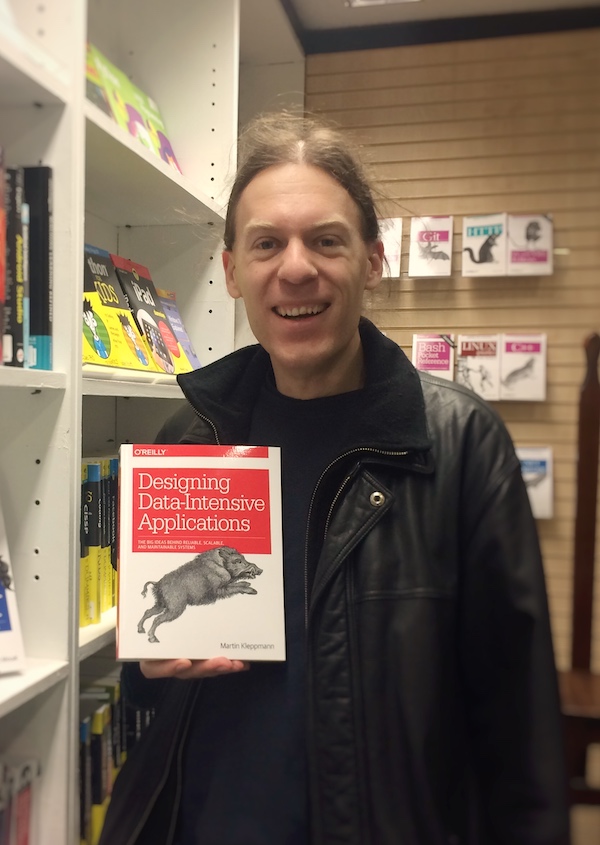
Dr. Martin Kleppmann is an Associate Professor at the University of Cambridge, specializing in local-first software and security protocols . He leads research in distributed systems, focusing on decentralized architectures, collaborative editing tools, and cryptographic methods. As a key contributor to the Automerge open-source project, he bridges academic innovation with real-world applications. Formerly a research fellow at TU Munich (2022–2023) and Cambridge (2015–2022), he has also worked as a software engineer and startup founder, including LinkedIn (acquired 2012). Research Interests span Distributed Systems Security , Conflict-Free Replicated Data Types (CRDTs) , Collaborative Software , and Cryptography . His work addresses challenges in decentralized social networks, privacy-preserving protocols, and efficient data synchronization. Recent projects include Kintsugi (end-to-end encrypted key recovery) and Pudding (private user discovery for anonymity networks). Publications emphasize Collaborative text editing (2025: Eg-walker, 2023: The Art of the Fugue) CRDTs for JSON and trees (2021, 2017) Privacy in decentralized systems (2024: Pudding, 2025: Emission Impossible) Scientific Awards include Gilles Muller Best Artifact Award (EuroSys 2025) Distinguished Paper & Artifact Awards (OOPSLA 2017) Best Presentation Awards (Security Protocols Workshop 2018, PaPoC 2025)
Milind Tiwari is a Senior Postdoctoral Research Fellow in Financial Crime at the Australian Graduate School of Policing and Security, Charles Sturt University. He holds a PhD in Money Laundering from Bond University, a Master of Science in Finance from the University of Manchester, and a Bachelor of Business Administration from Christ University. As a Certified Fraud Examiner (CFE) and Certified Anti-Money Laundering Specialist (CAMS), he brings extensive industry experience from working with Big 4 firms including KPMG, EY, and Deloitte in both India and Australia. Dr. Tiwari's research spans multiple dimensions of financial crime with particular expertise in money laundering detection mechanisms, trade-based money laundering (TBML), food crime as a money laundering typology, and emerging threats in digital spaces including cryptocurrency and the metaverse. His work integrates advanced data analytics, blockchain technology, and artificial intelligence to develop innovative approaches to financial crime detection and prevention. His recent publications demonstrate a clear trajectory focusing on increasingly complex intersections of technology and crime, with substantial contributions in 2024-2025 covering metacrime, cryptocurrency exchanges, food crime, and metaverse policing. These works appear in high-impact journals across criminology, finance, and technology disciplines. Dr. Tiwari has received significant recognition for his work, including the Emerald Literati Award and the Vice-chancellor's award for outstanding thesis. He is an active member of professional organizations including the Association of Certified Fraud Examiners (ACFE), Association of Certified Anti-money laundering specialists (ACAMS), and Australia and New Zealand Accounting and Finance Association (AFAANZ). As an educator, Dr. Tiwari teaches specialized courses including JST 545 – Money Laundering and JST 549 – White Collar Psychopaths, bringing his practical industry experience and cutting-edge research directly into the classroom. His current research projects focus on TBML (Trade-Based Money Laundering) and CTAS, addressing critical vulnerabilities in the global financial system.
Professor Steven J. Murdoch is a leading figure in cybersecurity and privacy-enhancing technologies at the Department of Computer Science , University College London . His work bridges computer science and law, focusing on payment system security, electronic evidence reliability, and dispute resolution mechanisms. Head of Information Security Research Group at UCL (2022–present) Director at Open Rights Group (2022–present) Research spans payment security , privacy protocols , and legal implications of computer evidence . Key contributions include analyzing EMV protocol flaws, designing secure authentication mechanisms, and improving Tor's anonymity. Publications cover privacy-preserving federated learning , time-lock puzzles , and malware ecosystem analysis Awards include Fellowships from the Institution of Engineering & Technology and British Computer Society , and a Royal Society University Research Fellowship . Teaches COMP0055 Computer Security II and COMP0061 Privacy Enhancing Technologies at UCL
Walid G. Aref is a Professor of Computer Science at Purdue University since Fall 1999. His research focuses on database systems, spatial and spatio-temporal data management, query processing, and indexing. He has led projects funded by NSF, NIH, and industry partners. Aref is a Fellow of the IEEE and has received awards including the NSF CAREER Award (2001) and VLDB’s Ten-Year Best Paper Award (2016). He serves as Editor-in-Chief of ACM Transactions on Spatial Algorithms and Systems and has authored numerous influential papers. Education: BSc/MSc from Alexandria University (Egypt), PhD from University of Maryland (1993). Research Interests: Extending database functionality for emerging applications like spatial, graph, and sensor databases. Notable contributions include the Chameleon project, AQWA system for big spatial data, and privacy-preserving Casper framework. Selected Projects: NSF-funded work on multi-predicate spatial queries, in-memory graph relational systems, and adaptive spatio-textual processing. Systems like Tornado (spatio-textual streams) and LocationSpark (distributed spatial data) exemplify his contributions. Awards: Multiple best paper awards, IEEE Fellow, and leadership roles in ACM SIGSPATIAL.
Elaine Shi is a Professor with a joint appointment in the Computer Science Department (CSD) and Electrical and Computer Engineering (ECE) at Carnegie Mellon University. She is also an Adjunct Professor of Computer Science at the University of Maryland. Her research focuses on cryptography, security, mechanism design, algorithms, blockchains, and programming languages. She co-founded Oblivious Labs, Inc., and her work on Oblivious RAM and differential privacy has been adopted by Signal, Meta, and Google. Education: Not explicitly listed, but her academic roles imply advanced degrees in computer science. Research Interests: Shi's work spans foundational areas such as secure computation, privacy-preserving algorithms, and blockchain protocols. She emphasizes practical implementations, such as Oblivious RAM and cryptographic compilers like Viaduct. Her research also explores game-theoretic mechanisms for decentralized systems and explores the intersection of theory and practice in secure distributed systems. Publications: Over 150+ articles in top venues like Eurocrypt, S&P, and CCS, covering topics like oblivious algorithms, blockchain security, and differential privacy. Recent work includes optimizing obfuscation, secure aggregation, and transaction fee mechanisms. Packard Fellow, Sloan Fellow, ACM Fellow, IACR Fellow Co-founder of CMU's Crypto Group and Crypto Seminar Series Advising & Grants: Supervises a large group of students and postdocs, with notable alumni holding academic and industry roles. Active in securing grants for research in secure computation and blockchain technologies. Labs & Teams: Leads research in Oblivious Labs and collaborates on projects like the Viaduct compiler and secure enclaves for privacy-preserving computation.
Ebru Cankaya is a Senior Lecturer II in the Department of Computer Science at the University of Texas at Dallas (UTD), part of the Erik Jonsson School of Engineering and Computer Science. She holds a Ph.D. in Computer Science from Ege University (Turkey) and has extensive academic experience across multiple institutions, including adjunct roles at Southern Methodist University and visiting professorships at Izmir University of Economics and Earlham College. Her research focuses on cybersecurity, risk modeling in databases, lossless text compression, and cloud computing. She has received numerous teaching awards, including the 2019 Outstanding Faculty of the Year award at UTD. Educational Background: Ph.D. in Computer Science, Ege University (2004) M.S. in Computer Science and IT & Management, Ege University (2004/2009) MBA in Economics and Administrative Sciences, Ege University (2000) B.Sc. in Computer Engineering, Ege University (1994) Research Interests: Computer and Network Security: Including access control models (e.g., Bell-LaPadula, Chinese Wall) and cryptographic techniques. Risk Modeling in Databases: Focusing on privacy-preserving data storage and obfuscation strategies. Text Compression: Innovations in encoding methods like Star Encoding and hybrid techniques. Cloud Computing: Security and dependability in distributed systems. Awards and Recognition: 2022: Teaching Award, Jonsson School 2019: Outstanding Faculty of the Year 2013: Faculty of the Month (NACURH) Multiple nominations for University and System-Wide Teaching Awards TUBITAK/EBILTEM Research Awards (2003–2004) Her professional activities include organizing doctoral symposiums (e.g., COMPSAC 2012/2013), participating in faculty development programs (e.g., Working Connections IT Institute), and mentoring undergraduate researchers. She has held academic roles across Turkey and the U.S. since 1997, including research assistantships at Ege University and a decade-long tenure at Ege University as a lecturer and assistant professor.
Prof. Maryline Laurent is a Professor at Telecom SudParis, affiliated with the SAMOVAR research laboratory. Her work focuses on cybersecurity, privacy-preserving technologies, blockchain applications, and IoT security. She has contributed to numerous high-impact publications and conferences, addressing challenges in secure healthcare systems, decentralized identity management, and privacy in distributed systems. Her research spans cryptographic protocols, access control mechanisms, and compliance with EU data protection regulations. Key areas of expertise include secure communication protocols for IoT, blockchain-based solutions for healthcare, and privacy-enhancing technologies. She has collaborated on projects such as self-sovereign identity frameworks, anonymized data aggregation, and privacy-preserving smart grid systems. Her work emphasizes practical methodologies for assessing re-identification risks in anonymized datasets and designing secure systems compliant with evolving regulations. Prof. Laurent’s contributions extend to book chapters and edited volumes on digital identity management and wireless network security. She actively participates in international conferences and initiatives, advocating for privacy-by-design principles in intelligent infrastructures.