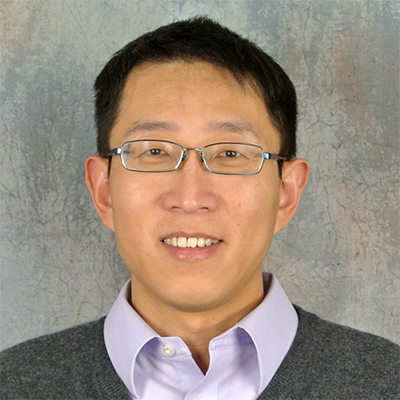
Padraig MacCarron is an Associate Professor in the Department of Mathematics and Statistics at the University of Limerick, specializing in complex networks. He is affiliated with the Centre for Research Training in Foundations of Data Science and the Mathematics Applications Consortium for Science and Industry (MACSI). Education: BSc in Astrophysics from University College Cork; PhD from Coventry University on social networks in narratives. His research focuses on interdisciplinary applications of complex networks, including social polarization, criminal networks, and trust dynamics in health research. He collaborates with Psychology, Law, and Health departments to model social phenomena like community formation and fragmentation. Recent work explores structural properties of social networks through diverse domains such as Twitter analysis for political polarization, participatory health research partnerships, and arts-based methods for migration health co-production. This spans network theory, social media analytics, and data-driven policy modeling. He is a member of MACSI and the Centre for Research Training, emphasizing computational methodologies and team-based collaborations. Padraig actively accepts PhD students for projects involving network science and social systems modeling.
Dr. Christian Panse is the Unit Head of Computational Mass Spectrometry at the Functional Genomics Center Zurich , ETH Zurich. His work spans bioinformatics, data processing, and visualization in proteomics, with a focus on method development and software engineering. Research Interests: Christian Panse specializes in proteomics and computational mass spectrometry , developing tools like prolfqua and rawrr for quantitative proteomics analysis. His research addresses standardization in proteomics core facilities and cross-resource data comparison. Recent work includes harmonizing quality controls across proteomics laboratories Creating user-friendly R packages for differential expression analysis Advancing fragmentation techniques for post-translational modification studies Publications Trends: His articles emphasize proteomics data reliability , software tools , and method validation in mass spectrometry. Collaborations with institutions like the Core for Life alliance highlight his role in community-driven standardization efforts.
Matthias Becker is a Professor at the Institute for Practical Computer Science within the Faculty of Electrical Engineering and Computer Science at Leibniz University Hannover, where he has been a core member of the Human-Computer Interaction group since 2019. He serves as Internship Coordinator for Computer Science and Computer Engineering and holds key roles in the Computer Science Examination Board and Selection Committee, actively shaping academic governance and student development. His academic journey began with PhD studies at the University of Bremen (1996-2000) supported by a DFG grant, followed by a postdoctoral permanent position at Leibniz University Hannover (2000-2019), an Associated Assistant Professor role at École des Mines de Nantes (2000), and a Habilitation in Computer Science in 2013. This foundation enabled his transition to a full professorship in 2019. Becker's research spans Human-Computer Interaction, Simulation and Modeling, and Bio-inspired Computing, with applications in agriculture, renewable energy, and manufacturing. His work integrates distributed systems, optimization algorithms, and wireless sensor networks to solve complex real-world problems, such as greenhouse monitoring, wind farm logistics, and tire noise reduction. Recent publications reveal a strategic focus on practical validation of simulation models and cross-domain applications of nature-inspired algorithms. His 15 most recent publications (2018-2024) demonstrate consistent innovation in applying simulation techniques to offshore wind farm installation, agricultural pest management, and sports science. These works emphasize real-world validation, collaborative problem-solving, and the development of domain-specific optimization frameworks that bridge theoretical algorithms and industrial implementation. As Internship Coordinator, Becker facilitates critical industry-academia connections for students, while his examination board responsibilities ensure rigorous academic standards. His leadership in the Human-Computer Interaction group drives research on interactive systems for agriculture, energy, and health, with particular emphasis on user-centered design in complex operational environments like wind farm logistics and greenhouse automation.
Ana Lucic is an Assistant Professor in Artificial Intelligence at the University of Amsterdam , with a joint appointment between the Institute for Logic, Language and Computation and the Informatics Institute . Her research focuses on interpretable machine learning applications for scientific discovery and societal impact. Formerly at Microsoft Research AI for Science and Partnership on AI PhD in Explainable Machine Learning from University of Amsterdam (2022) BSc/MSc in Mathematics from McMaster University Research Highlights: Develops mechanistic interpretability methods for deep learning architectures. Created Aurora , a foundation model for Earth system forecasting outperforming traditional operational models in air quality prediction and tropical cyclone tracking. Pioneers Clifford-Steerable CNNs for geophysical data analysis. Actively hiring PhD students for AI transparency research . Collaborative Networks: Contributions to ELLIS Summer School and ICML workshops . Collaborates with Microsoft Research AI for Science team on climate-related ML projects. Involved in organizing TerraBytes workshop at ICML 2025. Recent Advancements: Key role in publishing Aurora model in Nature (2025), demonstrating superior performance in Earth system forecasting. Supervises Ege Erdogan , new PhD student focused on mechanistic interpretability. Actively contributes to open-source AI development through GitHub repositories and technical discussions.
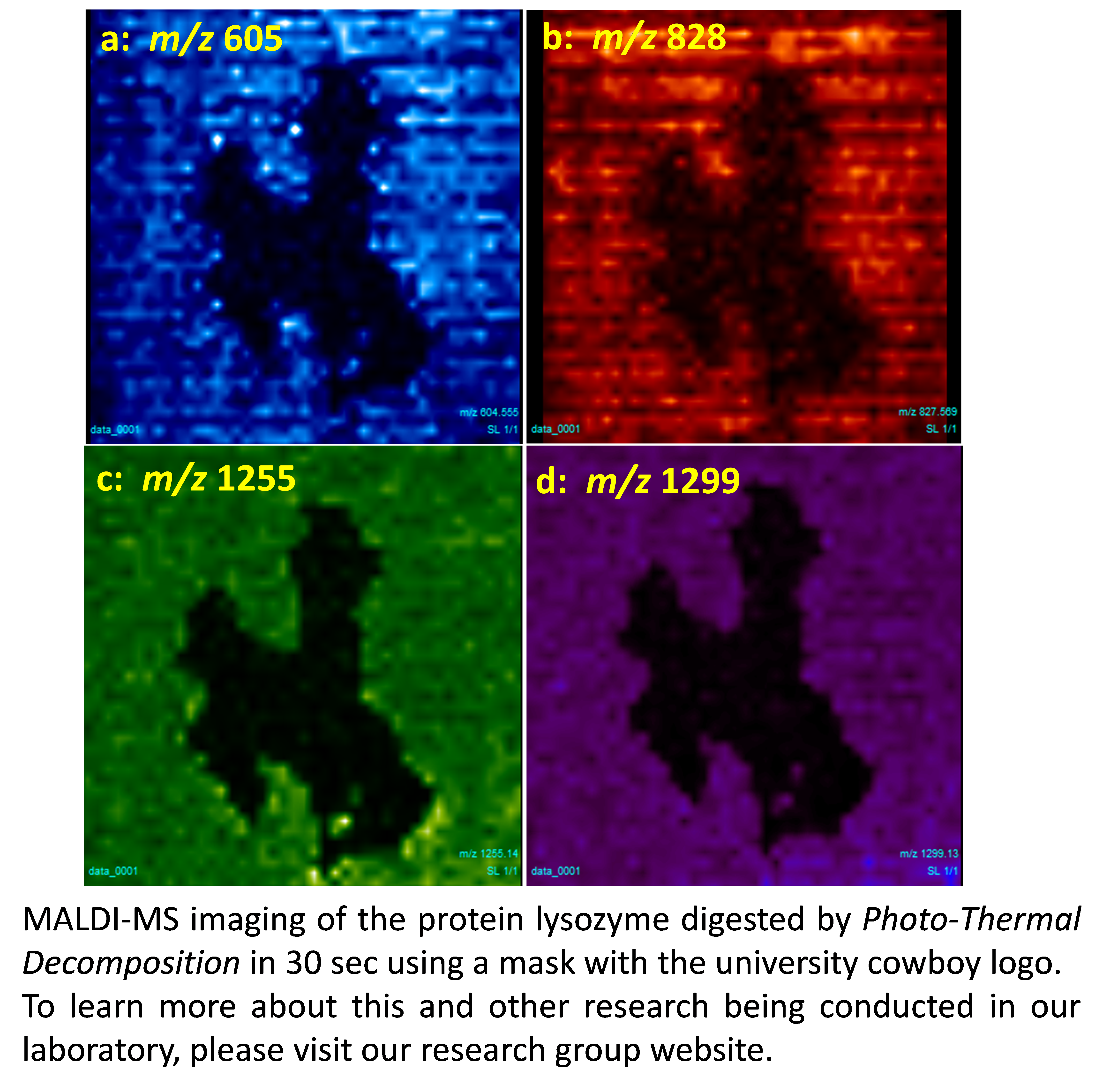
Franco Basile is a Professor in the Department of Chemistry at the University of Wyoming, specializing in Analytical Chemistry and Bioanalytical Mass Spectrometry . His research focuses on developing rapid, non-enzymatic sample preparation techniques for proteomics and metabolomics of biological and environmental samples, including microorganisms, bees, plants, and coal deposits. Education: B.S. in Chemistry (University of Wisconsin-Eau Claire, 1985), Ph.D. in Analytical Chemistry (Purdue University, 1992) Research Interests include: Analytical Mass Spectrometry : Pioneering thermal/microwave digestion for on-tissue proteomics and imaging-MS Metabolomics and Lipidomics : Analyzing root exudates, invasive grasses, and insect cold tolerance Microbial Ecology : Investigating sterol synthesis in bacteria and soil metaproteomics Article Trends span from 2025 to 2012 , emphasizing MALDI- and ESI-MS applications in proteomics, metabolomics, and environmental analysis. Recent work includes non-intrusive laser techniques for protein denaturation monitoring and sterol gene studies in planctomycetes. Scientific Awards : NSF CAREER Award R&D 100 Award ACS Outstanding Professor Award Lindbergh Foundation Research Award Funding sources include NSF, NIH, USDA, and DTRA for projects on insect cryobiology , microbial methane production , and field-portable biodetection systems . The Biodetection and Mass Spectrometry Laboratory houses advanced instrumentation like Q-Exactive HF-X Orbitrap and MALDI-ToF/ToF-MS, supporting interdisciplinary collaborations across ecology, geology, and biomedical sciences.
Brigitte Pientka is a Professor at McGill University's School of Computer Science , where she leads the Computation and Logic group . She earned her PhD from Carnegie Mellon University in 2003 and previously studied at the University of Edinburgh and Technical University of Darmstadt. Education PhD in Computer Science, Carnegie Mellon University (2003) University of Edinburgh Technical University of Darmstadt Research Interests Her work focuses on the theoretical and practical foundations for building reliable software systems, combining logic, type theory, and verification with system-building. Key areas include: Type Theory and Dependent Types Logical Frameworks and Mechanized Metatheory Session-Typed Concurrency and Linear Logic Metaprogramming and Contextual Type Systems Theorem Proving and Formal Verification Functional Programming and Language-Based Security Professional Roles She has served as: PC Chair for ICFP'24 and CPP'24 General Chair for POPL'20 Executive Editor of Logical Methods in Computer Science Steering Committee Member for LICS, POPL, and ESOP Scientific Awards Dr. Pientka has received: Test of Time Award at PPDP'18 Humboldt Fellowship for research at MPI-SWS, Germany Labs & Teams She actively develops the Beluga programming language , a tool for mechanizing meta-theory proofs and type-driven program manipulation.
Professor Kenneth Harris is a Distinguished Research Professor in the School of Chemistry at Cardiff University, specializing in the fundamental properties of solids and the development of advanced experimental techniques for materials characterization. His work bridges the gap between traditional crystallography and modern analytical methodologies, with a particular focus on overcoming limitations in structural analysis of complex materials. His research spans three primary interconnected themes: the development of techniques for determining crystal structures of organic solids directly from powder X-ray diffraction data; the advancement of in-situ solid-state NMR strategies for monitoring crystallization processes in real time; and the investigation of structural properties of anisotropic materials using polarized X-ray beam techniques, including the pioneering development of X-ray Birefringence Imaging (XBI). This work has significant implications for pharmaceutical development, materials science, and understanding biological crystallization processes. Analysis of his recent publications reveals a consistent trajectory toward increasingly sophisticated multi-technique approaches to materials characterization. His work increasingly integrates 3D electron diffraction, powder XRD, solid-state NMR, and computational methods like DFT calculations to solve previously intractable structural problems. A notable trend is the application of these methods to biologically relevant molecules (xanthine, riboflavin, L-tyrosine) and the development of techniques to monitor dynamic processes like crystallization and phase transitions in real time. His research demonstrates a shift from purely structural determination toward understanding the dynamic processes that govern material formation and transformation. Distinguished Research Professor title at Cardiff University Key contributor to the development of X-ray Birefringence Imaging Significant contributions to NMR crystallography methodologies Extensive publication record in top chemistry and materials science journals Professor Harris leads a research group focused on developing and applying cutting-edge techniques for materials characterization. His work has significant implications for pharmaceutical development, where understanding crystal structure and polymorphism is critical for drug efficacy and safety. His group has developed innovative approaches to monitor crystallization processes in real time, which has applications in both industrial manufacturing and understanding natural biomineralization processes. The group maintains strong collaborations with researchers across multiple disciplines, including physics, biology, and engineering, reflecting the interdisciplinary nature of modern materials science research.
Daniel W. Apley is Professor of Industrial Engineering and Management Sciences at the McCormick School of Engineering and Applied Science, Northwestern University, where he has served since 2003. He is Editor-in-Chief-Elect of Technometrics and previously Editor-in-Chief of the Journal of Quality Technology . He is also affiliated with Northwestern’s Master of Science in Machine Learning and Data Science Program. Education PhD Mechanical Engineering, University of Michigan, Ann Arbor MS Electrical Engineering, University of Michigan, Ann Arbor MS Mechanical Engineering, University of Michigan, Ann Arbor BS Mechanical Engineering, University of Michigan, Ann Arbor Research Interests Professor Apley is an industrial statistician whose work sits at the intersection of engineering modeling, statistical analysis, and predictive analytics. His major thrusts include statistical modeling of complex engineering and enterprise systems, machine learning for manufacturing data, quality engineering and Six Sigma methodologies, and computer-experiment–based design optimization under uncertainty. Recent applications span healthcare risk modeling, credit-risk analytics, materials microstructure prediction, and autonomous process control. Scientific Awards NSF CAREER Award IIE Transactions Best Paper Award (Quality & Reliability) Wilcoxon Prize for best practical application paper in Technometrics Teaching & Advising At Northwestern he teaches undergraduate courses in Statistical Methods for Quality Improvement, Introductory Statistics, and Statistical Tools for Data Mining, as well as graduate courses in Predictive Analytics, Engineering Applications of Data Mining, and Intermediate Statistics. His research has been supported by numerous industrial partners and federal agencies, underscoring a strong record of funded graduate and post-doctoral advising. Leadership & Service Beyond editorial roles, Professor Apley has chaired the Quality, Statistics & Reliability Section of INFORMS and served as Director of the Manufacturing and Design Engineering Program at Northwestern, shaping interdisciplinary curriculum and research initiatives.
Bonnie Berger is a Professor of Applied Mathematics at the Massachusetts Institute of Technology (MIT), with a joint appointment in Computer Science in the Department of Electrical Engineering and Computer Science (EECS). She leads the Computation and Biology group and is part of the Theory of Computation group at MIT's CSAIL. Her research focuses on computational biology, algorithms, and their applications to molecular biology. She has pioneered work in computational molecular biology, influencing the field through her mentorship of students and collaborations. Her academic roles include Vice President of the International Society for Computational Biology (ISCB), Head of the RECOMB steering committee, and membership on the NIGMS Advisory Council. Berger has received numerous awards, including membership in the American Academy of Arts and Sciences, the NIH Margaret Pittman Award, and an Honorary Doctorate from EPFL. Her current projects include developing algorithms for metagenomic binning, context-aware functional genomics, and secure federated genomic analysis using frameworks like Sequre and SCA. She also leads research on protein structure prediction, privacy-preserving data analysis, and single-cell transcriptomics integration with tools like Scanorama and CryoDRGN. Berger’s research bridges computational methods with biological insights, addressing challenges in health care, disease genetics, and data privacy. Her labs and collaborative efforts emphasize interdisciplinary approaches to solving complex biological questions through advanced computational techniques.
Dr. Danny John Norrey serves as a Tutor for Biology at Manchester Metropolitan University, specializing in ecological and conservation research. He provides academic support for student skills development in data analysis and research design for both undergraduate and postgraduate programs. His research focuses on: Ecology and evolutionary biology Biodiversity conservation Wildlife ecology and behavioral studies Field-based ecological research methodologies Norrey's publications demonstrate strong interdisciplinary engagement across conservation biology, wildlife ecology, and ecological monitoring. Recent work frequently examines human-wildlife interactions, trade impacts on biodiversity, and conservation strategies across diverse ecosystems from African savannahs to Amazonian markets. His international collaborations span multiple continents with research outputs contributing to wildlife policy and conservation practice.
Dr. Gea Rahman is a Lecturer in Computing at Charles Sturt University (CSU), specializing in data science and machine learning. He holds a PhD in Computer Science from CSU, and MSc/BSc degrees from Rajshahi University, Bangladesh, where he was awarded a Gold Medal for academic excellence. With over 20 years of teaching experience, he previously served as Professor and Programme Director at Bangladesh Agricultural University. Education: PhD in Computer Science (Data Science/ML), Charles Sturt University (2011-2015) MSc in Computer Science & Engineering, Rajshahi University (2002-2003) BSc (Hons) in Computer Science & Technology, Rajshahi University (1998-2002) Research Interests: Data science applications in agriculture, healthcare, and environmental monitoring Machine learning techniques including ensemble/deep learning, transfer learning, and incremental learning Data preprocessing methods (missing value imputation, outlier analysis) AI ethics and healthcare consent strategies Awards: Global Research Impact Recognition Award 2020 Best Researcher Award Gold Medal for Academic Excellence (2003) Advising & Grants: Principal supervisor for multiple postgraduate students Recipient of grants including: Ai-Enabled Segmentation of Brain MRI (2024) Adaptive Federated Learning Framework (2024) Unusual Behaviour Detection in Aged Care (2023) He is part of the Data Mining Research Group (DaMRG) and actively contributes to conferences/journals as a reviewer and editorial board member.
Dr. Jun Yan is a Professor in the Department of Statistics at the University of Connecticut. His research spans network analytics, spatial extremes, survival analysis, and statistical computing with applications in public health, finance, and environmental science. His core research interests include: network modeling and analysis, spatial statistics for climate extremes, survival analysis methodologies, statistical computing frameworks, and applications in interdisciplinary domains including sports analytics. Dr. Yan has developed significant statistical methodologies for network analysis, climate change detection, financial modeling, and health analytics. His recent publications demonstrate innovation in modeling complex network structures, analyzing climate extremes, developing computational approaches for massive datasets, and creating specialized statistical methods for health and finance applications. He maintains active collaborations across disciplines and contributes to open-source statistical software. Honors include: Guggenheim Fellowship, multiple Fromm Foundation commissions, and Barlow Endowment recognition.
Michael A. Bender is the John L. Hennessy Chaired Professor of Computer Science at Stony Brook University. His work spans both theoretical and applied domains in algorithms, data structures, and storage systems. He co-founded Tokutek, Inc., a database company acquired by Percona in 2015, and has held visiting positions at MIT and King's College London. Education: PhD in Computer Science from Harvard University (1998), DEA and Magistère in Computer Science from École Normale Supérieure de Lyon (1993), BA in Applied Mathematics from Harvard (1992). His research focuses on cache-oblivious algorithms , I/O-efficient computing , parallel systems , and scheduling . His work addresses scalability in large-scale data management and computational geometry, with applications in bioinformatics and robotics. The 15 most recent publications highlight advancements in list labeling , hash table design , graph algorithms , and memory optimization . These papers reflect his commitment to solving practical problems with rigorous algorithmic approaches. Awards include: PODS Best Paper Award (2024) ASPLOS Distinguished Paper Award (2023) USENIX FAST Best Paper Award (2016) Chancellor's Award for Excellence in Teaching (2015) R&D 100 Award (2006) He has led the Stony Brook Computer Science Honors Program and advised graduate students in algorithmic research. His grants portfolio includes 39 funded projects, emphasizing algorithm engineering and systems optimization.
Professor Manolis Koubarakis is a faculty member at the Department of Informatics and Telecommunications, National and Kapodistrian University of Athens. His research focuses on geospatial data science, knowledge graphs, entity resolution, and AI applications in Earth observation. He leads projects like ExtremeEarth and Plato, advancing semantic data cube systems and geospatial question answering engines. His work bridges AI and geospatial technologies, with contributions to frameworks like pyJedAI and Strabo 2 for managing big geospatial data. Research Interests include: Geospatial Question Answering Systems Entity Resolution and Entity Linking Ontology-Based Data Access (OBDA) Knowledge Graph Construction and Applications Earth Observation Data Analytics AI for Geoinformatics Notable Projects: ExtremeEarth: Combines Copernicus satellite data with machine learning for environmental analytics. Plato: Semantic data cube system enabling advanced querying of multidimensional datasets. GeoQA2: A geospatial question answering engine evaluated on large benchmarks. JedAI Family: Tools for scalable entity resolution in structured/semi-structured data. His publications span 20+ years, with recent emphasis on: AI-driven Earth observation systems Geospatial RDF benchmarking 3D geospatial interlinking Large language models for legal and health content delivery
Joel E. Cohen is the Abby Rockefeller Mauzé Professor at The Rockefeller University, where he leads the Laboratory of Populations. With over five decades of research experience, Cohen has pioneered innovative mathematical approaches to study biological populations and variability. His work bridges mathematics, biology, and environmental science, fundamentally changing how scientists understand population dynamics and the significance of biological variability. Dr. Cohen's research focuses on developing new mathematical tools to address population problems in demography, epidemiology, and ecology. He has made seminal contributions to the understanding of heavy-tailed distributions that describe extreme events like hurricanes and disease outbreaks, challenging traditional statistical approaches. His laboratory has conducted groundbreaking research on the spatial distribution of human populations in relation to geophysical factors, with unexpected practical applications ranging from soap formulation to semiconductor manufacturing. Cohen has also developed mathematical models for Chagas disease control in rural Argentina and created algorithms to predict international migration patterns. Analysis of Cohen's recent publications reveals a sustained focus on Taylor's law of fluctuation scaling, population dynamics, and ecological statistics. His work consistently demonstrates how abstract mathematical concepts can transform our understanding of biological systems, from cellular processes to global population trends. The research spans theoretical mathematics to practical applications in disease control, conservation biology, and environmental management. Olivia Schieffelin Nordberg Prize for excellence in writing in the population sciences (March 1997) Gheorghe Lazar Prize of Romanian Academy (December 2000) As director of the Laboratory of Populations, Cohen has led research on human population growth, infectious diseases, food webs, and international migration. His methods for assessing the uncertainty of population projections have been applied in court cases for predicting future claimants of asbestos-related diseases. Cohen's laboratory has collaborated with the United Nations Population Division on migration studies and developed mathematical models that account for more than half of the variability in annual migration numbers among 229 countries. Current research directions include understanding how demographic, economic, and cultural changes interact with Earth's physical, chemical, and biological environments. The Laboratory of Populations employs a multidisciplinary approach that combines mathematical modeling, statistical analysis, and field studies to address complex population issues. Their work exemplifies how basic quantitative research on populations frequently yields unexpected practical applications, demonstrating the profound connections between theoretical mathematics and real-world challenges in public health, environmental science, and resource management.