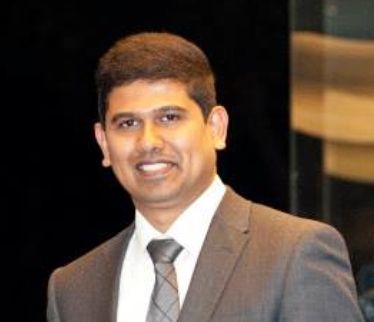
Haley Larson, Ph.D., serves as a Teaching Assistant Professor in Animal Health at Kansas State University's Olathe campus. Her career bridges academia and industry, with prior roles as a Senior Scientist at Cargill Animal Nutrition and Health where she developed the first fully automated dual-flow continuous culture system for cattle rumen simulation. Education: Ph.D. in Ruminant Nutrition from University of Minnesota (2019) B.S. in Animal Science from University of Minnesota (2014) Research Interests focus on ruminal fermentation patterns, in vitro culture systems, biological modeling, and on-farm rapid assays. She specializes in nutritional strategies to optimize cattle performance and reduce environmental impacts through feed additive evaluation and microbial analytics. Academic Contributions include designing graduate programs like the M.S. in Applied Biosciences and Regulatory Affairs in Animal Health Graduate Certificate. Her teaching spans topics such as product development research strategies, EPA regulatory affairs, and zoonotic pathogens in the food chain. Professional Affiliations include American Registry of Professional Animal Scientists, Plains Nutrition Council, American Society of Animal Science, and American Dairy Science Association.
Anthony SIMONOFSKI is an Associate Professor at the Department of Management Sciences within the Faculty of Economic, Social and Management Sciences at the University of Namur. He is actively involved in the Namur Digital Institute (NADI) and leads the Management of INformation and DIgital Transformation (MIND IT) research group. His academic background includes dual doctorates in Business Economics from KU Leuven and Computer Science from UNamur. His educational background demonstrates exceptional interdisciplinary training: Doctor in Business Economics, KU Leuven Doctor in Sciences (Computer Science), UNamur Master in Business Engineering - Information Management, UNamur Master in Handelsingenieur in de Beleidsinformatica, KU Leuven Bachelor in Business Engineering - Information Management, UNamur SIMONOFSKI's research focuses at the intersection of digital technology and public administration, with particular expertise in digital transformation, smart cities, and citizen participation. His work bridges information systems theory with practical governance challenges, developing frameworks for more responsive public services. His recent publications reveal a strong trend toward AI applications in citizen engagement, with increasing focus on ethical implementation and practical frameworks for public sector use. His scientific contributions have been recognized with several prestigious awards: Best Paper Award at the 19th IEEE Conference on Business Informatics (2017) Publica Award for Methodological Guidance of La Louvière (2019) Nomination for the De Woot Award for Master's Thesis (2018) As Principal Investigator, SIMONOFSKI leads seven major research projects with significant funding, including PARIS2 (2025-2029) on proactive digital public services and Di-Fic (2025-2030) on digital citizenship education. He has supervised numerous graduate students and contributes to the academic community through committee service, including serving on the Faculty Council of Economic, Social and Management Sciences. His work with the ALMEN Alumni Association Committee (as Member 2016-2017 and President 2017-2020) demonstrates his commitment to academic community building. He directs the MIND IT research group which focuses on practical applications of digital transformation in public administration, with particular emphasis on citizen-centered design and implementation challenges in real-world governance contexts.
David Hinks is Dean of the Wilson College of Textiles and Professor of Textile Chemistry at North Carolina State University. He leads over 145 employees, mentors hundreds of students, and manages over $10 million in research contracts with industry and government agencies. He holds the Cone Mills Distinguished Professorship and is a member of both the Academy of Outstanding Teachers and the Academy of Outstanding Faculty Engaged in Extension. His educational background includes: B.Sc. (Honors) in Colour Chemistry, University of Leeds, 1989 Ph.D. in Cationic Reactive Dyes for Cellulosic Fibres, University of Leeds, 1993 Dr. Hinks' research focuses on color science, forensic textile analysis, sustainable dyeing processes, and environmentally responsible dyestuff design . His work bridges chemistry, engineering, and forensics, with applications in both industry and criminal justice. He has developed novel methods for neutral pH cotton bleaching, forensic fiber databases, and ultra-deep dyeing technologies. His recent publications reflect a strong trend toward forensic applications of textile chemistry, sustainability in dyeing processes, and advanced analytical techniques such as LC-TOF MS and microfluidics. These works demonstrate interdisciplinary collaboration across chemistry, engineering, and computational science. His scientific honors include: Member, NC State Academy of Outstanding Teachers Member, NC State Academy of Outstanding Faculty Engaged in Extension Dr. Hinks has mentored dozens of graduate and undergraduate students, many of whom have won top awards including the AATCC Student Paper Competition, NSF Graduate Fellowships, and the Barry Goldwater Scholarship. Five of his former students are now professors internationally. He has secured substantial research funding from NSF, USAID, National Institute of Justice, Cotton, Inc., and Hanesbrands, supporting projects in forensic science education, sustainable textiles, and crime scene reconstruction. He leads or contributes to key research initiatives including: Comparative Finished Fiber Analytical Database (COMFFAD) IC-CRIME: Interdisciplinary Cyber-Enabled Crime Reconstruction Development of non-genotoxic dyes and sustainable textile processing
Steve Szigeti is an Associate Professor in the Teaching Stream and Program Director for Communication, Culture, Information & Technology (CCT) at the Institute for Communication, Culture, Information & Technology (ICCIT), University of Toronto Mississauga. He holds a Ph.D. and Master of Information from the University of Toronto’s Faculty of Information, an MA in English from Concordia University, and a BA in English Literature and History from the University of Toronto. His research focuses on game design, design thinking, pedagogy, human-computer interaction, data visualization, and academic integrity . He integrates innovative teaching practices with digital design, particularly through educational games and inclusive pedagogical frameworks. The recent publications reflect a strong interdisciplinary trend combining education, ethics, and technology . His work explores academic integrity through student attitudes, develops inclusive design pedagogy, and applies HCI principles to media analytics and labor education via gamification. Scientific Awards: UTM Teaching Excellence Award for Junior Faculty 2021-22 As a teaching-stream professor and program director, Steve Szigeti is deeply involved in curriculum development and instructional innovation. He teaches courses such as Business Research Methods, Principles in Game Design, Project Management, and UX and Board Game Design. While no formal students are listed, his mentoring role is evident through capstone projects and internship supervision. He leads initiatives in digital pedagogy and academic integrity, contributing to educational reform and inclusive design practices. He is associated with the Open Design Collaboratory and contributes to research on digital equity and ethical technology use in education.
Dr. D. Brandon Magers is a Professor and Chair of Chemistry and Physics at Belhaven University , where he has been part of the faculty since 2019. He also serves as a Faculty Fellow of Instructional Technology since 2022, supporting colleagues in integrating educational technology into teaching. Education: B.S., Mississippi College Ph.D., University of Georgia Dr. Magers’ research and teaching interests span Computational Chemistry , Electronic Structure Theory , Chemistry Education , and Physical Chemistry . His work combines theoretical studies of molecular systems with innovative educational approaches to enhance laboratory and programming instruction. His recent publications highlight two main themes: theoretical chemistry (e.g., reaction kinetics, ion binding, and molecular modeling) and chemistry education (e.g., development of open-source tools, data processing in labs). Earlier contributions include foundational studies on strain energy and radical structure using computational methods. Dr. Magers actively mentors undergraduate researchers, guiding presentations at local, regional, and national levels. He also contributes to professional communities as an officer for the Mississippi Local Section of the American Chemical Society .
Lynn Dailey is a Professor in the Department of Business at Capital University's College of Business, where she has held the George Moor Endowed Chair in Business and Economics since 2008. She teaches in both the MBA and undergraduate programs, with courses including Marketing Management, Consumer Behavior, and Marketing Consulting. Her work bridges academic theory and practical application through extensive client-based projects. Educational Background: Ph.D. in Business Administration, University of Kentucky Master of Business Administration, Ohio University Bachelor of Science in Business Economics, The Ohio State University Dr. Dailey's research focuses on marketing, consumer behavior, and strategic planning, particularly examining product return policies, consumer reactance, and the ethical dimensions of retail practices. She explores how restrictive policies influence consumer responses and how businesses can design strategies that balance profitability with customer satisfaction. Her work also extends to marketing MBA programs, emphasizing flexibility and student needs. Her recent publications show a consistent trend in consumer behavior research, especially in retail contexts, with a strong emphasis on empirical studies and practical implications. She frequently collaborates with industry partners and integrates real-world data into her scholarship. Scientific Awards: Faculty Scholar Award (top research award at Capital University) Cotterman Advising Award (top advising honor) Best Paper in Track Award (2012, Association of Collegiate Marketing Educators) Dr. Dailey has mentored over 90 experiential learning projects with central Ohio organizations, including COSI, the American Heart Association, Columbus Metropolitan Library, and government agencies. She has secured consulting engagements with major national clients like Grange Insurance, EXPRESS, and OCLC, as well as numerous small businesses and nonprofits. These projects serve as both teaching tools and applied research initiatives. She leads initiatives connecting academic programs with community and corporate partners, enhancing student learning while building institutional reputation. Her work in business consulting spans over 24 years and includes training and strategic planning for diverse sectors.
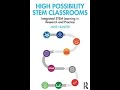
Jane Hunter is an Associate Professor in the School of International Studies and Education at the University of Technology Sydney (UTS), Faculty of Design and Society. She has a robust academic and professional background spanning K–12 education, teacher education, and educational leadership. Her research is centered on pedagogy, curriculum development, and technology-enhanced learning, with a strong focus on integrated STEM and STEAM education. University: University of Technology Sydney School: Faculty of Design and Society Department: School of International Studies and Education Academic Rank: Associate Professor Email: Jane.Hunter@uts.edu.au Education: PhD in Education, Western Sydney University (2010–2013) M.Ed (Hons 1), University of Sydney Graduate Diploma in Education, University of Canberra B.A., Australian National University Research Interests: Jane Hunter’s research focuses on teacher professional learning, pedagogical innovation, and the integration of technology in education. She developed the 'High Possibility Classrooms' framework, which emphasizes teacher agency, creativity, and integrated STEM/STEAM learning. Her work explores how teachers can use technology meaningfully to enhance student engagement and learning outcomes, particularly in disadvantaged and linguistically diverse communities. Recent Research Trends: Her 15 most recent publications reveal a consistent focus on integrated STEM/STEAM education, school-university partnerships, teacher professional development, and the ethical use of data and AI in education. She frequently investigates how pedagogical frameworks can support teacher autonomy and how digital tools can be used authentically in classrooms. Her work also extends to social justice themes, including Indigenous education and anti-racism through sport. Scientific Awards: Vice Chancellor's Award for Teaching & Learning (UTS) Australian Teacher Education Association Early Career Researcher Award Beth Southwell Research Award for Outstanding PhD Thesis SITE and Microsoft Award for Technology Enriched Instruction Office of Learning and Teaching Citation for Outstanding Contributions to Student Learning University of Western Sydney Citation for Outstanding Contributions to Student Learning University of Sydney Teaching Excellence Award Supervision and Grants: Jane is a Cat 1 HDR supervisor and mentors early-career academics. She has led multiple funded research projects, including 'High Possibility STEM Classrooms', 'Building Culture, Capacity and Community in STEAM', and studies on AI in education. She has supervised PhD, M.Ed, and Honours theses, and supports colleagues in publishing scholarly work. Labs and Research Groups: Jane is the Convener of the Life-wide Learning and Education (LLE) Research Group at UTS and a past member of the Centre for Research on Education in a Digital Society (CREDS). She also contributes to the UTS Library Creative-in-Residence Board and the Informal Learning Spaces Committee, reflecting her commitment to innovative and inclusive learning environments.
Dr. Yu-Cheng Lin (also known as Robbie Lin) is a Sessional Lecturer at the University of New South Wales (UNSW), Faculty of Built Environment, specializing in real estate investment and finance. He holds a PhD in real estate investment and finance from UNSW and is a chartered member of the Royal Institution of Chartered Surveyors (MRICS) in investment management, fund management, financial modelling and valuation. His academic appointments include Coordinator/Sessional Lecturer positions at UNSW for courses including Property Industry Application (REST0010) and Construction Management Risk and Business Analytics (CONS0016), as well as teaching roles at Western Sydney University. PhD in Real Estate Investment and Finance, University of New South Wales University International Postgraduate Award (UIPA scholarship), UNSW, 2019 Dr. Lin's research focuses on the intersection of real estate markets, capital markets, and investment strategies. His expertise includes analyzing interest rate sensitivity across different real estate sectors, particularly REITs in the Pacific Rim region, US, UK, Europe, and APAC markets. He investigates how monetary policy affects various commercial real estate sectors including office, retail, industrial and logistics, multifamily (BtR), healthcare, hotel, infrastructure, and data center properties. His work bridges academic research with practical application in institutional investment, providing insights for portfolio construction, tactical and strategic asset allocation, and interest rate risk management. His recent publications demonstrate a clear trend toward sector-specific analysis of real estate investment performance, with particular emphasis on how different property types respond to changing interest rate environments. His research increasingly focuses on the Pacific Rim region while maintaining a global perspective, examining how US monetary policy transmits to international real estate markets. The growing importance of logistics and industrial real estate due to e-commerce trends, as well as the development of specialized investment vehicles like Build-to-Rent (BtR), features prominently in his recent work. Doctoral Program Manuscript Prize Winner, American Real Estate Society (ARES), 2021 PhD Award for 'Highly Commended Presenter on the Day', Pacific Rim Real Estate Society (PRRES), 2020 University International Postgraduate Award (UIPA scholarship), University of New South Wales, 2019 Dr. Lin has secured research funding including a €$15,000 grant from the European Public Real Estate Association (EPRA) for his project on varying interest rate sensitivity of different real estate sectors. His research has been commercially applied in formulating institutional fund and investment management strategies, with practical implementations in real estate wholesale funds reporting for global institutional investors (SWFs, Pension Funds, Insurers). He has developed tactical and strategic asset allocation strategies for real estate funds across multiple regions and has created distressed asset and debt investment strategies for various real estate sectors. Through his media engagement with outlets including The Property Chronicle and Special Broadcasting Service (SBS), Dr. Lin actively translates academic research into practical insights for industry professionals and the broader public. His work demonstrates a strong commitment to connecting academic research with real-world applications in the commercial real estate industry.
Tracy Yother serves as Assistant Professor in Aeronautical Engineering Technology (AET) within Purdue University's School of Aviation and Transportation Technology. With over 18 years of industry experience at Boeing, McDonnell Douglas, and Pratt & Whitney spanning product support, program management, and business development, she teaches undergraduate Powerplant Systems courses and graduate-level aviation leadership/process improvement curricula while maintaining active FAA Airframe and Powerplant certification. Her academic credentials include: Ph.D. in Career and Technical Education from Purdue University M.S. in Technology, Aviation Logistics from Purdue University B.S. in Aviation Technology from Purdue University Dr. Yother's research pioneers the integration of emerging technologies into aviation maintenance education, with dual focus on faculty credentialing challenges and AI-driven maintenance solutions. She leads NIST-funded development of electric propulsion standards curriculum while advancing natural language processing applications for maintenance record analysis and defect detection through API integration. Her work bridges industry standards with academic training requirements for next-generation aviation technicians. Recent publications reveal strong thematic continuity in aviation education innovation, particularly addressing workforce development for electric propulsion systems and AI-enhanced maintenance practices. Her scholarship consistently connects curriculum design with industry consensus standards while expanding into diversity initiatives and sustainable maintenance technologies. Recognition includes: February 2021: School of Aviation and Transportation Technology’s Outstanding Faculty in Learning Award Dr. Yother directs NIST Standards Curricula Development Program funding for electric propulsion aviation standards while maintaining active leadership in professional communities. As ASEE Aerospace Division Chair and member of UAA Maintenance Division and Aviation Technician Education Council, she shapes national conversations on aviation maintenance education standards and workforce development strategies. Her research directly informs Purdue's aviation technology programs through industry partnerships, with current focus on developing training frameworks for high-voltage aircraft systems and AI-assisted maintenance protocols that address emerging industry challenges.
Aron Henriksson is a Senior Lecturer and Associate Professor at the Department of Computer and Systems Sciences, Stockholm University. He co-leads the Natural Language Processing Research Group and contributes to the Learning Analytics and AI for Education Group , focusing on large language models, privacy, explainability, and domain adaptation across healthcare and education. His research integrates AI and NLP into critical domains, including Developing SweClinEval - the first Swedish clinical NLP benchmark Privacy-preserving techniques for LLMs using pseudonymization Multimodal prediction models for healthcare outcomes (e.g., COVID-19 mortality) Educational applications of retrieval-augmented generation Henriksson teaches courses in Big Data, AI management, NLP, and information retrieval. His work bridges technical innovation with practical implementation across EU-funded projects like Extreme Food Risk Analytics (EFRA) and clinical AI initiatives, emphasizing ethical AI deployment and data utility preservation.
Dr. Pushpitha Kalutara serves as Head of Course for Built Environment at Central Queensland University's School of Engineering and Technology, holding a PhD in Civil Engineering from RMIT University. With over 17 years of post-graduate experience spanning academia and industry, he maintains active roles as Principal Supervisor for multiple PhD candidates and reviewer for the Journal of Engineering, Construction and Architectural Management. Education: BEng (Civil Engineering) - University of Moratuwa, Sri Lanka PhD (Civil Engineering) - RMIT University, Melbourne, Australia His research focuses on integrating digital solutions with sustainable practices in construction, particularly advancing Building Information Modelling (BIM) for facility management, developing lean procurement frameworks, and pioneering suicide prevention through architectural design. Recent publications demonstrate a shift toward mental health applications in built environments, with significant work on social-spatial design interventions for suicide prevention alongside traditional expertise in asset management and structural health monitoring. Key research trends: Analysis of 15 most recent publications reveals dual trajectories - ongoing development of decision-making frameworks for sustainable community building management (using AHP and neuro-fuzzy systems), and emerging focus on mental health applications in construction (suicide prevention design, industry mental health interventions). His work consistently bridges Australian industry needs with academic research, particularly for councils and infrastructure operators. Awards: Post Graduate Research Award by Engineers Australia and National Asset Management Council (2013) Australian Postgraduate Award Industry (APAI) by ARC Industry Linkage Scheme (2010) Dr. Kalutara actively supervises multiple PhD candidates including projects on construction industry suicide prevention frameworks, AI impacts on road construction project management, and counterterrorism design for critical infrastructure. His industry collaborations span Victorian local councils, Municipal Association of Victoria, and major construction firms. Professional software expertise includes SAP, Revit, AutoCAD, and statistical tools like SPSS and MATLAB for construction analytics.
Andreas Papasalouros is an Associate Professor at the Department of Mathematics, University of the Aegean. He holds a Ph.D. in Engineering from NTUA (2004), a Diploma in Electrical and Computer Engineering (2000), and a BSc in Physics (1992). His research focuses on Educational Technology , Adaptive Hypermedia , and Ontology Engineering . Education Ph.D. in Mechanics, School of Electrical and Computer Engineering, NTUA (2004) Diploma in Electrical and Computer Engineering, NTUA (2000) BSc in Physics, National and Kapodistrian University of Athens (1992) Research Interests Papasalouros's work centers on leveraging UML and Ontologies for designing Educational Software . He explores Automated Assessment systems, Accessibility solutions (e.g., TeX-to-Braille), and Mobile Learning applications. His studies often intersect with Collaborative Learning and Semantic Web technologies. Key Contributions His publications span Adaptive Hypermedia , Ontology-Driven Learning , and Accessibility Tools . Notable works include Ob-AHEM (2002), Grid4All Ontology (2008), and TeX-to-Braille Transcribing (2017). Recent trends emphasize Game-Based Learning and Query Log Analysis for ontology creation. Courses Taught New Technologies in Education (3rd semester) Introduction to Computer Science (2nd semester) Advanced Programming Languages (6th semester) Postgraduate Course in New Technologies in Education
Radmila Suzić is a Professor at Singidunum University, specializing in Applied Linguistics, English Language Teaching, and Digital Education Tools. She holds a PhD in Teaching Methodology from the University of Novi Sad's Faculty of Philosophy (2016) and has published extensively on language anxiety, curriculum development, and technology integration in education. Fields of Interest: Applied Linguistics, Language Anxiety, English Language Teaching, Curriculum Development, Translation Studies, Digital Education Tools Email: rsuzic@singidunum.ac.rs Key Collaborations: Co-authored works with M. Nedeljkovic, A. Puška, T. Dabić, and B. Radić-Bojanić Notable Publications: 'Evolving Methodologies' (2024), studies on multi-criteria analysis in agricultural selection, and research on digital tools in language teaching Her recent articles focus on agricultural decision-making models, digital transformation in education, and cross-cultural language studies. She actively participates in international conferences like SINTEZA and CILRAID.
Dana Mukamel is a Professor of Medicine at the University of California, Irvine, with an affiliation in the Department of Population Health & Disease Prevention within the School of Public Health. Her research focuses on healthcare policy, geriatrics, mental health, and chronic disease management, particularly advanced chronic kidney disease (CKD) and cancer care. She explores topics such as Medicare Part D cost disparities, nursing home staffing and quality, digital mental health interventions, and rural-urban healthcare gaps. Dana's recent publications highlight trends in digital health adoption during the pandemic, staffing instability in nursing homes, and CKD treatment outcomes. Her work often intersects with health equity, examining disparities in rural and minority populations, and innovates through technology-driven care coordination models for seniors. She contributes to policy evaluations, including the Medicare Prescription Payment Plan, Certificate of Need regulations, and Medicaid waiver programs. Her projects frequently involve multi-site collaborations and stakeholder engagement, especially with peer perspectives in mental health interventions and county-level healthcare systems.
Kuldeep Kumar is a Professor at Bond University's Centre for Data Analytics and Bond Business School, where he has taught since 1993 following positions at the Indian Institute of Management and National University of Singapore. He holds a PhD in Statistics from the University of Kent (1986) and maintains prestigious credentials as a Chartered Statistician, Chartered Scientist, and Fellow of the Royal Statistical Society. His research focuses on applied statistical modeling with emphasis on: Time series forecasting and recursive partitioning techniques Financial applications including bankruptcy prediction and fraud detection Healthcare analytics for breast cancer detection and trauma care Forensic accounting using Benford's Law Ethics in higher education Recent publications (2023-2025) demonstrate strong interdisciplinary focus, with 60% in healthcare informatics (ICU mortality prediction, TBI management) and 40% in economic criminology/education. This reflects his dual specialization in medical analytics and financial forensics. Awards and Honors: Teaching Excellence Awards (1998, 2002) Commonwealth Scholarship & Bond-Oxford Fellowship Chartered Scientist designation (Science Council) Excellence in Research Award (2006) International Statistical Institute's Young Statistician Award Supervision includes 6 PhD completions in recent years, with current students working on financial fraud detection and surf hazard modeling. He maintains international collaborations as Visiting Professor at Taiwan's AI-Econ Centre and Affiliate Professor at CENTRUM Católica Peru.