Dr. Zhi Chen is a Lecturer in Computing at the School of Mathematics, Physics and Computing, University of Southern Queensland, specializing in Artificial Intelligence and Machine Learning with applications spanning digital agriculture and healthcare systems. Education: Master of Information Technology (MIT), University of Queensland, 2018 PhD, University of Queensland, 2023 Research Focus: His work centers on zero-shot learning, domain adaptation, and multimodal systems, addressing core challenges in computer vision and deep learning. Current projects integrate AI with agricultural risk modeling and medical diagnostics, emphasizing real-world deployment of robust algorithms under data-scarce conditions. Publication Trends: Recent output (2022-2025) shows concentrated expertise in source-free domain adaptation and generalized zero-shot learning, with significant contributions to plant disease recognition (via mobile multimodal systems) and diabetes subgroup analysis. His work consistently appears in premier venues including AAAI, CVPR, and ACM MM, demonstrating methodological innovation applied to critical domains like climate-resilient agriculture and precision medicine. Supervision: Currently serves as Associate Supervisor for a doctoral candidate developing parametric insurance models for oyster farms to mitigate climate-related risks from king tides and extreme weather events. Awards: No scientific awards were documented in the provided materials.
Renate Egan is a Professor and Deputy Head of School (Engagement) at the School of Photovoltaics and Renewable Energy Engineering , University of New South Wales (UNSW). She leads UNSW's activities in the Australian Centre for Advanced Photovoltaics , a national research consortium involving multiple Australian institutions. Her research focuses on: Techno-economic analysis of photovoltaic technologies Energy data analytics for decentralized systems Electricity market restructuring Technology transfer and commercialization Recent work examines machine learning applications in energy demand forecasting, thermal storage optimization, and bushfire resilience. She collaborates extensively across academia, industry, and government sectors. Key affiliations include: Co-Founder of Solar Analytics (Australia's largest independent energy monitoring provider) Executive Committee member of the IEA PV Power Systems program
David Lo is the OUB Chair Professor of Computer Science at Singapore Management University's School of Computing and Information Systems, where he directs the Information Systems and Technology Cluster and the Center for Research on Intelligent Software Engineering. An ACM Fellow, IEEE Fellow, and ASE Fellow, his research focuses on AI for Software Engineering (AI4SE), leveraging machine learning, data mining, and NLP to enhance software analytics and automation. Research Highlights: AI4SE, code LLMs, human-AI synergy in software engineering, software reliability, and empirical studies of practitioner pain points Awards: IEEE TCSE Distinguished Service Award, university-wide Teaching Excellence Award, Outstanding Graduate Supervisor Award, 2 Test-of-Time Awards, and 11 ACM SIGSOFT/IEEE TCSE Distinguished Paper Awards Leadership: General Chair of ASE'16 and MSR'22, PC Co-Chair for ASE'20, FSE'24, and ICSE'25, ACM SIGSOFT Executive Committee member His work has received over 20 awards, 37,000 citations, and an H-index of 100. As an educator, he has mentored trainees who became faculty and R&D experts globally.
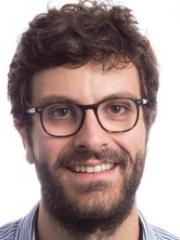
Prof. Andrew Zhang is a Professor at the School of Electrical and Data Engineering, University of Technology Sydney (UTS). He leads the UTS Radio Sensing and Pattern Analysis (RaSPA) Lab and serves as Technical Director of the UTS-TPG Network Sensing Lab. His research focuses on integrated sensing and communications (ISAC), wireless signal processing, and autonomous vehicular networks. He holds a PhD from the Australian National University and has over 15 years of industry experience, including roles at CSIRO and ZTE Corp. Education: B.S. (Xi’an Jiaotong University), M.Sc. (Nanjing University of Posts and Telecommunications), Ph.D. (Australian National University). Research Interests: ISAC, radio sensing, machine learning for communications, and 6G waveform design. Key projects include developing perceptive mobile networks and flood/storm sensing via ISAC. Publications: Over 290 papers, 5 patents, and notable works on ISAC frameworks, joint communication-sensing systems, and mmWave technologies. Recent trends emphasize ISAC, 6G waveforms, and IoT integration with federated learning. Awards: CSIRO Chairman’s Medal, Australian Engineering Innovation Award, and multiple best paper awards. Active in IEEE leadership roles, including Editor-in-Chief of ISAC-Focus. Grants: ~$8M in research funding. Advises on ISAC-ETI initiatives and collaborates with industry partners like TPG Telecom. Labs: RaSPA Lab (radio sensing analytics) and UTS-TPG Lab (ISAC industrial solutions).
Prof. Jian Zhang is a Professor in the School of Electrical and Data Engineering at the University of Technology Sydney (UTS), specializing in computer vision, pattern recognition, and multimedia signal processing. He leads the Multimedia Data Analytics Lab at the Global Big Data Technologies Centre, focusing on agri-food sector applications such as livestock monitoring and AI-driven solutions for agricultural efficiency. Education : PhD, School of Information Technology and Electrical Engineering, University of New South Wales, 1999 MSc, The Flinders University of South Australia, 1994 BSc, East China Normal University, 1982 Research Interests : His work spans 2D/3D computer vision, large-scale image/video analytics, and cross-disciplinary projects in agriculture and remote sensing. He has pioneered AI systems for livestock counting, poultry welfare monitoring, and fish quality assessment, funded by organizations like Meat & Livestock Australia and Australian Eggs. Grants & Projects : Current projects include AI-based hen health monitoring ($5M+ funding since 2011) Collaborations with industry partners like Sydney Fish Market and Fremantle Port Students & Academic Leadership : Supervised 19 PhD graduates and 5 research fellows Recruiting new PhD candidates in computer vision and data analytics Labs & Teams : Director of the Multimedia Data Analytics Lab, collaborating with global experts through UTS's Distinguished Visiting Scholars program.
Dr. Maxime Cordeil is a Senior Lecturer in Human Centred Computing at the School of Electrical Engineering and Computer Science, The University of Queensland. His research focuses on Virtual and Augmented Reality technologies for data interaction, interactive visualization systems, and AR interfaces for industry applications. He has authored over 60 publications in top-tier venues such as ACM CHI and IEEE VR, and was nominated as Australia's Field Leader in Computer Graphics in 2021 and 2022. Research Interests: Data visualization, immersive analytics, medical imaging, collaborative systems, and human-computer interaction. Current Projects: Includes embedded visualizations for sports performance, interactive machine learning in 3D environments, and mixed-reality applications in forensic science. PhD Supervision: Actively guiding students in topics like immersive gesture exploration, AR for digital health, and collaborative VR systems. His work bridges theory and practice, with tools like IATK (Immersive Analytics Toolkit) and the MADE-Axes hardware system. He collaborates with industry partners like Raytracer and CSIRO, focusing on applications in space exploration, underwater training, and remote operations. Awards: Multiple best paper recognitions at ISS and CHI, plus industry-driven research grants. Labs: Leads the Immersive Analytics research group at UQ, specializing in embodied interaction and spatial computing.
Tongguang Li is a Research Fellow at the Department of Human Centred Computing, Monash University. His research focuses on learning analytics, self-regulated learning, and AI applications in education. He has contributed to the development of the FLoRA engine, an AI tool designed to enhance hybrid human-AI regulated learning. Li’s work explores adaptive scaffolding, large language model (LLM) feedback systems, and the integration of multimodal data for educational insights. His recent studies investigate how LLMs like ChatGPT can provide effective feedback to students, analyze rhetorical patterns in writing, and measure the impact of scaffolding on learning processes. Li has been recognized for his research with the Conference Best Full Student Paper Award from the Australiasian Society for Computers in Learning in Tertiary Education (2022). Key themes in his work include understanding self-regulated learning strategies through trace data, optimizing adaptive systems for learner engagement, and leveraging AI for educational innovation. His research bridges cognitive science, data analytics, and educational technology to improve learning outcomes and pedagogical practices.
Associate Professor Jenni Ilomaki holds a position at Monash University's Centre for Medicine Use and Safety. With expertise in clinical pharmacy, epidemiology, and public health, she leads a research group analyzing administrative claims data. Her work spans collaborations with governmental and non-governmental organizations globally, yielding over 150 peer-reviewed publications and $4 million in grants. She previously served as Chair of ASCEPT's Pharmacoepidemiology Special Interest Group and currently serves as Science Lead for the Monash Addiction Research Centre and Executive Editor of the British Journal of Clinical Pharmacology. Education includes a Bachelor of Science (Pharmacy) from the University of Kuopio (1999) and Master of Science (Pharmacy) from the University of Kuopio (2004). She completed a PhD in alcohol epidemiology at the University of Eastern Finland (2011) and a postdoc at the University of South Australia (2011-2014). Notable recognitions include Young Epidemiologist of the Year (2011) and the Ronald D. Mann Best Paper Award (2021). Key research focuses on quality use of medicines, medicine safety, large population studies, and innovative epidemiological methods. Major projects include developing clinical decision support tools for cardiovascular prevention, analyzing preventable hospitalizations in aged care, and investigating psychotropic medication trends in youth. Her work contributes to UN Sustainable Development Goals related to health equity and non-communicable disease reduction. Recent publications emphasize drug repurposing (e.g., SGLT2 inhibitors), opioid prescribing patterns, hip fracture outcomes, and dementia detection algorithms. She chairs multinational studies on stroke and myocardial infarction cost burdens, demonstrating interdisciplinary impact across pharmacology, epidemiology, and health economics.
Andrew Zammit Mangion is an Associate Professor at the University of Wollongong , affiliated with the School of Mathematics and Applied Statistics . His research focuses on spatio-temporal statistics, computational methods, and environmental informatics, with applications in climate science and geospatial data analysis. Education : PhD in Statistics (University of Sheffield, 2012), B.Eng. (University of Malta, 2007) Research Themes : Spatio-temporal modeling, Bayesian inversion frameworks (e.g., WOMBAT v2.S), deep learning integration, and statistical software development (e.g., FRK package) Grants & Projects : ARC DECRA Fellow (2018), Chief Investigator on ARC Discovery Project (greenhouse gases), ARC Special Research Initiative (Securing Antarctica's Environmental Future), and ARC Industrial Transformation Hub (TIDE). Collaborations : University of Bristol, University of Edinburgh, ESA CCI, NASA OCO-2 data projects Scientific Awards include the prestigious Australian Research Council Discovery Early Career Researcher Award (DECRA). His work spans Antarctic ice sheet analysis, CO2 flux inversion, and scalable spatial statistical models for environmental monitoring.
Chun Ouyang is a Professor at Queensland University of Technology (QUT) in the School of Computer Science within the Faculty of Science. With an extensive publication record spanning over two decades from 2002 to 2025, Professor Ouyang has established themselves as a leading researcher in Business Process Management, Process Mining, and Explainable AI. Their work bridges theoretical foundations with practical applications across healthcare, finance, and industrial sectors. Professor Ouyang's research interests primarily focus on Business Process Management systems, Process Mining techniques, Explainable Artificial Intelligence, and Healthcare Process Analysis. Their work has evolved from foundational BPMN/BPEL translation research in the early 2000s to sophisticated process mining approaches in the 2010s, and most recently to cutting-edge Explainable AI applications in clinical and business contexts. They have developed novel methodologies for process querying, predictive process analytics, and XAI evaluation frameworks that have significantly advanced the field. Their research consistently emphasizes practical applicability while maintaining strong theoretical foundations, with publications in top-tier journals and conferences including IEEE Transactions, Springer journals, and major BPM conferences. Analysis of Professor Ouyang's recent publications (2023-2025) reveals a strategic research trajectory that integrates traditional process mining with modern AI techniques, particularly focusing on explainability and trustworthiness. Their work demonstrates a consistent pattern of addressing real-world challenges through rigorous methodological development, with increasing emphasis on healthcare applications, clinical decision support systems, and the ethical implications of AI deployment. The publications show strong interdisciplinary collaboration patterns, particularly with medical researchers and industry partners. Professor Ouyang has mentored numerous PhD students and early-career researchers who have gone on to establish themselves in the BPM and AI communities. Their research group at QUT has secured multiple competitive grants supporting innovative work in process analytics and AI. They maintain active collaborations with leading researchers globally, including Catarina Pinto Moreira, Arthur ter Hofstede, and Moe Wynn. Professor Ouyang leads the Process Analytics Research Group at QUT, which focuses on developing advanced techniques for business process analysis, prediction, and optimization. The group maintains strong industry connections with healthcare providers, financial institutions, and government agencies, ensuring their research has practical impact. Current projects include developing trustworthy AI systems for clinical decision support, cross-organizational process analysis frameworks, and next-generation process mining techniques for complex, distributed systems.
Dr. Ghazal Bargshady is a Lecturer at the University of Canberra , with expertise in Affective Computing , Artificial Intelligence , and Healthcare Technology . Her roles include teaching units such as Computer Vision, Data Analytics, and Soft Computing, as well as supervising PhD and Master by Research students in AI-driven projects for healthcare and road safety. Education: She earned her PhD in Artificial Intelligence and Computer Vision from the University of Southern Queensland in 2020. Research Interests: Dr. Bargshady specializes in Computer Vision Deep Learning Biosignal Processing Facial Expression Analysis Human Factors in AI Wearable Sensors Multimodal Data Fusion Brain–Computer Interfaces Her work addresses real-world challenges in pain assessment, depression recognition, and driver safety using cutting-edge AI models. Article Trends: Her recent publications focus on Transformer architectures , fNIRS signal analysis , multimodal pain detection , and depression severity estimation via facial video data. These studies highlight her contributions to AI in healthcare , transportation safety , and biomedical signal processing . Teaching Activities: Dr. Bargshady has lectured units including Programming for Data Science , Computer Vision , and Soft Computing , emphasizing practical AI applications.
Professor Clinton Fookes is a faculty member at the Queensland University of Technology (QUT) within the School of Electrical Engineering & Robotics . His research focuses on leveraging computer vision and artificial intelligence to develop automated systems that understand, anticipate, and interact with human behaviors, with applications in medical diagnostics, autonomous vehicles, defense, and industrial efficiency . Research areas include AI adaptability, multimodal biosignal analysis, and human-machine interaction Collaborates with CSIRO Data61, Defence Science and Technology Group, Orica, Airbus, and Sentient Vision Systems Develops systems for human action detection, infrastructure monitoring, and stress response prediction His work addresses critical challenges in AI deployment, such as environmental adaptability and reducing diagnostic errors in medical and autonomous systems. Recent publications highlight trends in self-supervised learning, zero-shot knowledge transfer, multimodal integration , and 3D reconstruction for healthcare , while exploring ethical AI use in sectors like mining and defense . Professor Fookes emphasizes interdisciplinary collaboration, bridging engineering, medicine, and social sciences to advance AI systems capable of real-world impact. His research agenda includes improving AI memory capabilities and explainability for safer, more reliable automation.
Summary Associate Professor Mehrdad Arashpour is an internationally recognized researcher and educator in construction and civil infrastructure, focusing on automation and information technologies. He leads the ASCII Lab at Monash University's Department of Civil and Environmental Engineering. His academic roles include Head of Construction Engineering and membership in the CIB's Working Commission on Off-site Construction (W121) and Infrastructure Task Group (TG91). Education: Ph.D., RMIT University, Australia M.Sc., Grenoble University, France B.Sc., IU University, Iran Research Interests: Digital twins, computer vision, robotics, BIM integration, sustainable construction, and automation in construction processes. His work contributes to UN Sustainable Development Goals, particularly in sustainable cities and communities. Grants & Awards: Over $6M in grants from ARC, Austroads, and industry partnerships. Recognitions include Editor's Choice Paper (ASCE, 2019) and Outstanding Reviewer (Elsevier, 2016). Teaching: Courses like Risk Management in Engineering Projects and Infrastructure Research Project. Advises on PhD topics in computer vision, robotics, and BIM. Labs & Collaborations: ASCII Lab focuses on smart, sustainable solutions for construction. Collaborates with global researchers and organizations like SPARC Hub and Building 4.0 CRC.
Professor Dian Tjondronegoro is a leading academic at Griffith University's Department of Management within the Griffith Business School. He holds roles such as Acting Head of Department and Deputy Head (Research), and is affiliated with the Centre for Work, Organisation and Wellbeing, Griffith Asia Institute, and the Griffith Inclusive Future Beacon. His research focuses on AI ethics, eHealth systems, and digital governance, with over $9M in grants from bodies like the ARC and NHMRC. He has published 145+ peer-reviewed papers and leads initiatives like the 'Governing in the Digital Age' program. A Fellow of the Australian Computer Society and Senior Member of IEEE/ACM, he has won the Gold Disrupters Award (2019) and multiple teaching accolades. Education: PhD in Information Systems (Deakin University, 2005), BIS (QUT, 2001). Research Interests: AI, machine learning, healthcare innovation, responsible AI, workplace design, and digital economy strategies. His articles emphasize AI applications in healthcare monitoring, workplace productivity, and ethical surveillance. Recent work explores post-COVID workplace trends and AI-driven public health solutions. He advises on government policy and innovation through roles like Gold Coast Health's Digital Innovation Advisory Committee. His teaching includes courses on digital strategy and innovation management.
Professor Stuart Phinn is a distinguished academic at the University of Queensland, serving as Professor in the School of the Environment and Centre Director of the Remote Sensing Research Centre (Earth Observation Research Centre). He also maintains affiliations with the Centre for Marine Science. With a career spanning over two decades, Professor Phinn has established himself as a leading expert in earth observation and environmental monitoring, with over 559 publications including 295 journal articles. His educational background includes a Bachelor (Honours) of Science (Advanced) from The University of Queensland and a Doctor of Philosophy from San Diego State University. Professor Phinn's leadership extends to founding directorships of Australia's national earth observation coordination body (www.eoa.org.au) and collaborative research infrastructure (www.tern.org.au), as well as a world-leading research-to-operational program supporting government environmental monitoring (www.jrsrp.org.au). He also leads the Earth Observation for Government Network. Professor Phinn's research focuses on monitoring environmental change using earth observation and field data. His work primarily involves using images collected from satellites and aircraft, combined with field measurements, to map and monitor Earth's environments and how they change over time. This research is conducted in collaboration with environmental scientists, government agencies, NGOs, and private companies. A growing aspect of his work focuses on national coordination of earth observation activities and the collection, publishing, and sharing of ecosystem data. His work provides solutions to support sustainable development and resource use for governments, industries, and communities. His recent publications demonstrate a consistent focus on applying earth observation technologies to solve environmental challenges across multiple domains. The 15 most recent articles reveal strong themes in coral reef mapping and monitoring, land cover change detection, fire resilience analysis, and advanced remote sensing techniques including multi-sensor fusion and machine learning applications. His work spans terrestrial, coastal, and marine environments, with significant contributions to understanding environmental change in Australia and internationally, particularly in Indonesia. Professor Phinn has secured substantial research funding from diverse sources including government agencies (Queensland Government, Great Barrier Reef Marine Park Authority), industry partners (SmartSat CRC, Blue Economy CRC), and international organizations (Google Inc, Vulcan Inc). Current projects include evaluating impacts of threats to endangered reptiles, automating tree-scale vegetation structure monitoring, and continuing the Joint Remote Sensing Research Program. As an academic supervisor, Professor Phinn has mentored numerous PhD and Master's students, with current supervision spanning topics from forest disturbance analysis to kelp forest mapping and fire resilience of mine site rehabilitation. His extensive supervision history demonstrates his commitment to training the next generation of earth observation scientists. The Earth Observation Research Centre he directs fosters a collaborative research environment focused on transforming satellite and airborne images with field survey data into meaningful environmental information for decision-making.