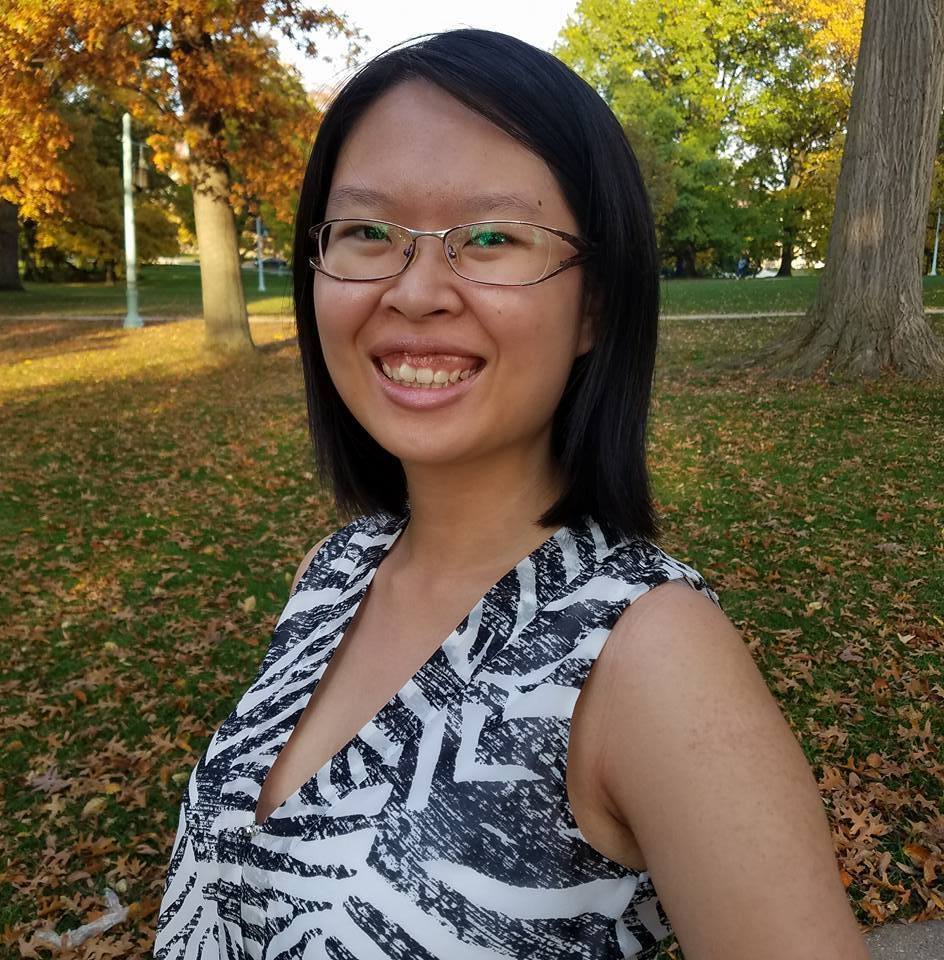
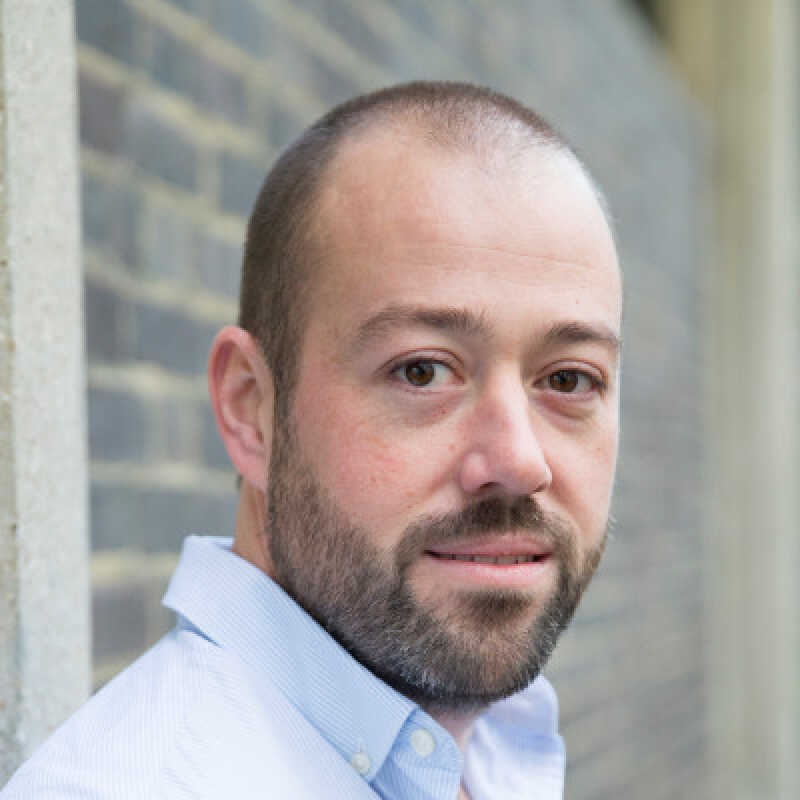
Inga Kristina Trauthig is a dual-affiliation academic serving as a Research Professor at Florida International University’s Jack D. Gordon Institute for Public Policy and a Visiting Fellow at King’s College London’s Institute of Middle Eastern Studies (IMES). She holds a PhD in War Studies from King’s College London, focusing on Libya, and an MLitt in Middle East Security from the University of St Andrews. Her research spans terrorism, disinformation, emerging technologies, and Middle Eastern political dynamics, with particular expertise in Salafism and security sector analysis. She has authored over 80 peer-reviewed publications and policy-focused articles, including work in Conflict, Security & Development and Political Research Quarterly . Her consulting work addresses causes of war and insecurity for UN bodies, governments, NGOs, and private firms. She has provided oral evidence to the UK Parliament and appeared on platforms like BBC’s Digital Human and Lawfare Blog . Trauthig convenes King’s MENA Research Group within IMES and has held student representation roles across faculty levels. Her research highlights include analyzing generative AI’s political risks, disinformation strategies in MENA, and the role of messaging apps in authoritarian governance.
Emily Chiang is a researcher at Aston University’s Aston Institute for Forensic Linguistics , part of the Communication and Culture faculty. She holds a PhD (2019) and MA (2016) from Aston University, focusing on rhetorical move analysis in forensic contexts, and a BA from Oxford Brookes University (2009). Her work examines linguistic expressions of identity in online criminal spaces, including dark web communities and self-styled ‘paedophile-hunting’ groups. She employs tools like speech act theory to inform law enforcement strategies, with a focus on language variation over time. Education: PhD: Rhetorical Moves and Identity Performance in Online Child Sexual Abuse Interactions (Aston University, 2019) MA: Chatroom Groomers as Discourse Communities (Aston University, 2016) BA: Oxford Brookes University (2009) Research Interests: Chiang’s research bridges forensic linguistics and criminology. She analyzes how offenders and vigilante groups construct identity digitally, including dark web criminal communities, paedophile-hunting groups, and linguistic shifts in offender interactions. Her work aims to enhance undercover police practices through linguistic insights. Recent Trends in Publications: Her recent work emphasizes dark web offender identity dynamics, linguistic strategies in membership requests, and forensic applications of language stability analysis. She also critiques discourses in the seduction industry and vigilante group rhetoric. Awards and Grants: None explicitly listed. Labs/Teams: Active within the Aston Institute for Forensic Linguistics. Collaborations include researchers on child sexual abuse discourse and digital forensic analysis.
Dr Wasim Ahmad is a Lecturer in Marketing at the Department of Marketing, Lancaster University Management School (LUMS), having joined the institution in January 2024. His prior academic appointments include Monash University, Florida State University, Teesside University, and Fujian University of Technology, where he conducted research, taught undergraduate/postgraduate modules, and led curriculum development. Education: Ph.D. in Marketing, University of International Business and Economics PostDoc, Florida State University Research Interests: Dr Ahmad investigates consumer behaviour with emphasis on negative emotions (brand hate, betrayal) and extreme responses to brands across cultural contexts. His work spans sustainability-oriented innovation in B2B firms, eco-brand strategy, and cross-cultural CSR implementation—particularly during crises like the pandemic. He employs quantitative methodologies including experimental designs and meta-analysis, frequently examining digital marketing phenomena such as virtual influencers, travel apps, and dark patterns in online interfaces. Publication Trends: His 2023-2025 output reveals concentrated research on brand hate consequences in B2B relationships, sustainability innovation linked to triple-bottom-line performance, and cross-cultural digital behaviour (e.g., social media addiction, travel app usage). Key journals include Journal of Business Research , Industrial Marketing Management , and Annals of Tourism Research , demonstrating interdisciplinary reach across marketing, sustainability, and tourism. Scientific Awards: No specific awards, prizes, or fellowships mentioned in source materials Advising and Grants: Dr Ahmad actively supervises PhD candidates in green marketing topics (product sustainability, eco-brand orientation) using quantitative approaches. He teaches core modules including International Marketing (MKTG101), Strategic Marketing (MKTG301), and Marketing Research (MKTG212). No grant funding details were provided in the directory. Labs and Teams: No dedicated research labs or teams specified in current affiliation Collaborative work evident in B2B sustainability studies with international co-authors
Babak Akhgar serves as Professor of Informatics and Director of CENTRIC (Centre of Excellence in Terrorism, Resilience, Intelligence and Organised Crime Research) at Sheffield Hallam University's College of Business, Technology and Engineering, with additional affiliation to the Culture and Creativity Research Institute. Recognized as a Fellow of the British Computer Society (FBCS), he maintains active leadership in security informatics research and education. His academic foundation includes a Software Engineering degree from Sheffield Hallam University, complemented by a Master's degree with distinction in Information Systems in Management and a PhD in Information Systems. This academic trajectory followed substantial industry experience as a Strategy Analyst and Methodology Director for multiple organizations. Professor Akhgar's research program bridges theoretical knowledge management with practical security applications, focusing on cyber security, counter-terrorism, intelligence frameworks, and big data analytics for national security. His scholarly output demonstrates consistent evolution from foundational knowledge management systems toward contemporary security challenges including cryptocurrency tracing, AI accountability in law enforcement, and smart city security frameworks. Recent work shows particular emphasis on ethical considerations, citizen acceptance of security technologies, and practical implementation of security solutions. Fellow of the British Computer Society (FBCS) Co-editor of influential security publications including 'Intelligence Management: Knowledge Driven Frameworks for Combating Terrorism and Organised Crime' Member of editorial boards for three international journals Chair and program committee member for numerous international security conferences As a doctoral supervisor, Professor Akhgar has guided research on cyber situational awareness, digital music ontology, and e-government services. His leadership extends to major EU-funded security initiatives including the MIICT project for migrant integration and development of the AP4AI accountability framework for artificial intelligence in security contexts. Through CENTRIC, he directs a research ecosystem that connects academic inquiry with real-world security challenges while addressing ethical, legal, and societal implications of security technologies.
Professor Scott Palmer is a distinguished academic at the University of Leeds, serving as Professor of Light and Performance within the School of Performance and Cultural Industries (Faculty of Arts, Humanities and Cultures). With over 30 years of teaching and management experience in Higher Education, he was a founder member of the School in 2001 and has held numerous senior management roles including Interim Head of School, Director of Student Education (2019-2022), Director of Enterprise and Knowledge Transfer, and Programme Manager for BA (Hons) Performance Design for over a decade. In 2017-18, he was appointed to an Excellence and Innovation Fellowship at the Leeds Institute for Teaching Excellence & Innovation. PhD (Leeds) - Light, Scenography and the Choreography of Space Cert. Education (Manchester) BA Hons. Drama (Wales) Professor Palmer is a leading international advocate for scenography as an intellectual discipline. His research focuses on light, darkness and atmosphere in performance, designing for audience experience, and since 2017, the field of XR (Extended Reality). His influential monograph Light: Readings in Theatre Practice (Palgrave Macmillan, 2013) significantly contributed to establishing scenography as a scholarly field, exploring how light has influenced staging practices throughout history. He has co-edited major works including Scenography Expanded (Bloomsbury 2017) and the groundbreaking Contemporary Performance Lighting (2023), the first critical anthology focused specifically on performance lighting. His recent publications reveal evolving research trends from historical analyses of light in theatre to contemporary explorations of XR, immersive environments, and audience experience. Keywords across his work consistently emphasize scenography, audience experience, light design, and the integration of digital technologies in performance. His sub-field specializations span historical lighting techniques, immersive theatre practices, site-specific performance, 360-degree environments, and the theoretical frameworks connecting technological innovation with theatrical expression. Excellence and Innovation Fellowship at the Leeds Institute for Teaching Excellence & Innovation (2017-18) Research impact highlighted by AHRC as an exemplar case study Contributions to BBC Radio 3's Illuminating the Stage (broadcast December 25, 2017) Professor Palmer has supervised numerous PhD candidates and led collaborative student projects resulting in public performances including Pandora's Box (2009), Dream/Play (2010), Just Before Dawn (2011), Into the Dark (2012), Blood Wedding (2013), The Dreaming (2015), The Waiting Room (2017), and Within This House (2018). His research has been supported by significant grants including the AHRC-funded Projecting Performance (2006-08), UKRI-funded Surround Stories (XR Stories), and AHRC-funded Bridging the Gaps exploring Mixed Reality Performance of Chinese Opera. He plays an active role in international scholarly communities as co-convenor of the IFTR Scenography Working Group (2013-16), inaugural member of the TaPRA Scenography Working Group, and contributor to OISTAT Education and History and Theory Commissions. Professor Palmer is a member of the PLACE, Practice as Research, and Participation Research Groups at Leeds, and was co-instigator of the Leeds-based Performing Light Network. His SignalSpace web resource, developed with colleague Maria Kapsali, explores digital creativity and mobile phone applications in performance contexts. He regularly presents research outcomes at international conferences including IFTR, TaPRA, ICIDS, and ZipScene, demonstrating his commitment to advancing both theoretical understanding and practical applications of performance design.
Professor Alan Woodward is a renowned computer security expert at the University of Surrey, affiliated with the Surrey Centre for Cyber Security and Computer Science Research Centre. His career spans academia, government service, and private sector leadership, including pivotal roles in IT businesses like Charteris plc. He holds fellowships and chartered status across multiple prestigious institutions and actively advises governmental bodies such as Europol. Education: Undergraduate studies in Physics & Astronomy Postgraduate research in adaptive filtering and signal recovery at the University of Southampton's Institute of Sound and Vibration Research Research Focus: Woodward's interdisciplinary work bridges cybersecurity, digital forensics, and signal processing. His expertise includes cryptographic methods, steganography for covert communications, digital watermarking for data protection, and novel approaches to forensic computing. Current projects explore quantum computing threats and real-world cybercrime mitigation. Publication Trends: His recent articles demonstrate a strong focus on emerging cyber threats across societal and technical domains. Key themes include quantum cryptography vulnerabilities, organized cybercrime patterns, critical infrastructure risks, mobile/cloud security challenges, and public cybersecurity education with practical guidance for digital safety. Honors & Credentials: Fellow: Institute of Physics, British Computer Society, Royal Statistical Society Chartered Status: Engineer (CEng), IT Practitioner (CITP), Physicist (CPhys) Eur Ing (European Engineer) Leadership & Outreach: Beyond academic research, Woodward directs technology enterprises and leads public STEM engagement. He frequently contributes to international media (BBC, The Times, The Telegraph) as a cybersecurity commentator. His Surrey research teams collaborate with law enforcement and industry partners on threat intelligence initiatives.
Dr. Yi Ting Chua is a Research Fellow at the University of Cambridge's Department of Computer Science and Technology, affiliated with the Cambridge Cybercrime Centre. She holds a PhD in Criminal Justice from Michigan State University (2019), with prior collaborative work under Dr. T. Holt and Dr. O. Smirnova. Current research bridges computer science, criminology, and gender studies in cybercrime contexts Key methodological approach: Social network analysis of online communities Her article trends ( 2013-2020 ) show interdisciplinary focus on: Cybercrime market economics (price analysis, revenue estimation) Radicalization dynamics in far-right forums Gender roles in online criminal subcultures Framework development for unintended cybersecurity consequences Notable scientific contributions include: 2020 Best Paper (STAST) for cybersecurity framework research 2019 Best Paper (APWG eCrime) for unintended harms analysis Active in stakeholder engagement projects related to: Intimate partner abuse victim support Far-right forum monitoring Cybercrime dataset standardization
Dr. Sownak Bose is an Associate Professor (Research) at Durham University's Department of Physics and holds a UKRI Future Leaders Fellowship. His work focuses on computational cosmology, galaxy formation, and dark matter studies through large-scale simulations. Research Interests Cosmological simulations (MillenniumTNG, IllustrisTNG, AbacusSummit) Dark matter properties and modified gravity models Galaxy clustering and large-scale structure AGN feedback and baryonic effects His recent publications explore topics including: Accreted stellar halos in low-mass galaxies Impact of massive neutrinos on cosmic structure Multiwavelength mass accretion rate estimation Machine learning-based galaxy-halo connection Scientific Awards: UKRI Future Leaders Fellowship He supervises postgraduate research students and collaborates on major projects like DESI, eROSITA, and H3 survey. His work bridges theoretical models with observational data to constrain cosmological parameters.
Professor Martin Paul Eve holds the position of Professor of Literature, Technology & Publishing at Birkbeck, University of London, where he also serves as Strategic Lead for Digital Education and Disability Lead for English, Theatre, and Creative Writing. He previously lectured at the University of Lincoln and the University of Sussex, completing his PhD there in 2013. Education: PhD (University of Sussex, 2013), MA (Queen Mary, 2009), BA (Queen Mary, 2008) Visiting roles: Visiting Professor of Digital Humanities at Sheffield Hallam University His research focuses on contemporary American fiction (Pynchon, DeLillo, Egan), technology's role in scholarly publishing, and open access policies. He has pioneered initiatives like the Open Library of Humanities and advised numerous organizations including the UK Parliament and Jisc. Key contributions include critical works on disability advocacy, digital preservation, and publishing ethics. Recent publications analyze AI's impact on academia, shadow libraries, and sustainable funding models for open access. His work bridges literary criticism and technical infrastructure, emphasizing equity and accessibility. Awards: Philip Leverhulme Prize (2019), KU Leuven Medal (2018), Shaw Trust Disability Power 100 (2021) Grants and leadership: Over £2M secured for Open Access initiatives; steering roles in OAPEN-UK, SCONUL, and the Open Knowledge Foundation. Active in policy-making through House of Commons evidence submissions and global advisory boards. Technical leadership at MESH Research (Knowledge Commons) drives infrastructural innovation. Collaborative projects include the COPIM collective and Humanities Book Infrastructure advisory work.
Professor David Clarke is a faculty member at Cardiff University , serving as Head of the School of Modern Languages and Professor of Modern German Studies. His research focuses on the politics of memory in Germany and Europe, particularly addressing victimhood , cultural diplomacy , and heritage's role in soft power . Clarke contributes to teaching in the MA in Global Cultures program and supervises PhD projects related to memory studies, memorials, and war museums. He has participated in significant research initiatives, including the Horizon 2020 UNREST project and an ongoing MSCA project on disputed territories. His recent publications explore topics such as agonistic memory , digital diasporic practices , and post-witness tourism in documentary film. Clarke has also co-edited works on disaster rituals and European war museum cultures. ClarkeD4@cardiff.ac.uk
Sotiria Fotopoulou is a Lecturer in the School of Physics at the University of Bristol. Her research focuses on astrophysics, particularly in active galactic nuclei (AGN), quasars, galaxy clusters, and cosmic web structure. She contributes to the Euclid mission's scientific objectives through studies of photometric redshifts, galaxy evolution, and environmental effects. Current Project: Principal Investigator for 'Co-evolution or co-existence? Growth of supermassive black holes in next generation surveys' (2023-2024) Research Themes: Quasar census, slitless infrared spectroscopy for high-redshift objects, cosmic web reconstruction, intracluster light analysis, and gravitational lensing detection. Her work integrates Euclid data with machine learning techniques for galaxy morphology and photometric studies. Award: Recipient of Undergraduate Bursary Grant (2020)
Dr. Rebecca Smith is a Senior Lecturer in Psychology at the School of Human Sciences, University of Greenwich. Her academic career spans over 15 years, with a focus on social psychology. She specializes in teaching and research related to ostracism, rape myth acceptance, and homeless stigmatization, while also contributing to gender equality studies. Her work bridges theoretical and applied research in human behavior. PhD (Psychology), University of Dundee MA (Psychology), University of Dundee Research Interests: Dr. Smith’s work explores the psychological impacts of social exclusion, the cultural and cognitive underpinnings of rape myth acceptance, and societal biases toward marginalized populations like the homeless. She integrates these themes with broader social psychology frameworks. Article Trends: Her recent publications span social psychology (e.g., ostracism, homeless stigma) and interdisciplinary topics like IVF outcomes, galaxy dynamics, and West Nile virus surveillance. This reflects a diverse collaboration network across medical, astrophysical, and public health domains. Advising: Dr. Smith supervises PhD and EdD students in social psychology and gender equality, fostering research in human behavior and societal structures. She previously served as Deputy Head of Department (2015-16) and TMC Link Tutor (2009-13).
Professor David Bacon is a leading academic in cosmology and astrophysics at the University of Portsmouth's Faculty of Technology, serving as Director of the Institute of Cosmology & Gravitation (ICG). His research focuses on cosmology at radio wavelengths, gravitational lensing, and theories of gravity, with significant contributions to dark matter and dark energy studies. Education : PhD in Natural Sciences from the University of Cambridge (2002) Appointments : PPARC/STFC Fellow (2002–2004), University of Edinburgh; Senior Research Fellow/RCUK Academic Fellow (2007), University of Portsmouth; Professor (2018–present) His work leverages data from major surveys like the Dark Energy Survey (DES), Atacama Cosmology Telescope (ACT), and Euclid mission, employing techniques such as weak lensing , galaxy clustering , and machine learning . Recent publications analyze dark energy constraints , galaxy cluster profiles , and cosmological parameter estimation using FRBs and supernovae. Scientific Awards : PPARC Research Fellowship (2002) STFC Advanced Fellowship (2004)
Jessica Sze Yin Ho is an Associate Professor and Senior Fellow of the Higher Education Academy at Heriot-Watt University , where she serves in the School of Social Sciences as Associate Head and Programme Director of MA (Hons) Marketing in the Department of Marketing and Operations . She is a prolific researcher in digital marketing, social media, and sustainable consumption, with over 20 publications and multiple international awards. PhD in Marketing (Multimedia University, Malaysia) MPhil in Management (Multimedia University, Malaysia) BBA in Marketing (Multimedia University, Malaysia) Research Interests span Digital Marketing , Social Media Strategy , E-commerce , Sustainable Consumer Behavior , and Service Quality , with a focus on technology adoption and higher education quality. Her recent work explores Live Streaming Commerce , TikTok’s role in Cultural Heritage Promotion , and the Dark Side of Celebrity Endorsements . Her 15 most recent publications (2025–2020) analyze audience engagement , privacy dynamics in virtual streaming , sentiment analysis , and augmented reality applications across sectors like museums, tourism, and finance. Awards include multiple Best Paper and Best Reviewer recognitions from global marketing conferences. Collaborations include industry-funded projects on talent management and services marketing . She also mentors colleagues toward Senior Fellow of AdvanceHE status and contributes to UN Sustainable Development Goals through research on sustainable consumption and education.
Dr. Caoilte Ó Ciardha is a Senior Lecturer in Forensic Psychology and Deputy Head of School at the University of Kent's School of Psychology. He serves as Head of Undergraduate Recruitment and Student Experience and is a member of the UG Outreach Team. Dr. Ó Ciardha is affiliated with the Centre of Research and Education in Forensic Psychology (CORE-FP) and holds editorial positions with journals including Sexual Abuse and Psychology, Crime & Law . He also serves on the research committee of the Association for the Treatment of Sexual Abusers (ATSA). Dr. Ó Ciardha obtained his PhD from Trinity College Dublin (Ireland) in 2010. His doctoral research examined the use of indirect/implicit cognitive measures in the assessment of individuals who had sexually offended. Following his PhD, he joined the University of Kent in 2011 as a postdoctoral research associate working on an ESRC funded project to develop a psychological treatment programme for adults who had engaged in deliberate firesetting. Dr. Ó Ciardha's research focuses on the aetiology of offending behaviour, as well as on the assessment and treatment of factors that are causally related to offending. His work primarily concerns sexual offending against children and adults and firesetting. His research draws on theory and methods across forensic psychology, social psychology, cognitive psychology and social cognition, employing approaches including reaction time measures, eye-movements, brain stimulation, questionnaires, and qualitative methods to understand criminogenic psychological factors such as problematic sexual interest, cognitive distortions, maladaptive coping, and the psychological consequences of childhood adversity. Analysis of Dr. Ó Ciardha's recent publications reveals a consistent focus on understanding sexual offending and firesetting through innovative assessment methods. His work frequently employs physiological measures like pupillometry to assess sexual interest, examines cognitive distortions in offenders, and evaluates treatment approaches. Recent work has expanded into areas including online communities (incel phenomenon), dark web analysis, and theory of mind deficits in offenders. His research demonstrates an interdisciplinary approach combining forensic, cognitive, and clinical psychology perspectives. Dr. Ó Ciardha serves as associate editor for the journals Sexual Abuse and Psychology, Crime & Law and reviews for over 20 other journals. He is a member of the research committee of the Association for the Treatment of Sexual Abusers (ATSA). His editorial work represents significant recognition of his expertise in the field of forensic psychology and sexual offending. Dr. Ó Ciardha actively supervises PhD students, with current research focusing on topics including childhood adversity and sexual behavior, implicit theories in sexual offending, theory of mind in child sexual abuse, and cognitive schemas in sexual assault cases. His grant history includes projects funded by the Police and Crime Commissioner for Cumbria (evaluating polygraph use for managing sexual offenders) and the National Organisation for the Treatment of Abusers (comparing indirect measures of sexual interest). These grants demonstrate his ability to secure external research funding for applied forensic psychology projects. Dr. Ó Ciardha leads research within the Centre of Research and Education in Forensic Psychology (CORE-FP) at the University of Kent. His lab employs diverse methodologies including reaction time measures, eye-tracking, pupillometry, and qualitative approaches to investigate criminogenic factors. His team collaborates with researchers internationally and works closely with practitioners in the field to ensure research has practical applications for assessment and treatment of offenders.