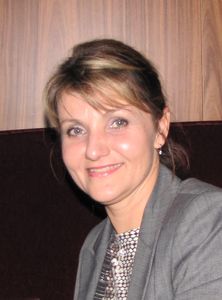
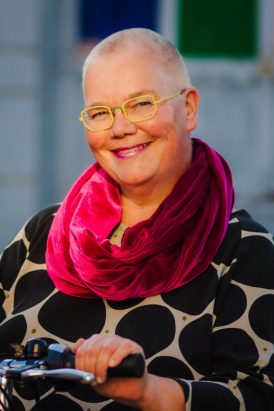
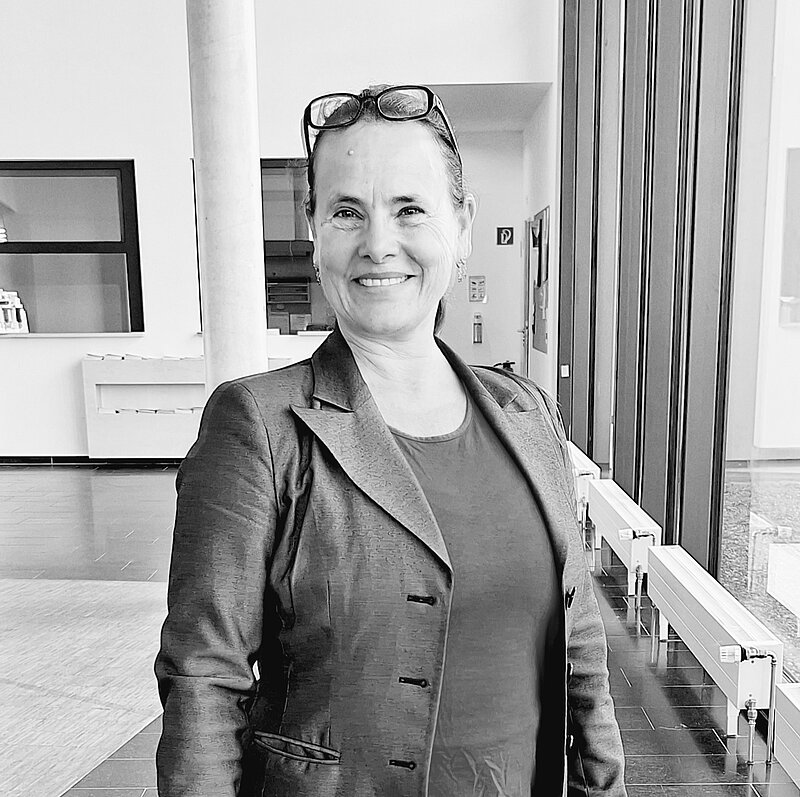
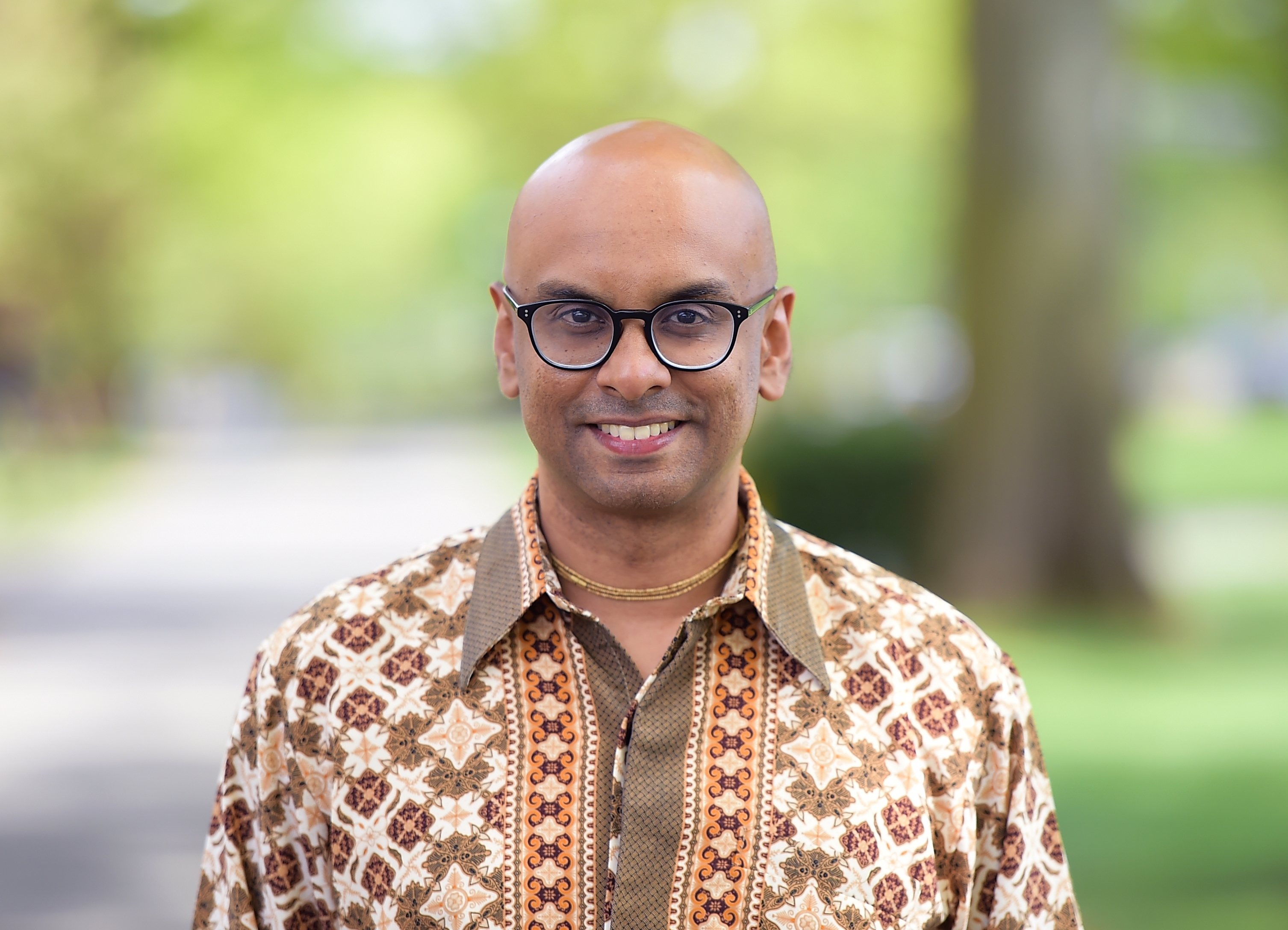
Assoc. Prof. Tatyana Yordanova is affiliated with the National Academy of Sports in Bulgaria, where she serves in the Faculty of Sports and Department of Technical and Ice Sports . She holds the academic rank of Associate Professor and has been leading the department since 2024. Education: Master's from State Central Institute of Physical Culture (1987); Doctorate in Sports Science (2019) Languages: English, Italian, Russian Her research focuses on technical elements in figure skating , speed-power abilities , balance stability , and judging systems . She has extensively studied jump mechanics and anthropometric factors in skaters. Her publications from 2018-2024 include studies on judging systems, jump techniques, and sports management. Key themes in her work involve training methodology, competition analytics, and biomechanics of skating. Since 2002, she has worked as an international figure skating judge, including at the Sochi 2014 Olympics . She chaired the Bulgarian Skating Federation (2011-2023) and participated in projects like Erasmus+ mobility (2022, 2024). Her pedagogical career includes roles as scientific assistant (1988), senior assistant (2006), and associate professor (2023).
Wendy Ju is an Associate Professor of Information Science at Cornell Tech, with appointments in the Cornell Ann S. Bowers College of Computing and Information Science, the Jacobs Technion-Cornell Institute, and the Technion-Israel Institute of Technology. Previously, she served as executive director of interaction design research at Stanford University's Center for Design Research and as an associate professor of interaction design at the California College of the Arts. Her work bridges human-computer interaction, design, and robotics with a focus on how interactive devices can communicate with people without interrupting them. PhD in Mechanical Engineering from Stanford University Master's degree in Media Arts and Sciences from MIT Professor Ju's research centers on implicit interactions, human-robot collaboration, and automotive interfaces. She investigates how people interact with automated systems in natural contexts, develops methods for early-stage prototyping of autonomous technologies, and examines the social implications of robotics in urban environments. Her work spans from theoretical frameworks to practical applications, with particular emphasis on designing systems that integrate seamlessly into human activities without demanding constant attention. Her recent publications reveal a strong trajectory toward understanding human-robot interaction in public urban spaces, with increasing focus on robot navigation in city streets, the social implications of autonomous vehicles, and the integration of generative AI in design processes. Her work consistently bridges theoretical HCI frameworks with practical applications in transportation, urban design, and everyday robotics. Inducted into the ACM SIGCHI Academy (2025) Multiple Honorable Mention Awards at ACM CHI and DIS conferences Best Paper Award at Multimodal Technologies and Interaction (2023) Best Student Paper Award at IEEE Intelligent Vehicles Symposium (2017) Best Demonstration Award at HRI (2017) Professor Ju actively mentors numerous PhD and master's students, many of whom have become leading researchers in HCI and robotics. Her research has been supported by significant grants from NSF and industry partners, enabling extensive field studies of human-robot interaction in real-world settings. She has pioneered methodologies for studying autonomous vehicle interactions through both simulated and naturalistic driving environments. Her work with the Jacobs Technion-Cornell Institute supports interdisciplinary research at the intersection of computing, design, and urban technology. She has established research partnerships with transportation authorities, automotive companies, and urban planning organizations to study how emerging technologies can enhance urban mobility while respecting human needs and social contexts.
Blair Hoxby is Professor of English at Stanford University's School of Humanities and Sciences, where he has taught since 2007. Previously, he served as Associate Professor of History and Literature at Harvard University (2005-2007) and Associate Professor of English at Yale University (2003-2005), where he began as Assistant Professor in 1998. His academic journey includes a Ph.D. in English from Yale University (1998), an M.Phil. in English Studies from the University of Oxford (1990), and an A.B. in English and American Literature and Language from Harvard University (1988). Hoxby's research focuses on literature and culture from 1500 to 1800, with particular emphasis on tragedy theory, Milton studies, and the intersection of literature and economics. His notable works include What Was Tragedy? Theory and the Early Modern Canon (2015) and Mammon's Music: Literature and Economics in the Age of Milton (2002). He argues that early modern tragedy differed significantly from contemporary understandings of the genre, with passions rather than deeds or character serving as the keys to early modern tragic performance. Hoxby's recent scholarly output reveals a consistent engagement with early modern theatrical practices, particularly tragedy and opera. His work demonstrates sophisticated interdisciplinary approaches, connecting literary analysis with historical context, economic theory, and performance studies. He has made significant contributions to understanding how commercial culture shaped literary production and how theatrical conventions evolved across national boundaries in Europe. Scientific Awards and Honors Internal Fellow, Stanford Humanities Center (2009-2010) Morse Fellowship, Juilliard School (2001-2002) Samuel and Ronnie Heyman Prize, Yale University (2001) John Addison Porter Prize, Yale University (1999) Rhodes Scholarship, University of Oxford (1988-1990) Hoxby has supervised numerous doctoral students and served in various administrative roles at Stanford, including Director of Undergraduate Studies (2011-2014) and Director of Graduate Admissions (2008-2011). His teaching portfolio includes courses on English poetry from the Renaissance to Romanticism, tragedy and tragic theory from Aristotle to the present, theater history, and performance theory. Currently, he teaches courses such as Court Theater from Shakespeare to Mozart and Introduction to English II: From Milton to the Romantics . Hoxby maintains active scholarly engagement through committee memberships, including the Executive Committee of the Milton Society of America (2009-2013) and service as a referee for major academic presses including Oxford University Press and the University of Pennsylvania Press.
Professor Beth Williamson is a leading scholar of medieval culture, holding dual roles as Professor of Medieval Culture and Chair in the History of Art at the University of Bristol's Department of History of Art (Historical Studies), and as Academic Director (Research Impact & Translation Partnerships) within the Faculty of Social Sciences and Law. She earned her B.A. from Oxford University (Oxon), an M.A., and a Ph.D. from the University of London (Lond.). Her research focuses on visual, material, and aural dimensions of medieval religious practice, exploring how sensory experiences shaped devotional life. Key themes include sacred imagery (e.g., the Virgin Lactans and Madonna of Humility), liturgical spaces, and the intersection of art with music, time, and political power. Recent projects include studies of Westminster Abbey’s royal patronage and collaborations in interdisciplinary historical research. Her publications span over three decades, addressing topics from Italian Renaissance altarpieces to Irish medieval sculpture, with a strong emphasis on material culture and devotional practices. Despite her prolific output, no formal awards are listed, though her academic leadership roles reflect her scholarly impact. As a mentor, her supervisory activities are noted in her profile but lack specific student names. Her work bridges academic and public spheres, particularly through her role in translating research into societal impact initiatives. She is affiliated with the University of Bristol’s Senate House and contributes to institutional leadership.
Petra Kuppers is a Professor at the University of Michigan, specializing in disability culture, performance art, and ecocriticism. She holds a PhD from Falmouth College of Art/Plymouth University (1999) and is affiliated with multiple departments, including English, Drama, and Gender Studies. Her work bridges academic research with community-based performance, emphasizing socially just futures through art. Key roles include Artistic Director of The Olimpias, co-founder of Turtle Disco, and a Just Tech Fellow (2024–2026) for 'Planting Disabled Futures,' a VR project blending disability culture and environmental ethics. She teaches graduate courses on disability studies and creative writing, advising students through a monthly 'Research Coven.' Kuppers has authored influential books like *Disability and Contemporary Performance* (2003) and *Eco Soma* (2022), recognized with awards such as the Guggenheim Fellowship and ATHE Book Prize. Her poetry collections, including *Gut Botany* (2020) and *Diver Beneath the Street* (2024), explore intersections of disability, ecology, and true crime. Her research spans crip ecologies, archival activism, and somatic methods, with recent projects including *Crip/Mad Archive Dances* and participatory events like 'Crip Drifts.' She emphasizes accessibility in performance, digital art, and public engagement, often collaborating with Indigenous communities and global disability collectives.
Dr. Simon A. Morrison is a Senior Lecturer in the Division of Communication, Screen & Performance within the Faculty of Arts, Humanities and Social Sciences at the University of Chester. He serves as Programme Leader for the Music Journalism degree, which he helped design, build and deliver from its first cohort in 2014. With 25 years of experience as a writer, broadcaster, and academic, Morrison brings extensive industry knowledge to his teaching and research, having worked as a music journalist reporting from locations worldwide including Beijing, Brazil, Moscow, and Marrakech. Dr. Morrison holds a PhD from the University of Leeds (completed 2018), an MA from the University of Manchester (1995-1997), and a BA Hons from the University of Manchester (1989-1992). Prior to his position at Chester, he worked as an Associate Lecturer at Manchester Metropolitan University (2012-2014) and as a Visiting Lecturer at Leeds University (2011-2013). His academic journey follows a substantial career in media where he presented TV for Rapture TV, hosted radio shows in Ibiza, produced and presented for Kiss Radio, and appeared on BBC Breakfast and BBC 5 Live. Dr. Morrison's research centers on the intersection of words and music , with particular focus on Popular Music , Musico-Literary Intermediality , and Electronic Dance Music Culture . His work explores how music subcultures, particularly rave and dance music scenes, are represented in literature and journalism. He examines the connections between different countercultural movements, notably drawing parallels between the Beat Generation writers and contemporary 'Chemical Generation' authors who write about club culture. His research also investigates the relationship between music journalism and subcultural movements across different historical periods. His recent publications reveal a clear trajectory connecting historical dance music developments across continents and eras. Morrison's work traces the evolution of electronic dance music from its American roots in Chicago and Detroit through its transatlantic journey to Europe and back again, examining how cultural exchange shaped musical innovation. His analyses of Pink Floyd demonstrate how rock bands interact with media landscapes, while his investigations of music journalism document the changing nature of music criticism in digital eras. The recurring theme across his scholarship is the examination of how subcultural experiences are translated into written form, whether through journalism, fiction, or academic analysis. Dr. Morrison actively supervises undergraduate dissertation projects and Negotiated Study production projects across all three years of undergraduate study. He has successfully supervised an MRes project to completion and examined PhDs (including one internal and two external, one being an Australian PhD by Artefact & Exegesis). He has served as an External Examiner for Music Journalism programs at Southampton Solent University (2016-2019) and BIMM London, Birmingham and Manchester (2016-2020). His teaching spans modules including Introduction to Journalism, Live Journalism, Dancing About Architecture: Popular Music Media, Histories and Technologies, The Cultural Politics of Music Journalism, The Politics of Social Media, Magazine Publishing and Music PR and Promotional Writing.
Emily S. Cross is Professor at the University of Glasgow's School of Psychology & Neuroscience, where she co-directs the Social Brain in Action Lab (SoBA) and leads the ERC Starting Grant 'Social Robots' project. She completed her PhD at Dartmouth College and held positions at Bangor University, Radboud University, and the University of Western Australia before joining Glasgow. Her research explores: Experience-dependent plasticity through dance and motor learning Social cognition in human-robot interaction Emotional processing during action observation Aesthetic perception of movement Cross-cultural differences in technology acceptance Professor Cross uses neuroimaging (fMRI), neurostimulation (TMS, tDCS), and behavioral methods to study how we perceive and learn from human and artificial agents. Her work has been published in Trends in Cognitive Sciences, Journal of Neuroscience, and Philosophical Transactions of the Royal Society. She currently supervises projects on robot-assisted health interventions and develops VR paradigms to study social cognition.
Max Planck Institute for Empirical AestheticsGermany
Professor Emily S. Cross is a cognitive and social neuroscientist holding dual appointments at the University of Glasgow's School of Psychology & Neuroscience (UK) and Western Sydney University's MARCS Institute (Australia). She directs the Social Brain in Action Laboratory (SoBA), specializing in how embodied experiences shape social perception. Cross earned a BA in psychology and dance from Pomona College, MSc from University of Otago as a Fulbright Fellow, and PhD in cognitive neuroscience from Dartmouth College, followed by postdoctoral training at University of Nottingham and Max Planck Institute. Her research explores experience-dependent plasticity through dance, robotics, and neuroimaging techniques (fMRI, TMS), focusing on four key areas: neural signatures of embodied expertise, neuroaesthetics, visual learning across lifespan, and social engagement with robots. This interdisciplinary work bridges neuroscience, performing arts, and robotics. Cross's research shows strong focus on human-robot interaction dynamics, cultural perceptions of robotics, and the neural correlates of aesthetic experiences. Recent work investigates how social experience shapes human-robot interaction, cross-cultural differences in robot acceptance, and computational approaches to movement analysis. Publications consistently demonstrate methodological innovation through VR, economic games, and large-scale motion capture libraries. Honors & Awards: Jacob Brownowski Award (British Science Association, 2017) Philip Leverhulme Prize in Psychology (2018) World's 50 Most Renowned Women in Robotics (2020) Elected member: Young Academy of Europe Elected member: Royal Society of Edinburgh's Young Academy of Scotland Her ERC Starting Grant funds groundbreaking work on human-robot interaction. Cross leads the Social Brain in Action Lab with focus on mentoring next-generation scientists and research ethics training. The lab employs neuroimaging, training paradigms, and diverse methodologies to study action observation across dance, music, and robotics domains.
Florian 'Floyd' Mueller is a Professor of Future Interfaces at Monash University in Melbourne, Australia, where he directs the award-winning Exertion Games Lab within the Department of Human-Centred Computing (ranked among the top 20 HCI departments globally). Previously, he held positions at RMIT University, Stanford, University of Melbourne, Microsoft Research, MIT Media Lab, Fuji-Xerox Palo Alto Labs, Xerox Parc, and Australia's CSIRO. Mueller is a member of the prestigious ACM SIGCHI Academy, an honorary group recognizing leaders who have made substantial contributions to Human-Computer Interaction (HCI). Professor Mueller's research focuses on the intersections between technology, the human body, and play. He originated the concept of "Exertion Interface," arguing that we should not just design "easy-to-use" interactions when "hard-to-use" interactions can also be beneficial. His work spans movement-based interactions, whole-body interfaces, uncomfortable interactions, somaesthetics, and exertion games. Mueller's research methodology often employs research through design, design ethnography, and autoethnography to explore these novel interaction paradigms, incorporating mixed-reality, augmented reality, virtual reality, electronic muscle stimulation, biosensors, wearables, and drones. His recent publications demonstrate a continued focus on bodily interactions and human-computer integration, with particular emphasis on emerging subfields like WaterHCI and SportsHCI, brain-computer interfaces, and gustosonic (taste and sound) experiences. Mueller's work has evolved from foundational exertion game concepts to more sophisticated explorations of human-computer integration where technology becomes seamlessly woven into the fabric of human experience. Professor Mueller's contributions have been widely recognized with numerous awards including: Inaugural honouree of the Australian Design Centre's Design Honours Tall Poppy award for "intellectual and scientific excellence" 10 "Best Paper Honorable Mentions" (top 5%) from premier HCI conferences 2 "Best Paper" awards (top 1%) at CHI PLAY and CHI Shortlisted for the European Innovation Games Award (alongside Nintendo's WiiFit) Nokia Mindtrek Ubimedia Award Mueller has successfully secured some of Australia's largest and most competitive research grants, achieving a remarkable 14% success rate on Australian Research Council Discovery Project applications. He has served as General co-Chair for CHI PLAY'18 and CHI'20, becoming the first Australian-based researcher to spearhead HCI's highest-ranked publication outlet, and is currently General co-Chair for CHI'24. He is Associate Editor for tier A journals including Elsevier's IJHCS (International Journal of Human-Computer Studies) and ACM's IMWUT (Interactive, Mobile, Wearable and Ubiquitous Technologies). As director of the Exertion Games Lab, Mueller leads a research team whose innovations have been experienced by over 20,000 users across 3 continents and featured on the BBC, ABC, Discovery Science Channel, and Wired magazine. The lab has produced groundbreaking work in bodily interfaces, co-founding the CHI PLAY conference series and establishing new research directions in SportsHCI and WaterHCI through recent "Grand Challenges" papers. Mueller's lab continues to push boundaries with projects exploring brain-to-brain interfaces, lucid dreaming induction, and novel gustosonic experiences.
Ruxandra Paul is a faculty member in the Department of Political Science at Amherst College, where they teach courses ranging from introductory to advanced levels including POSC 470: International Migrations and Politics and POSC 436: European Democracy. Their academic work bridges political science, migration studies, and European Union politics, with a particular focus on how mobility transforms national politics and international relations. Education: PhD (Government), Harvard University A.M. (Government), Harvard University B.A., summa cum laude, PBK (Political Science - International Relations; French), Williams College Paul's research examines how migrations transform national politics and international relations, with particular attention to European citizenship enabling free movement across borders. Their work explores political developments in a world where people's experiential space transcends national territories, especially focusing on Central and Eastern Europe. Current research projects include "Citizens of the Market: Free Movement and Political Change in Central and Eastern Europe" (under contract at Oxford University Press) and studies on pandemic politics, cyberpolitics, and aging/ageism. Paul's publications demonstrate consistent scholarly output in migration politics, with a concentration on European contexts. Their work spans theoretical contributions on transnational citizenship and practical analyses of migration crises, showing an evolving focus from foundational migration studies toward contemporary challenges including pandemic politics and digital governance. Scientific Awards and Affiliations: Minda de Gunzburg Center for European Studies, Harvard University - Visiting Scholar and Local Affiliate Harvard Academy for International and Area Studies Chateaubriand Fellowship of the French Government Weatherhead Center for International Affairs research grant Krupp Foundation research grant Certificate of Excellence in Teaching, Derek Bok Center for Teaching and Learning Paul has received multiple competitive research grants and teaching awards, demonstrating excellence in both research and pedagogy. Their teaching portfolio includes innovative courses like POSC 109: Pandemic Politics: Democracy versus Disease and POSC 239: Acceptable Prejudice: Age, Aging, Ageism, reflecting their commitment to connecting academic research with contemporary issues. Outside of formal academic work, Paul teaches fitness classes (Barre and Barre Cardio) at the Amherst Gym and maintains diverse interests including music, dance, art, and long-distance running.
Jocelyn Alexander is Professor of Commonwealth Studies and Head of Department at the University of Oxford's Department of International Development (ODID). She teaches primarily on the MPhil in Development Studies and the DPhil in International Development, and serves on the editorial board of the Journal of Southern African Studies and the publications committee of the International Africa Institute. Her research interests include: Southern African social and political history Liberation movements and their legacies Violence and memory Political imprisonment Rural politics and state-making Political & International Dimensions of Development Sub-Saharan Africa Professor Alexander is currently working on a Leverhulme-funded collaborative research project titled 'Global Soldiers in the Cold War: Making southern Africa's liberation armies', and writing a history of political imprisonment in Zimbabwe. Her research uses qualitative methodologies, notably oral history and archival research, and she is interested in cross-disciplinary approaches combining history, anthropology, politics, and literature. Her recent publications demonstrate a strong focus on transnational histories of Southern African liberation movements, political imprisonment in Zimbabwe, and the legacies of violence in post-colonial states. She has made significant contributions to understanding the connections between liberation movements, the Cold War context, and the formation of post-colonial states in Southern Africa. Scientific awards: Leverhulme grant for project on Cold War-era 'global soldiers' (2019) Professor Alexander has supervised numerous doctoral students working on topics related to Southern African politics, history, and development. She has also co-authored important works including 'Violence and Memory: One Hundred Years in the 'Dark Forests' of Matabeleland' (2000) and authored 'The Unsettled Land: The Politics of Land and State-making in Zimbabwe, 1893-2003' (2006). She has taught at Sussex and Bristol Universities and has been a Research Associate at the University of Zimbabwe, bringing extensive regional experience to her academic work.
Prof. Dr. Sabine C. Koch is a Professor of Dance and Movement Therapy at Alanus Hochschule Alfter and Head of the Research Institute for Creative Arts Therapies (RIArT). She holds a habilitation and multiple professorships, including at SRH Hochschule Heidelberg (2012–present) and has led the Alanus Research Institute since 2015. Her work focuses on embodiment theory, applying it to creative arts therapies such as dance, theater, and art to address mental and physical health challenges. Her education includes a Diplom in Psychology from Heidelberg University (1999) and a PhD (2003) and Habilitation (2009) from Heidelberg. She has led major projects like the BMBF-funded 'Körpersprache' (2009–2011), the EU TESIS project (2011–2015), and the Heidelberg Center for Motion Research (2016–2022). Awards include ADTA Research Awards (2007, 2013, 2014, 2023) and a Fulbright Scholarship (1996). Research interests span embodiment theory, enaction, systems theory, and their application in therapies. Her work emphasizes the role of movement in mental health, including studies on autism, schizophrenia, oncology, and refugee trauma. She collaborates internationally, including with institutions in Chile, Slovenia, and France. Her recent articles explore drama therapy for flood-affected children, dance therapy for dementia patients, and embodied approaches to experience studies. Grants and networks include the DFG-funded EmbodiNet (2024–2026) and a PhD program in Creative Arts Therapies with Witten/Herdecke University. Koch’s labs and teams focus on interdisciplinary motion research and clinical applications of movement therapies. She has advised numerous studies on therapeutic efficacy and co-authored over 200 peer-reviewed articles and books, including 'The Routledge International Handbook of Embodied Perspectives in Psychotherapy' (2019).
Professor Stephen Broad is a musicologist and educator serving as Director of Research and Knowledge Exchange at the Royal Conservatoire of Scotland. He holds a DPhil from the University of Oxford and has extensive experience in historical musicology, music education, and policy development. His research focuses on Olivier Messiaen, 1930s French music culture, and music practice in Scotland. Broad has authored/co-authored influential reports like What’s Going On? , which informed the Scottish Youth Music Initiative, and chairs the European Platform for Artistic Research in Music (EPARM). Education: DPhil in Historical Musicology, University of Oxford (2001) MA in Music and Physics, University of Glasgow (1997) Research Interests: Historical Musicology: Messiaen’s early career, French musical traditions, and music historiography Music Education: Pedagogy in diverse contexts, policy development, and workforce training Practice-Based Research: Philosophical frameworks and interdisciplinary methodologies Awards & Roles: External Examiner at Royal Academy of Music, Royal College of Music, and others Editorial boards for Music Education Research and Practice-Based Research Journal Recipient of grants including the Scottish Government’s £1m Musical Instrument Fund Advising & Grants: Supervised over 10 doctoral projects in musicology, performance, and education Contributed to policy initiatives like Creative Scotland’s music development programs Labs/Teams: Leads the Sciences, Humanities and Arts Research Exchange (SHARE) and chairs EPARM, fostering international collaboration in artistic research.
Paul Dosh is an Associate Professor of Political Science at Macalester College, where he has served since 2004. He previously taught at Carleton College and the University of California, Berkeley, and held roles as Director of Latin American Studies and Chair of the Political Science department. A Fulbright-Hays Scholar, his expertise spans Latin American politics, urban social movements, and comparative politics. He authored Demading the Land: Urban Popular Movements in Peru and Ecuador and contributes to journals like the Journal of Latin American Studies and NACLA Report on the Americas . Dr. Dosh holds a BA from Carleton College and a PhD from UC Berkeley. His teaching emphasizes Montessori-inspired methods, prioritizing self-teaching and civic engagement. Courses include Urban Latinx Power in U.S. Cities, Latin American Politics, and the Chuck Green Civic Engagement Fellowship. His research and activism focus on social justice, including co-founding Building Dignity in Lima, Peru, and advocating prison abolition. He has worked in 10 Latin American countries and received teaching awards for innovative pedagogy. Beyond academia, he and his wife Andrea enjoy salsa dancing. Recent work explores urban governance, political dynamics in Lima, and gender roles in social movements. His writing analyzes media influence on elections and resource conflicts in Bolivia and Ecuador. Awards: Fulbright-Hays Scholar Multiple Teaching Awards Advising & Grants: Advised numerous student research projects through the Senior Research Seminar. Active in community partnerships linking academic work to civic engagement initiatives. Labs/Teams: Co-founded Building Dignity community center (Lima) and served on the Children of Incarcerated Caregivers board.
Rodney Sebastian is an Assistant Professor in the Theology and Religious Studies Department at St. John's University's St. John's College of Liberal Arts and Sciences. He holds a Ph.D. from the University of Florida, an M.A. from the National University of Singapore, and B.A. degrees from Curtin University of Technology (Australia) and the National University of Singapore. His research focuses on the intersection of politics, religion, and aesthetics in Manipur, India, with a particular interest in the sociopolitical origins of Manipuri Rāsalīlā dance dramas and classical Asian texts on governance. He also explores contemporary state-religion dynamics in Singapore and South/Southeast Asia. Dr. Sebastian’s multidisciplinary approach integrates anthropological fieldwork, archival research, and textual analysis. He is affiliated with the Bhāgavata Purāṇa Research Project at the Oxford Center for Hindu Studies and advocates interfaith dialogue. His teaching emphasizes experiential learning through field trips, community engagement, and high-impact pedagogical practices. His publications span topics such as Manipur’s sociopolitical history, Singaporean religious agency, and Hindu diaspora studies. Beyond academia, he contributes to cultural preservation initiatives and global religious discourse.