
Koray Tahiroglu is a University Lecturer at Aalto University's School of Arts, Design and Architecture, specializing in Sound and Music Computing. His work bridges artificial intelligence, digital musical instruments, and embodied interaction, with a focus on deep learning applications in audio synthesis and human-AI creative collaboration. His research explores New Interfaces for Musical Expression (NIME), sonic interaction, and physical computing. He collaborates with SOPI Research Group and Google Brain Team (Magenta) on AI-driven artistic innovation. Recent Publications : 2024 studies on dance-sound cross-correlation and intra-action frameworks; 2023 work on AI-terity and deep learning syllabi; 2022 explorations of GAN synthesis, musical expectations, and lifeworld sonification. Scientific Awards : Co-Creative Artificial Intelligence of Music (2022) 2010 grant for scientific publications and artistic activities 2017 Honorable Mention for mobile cultural heritage research Tahiroglu contributes to digital art education and leads projects at Media Lab Helsinki, advancing sonic interaction and generative audio systems.
جستجوی استاد راهنمای دانشگاهی
برای مسیر پژوهشیتان، استاد راهنما، استاد دانشگاه و پژوهشگر مناسب را پیدا کنید و با آنها ارتباط بگیرید.
نمایش ۱-۱۵ از ۳۶ استاد راهنما
اطلاعات پروفایلها از صفحات عمومی دانشگاهها گرفته شده و ممکن است بهروز نباشد.
Lauri Väkevä is a Professor in the Department of Education at the University of Helsinki, specializing in educational sciences with a focus on performing arts, music education, and STEAM pedagogy. He actively supervises doctoral students in the Doctoral Programme in School, Education, Society, and Culture and leads the SKAPA project (2024–2026) on developing study paths in arts education. His research explores the intersection of artificial intelligence, creativity, and multimodal learning environments. Key Affiliations: Department of Education, Sibelius Academy collaboration, Gaudeamus publishing network Research Themes: AI in music education, safe spaces for artistic expression, responsible AI pedagogy, historical evolution of Finnish music institutions Recent Work Highlights : 2025: Generative AI as a Collaborator in Music Education (Action-Network Theory application) 2025: Voicing Responsible AI Pedagogy (Ethical frameworks for arts education) 2024: Changing Role of Sibelius Academy (Historical analysis of Finnish music education) Leadership & Engagement : Project Manager for SKAPA, organizing committee member for the 2024 Ainedidaktinen Symposium, and active participant in AI research events.

Rani-Henrik Anderssonمشاهده پروفایل
مدرس ارشد
Rani-Henrik Andersson is a Senior University Lecturer at the University of Helsinki, affiliated with the Faculty of Arts, Department of Cultures, and Helsinki Institute of Sustainability Science (HELSUS). He serves in the Teachers' Academy and supervises doctoral students in the Doctoral Programme in Political, Societal and Regional Change. Research Focus: Indigenous studies, settler colonialism, environmental stewardship, ethnohistory, and transnational cultural concepts of nature. Recent Projects: Leading research on Indigenous Borderlands, Re-Indigenization of national parks, and Traditional Ecological Knowledge frameworks. Selected Publications (2024-2025): Interdisciplinary works on Great Plains ethnohistory, Indigenous environmental governance, and settler colonial borderlands in North America. Scientific Awards: Certificate of Merit in Canadian Studies (2024) Teacher's Academy membership (2025) University of Helsinki Department of Cultures Teaching Award (2022) Magister Bonus-Good Teacher Award (2020) Outstanding Academic Title (2010) Active in international academic collaborations, Andersson has organized workshops on Indigenous borderlands (2025) and contributed to journals as peer reviewer. His research bridges historical analysis with contemporary sustainability challenges in protected spaces.
Ria Bergمشاهده پروفایل
دانشیار
Ria Berg serves as a Docent (Associate Professor) in the Department of Cultures at the Faculty of Arts, University of Helsinki, specializing in classical archaeology with emphasis on Pompeian domestic environments and Roman material culture. Her research spans Classical Archaeology, Roman History, and Gender Studies in Antiquity, investigating how natural landscapes ('loca amoena' and 'loca horrida') were integrated into Roman homes, military symbolism in domestic contexts, and women's roles in ancient society. Recent work analyzes Pompeian wall paintings, gendered beauty standards, and Greek cultural transmission through art. Analysis of her 2024-2025 publications reveals consistent focus on spatial dynamics in Pompeian residences, particularly how wilderness motifs and military iconography functioned within domestic spheres to convey social status and cultural identity. No scientific awards were documented in the source material. While specific student supervision details are absent, Berg participated in the long-term excavation of the Latin site of Ficana (1976-2009) as a research team member. Current activity includes collaboration with the Finnish Institute Project in Pompeii, evidenced by her upcoming July 2025 invited talk. She maintains active research leadership through the Finnish Institute Project in Pompeii, directing studies on Roman domestic architecture and organizing scholarly presentations on Pompeian spatial aesthetics.
Hanna Marjaana Lampi is a University Lecturer in the Department of Education at the University of Helsinki, specializing in Special Educational Needs (SEN). She is an active researcher with numerous publications from 2014 to 2025, focusing on future education, child development, and arts-based educational methods. Dr. Lampi's research interests span across multiple domains of educational sciences: Special Educational Needs and inclusive education approaches Future education methodologies and visualization techniques Child and adolescent development through longitudinal studies Arts-based educational methods including drama and dance Constructivist grounded theory in educational research Her recent publications demonstrate a strong focus on future-oriented educational approaches, particularly the use of future drawings and drama as methods to understand children's perspectives and development. These works often employ longitudinal research designs spanning multiple years, with some studies following subjects from childhood to adulthood across different cultural contexts. Dr. Lampi has received recognition for her work: Campus Award 2015 for excellent and inspiring work Special Award for Meritorious Work in 2003 She actively contributes to research projects, including the "Tämä elämä" project (2018-2020), and maintains significant public engagement through media appearances dating back to 2011. Her work bridges educational theory with practical applications, particularly in understanding how children and youth envision their futures and how these visions can inform educational practices. Dr. Lampi participates in scholarly activities including conference presentations and serving on scientific committees for educational events, demonstrating ongoing commitment to advancing educational research and practice.

Janne Mäkeläمشاهده پروفایل
استاد مدعو
Janne Mäkelä is an active academic working as a visiting researcher at the University of the Arts Helsinki and Adjunct Professor of History of Popular Culture at the University of Turku. His scholarly work focuses on the intersections of music, identity, and cultural history, with particular expertise in Finnish cultural phenomena and international music trends. His research interests span Music History, Cultural History, and Popular Culture studies, with specific focus on Finnish cultural heritage, Eurovision Song Contest history, rock music evolution, and media history. Mäkelä has published extensively on these topics, including his notable books John Lennon Imagined: Cultural History of a Rock Star (2004) and Pophistoria: Kuinka musiikki muutti maailman (2014). His recent scholarly output demonstrates a clear trajectory examining contemporary cultural phenomena through historical lenses, particularly in analyzing the Eurovision Song Contest's geopolitical dimensions and the evolution of music genres. His work often bridges academic research with public intellectual engagement through regular blog posts and commentary. Mäkelä's academic contributions include significant analyses of Finnish media history, particularly regarding youth magazines like Suosikki, and studies on the historical development of music genres in Finland including jazz, tango, and Eurodance. His approach combines rigorous historical research with cultural studies methodology.
- Music History
- Cultural History
- Popular Culture
- +۴ مورد دیگر
Kai Lehikoinenمشاهده پروفایل
پژوهشگر
Dr. Kai Lehikoinen is a University Researcher at Uniarts Helsinki's Research Institute. With a PhD in Dance Studies (University of Surrey, 2003), his work bridges dance pedagogy, socially engaged arts, and cultural well-being research. His academic career spans leadership roles including Vice Director of ArtsEqual (2015–2021) and Director of CERADA (2015–2021). Research focuses on arts-health intersections and future-oriented pedagogy Developed arts-based futures workshop model for European higher education Pioneered dance ambassador programs in elderly care settings His recent publications include Creativity, Society, and the Role of Socially Engaged Art in Higher Arts Education (Routledge, 2025) and Socially Engaged Arts (SEA) Practices: Key Skills and Capabilities (2023). Current projects Embodying Futures and Cultural Well-being Materialization explore embodiment theory and interdisciplinary well-being frameworks. Dr. Lehikoinen contributes to policy-making through the WHO Regional Office for Europe collaboration and serves on editorial boards including Critical Studies in Dance Leadership and Frontiers in Psychology . He advocates for ethical leadership models and appreciative dialogue in arts education reform.

Eeva Anttila is a Professor in Dance Pedagogy at the Theatre Academy of University of the Arts Helsinki, Finland, where she leads the MA program for dance pedagogy. She earned her Doctor of Arts degree in Dance from the Theatre Academy in 2003. Her research focuses on dialogical and critical dance pedagogy, embodied learning, and practice-based artistic research methods. Her education includes: Doctor of Arts in Dance (2003), Theatre Academy, Finland Anttila's research examines embodied knowledge through interdisciplinary approaches. She investigates how movement-based pedagogies facilitate transformative learning experiences across educational contexts, with particular focus on: Critical dialogical frameworks in arts education Embodiment as epistemological foundation Cross-disciplinary applications in language acquisition and physical education Social justice dimensions of artistic practices Her publications demonstrate consistent focus on arts integration in education, with recent trends exploring: Post-pandemic pedagogical adaptations Multisensory language learning approaches Interdisciplinary curriculum development Social-emotional dimensions of embodied practices Anttila leads significant research initiatives including: ELLA project (Embodied Language Learning through Arts) funded by KONE Foundation ARTSEQUAL research project (2015-2021) as Arts@School team leader 'The entire school dances!' national development project (2009-2013) She maintains active leadership roles in: Dance and the Child International (Chair 2009-2012) Observatory of Arts and Cultural Education, Finland (Founding member) Board of Uniarts (2015-2021)

Antti Juvonen is a Lecturer at the School of Applied Educational Science and Teacher Education, University of Eastern Finland. His research focuses on music education, arts education, and pedagogical well-being, with an emphasis on creativity, multiculturalism, and technology integration. He has published extensively on topics such as student motivation, distance learning, and the role of arts in education. Fields of Expertise: Music Education, Arts Education, Educational Sciences, Creativity, Drama Education, School Well-being Email: antti.juvonen@uef.fi Phone: +358 50 593 8120 His recent work explores the paradigm shift in music education, ethnographic studies of community orchestras, and the impact of innovative learning environments on student well-being. He collaborates internationally, with publications in peer-reviewed journals and conferences across Finland, Estonia, Lithuania, and Latvia. Antti’s research includes studies on: Motivation in music and mathematics Distance music learning in primary education Professional competence in teacher training Multicultural reflections in arts education Digital tools in music and teacher education

Sofia Jusslinمشاهده پروفایل
مدرس ارشد
Sofia Jusslin is a Senior Lecturer and Docent in Subject Didactics with a focus on Literacy at Åbo Akademi’s Faculty of Education and Welfare Studies, Department of Pedagogy. She holds a Doctor of Pedagogy (Fil. Dr.) from Åbo Akademi (2021) and was awarded docentship in 2024. She is also a guest researcher at Umeå University (2024) and the University of the Arts (2022–2024). Jusslin is actively engaged in research, teaching, and leadership in literacy and arts-integrated education. Education: Docent in Subject Didactics (Literacy), Åbo Akademi, 2024 Doctor of Pedagogy (Fil. Dr.), Åbo Akademi, 2021 Her research centers on literacy, academic writing, writing with AI, arts integration (especially dance), embodied learning, and post-qualitative and performative research methodologies. She leads the CO-WRITE project (2025–2027) on collaborative academic writing in hybrid higher education settings and contributes to several other funded projects such as ELLA and SKRiDi. Her work emphasizes creative, multimodal, and critical approaches to language and literacy education in teacher training and schools. The recent articles highlight a strong trend in arts-integrated, embodied, and innovative literacy practices. Themes include the use of dance and arts in language learning, the role of imagination and play in early literacy, and the impact of generative AI on academic writing. Her scholarship bridges theory and practice, often employing post-qualitative and performative lenses to explore educational phenomena. Scientific Awards: Kanslerpriset för yngre forskare (2024) 3MT Thesis Competition recognition (2017) Ros istället för ris (2022) Jusslin supervises bachelor’s, master’s, and doctoral theses in pedagogy and has extensive experience teaching academic writing across disciplines in Finland and internationally. She has been involved in numerous research grants from foundations such as the Swedish Cultural Foundation, NordForsk, and the Österbotten Higher Education Foundation. Her external roles include being editor-in-chief of the Journal for Research in Arts and Sports Education , editorial board member of Dance Articulated , and active participation in the Nordic Writing Didactics Research Network (SKRiDi). She leads or participates in research teams focused on embodied learning (ELLA), collaborative writing (CO-WRITE), and poetry pedagogy. Her work is highly collaborative, involving Nordic and international partners in arts-based and interdisciplinary educational research.
- Literacy
- Academic Writing
- Writing with AI
- +۱۱ مورد دیگر

Sofia Pantouvaki is a Professor of Costume Design for Theatre and Film at Aalto University's Department of Film. Her research focuses on performance costume, particularly in opera and dance, costume technology, sustainability, and educational applications. She founded the Costume in Focus research group and led the Academy of Finland-funded 'Costume Methodologies' project (2014–2018). Her work bridges artistic practice and academic research, emphasizing interdisciplinary collaboration and ethical material practices. Education: PhD in Scenography from the University of the Arts London (2008). Research Interests: Costume materialities, sustainable design, historical costume analysis (e.g., WWII concentration camps), and educational uses of costume in youth integration. Her awards include the Gold Medal PQ2015 for Best Exposition and curatorial leadership in international events like the Prague Quadrennial. She has supervised 7 theses and contributed to over 139 research outputs, including exhibitions, conference papers, and books like Performance Costume: New Perspectives and Methods . Current projects include the EU Horizon-funded 'Technological Innovations in Costume Practice' (TICP). Grants & Projects: TICP (2024–2025), Costume Methodologies (2014–2018). Labs/Teams: Leads the Costume in Focus group and collaborates internationally on material innovation and sustainability.

Sandra Wallenius-Korkalo is a University Lecturer in Political Sciences at the University of Lapland's Faculty of Social Sciences. She is affiliated with the Sustainable Naturecultures and Multispecies Future (SuMu) research group and serves as a Collaborative Investigator in the Horizon Europe-funded AECED project (2023–2026), focusing on radical democratic pedagogies. Her academic profile includes a Doctorate in Social Sciences and editorial leadership roles, such as Chief Editor of KOSMOPOLIS (2013–2016). Research interests span body politics, feminist thought, qualitative methodologies, and the intersections of religion, gender, and embodiment. Recent work explores the politics of human milk, dance as knowledge production, and transformative education. She received the prestigious Teacher of the Year 2013 award from Lapland. Key projects include the AECED initiative addressing democracy-as-becoming through aesthetic and embodied learning, alongside media engagements discussing Laestadianism in popular culture. Her publications emphasize methodological innovation and interdisciplinary approaches. Education: Doctor of Social Sciences Grants: AECED (€ [amount unspecified]) Labs/Teams: SuMu Research Group, AECED Consortium

Teppo Särkämöمشاهده پروفایل
دانشیار
Teppo Särkämö is an Associate Professor of Neuropsychology at the Department of Psychology and Logopedics , Faculty of Medicine , University of Helsinki. He serves as a Senior Scientist at the Cognitive Brain Research Unit (CBRU) and leads the Music, Ageing and Rehabilitation Team (MART) . His research focuses on the neural mechanisms of music and speech perception , their deficits ( aphasia, amusia ), and music-based rehabilitation in neurological disorders like stroke and Alzheimer's disease. Key research areas: Neuropsychology, Cognitive neuroscience, Music therapy, Aging, Neuroplasticity, Neurology His ERC-funded projects investigate singing in normal aging, music-evoked emotions in dementia, and structural brain connectivity in aphasia. Recent publications highlight music's role in enhancing neural plasticity and rehabilitation outcomes through longitudinal and clinical studies. Scientific honors: Cortex Prize (2017) Doctoral Thesis Prizes (2011) Göttinger Innovatiospreis (2009) Publication of the Year (2008) He supervises doctoral and master's theses, including work by Nella Moisseinen , and actively engages in public outreach through lectures and media interviews.
- Neuropsychology
- Music perception
- Speech processing
- +۶ مورد دیگر
Raisa Fosterمشاهده پروفایل
پژوهشگر ارشد
Raisa Foster is a Senior Research Fellow at the University of Tampere's Faculty of Education and Culture, leading the Re-Connect / Re-collect project on Cold War-era childhood memories through arts-based methodologies. She concurrently holds a five-year docentship in dance pedagogy at the University of the Arts Helsinki, recognizing her expertise in eco-social scholarship despite no formal employment tie. Her academic foundation includes: Master's in Finnish Language and Literature (2001) PhD from University of Tampere (2013) for The Pedagogy of Recognition: Dancing Identity and Mutuality Foster's research pioneers eco-social dance pedagogy , arguing that corporeal engagement with the more-than-human world is essential for ecological crisis resolution. Through projects like Art-Eco (2015-2017), she develops frameworks where dance pedagogy transcends artistic instruction to dismantle binaries (culture/nature, subject/object). Her current work explores collaborative memory practices as catalysts for ethical relationships with ecological systems, emphasizing that humans' forgotten bodily existence underpins ecological destruction . As principal investigator for Re-Connect / Re-collect and leader of Art-Eco , Foster secures research funding to advance interdisciplinary methodologies. While expressing interest in thesis supervision at the University of the Arts Helsinki, no formal advisees are documented in available materials.
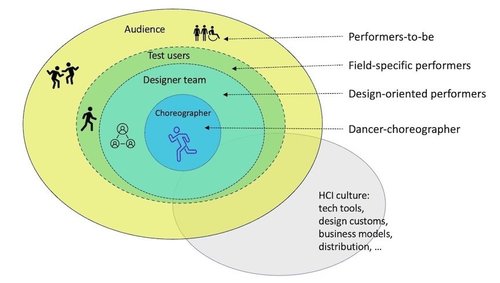
Hanna Pajala-Assefa is a dance artist and multimedia choreographer affiliated with the University of the Arts Helsinki , where she conducts doctoral research on choreography in mediated performance environments and feminist interaction design practices. Current doctoral researcher at the University of the Arts Helsinki Expertise in cross-media performance art, VR, and interactive audiovisual installations Her research focuses on the intersection of dance art and new technology , particularly the mediated body in virtual environments. Recent works explore choreography in VR , experiential sculpting , and audience experience studies , reflecting her interest in digital performance and feminist design. She has created over 40 dance works and multimedia productions globally since 2013.
- Choreography
- Dance Film
- Multimedia Performance Art
- +۳ مورد دیگر