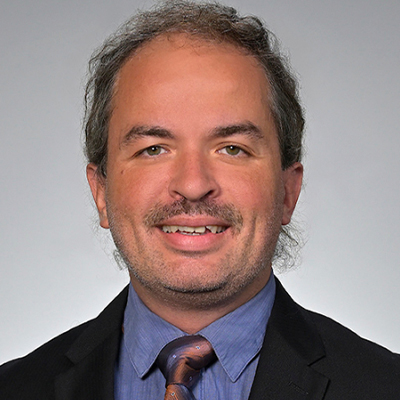
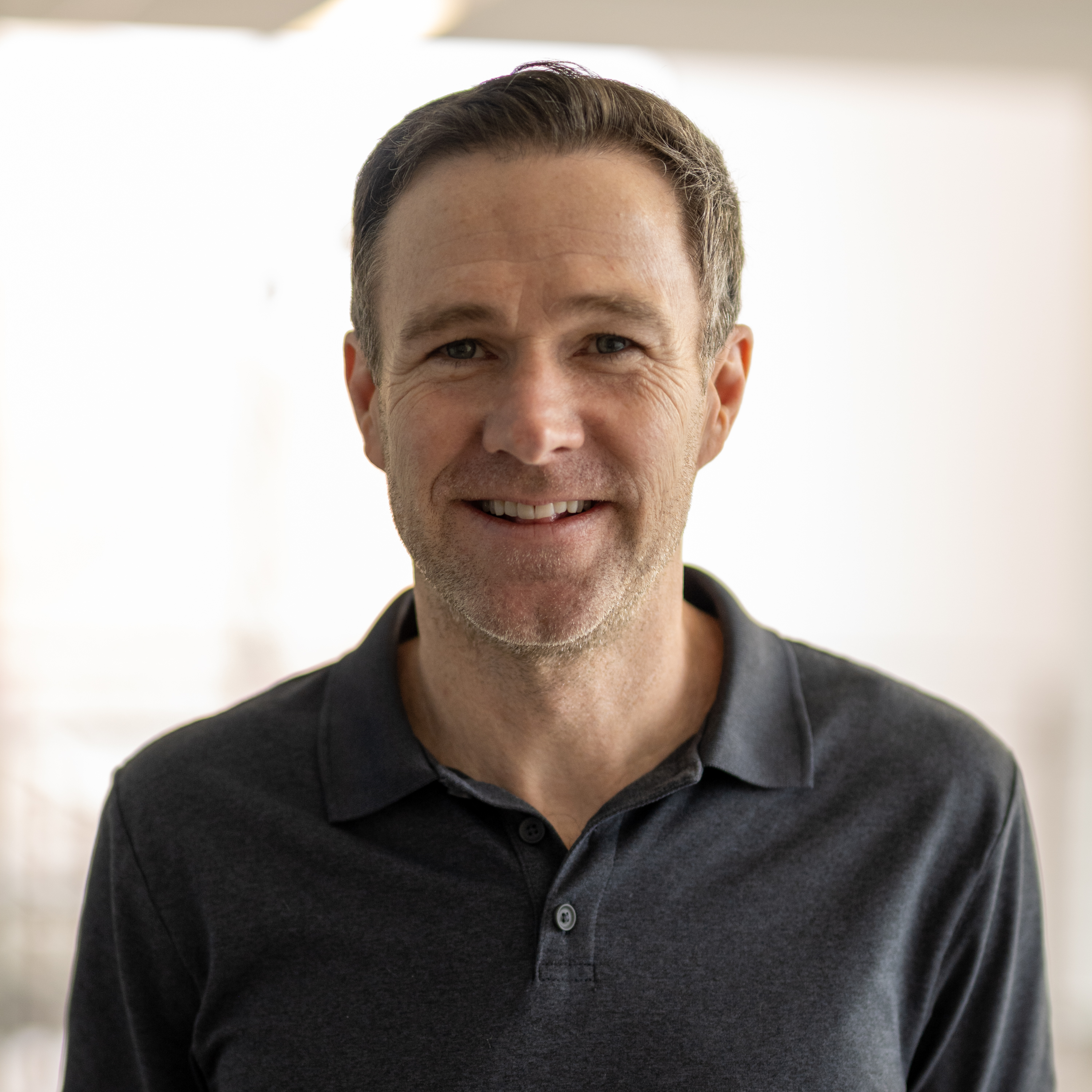
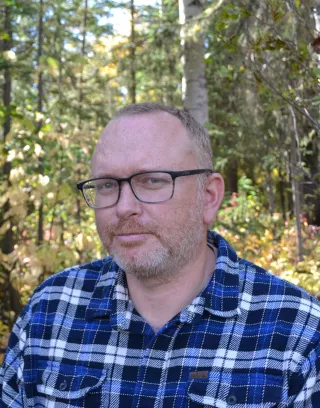
Pavel P. Kuksa is a Research Assistant Professor in the Department of Pathology and Laboratory Medicine, specializing in bioinformatics, computer science, and functional genomics. His work focuses on high-throughput sequencing analysis, chromatin interaction data, and developing scalable software platforms for genomics research.
Frederick R. Haselton is a Professor of Biomedical Engineering, Chemistry, and Ophthalmology and Visual Sciences at Vanderbilt University’s School of Engineering. His research focuses on developing low-cost, accessible diagnostic technologies for global health challenges, particularly in resource-constrained settings. He leads the Haselton Lab, a multidisciplinary team advancing innovations like Adaptive PCR, coffee ring-based diagnostics, and quantum dot imaging systems. Education : Ph.D. in Bioengineering from the University of Pennsylvania; B.A. in Mathematics from Haverford College. Research Interests : Dr. Haselton’s work spans molecular diagnostics, nanotechnology, and global health. Key projects include: Adaptive PCR: A revolutionary PCR method using synthetic L-DNA for temperature-independent cycling, enabling point-of-care diagnostics. Coffee Ring Diagnostics: Leveraging evaporation phenomena to create simple malaria and tuberculosis tests requiring no electricity. Quantum Dot Imaging: Developing multispectral tools for retinal and cardiovascular disease monitoring. Global Health Collaborations: Leading LIGHT (Laboratories for Innovation in Global Health Technologies), a cross-disciplinary initiative addressing diagnostic needs in low-resource environments. Grants & Funding : Haselton has secured major grants from NIH, Bill & Melinda Gates Foundation, and others for projects like tuberculosis detection via magnetic bead systems and mobile-connected diagnostic tests. Labs & Teams : The Haselton Lab collaborates with faculty across engineering, medicine, and chemistry. Current personnel include postdocs, graduate students, and undergraduates working on projects ranging from HIV viral load monitoring to SARS-CoV-2 diagnostics.
Christopher S. Sullivan is a Professor in the Department of Molecular Biosciences within the College of Natural Sciences at the University of Texas at Austin. He directs an active research laboratory focused on viral non-coding RNA biology and host-pathogen interactions, with continuous funding evidenced by publications spanning 2005-2025. His work bridges molecular virology, immunology, and RNA biology through investigations of tumor viruses and host defense mechanisms. Research interests center on the role of non-coding RNAs in viral infection and host defense pathways, with particular emphasis on viral microRNAs , RNA interference mechanisms , and host-pathogen coevolution . His lab studies diverse virus families including Polyomaviridae, Herpesviridae, Retroviridae, and avipoxviruses, with key discoveries regarding viral miRNA functions in tumorigenesis and immune evasion. Research approaches integrate molecular virology, next-generation sequencing, and computational analysis to dissect RNA-based regulatory networks. Publications reveal consistent focus on viral non-coding RNA functions, particularly how viruses exploit host RNA machinery (notably DUSP11 phosphatase) to modulate immune responses. Recent work (2021-2025) expands into viral shedding dynamics, SARS-CoV-2 diagnostics, and circular RNA biology in polyomaviruses, demonstrating evolving yet cohesive research trajectory in RNA-virus interactions. Scientific contributions include: Pioneering identification of viral microRNAs across multiple virus families Discovery of DUSP11's critical role in RNA triphosphate regulation during infection Mechanistic insights into viral evasion of RNAi and innate immunity Development of novel RNA-based detection methods The Sullivan lab maintains active collaborations through the Center for Systems and Synthetic Biology, John Ring LaMontagne Center for Infectious Disease, and Interdisciplinary Life Sciences Graduate Programs. Lab culture emphasizes collective scientific inquiry with stated mission to 'increase understanding of pathogen-host interactions while enjoying the company of fellow lab members.' Current research directions include viral exploitation of RNA modification pathways and identification of novel host defense mechanisms using viruses as 'molecular divining rods.'
Alfried Vogler is a Professor of Molecular Systematics with a joint appointment at Imperial College London's Department of Life Sciences (Silwood Park) and the Natural History Museum, London. His research focuses on the evolutionary and genetic mechanisms underlying insect biodiversity, particularly in beetles (Coleoptera), using advanced genomic techniques like metagenomics and environmental DNA (eDNA). He has held academic positions since 1995, becoming a Full Professor in 2006. Vogler is affiliated with the Georgina Mace Centre for the Living Planet, the Grantham Institute, and the Microbiome Network, contributing to interdisciplinary projects in ecology and conservation. Education: PhD in Bacterial Genetics (1988), University of Osnabrück, Germany MSc in Taxonomy and Biodiversity Biology degree (1984), University of Regensburg, Germany Research Interests: Vogler combines phylogenetics, population genomics, and bioinformatics to study species diversity across hierarchical levels (populations to insect orders). He explores community dynamics in complex environments, including tropical rainforests and soil ecosystems, using cutting-edge methods like metabarcoding and qPCR. His work emphasizes understanding trait evolution, dispersal constraints, and ecological interactions in biodiversity hotspots. Recent projects investigate the role of mitochondrial metagenomics in reconstructing evolutionary histories and predicting climate change impacts on communities. Academic Leadership: Since 1996, Vogler has directed the MSc in Taxonomy and Biodiversity and the MRes in Biosystematics programs, overseeing academic content and student research supervision. He also contributes to the Biodiversity, Evolution and Conservation MRes (UCL/NHM) and has been a module organizer for courses like Tree-of-Life and molecular systematics. Labs & Collaborations: Vogler leads the Molecular Systematics research group at the Natural History Museum, collaborating with Imperial College's Silwood Park campus. His work integrates with the SITE-100 project, aiming to build a global genomic framework for biodiversity synthesis. He also participates in DNAqua-Net, advancing genetic tools for aquatic ecosystem assessment.
Dr. Andrew Harrington is a Lecturer in the Department of Science at South-East Technological University. His research focuses on biodiversity assessment, conservation biology, and molecular biology techniques applied to ecological studies. He specializes in using environmental DNA (eDNA) and metabarcoding to analyze bat feces and other biological samples to understand ecosystem dynamics and species interactions. His work addresses topics such as insect biodiversity, vector species identification (e.g., mosquitoes), and the dietary habits of endangered bat species like Rhinolophus hipposideros. Collaborations include projects on Ireland’s biodiversity and the application of molecular methods to ecological monitoring. Dr. Harrington has contributed to peer-reviewed articles and conference presentations since 2018, emphasizing innovative approaches to ecological assessment. He is currently accepting PhD students interested in these research areas.
Dr. Marcell K. Peters is a Senior Academic Councillor at the Chair of Animal Ecology and Tropical Biology (Zoology III) at the University of Bremen. His research focuses on biodiversity patterns, ecosystem functioning, and climate-land use interactions in tropical and montane environments, with extensive fieldwork in East Africa and the Amazon. He leads projects under DFG and EU funding, including the UPSCALE initiative. Habilitation in Zoology (University of Würzburg, 2018) PhD in Biology (University of Bonn, 2008) Diploma in Biology (RWTH Aachen & University of Bonn, 2003) Research spans multi-taxa community ecology, army ants and ant-following birds, DNA barcoding applications, and climate change impacts on pollination networks. Google Scholar highlights recent work on climate-agriculture interactions in sub-Saharan Africa, trait-based community assembly, and network resilience in biodiversity hotspots. His publications emphasize elevational gradients, disturbance ecology, and functional diversity across Mount Kilimanjaro studies. Current affiliations include the DFG Research Unit Kilimanjaro and EU-funded UPSCALE project. He employs advanced methods like airborne LiDAR for biodiversity prediction and investigates nutrient use by ant communities across continents.
Mary Catherine Aime is a Professor of Botany & Plant Pathology at Purdue University's College of Agriculture, where she serves as Director of the Purdue University Herbaria (Arthur Fungarium and Kriebel Herbarium). Her research program focuses on the systematics, biodiversity, and evolution of Fungi, with particular emphasis on the earliest diverging lineages of Basidiomycota, rust fungi, fungi in tropical ecosystems, and fungal diseases of tropical tree crops. Dr. Aime's research interests span fungal systematics, biodiversity, and evolution. Her lab employs diverse methodologies from genomics to field studies in remote regions to investigate vastly underexplored fungal lineages. She has made significant contributions to the understanding of rust fungi (Pucciniales) taxonomy, establishing a comprehensive higher-rank classification based on molecular, morphological, and ecological data. Her work has important implications for plant pathology, agriculture, and biodiversity conservation. Dr. Aime's publication record demonstrates consistent contributions to fungal systematics, particularly in rust fungi research. Her work spans taxonomic revisions, molecular phylogenetics, biodiversity documentation, and the development of practical identification tools like Rust HUBB. Her research shows a clear progression from foundational taxonomic work to the development of molecular resources that benefit the broader plant pathology community. As Director of the Purdue University Herbaria, Dr. Aime oversees one of the most important collections of rust fungi (Pucciniales) in the world through the Arthur Fungarium (PUR). Her leadership in maintaining and expanding these critical research collections supports global mycological research efforts.
George M. Church is a Professor of Genetics at Harvard Medical School and affiliated with MIT, where he directs PersonalGenomes.org, providing open-access genomic, environmental and trait data. His laboratory focuses on transformative technologies for reading and writing 3D/4D biological structures with attention to ethics, safety, and equitable access. Church has co-initiated major scientific initiatives including the BRAIN Initiative (2011) and multiple Genome Projects (GP-Read-1984, GP-Write-2016, PGP-2005). Church's research spans multiple cutting-edge domains including genome engineering, synthetic biology, aging reversal, and space genetics. His lab pioneered foundational methods for direct genome sequencing, molecular multiplexing and barcoding in 1984, leading to the first genome sequence in 1994. His innovations contributed to nearly all next-generation DNA sequencing methods and companies. Current research directions include machine learning for protein engineering, tissue reprogramming, organoids, gene therapy, and in situ 3D DNA/RNA/protein imaging. His work bridges fundamental biology with therapeutic applications across diverse fields from Alzheimer's disease to de-extinction biology. Church's recent publications reveal a remarkable breadth of scientific inquiry, spanning from fundamental genome editing techniques to applications in aging research, neuroscience, and space biology. His work increasingly integrates artificial intelligence with biological systems, as seen in papers on machine-guided cell-fate engineering and automation of systematic reviews with large language models. His research maintains a strong translational focus, with numerous papers addressing therapeutic applications in cancer immunotherapy, gene therapy, and diagnostics. The consistent theme across his diverse publications is the development and application of transformative technologies to address fundamental biological questions and medical challenges. National Academy of Sciences (NAS) membership National Academy of Engineering (NAE) membership Franklin Bower Laureate for Achievement in Science Co-initiator of the BRAIN Initiative (2011) Director of multiple NIH Centers for Excellence in Genomic Science (2004-2020) Church directs numerous research centers including the NIH-CEGS, Personal Genome Project (PGP), Lipper Center for Computational Genetics, and Wyss Institute Synthetic Biology center. His laboratory has trained PhD students across multiple Harvard and MIT programs including Biophysics, BBS, Biomedical Informatics, ChemBio, Chemistry, SSQB, MCO, Virology, HST, EE/CS, Physics and Applied Math. His commercial impact is extensive through companies spanning medical diagnostics (Knome/PierianDx, Alacris, Nebula, Veritas) and synthetic biology/therapeutics (AbVitro/Juno, Gen9/enEvolv/Zymergen/Warpdrive/Gingko, Editas, Egenesis). Church also pioneered new privacy, biosafety, ELSI, environmental and biosecurity policies. The Church Lab operates across multiple research domains including molecular multiplexing, next-generation sequencing, nanopore technology, and genome engineering. The lab maintains strong connections with the Personal Genome Project, Wyss Institute, and multiple commercial ventures. Current research directions include the Spatial Atlas of Human Anatomy (SAHA), human skin rejuvenation via mRNA, and space genetics research through the Consortium for Space Genetics and BioAstra. The lab's mission focuses on transformative technologies for reading and writing 3D/4D structures at any scale, inspired by but not limited by biology.
Silvia Rondon is a Professor and Director of the Integrated Pest Management Center at Oregon State University (OSU), affiliated with the College of Agriculture and Department of Crop & Soil Science. She moved to OSU's Corvallis campus in September 2022 after extensive work in eastern Oregon. Education: PhD in Crop Sciences (2002), MS in Entomology (1999), BA in Biology/Zoology (1993) from Universidad Nacional Agraria La Molina (Peru) and University of Illinois. Research Focus: Ecological-based Integrated Pest Management for irrigated crops (potatoes, onions, corn, wheat) emphasizing insect ecology, biological/chemical control, and pest population dynamics. Her publications span potato psyllid management, zebra chip disease, wireworm genomics, and landscape-driven pest movement. Key awards include the Erasmus Teaching Award, Pacific Branch ESA Excellence in Extension, and multiple NACAA/OSU honors. She leads extension programs through on-farm demonstrations and train-the-trainer workshops, while mentoring graduate students in IPM research.
Associate Professor Jeremy Austin is a leading evolutionary biologist at the University of Adelaide , affiliated with the School of Biological Sciences and serving as Deputy Director of the Australian Centre for Ancient DNA (ACAD) . His work bridges ancient DNA analysis, molecular ecology, and forensic biology to address critical questions in conservation genetics and human identification. PhD in Evolutionary Biology from University of Tasmania (1995) Jeremy's research focuses on ancient DNA techniques to study evolutionary histories of extinct and extant vertebrates, assess environmental change impacts, and develop genomic tools for forensic identification of degraded human remains. His work supports agencies like the Australian Defence Force and humanitarian organizations. Recent publications highlight applications of LAMP assays for invasive species detection, genome-wide hybridization capture in forensic profiling, and phylogeographic analysis of endangered species. His team's innovations in trace DNA recovery and environmental DNA (eDNA) have advanced biosecurity monitoring. Australian Research Council Future Fellowship (2011) As a Senior Lecturer , Jeremy supervises research students and collaborates across conservation, forensics, and evolutionary biology . He leads ACAD's efforts to integrate historical museum samples into modern genomic studies, with applications for wildlife management and human remains identification.
Timothy Rawlings is an Associate Professor in the Department of Biology at Cape Breton University. He holds a BSc (Honours) and MSc in Zoology from the University of British Columbia and a PhD from the University of Alberta. His research focuses on the evolutionary ecology and molecular ecology of freshwater and marine invertebrates, particularly examining factors influencing their evolution in response to environmental and anthropogenic pressures. Dr. Rawlings' expertise spans invertebrate zoology, marine ecology, and molecular analysis. His work often integrates morphological and genetic approaches, as seen in studies of vermetid snails, hydroids, and invasive molluscs. He has conducted research at the Bamfield Marine Sciences Centre and contributed to biodiversity assessments in Cape Breton and Pacific coral reefs. His publications explore topics such as phylogenetic relationships, species delimitation, and ecological adaptations of marine organisms. Recent work includes investigations into novel shell morphologies, invasive species dynamics, and the evolutionary strategies of sessile invertebrates. Dr. Rawlings emphasizes the importance of understanding human impacts on marine ecosystems, including the introduction of non-native species and climate change effects on coastal communities.
Anna Maria Palermo is an Associate Professor in the Department of Biology, Ecology and Earth Sciences at the University of Calabria, where she specializes in General Botany (BIO/01). She has held this position since October 2022, following a long academic trajectory that includes serving as a confirmed researcher since 2004 and prior technical service from 1990 to 2004. She is actively involved in teaching, research, and academic governance, with no indication of retirement or departure. Education: Laurea in Scienze Biologiche, University of Naples (1986) Professional qualification as Biologist, University of Naples (1987) Her research interests lie at the intersection of molecular botany and cultural heritage conservation. She focuses on molecular biosystematics of Mediterranean flora, particularly rare and endemic species in Calabria, using techniques such as ISSR, RAPD, AFLP, microsatellites, DNA barcoding, and isoenzyme analysis. A second major research line involves the study of biodeteriogens —fungi, cyanobacteria, algae, and lichens—on both organic (paper, wood, parchment) and inorganic (stone, plastic) cultural artifacts. Her work includes developing green conservation methods, notably using titanium dioxide nanoparticles for biocidal and preventive treatments. Her recent publications highlight a strong engagement in orchid pollination biology , heritage biodeterioration , and molecular taxonomy . These works reflect interdisciplinary trends combining ecology, botany, and conservation science, often with applications to historical monuments in Southern Italy. Scientific Service and Recognition: Reviewer for international journals: Environmental Engineering and Management, Journal Plant Biology, Aerobiologia, Studies in Conservation, Journal of Fungi, Horticulture, International Biodeterioration & Biodegradation, Botanical Studies Member of the Scientific Secretariat of the PhD Program in Life Science and Technology (2021) Member of the Italian Botanical Society since 2007 Active participant in research groups on plant biology and conservation Anna Maria Palermo has supervised numerous Master's and PhD theses in Biological Sciences, Natural Sciences, and Cultural Heritage Conservation. She has participated in research projects, organized workshops, and collaborated with various institutions. She is a key member of the Plant Biology Research Group at the University of Calabria, specifically contributing to the section on Biosystematics, Conservation, and Botany in Cultural Heritage led by Prof. Giuseppe Pellegrino.
Daniel Erasmus is an Associate Professor in the Department of Chemistry at the University of Northern British Columbia (UNBC), Faculty of Science. He holds a PhD from the University of British Columbia and earned his MSc and BSc (Hons) from the University of Stellenbosch, South Africa. His work emphasizes integrating undergraduate students into authentic research experiences. Education: PhD, University of British Columbia MSc, University of Stellenbosch, South Africa BSc (Hons), University of Stellenbosch, South Africa Dr. Erasmus's research spans biochemistry, molecular biology, genetics, and aquatic entomology. He focuses on DNA as the blueprint of life, guiding students in population genetics of fish and DNA barcoding of aquatic insects in northern British Columbia. His work also extends to wine chemistry and microbiology, particularly the genetic and metabolic behavior of wine yeasts under stress. These interdisciplinary interests reflect a strong commitment to both fundamental science and applied research in environmental and food systems. His recent publications (2018–2024) highlight biodiversity studies, with a focus on discovering new species of aquatic insects in British Columbia using molecular techniques. Earlier works center on yeast genomics and wine fermentation science, demonstrating a long-standing interest in microbial stress responses and metabolic engineering. Collectively, his research bridges molecular biology with ecological and industrial applications. Scientific Awards: No awards listed in the provided text. Dr. Erasmus actively mentors undergraduate and graduate students, integrating them into research projects that combine laboratory and fieldwork. He has developed innovative educational methods, including remote-access laboratory technologies and interdisciplinary biochemistry curricula. While specific grant details are not mentioned, his sustained research output suggests active funding support. He is currently accepting graduate students, indicating an open and growing research group. His research is conducted through hands-on student projects and collaborations, particularly with colleagues like Dr. Dezene P.W. Huber. Though no formal lab name is given, his work forms a cohesive research program in molecular ecology and biochemical analysis, centered on both environmental and food-related systems.
Malte Ebach is an Honorary Associate Professor at the School of Biological, Earth & Environmental Sciences, University of New South Wales (UNSW). His primary affiliation is with UNSW’s Science faculty, where he contributes to teaching and research in biogeography and systematics. He has held collaborative roles with institutions like CSIRO Publishing and the Linnean Society, and his work spans multiple disciplines involving classification and natural history. Ebanch’s research focuses on Australasian and Gondwanan biogeography, emphasizing natural classification methods such as cladistics and Goethean science. He critically examines historical taxonomic practices, advocating for rigorous area taxonomy and the integration of tectonic data into bioregionalization. Key themes include transition zones, the legacy of 19th-century plant and animal geography, and the revival of bioregionalization in the context of modern geology. He has authored or co-authored over 20 books since 2004, including Biotectonics of Neotropical Transition Zones (2024) and Goethe in the Age of Artificial Intelligence (2023). His edited works include Handbook of Australasian Biogeography (2017) and Biogeography in a Changing World (2006). His recent publications analyze tectonic influences on biogeography, SARS-CoV-2 taxonomy, and the philosophical underpinnings of classification systems. Ebanch’s teaching roles at UNSW include convening GEOS1111 Fundamentals of Geology and GEOS3071 Life on a Dynamic Earth , and lecturing in GEOS1211 Earth and Environmental Science . He critiques emerging trends in taxonomy, such as DNA barcoding, and emphasizes the need for intuitive, historically grounded methods in systematics.
Anne Pringle is a Professor in the Department of Bacteriology at the University of Wisconsin–Madison, where she leads the Pringle Laboratory. Her research focuses on the evolution and ecology of fungi, particularly natural populations of invasive species like Amanita phalloides (death cap), lichen demographics, and fungal responses to global change. She is actively involved in field research, genomic analysis, and public science communication. Her research interests span fungal ecology, evolutionary biology, invasion dynamics, mycorrhizal symbiosis, and conservation. Using fungi as model organisms, her lab investigates broad ecological and evolutionary principles, including spore dispersal, gene birth, nitrogen deposition effects, and the evolutionary origins of toxicity. She emphasizes both field and molecular approaches. The recent publications reflect a strong focus on invasive fungal species, particularly Amanita phalloides in California. Themes include biogeography, genetic origins, mycorrhizal relationships, reproductive strategies, and ecological impacts. There is also significant work on lichen demography, wood-decay fungi, and citizen science initiatives like the Golden Oyster Project. MSA Fellow NAMA Fellowship Forest Mycology Research Award Multiple student travel awards Pringle mentors several students, including PhD candidates and researchers involved in fieldwork, genomics, and public outreach. Her lab has received recognition for research on snake disease, nitrogen deposition, and gene evolution. She collaborates widely and promotes fungal science through media appearances, iBiology talks, and KQED features. The Pringle Lab conducts field forays, retreats, and engages in community science, maintaining strong ties with mycological societies and bioinformatics resources at UW-Madison.