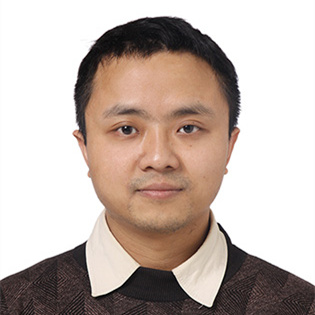
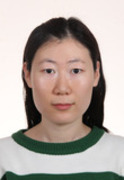
Lisa Bergmann is a Lecturer in Romance Studies Didactics at the Institute of Modern Languages and Romance Studies , University of Würzburg , Germany. Her research focuses on parasitology, particularly the cellular mechanisms and genetic regulation in trypanosomes, as evidenced by her publications in molecular biology, phylogenetics, and membrane trafficking. University : University of Würzburg Faculty : Faculty of Philosophy Department : Romance Studies Rank : Lecturer Her work explores: Molecular Biology of trypanosomes, including endocytosis and exocytosis pathways. Phylogenetic analysis of trypanosome species using 18S rDNA/RNA sequencing. Cellular dynamics , such as flagellar pocket function and organelle replication. Recent publications (2024) investigate actomyosin systems in Trypanosoma brucei, transcriptional profiles in Trypanosoma cruzi, and the discovery of continuous endosomes in membrane trafficking. Earlier studies (2022-2014) address endocytosis requirements for cargo entry, GPI anchor biochemistry, and Brazilian fish trypanosomes.
PD Dr. Frieder Mayer is a senior researcher at the Museum für Naturkunde – Leibniz Institute for Evolution and Biodiversity Science in Berlin, where he serves as Curator of the Mammal Collection and Deputy Head of the Science Programme 'Evolution and Geoprocesses' since 2007. His academic credentials include a Dr. rer nat. (1997) and Venia legendi in Zoology (2003) from the University of Erlangen-Nürnberg, where he worked as a PostDoc (1997-2003) and Senior Assistant (2003-2007). Mayer's research integrates evolutionary ecology, behavioral ecology, and population genetics to understand speciation mechanisms. His empirical work focuses on: Selective forces affecting dispersal Gene flow restrictions in populations Comparative studies of bats (Palaearctic/Neotropic regions) and grasshoppers Combined behavioral, ecological, morphological and genetic methodologies He coordinates major research initiatives including the DFG Research Unit BATS (bat sensor systems) and BMBF Network Sus100 (swine genetics), and leads the GENART network on functional speciation genomics. His publications (2001-2016) demonstrate consistent focus on: Molecular ecology of speciation Acoustic communication in grasshoppers and bats Population genomics Conservation genetics of cryptic species Behavioral adaptations in mating systems
Dr. Silke Laakmann is a Senior Scientist at the Helmholtz Institute for Functional Marine Biodiversity (HIFMB) at the University of Oldenburg, Germany. She leads the Plankton Ecology Project Group, focusing on marine biodiversity, ecology, and molecular species identification techniques. Education: Biology, University of Frankfurt am Main (1998–2000) Biology, University of Bremen (2000–2005) PhD in Biology, University of Bremen (2005–2009) Her research integrates traditional and molecular methods to study biodiversity patterns in coastal and open ocean ecosystems, with emphasis on zooplankton , environmental DNA , and marine fauna . Recent projects include HABBAL-2 and CREATE-2, addressing harmful algal blooms and anthropogenic impacts on marine ecosystems. Grants & Projects: BMBF collaborative projects (2024–2027): HABBAL-2, CREATE-2 EXIST Business Start-up Grant (2017–2018) DFG project (2022–2026): Microbialite connectivity studies Contact: silke.laakmann@hifmb.de | +49 471 4831-2566
Prof. Dr. Ali Ertürk serves as a Professor at Ludwig Maximilian University of Munich (LMU) where he leads the Institute for Stroke and Dementia Research. His research focuses on developing advanced drug delivery systems, particularly for macromolecular therapeutics like DNA, RNA, and protein-based treatments. His primary research interests center around overcoming the significant challenge of tissue-specific drug delivery using lipid nanoparticles (LNPs). His laboratory specializes in whole-mouse body clearing techniques that enable high-resolution imaging throughout the entire organism. This innovative approach allows for the identification of tissue-specific delivery vehicles beyond the liver, which represents a major limitation in current LNP technology. Ertürk's team combines tissue clearing methods with molecular barcoding to create highly multiplexed in vivo screening platforms for LNP formulations. This work has significant implications for precision medicine and targeted therapeutic delivery. His laboratory emphasizes collaborative teamwork and provides comprehensive training across all relevant technical domains including LNP design, animal experimentation, advanced microscopy, and data analysis. Currently, his research group is actively recruiting doctoral candidates for projects focused on identifying tissue-specific lipid nanoparticles in cleared mouse models, indicating ongoing research activity and supervision of graduate students. His work bridges engineering, neuroscience, and medical research with potential applications in treating neurological disorders and other conditions requiring targeted molecular therapies.
Catharina Clewing is a researcher at the Department of Animal Ecology & Systematics, Justus Liebig University, Giessen, Germany. Since 2016, she has been a postdoctoral researcher focusing on evolutionary and biogeographical dynamics of freshwater molluscs, particularly in the Tibetan Plateau and surrounding regions. Her work combines molecular phylogenetics, population dynamics analysis, and biogeographic modeling to understand biodiversity patterns. Education: Bachelor’s/Master’s (Diploma in Biology) from Justus Liebig University (2007-2011) Ph.D. in Animal Ecology and Systematics (2011-2016), with a thesis on evolutionary drivers of Tibetan Plateau biodiversity Research Interests: Her studies center on freshwater molluscs, including their evolution, population dynamics, and biogeography. Key topics include glacial refugia effects, cryptic species discovery, and host-parasite interactions. She employs cutting-edge techniques like microsatellite analyses and next-generation sequencing. Publications & Awards: With over 20 peer-reviewed articles, Clewing has contributed to understanding mollusc distributions in lakes like Tanganyika, Malawi, and Baikal. Her work has earned notable awards, including the J. Frances Allen Institute’s Outstanding Publication Award (2013). Teaching & Mentorship: Supervises undergraduate and graduate courses at Justus Liebig University, fostering student research in aquatic biodiversity and molecular ecology. Labs & Collaborations: Part of the Systematics & Biodiversity Lab, collaborating with groups led by Prof. Thomas Wilke and apl. Prof. Christian Albrecht. Engaged in projects like the EU-funded PRIDE initiative on Pontocaspian biodiversity.
Prof. Johannes Vogel is Director General of the Museum für Naturkunde Berlin and Professor of Biodiversity and Public Science at Humboldt University. His research spans biodiversity science, citizen science methodologies, and open science policy. He chairs the European Citizen Science Association and Leibniz Research Alliance Biodiversity. Publications address biodiversity governance, DNA barcoding applications, and science-policy interfaces. Current projects include digital transformation of natural history collections and international capacity building. Leadership roles include steering committees for DiSSCo research infrastructure and EU Open Science Policy Platform. He advocates for museum-based research addressing global sustainability challenges.
Qiang Wang is a Researcher at the Institute of Botany, Chinese Academy of Sciences, with expertise in plant taxonomy, systematics, and phylogenetics. His work focuses on the classification and evolutionary relationships of Lamiaceae and Campanulaceae families, employing molecular, morphological, and cytological approaches. He holds a PhD in Science and has held visiting scholar positions, including at the Royal Botanic Gardens, Kew (2016–2017). Research interests include: Phylogenomics of plant families using plastome and chloroplast data Taxonomic revisions of genera like Pseudocodon and Codonopsis Species delimitation in Lamiaceae and Campanulaceae Application of DNA barcoding and cytotaxonomy His publications emphasize integrative approaches combining genomic, morphological, and ecological data to resolve taxonomic uncertainties and uncover evolutionary patterns. Notable contributions include descriptions of new species (e.g., Codonopsis atriplicifolia) and reclassification of plant groups based on molecular evidence.
Dr. Yuanyuan Wang is a retired Professor at the Faculty of Biology, Ludwig Maximilian University of Munich (LMU). Their research focuses on fish genomics, population genetics, and ecological conservation, particularly in teleost species like eels and catfish. They have contributed to studies on sex determination mechanisms, invasive species genomics, and island ecosystem vulnerability. Key areas of expertise include molecular phylogeny, comparative transcriptomics, and DNA barcoding. Research interests encompass the genomic basis of sexual dimorphism, adaptive evolution in invasive species, and the application of chromosome-level genome assemblies to understand species biology. Dr. Wang has also conducted extensive work on evaluating ecological vulnerability in island ecosystems, combining spatial analysis with environmental factors. Publications from 2016–2025 highlight a strong focus on aquatic species conservation, genomic technologies, and ecological modeling. Their work integrates molecular tools with ecological studies to address biodiversity challenges. Grants and advising details are not specified in available records.
Dr. Mara Lawniczak is a Senior Group Leader at the Wellcome Sanger Institute, where she leads the Lawniczak Group focused on evolutionary genetics with applications to malaria control and biodiversity research. She also maintains an honorary faculty position at Imperial College London, where she was awarded a proleptic lectureship. Her work bridges fundamental evolutionary biology with practical applications for global health challenges. Dr. Lawniczak completed her PhD in Population Biology at UCDavis studying sexual conflict dynamics in Drosophila, followed by postdoctoral research at University College London on seminal fluid proteins and at Imperial College London on Anopheles mosquitoes. In 2012, she received an MRC Career Development Fellowship, and in 2014 she joined the Sanger Institute to establish her research group. Her research spans three interconnected themes: Mosquito Vector Population Genomics, Transmission Biology of Plasmodium falciparum, and Biodiversity Genomics. She has pioneered the Malaria Cell Atlas project using single-cell transcriptomics to map Plasmodium development, established the Anopheles funestus population genomics project, and contributes significantly to the Darwin Tree of Life Project. Her work leverages cutting-edge genomic technologies from whole genome sequencing to single-cell RNA-seq. Analysis of her recent publications reveals a consistent focus on vector biology, malaria parasite genomics, and biodiversity monitoring. Her team produces high-quality reference genomes for vector species while simultaneously investigating transmission dynamics at single-cell resolution. A significant portion of her work addresses practical applications for malaria control through understanding insecticide resistance mechanisms and vector behavior. MRC Career Development Fellowship Featured as a 'hero in the field' by Bill Gates (2023) Associate editor position at GENETICS journal Leadership roles in major international consortia including the Earth BioGenome Project Dr. Lawniczak currently mentors a diverse team including PhD students, postdoctoral fellows, and technical specialists. Her research is supported by multiple major grants from MRC, Wellcome, UKRI, Horizon Europe, and the Bill and Melinda Gates Foundation. The Lawniczak Group operates several key projects including the Malaria Cell Atlas, the Anopheles funestus population genomics project, the Anopheles Reference Genomes project, the ANOSPP project, and BIOSCAN UK. These initiatives involve extensive international collaborations, particularly with researchers across Africa where malaria remains endemic.
Dr. Axel Hausmann is a distinguished researcher at the Bavarian State Collection of Zoology (Zoologische Staatssammlung München) in Munich, Germany, where he serves as a leading expert in Lepidoptera systematics with particular specialization in Geometridae moths. His career spanning over 25 years has established him as a prominent figure in the international lepidopterological community, with extensive contributions to taxonomic research, biodiversity assessment, and the application of DNA barcoding technology to moth systematics. Dr. Hausmann's research focuses on the taxonomy and systematics of geometrid moths across diverse geographical regions including Europe, Africa, the Middle East, and various island systems. His work uniquely integrates traditional morphological analysis with cutting-edge molecular techniques, particularly DNA barcoding, to resolve complex taxonomic questions and uncover hidden biodiversity. He has pioneered integrative approaches that combine morphological, ecological, and genetic data to validate species boundaries and accelerate biodiversity documentation. Analysis of Dr. Hausmann's extensive publication record (over 300 publications) reveals consistent contributions to major taxonomic revisions, species descriptions, and methodological advancements in lepidopteran research. His recent work demonstrates a strong emphasis on applying DNA barcoding to large-scale biodiversity assessment projects, with particular focus on European and African geometrid faunas. He has been instrumental in developing frameworks for using molecular data in taxonomic practice while maintaining rigorous morphological standards. Dr. Hausmann has served as editor for multiple volumes of 'The Geometrid Moths of Europe' series and has organized the annual Forum Herbulot meetings since 2001, which have become a cornerstone for international collaboration among geometrid researchers. He has led major initiatives including the 'Barcoding Fauna Bavarica' project and the 'Geometridae Mundi' global database, significantly advancing our capacity to document and understand insect biodiversity through integrative approaches. His leadership extends to international collaborations with institutions across Europe, Africa, Australia, and the Americas, reflecting his central role in the global lepidopterological community. Dr. Hausmann's work has established important methodological standards for combining traditional and molecular approaches in taxonomy, influencing how biodiversity is documented and conserved worldwide.
PD Dr. Stefan Merker is Head of the Zoology Department and Curator of Mammalogy at the State Museum of Natural History Stuttgart (Staatliches Museum für Naturkunde Stuttgart) and holds a Habilitation (Venia Legendi) in Zoology at the University of Hohenheim, where he has taught since 2014. He leads an active research program in mammalian biogeography, conservation genetics and primate evolution. Education : Habilitation in Zoology, University of Hohenheim, 2023 PhD (Dr. rer. nat.) in Biology, Georg-August-Universität Göttingen, 2003 Diplom in Biology, Georg-August-Universität Göttingen, 1999 Exchange studies, University of California, Santa Barbara, 1995–1996 Research Interests Merker’s work centers on the evolutionary history and conservation of mammals , especially small primates and island fauna. Using field ecology, molecular genetics and bioacoustics, he investigates how geological events and anthropogenic change shape species distributions and genetic diversity. His flagship projects include: Ecology and evolution of tarsiers – phylogeography, hybrid zones and speciation on Sulawesi Island, Indonesia. Population genetics of the Eurasian beaver – recolonization dynamics and genetic structure in Central Europe. Urban ecology of European rabbits – gene flow and behavioral adaptation along rural–urban gradients. Scientific Awards & Grants Habilitation Scholarship & Venia Legendi, University of Hohenheim (2023) Postdoctoral Fellowships – EU Marie Curie & DFG (2003–2008) PhD Fellowships – Studienstiftung des deutschen Volkes & DAAD (2000–2003) Diplom Fellowship – Studienstiftung & GfP Christian-Vogel-Fonds (1998) Advising & Teaching Merker has supervised 15+ graduate students (3 PhD, 12 MSc/Diplom) and numerous bachelor theses, covering topics from tarsier hybridization to urban beaver genetics. He teaches undergraduate and master modules at the University of Hohenheim and previously at Goethe University Frankfurt and Johannes Gutenberg University Mainz, with courses on vertebrate biology, evolutionary ecology and field methods. Laboratories & Teams He heads the Mammalogy Section at the Stuttgart State Museum of Natural History, curating extensive zoological collections and running molecular laboratories for DNA barcoding, microsatellite genotyping and next-generation sequencing. The group participates in international consortia such as the Primate Genome Project and the European Beaver Genetic Monitoring Network.
Dr. Ramona Elena Irimia is a plant ecologist affiliated with the Institute of Evolution & Ecology at the University of Tübingen, Germany. Her research integrates fieldwork, common garden experiments, statistical modeling, and genomic tools to study how invasive plants adapt to environmental change across native and introduced ranges. She has held prestigious positions including a Marie Skłodowska-Curie Fellowship (2022-2023) and an FCT Fellowship during her PhD at the University of Coimbra, Portugal. Current work explores herbarium collections and archival DNA to trace eco-evolutionary changes over time. Education : PhD in Biosciences (2016-2020), BSc & MSc in Ecology/Biology (Alexandru Ioan Cuza University, Romania) Grants : Research Seed Capital (2023), BMBF/Baden-Württemberg Ministry (2022-2023), DFG-NSFC (2020-2022), H2020-MSCA-IF (2022-2023) Research Interests revolve around Genomic mechanisms of plant invasions Climate change resilience in invasive species Evolutionary dynamics during range expansion Historical ecology via herbarium DNA Biogeographic comparisons of plant defenses Polyploidization in global invasions Scientific Contributions include studies on cross-continental ecological strategy shifts, phenotypic plasticity in knotweed, and the role of genetic admixture in reproductive compatibility. Her work reveals minimal genetic differentiation in invasive species despite global spread and challenges assumptions about polyploidization in invasions. Marie Skłodowska-Curie Fellow (2022-2023) FCT Fellow during PhD She operates within the Institute of Evolution & Ecology , focusing on plant invasions through genomic and experimental lenses.
Prof. Jonathan Schmid-Burgk is a Professor at the University of Bonn's Institut für klinische Chemie und klinische Pharmakologie within the Universitätsklinikum Bonn. His research focuses on developing genome-editing and sequencing technologies to study the human innate immune system. Key areas include CRISPR-based tools, inflammasome regulation, and antiviral signaling mechanisms. He leads projects in genetic engineering, viral pathogenesis, and diagnostic technologies like LAMP-Seq for SARS-CoV-2 detection. Research Interests: Genome Editing: CRISPR-Cas systems, gene tagging, and high-throughput cloning techniques. Innate Immunity: NLRP3 inflammasome activation, TLR4 signaling, and autoimmunity pathways. Viral Defense: RIG-I-like receptors, cGAS-STING pathways, and antiviral mechanisms. Diagnostic Innovation: Molecular barcoding and multiplexed sequencing for infectious disease detection. Publications highlight advancements in CRISPR tools (e.g., CRISPaint), Cas9 specificity profiling, and insights into cancer biology and immune dysfunction in severe COVID-19. His work bridges molecular biology, immunology, and clinical diagnostics, with applications in both basic science and translational medicine.
André Luiz de Oliveira is a Researcher at the Department of Symbiosis, Max Planck Institute for Marine Microbiology. His work explores the evolutionary and developmental impacts of host-symbiont interactions, focusing on germ-free animal models like gutless oligochaetes ( Olavius algarvensis and O. ilvae ), which lack traditional digestive systems and rely entirely on bacterial symbionts for survival. Research Interests Host-microbe interactions Eco-Evo-Devo (Ecological Evolutionary Developmental Biology) Comparative genomics of symbiotic organisms Morphological diversification in marine annelids Methodologies Integrates 'omics approaches Compares developmental biology and morphology Uses fluorescence in-situ hybridization The 10 listed publications (2015-2024) span disciplines including Marine Biology, Genomics, Developmental Biology, and Evolutionary Ecology. Key subfields include deep-sea symbiosis, Hox gene regulation in mollusks, microbial adaptation mechanisms, and comparative transcriptomics of chemosynthetic environments.
Dr. Milen Nachev is a Scientific Assistant at the Faculty of Biology , University of Duisburg-Essen , specializing in Aquatic Ecology . His research spans Environmental Parasitology , Ecotoxicology , and Biodiversity , focusing on host-parasite interactions and contaminant uptake by parasites. Key research areas include: Parasite diversity, evolution, and transmission dynamics Bioaccumulation and bioindication of heavy metals Stable isotope analysis for trophic structure studies Assessment of pollution impacts on aquatic ecosystems He employs advanced analytical techniques such as ICP-MS , AAS , IRMS , and molecular barcoding to investigate metal contamination in food webs (e.g., Rhine River, Orange-Vaal Basin) and parasite roles in pollution monitoring. His publications highlight multi-stressor effects on fish, parasite-specific accumulation patterns, and methodological innovations in isotope analysis.