معرفی
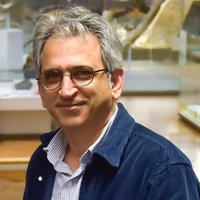
Dr. Axel Hausmann is a distinguished researcher at the Bavarian State Collection of Zoology (Zoologische Staatssammlung München) in Munich, Germany, where he serves as a leading expert in Lepidoptera systematics with particular specialization in Geometridae moths. His career spanning over 25 years has established him as a prominent figure in the international lepidopterological community, with extensive contributions to taxonomic research, biodiversity assessment, and the application of DNA barcoding technology to moth systematics.
Dr. Hausmann's research focuses on the taxonomy and systematics of geometrid moths across diverse geographical regions including Europe, Africa, the Middle East, and various island systems. His work uniquely integrates traditional morphological analysis with cutting-edge molecular techniques, particularly DNA barcoding, to resolve complex taxonomic questions and uncover hidden biodiversity. He has pioneered integrative approaches that combine morphological, ecological, and genetic data to validate species boundaries and accelerate biodiversity documentation.
Analysis of Dr. Hausmann's extensive publication record (over 300 publications) reveals consistent contributions to major taxonomic revisions, species descriptions, and methodological advancements in lepidopteran research. His recent work demonstrates a strong emphasis on applying DNA barcoding to large-scale biodiversity assessment projects, with particular focus on European and African geometrid faunas. He has been instrumental in developing frameworks for using molecular data in taxonomic practice while maintaining rigorous morphological standards.
Dr. Hausmann has served as editor for multiple volumes of 'The Geometrid Moths of Europe' series and has organized the annual Forum Herbulot meetings since 2001, which have become a cornerstone for international collaboration among geometrid researchers. He has led major initiatives including the 'Barcoding Fauna Bavarica' project and the 'Geometridae Mundi' global database, significantly advancing our capacity to document and understand insect biodiversity through integrative approaches.
His leadership extends to international collaborations with institutions across Europe, Africa, Australia, and the Americas, reflecting his central role in the global lepidopterological community. Dr. Hausmann's work has established important methodological standards for combining traditional and molecular approaches in taxonomy, influencing how biodiversity is documented and conserved worldwide.