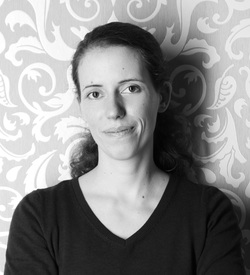
Dr. Roy Rea is an Associate Professor in Ecosystem Science and Management at the University of Northern British Columbia. A Registered Professional Biologist, he holds a BSc from California State University, Stanislaus (1992), MSc from UNBC (1999), and PhD in Ecology from the Norwegian University of Life Sciences (2014). His research examines plant-animal interactions, moose ecology, wildlife-vehicle collision mitigation, and habitat management. Current projects investigate ungulate foraging ecology and human-wildlife conflict solutions. Recent publications focus on wildlife diet analysis using DNA metabarcoding and mitigation strategies for moose-vehicle collisions. Research employs field ecology, molecular techniques, and geospatial analysis. Dr. Rea teaches courses in animal physiology, marine ecology, and field applications. He advises graduate research in wildlife management and conservation.
Prof. Christiaan Both is a Professor of Animal Ecology at the University of Groningen's Faculty of Science and Engineering, affiliated with the Groningen Institute for Evolutionary Life Sciences. His research focuses on avian migration, climate change impacts, and ecological adaptation, particularly in migratory birds. He holds leadership roles in scientific advisory boards such as SOVON and the Netherlands Ornithologists Union. Both studied Biology at Wageningen, Groningen, and Oxford, completing a PhD on avian reproductive ecology in 1998. He held postdoctoral positions globally before joining Groningen in 2004. Key research themes include phenological mismatch in migratory birds, climate-driven habitat shifts, and dispersal strategies in response to environmental change. His work has been featured in Science , Nature , and Current Biology , and he has received grants from NWO, NATO, and the Prins Bernhard Fund. Notable contributions include documenting climate-related shifts in bird migration timing and population declines in long-distance migrants. Both advises on conservation policies and has engaged the public through media outlets like TIME Magazine and National Geographic. His current projects explore genetic and behavioral mechanisms enabling bird populations to adapt to global environmental changes.
Chris Stallings is an Associate Professor at the University of South Florida’s College of Marine Science, specializing in biological oceanography. He holds a Ph.D. from Oregon State University (2007), an M.A. from San Francisco State University (2002), and a B.S. from East Carolina University (1999). His research focuses on marine ecology, fisheries science, and conservation biology, particularly predator-prey interactions, habitat dynamics, and the effects of human activities on marine ecosystems. Stallings leads the Fish Ecology Lab, which investigates species-habitat relationships, community dynamics on reefs, and the impacts of invasive species like lionfish. He has advised numerous graduate students, including Mark Albins, Dinorah Chacin, and Jonathan Peake. Notable projects include studies on oyster reef restoration, lionfish invasion effects, and long-term fish assemblage monitoring. He has received awards such as the Florida Sea Grant Newell Scholarship (2016) and the Thompson Coral Reef Fellowship (2002–2003). His work bridges basic ecological research with applied conservation, addressing topics like artificial reef functionality, spawning dynamics, and the recovery of threatened species like goliath grouper. Stallings collaborates with federal agencies and contributes to fisheries management through studies on discard mortality and recreational fishing impacts. Current research includes examining microplastic impacts on corals, spatial patterns in spawning dynamics, and biodiversity trends via the BioTIME database. His lab also explores trophic structure differences between artificial and natural reefs, emphasizing ecosystem services and human-sea interactions.
Anita Diaz Isla is a Professor in the Department of Life and Environmental Sciences at Bournemouth University, Faculty of Science and Technology. Her work integrates research, education, and public engagement in conservation ecology, with a focus on cultural habitats such as heathlands, meadows, and woodlands. Her research interests span conservation ecology, ecological restoration, biodiversity dynamics, human-wildlife interactions, and climate change impacts. She investigates how traditional and modern land uses affect ecological feedbacks like grazing and pollination. A key focus is on heathland restoration, soil-plant-animal interactions, and the role of citizen science in conservation. She promotes public involvement in nature through initiatives like NatureVolunteers.uk. Her recent publications reveal a strong trend in long-term ecological monitoring, soil biogeochemistry, biodiversity change, and the effectiveness of restoration techniques. Themes include carbon storage in restored heathlands, pH effects on soil enzymes, and plant-insect co-dynamics over decades. Her work often involves collaborations with the National Trust, Natural England, and international partners in Spain. Anita actively mentors students and involves them as co-researchers in real-world conservation projects. She has led educational innovations in fieldwork and student-staff research communities. Her work is supported by HEIF funding and partnerships with conservation organizations. She is involved in several research teams and collaborative networks focused on heathland conservation, ecological restoration, and citizen science. Her projects often integrate fieldwork, laboratory analysis, and community engagement, forming interdisciplinary teams across institutions.
Stefano Mariani is a Professor at Liverpool John Moores University (since 2019) in the School of Environment & Life Sciences. Previously, he held roles including Professor of Conservation Genetics at the University of Salford (2011–2019), Lecturer at University College Dublin (2005–2011), and Post-Doctoral Researcher at the University of Hull (2002–2004). He earned his PhD in Animal Biology from Sapienza University of Rome (2001) and a BSc+MSc in Biology from the University of Rome Tor Vergata (1997). His research focuses on marine ecology and conservation genetics, with emphasis on interdisciplinary approaches for biodiversity management, DNA metabarcoding, and fisheries sustainability. Recent work includes leveraging eDNA from sponges and diver-assisted sampling for marine biodiversity monitoring, as well as investigating sex change dynamics in fish populations. Key contributions span environmental DNA applications, seafood traceability, and Antarctic biodiversity studies. Publications highlight innovations like using museum-preserved sponges for historical eDNA analysis and developing tools to combat seafood mislabeling. Collaborative projects include global biodiversity monitoring (e.g., DNA Divers initiative) and forensic applications of eDNA in wildlife crime investigations. His work bridges academic research with practical conservation, emphasizing scalable solutions for marine ecosystems. Current affiliations include Liverpool John Moores University, with grants and partnerships focused on eDNA technologies and fisheries management.
Tyler Coverdale is an Assistant Professor in the Department of Biological Sciences at the University of Notre Dame, joining in Fall 2023. His research focuses on community and evolutionary ecology in the Anthropocene, particularly how human-driven changes affect species interactions, ecosystem structure, and resilience. His work spans African savannas and North American prairies, integrating field ecology, remote sensing, chemical ecology, and modeling. PhD, Ecology and Evolutionary Biology, Princeton University, 2018 Postdoctoral Fellow, Organismic and Evolutionary Biology, Harvard University, 2021–2023 Presidential Postdoctoral Fellow, Ecology and Evolutionary Biology, Cornell University, 2018–2021 ScB, Biology, Brown University, 2010 His research centers on plant-herbivore interactions, ecosystem resilience, and human-wildlife-livestock coexistence. He investigates how changes in herbivore and plant diversity influence ecosystem function, with a focus on savanna systems. His lab employs a multidisciplinary approach, combining long-term field experiments (e.g., UHURU experiment), molecular tools (e.g., DNA metabarcoding), and theoretical models to understand ecological dynamics. His recent publications reveal trends in the role of megaherbivores in preventing liana infestations, the evolution of plant defense strategies, and the structural regulation of savanna vegetation. His work frequently appears in high-impact journals such as Nature , Science , and PNAS , emphasizing mechanistic insights into ecological resilience and conservation. Notable scientific awards include the John L. Harper Prize from the British Ecological Society for his 2023 review on plant diversity and structural complexity. Coverdale advises students through the Coverdale Lab, which is actively recruiting graduate and postdoctoral researchers. His lab is funded and engaged in externally supported research, with opportunities for external fellowship applicants. The lab emphasizes collaborative science, field-based discovery, and integrative approaches to ecological questions. The Coverdale Lab is based at the Galvin Life Science Center and conducts research in both North American and African ecosystems, contributing to conservation, restoration, and theoretical ecology.
Joy O'Keefe is an Associate Professor at the University of Illinois Urbana-Champaign within the School of Integrative Biology and Department of Natural Resources and Environmental Sciences. She leads the Human-Wildlife Interactions Lab and holds additional affiliations with the Prairie Research Institute. Primary Affiliation: School of Integrative Biology Department: Natural Resources and Environmental Sciences Institute: Prairie Research Institute Dr. O'Keefe's research focuses on understanding bat ecology in human-altered landscapes, particularly examining: Roosting and foraging behaviors Mitigation strategies for bat conservation Thermal ecology of artificial roosts Wildlife trade impacts and solutions Acoustic monitoring techniques Effects of climate and disease on bat populations Her recent work addresses critical conservation challenges such as: Ending online ornamental bat trade Optimizing bat box thermal conditions Assessing white-nose syndrome impacts Improving habitat suitability modeling Dr. O'Keefe collaborates extensively with: USDA Forest Service National Park Service State wildlife agencies Private landowners
Anders Forsman is a Professor in the Department of Biology and Environmental Science at Linnaeus University's Faculty of Health and Life Sciences. He serves as the subject coordinator for doctoral education in Ecology, demonstrating his leadership role in academic training. His research spans evolutionary ecology, population dynamics, and conservation biology with a focus on understanding how evolutionary processes contribute to biodiversity across various taxa including insects, fish, amphibians, and mammals. Forsman's research interests center on evolutionary processes that generate diversity in form, color, function, and behavior among living organisms. He investigates how individual variation in functionally important traits affects ecological success of populations and species in changing environments. His work combines behavioral studies, experiments, genetic markers, and theoretical modeling to address fundamental biological questions with applications for conservation biology and sustainable resource management. His research has significant implications for developing more sustainable agricultural, fishing, and forestry practices in the face of climate change. Analysis of Forsman's recent publications reveals a strong focus on climate change impacts across multiple ecosystems. His work spans terrestrial systems (oak forests, moth populations), freshwater environments (riverine fish, pike ecology), and marine contexts (Baltic Sea microbiomes). A recurring theme is examining how biodiversity responds to environmental stressors, with particular attention to spatial patterns, adaptive capacity, and conservation implications. His methodological approach integrates field observations, experimental manipulations, and molecular techniques to provide comprehensive insights into ecological and evolutionary processes. Forsman leads multiple research initiatives including the Evolutionary Ecology group, Fish Ecology research focusing on Baltic coastal predatory fish, and the Linnaeus University Centre for Ecology and Evolution in Microbial model Systems (EEMiS). His current projects address critical environmental challenges such as climate change impacts on coastal ecosystems, adaptation of forest ecosystems to changing conditions, and effects of river fragmentation on fish populations. His collaborative approach is evident in numerous co-authored publications across diverse ecological topics, demonstrating his ability to bridge disciplinary boundaries to address complex environmental questions.
Herb Schellhorn is a Professor in the Department of Biology within the Faculty of Science at McMaster University. His research spans fundamental bacterial genetics to applied environmental microbiology, with a particular focus on bacterial adaptation mechanisms and water quality monitoring. Dr. Schellhorn earned his B.Sc. and M.Sc. in Microbiology from the University of Guelph, followed by a Ph.D. in Microbiology from North Carolina State University. His academic background established the foundation for his expertise in bacterial stress response mechanisms and molecular microbiology. His laboratory primarily investigates bacterial genes that help cells adapt to sub-optimal growth conditions, with significant emphasis on the RpoS regulon. Early in his career, he focused on fundamental mechanisms of bacterial gene regulation, oxidative stress response, and DNA repair in Escherichia coli. More recently, his research has expanded to address critical environmental challenges, particularly in recreational water safety and pathogen detection in the Great Lakes region. His work combines DNA microarrays, real-time PCR, reporter fusions, and mass spectrometry with advanced genomic techniques to develop innovative solutions for water quality assessment. Analysis of his recent publications reveals a strategic evolution from pure bacterial physiology toward applied environmental microbiology. While maintaining his core interest in bacterial adaptation mechanisms, approximately 70% of his recent work (2023-2025) focuses on water quality monitoring, microbial source tracking, and recreational water safety. His research demonstrates exceptional methodological diversity, incorporating molecular diagnostics, metagenomics, and computational approaches to address public health challenges. Development of novel molecular methods for rapid water quality assessment Application of genomic technologies to environmental monitoring Investigation of bacterial adaptation in natural aquatic environments Creation of same-day testing protocols for recreational water safety Characterization of microbial communities in freshwater ecosystems Dr. Schellhorn actively contributes to teaching at McMaster University, instructing courses including Medical Microbiology (MOLBIOL 6P03 and 4P03), Introductory Biology (BIOLOGY 1P03), and Techniques in Molecular Genetics (MOLBIOL 3V03). His teaching reflects his research expertise, bridging theoretical knowledge with practical laboratory skills in molecular biology and microbiology. His laboratory serves as a training ground for students interested in both fundamental bacterial physiology and applied environmental microbiology.
Inga Hiiesalu is an Associate Professor of Molecular Plant Ecology at the University of Tartu’s Faculty of Science and Technology, within the Institute of Ecology and Earth Sciences. She specializes in plant-fungal interactions, particularly focusing on mycorrhizal fungi across environmental gradients. Her work spans global-scale studies in diverse regions, including Europe, North America, the Himalayas, and Iceland. Education: PhD in Plant Ecology (2012) and Master’s in Biology (2007), both from the University of Tartu. Research: Over 50 publications in journals like *Science*, *New Phytologist*, and *Ecology Letters*, cited over 3,400 times (H-index 24). Awards: 2015 I Prize for Young Researcher Presentation and 2012 Honorary Mention in National Student Research Competition. Research interests include biodiversity conservation, soil microbial diversity, and the ecological impacts of global change. She leads projects funded by the Estonian Research Council and EU, such as *Agroecology and New Crops in Future Climates* (€1.37M) and *Soil FUNgi in FARMing Landscapes* (€577K). Her supervision includes doctoral student Merili Simmer and master’s student Epp Maria Lillipuu. Administrative roles include editorial work, conference organizing, and society memberships (e.g., Estonian Mycological Society).
Tanel Vahter is a Research Fellow in Soil Ecology at the University of Tartu’s Faculty of Science and Technology, Institute of Ecology and Earth Sciences. He holds a Doctor’s Degree from the University of Tartu (2021) and a Master’s Degree in Landscape Ecology from Tallinn University (2016). His career includes roles as a doctoral student (2016–2021) and chief specialist in agrochemistry at the Agricultural Research Centre (2014–2016). Education: PhD in Botany and Ecology, University of Tartu (2016–2021) MSc in Landscape Ecology (cum laude), Tallinn University (2014–2016) BSc in Geoecology, Tallinn University (2011–2014) Research Interests: Vahter focuses on soil ecology, plant-microbial mutualisms, and sustainable agroecosystems. His work explores how agricultural practices, environmental factors, and historical habitat proximity influence soil biodiversity and ecosystem services. He emphasizes the role of mycorrhizal fungi in plant growth promotion and ecological restoration, particularly in post-mining landscapes and semi-natural grasslands. His research integrates high-throughput sequencing and environmental DNA (eDNA) techniques to assess global plant and soil microbial diversity. Publications Trends: His articles highlight the interplay between soil microbial communities and agricultural sustainability. Recent studies investigate the impacts of tillage practices, soil compaction, and commercial inoculants on fungal diversity. He also examines the legacy effects of land-use changes on ecosystem services and the potential of native fungi for landscape restoration. Awards: 2020 Dora Plus T1.1 short-term mobility grant 2018 IAVS Travel grant for symposium participation 2018 Third place in 'Quarrie Life' European project competition 2016 Third place in Tallinn University thesis competition Advising & Grants: Vahter supervises three doctoral and three master’s students, focusing on topics like regenerative agriculture and soil health indicators. He has led or contributed to grants totaling over 1.3 million EUR, including projects on agroecology, soil biodiversity, and sustainable farming. Current roles include leading the 'Development of a fatty acid biomarker based soil health indicator' initiative and co-leading the 'FUNFARM' project. Labs & Teams: Active in research networks like the European COST Action FP1305 and collaborates with institutions such as the Estonian Research Council and the Archimedes Foundation. He is a board member of the Estonian Soil Science Society and participates in global initiatives like the Global Soil Biodiversity Conference.
Camila Mazzoni is a group leader at the Leibniz Institute for Zoo and Wildlife Research (IZW) in Berlin, Germany. She co-leads the BeGenDiv initiative and serves as Chair of the European Reference Genome Atlas (2020–2023). Her research focuses on conservation genomics, population genomics, and phylogenomics , utilizing whole genome sequencing and environmental DNA analysis to address biodiversity challenges. Education PhD, Molecular and Cellular Biology, Oswaldo Cruz Institution (Fiocruz), Brazil (2003–2006) MSc, Molecular and Cellular Biology, Oswaldo Cruz Institution (Fiocruz), Brazil (2001–2003) BSc, Biological Sciences, University of Rio de Janeiro State, Brazil (1997–2001) Mazzoni’s work spans hybridization/introgression studies (e.g., sea turtles, grasshoppers), bioinformatics pipeline development for non-model organisms, and mitogenomic/environmental DNA applications . Her recent publications highlight advancements in long-read sequencing , RADseq methods , and cross-species transmission analysis . Projects include Biodiversity Genomics Europe , Genotropics , and contributions to the Earth BioGenome Project . Collaborative efforts involve teams at IZW, BeGenDiv, and international consortia like the European Reference Genome Atlas.
Paco Bustamante is a Professor at the University of La Rochelle, specializing in ecotoxicology and marine contaminant research. His work primarily focuses on mercury contamination, trace elements, and pollutants in marine ecosystems across the globe, from polar regions to tropical environments. With affiliations including the CNRS (Section 30) and the French University Institute (as an honorary member), he leads significant research projects investigating bioaccumulation, detoxification mechanisms, and trophic transfer of contaminants. Dr. Bustamante's research interests span ecotoxicology, bioaccumulation of trace elements and organic pollutants, stable isotope applications, biomarker development, and trophic ecology. His work examines contamination patterns in diverse marine organisms including bivalves, cephalopods, fish, birds, and mammals, with particular emphasis on mercury cycling in polar and tropical ecosystems. His innovative research has revealed novel detoxification mechanisms for mercury in marine predators and documented century-long trends in mercury contamination. His publication record demonstrates consistent high-impact research, with over 380 publications focusing on environmental contaminants in marine systems. Recent work has examined PFAS pollution in Mediterranean shearwaters, mercury speciation in emperor penguins, and the relationship between changing trophic niches and mercury contamination in seabirds. His research often involves international collaborations across multiple continents, reflecting the global nature of marine pollution issues. Honorary Member of the French University Institute Best Paper Award 'Environmental Science and Technology' 2021 Principal investigator on multiple ANR projects (ToxSeaBird, TONIC) Coordinator of European research projects (BIOCET, FACTS, ARCTOX) Dr. Bustamante actively supervises research and collaborates with numerous scientists worldwide. His work informs environmental policy through projects related to the Minamata Convention on mercury pollution. Current research focuses on emerging contaminants like PFAS, climate change impacts on contaminant distribution, and developing novel biomarkers for environmental monitoring. His laboratory employs advanced techniques including stable isotope analysis, speciation chemistry, and molecular approaches to understand contaminant fate in marine ecosystems.
Lisette P Waits serves as University Distinguished Professor in the Department of Fish and Wildlife Sciences within the College of Natural Resources at the University of Idaho. She holds additional affiliations as Affiliate Faculty at the Center for Research on Invasive Species, Member of the Initiative for Bioinformatics and Evolutionary Studies, and Participating Faculty at the Institute for Modeling Collaboration and Innovation through the Office of Research and Economic Development. Her academic credentials include: PhD in Genetics, University of Utah (1996) BS in Genetics, University of Georgia (1991) Dr. Waits' research program integrates conservation biology with advanced genomic methodologies to address critical wildlife management challenges. Her primary focus areas include endangered species recovery, population genetics, non-invasive genetic monitoring, and landscape-scale connectivity assessments. She employs molecular ecology and evolutionary biology frameworks to investigate genetic diversity loss, hybridization dynamics, and adaptive responses to environmental change across fragmented habitats. Analysis of her recent publications (2023-2025) reveals dominant themes in genomic conservation: development of spatial close-kin mark-recapture models for terrestrial species, comparative SNP/microsatellite analyses for carnivore population structure, and DNA metabarcoding applications for predator diet assessment. Her work consistently demonstrates how genetic connectivity mitigates diversity loss in threatened populations like Columbia Basin pygmy rabbits and grizzly bears, while quantifying harvest impacts on social carnivores including wolves and wolverines. Through university-affiliated institutes, Dr. Waits contributes to interdisciplinary initiatives applying bioinformatics and computational modeling to conservation genomics. Her collaborations enhance genomic data interpretation for wildlife management decisions, particularly regarding climate adaptation strategies and metapopulation recovery planning for species with complex social structures.
Prof. Dr. Daniela Beisser is a Professor at the Department of Engineering and Natural Sciences (FB 8) of the Westphalian University of Applied Sciences in Recklinghausen, Germany. Her research focuses on bioinformatics and biostatistical methods for high-throughput 'omics data, applied to biomedicine and freshwater ecology. She previously held academic roles at the University of Duisburg-Essen (2017–2023) and University Hospital Essen. 2004–2008: B.Sc. in Molecular Biology with Bioinformatics focus, FH Gelsenkirchen 2006–2008: M.Sc. in Molecular Biology with Bioinformatics focus, FH Gelsenkirchen 2008–2011: Ph.D. in Bioinformatics, University of Würzburg Her research integrates computational approaches with experimental data to study molecular responses to environmental stressors in freshwater organisms, genome analyses in human and protists, and proteomic studies in plants. She also investigates eco-evolutionary theories in microorganisms and links biodiversity to ecosystem functions. Recent publications highlight her work on amplicon sequencing (Natrix2 pipeline), metatranscriptomic analysis of microbial communities, and machine learning frameworks for environmental data. She contributes to software tools like TaxMapper and BioNet for reproducible workflows. Best Poster Award, German Conference on Bioinformatics (2013) Travel scholarships: DAAD, DAAD PROMOS, German Symposium on Systems Biology E-fellows.net scholarship (2006–2008) She has supervised numerous PhD, Master’s, and Bachelor’s students on topics such as protist community dynamics , fungal degradation processes , and stressor recovery mechanisms . Her lab collaborates on the CRC 1439 'RESIST' project and develops tools for environmental DNA analysis.