Eugenio Marinelli is a Research Fellow in the Data Science department at EURECOM, specializing in DNA-based data storage systems and high-performance computing. His office is located in room 409, and he can be contacted via phone (8260) or email. Research Focus: His work integrates computer science with molecular biology to develop next-generation storage solutions. Primary interests include: DNA data encoding and error correction for reliable long-term preservation Parallel algorithms for heterogeneous computing architectures (GPUs/XPUs) Columnar database designs optimized for molecular storage Migration-free archival strategies for cloud-scale data lakes His publications demonstrate consistent innovation in DNA storage architectures, with recent work emphasizing error resilience and cross-platform performance. No scientific awards or student advising roles are documented.
Dr Rebecca Coll is a Lecturer at Queen's University Belfast (QUB), affiliated with the School of Medicine, Dentistry and Biomedical Sciences and the Wellcome Wolfson Institute for Experimental Medicine. Her research focuses on understanding inflammasome mechanisms, particularly the NLRP3 inflammasome, and their role in inflammation, autoimmune diseases, and drug discovery. She has led projects such as 'Investigating the Thermal Biology of Inflammasomes' (2021–present) and contributed as Co-Investigator to initiatives like the Chemoproteomics Centre of Excellence (2023–present) and mass spectrometry proteomic capabilities at QUB (2023–present). Her work aligns with UN Sustainable Development Goals, contributing to advancements in health and well-being. She has been actively involved in academic activities, including invited talks at conferences like the World Congress on Inflammation (2019), the Greater Manchester Immunology Group seminar series (2019), and the Lorne Infection and Immunity Conference (2019). Coll's research interests emphasize the physiological and pathological roles of NLRP3 inflammasome activation, therapeutic targeting of inflammasomes, and the interplay between inflammation and metabolic disorders. Her recent studies explore novel inhibitors (e.g., bispecific antibodies, indazole derivatives) and mechanisms to regulate inflammasome activity in diseases such as atherosclerosis and acute respiratory distress syndrome (ARDS). Key Awards: Research Australia Griffith University Discovery Award (2016) Young Investigator Award (2012) 2021 ICIS Regeneron New Investigator Award (2021) Best Science Bite at the Lorne Infection and Immunity Conference (2019) Coll accepts PhD students and has supervised one student (details unavailable). She collaborates extensively with the Collins Lab and other institutions to advance proteomics and drug discovery tools, particularly through mass spectrometry. Her involvement in large-scale projects highlights her role in interdisciplinary research to develop therapies targeting inflammasome-driven inflammation. Her affiliation with the Wellcome Wolfson Institute underscores her commitment to experimental medicine, while her leadership in thermal biology studies and co-investigator roles in chemoproteomics initiatives reflect her expertise in translational research.
Thomas Heinis is a Professor in Computing at Imperial College London. He leads the SCALE Lab and conducts research in DNA data storage and high-performance data analytics. His academic journey includes a Ph.D. and M.Sc. in Computer Science from ETH Zürich, a Postdoctoral fellowship at EPFL’s DIAS Lab, and a Fulbright Scholarship at Purdue University. He specializes in scalable data management techniques for scientific and spatial datasets, novel hardware optimization, and interdisciplinary applications such as medical data analysis. Education: Ph.D. and M.Sc. in Computer Science, Swiss Federal Institute of Technology in Zürich (ETH Zürich) Postdoctoral Fellow, DIAS Lab, EPFL Fulbright Scholarship, Purdue University (2002–2004) Research Interests: Big Data and Distributed Processing Spatial Data Indexing and Visualization High-Performance Computing (HPC) Data Analytics Data Management on Novel Hardware (e.g., neuromorphic systems) Synthetic DNA Storage Technology Interdisciplinary Applications in Medicine and Neuroscience Recent Work Trends: Heinis’s publications emphasize innovative storage solutions like Motif-based DNA encoding, efficient spatial indexing algorithms (e.g., FLAT, SCOUT, TOUCH), and machine learning-driven approaches for healthcare and scientific data analysis. His work bridges computational methods with real-world applications in neuroscience, medicine, and environmental science. Scientific Awards: SystemsX Interdisciplinary Ph.D. Fellowship (2007) Finalist, Venture Leaders Entrepreneurship Competition (2007) Finalist, Purdue Burton D. Morgan Entrepreneurship Competition (2003) Fulbright Scholarship (2002–2004) Advising & Grants: Supervises Ph.D. students in scientific data management, spatial data, and DNA storage. Funding opportunities include Marie-Curie post-doctoral fellowships, CSC Imperial Scholarships, and others. His lab actively collaborates with institutions like the Blue Brain Project and explores scalable tools for data-driven research. Labs & Teams: Leader of the SCALE Lab at Imperial College. Collaborations with the Blue Brain Project (BBP) on neuroscientific data management.
Professor Martin Noble is a faculty member at Newcastle University , specializing in Structural Biology and Cancer Drug Discovery . His work focuses on Protein Kinase Inhibition , Fragment-Based Drug Design , and Crystallographic Techniques . Key Collaborations : Co-authored numerous studies with Professor Jane Endicott and Dr. Mathew Martin . Research Trends : Recent publications highlight structural studies of CDK2-cyclin complexes , MDM2-p53 inhibitors , and applications of Cryo-EM and Fragment Screening in drug development. Technical Contributions : Involved in CCP4 Suite software for macromolecular crystallography and FragLites/PepLites for bromodomain and peptide interaction studies.
Dr. Mathew Martin is a researcher at Newcastle University , focusing on structural biology and drug discovery for cancer therapies. His work primarily involves crystallographic fragment screening, kinase inhibitor design, and molecular interaction analysis. His research interests include: Kinase Inhibition: Targeting CDK, ERK5, and EGFR with covalent and reversible inhibitors. Structural Biology: Utilizing X-ray crystallography to map protein-ligand interactions and validate drug targets. Fragment-Based Drug Discovery: Developing NUDELs and FragLites for efficient hit generation in academic cancer research. Recent publications highlight his contributions to understanding drug resistance mechanisms, optimizing pharmacokinetics, and designing novel inhibitors with scaffold diversity. His collaborations span structural biology, chemical synthesis, and proteomic analysis.
Dr. Shannon Turberville is a researcher affiliated with Newcastle University , contributing to structural biology and chemical biology. Her work focuses on molecular interactions and drug discovery, particularly in protein-ligand binding mechanisms and library synthesis methodologies. Research interests include structural biology, protein-ligand interactions, fragment-based drug discovery, and scaffold diversity in lead compound synthesis. Key collaborations span topics like bromodomains and DNA-encoded libraries. Recent publications highlight her expertise in molecular interaction mapping and structural design, with a focus on cyclin D3 binding, DNA-encoded library expansion, and bromodomain ligand interactions.
Brian M Paegel is a Professor at the University of California, Irvine (UCI), holding appointments in three schools: School of Pharmacy & Pharmaceutical Sciences, School of Physical Sciences, and The Henry Samueli School of Engineering. He also serves as the Associate Dean of Research in the School of Pharmacy & Pharmaceutical Sciences. His academic background includes a B.S. in Chemistry from Duke University (1998) and a Ph.D. in Chemistry from UC Berkeley (2003). Research Focus: Drug discovery, microfluidics, combinatorial chemistry, and DNA-encoded libraries. His work aims to revolutionize high-throughput screening (HTS) through miniaturized, cost-effective platforms. Awards: NIH NRSA Postdoctoral Fellow, NIH Pathway to Independence Award, NIH Director's New Innovator Award, NSF CAREER Award, and NIH MIRA. His research integrates microfluidics to develop next-generation drug discovery tools, emphasizing distributed HTS using DNA-encoded libraries. This approach aims to make drug discovery as accessible as DNA sequencing. Key contributions include the development of microfluidic devices for DNA sequencing and the design of droplet-scale pharmacokinetic assays. His lab, the Paegel Lab, focuses on translating genomic insights into therapeutic solutions.
Professeure associée at Université de Montréal in the Department of Chemistry (Faculty of Arts and Sciences) and affiliated with the Department of Pharmacology and Physiology (Faculty of Medicine). Her research focuses on medicinal chemistry, designing novel chemical entities for cancer therapy. Holds dual academic appointments and leads drug discovery initiatives at IRIC. Completed a PhD at Université de Sherbrooke (1990), followed by postdoctoral work at Washington University School of Medicine. Extensive industry experience with Bristol-Myers Squibb (1991–2007) before joining IRIC. Key affiliations: IRIC, GRUM, RQRM Research projects: Over 30 funded projects including ERK3/ERK4 inhibitors, DNA-encoded libraries, and AML treatment Supervised 6+ students in recent years. Active in both basic and translational research with >100 publications. Leads teams in chemogenomic profiling and drug repurposing strategies targeting leukemia vulnerabilities.
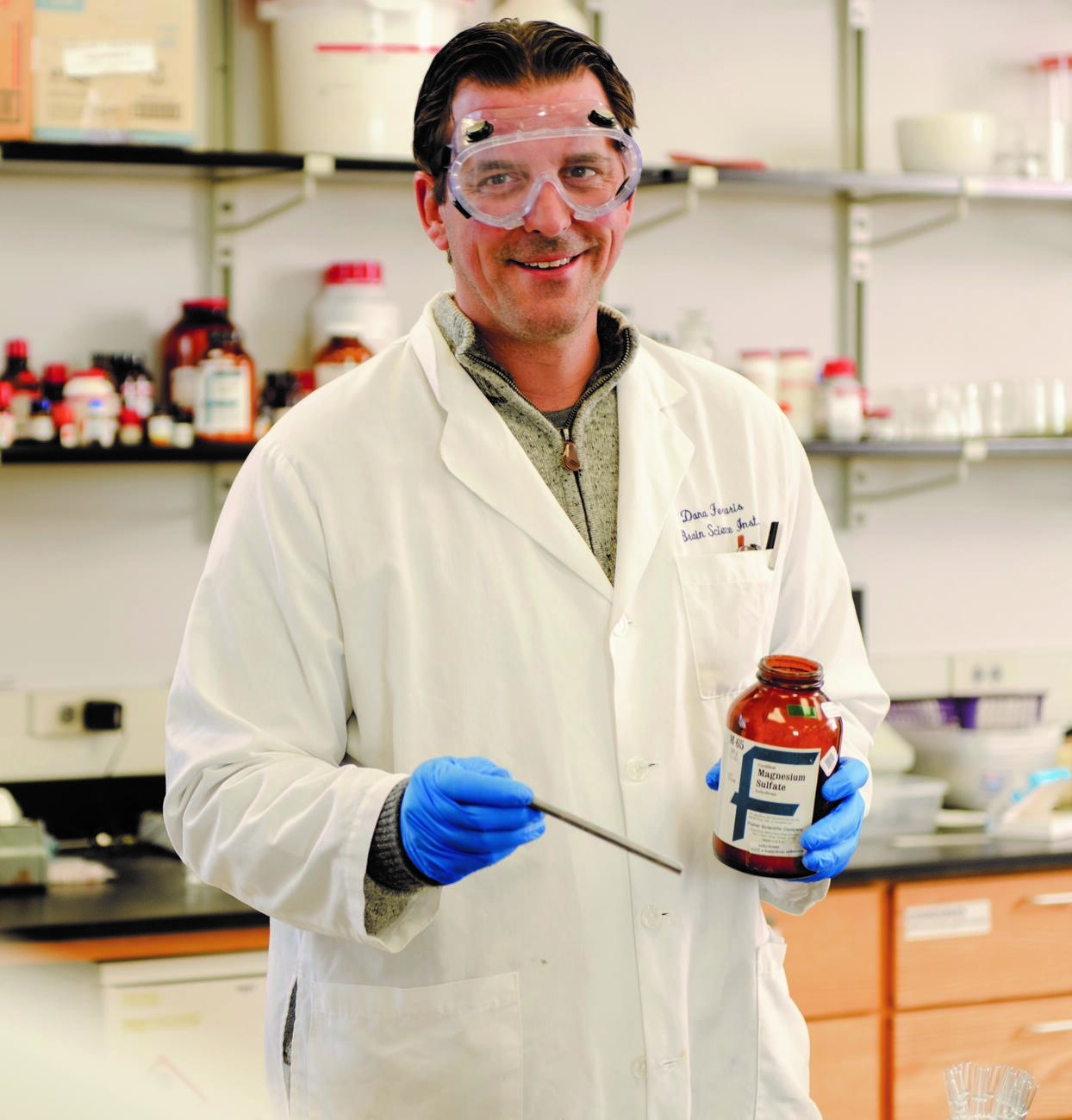
Dana Ferraris is a Professor of Chemistry and the John Desmond Kopp Professorship in the Sciences at McDaniel College. He holds a Ph.D. in Chemistry from Johns Hopkins University and an MBA from Johns Hopkins Carey Business School. His academic home is in the Department of Chemistry within the School of Natural Sciences, where he teaches Organic Chemistry, Medicinal Chemistry, and Modern Drug Discovery. Education: B.A. in Biochemistry, Lafayette College, 1994 Ph.D. in Chemistry, Johns Hopkins University, 2000 M.B.A., Johns Hopkins Carey Business School, 2009 Dana's research interests center on medicinal chemistry and drug discovery , with a focus on developing novel therapeutics for cancer and viral diseases. His work integrates industrial experience with undergraduate research, enabling students to engage in cutting-edge projects such as designing inhibitors for SARS-CoV-2 and developing compounds for acute myeloid leukemia. He emphasizes the importance of understanding the full drug development pipeline, including cost, timeline, and interdisciplinary collaboration. His recent publications highlight a strong trajectory in targeting viral macrodomains and PARP enzymes, using techniques ranging from high-throughput screening to structure-based design. These works reflect his expertise in bioorganic chemistry and translational drug development. Scientific Awards and Honors: Charles A. Boehlke Jr. Engaged Faculty Fellows Award (AY 2018–2019) Scholarly Publications Award, McDaniel College (AY 2017–2018) Nora Roberts Award for Community Outreach (AY 2016–2017) John Desmond Kopp Professorship in the Sciences "You're a rockstar." – 2018 summer research group Dana has mentored over 30 undergraduate students in research, many of whom have pursued careers in chemistry and medicine. He fosters interdisciplinary collaboration, integrating students from biology, pre-med, and chemistry into his projects. He has established academic and industry partnerships and contributed to career development initiatives through the American Chemical Society, where he has served as a councilor and committee member. His lab emphasizes soft skills such as teamwork, communication, and scientific presentation. Beyond the classroom, he co-owns Kismet Cafe and enjoys woodworking and bocce ball, reflecting a well-rounded engagement with both science and community.
Dr. Liu Ying serves as a Research Assistant Professor in the Department of Biomedical Engineering at Southern University of Science and Technology (SUSTech), where she focuses on developing innovative diagnostic technologies. Her academic journey began at Zhengzhou University where she earned her Bachelor's degree in Chemistry, followed by a Ph.D. in Organic Chemistry from Peking University. Her educational background includes: Ph.D. in Organic Chemistry, College of Chemistry and Molecular Engineering, Peking University (2011.09-2016.07) B.S. in Chemistry, College of Chemistry and Molecular Engineering, Zhengzhou University (2007.09-2011.06) Dr. Liu's research spans multiple cutting-edge areas in biomedical diagnostics, with particular expertise in nucleic acid and protein detection methods. Her work bridges the gap between fundamental chemical principles and practical clinical applications, especially in liquid biopsy technologies. She has made significant contributions to the development of automated viral nucleic acid extraction technology that has received emergency authorization from the US FDA and been commercialized. Her publication record demonstrates a consistent trajectory of impactful research, with papers appearing in high-impact journals such as Angewandte Chemie (IF=12.439) and Chemical Science (IF=9.322). Her work shows a clear evolution from fundamental chemical biology techniques to applied biomedical engineering solutions. Her notable achievements include: General Financial Grant from China Postdoctoral Science Foundation (2020M672702) Special Financial Grant from China Postdoctoral Science Foundation (2020T130051ZX) Multiple prestigious scholarships including the Peking University President Scholarship and National Scholarship Dr. Liu has received funding for significant research projects including 'Enrichment of fetal cell-free DNA from maternal plasma based on novel magnetic nanoparticles platform' and 'High throughput Covid-19 detection and diagnosis platform based on plasmonic gold microarray technology.' Her work demonstrates strong translational potential, with one technology already commercialized and FDA-authorized.
Josh Coon serves as Professor and Thomas and Margaret Pyle Chair in Metabolism within the Department of Chemistry at the University of Wisconsin-Madison's College of Letters & Science. He directs the NIGMS-funded National Center for Quantitative Biology of Complex Systems and leads Coon Laboratories, which focuses on advancing mass spectrometry technologies for proteome and metabolome analysis. His research bridges biomedical, biofuel, and biochemical applications through instrumental innovation. Coon's research interests center on mass spectrometry technology development , particularly for comprehensive proteome and metabolome analysis. His laboratory pioneers techniques like electron transfer dissociation (which he co-invented) and develops novel instrumentation configurations including Orbitrap systems. Current emphases include high-throughput quantitative proteomics, lipidomics, and metabolomics with applications spanning human health, biofuels, and fundamental biological discovery. The lab maintains close collaborations with Thermo Fisher Scientific for technology transfer and commercialization. His recent publications demonstrate leadership in Ultrafast proteome analysis (e.g., 'One-hour human proteome') Advanced separation techniques (SynchroSep-MS) Cryo-EM sample preparation innovations Multiplexed omics data integration Metabolic remodeling in stress responses Machine learning applications in proteomics These works consistently advance methodological capabilities while addressing biological questions in aging, exercise physiology, viral infection, and bioenergy. Coon has received significant recognition including the Biemann Medal from the American Society for Mass Spectrometry and the Ken Standing Award from the University of Manitoba. His laboratory has filed dozens of patent applications through WARF, leading to commercial products that impact laboratories worldwide. As an advisor, Coon has trained over 50 PhD graduates and postdoctoral scholars now working across academia and industry (including Thermo Fisher Scientific, Genentech, Harvard, and UCSF). His trainees consistently highlight the lab's collaborative environment, industry connections, and emphasis on both technical innovation and communication skills. Current funding supports multiple NIH grants and industry partnerships focused on quantitative biology.
Ken Pearce is a Research Professor at the UNC Eshelman School of Pharmacy, University of North Carolina at Chapel Hill. He leads an interdisciplinary team focused on early-stage drug discovery, particularly in oncology and epigenetic pathways. Education: No explicit educational details are provided in the text. Research Interests: His laboratory integrates reagent production, assay development, high-throughput screening, biophysics, and exploratory cell biology to identify small-molecule chemical probes and therapeutics. Specific areas include inhibition of chromatin methyl-lysine reader proteins, targeting small GTPases (e.g., K-Ras, Gaq), inositol phosphate kinases, and protein–protein interactions involving CIB1 and MAGE proteins. They also pursue phenotypic screens—such as enhancing c-Myc degradation in pancreatic cancer cells—and are advancing DNA-encoded library technologies as a complement to traditional high-throughput approaches. Publication Trends: Recent articles (2022–2025) emphasize chemical biology, structure-guided drug design, epigenetic modulators, and immunotherapy. Earlier work (2004) focused on structural characterization of nuclear receptors. The trajectory illustrates a consistent focus on translating biochemical insights into therapeutic leads for cancer, neurodegeneration, and inflammatory diseases. Funding & Collaborations: Pearce actively partners with the Center for Integrative Chemical Biology and Drug Discovery and multiple groups across the UNC campus, leveraging shared resources and expertise to accelerate translational research. Laboratory & Teams: He directs a comprehensive collaborative group housed in Marsico Hall, Chapel Hill, NC, equipped for high-throughput screening, biophysical characterization, and cellular imaging.
Yasuko Antoku is a Researcher at the Biotech Research & Innovation Centre (BRIC) within the Faculty of Health and Medical Sciences at the University of Copenhagen. Located at Ole Maaløes Vej 5 in Copenhagen, she has maintained an active research career from 2008 through 2024, contributing to numerous high-impact publications across multiple disciplines. Her research interests span cancer biology, nanotechnology, and developmental processes, with particular expertise in advanced imaging techniques and nanomaterial applications. Dr. Antoku's work demonstrates significant interdisciplinary integration, bridging molecular biology with innovative imaging technologies to address complex biological questions in cancer development and tissue regeneration. Analysis of her publication history reveals an evolution from foundational nanotechnology work (2008-2010) to more recent cancer biology and developmental research (2019-2024). Her contributions consistently focus on cellular dynamics, imaging methodologies, and molecular mechanisms underlying disease processes. Scientific Recognition Her 2008 paper in the Journal of the American Chemical Society has received over 825 citations Multiple publications featured in high-impact journals including Nature Cell Biology and Nature Communications Research highlighted across various news outlets and social media platforms As a member of BRIC's Core Facilities, Dr. Antoku provides specialized expertise to the broader research community while maintaining her own research trajectory. Her collaborative approach is evident in her extensive co-authorship network spanning multiple institutions and research domains.