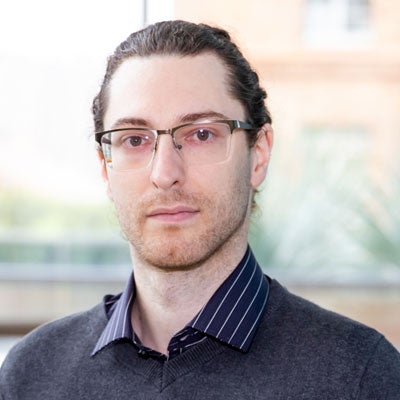
Istvan Albert is a Research Professor of Bioinformatics at Pennsylvania State University , affiliated with the Department of Biochemistry and Molecular Biology . He leads the Bioinformatics Consulting Center and teaches BMMB 852: Applied Bioinformatics . Research Interests: Specializing in bioinformatics, large-scale biological data analysis, microarray and sequence analysis, scientific programming, algorithm development, and database-driven web development. His work spans gene ontology visualization , RNA-Seq analysis , and coronavirus research . Software Development: Created GeneScape for gene function visualization and bio for bioinformatics workflows. Maintains the Biostar Handbook series and the Biostars Q&A Forum , a leading bioinformatics resource.
Sara Hägg is a Senior Lecturer at the Karolinska Institutet , affiliated with the Department of Medical Epidemiology and Biostatistics . She is also a Docent in molecular epidemiology. PhD in Computational Biology (Linköping University, 2009) MSc in Molecular Biology (Stockholm University, 2003) BSc in Computer Science (Stockholm University, 2003) Her research focuses on human biological aging , including measurement of aging markers (telomere length, epigenetic clocks, frailty index), causal pathway analysis, and identification of geroprotectors for age-related diseases. She utilizes longitudinal twin studies (SATSA, GENDER, HARMONY), UK Biobank, and Swedish cohorts with methods like Mendelian randomization and genome-wide analyses . Recent articles demonstrate trends in epidemiological aging research , with emphasis on cardiovascular aging , neurological disease interactions , metabolic profiling , and epigenetic clocks . Her work often involves multivariable modeling and cross-cohort validation . Leadership roles include Director of LifeGene Core Facility (2024-) and Founding Board Member of the Nordic Aging Society (2023-). She serves on expert groups for the Swedish Twin Registry and Strategic Research Area in Epidemiology and Biostatistics .
Professor Alexander J. Hartemink holds dual appointments in the Department of Computer Science and Department of Biology at Duke University, Trinity College of Arts & Sciences. He is also a Bass Fellow in Computer Science. His research focuses on computational biology, machine learning, and systems biology, with applications to genomics, epigenomics, and transcriptional regulation. Hartemink leads the Duke Office of University Scholars and Fellows and has directed the Computational Biology and Bioinformatics graduate program. He earned a PhD from MIT (2001), MPhil from the University of Oxford (1996), and BS from Duke (1994). Research Interests His work integrates computational methods to study chromatin dynamics, transcriptional networks, and epigenetic mechanisms. Key areas include modeling chromatin accessibility, predicting transcription factor binding, and understanding cell-cycle regulation. Techniques employed include Bayesian networks, dynamic systems modeling, and machine learning algorithms. Publications & Trends Recent work emphasizes single-cell multi-omics integration, chromatin occupancy modeling (RoboCOP framework), and transcriptional regulation in response to genetic perturbations. Themes include epigenetic plasticity, disease-associated enhancers, and systems-level analysis of gene expression. Awards & Grants Hartemink has received the Sloan Research Fellowship (2005) and NSF CAREER Award (2004). Active grants include NIH funding for chromatin-transcription interplay studies and NSF support for regulatory genome research. He collaborates on projects like the Data+ initiative, promoting interdisciplinary data science. Affiliations & Labs Associated with Duke’s Center for Genomic and Computational Biology and Center for Advanced Genomic Technologies. His lab develops computational tools for genomic analysis, including software for chromatin modeling and epigenetic data integration.
Luca Cardelli is a Principal Researcher and Assistant Director at Microsoft Research Cambridge, UK, since 1997. He holds visiting professorships at Imperial College London (Department of Computing, 2004–2009) and the University of Trento (2005–2007). He earned his PhD in Computer Science from the University of Edinburgh in 1982. His research spans type theory , molecular programming , and principles of programming languages , with applications to systems biology and concurrency theory. Notable contributions include formal frameworks for modeling biochemical systems (e.g., the stochastic π-calculus) and designing DNA-based circuits. Key achievements include the AITO Dahl-Nygaard Senior Prize (2007) and multiple Most Influential Paper Awards at POPL and ETAPS. His work bridges computer science and biology, advancing both theoretical foundations and practical molecular computing.
Scott Michael Lindhorst, MD, is an Assistant Professor in the Department of Neurosurgery at the Medical University of South Carolina (MUSC) College of Medicine. He holds a dual appointment in the Division of Hematology/Medical Oncology within the Department of Medicine. Dr. Lindhorst specializes in neuro-oncology, focusing on central nervous system lymphomas, gliomas, and meningiomas, while also managing brain metastases through clinical trials. Education: BS in Microbiology from University of Florida (2001), MD from University of South Alabama College of Medicine (2005) Training: Residency in Internal Medicine, Fellowship in Hematology/Medical Oncology (University of Alabama at Birmingham), Fellowship in Neuro-Oncology (Duke University Medical Center) His research centers on immuno-oncology , glioblastoma therapy , and epigenetic cancer treatments , with a strong emphasis on clinical trials for novel therapies. Recent publications explore hypermutation in cancer , immune checkpoint inhibition , and programmed necrosis in glioblastoma . Dr. Lindhorst is board-certified in internal medicine, hematology, medical oncology, and neuro-oncology. Clinical practice includes CNS lymphomas , gliomas , meningiomas , and brain metastases , with dedicated clinical trials to advance treatment options.
Kathleen M. Carley is a full professor at Carnegie Mellon University's School of Computer Science with courtesy appointments in Engineering and Public Policy, Heinz School, and Electrical and Computer Engineering. As director of the Center for Computational Analysis of Social and Organizational Systems (CASOS) and the Center for Informed Democracy and Social-Cybersecurity (IDeaS) , she leads interdisciplinary research at the intersection of network science, cognitive modeling, and cybersecurity. Ph.D. in Sociology from Harvard University SB degrees in Economics and Political Science from MIT Her research focuses on Dynamic Network Analysis (DNA) and Social-Cybersecurity (SC) , developing tools like ORA (network analysis), AutoMap (semantic mining), Construct (influence simulation), and BotHunter (bot detection). She has over 400 publications and 15+ active research projects addressing disinformation, cognitive security, and organizational resilience. Recent work examines LLM-powered bots , multi-platform misinformation dynamics , and public health analytics . As an IEEE Fellow, she contributes to standards in computational social science while teaching courses on network analysis and complex socio-technical systems.
Brock C Christensen is a Professor at the Geisel School of Medicine , Dartmouth, affiliated with the Departments of Epidemiology , Community and Family Medicine , and Molecular and Systems Biology . His research integrates molecular biology, genomics, and bioinformatics with epidemiology to investigate epigenetic mechanisms in human health and disease. Harvard University, PhD (2008) University of Wisconsin - Madison, BS (2002) Dr. Christensen's work focuses on epigenetic susceptibility traits , environmental interactions, and translational applications in cancer diagnostics and treatment. His recent publications explore DNA methylation patterns in triple-negative breast cancer , head and neck cancer , and pediatric CNS tumors . He serves as course director for PEMM103: Introductory Applied Biostatistics with R and leads the Christensen Lab , which specializes in epigenomic profiling and computational biology.
Tobias Sjöblom serves as Professor and Head of Department at Uppsala University's Department of Immunology, Genetics and Pathology, where he leads the Cancer Precision Medicine research program. His work bridges clinical oncology and molecular biology, with particular focus on translating genomic findings into clinical applications for cancer patients. His research interests center on cancer genomics, precision medicine, and molecular diagnostics, with extensive work on colorectal cancer biology and treatment. Sjöblom's laboratory investigates how genetic variations influence cancer development, progression, and response to therapy, particularly focusing on pharmacogenomic biomarkers that can guide personalized treatment decisions. His work spans from basic molecular mechanisms to clinical applications, with strong emphasis on translating research findings into clinical practice. Analyzing his recent publication record reveals a clear trajectory toward precision oncology applications, with increasing focus on liquid biopsy technologies, AI-assisted diagnostics, and biomarker-driven treatment strategies. His research demonstrates a consistent pattern of investigating how specific genetic alterations (particularly in NAT2, CYP2D6, and other metabolic enzymes) can be leveraged for targeted cancer therapies. The interdisciplinary nature of his work is evident in collaborations spanning molecular biology, clinical oncology, bioinformatics, and medical imaging. Sjöblom has established significant research infrastructure through initiatives like the U-CAN biobank, creating valuable resources for cancer research across Sweden. His leadership extends to developing novel methodologies for cancer genomics and diagnostics, including advanced techniques for mutation detection and tissue analysis. His laboratory maintains strong clinical connections, working closely with oncologists and surgeons to ensure research questions address real clinical challenges. This translational approach has resulted in numerous publications in high-impact journals including Nature, Science, and Cell Death and Disease, demonstrating the significance and quality of his contributions to cancer research.
Vijini Mallawaarachchi is a Research Fellow in Bioinformatics at Flinders University's Flinders Accelerator for Microbiome Exploration (FAME). His research focuses on developing computational methods for metagenomic analysis, particularly viral genome recovery from metagenomes. He holds a PhD in Computer Science from the Australian National University (2022) and a BSc in Computer Science and Engineering (Honours) from the University of Moratuwa, Sri Lanka (2018). Education: Doctor of Philosophy (Computer Science), Australian National University, 2018–2022 Bachelor of Science (Computer Science & Engineering, Honours), University of Moratuwa, 2014–2018 Research Interests: Metagenomics, algorithms for genome recovery, bacteriophage discovery, machine learning applications in bioinformatics, and software engineering for computational biology. His work emphasizes leveraging assembly graphs and computational models to analyze microbial communities and viral genomes. Grants & Awards: 2025: National Computational Merit Allocation Scheme Grant (Co-CI) - A$412,000 2025: ARC Discovery Projects Grant (Co-CI) - A$685,781 2024: Outstanding PhD Thesis Award (ABACBS) 2023: Australian Society for Microbiology Early Career Award Professional Engagement: Active member of ISMB, ISVM, ACM, IEEE, ABACBS, ASM, and RSE AU/NZ. Supervises HDR and Honours students in bioinformatics and computational biology. Labs & Tools: Leads projects at FAME, developed tools like GraphBin, Phables, and ConDiGA for metagenomic analysis. Collaborates on open-source initiatives like the cogent3 Python APIs.
Karestan C. Koenen is Professor of Psychiatric Epidemiology at the Harvard T.H. Chan School of Public Health and an Associate Member at the Broad Institute of MIT and Harvard . She also serves as Affiliated Faculty at the Harvard University Center for the Environment , advising students in Epidemiology and Social Behavioral Sciences. BA in Economics, Wellesley College MA in Developmental Psychology, Columbia University PhD in Clinical Psychology, Boston University Post-doctoral Fellowship in Psychiatric Epidemiology, Columbia University Dr. Koenen's research focuses on three areas: (1) understanding PTSD resilience, (2) trauma's long-term physical health impacts, and (3) expanding access to evidence-based mental health treatments. Her work bridges genetics, global mental health, and trauma epidemiology, with recent studies on epigenetic aging, cognitive outcomes after trauma, and substance use comorbidities. Her 2025 publications span psychiatric genetics, trauma neurobiology, and women's health, emphasizing machine learning, neuroimaging, and population-level interventions. Current projects include the Broad Trauma Initiative and NIMH-funded training programs. 2025 Junior Faculty Mentoring Award 2021 Pamela Sklar Innovation Award 2017 Distinguished Alumnae Award 2015 Robert S. Laufer Memorial Award Dr. Koenen actively trains graduate students through the Trauma Epidemiology and Population Mental Health Research Group . She integrates advocacy into her work, having testified before Congress and consulted on documentaries about trauma, while publishing in outlets like the Boston Globe and Psychology Today . Her lab collaborates on mental health policy and global trauma research.
Ash A. Alizadeh is the Moghadam Family Professor of Medicine, Oncology, and Hematology (by courtesy) at Stanford University, where he serves as leader of the Cancer Genomics Program at Stanford Cancer Institute. He holds multiple academic appointments including Professor in Medicine - Oncology, and membership in Bio-X, the Institute for Stem Cell Biology and Regenerative Medicine, and the Maternal & Child Health Research Institute (MCHRI). Dr. Alizadeh received his BS in Biochemistry from UCLA (1994), MD from Stanford Medical School, and PhD in Biophysics from Stanford. He completed additional training at the National Cancer Institute (NCI), the National Institutes of Health (NIH), and the Howard Hughes Medical Institute (HHMI). His primary research focuses on developing and applying genome technologies and computing (machine learning & data science) to problems in human disease, with special emphasis on cancer detection, classification, monitoring, and tumor immunology. His laboratory pioneers noninvasive cancer genomic techniques including CAPP-Seq, PhasED-Seq, and EPIC-Seq for "liquid biopsies" that analyze circulating nucleic acids for early cancer detection and monitoring therapeutic response. Using machine learning approaches, his group studies how cellular compositional variation impacts cancer behavior and therapeutic response, including anti-tumor immunity. His work spans molecular, cellular, organism and population levels of tumor behavior analysis. Dr. Alizadeh has received numerous prestigious awards including the Scholar Award from the American Society of Hematology (ASH), the Leukemia & Lymphoma Society (LLS), the V-Foundation, as well as awards from the American Red Cross, Damon Runyon Cancer Research Foundation, and Doris Duke Charitable Research Foundation. He is an elected member of the American Society for Clinical Investigation (ASCI) and serves on the Scientific Advisory Board of the Lymphoma Research Foundation (LRF). As an educator and mentor, Dr. Alizadeh advises numerous doctoral students, postdoctoral fellows, and medical scholars. He teaches in the Department of Medicine and Immunology and serves on various admissions panels at Stanford. His laboratory, the Alizadeh Lab, is a hub for interdisciplinary cancer genomics research that combines computational biology, molecular genetics, and clinical oncology to develop novel cancer diagnostics and therapeutics.
Dr. Alan Huang is a Senior Lecturer at the School of Mathematics and Physics, University of Queensland. He holds a PhD in Statistics from the University of Chicago (McCormick Fellowship) and an Honours degree in Science (Advanced Mathematics) from the University of Sydney. His academic career includes lecturing roles at the University of Wisconsin-Madison and the University of Technology Sydney before joining UQ. Research Focus: Biostatistics, nonparametric methods, and statistical modeling for dispersed counts. Key Projects: Bayesian methods for agricultural data, trend analysis of pesticide concentrations in the Great Barrier Reef, spectral water quality analysis. Article Trends: His work spans generalized linear models, count data analysis, and environmental statistics, with recent emphasis on Conway-Maxwell-Poisson regression and time-series modeling. Collaborations include environmental science applications. Awards: McCormick Fellowship (University of Chicago). Supervision: Currently advising PhD research on count data methods. Past supervision includes topics in geotechnical uncertainty and rock mechanics. Collaborates with Queensland Department of Environment and Science on water quality projects.
Ross Thyer is an Assistant Professor in the Department of Chemical and Biomolecular Engineering at Rice University. He holds a BSc (Hons) from the University of Western Australia and a PhD from the Harry Perkins Institute of Medical Research under Drs. Rackham and Filipovska. His postdoctoral training at the University of Texas at Austin with Prof. Andrew Ellington focused on engineered biosynthesis pathways and non-canonical amino acids. He co-founded GRO Biosciences, a Boston-based biotech startup, and leads the Thyer Lab at Rice. His research bridges synthetic biology, protein engineering, and molecular programming to address global challenges. Key areas include expanding genetic codes for therapeutics, engineering biosynthetic pathways via genetic circuitry, and developing microbial systems for environmental bioremediation. Core technologies include deep learning for protein design, modular DNA assembly, and high-throughput selections. The lab also develops tools like MutCompute for enzyme engineering and domesticates non-model bacteria for bioproduction. His work emphasizes technology innovation, with recent advances in selenocysteine incorporation, L-DOPA sensing systems, and actinobacteria toolkits. The Thyer Lab actively collaborates on biocatalyst development and translational applications in healthcare and industry.
Lena Simine is an Associate Professor in the Department of Chemistry at McGill University, affiliated with the Faculty of Science. She holds a B.Sc. (2009) and Ph.D. (2015) from the University of Toronto, followed by a postdoctoral fellowship at Rice University (2015–2019). Her laboratory is located in P&P 118A, focusing on developing computational approaches for modeling molecular phenomena in theoretical chemistry and chemical physics. Her research interests center on computational materials design, quantum dynamics, and the application of machine learning to chemistry. Specific areas include simulating amorphous materials, aptamer design, and quantum systems modeling. She teaches CHEM 365 (Statistical Thermodynamics) and CHEM 593 (Statistical Mechanics and Machine Learning for Chemistry). Her work explores interdisciplinary frontiers, such as path-integral simulations, GFlowNets for molecular design, and the physical principles underlying deep learning in materials science. Recent studies highlight innovations like DeltaGzip for binding affinity prediction and the MAP protocol for 3D disordered matter simulations. Her lab’s contributions span computational methods, material innovation, and quantum phenomena, with a focus on advancing both theoretical frameworks and practical applications in chemistry and materials science.
Greta Panova is a Gabilan Distinguished Professor of Science and Engineering and a Professor of Mathematics at the University of Southern California (USC). Her research focuses on Algebraic Combinatorics, with connections to representation theory, statistical mechanics, probability, and computational complexity theory. She also engages in molecular biology modeling. Panova holds editorial roles at journals including the Electronic Journal of Combinatorics, Arnold Mathematical Journal, and Communications of the American Mathematical Society. She is a writer/editor for the Putnam Mathematical Competition (2023-2025) and is currently supported by NSF grants in the CCF division. Her research interests span Algebraic Combinatorics, Representation Theory, Statistical Mechanics, Probability, and Computational Complexity Theory. Specific areas include Kronecker and Littlewood-Richardson coefficients, asymptotic behavior of combinatorial structures, and the interplay between algebraic structures and computational complexity. She also explores applications in molecular biology, particularly protein dynamics in DNA lesions. NSF grants in CCF division (current) Editorial roles at Electronic Journal of Combinatorics, Arnold Mathematical Journal, and others Contributor to the Putnam Mathematical Competition Panova's research is supported by NSF grants, focusing on computational complexity and algebraic combinatorics. She has advised students in areas related to her research, though specific names aren’t listed here. Grants have funded explorations into geometric complexity theory, asymptotic combinatorics, and molecular biology modeling. Her work involves collaborations across disciplines, including statistical mechanics and integrability, as highlighted in her white paper contributions.