Dr. Adriana Bocchini is a Researcher at the University of Paderborn , affiliated with the Theoretical Materials Physics department and the Quantum Materials Modelling group. Her work focuses on computational modeling of materials, particularly crystal defects, surface adsorption, and electrochemical properties using advanced theoretical methods. Research Interests: Adriana's research spans Theoretical Materials Physics and Quantum Materials Modelling , with a focus on Defect modeling in ferroelectric materials Surface adsorption mechanisms Electronic structure calculations First-principles simulations Recent Publications: She has contributed to studies on radiation-induced defects in KTiOPO 4 , Mg doping effects in lithium niobate, phosphonic acid interactions with bismuth oxide, and electrochemical properties of doped RTP crystals, all leveraging computational approaches like Density Functional Theory (DFT). Labs & Teams: Adriana is actively involved in the Theoretical Materials Physics and Quantum Materials Modelling groups at the University of Paderborn, advancing computational studies in materials science.
William F. Schneider is the Keating-Crawford Professor of Chemical Engineering and Chair of the Department of Chemical and Biomolecular Engineering at the University of Notre Dame's College of Engineering. He also holds a concurrent professorship in the Department of Chemistry and Biochemistry. Dr. Schneider leads the Computational Environmental Catalysis research group focused on applying density functional theory (DFT) simulations to solve problems in energy and the environment. Dr. Schneider's educational background includes a Ph.D. in Chemistry from Ohio State University (1991) and a B.S. in Chemistry from the University of Michigan-Dearborn (1986). Before joining Notre Dame in 2004 as an Associate Professor, he worked at the Ford Motor Company Research Laboratory where he developed expertise in catalytic chemistry related to automobile emissions control. Dr. Schneider's research focuses on molecular-scale understanding of heterogeneous catalysis, with particular emphasis on energy-related applications. His group uses computationally intensive molecular simulations to understand and predict chemical properties and reactivity from first principles. Key research areas include: Zeolites for NOx reduction Catalysis at metal surfaces Catalysis for shale gas conversion Energy-directed catalysis Carbon capture and conversion Sustainable bio/fossil fuels His recent publications demonstrate a strong focus on computational approaches to understanding catalytic mechanisms, particularly in zeolite systems for environmental applications and energy conversion processes. The research often combines density functional theory with microkinetic modeling to provide molecular-level insights into catalytic processes. Dr. Schneider has received numerous honors including: Dorini Family Chair of Energy Studies Keating-Crawford Professor of Chemical Engineering Fellow of the American Association for the Advancement of Science James A. Burns, C.S.C., Award for outstanding mentorship of doctoral students Executive Editor of the Journal of Physical Chemistry C As an advisor, Dr. Schneider mentors numerous graduate students and postdocs in the Computational Molecular Sciences and Engineering Laboratory (CoMSEL). His research group collaborates closely with experimentalists to validate computational findings and accelerate their application. Current projects include investigations into plasma-catalytic processes, copper-zeolite systems for methane oxidation, and computational screening of catalysts for various energy applications. Dr. Schneider's research is supported by various grants focusing on energy conversion, environmental catalysis, and computational materials design. He leads the Computational Environmental Catalysis group which is part of the broader CoMSEL research community at Notre Dame.
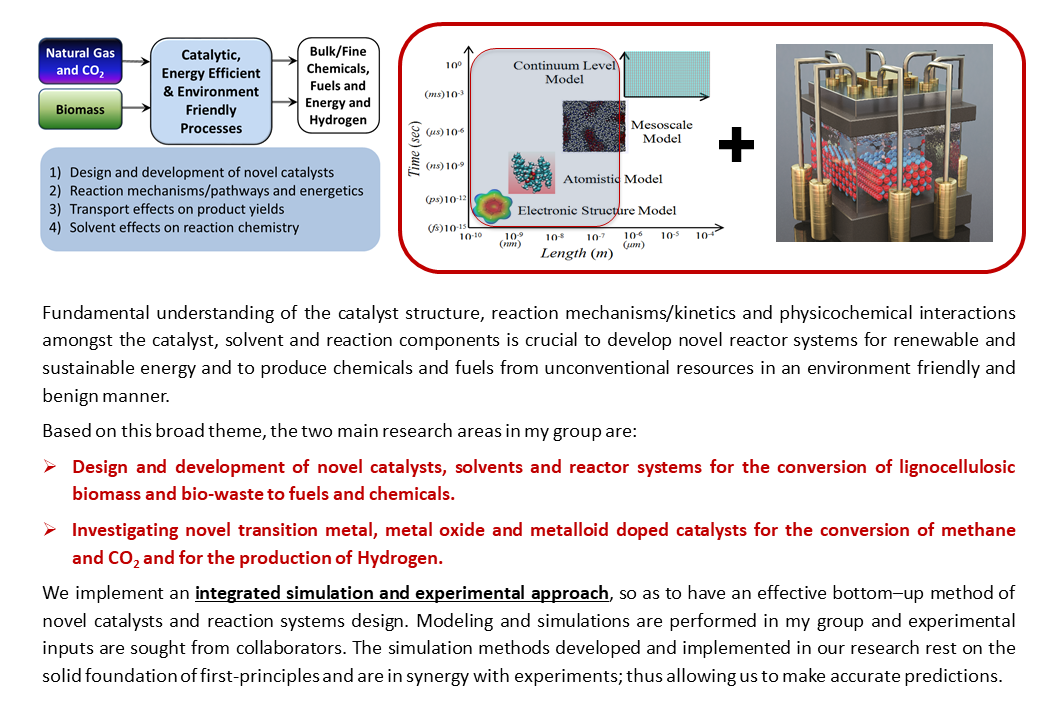
Dr. Samir H. Mushrif is a Professor in the Department of Chemical and Materials Engineering at the University of Alberta . Prior to this role, he served as faculty at the School of Chemical and Biomedical Engineering at Nanyang Technological University (NTU), Singapore . He holds a PhD in Chemical Engineering from McGill University and completed postdoctoral research at the University of Delaware, USA . Education : PhD (Chemical Engineering, McGill University), Postdoc (University of Delaware) His research focuses on computational catalysis , molecular modeling , and reaction engineering for biomass conversion and CO2 reduction . He develops novel catalysts, solvents, and reactor systems using integrated quantum mechanical and classical molecular simulations , synergized with experimental data to enable sustainable energy and chemical production . Recent publications highlight trends in condensed phase chemistry for biomass reactions, machine learning applications in solvent configuration prediction, and mechanistic studies of lignin-carbohydrate complex deconstruction. His work bridges methane activation on metal oxides, hydrodeoxygenation of bio-oil compounds, and polymerization pathways in lignin structures. Scientific Awards include: NSERC Doctoral and Post-doctoral Fellowships Discovery International Award 2017 (Australian Research Council) NANYANG EDUCATION AWARD 2016 (Singapore) SCBE Teaching Excellence Awards (Silver 2015, Gold 2016) Bharat Gaurav (Pride of India) Award 2014 Dr. Mushrif's NSERC Discovery Grant (2018), CFI John R. Evans Leaders Fund Grant (2022), and AcRF Tier-2 Grant (Singapore, 2015) have advanced his work. Current PhD and Master's students include José Carlos Velasco Calderón , Arul Mozhi Devan Padmanathan , and Sagar Bathla , among others. The CARES Lab (Catalysis Research for Sustainability) under his leadership combines ab initio molecular dynamics , machine learning potentials , and Density Functional Theory to design materials for renewable energy . Collaborations span institutions in France , Canada , India , and the UK .
Prof. Dr. Mathias Christmann is a faculty member at the Institute of Chemistry and Biochemistry, Freie Universität Berlin , leading the research group in Organic Chemistry . His work focuses on strategic and methodological challenges in synthetic chemistry, particularly in total synthesis, organocatalysis, and renewable resource transformations. Position: Professor Contact: mathias.christmann@fu-berlin.de Location: Takustr. 3, Room 24.16, 14195 Berlin Research Interests include: Natural product-inspired small molecule synthesis for biological pathway modulation Minimizing C-C bond formations through selective functionalization of terpene building blocks Organocatalytic and metal-catalyzed reactions in multistep sequences Flow chemistry applications for scalable and sustainable synthesis Biological evaluation of TRPC channel agonists/antagonists for cancer therapy Publication Trends highlight expertise in total synthesis of complex terpenoids, organocatalysis for stereocontrolled reactions, flow chemistry for late-stage transformations, and TRPC4/5 channel modulation in renal cancer studies. His group pioneers asymmetric desymmetrization , photo-oxidation protocols , and electrosynthesis methods with minimal reagent waste. Advisees include PhD candidates Jan-Hendrik Dickoff , Mayar Elbendary , Nadine Kreidt , Tobias Olbrisch , Kamar Shakeri , and Zhen Wang , focusing on terpene-based drug discovery and catalytic reaction design.
Dr. Christopher M. Wolverton is a Professor of Materials Science and Engineering at Northwestern University , where he leads the Wolverton Research Group . His work focuses on computational materials science with applications in energy sustainability , particularly in batteries , hydrogen storage , and thermoelectrics . PhD in Physics from University of California, Berkeley BS in Physics (summa cum laude) from University of Texas, Austin His research leverages first-principles quantum mechanical simulations and machine learning to enable virtual materials synthesis before laboratory testing. The group specializes in hybrid computational methods integrating Density Functional Theory (DFT) , Monte Carlo simulations , and phase-field microstructural models . The article portfolio shows leadership in energy storage materials , with recent work on data-driven nanoparticle facet control , mixed-anion semiconductors , and machine learning-accelerated discovery . Publications span top journals including Nature Energy , Nature Materials , and Science . 2006 Ford Motor Company Technical Achievement Award 2005 Ford Patent & Publication Awards 2003 Ford Environmental/Physical Sciences Recognition As advisor to PhD candidates Zhenpeng Yao , Shiqiang Hao , and Shane Patel , he fosters interdisciplinary research connecting materials informatics with experimental validation . The group maintains active collaborations with Argonne National Lab and MIT/Harvard teams.
Ashis K. Patra is a full-time Professor in the Department of Chemistry at the Indian Institute of Technology Kanpur (IIT Kanpur). After obtaining his Ph.D. from the Indian Institute of Science (IISc) Bangalore in 2008, he carried out post-doctoral research at Harvard University and the University of Georgia before joining IIT Kanpur in 2012. Education & Academic Training Ph.D. (2008), Indian Institute of Science (IISc), Bangalore M.Sc. (2002), The University of Burdwan Research Interests Professor Patra leads an interdisciplinary program that sits at the interface of inorganic chemistry, chemical biology, and medicinal chemistry. His work is organized into three principal thrusts: Therapeutic Applications of Metal Complexes: Design and mechanistic evaluation of cytotoxic transition-metal complexes that target nucleic acids and proteins, aiming to overcome multidrug resistance in cancer. Nitric Oxide Delivery from Transition Metal Nitrosyls: Development of photo- and redox-triggered metal nitrosyl complexes for controlled NO release to biological targets such as hemoglobin, myoglobin, and glutathione. Luminescent Lanthanide Complexes: Synthesis and photophysical characterization of Eu(III) and Tb(III) complexes that serve as luminescent probes and theranostic agents. Research Output & Impact His group has published extensively in leading journals including Dalton Transactions , Inorganic Chemistry , Chemical Science , and Journal of Inorganic Biochemistry . The collective work demonstrates a clear trajectory from fundamental coordination chemistry to translational applications in drug delivery and bioimaging, with recurring themes of redox control, light activation, and biological targeting. Scientific Awards & Fellowships CSIR Junior & Senior Research Fellowships (2001, 2003) West Bengal SLET Qualification (2001) International Travel Grants from CSIR & INSA (2006) DST Fast-Track Fellowship for Young Scientists (2013) Erasmus Mundus NAMASTE Scholarship for Academic Staff (2014) JSPS Invitation Fellowship (2016) Teaching & Mentoring Professor Patra teaches core and advanced courses in inorganic chemistry, including Inorganic Chemistry Laboratory, Bioinorganic Chemistry, and Frontiers in Inorganic Chemistry. He actively mentors Ph.D. and master’s students (full list available on his lab website ) and has established the Laboratory of Inorganic Chemical Biology in the Old Core Lab complex at IIT Kanpur.
Michael John Janik is a Professor in the Department of Chemical Engineering at Pennsylvania State University, with significant affiliation to the Institute of Energy and the Environment (IEE). His academic profile demonstrates exceptional research productivity with 270 research outputs, 25 funded projects, and substantial scholarly impact reflected in 17,238 citations and an h-index of 61. His research expertise centers on computational chemistry with particular focus on Density Functional Theory applications to catalysis and electrocatalysis. The fingerprint analysis of his work reveals strong concentrations in Density Functional Theory (76%), Oxidation Reactions (36%), Carbon Dioxide research (29%), Adsorption phenomena (27%), and First Principles Chemistry (22%). His work significantly contributes to UN Sustainable Development Goals related to clean energy and climate action. Analysis of his recent publications (2020-2025) reveals a strong research trajectory in electrocatalysis, particularly examining cation effects on CO 2 reduction mechanisms, intermetallic catalyst design, and computational modeling of electrochemical systems. His work bridges fundamental computational chemistry with practical applications in sustainable energy conversion. h-index of 61 17,238 total citations Multiple high-impact publications in journals including Nature Catalysis, Journal of the American Chemical Society, and Science Advances Professor Janik actively leads and collaborates on numerous research projects, particularly with Dr. Rioux and other colleagues, focusing on advanced catalyst development and electrochemical energy conversion systems. His current research portfolio includes multiple active NSF-funded projects extending through 2027 that address critical challenges in electrocatalysis, CO 2 reduction, and intermetallic catalyst design. His research group maintains strong connections with the Institute of Energy and the Environment, positioning his work at the intersection of fundamental computational chemistry and applied energy solutions. Current projects include combining DFT with classical simulations to predict solvation effects, developing high-entropy alloys for catalysis, and studying oxide overlayers in CO 2 reaction systems.
Asst. Prof. OU Pengfei is an Assistant Professor and NUS Presidential Young Professor in the Department of Chemistry at the National University of Singapore, Faculty of Science. He leads the AI for Chemistry (AI4Chem) research group, focusing on computational catalysis, machine learning, and materials science. Previously, he was a Research Associate at Northwestern University and a Postdoctoral Fellow at the University of Toronto under Prof. Edward H. Sargent, and earned his Ph.D. from McGill University. Education: Ph.D., McGill University, 2020 M.Eng., Central South University, 2015 B.Eng., Central South University, 2012 Research interests include catalyst design for electrochemical reactions using ab initio DFT, molecular dynamics simulations, and AI-driven methods. He develops dynamic simulations of chemical processes under reaction conditions and machine learning tools for accelerated catalyst discovery. His work addresses challenges in energy and environmental applications such as CO2 reduction and hydrogen evolution. Notable awards include the NUS Presidential Young Professorship (2024), Climate Positive Energy Postdoctoral Fellowship (2021), and Chinese Government Award for Outstanding Self-Financed Students Abroad (2020). Labs/Teams: The AI4Chem group integrates theory-guided and data-driven approaches to advance computational catalysis, with three core research directions: (1) reaction mechanism exploration and catalyst optimization, (2) dynamic structure-performance relationships under reaction conditions, and (3) machine learning algorithms for high-throughput screening.
Alfredo Pasquarello is a Full Professor at the Chair of Atomic Scale Simulation within the Condensed Matter Theory Laboratory (CSEA) at the Ecole Polytechnique Fédérale de Lausanne (EPFL) . He teaches courses such as Computer Simulation of Physical Systems I and General Physics: Quanta . Education: Physics at Scuola Normale Superiore of Pisa (1986), University of Pisa (1986), PhD at EPFL (1991). Research: Focuses on atomic-scale simulations using density functional theory (DFT) and many-body perturbation to study defects in oxides , oxide-semiconductor interfaces , and energy materials like perovskites and photocatalysts. Recent Publications: 15 most recent articles (2022–2024) address band gaps, polarons, water splitting, and defect engineering in materials for photovoltaics and electrochemistry. Awards: Recipient of the EPFL Latsis Prize (1998) . Students: Supervised PhD/Master's students including Stefano Falletta, Thomas Bischoff, Patrick Gono, and Zhendong Guo. Labs: Leads the Chair of Atomic Scale Simulation at EPFL SB IPHYS CSEA.
William A. Goddard, III is the Charles and Mary Ferkel Professor of Chemistry, Materials Science, and Applied Physics at the California Institute of Technology. With a career spanning over five decades, he has held positions from Noyes Research Fellow (1964–66) to his current professorship since 2001. His educational background includes a B.S. from UCLA (1960) and a Ph.D. from Caltech (1965). Quantum chemistry and first-principles simulations Multiscale modeling (QM→MD→mesoscale) Catalysis and protein structure prediction Nanotechnology and bionanotechnology Energy storage (batteries, supercapacitors) Recent publications emphasize applications in metal-organic frameworks , electrocatalysis , and space manufacturing , reflecting his interdisciplinary approach. His work on G-protein coupled receptors and Li-S batteries demonstrates methodological innovation through quantum mechanics and machine learning . Horizon Prize , Royal Society of Chemistry Over 1548 total publications (1967–2022) As Director of Caltech's Material and Process Simulation Center , he leads development of software like ReaxFF for reactive dynamics. He teaches Ch 120 ab (Nature of the Chemical Bond) and Ch 121 ab (Atomic-Level Simulations), emphasizing hands-on computational applications for experimentalists and theorists.
Associate Professor Judy Hart is a materials scientist at the School of Materials Science & Engineering, UNSW Sydney , specializing in the development of semiconducting materials for renewable energy applications. Her work integrates computational (DFT) and experimental approaches to understand composition-property relationships in systems like solid solutions , heterostructures , and doped materials for photocatalysis and solar cells . She leads projects funded by ARC Discovery and Linkage grants , including work on photo-electro-catalysis systems and stabilizing ceramic materials . Education: PhD in Materials Engineering (Monash University, 2007), BEng (Materials) (Monash, 2002) Professional Experience: Senior Lecturer (UNSW, 2017–), Lecturer (UNSW, 2013–2017), University of Bristol (2007–2012) Research Interests Her research focuses on designing materials for renewable energy , particularly photoelectrochemical water splitting and organic oxidation reactions . Key areas include Density Functional Theory (DFT) , defect engineering , band gap tuning , and nanostructured materials . She investigates ferroelectric polarization effects , metal oxide heterostructures , and stability of battery components , with applications in hydrogen production , CO2 conversion , and advanced battery materials . Scientific Awards Ramsay Memorial Fellowship (University of Bristol, 2007–2009) Teaching Contributions She is co-author of the 1st Australian & New Zealand edition of "Materials Science and Engineering: An Introduction" , and teaches courses on computational materials science , corrosion-resistant surfaces , mechanical behavior of metals , and materials design .
Professor Kenneth Ruud is a leading expert in theoretical and computational chemistry at UiT The Arctic University of Norway. He serves as Director General of the Norwegian Defence Research Establishment and leads the Hylleraas Centre for Quantum Molecular Sciences. His research focuses on relativistic quantum chemistry, developing advanced ab initio methods for molecular property calculations, and integrating QM/MM and continuum solvent models. Education: PhD from University of Oslo (1998, supervised by Trygve Helgaker) Postdoc: University of San Diego with Peter Taylor (1998-2000) His work spans relativistic effects in molecular properties, vibronic coupling, and X-ray spectroscopy. He contributes to software development through programs like Dalton, Dirac, ReSpect, and OpenRSP. Recent publications highlight applications in spin-vibronic dynamics, heavy metal L/M-edge XAS, and topological materials. Key scientific contributions include relativistic DFT for nuclear spin-rotation constants, polarizable embedding models for vibrational spectra, and quantum dynamics frameworks. Awards recognize his impact through the Dirac Medal (2008) and multiple academy memberships. Elected to Norwegian Academy of Science and Letters Fellow of American Association for the Advancement of Science (AAAS) Foreign member of Finnish Academy of Science and Letters He actively participates in open science initiatives and serves on boards including Norges Forskningsråd and CAROS center for subsea robotics. Current projects involve quantum molecular science in extreme environments and computational protocol development.
Dr. Golo Storch is a Junior Fellow and Research Group Leader at the Technical University of Munich (TUM), where he leads the Emmy Noether Research Group funded by the German Research Foundation and holds an ERC Starting Grant. He is affiliated with the TUM School of Natural Sciences and the Department of Organic Chemistry I, focusing on flavin-based catalysis for organic synthesis. Dr. Storch completed his undergraduate and graduate studies in Chemistry at Heidelberg University (2007-2012), followed by a doctorate in 2016 under Prof. Oliver Trapp, focusing on stereodynamic ligands and self-amplifying catalysis. He then conducted postdoctoral research at Yale University (2016-2018) with Prof. Scott Miller, exploring quinone redox-interconversion and peptide ligands for site-selective catalysis. Since 2019, he has led his independent research group at TUM. Dr. Storch's research centers on designing molecular flavin catalysts for selective organic transformations, inspired by flavoenzyme chemistry. His work focuses on position- and stereoselective catalysis, particularly using non-covalent interactions to control catalytically active sites. Key research directions include photochemical excitation of flavins for oxidation/reduction reactions, activation of molecular oxygen for selective oxygenation, and applications in modifying peptide natural products and complex organic molecules. His group combines synthetic methodology, photochemistry, DFT calculations, and spectroscopy to develop sustainable alternatives to precious metal catalysts. Dr. Storch's recent publications demonstrate significant contributions to flavin catalysis, showing how tailored flavin structures can enable diverse chemical transformations including hydrogen atom abstraction, C-H functionalization, selective oxygenation, and deracemization reactions. His work bridges photochemistry and organocatalysis, with applications in natural product modification and sustainable synthesis. Research Award of the Dr. Otto Röhm Memorial Foundation (2023) ERC Starting Grant 2023 (2023) ADUC Prize of the German Chemical Society (2023) Member of the Young College of the Bavarian Academy of Sciences and Humanities (2023) Exploration Grant, Boehringer Ingelheim Foundation (2024) ORCHEM Award 2024, German Chemical Society Emmy Noether Programme, German Research Foundation (since 2021) Liebig Fellowship, Chemical Industry Fund (2019-2021) Dr. Storch actively mentors PhD and Master's students in his research group, with several successful PhD completions. His research is supported by multiple prestigious grants including the ERC Starting Grant "BifurCAT," the DFG Emmy Noether Programme, and the Boehringer Ingelheim Foundation Exploration Grant for hybrid macrolide natural products research. He is also an Associate PI at the Catalysis Research Center (CRC) and participates in the newly funded CRC 392 on Molecular Evolution. The Storch Lab, part of the TUM Catalysis Research Center, focuses on "Designed Flavins for Catalysis" with the motto "Tailor-Made Catalysts - New Reactivity - Selective Editing." The group collaborates extensively with other research teams at TUM, including the de Vivie-Riedle group, Hauer lab, Bach group, and Dreuw labs, demonstrating strong interdisciplinary connections within the university's chemistry and physics departments.
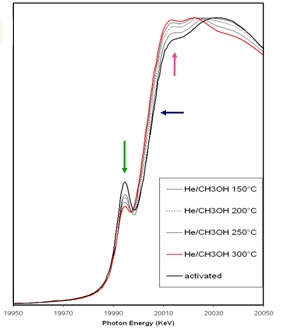
Sylvain Cristol is a Professor at the University of Lille within the Heterogeneous Catalysis department and the Modeling and Spectroscopy (MODSPEC) group. He teaches quantum chemistry, chemical bonding, statistical physics , and X-ray absorption spectroscopy at the university’s European Master’s program. PhD in Molecular and Organic Chemistry (1997-2000, Université de Provence) Postdoctoral work at Davy-Faraday Research Lab, Royal Institution of Great Britain (2000-2002) His research focuses on modeling hydrodesulfurization and hydrodeoxygenation catalysts for biomass valorization, supported by ANR-PNRB project ECOHDOC (with Caen, Poitiers, and TOTAL). He pioneered operando X-ray absorption spectroscopy for characterizing supported oxides (Mo/Re on alumina/anatase) via the ANR SAXO project (Paris VI, Grenoble, SOLEIL). Collaborative work with Francesco Mauri (Paris VI) advanced NMR parameter modeling in solids. Publications span DFT studies , XANES spectroscopy , and solid-state NMR applied to catalysis. Scientific awards include the UCCS Thesis Prize (highest honors) for his work on dibenzothiophene reactivity on molybdenum sulfide.
Dr. Anna Baldycheva is a Senior Lecturer in Electronic Engineering at the University of Exeter, within the College of Engineering, Mathematics and Physical Sciences. She leads the interdisciplinary STEMM Laboratory, focusing on applied R&D in smart materials, photonics, AI, and IoT. With prior research experience at MIT, Trinity College Dublin, and Tyndall National Institute, she has established herself as an internationally recognized innovator and entrepreneur in emerging technologies. PhD in Electronic and Electrical Engineering, Trinity College Dublin (2008–2012) BSc (Hons) in Physics, St. Petersburg State University (2003–2008) Postgraduate Certificate in Academic Practice, University of Exeter (2016–2017) Postgraduate Certificate in Technology Management, Smurfit Business School (2009–2010) Her research spans Nano-Engineering, Opto-Electronics, Photonics, AI, and IoT , with a strong emphasis on real-world applications. She pioneers work in fluid opto-electronics , graphene nanocoatings , and AI-driven emotion recognition and early cancer detection . Her lab develops smart composite materials for flexible electronics, e-textiles, and structural applications, integrating machine learning into healthcare, education, and communications systems. The recent publications highlight a strong trend toward applied interdisciplinary innovation , combining materials science with AI and photonics for healthcare diagnostics, energy-efficient computing, and educational technology. Her work frequently bridges fundamental physics with commercialization potential, as seen in spin-out technologies like GSurf and the Electronic-Nose for lung cancer detection. Fellow, Royal Microscopical Society (RMS) Fellow, Higher Education Academy (FHEA) Expert, Future and Emerging Technologies, European Commission Featured in Forbes and Forbes Tech Council Editor-in-Chief, InSTEMM Journal Associate Editor, Nature Scientific Reports and Discover Nano Trustee, Royal Microscopical Society Founder, STEMM Global Scientific Society Founder, It’s Her! Women in STEMM Initiative Dr. Baldycheva actively supervises PhD students and has secured industrial collaborations with organizations such as Qinetiq and Lumentum. She leads multiple outreach initiatives, including STEMM Junior for underprivileged children, and serves on the committee for the Jocelyn Bell Brunel PhD Scholarship. She has raised significant research funding through national and international grants, though specific grant names are not listed. She leads the STEMM Laboratory , a multidisciplinary research group with divisions in Smart Composite Materials, Machine Learning & AI, and Opto-Electronics & Photonics. The lab emphasizes industry collaboration and technology transfer, having produced a university spin-out (GSurf) and multiple media-highlighted innovations.