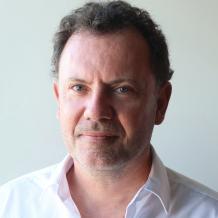
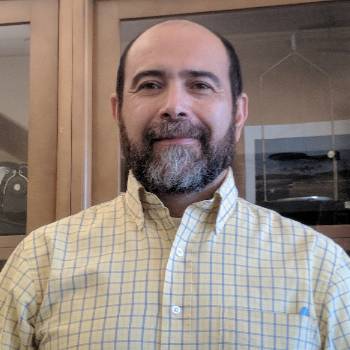
Kim Wood is Associate Professor of Hydrology and Atmospheric Sciences at the University of Arizona, specializing in tropical cyclone dynamics. Research integrates satellite observations, machine learning, and climate analysis to study hurricane intensification, structural evolution, and climate change impacts. Teaching interests include tropical meteorology and remote sensing applications. Research focuses on hurricane-ocean interactions, rapid intensification prediction, and climate-driven changes in storm behavior. Recent publications emphasize machine learning applications for intensity forecasting and spatiotemporal analysis of subsurface ocean responses.
Dr. Daniel Argüeso Barriga is a Senior Lecturer at the University of the Balearic Islands (UIB), Spain, affiliated with the Department of Physics and the Meteorology (Meteo-UIB) research group. He holds a PhD Summa Cum Laude (2011) and M.Sc. in Geophysics and Meteorology (2009) from Universidad de Granada, and B.Sc. in Physics (2005) from Universidad de Salamanca. His research spans atmospheric physics , climate modeling , and extreme weather , focusing on convection-permitting ocean-atmosphere models to study mechanisms behind climate extremes , urban development impacts , and renewable energy applications . Recent publications analyze East Australian Current intensification , urban rainfall extremes , and land-atmosphere feedbacks in heatwaves . Scientific Awards PhD Summa Cum Laude Beatriz Galindo Fellowship (2021–Present) JIN Fellowship (2020–2021) MSCA-IF Fellowship (2017–2019) Teaching includes Applied Physics in Health Sciences , Atmospheric Numerical Simulation , and advanced topics in geophysical fluid dynamics . His work integrates interdisciplinary climate change research across institutions in Spain, Australia, and the USA.
Emmanuel DORMY serves as a Professor of Mathematics at Ecole Normale Supérieure - PSL, holding the position of CNRS Directeur de Recherche since 2008. His academic appointments include Researcher and Professor at ENS since 2004, Associate Professor at Ecole Polytechnique (2008-2020), and Researcher at Institut de Physique du Globe de Paris (1999-2016). He maintains international collaborations through visiting positions at Trinity College, Cambridge and has led significant research projects including Maeva [CNES], GDRE-Dynamo [CNRS], and Magnet [ANR]. Professor DORMY's research focuses on mathematical modeling of geophysical fluid phenomena. His work spans dynamo theory examining Earth's core convection and magnetic field generation, water wave dynamics with emphasis on breaking mechanisms, tropical cyclone structure including eye formation, rotating fluid systems affected by Earth's rotation, and magnetohydrodynamics of conducting liquids. His approach combines simplified mathematical models with numerical simulations and asymptotic analysis, always grounded in real-world geophysical problems. His publication trends reveal consistent focus on fundamental fluid dynamics problems with applications to Earth's core, atmospheric phenomena, and oceanic processes. The research demonstrates progression from foundational numerical methods for convection modeling to complex multi-physical systems involving magnetic fields and rotating frames. Recent work shows increased attention to high-resolution numerical methods for capturing thin shear layers and boundary effects. Professor DORMY has mentored numerous doctoral students through their PhD programs and supervised multiple postdoctoral researchers. His collaborative projects have secured funding from major French research agencies including CNRS, ANR, and CNES, supporting both theoretical development and computational infrastructure for geophysical modeling. His laboratory work involves advanced numerical simulations of fluid systems, particularly examining convection patterns in spherical shells, wave breaking mechanisms, and cyclone dynamics. Current projects include the Mathematical Developments in Geophysical Fluid Dynamics program at IHP Paris (2026), continuing his longstanding focus on creating mathematically rigorous yet physically relevant models of complex geophysical phenomena.
Carlos Lopez Carrillo is an Assistant Professor of Lab Instruction at New Mexico Tech , specializing in atmospheric physics with a focus on hurricane dynamics and tropical meteorology. He holds a PhD in Physics from New Mexico Tech (2001) and a BS in Physics from Autonomous University of Nuevo Leon (1987). Education: PhD in Physics, New Mexico Tech (2001) BS in Physics, Autonomous University of Nuevo Leon (1987) His research explores hurricane formation and rapid intensification through analysis of HIWRAP Doppler radar data from NASA's HS3 program and WRF modeling of storm dynamics. He investigates moisture interchange between clouds and environment, tropical convection, and storm-environment interactions using airborne and ground-based datasets. Key research areas include hurricane genesis , convective forcing mechanisms in the Intertropical Convergence Zone, and mesoscale storm dynamics . His work spans field campaigns like EPIC (2001) and computational modeling of tropical systems. Carlos teaches physics courses such as Physics II (P122), Vibrations and Waves (P242), Physics of Weather and Climate (P331), and Atmospheric Physics (P427), emphasizing hands-on learning and data analysis techniques.
Dr. Ben Maybee is a Research Fellow in Tropical Meteorology at the School of Earth and Environment, University of Leeds. His research focuses on atmospheric dynamics, particularly the physics of deep convection and Mesoscale Convective Systems (MCSs) in km-scale models. He investigates how MCSs interact with their environment and influence processes like tropical cyclone formation and climate change impacts. He contributes to major projects such as NERC Huracan, Met Office UPSCALE, and DRENCH. His work bridges high-resolution modeling and climate science, addressing hazards and climate variability. Education: PhD in Theoretical Particle Physics (University of Edinburgh), MPhys and BSc in Theoretical Physics (University of Leeds). Professional Memberships: Institute of Physics, Royal Meteorological Society. Research interests include MCS dynamics, tropical cyclogenesis, and upscale impacts of convection. He collaborates on projects like the LMCS global MCS tracking intercomparison (MCSMIP) and flood forecasting initiatives in Yorkshire. His interdisciplinary work spans atmospheric science, climate modeling, and hydrology. Dr. Maybee’s contributions to initiatives like FOREWARNS and HyCristal highlight his focus on climate predictability and societal impacts. He actively supervises PhD/MSc projects and is affiliated with the Atmospheric and Cloud Dynamics group and the Institute for Climate and Atmospheric Science. His GitHub repository MCS_shear_evaluation supports his 2024 paper on wind shear effects in convection-permitting models, emphasizing entrainment processes and tropical circulation links.
Mark Bourassa is a Professor of Meteorology at Florida State University (FSU), affiliated with the Department of Earth, Ocean and Atmospheric Science. He serves as Associate Director of the Center for Ocean-Atmospheric Prediction Studies (COAPS) and is a member of the Geophysical Fluid Dynamics Institute. His research focuses on air-sea interaction, remote sensing, and data fusion, with applications to tropical cyclones, surface fluxes, and ocean-atmosphere coupling. He leads NASA's Ocean Vector Wind Science Team and contributes to initiatives like the ODYSEA satellite mission concept. Bourassa has collaborated extensively on projects such as the Shipboard Automated Meteorological and Oceanographic Systems (SAMOS) and NOAA's Expert Team on the State of the Ocean. His work emphasizes integrating observations from satellites, buoys, and ships to understand ocean-atmosphere dynamics. Notable contributions include studies on hurricane boundary layers, sea spray effects on typhoons, and the impact of ocean currents on wind stress. Bourassa has authored over 200 publications, with recent focus on satellite mission design and climate data records. His grants and advising include collaborations on ocean modeling, oil spill response, and mesoscale interactions. He leads the Distributed Oceanographic Match-Up Service (DOMS), enhancing data interoperability. Bourassa is actively involved in global initiatives like the Observing Air-Sea Interactions Strategy (OASIS) to advance Earth system understanding.