

Phil Watson is a Professor at the University of Western Australia, affiliated with the School of Earth and Oceans and the UWA Oceans Institute. He holds the Shell Professorship of Offshore Engineering and serves as Director of the ARC ITRH on Transforming Energy Infrastructure through Digital Engineering (TIDE). With over 25 years of experience in offshore geotechnical engineering, he previously held leadership roles at Fugro and Advanced Geomechanics. Education: PhD in Engineering, B.Eng (1st Class Hons), B.Comm His research focuses on offshore geotechnics, emphasizing soil-structure interaction, cyclic loading, and digital engineering solutions for energy infrastructure. Key areas include clay soil behavior, anchor capacity prediction, and centrifuge modeling of seabed interactions. Recent publications highlight advancements in shaft friction analysis, subsea sediment property inference through spatial processes, and metamodeling for offshore foundation stability. These align with his leadership in integrating digital engineering with traditional geotechnical methods. Scientific Awards: Oceans Graduate School Award in Research Impact and Innovation (2022) He has secured major grants from the Australian Research Council and Shell Australia, including funding for the TIDE Research Hub and offshore foundation studies. His professional network spans 24 grants and collaborations with institutions in France, Australia, and the UK.
جستوجوی استاد و پژوهشگر
استاد راهنما، استاد دانشگاه یا پژوهشگر مناسب برای مسیر پژوهشیتان را پیدا کنید و با او ارتباط بگیرید.
نمایش ۹۱-۱۰۵ از ۸۷۸ استاد راهنما
اطلاعات این پروفایلها از صفحات عمومی دانشگاهها جمعآوری شده و ممکن است بهروز نباشد.
Professor Chengqing Wu is a distinguished academic in the School of Civil and Environmental Engineering at the University of Technology, Sydney (UTS). He serves as Professor of Structural Engineering with a research focus on blast-induced phenomena and advanced concrete technologies. His expertise spans structural response to blast loading, mitigation of blast effects, and the development of ultra-high performance concrete systems. Professor at University of Technology, Sydney Former Chair of Australian Chapter of International Association of Protective Structures (2013-2017) Associate Editor of ASCE Journal of Performance of Constructed Facilities Editorial Board Member of International Journal of Protective Structures Professor Wu's research interests center on structural engineering with emphasis on blast resistance, ultra-high performance concrete, geopolymer concrete, and structural response to extreme loading conditions. His work bridges theoretical analysis with practical applications, particularly in protective structures and extreme environment construction. His research group has made significant contributions to understanding material behavior under blast, impact, and extreme thermal conditions, with applications ranging from terrestrial infrastructure to potential lunar construction. Analysis of Professor Wu's recent publications reveals a strong focus on advanced concrete technologies for extreme environments. His research spans 3D-printed concrete, lunar and Martian construction materials, cryogenic performance of concrete, and blast-resistant structural systems. A notable trend is the increasing application of computational methods and machine learning techniques to predict structural response to explosions, alongside traditional experimental approaches. His work demonstrates a progression from fundamental material characterization to complex structural system analysis, with growing emphasis on sustainable construction and extraterrestrial applications. Author/co-author of over 200 international journal papers Editor of four conference proceedings Editor of two ASCE special issues Editor of two International Journal of Protective Structures special issues Professor Wu has successfully attracted over 4 million dollars in research funding from diverse sources including the Australian Research Council (ARC), Defence Science and Technology Organization (DSTO), and industry partners. His current projects include Eco-friendly Ultra-High Performance Rubberised Concrete, Decarbonised Infrastructure, Structural protective design on large capacity flywheel energy storage system, and Gas Explosion Resistance of Non-Cement Based High Performance Concrete. He actively supervises undergraduate honors students, coursework master's students, and research higher degree candidates, with several scholarships available for prospective postgraduates and research associates. Professor Wu leads research in protective infrastructure technology through the Joint Research Centre for Protective Infrastructure Technology and Environmental Green Bioprocess with Tianjin Chenjian University. His team operates the National Drop Weight Impact Testing Facility and contributes to the National Facility for Physical Blast Simulation. Current research directions include sustainable concrete technologies for extreme environments, blast-resistant structural systems, and innovative applications of concrete in space exploration contexts.
John Mooreمشاهده پروفایل
استادیار
Dr. John Moore is an Assistant Professor in the Department of Mechanical Engineering at Marquette University . He leads the Computational Mechanics of Materials Laboratory, focusing on computational mechanics, materials science, and high-performance computing. His research spans alloys, polymers, and biomedical devices. Education Ph.D., Mechanical Engineering, Northwestern University (2015) M.S.E., Civil Engineering, University of Washington (2007) B.S., Aeronautical and Astronautical Engineering, University of Washington (2005) Research Focus Dr. Moore's work combines computational modeling with experimental validation to understand material behavior under extreme conditions. Key areas include: Crystal plasticity modeling of metallic alloys Nonlocal damage mechanics for fatigue prediction Dynamic spallation and porosity evolution High-throughput X-ray imaging of additively manufactured materials UV-sensitive resin material modeling Recent Publications His recent work focuses on advanced computational techniques for material failure analysis, including: Nonlocal approaches for statistical fatigue prediction Microinertia effects in spall modeling Betatron X-ray tomography applications UV resin optimization studies Phase transformation fatigue mechanisms Contact Email: john.a.moore@marquette.edu | Phone: (414) 288-6641 Location: Haggerty Hall, 225, Marquette University, Milwaukee, WI 53201
Hayder Abdullah is a Lecturer in the School of Civil and Mechanical Engineering at Curtin University. His research centers on geopolymer applications for soil stabilization and road construction. Recent work explores sustainable material alternatives like geopolymer-stabilized crushed rock and biochar-enhanced laterite composites. Dr. Abdullah has published extensively on clay stabilization using geopolymers and waste materials, emphasizing environmental sustainability and infrastructure resilience. His investigations cover mechanical behavior under cyclic loading and long-term sulfate exposure. Primary research domains: Geopolymer technology, soil mechanics, and road materials
Patricia Clayton, Ph.D., PE, is an Associate Professor specializing in structural and natural hazards engineering. Her office is located at 455 Vine Street, Bldg 60 South, Rm 4512, and she can be reached via phone at 336.702.1924. She holds a B.S. in Civil Engineering from North Carolina State University (2007), an M.S. (2010) and Ph.D. (2013) in Civil Engineering from the University of Washington. Her research focuses on: Hazard-resistant structural technologies Multi-scale modeling of natural hazard impacts Applications of 3D printing in construction Computational modeling and data analysis Small-scale structural testing methodologies She maintains active investigations in earthquake engineering and structural resilience. Recent publications (2022-2025) demonstrate three primary research streams: Structural Seismic Performance : Innovations in steel connections, composite systems, and deployable structures Engineering Education : Remote teaching pedagogy and inclusive curriculum development Disaster Technology : AI-enhanced damage assessment and field instrumentation Her work consistently integrates experimental validation with practical applications.
- Environmental Geomechanics
- Geotechnical Engineering
- Mechanics of Multiphase Porous Materials
- +۲ مورد دیگر
Lyesse Laloui is Full Professor and Director of the Soil Mechanics Laboratory at EPFL's School of Architecture, Civil and Environmental Engineering. A world-renowned expert in geomechanics and sustainability, his research develops nature-inspired solutions for climate change mitigation and renewable energy adoption. His distinguished career includes ERC Advanced and Proof of Concept Grants, two honoris causa doctorates, and leadership roles in Academia Europaea and International Society of Soil Mechanics. Research focuses on: Thermo-hydro-mechanical behavior of energy geostructures Bio-inspired geotechnical solutions for soil improvement Radioactive waste repository safety CO₂ sequestration caprock integrity Urban underground space utilization Recent publications demonstrate innovations in geothermal metro station design, shale behavior characterization for energy applications, and bio-mediated soil stabilization. His laboratory has supervised over 35 PhD graduates now advancing geotechnical engineering globally. Professor Laloui founded 5 EPFL spin-offs including Enerdrape (Swiss Top 100 startup) and serves as European Director of the International Associated Research Centers for Urban Underground Space. His awards include the ASCE Kersten Lecture and InterPore Kimberly-Clark Distinguished Lectureship.

Nicole Churchمشاهده پروفایل
پژوهشگر ارشد
Nicole Church is a Beatrice Mary Dale Research Fellow at Newnham College and a member of the Rolls-Royce University Technology Centre (UTC) in the Department of Materials Science & Metallurgy at the University of Cambridge. She holds an MSci and PhD in Materials Science from Cambridge, where she specialized in titanium alloys. Her research focuses on superelastic and shape-memory titanium alloys for biomedical and aerospace applications, particularly investigating functional fatigue and microstructural degradation mechanisms. She lectures the Fracture and Fatigue course in the Materials Science Part II of the Natural Sciences Tripos. Key achievements include developing a new theory governing transforming alloys and being awarded the IOM3 Prize for her undergraduate research. Her work addresses challenges in alloy design, including optimizing composition and processing to prevent in-service property degradation. Nicole has collaborated with Rolls-Royce UTC on high-temperature structural alloys and solid-state welding processes. Recent research highlights include studies on Ti-Nb-Au alloys for low-modulus biomedical applications, functional fatigue mechanisms in Ti2448 alloys, and microstructural stability in nickel-based superalloys. Her interdisciplinary approach combines advanced characterization techniques like high-energy diffraction and electron microscopy to advance material science solutions.
Prof. Alper SEZER is a faculty member at Ege University's Department of Civil Engineering (Faculty of Engineering), specializing in Geotechnics. His research focuses on geotechnical engineering, earthquake effects, soil mechanics, and sustainable development. He has conducted extensive studies on soil liquefaction, seismic site effects, and post-earthquake damage assessments in regions like Antakya, Izmir, and Adıyaman. His work integrates computational methods (e.g., genetic algorithms, artificial neural networks) with experimental geotechnics to improve soil characterization and disaster resilience. He has collaborated on projects analyzing valley effects, ground motion amplification, and the mechanical behavior of soils under cyclic loading. Education: Details not explicitly provided in text, inferred through academic publications and position. Research interests include geotechnical hazard mitigation, soil stabilization techniques (e.g., polymer-modified soils), and the application of fractal analysis to soil properties. His studies address practical challenges such as sulfate resistance in cement-stabilized soils and freeze-thaw resistance of fiber-reinforced materials. He has contributed to microzonation studies and seismic risk assessments in urban areas like Izmir Bay. Publications emphasize field reconnaissance findings from major earthquakes (e.g., 2020 Samos, 2023 Türkiye earthquakes) and laboratory experiments on soil behavior under dynamic loading. Awards and recognitions are not explicitly listed in the text. Grant activities and advising details are not provided, but his extensive publication record suggests sustained research funding. He is affiliated with geotechnical laboratories at Ege University, focusing on experimental testing and computational modeling in geotechnical engineering.
Armin Stuedlein is a Professor of Geotechnical Engineering at Oregon State University's College of Engineering, specializing in ground improvement, liquefaction mitigation, and soil-structure interaction. He holds a Ph.D. from the University of Washington (2008) and joined OSU in 2009 after consulting in port and harbor engineering. His research focuses on geotechnical testing, probabilistic analysis, and seismic resilience, with over 150 peer-reviewed publications. Education: Ph.D., Civil Engineering, University of Washington (2008) M.S., Civil Engineering, Syracuse University (2003) B.S., Environmental Engineering, SUNY-Environmental Science & Forestry (2000) Research Interests: Liquefaction mitigation and ground improvement techniques Dynamic soil behavior and cyclic softening Seismic retrofit strategies for infrastructure Biocementation and soil modification Probabilistic geotechnical engineering Awards: 2018 ASTM Award for Outstanding Geotechnical Testing Article 2015 ASCE Journal Associate Editor of the Year 2013 Deep Foundations Institute Young Professor Award Advising/Grants: Active in mentoring graduate students and securing grants from NSF, DOTs, and industry partners. Leads the Full-Scale Geotechnics Group, focusing on field-scale geotechnical experimentation. Labs/Teams: Oversees the Full-Scale Geotechnics Group and collaborates with the Geotechnical Research team, advancing large-scale testing methodologies and field applications.
Professor Albert Turon Travesa is a faculty member in the Department of Mechanical and Industrial Construction Engineering at the University of Girona (Spain), where he leads the Mechanics of Continuum Media and Theory of Structures research area. He serves as Head of Department and is affiliated with the AMADE research group. His research focuses on characterizing mechanical behavior of composite materials, developing non-deterministic modeling strategies for structural prediction, and advancing fatigue life estimation techniques. Key contributions include cohesive zone modeling, delamination growth analysis, and machine learning applications in materials science. He has authored over 100 top-tier journal papers, appears in Stanford's World Top 2% Scientists, and Research.com's Mechanical & Aerospace Engineering ranking. Awards include the 2022 ICREA Acadèmia grant and 2024 Air and Space Academy Medal for composite materials advancements in European aeronautics. His 15 most recent publications span fatigue modeling, delamination mechanics, and computational strategies, primarily applied to aerospace composites. Current work emphasizes probabilistic approaches, ply orientation effects, and residual strength prediction after damage accumulation. ICREA Acadèmia Award (2022) Air and Space Academy Medal (2024) Active collaborations with aeronautical industries include technology transfer projects on composite material implementation. His research combines experimental validation with numerical simulation to bridge theoretical modeling and industrial application.
Dr. Antoni Cladera Bohigas is a Full Professor in the Department of Industrial Engineering and Construction at the University of the Balearic Islands (UIB), where he serves as Deputy Director of the department since 2020. He holds a PhD in Construction Engineering from the Polytechnic University of Catalonia (2003), where he also received the Outstanding Doctorate Award. With over two decades of academic experience, he teaches various structural engineering courses across undergraduate and master's programs at UIB. His educational background includes: PhD in Construction Engineering from Polytechnic University of Catalonia (2003) Civil Engineering degree with specialization in Structural Engineering from Polytechnic University of Catalonia (1999) Civil Engineering degree from Polytechnic University of Catalonia (1997) Professor Cladera's research primarily focuses on structural engineering , with special emphasis on the behavior of deteriorated concrete structures and applications of shape memory alloys (particularly iron-based SMAs) for structural reinforcement. He has published over 85 scientific articles, collaborated on books and regulations, and participated in over 165 conferences. His research has evolved from fundamental work on shear strength models for reinforced concrete to innovative applications of shape memory alloys in structural rehabilitation, with recent work focusing on active continuity systems for hollow-core slabs and shear strengthening techniques using iron-based shape memory alloys. His scientific contributions have earned him significant recognition including inclusion in the Stanford University/Elsevier list of the 2% most cited scientists worldwide (2023-2024), the Mirko Roš silver medal award from Empa for his best paper in SMAR2015, and the Best Research Paper award for the journal "Hormigón y Acero" (2014-2016). He is also a member of the Leonardo Network of the BBVA Foundation in engineering (2018). Professor Cladera has supervised 4 completed doctoral theses with 3 more in progress. His academic leadership extends beyond research, having held significant administrative roles including Deputy Director of the Department of Industrial and Construction Engineering (2020-present), Coordinator of the Academic Commission of the PhD Program in Physics (2018-2021), and Associate Vice-Rector of University Infrastructures (2008-2012). He is actively involved in professional organizations, having served as Vice President of the Spanish Association of Structural Engineering (ACHE) from 2017 to 2022. He co-founded the educational YouTube channel 'Ingenia-ConStruct,' which has accumulated over 1.9 million views, demonstrating his commitment to disseminating structural engineering knowledge. His international experience includes research stays at the University of Toronto and EMPA (Swiss Federal Laboratories), as well as humanitarian engineering work in multiple developing countries.

Murat Monkul is a Professor in the Department of Civil Engineering at Yeditepe University's Faculty of Engineering. With expertise in geotechnical engineering and soil mechanics, his research focuses on liquefaction behavior of sands and silty soils, seismic stability, and sustainable soil utilization. PhD, MS, and BS degrees in Civil Engineering Specializes in cyclic/monotonic loading effects on soils Developed automated testing systems for soil stability Investigates lunar soil simulants for space applications His recent work explores microplastic contamination effects on soils, advanced liquefaction criteria using CPT data, and innovative soil stabilization methods. Notable projects include EU-funded research on silt characteristics and USD40,000 FHWA corrosion study.
Zeshu Shao is a Lecturer at the School of Psychology, University of Aberdeen, specializing in psycholinguistics with primary interest in individual differences in language psychology. Affiliated with the School of Psychology since 2018, Shao serves as MSc Programme Coordinator, Education Committee Member, School Disability Officer, and International Study Centre link tutor. Education: BSc in Applied Psychology at Nankai University (2004, China) MSc in Psychology at University of Nottingham (2006, UK) PhD at Max Planck Institute for Psycholinguistics (2013, Netherlands) Post-doctoral research fellow at Max Planck Institute for Psycholinguistics (2013-2017) Shao's research centers on cognitive, linguistic, and social factors affecting first and second language communication. Key areas include language production mechanisms, individual differences in lexical access, naming paradigms, and the role of executive control in speech. Current work examines orthographic influences on spoken word production, contextual effects in question answering, and social network impacts on language processing. The research employs experimental paradigms like blocked cyclic naming, picture-word interference, and Stroop tasks with EEG analysis. Publication trends show consistent focus on psycholinguistic mechanisms since 2011, with increasing emphasis on individual differences and neural correlates. Recent work (2020-2023) explores orthographic processing, contextual priming, and frequency effects in noun phrase production, demonstrating methodological evolution toward neurocognitive approaches. Scientific Awards: Shao provides academic leadership as MSc Programme Coordinator and serves on the Education Committee. While specific grants aren't detailed in available materials, research spans multiple international collaborations including Max Planck Institute, University of Nottingham, and Dutch institutions. The work supports Aberdeen's research vision in cognitive psychology and language sciences. Laboratory work appears centered in the School of Psychology's research facilities, with emphasis on experimental psycholinguistics and cognitive testing environments. Current projects continue investigating language production mechanisms and individual variability factors.
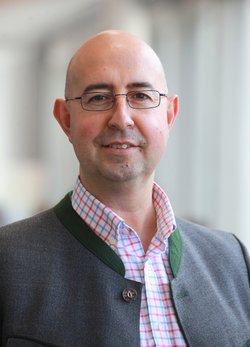
Univ. Prof. Dr. Raúl Bermejo leads the Chair of Structural and Functional Ceramics at Montanuniversität Leoben. His academic journey includes a Mechanical Engineering degree from University of Valladolid (1993-2000), doctoral studies at Technical University of Catalonia (2002-2006), and research positions at San Diego State University and Penn State University. From 2017-2019, he served as Visiting Scholar and Adjunct Professor at Pennsylvania State University. Bermejo's research focuses on: Fracture mechanics and failure analysis of brittle materials Mechanical and microstructural characterization of ceramics Environmental degradation mechanisms in structural components Development of advanced testing methods for microelectronic systems Design of hybrid ceramic systems with enhanced reliability His publications primarily investigate fracture behavior in layered ceramics, strength optimization of composites, and reliability of functional materials under mechanical/thermal stress. Major recognitions include: ERC-Consolidator Grant (2019-2024) Max Kade Research Scholarship (2017) ECERS Best Paper Prize (2007-2008) EU FP6 Research Fellowship (2006) He directs research at the Institute of Structural and Functional Ceramics and serves as Associate Editor for the Journal of the American Ceramic Society.
Emile Greenhalgh is Professor of Composite Materials at Imperial College London and Royal Academy of Engineering Chair in Emerging Technologies. He leads research on multifunctional composites that combine structural properties with energy storage capabilities. With over 100 publications, his work spans fracture analysis and structural power solutions. Research focus areas: Damage tolerance in composite structures Structural batteries for electric vehicles Advanced failure analysis techniques Pioneered 'structural power' composites enabling weight reduction in electric transport. Recent ERC-funded projects focus on bifurcated catalysis pathways. Recognized with ADUC Prize for chemical research applications and serves on British Composites Society executive committee.