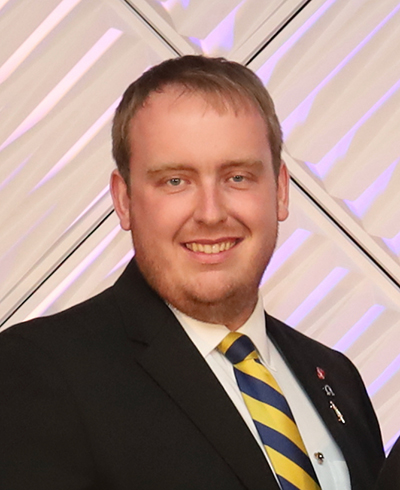
Dr. Lei Miao is a Professor and Coordinator of Mechatronics Engineering at Middle Tennessee State University (MTSU). He holds a Ph.D. from Boston University (2006) and degrees from Northeastern University of China. His research focuses on wireless networks, controls, discrete event systems, and intelligent transportation systems. He has authored over 30 publications and secured grants totaling $150K+. Notable projects include smart traffic signal optimization and indoor wireless localization. Education: Ph.D., Boston University, 2006 ME, Northeastern University of China, 2001 BS, Northeastern University of China, 1998 Research Interests: Wireless secret sharing protocols Intelligent transportation systems Machine learning for traffic optimization Embedded systems and robotics Energy-efficient wireless networks Grant Highlights: $31K Federal Highway Administration grant for National Summer Transportation Institute (2024) $104K Tennessee DOT grant for traffic signal evaluation (2020-2022) Awards: Best Paper Awards (IEEE CIEEC 2019, ICSED 2018) Lab Activities: Directs the REC³ Lab, focusing on real-time control, robotics, and smart city applications. Supervised 12+ students in mechatronics and engineering technology.
Ahmad Salman is an Associate Professor at James Madison University (JMU) in the College of Integrated Science and Engineering (CISE), specializing in Cybersecurity, Hardware Security, and the Security of the Internet of Things (IoT). He holds a Ph.D. in Computer Engineering from George Mason University (2017) and an M.S. in Computer Engineering from the same institution (2011), with a B.Sc. in Computer Engineering from the University of Arab Academy for Science and Technology (2002). Education: Ph.D. in Computer Engineering, George Mason University (2017) M.S. in Computer Engineering, George Mason University (2011) B.Sc. Computer Engineering, University of Arab Academy for Science and Technology (2002) Research Interests: His work focuses on securing emerging technologies, including IoT systems, UAVs, and cyber-physical infrastructure. Key areas include AI-driven cybersecurity solutions, hardware-based security mechanisms, and privacy preservation in smart environments. Recent projects involve real-time emotion detection for companion robots, secure UAV surveillance systems, and automated vulnerability inspection tools like SAVI. Grants and Contributions: Salman has secured multiple grants and published widely in high-impact venues. He advocates integrating ethical reasoning into applied science curricula and emphasizes practical applications of security technologies. His work often bridges theoretical research and real-world deployments, such as the SAWBRID smart whiteboard system and transit monitoring frameworks. Labs and Collaborations: While specific lab affiliations are not detailed, his research collaborations involve interdisciplinary teams focusing on IoT, AI, and cybersecurity. He actively participates in IEEE and ACM initiatives, driving advancements in hardware-software co-design for secure systems.
Hala ElAarag is a Professor of Computer Science at Stetson University, located in Deland, Florida. She holds a PhD from the University of Central Florida (2001) and MS/BS degrees from Alexandria University (1991/1989). Her research focuses on computer networks, machine learning, cybersecurity, and computer science education. She has authored over 70 publications and 11 edited books, including her notable work Web Proxy Cache Replacement Strategies Simulation, Implementation, and Performance Evaluation . ElAarag has served in leadership roles, such as President of the Consortium of Computing Sciences in Colleges (2016-2018) and Vice President (2014-2016). She has also been active in organizing conferences, including co-chairing the Communication and Networking Simulation Symposium and Spring Simulation Multiconference. Her teaching philosophy emphasizes hands-on learning, reflected in her development of 15 computer science courses, including core and specialized subjects like Computer Networks and Algorithms Analysis. Her research trends span algorithm optimization, network security, and autonomous systems, with recent work in AI-driven password cracking and quadrotor modeling. Awards include the IEEE Region 3 Biedenbach Award (2022) and multiple teaching and service recognitions. She has mentored numerous students and contributed to STEM outreach through initiatives like the Tech Trek Coordinator for middle school girls (2021-2023). ElAarag’s contributions extend to editorial roles in journals like Journal of Computing Sciences in Colleges and Simulation: Transactions of SCS . Her work bridges academic research and practical application, emphasizing pedagogical innovation and interdisciplinary collaboration.
Hani Hamdan is a Professor of Electrical Engineering and Computer Science at CentraleSupélec, part of Université Paris-Saclay. He holds a PhD from Université de Technologie de Compiègne and has held roles including Research Engineer at CETIM, Researcher at CNRS, and Assistant Professor at Sorbonne-Paris-Nord. His research focuses on machine learning, signal processing, robotics, and telecommunications, with contributions to biomedical engineering and sustainable technologies. He leads the COMEDY and MODESTY research groups within the L2S laboratory. Education: PhD in Systems and Information Technologies, Université de Technologie de Compiègne (2005) MSc in Industrial Control, Université Libanaise/UTC (2001) Engineering Diploma in Electricity & Electronics, Université Libanaise (2000) Research Interests: Machine learning for healthcare and environmental applications Signal processing in robotics and communication systems Intelligent communication networks (FSO, IoT security) Data-driven analysis of biomedical systems and civil infrastructure Key Contributions: Innovative clustering algorithms for big data (e.g., bin-EM-CEM) FSO communication system optimizations Robotics rehabilitation systems using ML-enhanced biomechanics Awards: Best Paper Award for Big Data clustering (2018) Outstanding conference organization award (DeSE 2017) CIFRE doctoral scholarship (2002-2005) Lab Affiliations: Laboratoire des signaux et systèmes (L2S), collaborating with CNRS and CentraleSupélec on interdisciplinary projects in signal processing and automated systems.
Dr. Miguel Vargas Martin is a Professor of Computer Science at Ontario Tech University's Faculty of Business and Information Technology. He holds a PhD from Carleton University, a Master's from CINVESTAV del IPN, and a Bachelor's from Universidad Autónoma de Aguascalientes. His research focuses on cybersecurity, authentication systems, machine learning, and human factors in security. Dr. Martin teaches graduate courses such as Cryptography and Secure Communications, and undergraduate courses including Machine Learning and Cryptography, Malware, and Network Security. Education: PhD in Computer Science, Carleton University (2003) Master of Applied Science in Electrical Engineering, CINVESTAV del IPN (1998) Bachelor of Science in Computer Science, Universidad Autónoma de Aguascalientes (1996) Research Interests: Dr. Martin's work addresses cutting-edge topics in computer security and artificial intelligence. His recent studies include improving password security through honeyword generation using machine learning, developing differential privacy visualizations for public understanding, and creating emotion recognition models for companion robots. His cybersecurity frameworks target edge computing and IoT environments, emphasizing practical defenses against modern threats. Key Contributions: Over 25 peer-reviewed articles since 2012 span topics from brain-computer interfaces for password memorability analysis to fusion-based optimization algorithms. His work bridges theoretical advancements with real-world applications in healthcare, transportation systems, and industrial IoT security.
Philippe Rauffet is a Full Professor in Industrial Engineering and Human-Machine Systems at Université Bretagne Sud, serving as Director of Research and Innovation at ENSIBS. He leads the FHOOX team (Human Factors & Industry 4.0) within Lab-STICC, focusing on cognitive state monitoring, human-autonomy teaming, and adaptive automation. His research integrates neuroscience, human factors, and systems engineering to enhance safety and efficiency in transportation, defense, and industrial settings. He holds an HDR (2021) and has supervised over 10 PhD students. Education: PhD in Industrial Engineering (Centrale Nantes, 2010) MSc/Engineering Degree (Centrale Nantes, 2007) Habilitation à Diriger des Recherches (UBS, 2021) Research Focus: Specializes in cognitive workload assessment, transparency mechanisms in autonomous systems, and sociotechnical system design. Applications include submarine piloting, cyber defense, and predictive maintenance. Recent work emphasizes Industry 4.0 interfaces and digital twins for territorial heritage preservation. Key Projects: Leading a 2.8M€ regional CPER program on Industry of the Future Collaborations with Airbus, Thales, Naval Group, and Australian institutions Developed real-time cognitive state monitoring tools using fNIRS and eye-tracking Awards: Best Paper Awards at CHIRA (2020) and IFAC HMS (2016) Prime d'Encadrement Doctoral (Rank A) Teaching: Responsible for the LOGIQ Bachelor program and Industry 4.0 MOOCs. Integrates research on operator state assessment into maritime training curricula.
Raluca Lefticaru is an Associate Professor in Computer Science at the University of Bradford's School of Computing, Software and Artificial Intelligence & Engineering (CSAI&E), within the Faculty of Engineering & Digital Technologies. She leads the BEng Software Engineering programme and holds a visiting researcher position at the University of Sheffield's Testing group. A Fellow of the Higher Education Academy (FHEA), she specializes in software testing methodologies, particularly model-based testing using evolutionary approaches, formal specification, and P systems verification. Her research interests span software testing, model-based testing, search-based software engineering, membrane computing, and formal verification. Recent professional activities include organizing conferences such as YISEC 2023, AIERC 2022, and A-MOST 2021, serving as a program committee member for SEFM 2025, ICTSS 2023, and ICSE 2022, and reviewing for WCCI 2022. She has held roles including Co-chair of YISEC 2023 and Communication Chair of CMC18 (2017). Raluca's work emphasizes interdisciplinary applications, from IoT security to medical imaging analysis. Her publications reflect contributions to testing frameworks for P systems, fault tree analysis, and AI-driven solutions for cyberbullying detection and industrial fire prevention. She actively contributes to academic journals in membrane computing, optimization, and software engineering. Awards: Fellow of the Higher Education Academy (FHEA) Key Projects: IoT safety-security integration, robotic system testing, and COPD self-management systems Conference Leadership: Organized over 10 international conferences since 2017
Prof. Francesco Ferracuti is a Researcher at the Department of Information Engineering (Università Politecnica delle Marche, Ancona, Italy). His work focuses on advanced control systems, robotics, brain-computer interfaces, and energy management. Key research themes include fault-tolerant control, autonomous navigation, and human-machine interaction through wearable sensors. Research interests span across: Control Engineering (MIMO systems, PID control, Model Predictive Control) Robotics (mobile robotics, UAVs, smart wheelchairs) Neuroengineering (EEG-based BCI, cognitive workload assessment) Energy Systems (renewable integration, home energy management) Data-Driven Methods (machine learning, system identification) Publications emphasize innovative solutions like EEG-driven obstacle avoidance and thermal stress monitoring for smart wheelchairs, demonstrating interdisciplinary approaches combining robotics with biometrics. His work on fault detection in multirotors and energy optimization algorithms highlights practical applications in both industrial and healthcare domains. Current projects include the E-MOTIVE initiative for mobility solutions via affective computing and BCI. His lab develops cutting-edge algorithms for cyber-physical systems security and predictive maintenance in industrial equipment.
Dominic DiFranzo is an Assistant Professor in the Department of Computer Science and Engineering at Lehigh University. His work bridges human-computer interaction, social psychology, and social media design to create interventions that promote prosocial behaviors online. He leads several innovative research projects including the Truman Platform, Social Media TestDrive, and Deception Awareness and Resilience Training (DART). Dr. DiFranzo earned his PhD in Computer Science from Rensselaer Polytechnic Institute as a member of the Tetherless World Constellation. Following his doctoral studies, he completed a postdoctoral position in the Social Media Lab at Cornell University. His educational background has provided him with strong foundations in both computer science and social science methodologies. Dr. DiFranzo's research focuses on translating established social science theories into practical design interventions for social media platforms. His primary areas of interest include cyberbullying intervention strategies, misinformation detection and correction, AI-mediated communication, and developing educational tools for digital literacy. He specializes in creating ecologically valid social media simulations that give researchers control over both technical interfaces and social situations. His innovative Truman Platform allows researchers to create custom social media environments where every user interaction can be controlled and curated. His Social Media TestDrive platform has been used by over 800,000 middle school students across the US to safely practice social media skills. His recent publications (2023-2025) demonstrate a strong focus on understanding and improving social interactions in digital spaces. His work spans multiple dimensions of online behavior including cyberbullying intervention strategies, misinformation processing, AI-mediated communication effects, and social norm influences on user behavior. A recurring theme across his recent work is the development of methodological innovations that balance ecological validity with experimental control, particularly through his Truman Platform and related simulation tools. His research has significant implications for social media design, digital literacy education, and platform policy. Dr. DiFranzo actively mentors students through his various research projects and has secured funding to support his innovative work in social media simulation and intervention design. His Truman Platform has been made openly available on GitHub, demonstrating his commitment to open science and collaborative research. His Social Media TestDrive platform has reached a substantial audience of over 800,000 middle school students across the United States, showing the real-world impact of his educational interventions. Dr. DiFranzo leads the Truman Research Lab at Lehigh University, which develops and implements social media simulation platforms for experimental research. His team includes undergraduate and graduate students working on various aspects of social media design, AI-mediated communication, and educational technology. The lab's work spans multiple interdisciplinary collaborations across computer science, psychology, education, and gerontology, particularly evident in projects like DART which focuses on deception awareness for older adults.
Dr. Boris S. Pervan is Professor of Mechanical and Aerospace Engineering at Illinois Institute of Technology's Armour College of Engineering, where he holds the Frank Gunsaulus Faculty Fellow position and directs the CARNATIONS research center. Education: Ph.D. in Aeronautics and Astronautics from Stanford University (1996) M.S. in Aeronautics from California Institute of Technology (1987) B.S. in Aerospace Engineering from University of Notre Dame (1986) His research develops assured navigation technologies for transportation systems, focusing on GNSS integrity monitoring, spoofing/jamming resistance, and multi-sensor fusion for autonomous vehicles. Current projects address resilient positioning for driverless cars and aircraft through USDOT-funded initiatives. Publications demonstrate leadership in navigation security, with recent advances in INS monitoring against spoofing, lidar integrity verification, and interference-resistant signal processing. Research consistently bridges theoretical innovation with real-world validation in urban environments. Awards highlight exceptional contributions: Johannes Kepler Award (2022) AIAA Associate Fellow ION Fellow Multiple best paper awards from IEEE and ION Guggenheim Fellowship He leads the $10M CARNATIONS UTC developing anti-spoofing technologies for transportation infrastructure. Professional memberships include IEEE, AIAA, and Institute of Navigation where he influences technical standards.
Michael Morak is a Professor at the Department of Artificial Intelligence and Cybersecurity, Alpen-Adria-Universität Klagenfurt, affiliated with the Faculty of Technical Sciences. He holds the titles Privatdozent, Diplom-Ingenieur, and Doctor. His research focuses on artificial intelligence, cybersecurity, and computer science, with notable contributions in logic programming, answer set programming, and algorithmic methods. He has led and contributed to multiple research projects funded by entities like the Austrian Research Promotion Agency (FFG) and the Austrian Agency for International Cooperation in Education (OeAD), addressing topics such as multi-agent systems, radar simulation, and educational technology. His work spans theoretical advancements, including reversibility in planning and dynamic programming, as well as practical applications like interactive SQL learning tools (aDBenture). He collaborates with industry partners, including Infineon Technologies, and has published extensively in top-tier conferences and journals. Morak’s teaching emphasizes innovative methods in computer science education, leveraging game-based learning and interactive platforms to enhance student engagement. Key areas of research include formal methods in AI, algorithmic complexity, and the integration of logic programming with real-world systems. His projects often bridge academia and industry, aiming to solve complex challenges in cybersecurity, robotics, and educational innovation.
Konstantin Schekotihin is an Associate Professor at the Institute of Artificial Intelligence and Cybersecurity , part of the Faculty of Technical Sciences at Alpen-Adria-Universität Klagenfurt. His research focuses on AI-driven solutions for semiconductor manufacturing, failure analysis, and multi-agent systems. He specializes in reinforcement learning, scheduling optimization, and neuro-symbolic AI applications. His work bridges theoretical advancements with industrial challenges such as semiconductor fab automation and real-time process monitoring. He has collaborated with organizations like the Austrian Research Promotion Agency (FFG) and Infineon Technologies. Key research areas include: AI for semiconductor failure analysis workflows Reinforcement learning in manufacturing scheduling Multi-agent systems in immersive VR environments Neuro-symbolic AI for defect routing Predictive modeling for equipment maintenance Recent projects involve optimizing ion implantation processes, developing FA ChatBots, and improving social presence in VR simulations. His work emphasizes scalability, explainability, and real-world applicability of AI systems.
Yolanda González Arechavala is an Associate Professor at the ICAI School of Engineering, Comillas Pontifical University, and a researcher at the Institute for Research in Technology (IIT). She holds a Doctorate in Computer Science and has been affiliated with IIT since 1991. Her research focuses on software engineering, railway systems, sustainability assessments (LCA), and promoting STEM education for women. She directs the Chair for Women in STEM Vocational Training for Sustainable Mobility. Education: Computer Engineering, Universidad del País Vasco (1991) PhD in Computer Science (2003) Research Interests: Software quality assurance, RAMS analysis, safety-critical systems, railway infrastructure management, bioenergy sustainability, and strategies to increase female participation in STEM fields. She has led projects like the RAYUELA initiative and contributed to decarbonization studies in cement production. Grants & Projects: Includes EU-funded projects (e.g., RAYUELA), ADIF railway energy studies, and sustainability assessments for bioenergy crops. She has coordinated ICAI Tech Camps and external training programs since 2009. Awards: BP Chair Sustainability Prize (2021, 2012) Accenture Best Final Project (2010) Labs/Initiatives: Leads the Women in STEM Chair, organizing workshops on AI, cybersecurity, and STEM outreach for schools. Active in conferences on renewable energy, engineering education, and gender equality in STEM.
Dr. Clayton Cooper is an Assistant Professor of Mechanical and Manufacturing Engineering at Miami University. He holds a Ph.D., M.S., and B.S.E. in Mechanical Engineering from Case Western Reserve University (2024, 2020, 2020 respectively). His research focuses on physics-informed machine learning (PIML) for manufacturing process modeling, digital twin enablement, and explainable AI applications. He leads projects in machine learning-driven deformation prediction in sheet metal forming, computer vision-based digital twins, and novel PIML methods for manufacturing. Education: Ph.D., Mechanical Engineering, Case Western Reserve University, 2024 M.S., Mechanical Engineering, Case Western Reserve University, 2020 B.S.E., Mechanical Engineering, Case Western Reserve University, 2020 Research Interests: Dr. Cooper's work integrates ML with manufacturing physics to improve process observability. He develops PIML frameworks for quality prediction in machining, directed energy deposition, and human-robot collaboration. His methods include multi-sensor fusion, GAN-based signal synthesis, and Shapley additive explanations for model interpretability. Publications: His recent work spans journals like Journal of Manufacturing Systems and conferences such as NAMRC, with notable contributions to deformation prediction and anomaly detection in machining. Key achievements include an Outstanding Paper Award (2024) and a Student Research Presentation Award (2023). Awards: Outstanding Paper Award at NAMRC 52 (2024) Student Research Presentation Award at NAMRC 51 (2023) Teaching: He instructs MME 231: Manufacturing Processes. His lab collaborates with industry partners on smart manufacturing and federated learning for privacy-preserving collaboration. Current projects include digital twin development for real-time process monitoring in additive manufacturing.
Cynthia Matuszek is an Assistant Professor in the Department of Computer Science and Electrical Engineering at the University of Maryland, Baltimore County (UMBC). She directs UMBC’s Interactive Robotics and Language lab, focusing on enabling robots to learn from human interaction using natural language. Her research spans robotics, machine learning, human-robot interaction (HRI), and natural language processing (NLP). Notably, she was recognized in IEEE's 2018 '10 to Watch in AI' list. Dr. Matuszek holds a Ph.D. and M.S. in Computer Science & Engineering from the University of Washington (2014, 2010) and a B.S. in Computer Science from the University of Texas at Austin (2000). Her work bridges theoretical and applied domains, addressing challenges in grounded language learning, multimodal data fusion, and ethical AI deployment. Her recent publications emphasize cybersecurity (e.g., malware detection using compact features), neurosymbolic reasoning, and the integration of large language models into robotics. The lab’s work often explores VR-based human-robot collaboration scenarios, leveraging photogrammetry and simulation for reproducible studies. Key thematic trends in her articles include: Advancing grounded language learning through cross-modal alignment and interactive labeling Developing ethical AI systems capable of moral reasoning and command rejection Pioneering domain-specific cybersecurity solutions using tensor factorization and vector stores Expanding multilingual and multimodal capabilities for robots in unstructured environments Her research also addresses societal impacts, including studies on gender stereotypes in AI datasets and privacy implications of pervasive robotics. The lab’s work often intersects with NSF-funded initiatives, such as the CAREER award for inclusive robotic learning environments.




.png)