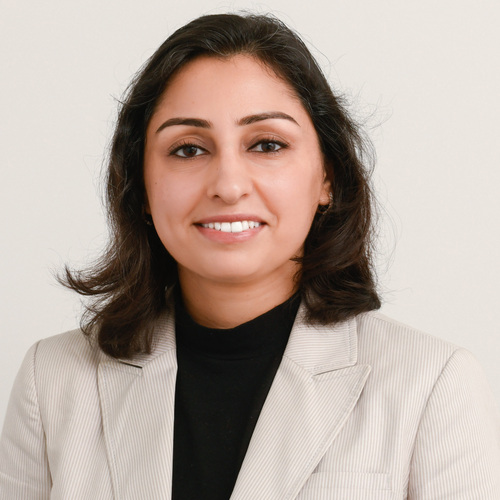
Katrien De Moor is an Associate Professor at the Department of Information Security and Communication Technology at NTNU. Her work focuses on socio-technical approaches in ICT research, particularly in Quality of Experience (QoE), human-technology interactions, and ethical implications of technology. She co-edits the journal Quality and User Experience and leads the 5-year Master's program in Cybersecurity and Data Communication. Her research emphasizes user-centric innovation, digital ethics, and sustainable HCI. Education: PhD in Social Sciences from Ghent University (2012). Visiting researcher at TU Eindhoven, TU Berlin, and NTNU (Marie Curie Fellow). Research Interests: User Experience (UX) and QoE in immersive technologies Human behavior and ethical design Ecological validity in user studies Cybersecurity in critical sectors Long-term QoE assessment Publications highlight: Recent work explores ethical risks in smart environments, sustainable multimedia design, and user perspectives on parental controls. Her projects include Amplify (EU-funded), PERSEUS Doctoral Programme , and Cryptology and Social Life . Supervision: Active mentor to over 30 PhD students and researchers, focusing on cybersecurity, ethical AI, and human-centered design. Grants: Principal Investigator for the Norwegian TufiQoE project (2020-2024) and grants on digital carbon footprint awareness. Labs/Teams: Member of SFI NORCICS (Norwegian Cybersecurity Center) and the Young Academy of Norway. Leads interdisciplinary projects in human-centric networking and XR security.
Sarah Khan is a Teaching Associate Professor of Information Technology and Business Analytics at the Department of Business Management, Poole College of Management, North Carolina State University. Her research focuses on tech management, information systems, big data, and technology education. She holds a Ph.D. in Computing and Information Systems from the University of North Carolina Charlotte (2012). Education : Ph.D. in Computing and Information Systems, UNC Charlotte (2012) Research Interests : Development of human-centric digital leadership frameworks Hybrid flexible (HyFlex) instructional models in education Anti-piracy communication strategies and digital behavior segmentation IT investment decision-making under behavioral and managerial risks Her recent work emphasizes pedagogical innovations in hybrid learning environments, with notable contributions to understanding student engagement and course design efficacy. Earlier research explored IT project management challenges and cybersecurity deterrent mechanisms. Advising & Grants : No advisees or grants listed in the provided materials. She contributes to curriculum development within the Information Technology and Business Analytics group at Poole College. Labs/Teams : Active member of the Information Technology and Business Analytics team in the Department of Business Management, collaborating on educational technology initiatives and IT management research.
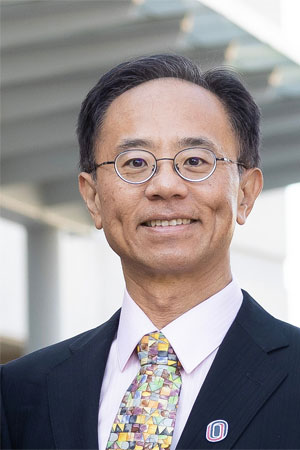
Yu-Che Chen is a Professor and Interim Director of the School of Public Administration at the University of Nebraska at Omaha (UNO), holding the Kathleen D. Seline and Isaacson Professorships. He directs the Digital Governance and Analytics Lab, focusing on AI governance, cyberinfrastructure, and collaborative digital governance. With a Ph.D. and MPA from Indiana University-Bloomington and a BS in Chemical Engineering from National Taiwan University, his career spans over two decades in digital government research. His research explores AI’s role in public governance, cybersecurity, and smart cities, supported by $3.5M in NSF grants. He co-edited The Oxford Handbook of AI Governance and published extensively in journals like Government Information Quarterly . As President-Elect of the Digital Government Society and Associate Editor of major journals, he shapes global research agendas. Dr. Chen has received awards including the Isaacson Professorship (2022-2024) and the 2009 Professor of the Year. He advises on NSF grants and collaborates internationally, organizing conferences like the International Digital Government Research Conference. His lab mentors doctoral students and bridges academia with public sector innovation. Teaching focuses on digital governance, policy analysis, and research methods. He emphasizes technology’s ethical implications and digital equity, advising on sustainability topics through his lab’s community engagement initiatives.
Michal A. Mankowski, PhD, is an Assistant Professor in the Department of Surgery at NYU Grossman School of Medicine, where he conducts impactful research in transplantation medicine. His work bridges clinical needs with data science and policy innovation, focusing on improving equity and efficiency in organ allocation systems. His research interests center on transplantation bioinformatics , HLA immunogenetics , and health equity , with a strong emphasis on kidney and liver allocation. He investigates how electronic health records and large language models can be leveraged—and secured—within clinical transplant settings. His work also explores the impact of patient comorbidities, such as delirium, on transplant access and outcomes. Recent publications reveal a strong trend toward integrating data science , machine learning , and policy modeling in organ transplantation. His research spans technical immunogenetic analysis (e.g., eplet mismatch) to ethical and operational challenges in national allocation systems. He frequently collaborates with leaders in transplant epidemiology and bioinformatics, contributing to high-impact journals such as American Journal of Transplantation and Nature Medicine . Scientific Awards : No awards are listed in the provided text. Advising and Grants : While no specific students or grants are listed, his role as an Assistant Professor and active publication record suggest involvement in mentoring graduate or medical students and securing research funding in transplantation informatics and policy. His collaborations indicate participation in multi-institutional research teams and likely grant-funded projects related to organ allocation and AI in medicine. Labs and Teams : Dr. Mankowski is part of a robust transplant research ecosystem at NYU Grossman School of Medicine, collaborating extensively with teams focused on transplant outcomes, immunogenetics, and health services research. He contributes to projects involving large databases such as the Scientific Registry of Transplant Recipients (SRTR) and Epic Cosmos, suggesting integration within data-driven clinical research networks.
Dr. Thomas Piko serves as a Lecturer in the Department of Administrative Science at Harz University of Applied Sciences in Halberstadt, Germany. With over 25 years of continuous service since 1995, he teaches courses in Politics and Governance, Administrative Reforms (focusing on Modernization and Digitalization), Organizational and Social Psychology, and Social Skills in Application. His academic home is the Faculty of Administrative Sciences at this applied sciences university. Dr. Piko holds a PhD in Human Resource Development from the University of Magdeburg (2005) with his dissertation on 'Acceptance and Resistance in Personnel Development.' His educational background includes political science studies in Braunschweig and Bamberg with focuses on social and organizational psychology and administrative science. He has completed specialized training in Gestalt Therapy (1995-2000), MBSR (2013-2015), and Positive Neuroplasticity Training (2016). His research interests center on organizational psychology, negotiation theory, and the 'New Enlightenment' philosophical movement. Dr. Piko has developed the C/\ID concept (in collaboration with Volkswagen-Academy and TU-Braunschweig), which integrates mental performance with mental and physical health aspects. His work bridges academic theory with practical applications in high-reliability organizations, particularly focusing on how humans can 'become human in the 21st century' amid technological acceleration and ecological crises. His recent publications show a clear trajectory toward crisis management applications, particularly his 2023 'Tryzub: Stress Management Handbook for Ukraine' and related work with Ukrainian institutions. His scholarly output spans intelligence studies, negotiation theory, and governance design, with increasing emphasis on practical applications for contemporary crises. The publications demonstrate interdisciplinary reach across political science, organizational psychology, security studies, and philosophical inquiry into modern enlightenment. Dr. Piko maintains professional affiliations with the German Council on Foreign Relations (DGAP) and the Platform 'People in complex working environments.' His work reflects a commitment to connecting academic knowledge with practical organizational challenges, particularly in crisis situations and high-stakes negotiation contexts. As an organizational psychologist and political scientist, he offers consulting and coaching services alongside his academic work, focusing on organizational development within the context of the 'New Enlightenment.' His approach integrates insights from neuroscience, criminology, and philosophical inquiry to address contemporary challenges in governance, security, and human development.
Gareth James is the John H. Harland Dean and Professor of Information Systems & Operations Management at Emory University's Goizueta Business School, a position he assumed in July 2022. Prior to this, he held significant leadership roles at USC Marshall School of Business, including interim dean (2019-2020), vice dean of faculty, and deputy dean (2020-2022). James received his PhD in Statistics from Stanford University, complemented by a BComm in Finance and BS in Statistics from The University of Auckland. His academic journey reflects a strong foundation in both statistical methodology and business applications. James specializes in statistical problems in marketing, functional data analysis, statistical methodology, and high-dimensional regression. His research bridges theoretical statistics with practical business applications, particularly in the areas of machine learning, advertising optimization, and technology adoption. His work demonstrates a consistent focus on developing methodological innovations that address real-world business challenges. His research contributions have been widely recognized, with over 30,000 citations. James has led multiple National Science Foundation research grants and served as associate editor for five top research journals. His most notable scholarly contribution is co-authoring the highly successful textbook "An Introduction to Statistical Learning," which has become a standard reference in the field. Fellow of the American Statistical Association Fellow of the Institute of Mathematical Statistics Dean's Research Awards (two times) Evan C. Thompson Faculty Teaching and Learning Innovation Award Three-time winner of the Marshall School of Business' Golden Apple Award Dean's Ph.D. Advising Award USC Mellon Award Provost's Mentoring Award James is equally distinguished as a mentor and educator. His teaching excellence is evidenced by multiple Golden Apple Awards, while his mentoring impact is reflected in the Dean's Ph.D. Advising, USC Mellon, Evan C. Thompson, and Provost's Mentoring awards. As Dean, he leverages his expertise in data-informed decision making to strengthen Goizueta's mission of preparing principled leaders to have a positive influence on business and society.
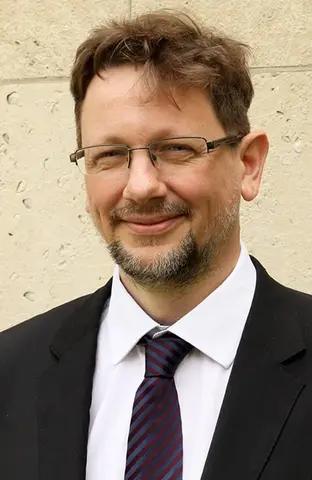
Oliver Kessler is a Professor of International Relations at the School of Social Sciences , University of Erfurt. He leads the Promotionskolleg "De-Globalisierung und Globale Entkopplung (DeGlobE)" and contributes to interdisciplinary research at the intersection of constructivist theories, international political economy, and risk politics. His research focuses on: Constructivist theories of international relations International political economy Risk and uncertainty in global governance Politics of international law Recent publications analyze risk-race intersections in finance, contingency in constructivist thought, world society frameworks, and cyberwarfare legal status. He has edited special forums in journals like Millennium and Review of International Studies . As a project leader for DeGlobE, he explores processes of global decoupling. His methodological approach combines critical theory, practice theory, and systems theory.
Imed Chkir is a Full Professor at the Telfer School of Management, University of Ottawa, specializing in Corporate Finance, Financial Markets, and International Finance. He holds a Ph.D. from Université Laval and has been affiliated with the University of Ottawa since at least 2016. Education: Baccalauréat from Lycée d'El Menzah VI, Maîtrise from Faculté des Sciences Économiques et de Gestion de Tunis and Université Laval. His research focuses on corporate governance, political connections, innovation, and sustainable finance. He has published extensively in top-tier journals including the Journal of Corporate Finance and Emerging Markets Review. Recent publications explore topics such as economic policy uncertainty and carbon emissions, green technology innovation, and board diversity. Funded by SSHRC, CPA Canada, and internal grants, his work spans corporate social responsibility, cybersecurity implications, and cannabis legislation analysis. Scientific awards include: Best student paper award at ASAC conference (1998) Finalist status for cannabis legislation research (2018) His funded projects (2016-2024) address innovation determinants, governance diversity, and risk management, with grants ranging from $1,500 to $65,884.
Dr. Craig Douglas Albert is a Professor of Political Science and Graduate Director of the PhD in Intelligence, Defense, and Cybersecurity Policy and the Master of Arts in Intelligence and Security Studies at Augusta University. His work bridges academic research and real-world policy, with expertise in global security threats and digital warfare. Education: PhD in Political Science and Government, University of Connecticut (2009) Master of Arts in Political Science and Government, University of Connecticut (2003) Bachelor of Arts in Political Science and Government, Augusta State University (2001) Research Focus: Dr. Albert's work centers on the evolving landscape of international conflict, with emphasis on: Information warfare tactics and propaganda dissemination across social media platforms Geopolitical implications of artificial intelligence in military and security operations Cybersecurity policy frameworks for major powers (US, China, Russia) Ethnic conflict dynamics and political philosophy in security contexts His research consistently examines how technology transforms traditional power structures and conflict mechanisms. Publication Trends: Recent works (2022-2024) demonstrate a strong focus on AI-driven information warfare, social media manipulation, and great-power competition. Over 60% of publications analyze technological impacts on security, while 30% address propaganda mechanics. Emerging themes include TikTok's national security risks, pandemic intelligence systems, and Middle Eastern disinformation campaigns. Media & Policy Engagement: Testified before US Congress Joint Subcommittee on Foreign Affairs Regular commentator for Fox News, Forbes, CTV Canada, VOA, and international outlets Council on Foreign Relations Higher Education Ambassador Advised US Army Cyber Center of Excellence workshops on AI threats Labs & Teams: Leads research initiatives on disinformation detection and cybersecurity policy through Augusta University's intelligence programs, collaborating with military cyber units on threat analysis.
Nadia Naffi is an Assistant Professor in the Department of Teaching and Learning Studies at the Faculty of Education, Laval University, where she also holds the Chair in Educational Leadership (CLE) on innovative teaching practices in a digital context funded by National Bank. She serves as Co-head of the Education and Empowerment axis of the International Observatory on the Societal Impacts of AI and Digital Technology (OBVIA), and has held leadership roles including chairing the first integration of the Institutional Committee for Innovation in Teaching at Laval University. Naffi's research focuses on digital empowerment in the face of AI risks, with particular emphasis on combating disinformation, deepfakes, and cyber scams through educational strategies. Her work spans multiple domains including educational technology, AI ethics, media literacy, and digital resilience across different age groups from youth to seniors. She has developed innovative approaches to designing inclusive learning experiences that harness AI and digital technologies in ethical, critical, and responsible ways. Her recent publications reveal a clear trend toward addressing societal challenges posed by generative AI, with particular focus on deepfakes, disinformation, and cyber resilience. The research spans educational settings, healthcare contexts, and broader societal implications, demonstrating an interdisciplinary approach that connects technical understanding with pedagogical innovation and policy development. Her work consistently emphasizes the human dimension of technology adoption and the need for critical digital literacy across all age groups. Concordia Public Scholar (2017-2018) Winner of SSHRC 'I have a story to tell' competition Winner of ACFAS 'My Thesis in 3 minutes' competition President's Media Outreach Award (2016-2017) Governor General of Canada Gold Medal – Person and Society 2018 2019 SALTISE Award for Teaching Excellence and Innovation John F. Lemieux Young Alumni Medal Naffi has secured significant research funding including a $425,000 National Bank Teaching Leadership Chair and multiple grants from SSHRC, FRQSC, and other organizations totaling over $1.5 million. Her research projects address critical issues such as seniors' cyber resilience against deepfakes, AI-health transformation, digital inequalities during pandemic, and educational responses to disinformation. She has also developed practical resources including bilingual guides for online course transition and the 'Abécédaire de l'IA' educational tool. As Co-head of OBVIA's Education and Empowerment axis, Naffi leads a multidisciplinary team focused on understanding and addressing the societal impacts of AI through education. Her work connects academic research with practical applications through collaborations with government agencies, educational institutions, and community organizations. The Digital and AI Bootcamp she developed represents one practical initiative bringing together educational advisors to explore innovative digital technologies including virtual reality and AI in teaching contexts.
Prof. Dr. Gerrit Sames is a Professor of General Business Administration at Mittelhessen University of Applied Sciences (THM), specializing in Organization with a focus on ERP systems. He has held leadership roles in industry, including Managing Director positions at Buderus Heiztechnik GmbH and Schott-Rohrglas GmbH, and served on the Board of Schott Solar AG. His research focuses on digitalization, Industry 4.0, and SMEs, with publications analyzing digital maturity models, business process transformation, and workforce implications. Affiliation: Mittelhessen University of Applied Sciences (THM) Email: gerrit.sames@w.thm.de Research Interests: Digitalization, Industry 4.0, ERP systems, SME transformation, IT maturity models, and business process optimization. His work emphasizes practical frameworks for digital positioning and addressing organizational challenges. Recent Publications: 15+ studies on digitalization trends in SMEs, including comparative analyses between Germany and Japan, maturity models for Industry 4.0, and IT security classifications. Conference Contributions: Expert panelist at Bundestag discussions, Hannover Messe presentations, and contributions to IoT and automation congresses.
Besa Arifi is a Full Professor at the Faculty of Law, South East European University (SEEU), with over 15 years of academic experience in criminal law, criminology, and victims' rights. Her career spans roles as Coordinator for International Cooperation and Mobility (2015–present), former Head of SEEU's Human Rights Centre, and leadership in academic reform projects. PhD in Criminal Law Sciences (2007–2010), St. Cyril and Methodius University Master of Arts in Criminal Law and Criminology (2003–2006), St. Cyril and Methodius University Bachelor of Arts in Law (2000–2003), St. Cyril and Methodius University Her research bridges criminal law , cybercrime , and gender-based legal analysis , with a focus on restorative justice and counter-violent extremism strategies . Recent publications address blockchain-enabled corruption , hate crime drivers , and children's procedural rights . Arifi's scholarly output spans 15 years, covering hate speech regulation , domestic violence legislation , and digital forensics . She has collaborated with institutions like OSCE and UNDP on projects related to judicial independence and whistleblower protection in higher education.
Jens Ladefoged Mortensen is an Associate Professor at the Department of Political Science , University of Copenhagen , specializing in the EU as a global trade actor and WTO governance . He teaches courses in International Relations , International Political Economy , and Global Environmental Governance , with administrative roles including Section Coordinator for International Relations and Organizer of the IPE Group . Research Focus : EU external trade policy, WTO Dispute Settlement, TTIP/Trade Agreements, Basel Process Trade Finance, and the intersection of Constructivism with IPE in analyzing economic globalization. Teaching Experience : Undergraduate courses (International Relations, Political Science), Postgraduate courses (WTO Governance, Global Environmental Governance), and guest lectures in Political Risk Analysis. Research Funding includes EU Framework 7 project Global Re-ordering: Evolution through European Networks (2012-14) and multiple Danish Social Science Council grants (2005-2004). Public Engagement spans 121 Press/Media appearances (TV, radio, print), policy workshops at the House of Lords (2014), and debates with institutions like DEO and DIIS . Academic Network : Affiliated with Centre for European Politics , Research Group on Climate, Environment and Change , and Asian Dynamics at UCPH.
Brian E. Ray is a Professor at Cleveland State University College of Law, serving as Co-Interim Dean and Director of the Center for Cybersecurity & Privacy Protection. He specializes in cybersecurity, data privacy, AI law, and comparative constitutional law, with a focus on socio-economic rights and pandemic response. B.A., University of Notre Dame (1993) M.A., University of Pennsylvania (1998) J.D., The Ohio State University (2001) His research bridges legal theory and technological innovation, particularly in cybersecurity , data privacy , and AI policy . He has led interdisciplinary teams securing over $4.5 million in grants for cybersecurity education and pandemic preparedness. His work on South African socio-economic rights culminated in the book Engaging with Social Rights (2016). Recent publications analyze smart city governance, facial recognition regulation, and pandemic digital privacy. His awards include the Fulbright Scholar designation (2013). Ray also directs the online Master of Legal Studies in Cybersecurity & Data Privacy and co-founded the Center for Cybersecurity & Privacy Protection. Co-Interim Dean, Cleveland State University College of Law Director, Center for Cybersecurity & Privacy Protection Member, CyberOhio Advisory Board Member, Ohio Attorney General Facial Recognition Task Force
Helmuth Ludwig is a Professor of Practice in Strategy and Entrepreneurship at Southern Methodist University's Cox School of Business, serving as Executive Director of the Hart Institute for Technology, Innovation, and Entrepreneurship. He additionally holds affiliations as Executive Fellow at IESE Business School (Barcelona) and Affiliated Professor at the University of St. Gallen's Research Lab for AI Management. Education PhD, Christian Albrecht University of Kiel, Germany MBA, University of Chicago Engineering degree, Karlsruhe Institute of Technology Research Interests Dr. Ludwig specializes in corporate technological transformation with concentrated expertise in artificial intelligence democratization and governance. His work examines strategic implementation of AI systems within global enterprises, board-level oversight of emerging technologies, and cybersecurity frameworks for executive leadership. This research bridges advanced technology adoption with organizational strategy and risk management. Publication Trends His 2023-2024 publications reveal a focused trajectory on AI governance and cybersecurity leadership, emphasizing practical board-level frameworks. The works consistently address the intersection of technological advancement, corporate oversight, and strategic risk management, highlighting actionable methodologies for governing complex digital systems within large organizations. Scientific Awards No scientific awards were documented in the source material, though professional certifications include NACD Certified Director and Board Leadership Fellow status. Advising and Grants While academic student advising details were omitted, Dr. Ludwig provides strategic guidance as senior advisor to Bridgepoint LLC and Zscaler, Inc. His board leadership encompasses Hitachi Ltd (audit committee), Humanetics Group (Chair), and prior roles at Circor International and Commonwealth Center for Advanced Manufacturing. Labs and Teams He directs SMU's Hart Institute for Technology, Innovation, and Entrepreneurship, fostering academic-industry collaboration in digital transformation. Concurrently, he leads research initiatives at the University of St. Gallen's AI Management Lab, focusing on organizational implementation of artificial intelligence systems.