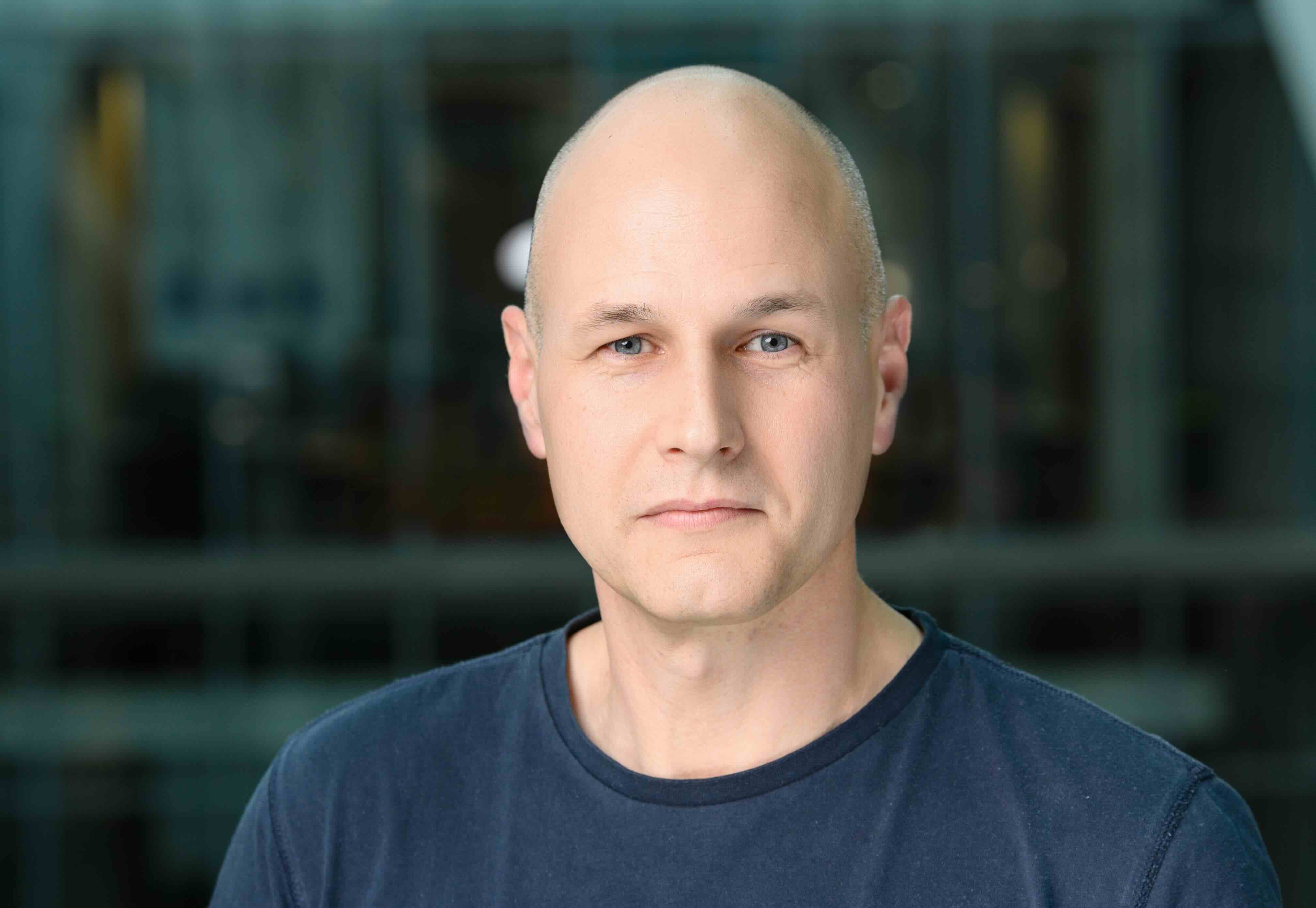
Ivan Dokmanic is an Assistant Professor at the Coordinated Science Laboratory (CSL) within the University of Illinois . His research bridges signal processing , machine learning , and applied inverse problems , with a focus on acoustics, biomedical imaging, and distance geometry. Current Role : Assistant Professor, CSL Email : dokmanic@illinois.edu Research Interests : Dokmanic explores machine learning applications in inverse problems , particularly distance geometry for molecular imaging and acoustics . His work includes unlabeled sensing , where distances between points are known but their arrangement is not. This has implications for powder diffraction , indoor localization , and echo modeling . Article Trends : His recent publications emphasize distance geometry in machine learning , acoustic signal processing , and inverse problem theory . Key areas include molecular imaging , audio encryption , and sensor positioning . Collaborative work spans medical imaging , cyberphysical systems , and geometric invariants . 2016 Google Faculty Award NSF Grant (1 year, $157,079) Students and Grants : Dokmanic mentors PhD students like Puoya, Shuai, and Anadi. His research is funded by the National Science Foundation , Google , VISA , and nVidia .
Brandon Lucia is a Professor in the Department of Electrical and Computer Engineering at Carnegie Mellon University's College of Engineering. He holds the Kavčić-Moura Professorship and leads the Abstract research group. As CEO and co-founder of Efficient Computer Corp., he bridges academic research with commercial applications in energy-efficient computing. Dr. Lucia received his Ph.D. in Computer Science and Engineering from the University of Washington in 2013, following an MS from the same institution in 2010 and a BS in Computer Science from Tufts University in 2007. His research focuses on the intersection of computer architecture, computer systems, and programming languages, particularly in energy-constrained environments. His primary research interests include intermittent computing, energy harvesting computers, orbital edge computing, and parallel computing systems. Lucia's work addresses fundamental challenges in creating programmable, reliable computing devices that operate without batteries by harvesting energy from their environments, with applications in sensing, medical implants, and space systems. He also investigates software systems and architectures for making parallel computing correct, reliable, and efficient in the post-Moore's Law era. Lucia's publication record shows a clear trajectory toward orbital edge computing and nanosatellite systems, with recent work focusing on computational constellations, visual navigation for satellites, and energy-efficient processing in space. His research spans both theoretical foundations of intermittent computing and practical implementations in hardware and software. 2021 Sloan Research Fellowship 2018 NSF CAREER Award 2018 ASPLOS Best Paper Award IEEE MICRO Top Picks in Computer Architecture (2009, 2010, 2016) 2015 OOPSLA Best Paper Award 2019 IEEE TCCA Young Computer Architect Award 2022 Engineering Faculty Award As an advisor, Lucia has mentored numerous graduate students including Brad Denby, Zhuo Cheng, and Kyle McCleary, many of whom have become co-authors on his significant publications. His lab developed the world's first batteryless PocketQube nanosatellite (Tartan-Artibeus-1), which was deployed to low-Earth orbit aboard the SpaceX Transporter-3 Rocket. Lucia's research has received funding from sources including NSF, DARPA, Google, and VMware, supporting both fundamental research and practical implementations of energy-harvesting computing systems.
Andrea Goldsmith is the Dean of the School of Engineering and Applied Science and the Arthur LeGrand Doty Professor of Electrical and Computer Engineering at Princeton University. Previously, she held the Stephen Harris Professorship at Stanford University and remains Harris Professor Emerita there. Her research focuses on information theory, communication theory, signal processing, and their applications to wireless communications, interconnected systems, and neuroscience. She founded Plume WiFi and Quantenna, Inc., and serves on the boards of Medtronic and Crown Castle Inc. Education: B.S., M.S., and Ph.D. in Electrical Engineering, University of California, Berkeley (1986–1994) Research Interests: Her work bridges theoretical foundations with practical applications in wireless systems, including MIMO communications, cognitive radio, and the integration of machine learning in communication protocols. She also explores the intersection of wireless technology with biomedical systems and neuroscience, emphasizing innovations like smart buildings and in-body networks. Key Contributions: Authored seminal textbooks, including Wireless Communications and MIMO Wireless Communications . Inventor on 29 patents, with significant industry impact through startups. Recipient of prestigious awards such as the IEEE Sumner Award, ACM Athena Lecturer Award, and Marconi Prize. Labs & Leadership: Leads the Wireless Systems Lab at Princeton, advancing cutting-edge wireless technologies. Chair of the IEEE Board of Directors Committee on Diversity, Inclusion, and Ethics.
Ning Zhang is an Associate Professor in the Department of Computer Science & Engineering at Washington University in St. Louis, affiliated with the Center for Trustworthy AI in Cyberphysical Systems (CPS). He joined the university in Fall 2018, following an 11-year tenure at Raytheon as a Principal Cyber Engineer and Technical Lead, where he focused on securing critical networked and cyberphysical infrastructures. Education: PhD in Computer Science, Virginia Polytechnic Institute and State University (2016) BS and MS in Computer Science, University of Massachusetts Amherst (2007) Research Interests: Professor Zhang’s work bridges security, computer architecture, and programming languages. Key areas include secure software/hardware systems, side-channel analysis, malware forensics, and automated vulnerability discovery. His recent focus includes safeguarding generative AI agents and enhancing cybersecurity in agentic systems. Awards: USENIX Distinguished Paper Award (2024) for research on generative AI security circumvention Grants & Collaborations: Co-recipient of a $1.5M DoD grant (2025) to advance generative AI robustness Labs & Teams: Leads research initiatives in system security and trustworthy AI within the McKelvey School of Engineering.
Professor Trina Myers serves as the Head of School for the School of Information Technology at Deakin University's Faculty of Science Engineering and Built Environment. With extensive experience in academia and research leadership, she plays a pivotal role in shaping IT education and research directions at Deakin. She is also an active member of the Australian Council of Deans of ICT (ACDICT), having served as its immediate past President. Her educational background includes: Doctor of Philosophy in Computer Science from James Cook University Master of Business Administration from James Cook University Master of Information Technology from James Cook University Professor Myers' research focuses on semantic technologies, ontology engineering, Internet of Things, knowledge management, natural language processing, and human-computer interaction . Her work emphasizes interdisciplinary collaboration, bridging technology with fields such as healthcare, marine science, environmental conservation, and business. She has pioneered approaches in academagogy (academic gamification) to enhance online learning engagement, particularly for adult learners. Her IoT research has significant applications in healthcare space optimization, environmental monitoring, and resource management. Her recent publications demonstrate a strong trajectory in applying AI and IoT technologies to solve real-world problems, particularly in healthcare, education, and resource optimization. There's a clear pattern of interdisciplinary work connecting computer science with healthcare, education, and environmental science. Her research increasingly focuses on human-centered technology design, especially for vulnerable populations like adolescents with autism spectrum disorder. Her notable achievements include: Fellow of the Australian Computer Society (2023) Australian Awards for University Teaching (AAUT) Teaching Award (2020) Women in IT Professional Leadership Award Finalist (2020) Asia-Pacific International Triple E Entrepreneurial Educator of the Year Award (1st runner-up, 2020) Australian Computer Society, National Digital Disruptor ICT Educator of the Year (2019) Professor Myers actively supervises doctoral students across diverse research areas including gamification in language learning, brain tumor analysis using deep learning, AI in higher education, AI for refugee resilience, data integrity in edge environments, and quantum-driven satellite networking. She has secured significant research funding, including a recent grant for "Indiginizing ICT Curriculum: A Starter Framework for the Community of Practice" through the Australian Council of Deans of ICT. Her teaching philosophy emphasizes active learning methodologies, Process Oriented Guided Inquiry Learning (POGIL), blended learning, and collective intelligence approaches.
Professor Vallipuram Muthukkumarasamy is an Associate Professor at the School of Information and Communication Technology at Griffith University, where he has pioneered Network Security teaching and research since joining in 2001. He leads the Networking & Security and Blockchain Research Group at the Institute for Integrated and Intelligent Systems. Muthu holds a Ph.D. from Cambridge University and a B.Sc. Eng. with 1st Class Honors from the University of Peradeniya, Sri Lanka. His extensive academic appointments include Group Leader of Network Security and Blockchain Research (2008-present), Program Director for the Graduate Certificate in Blockchain Technology (2022-present), HDR Convenor (2022-present), Member of the University Council (2020-2021), and Deputy Head of School for Learning and Teaching (2013-2016). Muthu's research expertise spans Cyber Security, Blockchain Technology (DLT), and Wireless Sensor Networking. He has secured national and international funding for interdisciplinary research, published over 150 articles in international journals and conferences, and supervised more than 30 research Masters and PhD students to completion. He pioneered the Network Security teaching at Griffith and successfully proposed and led the development of Queensland's first Master of Cyber Security Program, creating a truly interdisciplinary curriculum with Law, Business, and Criminology Schools. His recent publications reveal a strong research trajectory in blockchain applications, security visualization techniques, and wireless sensor networks. His work explores DeFi user behavior analysis, NFT privacy risks in the metaverse, blockchain transaction visualization, and the integration of blockchain with AI for credit scoring systems. His wireless sensor network research focuses on energy-efficient routing protocols and network lifetime modeling. Muthu has received multiple best teacher awards from students and peers, and during his tenure as Deputy Head of School, the Griffith IT program was ranked #1 in Australia for overall student satisfaction. He successfully proposed and developed Cisco-related courses at undergraduate and postgraduate levels and instrumental in creating industry-sought-after networking and security courses across all academic levels. His funded research includes significant projects such as Increasing the South East Queensland Cyber Security Workforce, Linking Digital Payments to Crime Using Big Data Machine Learning Tools, Improving Water Markets through Digital Technologies, and developing Indo-Australian partnerships for digital transformation through blockchain. He is actively involved in community and charity activities and has been instrumental in internationalization efforts for Griffith University.
Supriyo Ghosh is a Senior Researcher at Microsoft Research, India. Prior to this role, he held positions at IBM Research AI Lab (2019–2021) and the Institute of Infocomm Research (I2R), A*STAR. He completed his PhD in Information Systems at Singapore Management University (2017) under Prof. Pradeep Varakantham and conducted postdoctoral research at MIT's SMART and LIDS centers (2016–2017). His research focuses on data-driven decision analytics, including algorithmic optimization, reinforcement learning, urban logistics, and network resilience in cyber-physical systems. His work has addressed cloud incident management, proactive decision-making under uncertainty, and applications of large language models (LLMs) in system reliability. Notable contributions include developing automated root-cause analysis frameworks and improving incident response strategies in large-scale cloud environments. He has also explored reinforcement learning applications in healthcare treatment optimization and air traffic control systems. Award-winning research includes the Best Paper Award at ACM SoCC'22 for an empirical study on high-severity cloud service incidents. He actively serves as a PC member for top conferences like AAAI, NeurIPS, and ICML, demonstrating his leadership in advancing AI and optimization fields. His academic background includes a graduate exchange at Carnegie Mellon University (CMU) and collaborations with MIT faculty like Prof. Patrick Jaillet. His work bridges theoretical foundations with real-world applications in transportation, cybersecurity, and enterprise systems.
Dr. Iñaki Esnaola is a Senior Lecturer at the Department of Automatic Control and Systems Engineering, University of Sheffield, and a Visiting Research Collaborator at Princeton University. He holds a MSc from the University of Navarra (2006) and a PhD from the University of Delaware (2011). His research focuses on information theory, machine learning, and cybersecurity, particularly in cyberphysical systems like smart grids. His work addresses data integrity, privacy, robust estimation, and optimal sensor placement. Research interests include: Information theory and data science, machine learning and high-dimensional statistics, cybersecurity (especially data injection attacks), privacy, robust estimation, and sensor placement optimization. Recent projects involve empirical risk minimization with regularization, stealth attacks on control systems, and compressive sensing for environmental monitoring. Key publications include studies on relative entropy in machine learning, sensor placement for sewer networks, and stealth attacks in smart grids. He leads a research group with ongoing projects in resilient cyberphysical systems and received a UKRI grant for advanced manufacturing. His work bridges theoretical foundations with real-world applications in energy systems and environmental monitoring.
Roziana Ramli is an academic affiliated with Northumbria University, holding a PhD in Computer Science. Her research focuses on medical imaging techniques, cybersecurity in healthcare systems, and bio-inspired optimization algorithms. She has contributed to advancements in retinal fundus image registration and IoT security protocols. Her work integrates computer vision with biomedical applications, addressing challenges in healthcare monitoring and assistive technologies. Key research areas include federated learning in healthcare networks, prosodic feature analysis for language recognition, and secure communication for drone networks. Her systematic literature reviews and algorithmic innovations highlight her interdisciplinary approach to solving technical and clinical problems. Though no formal awards are listed, her active publication record from 1999 to 2024 demonstrates sustained academic engagement.
Xudong Chen is an Associate Professor in the Department of Electrical & Systems Engineering at Washington University in St. Louis, part of the McKelvey School of Engineering. Previously, he held an Assistant Professor position at the University of Colorado, Boulder. He earned a BS in Electronics Engineering from Tsinghua University (2009) and a PhD in Electrical Engineering from Harvard University (2014). His research focuses on control theory, decision theory, dynamical systems, stochastic processes, and network science, with a particular emphasis on large-scale multi-agent systems. Applications span quantum systems, smart materials, neuroscience, social science, robotics, drones, and spacecraft. His work develops advanced mathematical tools and engineering methods to address challenges in these complex systems. Notable Awards: 2023 A.V. Balakrishnan Early Career Award 2021 Donald P. Eckman Award NSF CAREER Award (2021) AFOSR Young Investigator Award (2020) Chen has secured grants including NSF support for graphon-based structural system theory and AFOSR funding. He leads a research group and maintains a lab website for collaborative projects. His work bridges theoretical foundations with practical applications across diverse engineering domains.
Dr. Ertem Esiner is a Senior Research Scientist and Coordinator at the Illinois Advanced Research Center at Singapore (Illinois ARCS), affiliated with the University of Illinois Urbana-Champaign. He holds a Ph.D. in Computer Science and Engineering from Nanyang Technological University (2017), an M.Sc. in Computer Science and Engineering from Koç University (2013), and a B.Sc. in Computer Engineering from Koç University (2011). His academic career includes teaching assistantships at both NTU and KU. Cryptography Security Privacy Cyberphysical Systems His research focuses on security solutions for cyberphysical systems, including the development of a security engine for enforcing automated policies and provenance verification in industrial control systems. Current projects include the Plug & Play Security Engine (Principal Investigator, 2023-2026) and automated security policy generation tools for IIoT environments. His work spans applications in smart grids, building energy management, and communication-based train control systems. Recent publications demonstrate a trend toward real-time security enforcement and provenance tracking in time-critical systems, including patented solutions for message authentication. He has secured multiple research grants totaling 5+ years of funding and leads teams of 4-7 members across collaborative projects with NTU, RESYNC Technologies, and Singapore-ETH Centre. Notable researcher from CREATE (2019) SINGA PhD scholarship recipient WOWZAPP 2012 hackathon winner UPE/ACM Scholarship awardee Vehbi Koç Scholarship recipient He has contributed to ACM and IEEE journals, developed a Building Energy Management System (BEMS) testbed , and published foundational work on secure data storage, query integrity, and decentralized access control mechanisms. His teaching experience includes courses on cryptography, operating systems, and algorithm design.
Prof. Dimitrios Georgakopoulos is a Professor of Computer Science at Swinburne University of Technology's School of Science, Computing and Emerging Technologies. He serves as Director of the ARC Industrial Transformation Research Hub for Future Digital Manufacturing and Swinburne's IoT Lab. Previously, he was Research Director at CSIRO's ICT Centre and a Professor at RMIT University. Affiliations: CSIRO Adjunct Fellow since 2014 Leadership: Directed 7 large cross-disciplinary initiatives with $100M+ funding Research Focus: IoT, Cyber-Physical Systems, Digital Manufacturing, Machine Learning Funding: Secured $77.1M in external grants; $59.7M at Swinburne Research Interests: Digital twins and AI for manufacturing IoT sensor sharing ecosystems 5G-enabled smart cities Autonomic IoT systems Quality assurance in Industry 4.0 Awards: 2023 National iAward (Public Sector), Vice Chancellor’s Innovation Award (2018), and multiple industry and academic recognitions. Grants & Projects: Lead researcher on ARC-funded initiatives in digital manufacturing, cybersecurity, and steel innovation. Collaborates with industry partners like Bega Cheese and FIA on IoT-driven solutions. Labs & Teams: Oversees Swinburne's IoT Lab and the ARC Future Digital Manufacturing Hub, advancing Industry 4.0 applications in manufacturing, healthcare, and smart infrastructure.
Dr. Baraq Ghaleb is an Associate Professor within the Centre for Distributed Computing, Networks and Security at Edinburgh Napier University's School of Computing Engineering and the Built Environment. He actively delivers and leads modules for both Undergraduate and Postgraduate programs in the Cyber Security and Systems Engineering subject group. Dr. Ghaleb earned his PhD from Edinburgh Napier University in June 2019, following completion of his MSc and BSc degrees. His academic journey has positioned him as an expert in cybersecurity and IoT technologies. His research focuses on investigating security vulnerabilities of Internet of Things standards and utilizing cutting-edge advancements to address these vulnerabilities. With expertise spanning Cyber Security, Internet of Things, Blockchain, and Machine Learning, Dr. Ghaleb bridges theoretical research with practical applications, particularly in securing IoT ecosystems. His recent work shows a clear progression from foundational networking research to contemporary security challenges involving blockchain, cryptography, and AI-enhanced security solutions. Dr. Ghaleb has secured significant research funding as Principal Investigator and Co-Investigator across multiple projects with a total budget of approximately £435,000. His externally funded projects include SafeNet (Carnegie Trust), Trusted Threat Sharing (Innovate UK), TruElect (Innovate UK), and LastingAsset (Innovate UK). He currently supervises numerous PhD students working on diverse security challenges: Blockchain-based Privacy-preserving Cybersecurity Intelligence Sharing (Elfatih Ahmed) Enhancing Security and Privacy of Blockchain-based Healthcare Systems (Faneela) Design of complex encryption schemes for IoT security (Shahbaz Khan) Intelligent and Privacy-Preserving Security Solutions for IoT Networks (Iain Baird) Dr. Ghaleb is affiliated with the Centre for Distributed Computing, Networking and Security and the Centre for Cybersecurity, IoT and Cyberphysical Systems, where he contributes to cutting-edge research in secure network architectures, cryptographic techniques, and privacy-preserving frameworks across multiple domains including automotive supply chains, healthcare systems, and environmental monitoring.
Dr. Yang Xing is a Senior Lecturer in Applied Artificial Intelligence for Engineering at Cranfield University's Centre for Autonomous and Cyberphysical Systems, where he also directs the HUMAX Lab focused on human-centered autonomous vehicle validation. He holds a PhD from Cranfield University (2018) and an MSc with Distinction in Control Systems from the University of Sheffield (2014). Previously, he was a Research Associate at the University of Oxford (2020-2021) and Research Fellow at Nanyang Technological University (2019-2020). His research centers on human-autonomy collaboration frameworks with four key pillars: Cognitive autonomous systems using trustworthy AI Computer vision for human behavior/intention modeling Multimodal foundation models for autonomous driving Deep learning for sustainable transportation systems His recent publications (2022-2025) demonstrate strong trends in AI-driven transportation research : 40% focus on trajectory prediction and behavior modeling, 30% on computer vision applications, 20% on human-AI collaboration frameworks, and 10% on energy optimization. Key thematic evolutions include increased use of transformer architectures, graph neural networks for interaction modeling, and simulation-to-real transfer learning. Awards and Honors: IEEE Outstanding Associate Editor Award (TNNLS 2023-2024) Best Paper Award, China National Intelligence Technology Conference 2019 IEEE Outstanding Service Award, Smart World Congress 2023 Best Workshop Paper, IEEE IV 2018 He currently advises PhD student Isa Ismail and has secured funding from the Royal Society, EPSRC, DSTL, SAAB, QinetiQ, and Thales. As lab director of HUMAX, he leads projects on human-AI teaming for autonomous systems.
Uduak Inyang-Udoh is an Assistant Professor in the Department of Mechanical Engineering at the University of Michigan, affiliated with the Autonomous & Intelligent Systems (AI-Sys) Lab. Her research focuses on control theory, graph theory, and physics-guided machine learning applied to data-rich advanced manufacturing, thermal systems, and energy storage. Education: PhD (Rensselaer Polytechnic Institute, 2021), BSc (University of Lagos, 2016) Research Areas: Controls, Energy, Manufacturing, Mechatronics & Robotics Email: udinyang@umich.edu Research interests integrate theoretical frameworks with practical applications in real-time optimal control, nonlinear system analysis, and additive manufacturing optimization. Her group has published extensively in control algorithms, thermal management systems, and data-driven industrial processes. Recent publications highlight advancements in neural co-state regulators, hybrid thermal control systems, and machine learning integration in droplet-based manufacturing. She emphasizes control theory applications to complex systems with input constraints and transient dynamics. Scientific Awards ASME Dynamic Systems and Control Division Rising Star Award (2022) ASME Rudolf Kalman Best Paper Award (2024) Mentoring style prioritizes student ownership of projects, collaborative peer mentoring, and structured progress reporting. Funding supports conference attendance (ACC, MECC) through travel grants and lab resources. Lab policies balance research productivity with vacation periods during academic breaks.