Christopher A. Mouton is a Senior Engineer at the RAND Corporation and Professor at the RAND School of Public Policy. His work focuses on technological innovation, public policy, and national security, particularly in areas like artificial intelligence (AI), information operations, aeronautics, and defense economics. He leads research to enhance special operations forces' effectiveness and counter foreign malign information campaigns. Education: Ph.D. in Aeronautics from California Institute of Technology Research Interests: AI applications in national security Cost-effectiveness analysis of defense investments Countering information warfare Biological weapon risk mitigation Military strategy and technology prioritization Key Contributions: Pioneer in detecting foreign information operations using AI Developed methodologies for defense technology prioritization Authored studies on AI's role in biological weapon risks Grants/Advising: Extensive Department of Defense-funded research Collaborations with U.S. Air Force and international partners Labs/Teams: Leads a multidisciplinary team at RAND focused on SOF operational effectiveness Part of AI and National Security Policy working groups
Dr. Lupu-Dima Lucian is an Associate Professor at the University of Petrosani's Faculty of Mining, Department of Mining Engineering, Surveying and Construction. His research focuses on GIS applications in risk management, educational technology, and mining safety. He has extensively studied e-learning systems during the pandemic and institutional reforms in higher education. Education: Ph.D. in relevant fields (university unspecified). His work integrates geospatial technologies with public health, disaster management, and organizational strategies. Over 20 years of academic contributions include pioneering studies on flood risk modeling, ERP systems in mining, and innovative training methods for workforce requalification. Research emphasizes interdisciplinary solutions for complex challenges: GIS-based disaster preparedness frameworks Educational resilience during crises Management systems for mining safety Articles highlight trends in: Hybrid educational models Geospatial policy applications Public administration efficiency Recent work explores post-pandemic educational systems and mining sector innovations. Labs/Teams: Involved in development of e-learning platforms at University of Petrosani and GIS-based solutions for Hunedoara County administration.
Prof. Dr. Florian Steinke is a Professor and Head of the Energy Information Networks and Systems Department at Technische Universität Darmstadt. His academic career spans roles at Siemens Corporate Technology (2009–2016) and a PhD in machine learning at the Max Planck Institute for Intelligent Systems (2006–2008). His research focuses on algorithmic energy management, distributed control systems, machine learning applications in energy grids, and resilient smart grid design. Education: PhD in Machine Learning (Max Planck Institute for Intelligent Systems, 2006–2008) Diplom in Computational Physics (University of Tübingen & University of Washington, 1999–2005) Research Interests: Development of cyber-physical systems for energy grids Optimization of thermal-electric systems using game theory and stochastic control Integration of social media data for demand forecasting Cybersecurity measures against adversarial attacks on grids Recent work emphasizes probabilistic grid modeling, resilient energy market design, and AI-driven control strategies for Fourth Generation district heating grids. His platform ecosystem research aims to support the energy transition through data-driven solutions. Labs/Teams: Leads the Energy Information Networks and Systems research group, focusing on interdisciplinary projects combining automation, data science, and energy systems engineering.
Maria Pinto-Albuquerque is an Assistant Professor at Iscte - University Institute of Lisbon, affiliated with the Department of Information Science and Technology (ISTA) and ISTAR-Iscte Research Center. Her work bridges software engineering, cybersecurity, and human-centered computing, with a strong focus on security awareness and education. PhD in Computer Science, University of Lancaster, UK Master’s in Computer Science, Faculty of Sciences, University of Lisbon Bachelor’s in Applied Mathematics and Computing, Instituto Superior Técnico Her research explores the intersection between people and computer systems, particularly in cybersecurity awareness , security-usability alignment , and requirements engineering . She develops tools such as serious games and interactive platforms to improve secure system development practices among engineers and stakeholders. Her recent publications (2021–2024) highlight a consistent focus on cloud security training , secure coding education , and the use of gamification—including board games and digital challenges—to raise awareness in industry settings. Topics like AI-generated code (e.g., ChatGPT), low-code vulnerabilities, and hybrid work security are also emerging in her recent work. UK National Innovation in Cyber Award 2020 (for 'Decisions and Disruptions' game) Member of IEEE, British Computer Society, Iscte Alumni, Lancaster University Alumni Maria actively collaborates with international institutions such as the University of Bristol (UK), UniBW Munich (Germany), and Siemens Technology. She contributes to curriculum development and workforce training in secure software engineering, advising on pedagogical strategies and conducting industry-focused research. Her work includes designing and assessing cybersecurity challenges and automated training platforms. She leads and contributes to research in cybersecurity games, developer awareness, and secure cloud deployments, often in collaboration with teams across Europe. Her lab-based and field research integrates human factors into technical security solutions.
Dr. Henry Hong-Ning Dai is an Associate Professor in the Department of Computer Science at the Faculty of Science, Hong Kong Baptist University (HKBU). He previously held academic positions at Lingnan University and Macau University of Science and Technology, where he advanced from Assistant to Associate Professor. He holds a Ph.D. from the Chinese University of Hong Kong and a D.Eng. from Shanghai Jiao Tong University. Education: Ph.D. in Computer Science and Engineering, Chinese University of Hong Kong (2008) D.Eng. in Computer Technology Application, Shanghai Jiao Tong University (2012) M.Eng. in Computer Science and Engineering, South China University of Technology (2003) B.Eng. in Computer Science and Engineering, South China University of Technology (2000) Dr. Dai's research focuses on security and reliability of VR/AR systems , Internet of Things , blockchain and distributed systems , federated learning , and cyber-physical systems . His work integrates AI, networking, and software engineering to address real-world security and performance challenges in emerging technologies. He has published over 300 papers in top journals and conferences such as IEEE JSAC, TMC, ICSE, INFOCOM, and AAAI, accumulating more than 24,000 citations. The 15 most recent publications (2023–2025) highlight his leadership in VR/AR security (e.g., AcouListener, Meta VR study), blockchain scalability and fairness (e.g., Porygon, Auncel, Justitia), federated and robust learning (e.g., EBS-CFL, FedDP), and edge-AI and wireless security (e.g., HARBOR, Smart Shield). His recent work also explores AI-generated art evaluation and LLM-driven manufacturing systems , showcasing interdisciplinary innovation. Scientific Awards and Recognition: Holder of 1 U.S. patent and 1 Australia innovation patent Winner of more than 17 awards Senior Member of ACM, IEEE, and EAI Dr. Dai has been Principal or Co-Investigator on over 12 research projects totaling HK$16 million, funded by UGC, NSFC, FDCT, and HKBU. He serves as an Associate Editor for IEEE Communications Surveys & Tutorials , IEEE Transactions on Intelligent Transportation Systems , and several other IEEE journals. He has chaired program committees and served on the PC of top conferences including ICSE, KDD, and INFOCOM. He is actively recruiting Ph.D. students and RAs in security, blockchain, and AI. Laboratories and Research Teams: While not explicitly named, Dr. Dai leads a research group focused on secure and intelligent distributed systems, with active projects in blockchain, VR security, and edge AI. His team has developed open-source tools such as VR-SP Detector , PrettySmart , and RLF for smart contract analysis and security assessment.
Paul Miller is a Professor and GII Director at the School of Electronics, Electrical Engineering and Computer Science, Queen's University Belfast, based at the Institute of Electronics, Communications & Information Technology (ECIT) in Titanic Quarter, Belfast. His research bridges computer vision and cyber security through artificial intelligence applications. His research focuses on applying AI to real-world problems, with expertise spanning deep learning, malware detection, anomaly detection, and re-identification. The fingerprint analysis of his work shows dominant contributions in Models (100%), Algorithms (94%), Reidentification (71%), Real World applications (62%), Detection (49%), Deep Learning (35%), Functions (30%), and Malware Detection (30%). His work demonstrates consistent translation of theoretical AI into practical implementations. Recent publications reveal a dual-track research trajectory: agricultural technology applications (automated broiler chicken monitoring systems for weight estimation and activity analysis) and cyber security innovations (anomaly detection frameworks and adversarial machine learning defenses). These works consistently leverage computer vision and machine learning to solve domain-specific challenges. Miller's scientific recognition includes: Belfast Telegraph IT Awards 2022 - Cybersecurity Project of the Year (Winner) Best Knowledge Transfer Partnership Award (2022) Best paper award at ACM AiSec 2022 Mobile World Scholar Challenge Finalist (2019) He actively supervises research through 8 supervised works and leads significant projects including the NIO New Deal Cyber Bid (AIDE_NICYBER2025) and CSIT Phase 2, securing substantial funding for machine learning and security research. His grant portfolio demonstrates strong industry-academia collaboration, particularly with Streamon.Net Ltd and Rapid7. As a core member of ECIT's Speech, Image and Vision Systems research group, Miller leads a multidisciplinary team developing practical AI solutions. His laboratory work focuses on translating computer vision research into deployable systems for agriculture and security sectors, with recent projects like FlockFocus demonstrating real-world impact on animal welfare monitoring.
Dr. Sarfraz Brohi is a Senior Lecturer in Cyber Security at the University of the West of England (UWE), Bristol, where he serves as Programme Leader for MSc IT. With over a decade of teaching experience at top-ranked universities, he recently led the MSc IT programme to achieve 100% satisfaction in PTES 2025. He also acts as External Examiner for the University of Gloucestershire and University of Technology, Bahrain. Previously, he coordinated teaching/learning activities, staff recruitment, and programme validations. His qualifications include: PhD in Cloud Security FHEA (Fellow of Higher Education Academy) PGCTL (Postgraduate Certificate in Teaching and Learning) MSc in Software Engineering BSCS (Bachelor of Science in Computer Science) Dr. Brohi's research focuses on adversarial risk mitigation in AI systems, developing lightweight security algorithms for drone communications (IoD), and enhancing resilience in IoT and cloud infrastructures. His work addresses critical vulnerabilities including data poisoning, adversarial perturbations, and evasion attacks to fortify AI trustworthiness. He has secured £200,315 in research grants from the British Council and Malaysia's Ministry of Higher Education. Notable scientific honors include: Best Paper Award (2019) for pioneering work in adversarial AI International Doctoral Fellowship (2011/12) for cloud security research MSc Outstanding Student Award (2010) Dr. Brohi has supervised PhD research on container security, IoT defenses, UAV protocols, and blockchain applications, while guiding over 50 Master's projects. He collaborates extensively with industry and academic partners to develop resilient security solutions and serves as reviewer for IEEE Transactions on SMC, Elsevier's Information Security Applications, and Computers & Security journals.
Matthew Jablonski serves as an Assistant Professor in the Department of Cyber Security Engineering at George Mason University , located at the Mason Square campus in Vernon Smith Hall. He began this role in 2025, after spending the prior year as a Research Assistant Professor within the College of Engineering and Computing . Education: PhD, Information Security and Assurance, George Mason University (2023) MS, Information Security and Assurance, George Mason University BS, Computer Science, Virginia Tech Research Focus: Dr. Jablonski’s research centers on securing complex engineered systems, spanning manufacturing, battery, vehicle, and AI-intensive systems . By integrating formal methods into threat modeling and model-based systems engineering (MBSE) , he aims to close security gaps earlier in the system life-cycle. His work leverages more than 20 years of industry experience in systems engineering, penetration testing, and red teaming, ensuring that theoretical advances translate into practical safeguards. Scientific Awards & Honors: No awards or honors are mentioned in the provided information. Student Advising & Research Funding: No specific advisees or funded projects are listed at this time. Laboratories & Teams: While no dedicated laboratory or team names are disclosed, Dr. Jablonski’s research activities are situated within the Department of Cyber Security Engineering, which is part of the College of Engineering and Computing at George Mason University.
Paulo Carreira is an Associate Professor at Instituto Superior Técnico , Universidade de Lisboa. His research focuses on Building Automation , Energy Management , and Data Integration , with a particular emphasis on Smart Urban Environments and Cyber-Physical Systems . Fields: Building Automation, Energy Management, Data Privacy, Query Optimization, ETL, Streaming Query Processing Research Trends : His recent work spans from SQL Injection Attacks in LLM-integrated systems to Multi-Paradigm Modeling for Cyber-Physical Systems. Publications highlight his expertise in Energy Efficiency in buildings and BIM Integration with real-time data. Scientific Awards : Best Student Paper Award Nomination for Best Paper Award
Tobias Dam serves as an Academic Professional at the Institute of IT Security Research within the Department of Computer Science and Security at St. Pölten University of Applied Sciences. His work focuses on practical cybersecurity challenges with emphasis on open-source software ecosystems, data space security, and web-based threats. Based in the B-Campus-Platz 1 location, he actively contributes to both research and educational initiatives in IT Security. His educational background includes completing HTL St. Pölten's Department of IT/Computer Science program from 2008-2013, followed by a Bachelor's degree in IT Security at St. Pölten University of Applied Sciences from 2013-2016. He gained practical experience in 2015 working on software development, security, and configuration management in the "upribox" project. Since 2016, he has been pursuing a Master's degree in Information Security at the same institution. Dr. Dam's research spans multiple critical areas in modern cybersecurity, with particular expertise in analyzing vulnerabilities in open-source software ecosystems. His work on critical open-source software databases represents significant contributions to understanding the "health status" of important open-source projects. He has also made notable advances in data space security, developing policy patterns for usage control, and conducting extensive analyses of web-based threats including typosquatting, pop-up scams, and cryptojacking. His research uniquely bridges theoretical frameworks with empirical analysis of real-world security issues, often examining how privacy techniques like k-anonymity impact machine learning classifiers and how data deletion affects model integrity. His publication record demonstrates consistent contributions to major cybersecurity conferences and journals, with recent work focusing on dataspace connector implementations, critical open-source software metrics, and vulnerability assessment in open-source packages. His research trajectory shows increasing specialization in the security challenges of modern data ecosystems while maintaining strong connections to practical implementation concerns. Through his video presentations on cloud services versus self-operated programs and secure remote corporate IT access, Dr. Dam actively engages in knowledge transfer to broader technical audiences beyond traditional academic publication channels.
Dr. Shun-Wen Hsiao is an Associate Professor in the Department of Management Information Systems at National Chengchi University (NCCU), Taiwan. He earned his PhD in Information Management from National Taiwan University and has been with NCCU since 2017, first as an Assistant Professor before his promotion to Associate Professor in 2023. His research spans: Cybersecurity : Malware analysis, threat detection, IoT security, and blockchain applications Artificial Intelligence : Neural networks for security, NLP, and recommendation systems FinTech : Blockchain frameworks, secure voting systems, and P2P lending risk models E-commerce : Livestreaming recommendation algorithms and consumer behavior analysis He has received multiple awards including: National Science Council Research Award (2023) Three consecutive Outstanding Team awards for Information Security R&D (2016-2018) Research grants from Taiwan's Ministry of Science and Technology Dr. Hsiao leads several major research projects funded by Taiwan's National Science and Technology Council, focusing on explainable AI for cybersecurity, financial technology security, and big data analytics platforms. His work frequently appears in top IEEE transactions and cybersecurity conferences.
Harald Gjermundrod is a Professor of Computer Science in the Department of Computer Science at the University of Nicosia's School of Sciences and Engineering, where he has served since September 2008. Previously, he was a Post-Doctorate Associate (2006-2008) at the High-Performance Computing Systems Laboratory, University of Cyprus. Education: PhD in Computer Science, Washington State University (2006) MS in Computer Science, Washington State University (2001) BS in Computer Science, Washington State University (1999) Dipl.-Ing, Oslo Metropolitan University (1998) His research spans Distributed Computing Systems , Computer Security , Blockchain Technology , and Data Protection , with emphasis on practical implementations like GridStat middleware for power grids and privacyTracker for GDPR compliance. As co-director of the Informatics Security Laboratory, he leads research on active defense mechanisms and data protection frameworks. His 87+ publications since 2001 show evolving focus from grid computing (2006-2010) to blockchain applications (2016-present), with recent work emphasizing privacy engineering, secure e-voting, and AI-driven security analytics. Key trends include transitioning from infrastructure-focused research (GridStat, ICGrid) to policy-compliant systems (privacyTracker, HoneyCY). Scientific Recognition: Senior Member of ACM Eclipse Committer Status (Alumni) Chair of ACM Cyprus Chapter (2015-2018) He has secured funding from EU programs, US National Science Foundation, and National Institute of Technology, developing software products including GridStat (critical infrastructure middleware), ICGrid (medical data sharing), and ReProTool (Bologna Process compliance). His supervision has produced student-developed prototypes like NoteLocker and HoneyCY. Current projects include privacyTracker (GDPR compliance) and SmartTeV (blockchain voting). As co-director of the Informatics Security Laboratory, he oversees research on active defense systems, honeypot frameworks (HoneyCY), and verifiable data traceability, with applications in e-government and healthcare security.
Stefano Tomasin is a Full Professor at the Department of Information Engineering, University of Padova, Italy. His research focuses on wireless communications, physical layer security, and reconfigurable intelligent surfaces (RIS) for 5G and beyond networks. He leads projects on RIS-assisted physical layer security, including signal processing for confidentiality, authentication techniques, and secure localization. Research Interests: Prof. Tomasin specializes in wireless security mechanisms with emphasis on physical-layer authentication, underwater acoustic networks, and RIS optimization. His work integrates signal processing with machine learning for jamming detection, secure key generation, and adaptive reconfiguration of intelligent surfaces. Recent Publications: His 2023-2025 articles demonstrate concentrated work on RIS-assisted security, underwater authentication, and anti-jamming techniques for 5G/6G networks. Dominant themes include physical-layer authentication protocols, channel-based key generation, and machine learning applications for signal security. Projects: Currently leading a national project on RIS for physical layer security in 5G+ networks, investigating confidentiality enhancement, authentication methods, and secure localization using advanced metasurfaces. Actively recruiting post-doctoral researchers for related work. Teaching & Advising: Supervises thesis projects and teaches courses in communications systems. Coordinates with the Department of Information Engineering's research initiatives in wireless technologies.
Yushuai Li is an Assistant Professor in the Department of Computer Science at Aalborg University. His research focuses on digital twin technologies, energy internet systems, distributed optimization, and cyber-physical security for energy networks. Institution: Aalborg University, Denmark Academic Rank: Assistant Professor Email: yushuaili@ieee.org, yusli@cs.aau.dk Research Interests: Li's work bridges artificial intelligence with energy systems, emphasizing: Digital Twin for Energy and Transportation Integration Reinforcement Learning in Power Trading Distributed Control for Microgrids Privacy-Preserving Energy Dispatch Autonomous Driving-Energy System Coupling Scientific Contributions: His recent publications address critical challenges in energy internet resilience, including: Distributed control under stealthy attacks Noise-resilient microgrid operations Multi-timescale optimization algorithms Event-triggered control strategies Secure peer-to-peer energy trading Honors & Awards: Recipient of multiple prestigious awards, including: Best Paper Awards (MPCE, ICCSIE, IEEE EI2) Excellent Young Expert Award (MPCE, 2023) National Natural Science Prizes (CAA 2022-2023) Highly Cited Papers (8 ESI Highly Cited, 2 ESI Hot Papers) H-index 24 with 2500+ Google Scholar Citations Academic Leadership: Serves as Associate Editor for four IEEE journals and chairs sessions at leading conferences like IEEE SmartGridComm, ISIE, and IEEE EI2. His 70+ publications span top venues including IEEE Transactions on Cybernetics, Smart Grid, and ACM SIGMOD.
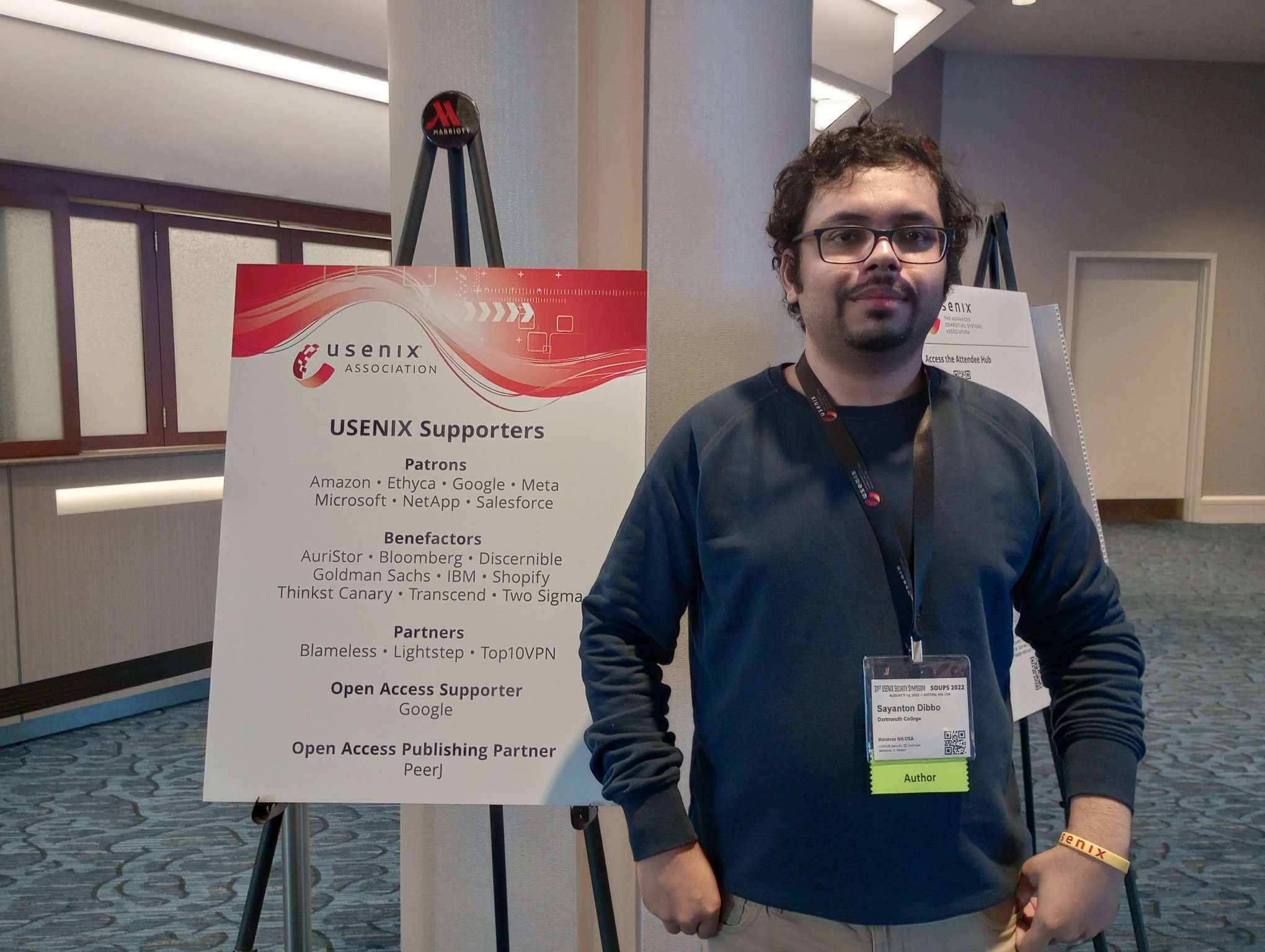
Dr. Sayanton Dibbo is an Assistant Professor in the Department of Computer Science at the University of Alabama, where he leads the Trustworthy AI Lab. He is also a faculty affiliate of the Alabama Center for the Advancement of AI (ALA-AI) and Alabama Cyber Institution & HPC. His academic journey includes a PhD in Computer Science from Dartmouth College (2020-2025) and an MS in Computer Science from the University of California, Riverside (2017-2019). Dr. Dibbo's research spans several critical areas in modern computing: Deep Learning and Computer Vision Secure & Trustworthy AI/ML modeling Analysis of foundation models (LLMs and Multimodal systems) Security and privacy aspects of machine learning systems Biometric-based user authentication for IoT devices His recent work focuses on developing defenses against model inversion attacks using sparse coding architectures, improving robustness in audio classification, and creating secure authentication systems for wearable devices. Dr. Dibbo's research spans multiple data modalities including images, tabular data, audio, and text, addressing critical security and privacy challenges in AI systems. Dr. Dibbo has received recognition for his work including the Dartmouth Graduate Student Council Travel Grant for ICASSP 2024 and the Cybersecurity Cluster Research Fellowship. His service to the academic community includes reviewing for Women in Computer Vision (WiCV) at ECCV 2024, Computers and Security Journal, and Neural Networks Journal. As an educator and mentor, Dr. Dibbo is actively seeking highly motivated undergraduate and graduate students to join his research team at the University of Alabama. His lab focuses on cutting-edge problems at the intersection of AI security, privacy, and robustness, offering students opportunities to work on impactful research with real-world applications.