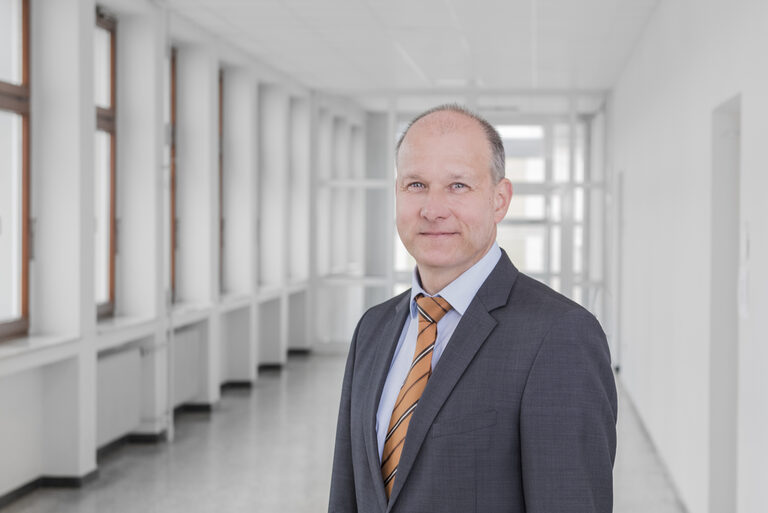
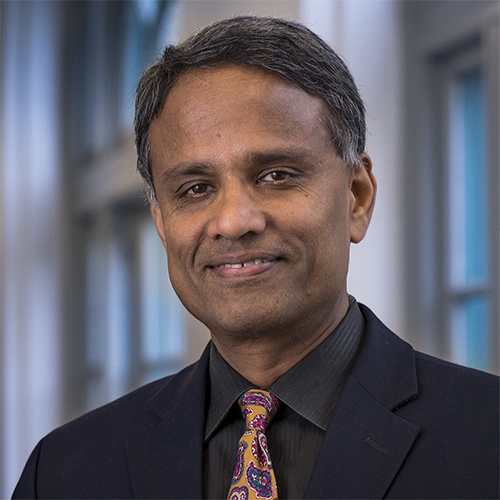
Christof Röhrig is a Professor at the FH Dortmund - University of Applied Sciences and Arts , conducting research at the Institute for the Digitalization of Work and Living Environments (IDiAL). He leads the Intelligent Mobile Systems Lab , focusing on robotics, wireless sensor networks, and kinematic modeling. His research spans mobile robotics , indoor localization , and industrial automation , with a strong emphasis on IoT , 5G networks , and rescue robotics . Key trends in his recent work include LoRaWAN localization , modular robot design , and digital twin architecture . He collaborates extensively on motion control , sensor fusion , and energy-efficient systems , though no specific students, awards, or grants are listed in the provided data. The lab at IDiAL explores robotics in emergency response and industrial IoT applications , with a focus on precision localization and collaborative automation .
Robert Czechowski, PhD , is an Assistant Professor at the Faculty of Information and Communication Technology , Wrocław University of Science and Technology , Poland, stationed in the Department of Telecommunications and Teleinformatics . His office is located in building D-20, room 421, and he holds regular consultation hours on Tuesdays 14:00–15:00, Wednesdays 15:00–17:00, and Thursdays 13:00–15:00. His research portfolio is centred on securing the next generation of electrical power systems. Core interests include: Cyber-security architectures for smart grids and micro-grids Artificial-intelligence-driven intrusion detection and prevention systems (IDS/IPS) Network protocols and time-synchronisation security in SCADA environments Simulation of information flow in complex, dynamically reconfigurable networks IPv4/IPv6 network design and security policy enforcement in power-system automation Database and expert-system solutions for real-time energy-management and fraud detection Between 2014 and 2019 he authored or co-authored more than fifteen peer-reviewed works. The publications reveal a clear longitudinal trend: early work established foundational security policies and good-practice guidelines, while later studies pivot toward advanced AI/ML techniques for anomaly detection and risk quantification in smart-metering infrastructures. A recurring theme is the integration of communication-protocol security (IEC 61850, PLC, IPv4/IPv6) with higher-level cyber-physical risk governance. Scientific recognitions: None explicitly mentioned in the supplied text. Advising & Grant activities: The provided material does not list specific doctoral or master’s students, nor does it enumerate funded projects. Laboratories & Teams: He conducts research within the Department of Telecommunications and Teleinformatics, leveraging university laboratories and the wider ICT Faculty infrastructure, although no dedicated lab name is specified.
Paula Chanfreut Palacio is an Assistant Professor in the Control Systems Technology section of the Department of Mechanical Engineering at Eindhoven University of Technology (TU/e). She joined TU/e in February 2023 after previously contributing to the ERC Advanced Grant project OCONTSOLAR (Optimal Control of Thermal Solar Energy Systems). Education: B.Sc. and M.Sc. in Industrial Engineering (University of Seville, 2017/2019) Ph.D. in Automation Engineering (University of Seville, 2018–2022) Visiting scholar at UC Berkeley (2021) and MIT (2022) Research Interests: Her work centers on decentralized and data-driven model predictive control (MPC) for large-scale interconnected systems. Key applications include renewable energy plants, traffic networks, and smart grids, with emphasis on scalability, cooperative multi-agent frameworks, and real-time optimization. She also investigates cyber-security in control systems and learning-based supervisory methods. Publications: Recent articles (2025) focus on advanced MPC techniques for safety-critical systems like vehicle platooning and power grids, highlighting themes such as cyber-attack resilience, nonlinear cooperative control, and invariant set design. Cross-cutting topics include distributed optimization, robustness, and machine learning integration. Projects: Active member of the Model Predictive Pandemic Control project (2023–2025), funded by an ERC Advanced Grant, focusing on control strategies for large-scale health crises. Affiliation: Part of the Cyber-Physical Systems and Systems Engineering research group at TU/e, contributing to interdisciplinary work in control theory and real-world engineering solutions.
Ramayya Krishnan is the W. W. Cooper and Ruth F. Cooper Professor of Management Science and Information Systems at Carnegie Mellon University, jointly appointed in Heinz College and the Department of Engineering and Public Policy. He served as Dean of Heinz College from 2009 to 2025 and has been a faculty member since 1988. He is a leading expert in digital transformation, data analytics, and AI policy, with extensive collaborations in government and industry. His education includes: B.Tech. in Mechanical Engineering, Indian Institute of Technology Madras (1981) M.S. in Industrial Engineering and Operations Research, University of Texas at Austin (1983) Ph.D. in Management Science and Information Systems, University of Texas at Austin (1987) Krishnan's research focuses on the responsible use of AI, data-driven workforce development, risk management in information systems, and the intersection of technology and public policy. His work bridges operations research, information systems, and policy design, with a strong emphasis on real-world impact. He has pioneered academic programs and research centers that integrate analytics with societal challenges. His recent publications reflect a strong trend in AI measurement science, policy design for emerging technologies, and the ethical deployment of data analytics in public and private sectors. These works emphasize safety, fairness, transparency, and accountability in AI systems, aligning with national priorities and global challenges. His scientific awards and honors include: INFORMS Fellow AAAS Fellow Elected Member, National Academy of Public Administration Commissioner, Geotech Center of the Atlantic Council IIT Madras Distinguished Alumnus Award (2017) Y. Nayudamma Award (2015) GM Outstanding Distance Learning Faculty Award Martcia Wade Teaching Award Two-time recipient of Heinz College IT Teaching Award UPS George D. Smith Prize (awarded to Heinz College under his leadership) Appointed to the National AI Advisory Committee (NAIAC), 2022 Krishnan has been a serial academic entrepreneur, founding the Master of Information Systems and Management program and the Decision Analytics and Systems (DAS) undergraduate minor. He has founded four externally funded research centers, raising nearly $100 million, including the Block Center for Technology and Society. He advises policymakers at the highest levels, including the U.S. President, the Commonwealth of Pennsylvania, the U.S. Government Accountability Office, and international bodies like the Asian Development Bank and the World Economic Forum. His leadership in the CMU/NIST AI Measurement Science & Engineering Cooperative Research Center (AIMSEC) underscores his role in shaping national AI standards. He leads or is affiliated with several key labs and teams: Block Center for Technology and Society (Director) CMU/NIST AI Measurement Science & Engineering Cooperative Research Center (AIMSEC) (Lead Research Coordinator) NIST AI Innovation Lab (NAIIL) (Contributing Leader) Global Agenda Council on Data Driven Development, World Economic Forum (Former Member)
Nuno Ricardo Mateus Coelho is an Associate Professor at Universidade Lusófona and a Guest Adjunct Professor of Cybersecurity at Instituto Politécnico do Cavado e Ave. He serves as a Cyber Security Adviser for FORVIA and Nanium Grupo Amkor, CEO of NRMC.PT, Judicial Expert for the Ministry of Justice, and CISO & DPO for several national organizations. He holds a PhD in Informatics (Cybersecurity) from the University of Trás-os-Montes e Alto Douro and is a Senior Engineer accredited by the Ordem dos Engenheiros and the European Commission. His research focuses on cybersecurity, privacy, secure operating systems, blockchain, AI in security, and digital forensics . He leads the LAPI2S - Laboratory of Privacy and Information Systems Security and is the Editor-in-Chief of the ARIS2-Journal . He is the General Chair of the iSCSi International Conference and has authored numerous scientific publications, books, and book chapters. The recent publications highlight a strong trend in secure system design, threat resilience, AI applications, and privacy-preserving technologies . His work spans from paranoid operating systems and blockchain applications to social engineering defense and AI-driven risk assessment, reflecting a multidisciplinary and applied approach to cybersecurity challenges. Inncyber Innovation Award - Best European Research in Cybersecurity (2021) Inncyber Innovation Award - 2nd Place (2023) Editor-in-Chief of ARIS2-Journal General Chair of iSCSi International Conference Specialist Accredited by the European Commission in Information and Cybersecurity Projects Senior Engineer and Specialist at the Ordem dos Engenheiros Nuno Mateus-Coelho advises on national cybersecurity strategy and has been instrumental in innovation through projects like Vent2Life , which repaired hospital ventilators during the pandemic, saving hundreds of lives. He has received research recognition and industry grants through his cybersecurity advisory roles and academic leadership. His work bridges academia, government, and industry, with strong emphasis on practical impact. He leads the LAPI2S Laboratory and organizes the iSCSi Conference , fostering collaboration between researchers, industry experts, and policymakers in cybersecurity and information systems. His teams focus on developing secure, privacy-aware technologies for real-world deployment in healthcare, education, and critical infrastructure.
Mathias Ekstedt is a Professor of Industrial Information and Control Systems at KTH Royal Institute of Technology in Stockholm, Sweden. Affiliated with the Software Systems Architecture and Security (SSAS) research group under the Division of Network and Systems Engineering in the Department of Computer Science, School of Electrical Engineering and Computer Science (EECS). He holds a Ph.D. (2004) and M.Sc. (1999) from KTH. Co-founder of foreseeti (acquired by Google in 2022) Director of KTH's Master Programme in Cybersecurity Member of the Digital Futures research center's Trust Working Group Affiliated with Center for Cyber Defense and Information Security (CDIS) Ekstedt's research focuses on information security and cybersecurity integrated with software/systems architecture modeling and analysis . His work emphasizes probabilistic attack/defense graphs for system-of-systems security evaluation, particularly in SCADA and Industrial Control Systems within power infrastructure. He has developed the Meta Attack Language (MAL) and collaborated extensively with the power industry. Recent research trends (2022-2025) include: Threat modeling languages for ICT and power systems Probabilistic attack graph applications in energy flexibility markets and smart cities Software Bill of Materials (SBOM) challenges in Java ecosystems Dynamic attack graph generation and lazy evaluation techniques Cyber-physical security for low-voltage grids and substation automation Ekstedt supervises 17 Ph.D. students (11 as main supervisor, 6 as co-supervisor) and has mentored numerous postdocs. He leads major projects like the SSF project CHAINS (software supply chain security) and coordinates initiatives within SweGRIDS , HONOR , and SOCCRATES .
Alexander Gurkov is a University Lecturer at the Faculty of Law, University of Helsinki. His academic work focuses on the intersection of traditional legal frameworks with emerging digital technologies, particularly blockchain applications in cooperative governance and financial systems. With expertise in International Commercial Arbitration and Comparative Law, he bridges Western and Russian legal traditions. Education LLM in International Commercial Arbitration Law, Stockholm University (2007-2008) LLM in Theory and History of Law and State, Saint-Petersburg State University (2006-2009) LLB (Hons) in Law, Saint-Petersburg State University (2002-2006) Research Focus Gurkov's research explores cooperative law frameworks, dispute resolution mechanisms, and the legal implications of blockchain technology. His recent work examines how decentralized autonomous organizations can align with traditional cooperative principles, public equity financing under EU regulations, and comparative analyses of personal data protection regimes in Russia. Publication analysis reveals consistent focus on digital transformation of legal systems, with recent emphasis on blockchain applications in cooperative governance and finance across European and Russian contexts. Awards Lecturer of the Year (2015) Lecturer of the Year (2014) Academic Activities Actively presents research at international conferences, with recent talks on blockchain-based cooperative governance at venues including 'Rethinking cooperatives in the decentralised economy' (2022) and blockchain applications in Russian cooperatives (2019-2020). Maintains memberships in Finnish and international legal organizations.
Daniel Månsson is a Professor at the Department of Electrical Engineering, Royal Institute of Technology (KTH), specializing in smart electricity grids and power system components. His work spans electromagnetic compatibility (EMC) of large distributed systems, energy storage optimization, and privacy protection in smart metering. PhD in Engineering Physics (with specialization in Electromagnetism) Docent (Swedish Academic Title) in Electrical Engineering His research focuses on: Optimization of self-sufficient microgrids with energy hubs Smart meter privacy protection using energy storage EMC analysis of photovoltaic systems and UWB transients Hybrid energy storage system performance in renewable grids Recent publications indicate expertise in: Electromagnetic interference from solar PV systems Cyber-physical security in smart meters Conducted emission analysis Greenhouse gas reduction through optimized storage
Dimitri Mavris is a Professor at the School of Aerospace Engineering , Georgia Institute of Technology, holding distinguished titles including Boeing Chair in Advanced Aerospace Systems Analysis and S.P. Langley Distinguished Professor . He directs the Aerospace Systems Design Laboratory (ASDL) and serves as Executive Director of the Professional Master’s in Applied Systems Engineering (PMASE) . Education B.S., Aerospace Engineering, Georgia Institute of Technology (1984) M.S., Aerospace Engineering, Georgia Institute of Technology (1985) Ph.D., Aerospace Engineering, Georgia Institute of Technology (1988) Dr. Mavris specializes in advanced design methods , aircraft preliminary design , and non-deterministic design theory , focusing on multi-disciplinary optimization and system of systems architecting . His work spans propulsion systems, space exploration, and sustainable aviation technologies. Recent research trends include machine learning for aerospace safety , hybrid-electric propulsion analysis , and digital twin applications in energy systems. His lab produces 100+ annual publications, reflecting leadership in MBSE , UAS certification , and lunar operations modeling . Scientific Awards Class of 1934 Distinguished Professor Award (2024) NSF CAREER Award (1997) Fellow of AIAA (2009-present) NASA Blue Marble Award (2017) SGA Faculty of the Year (2012-2013) As an advisor to Georgia Tech's AIAA student chapter, Dr. Mavris mentors 1,484 alumni (300 Ph.D., 1,184 M.S.) and leads industry partnerships with FAA , Airbus , and Siemens . His labs include the Vertical Lift Research Center and Strategic Energy Institute , with global initiatives like the ICAS presidency (2023-2024).
Chigo Okonkwo is Full Professor and Chair of Secured Ultra High Capacity Transmission at the Department of Electrical Engineering , Eindhoven University of Technology. He leads the high-capacity optical transmission laboratory at the Institute for Photonics Integration and contributes to the Center for Quantum Materials and Technology Eindhoven (QT/e) . Academic Qualifications: MSc in Telecommunications and Information Systems, University of Essex (2002) PhD in Optical Signal Processing, University of Essex (2010) Research Interests: Professor Okonkwo focuses on: Maximizing capacity of single-mode fiber systems through advanced-coded modulation and Probabilistic/Geometrically shaped signals Developing Space Division Multiplexing (SDM) systems for Petabit/s transmission using multi-mode/multi-core fibers Quantum secure communications and cryptographic protocol development Optical vector network analyzer (OVNA) technology for SDM fiber characterization Free-space optical link deployment in urban environments Low-complexity digital signal processing algorithms Recent Publications Trends: His 15 most recent articles (2023-2025) demonstrate active research in: Quantum-classical network integration Extreme capacity fiber transmission (Petabit/s systems) Machine learning for optical diagnostics SDM fiber measurement technologies Hybrid QKD-PQC security frameworks Free-space optical urban communication Scientific Awards: Asia Communications and Photonics Conference (ACP) 2018 Best Paper Award European Conference on Optical Communications (ECOC) 2018 Student Paper Award Optica Student Paper Awards (2022) Corning Outstanding Student Paper Competition Finalist (2025) Advisory & Collaborations: Advisor to 8+ researchers including Menno van den Hout, Vincent van Vliet, and Thomas Bradley Technical Program Committee Member, European Conference on Optical Communications (ECOC) since 2014 Sub Committee Chair for Digital Signal Processing track at ECOC 2018 General Chair for OSA Advanced Photonics Congress on Signal Processing for Photonics Collaborates with EU projects (HOMTech, PhotonDelta) and industrial partners Co-founder and Chief Technology Officer of CUbIQ Technologies Laboratory & Infrastructure: Maintains the world-class High Capacity Optical Transmission Lab at TU/e, featuring: Advanced SDM fiber testing equipment Quantum communication research infrastructure Free-space optical link experimental setups Multi-core fiber amplification systems Coherent transmission testbeds Machine learning-enabled diagnostic tools
Luiz Felipe Rocha de Faria is a Senior Lecturer at the Instituto Superior de Engenharia do Porto (ISEP), Instituto Politécnico do Porto, where he has served since 2020. His career spans over two decades in academic roles, including positions as Professor Adjunto (Assistant Professor) from 2010–2020 and earlier roles as a permanent lecturer. He holds a PhD in Electrical and Computer Engineering from Universidade do Porto (2002), a Master’s in the same field (1996), and a Licenciatura in Computer Engineering (1993). He is a founding member of e-IPP (eLearning Unit) and has led the Computer Engineering Department. His research focuses on Artificial Intelligence for Education and Power Systems , particularly through Adaptive Hypermedia , Intelligent Tutoring Systems , and Cyber-Physical Systems . He has contributed to projects like TINSEL (electrical installation design tutoring) and GECAD (intelligent systems for power grid control). A key theme in his work is User Modeling for personalized learning and Context Awareness in training environments. The 15 most recent articles highlight his expertise in adaptive educational technologies and power systems training . These works span from 2024 to 2010, with recurring subfields such as knowledge-based systems , user adaptation , intelligent alarm processing , and collaborative maintenance . His publications often integrate pedagogical modeling with real-time inference for complex systems. As a supervisor, Faria has mentored 10 MSc students and co-supervised 2 others, along with co-supervising 1 PhD thesis. He has participated in 32 research projects, including EU-funded initiatives like NORTEXCEL2020 and PIANiSM, focusing on medical devices , renewable energy integration , and smart education ecosystems . His current projects include the Lab Associate of Intelligent Systems (2021–2025) and HEIComp (2023–2025), addressing industry-academia alignment. He co-developed the PCMAT platform for mathematics education and TheRoute for tourism route customization. His work emphasizes practical implementation , collaborative learning , and decision support systems across engineering domains.
Gideon Nave is the Carlos and Rosa de la Cruz Associate Professor of Marketing at The Wharton School, University of Pennsylvania. He holds a prominent position within the Department of Marketing and contributes significantly to the school's research and teaching missions in consumer behavior, marketing analytics, and decision sciences. His academic journey began with B.Sc and M.Sc degrees in Electrical Engineering from the Technion – Israel Institute of Technology, specializing in Signal Processing. He then pursued and earned his PhD in Computation & Neural Systems from the California Institute of Technology (Caltech), establishing the interdisciplinary foundation for his current research program. Nave's research focuses on how technological developments in measurement instruments have granted unprecedented access to individual-level data. His work spans several interconnected domains: Consumer neuroscience and neuroeconomics Applications of genetic data in marketing AI's impact on creativity and consumer research Ethical implications of new data collection technologies Decision-making processes across various contexts He investigates how digital footprints of online behavior, MRI, genotyping, and hormonal assays can help understand consumer preferences and behavior, while critically evaluating the ethical challenges these technologies present. His publication record demonstrates a clear trajectory toward understanding the intersection of emerging technologies and consumer behavior. Recent work particularly emphasizes AI applications in marketing research, genetic data utilization for personalization, and neuroscientific approaches to understanding decision-making processes. His methodological approach often combines large-scale datasets with rigorous experimental designs, contributing significantly to both theoretical advancement and practical applications in marketing. Nave's contributions to the field have been recognized with several prestigious awards: National Science Foundation Faculty Early Career Development (CAREER) Award (2020-2025) Association For Consumer Research (ACR) Early Career Award (2024-2025) APS Rising Star Award (2020) Poets & Quants Selection as one of the "World's Best 40 B-School Professors under the Age of 40" (2021) As a recipient of the NSF CAREER Award, Nave leads significant research initiatives examining the applications and ethical implications of new measurement technologies in marketing and consumer behavior. His work has attracted considerable media attention, with features in major outlets including The New York Times, The Guardian, CNN, and The Economist, reflecting the broad relevance and impact of his research. While specific lab names aren't prominently featured in his public profile, Nave's research appears to involve extensive interdisciplinary collaborations spanning neuroscience, genetics, computer science, and marketing. His publications frequently include co-authors from diverse disciplinary backgrounds, suggesting a team-based research approach that bridges traditional academic boundaries.
Professor Gareth Taylor is a Professor of Power Systems and Director of the Brunel Interdisciplinary Power Systems (BIPS) Research Centre at Brunel University London's College of Engineering, Design and Physical Sciences. He serves as Module Leader for the MSc Sustainable Electrical Power program and has been actively involved with the university since May 2000, progressing from National Grid Post-doctoral Scholar to his current position as Professor (appointed in 2012). He previously served as Head of the Department of Electronic and Electrical Engineering from May 2019 to June 2023 and holds a Visiting Professor position at Imperial College London (2023-2026). Professor Taylor earned his BSc in Applied Physics from Royal Holloway College, University of London (1987), followed by an MSc in Scientific and Engineering Software Technology from the University of Greenwich (1992), and completed his PhD in Computational Solid Mechanics at the University of Greenwich in March 1997. His doctoral research focused on finite volume methods for material non-linearity within multi-physics frameworks. His research spans power systems engineering with particular emphasis on smart grid technologies, renewable energy integration, and advanced computational methods. Professor Taylor has contributed to over 250 research publications in areas including power system operation and management, reactive power control, voltage regulation, and high-performance computing applications in electrical power systems. His work addresses critical challenges in modern power systems, particularly those related to the integration of renewable energy sources and the development of more resilient grid infrastructure. Analysis of his recent publications reveals a strong focus on addressing contemporary power system challenges, particularly the integration of renewable energy sources, smart grid technologies, and advanced computational methods. His work spans from fundamental power system analysis to practical applications in grid operation, with increasing emphasis on cybersecurity aspects of power system monitoring and the challenges posed by reduced system inertia in grids with high renewable penetration. Senior Member of IEEE Fellow of the Institute of Engineering and Technology (FIET) Chartered Engineer Fellow of the Higher Education Academy (FHEA) UK Regular Member for CIGRE Study Committee D2 (2016-2022) Member of Strategic Advisory Group for CIGRE Study Committee D2 (2023) Professor Taylor has led numerous significant research projects including TDX-ASSIST (€5.2M), e-HIGHWAY2050 (€8.2M), and HiPerDNO (€5.4M), with funding from EPSRC, European Commission, National Grid, and other major organizations. His current research portfolio includes projects on novel decoupled active/reactive power oscillation response, digitalization of power systems operation, and examining net zero policy in European energy markets. He also directs the BIPS Research Centre, which focuses on interdisciplinary power systems research with strong industry connections.
Professor Maurizio Caon is a faculty member at HES-SO (University of Applied Sciences and Arts Western Switzerland). His primary research areas include Human-Computer Interaction, Digital Transformation, and User Experience Design, with a focus on aging populations and health technology. He leads the HumanTech Institute and contributes to projects like NESTORE COACH and PEGASO, which develop virtual coaching systems for elderly well-being and adolescent health behavior change. His research explores tangible interfaces for e-coaching, gestural interaction design for professional cyclists, and data privacy mechanisms using pictograms. While his publications span topics from AI implementation in HRM to posthumanist perspectives on enhancement, his core work centers on applying digital technologies to improve health outcomes across age groups. He collaborates with institutions like Politecnico di Milano and contributes to European Union-funded initiatives. Professor Caon's recent work examines conversational agents for life-course health interventions, virtual reality exergame design, and wearables' impact on body awareness. His projects integrate behavioral change theories with IoT architectures and human-centered design principles. Despite active research engagement, no scientific awards are explicitly mentioned in the provided texts.
Simone Vannuccini is a Teacher-Researcher and Junior Professor in the Economics of Artificial Intelligence and Innovation at the University Côte d'Azur's School of Economics and Management. He is affiliated with the Research Group in Law, Economics, and Management (GREDEG) and the Pole Innovation, Science and Technology (PIST) under the FIT (Firms, Innovation, Territories) team. His research focuses on innovation , artificial intelligence , and industrial policy , with particular emphasis on socioeconomic impacts, technological sovereignty, and global value chains. His recent publications explore themes like robot adoption , AI governance , and strategic autonomy in the European Union . His peer-reviewed articles and conference contributions span topics including multimodal AI systems , disruptive technologies , competition law enforcement , and cyber-physical dynamics . He actively contributes to interdisciplinary research bridging economics , law , and technology studies . Simone Vannuccini participates in collaborative projects such as AI3SD (Artificial Intelligence, Autonomous Systems, and Digital Innovation) and engages in policy discussions on green transitions , budgetary autonomy , and technological multiplier effects . His work integrates theoretical frameworks from Schumpeterian economics with empirical analyses of global innovation trends.