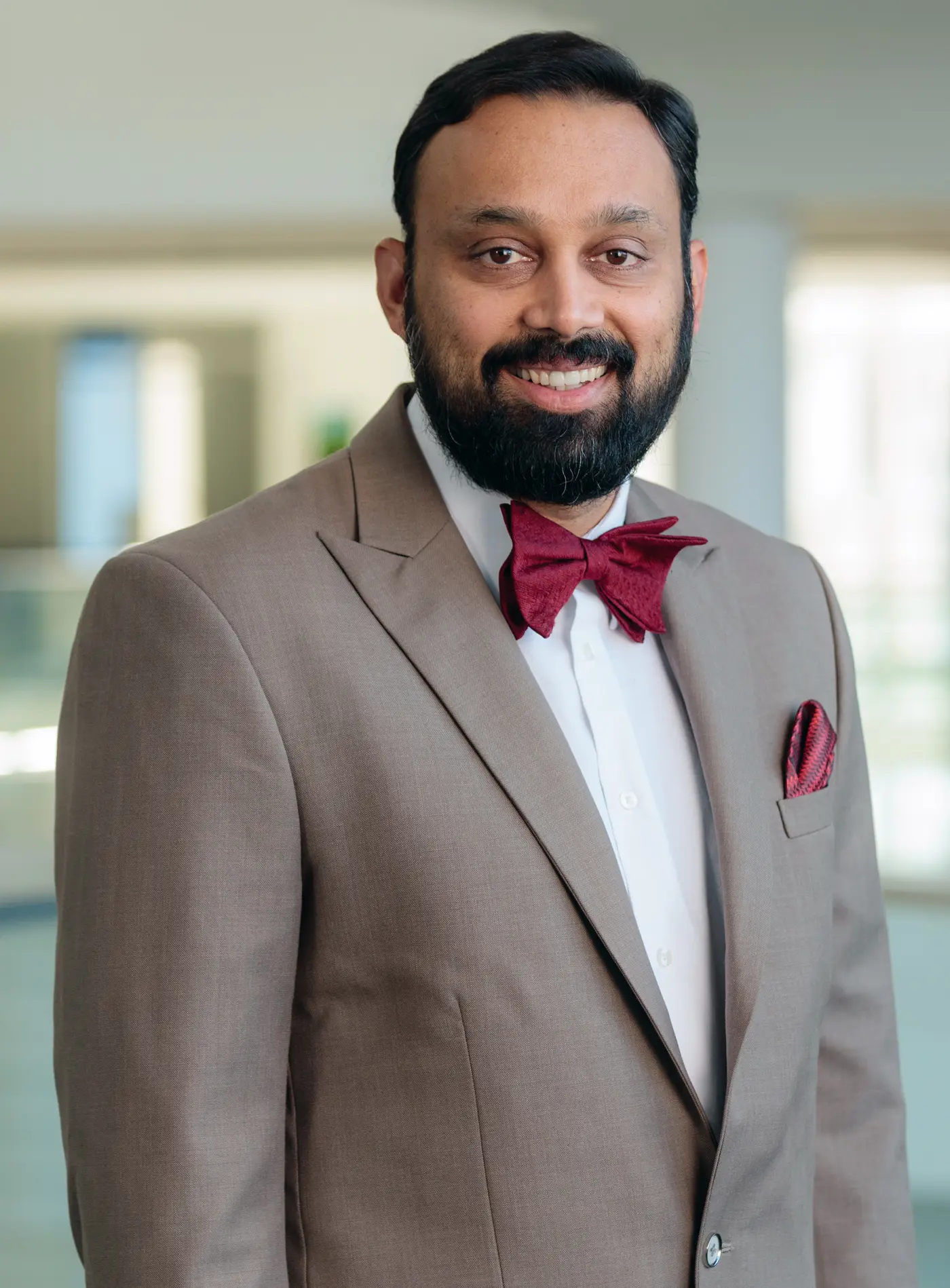
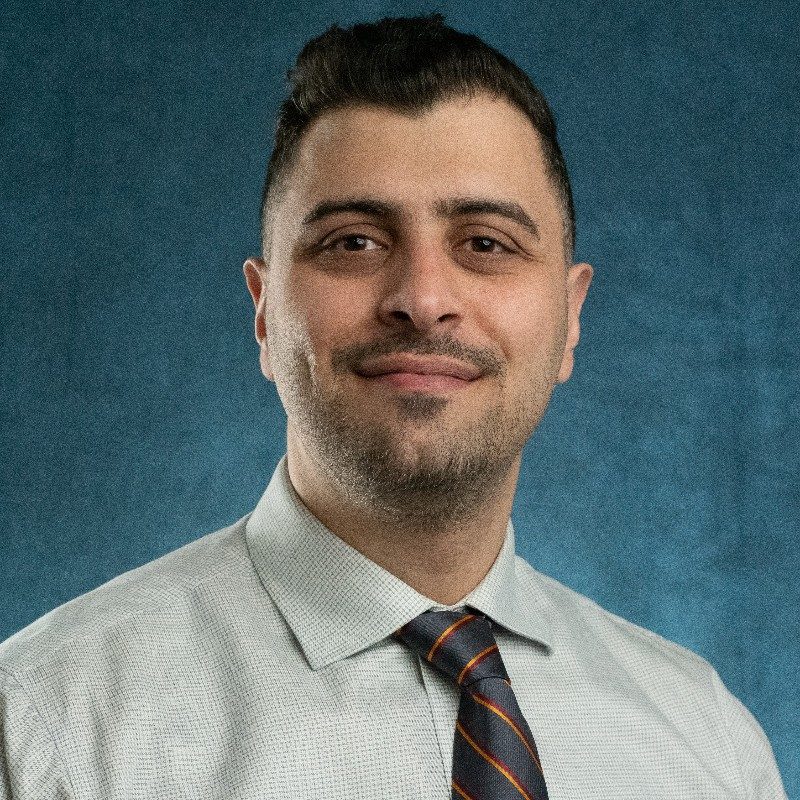
Mário Marques Freire is a Full Professor at the University of Beira Interior, where he serves as President of the Faculty of Engineering and Professor in the Department of Computer Science. He is also a Senior Researcher at Instituto de Telecomunicações, leading the Secure and Intelligent Networked Software Systems Lab. His academic qualifications include a Dr. habil. in Computer Science (2007) and Ph.D. in Electrical Engineering (2000) from the University of Beira Interior, complemented by an M.Sc. in Systems and Automation and B.Sc. in Electrical Engineering from the University of Coimbra. Freire's research spans Computer Systems and Networks, with specific expertise in Cloud Systems, Computer Networking, Security & Privacy, and AI applications. His work focuses on infrastructure virtualization, encrypted traffic classification, DDoS attack detection, and malware analysis. Recent publications demonstrate strong emphasis on cloud security, AI-enhanced defect prediction, and IoT security frameworks. He has received several scientific awards including multiple Conference Best Paper Awards and an ACM Certificate of Appreciation for his long-term contributions. Freire has supervised over 35 graduate students (10 PhD graduates) and led numerous research projects such as 'Towards the assurance of SECURity by dESIGN of the Internet of Things' (FCT/COMPETE/FEDER) and 'Cloud Computing Competence Center'. At the University of Beira Interior, Freire has held significant administrative roles including Vice-Rector (2020-2021), Director of Computer Science Services (2009-2013), and multiple terms as President of the Faculty of Engineering. He leads the Network Applications and Services research group at Instituto de Telecomunicações, focusing on secure networked systems.
Dr. Anthony Serapiglia serves as Associate Professor and Department Chair in the Department of Computing & Information Systems at Saint Vincent College's Herbert W. Boyer School of Natural Sciences, Mathematics and Computing. Joining the faculty in 2011 after completing his Doctor of Science at Robert Morris University, he integrates 15+ years of industry experience in web development, systems architecture, and project management across healthcare, legal, and manufacturing sectors. His educational credentials include: PhD in Computing & Information Science from Robert Morris University MS from Robert Morris University BS in Computer Science from Allegheny College with Education minor Dr. Serapiglia's research centers on innovative Information Systems pedagogy, with publications spanning cybersecurity education, database design, and cryptocurrency applications. His work consistently bridges theoretical concepts with hands-on implementation through Raspberry Pi projects, Formula One data modeling, and competitive security teams. He emphasizes real-world problem-solving through current events and industry-relevant technologies. Analysis of his publication history reveals persistent focus on educational methodology evolution, particularly in adapting emerging technologies like blockchain and cloud infrastructure for classroom use. His scholarship demonstrates increasing specialization in vulnerability analysis within cryptocurrency ecosystems and SIEM complexity management, while maintaining foundational work in database normalization and networking education. As a liberal arts advocate, he hosts annual interdisciplinary symposiums exploring faith-reason integration and knowledge frameworks. His industry background informs practical course development in Advanced Networking, Computer Security, and Information Systems Management, where he implements lessons from sectors including oil drilling and payment processing.
Nils Kalstad serves as Associate Professor in Information Security at the Department of Information Security and Communication Technology (IIK) at the Norwegian University of Science and Technology (NTNU) and has been Director of NTNU Community Safety since January 2024. Previously, he directed NTNU's Center for Cyber and Information Security (2017-2023) and led the Department of Information Security and Communication Technology (2017-2023). His academic career began at Gjøvik University College where he served as Doctoral Fellow (2003-2008), Head of the Center for Cyber and Information Security (2014-2015), and Dean of the Department of Informatics and Media Technology (2014-2015). Kalstad earned a civil engineering degree from NTNU's Department of Mathematical Sciences followed by a PhD in information security from the University of Oslo. His doctoral dissertation 'Interdependencies in Critical Infrastructures: A Qualitative Approach to Model Physical, Logical, and Geographical Interdependencies' established his research foundation. He has maintained continuous academic appointment at NTNU since August 2008. His research focuses on cybersecurity, critical infrastructure protection, and community safety, with particular emphasis on modeling interdependencies between physical, logical, and geographical aspects of critical systems. Kalstad's work bridges theoretical security models with practical applications in emergency preparedness, examining vulnerabilities in communication networks, developing anomaly detection frameworks for control systems, and analyzing security policies. His competence areas include emergency preparedness, civil security, cybersecurity, information security, communication technology, and community safety. Analysis of Kalstad's publication record reveals a consistent trajectory from technical security mechanisms toward broader societal security frameworks. His early work focused on critical infrastructure interdependencies and SCADA systems security, while more recent publications address national security strategies and energy security. The pattern shows increasing emphasis on human factors in cyber defense and comprehensive community safety approaches. His research maintains strong connections between theoretical modeling and practical implementation needs. Kalstad serves on multiple national security advisory bodies including the National Reference Group for Civil Security (Research Council) since July 2024, the National Cyber Security Center Reference Group since February 2020, and the Forum for National ICT Security since April 2018. His leadership extends to various boards including NORSAR (since May 2019), the Norwegian Center for Information Security (NorSIS) (2017-2024), and Skeikampen skiarena AS (since October 2014). He has also contributed to NTNU's internal governance through committee service on equality and diversity, honorary doctorates, and academic integration.
Dr. Tessa Berg is an Associate Professor in Computer Science at Heriot-Watt University's School of Mathematical & Computer Sciences. She holds a PhD in Rich Picture Interpretation (2013) and is a Fellow of the Higher Education Academy (2015) and recipient of the University's 'Learning and Teaching Oscar' (2016). Her work bridges information systems, visual communication, and social equity in technology. Heriot-Watt University (2014–present) Edinburgh Napier University (2014–2015) Research Focus: Berg's work explores: Collaborative visual methods for system understanding Online safety for autistic individuals Gender equality in STEM International student transition challenges Digital engagement for marginalized communities UN Sustainable Development Goals alignment Publication Trends: Recent works span vocational education, cybersecurity, autism research, and educational equity with focus on visual tools like Rich Pictures. Her 2025 paper examines adult apprenticeship motivations, while 2024 studies gender disparities in work-integrated learning. Awards: Fellow of Higher Education Academy (2015) Learning and Teaching Oscar (2016) Leadership: Berg serves as Director of Academic Quality for MACS since 2019 and has coordinated 'girls into computing' outreach initiatives. She has supervised 3 PhD students and conducted industry consultancy on system requirements and Rich Picture training.
Prof. Christos Xenakis is a Professor at the Department of Digital Systems within the University of Piraeus , where he has served since 2007. He holds a Ph.D. in Informatics (2004) and M.Sc. in Informatics and Telecommunications (1996) from the University of Athens , following his undergraduate studies in Informatics (1993). As a key member of the Systems Security Laboratory , he directs the postgraduate program Security of Digital Systems and leads numerous high-impact projects, including CUREX , SealedGRID , INCOGNITO , and SECONDO (all funded by the European Commission under H2020), while also coordinating the ReCRED program and managing the UINFC2 project for DGHOME/ISEC. Active participant in over 30 European and national research programs Leader of the Greek National Cyber Security Team and member of the European Cybersecurity Challenge Steering Committee Editorial board member for journals: Computers & Security , Computer Communications , and IET Information Security His research spans systems, networks, and application security , with a focus on IoT security , blockchain applications , smart grid security , and trust management . His work includes over 90 publications and leadership in projects addressing cyber-insurance , edge computing , and 6G security . Recent publications highlight trends in federated architectures , adversarial machine learning , and decentralized identity management .
Prof. Dr. Jürgen Seitz is a full Professor and Head of the Business Information Systems programme at the Baden-Württemberg Cooperative State University (DHBW) in Heidenheim, Germany. Since April 2001 he has shaped the university’s applied informatics curriculum and serves as data-protection liaison and German Informatics Society (GI) trustee. Internationally, he is Associate Editor for several journals and chairs tracks at conferences such as WHICEB and Bled eConference. Education 1988–1991 Diplom-Betriebswirt (BA), Berufsakademie Stuttgart (now DHBW) – focus on data processing 1992–1996 Diplom-Ökonom, University of Hohenheim – economics 1998 Dr. rer. pol., Europa-Universität Viadrina – dissertation on the impact of IT on banking structures Research Interests Seitz’s research integrates business informatics with pressing societal challenges. Key themes include: e-Finance & FinTech: cryptocurrency literacy, blockchain sustainability, digital payment futures e-Health & Health Telematics: barrier-free e-kiosk design, telematics infrastructure for electronic health cards, pandemic digital health solutions Data Management & Analytics: heterogeneous data-warehouse integration, big-data approaches to agriculture, water-quality prediction, renewable-energy forecasting IT Management & Modeling: business-model evaluation, Industry 4.0 architectures, enterprise system integration Publication Trends Across more than 150 peer-reviewed works (1998–2024), Seitz demonstrates a shift from foundational studies in e-commerce and digital watermarking to cutting-edge applications of AI, blockchain, and data analytics in finance, health, and sustainability. Recent articles emphasize machine-learning techniques (k-means, ARIMA, PCA) applied to global agriculture, renewable-energy growth, and gendered cryptocurrency adoption, reflecting a commitment to data-driven, cross-disciplinary impact. Editorial & Scientific Service Associate Editor: International Journal of Networking and Virtual Organisations (IJNVO) , Journal of Cases on Information Technology (JCIT) , International Journal of Cases on Electronic Commerce (IJCEC) Editorial Board Member: International Journal of Global Sourcing and Management (IJGSM) , Journal of Digital Marketing (JDM) , Journal of Internet Banking and Commerce (JIBC) , among others Conference Chair/Co-Chair: WHICEB (Wuhan International Conference on E-Business), Bled eConference eHealth Track Technical Programme Committee Member: IEEE ICDMAI, IEEE IEMCON, IEEE UEMCON, CCWC External examiner & guest lecturer in China, India, USA, Australia, Malaysia, Jordan, Poland, UK, Belarus Advising & Collaborative Networks While individual student names are not disclosed, Seitz mentors within the DHBW cooperative-education model and supervises industry-linked capstone projects. He is a key liaison for German industry partners and international universities, facilitating funded research on FinTech adoption, e-health feasibility, and sustainable IT architectures. His leadership of the Business Informatics programme positions him to coordinate grants and consortia across Europe and Asia. Laboratories & Teams At DHBW Heidenheim, Seitz steers the Business Informatics Lab —a hub for applied R&D projects with corporate partners such as Landesbank Baden-Württemberg and health-sector IT providers. The lab focuses on prototyping blockchain-based e-prescription systems, evaluating FinTech business models, and deploying predictive-maintenance analytics in automotive supply chains. Interdisciplinary student teams work under his guidance to translate academic insights into market-ready solutions.
Amin Rahimian is an Assistant Professor at the University of Pittsburgh , affiliated with the Swanson School of Engineering and leading the Sociotechnical Systems Research Laboratory . He is also associated with the Intelligent Systems Program and the Institute for Cyber Law, Policy, and Security . PhD in Electrical and Systems Engineering (University of Pennsylvania) Master’s in Statistics (Wharton School) His research spans networks, data, and decision sciences , focusing on robust autonomy , control of large-scale networked systems , satellite constellations , and decision support in mission-critical applications . His work bridges applied probability, statistics, algorithms, and decision/game theory to address challenges in online social networks, public health, e-commerce, cyberinfrastructure, and warfare . Recent publications highlight his expertise in differential privacy, network resilience, and social contagion dynamics. Awards include the Meta Foundational Integrity Research Award (2023) and Pitt Cyber Accelerator Grant (2022) . He has served on program committees for conferences like ACM Economics and Computation and IISE Annual Conference.
Dr. Paolo Palmieri is a Senior Lecturer in Cyber Security at the University College Cork (UCC) , affiliated with the School of Computer Science & IT . He serves as a Funded Investigator in Insight and CONNECT research centers, Supervisor in ADVANCE and AI Centres for Research Training, and co-Investigator in DTIF-Holistics and SFI-Spoke on Blended Autonomous Vehicles . PhD in Cryptography (2013), Université catholique de Louvain Prior positions: Lecturer at Cranfield University and Bournemouth University (UK), Post-Doctoral Researcher at Delft University of Technology (Netherlands) Research spans cryptography, privacy, and security , with focus on: Secure multi-party computation Homomorphic encryption Location privacy mechanisms Spatial Bloom filters Smart city security Blockchain applications in IoT Recent publications highlight advancements in blockchain-based healthcare authentication , privacy-preserving vehicular networks , and homomorphic encryption for sentiment analysis . He chairs Malicious Software and Hardware in Internet of Things (Mal-IoT) and Location Privacy Workshop (LPW) . Active in PhD supervision , he currently advises students in cryptographic protocols for location-based services. Collaborates with Smart City Lab at the University of Bologna and participates in international research networks .
Sukesh Aghara is a Professor and Associate Dean of Graduate Studies and Research at the Francis College of Engineering, University of Massachusetts Lowell, where he directs the Nuclear and Chemical Engineering program and leads the Integrated Nuclear Security and Safeguards Laboratory (INSSL). He also serves as a Nuclear Security Fellow with the Center for Terrorism and Security Studies (CTSS) and co-director of the IAEA-funded Intercontinental Nuclear Institute (INI) for international nuclear training. His educational background includes a Ph.D. in Mechanical Engineering (2003) and M.S. in Mechanical Engineering (2001) with Nuclear and Radiation Engineering focus from the University of Texas at Austin, plus M.S. (1999) and B.A. (1996) in Environmental Engineering from Vanderbilt University. His academic journey reflects a transition from environmental to nuclear engineering specialization. Dr. Aghara's research centers on nuclear nonproliferation, security, and safeguards using experimental and computational approaches. His work characterizes radiation fields, evaluates reactor fuel inventories, and models cyber-physical nuclear systems. Current projects address cybersecurity vulnerabilities in nuclear plants, safeguards inspection effectiveness, and nuclear reactor applications for decarbonization. His laboratory INSSL focuses on practical solutions for global nuclear security challenges through radiation transport modeling and safeguards verification technologies. Analysis of his recent publications reveals a strong trajectory toward securing next-generation nuclear systems, particularly small modular reactors (SMRs). His work integrates cybersecurity with physical safeguards, develops robotic inspection platforms, and applies stochastic modeling for verification. Key themes include optimizing security architectures for advanced reactors while reducing operational costs and enhancing decarbonization potential through nuclear energy. Best Presentation and Paper Award (American Nuclear Society/European Nuclear Society) Outstanding Achievement in Teaching Award (UT Austin) NASA Administrator's Fellow (Cohort 11, 2014) Visiting Scientist at NASA Langley and Oak Ridge National Laboratory President of American Nuclear Society UT Chapter Outstanding Research Award (Roy G. Perry College of Engineering) As Principal Investigator, Dr. Aghara manages multiple federally funded projects including robotic security platforms for nuclear facilities (NNSA/BNL, 2020-present), advanced reactor operational considerations (INL/UTK, 2019-2023), and cybersecurity incident response planning (INL, 2017-2021). His grants consistently address national priorities in nuclear security infrastructure and next-generation reactor safeguards, with a focus on practical implementation and international capacity building through the INI program. The Integrated Nuclear Security and Safeguards Laboratory (INSSL) operates as a multidisciplinary hub collaborating with national laboratories (ORNL, INL), the IAEA, and international partners. It develops radiation detection systems, cybersecurity frameworks, and training protocols while maintaining close ties with the Center for Terrorism and Security Studies (CTSS) for cross-disciplinary threat analysis. Current projects deploy robotic platforms like the Spot robot for automated inspections and model advanced reactor security architectures.
Feras Batarseh serves as an Associate Professor in the Department of Biological Systems Engineering at Virginia Tech, where he directs the Artificial Intelligence Assurance and Applications Lab (A 3 Lab) at the Virginia Tech Research Center in Arlington. His work bridges artificial intelligence, cyberbiosecurity, and critical infrastructure systems with a focus on water and agricultural applications. His educational background includes: JM in Law from George Mason University (2022) Postgraduate Certificate in Project Leadership from Cornell University (2016) Ph.D. in Computer Engineering from the University of Central Florida (2011) M.Sc. in Computer Engineering from the University of Central Florida (2007) Dr. Batarseh's research centers on AI Assurance —developing frameworks for trustworthy, explainable, and ethical AI systems—applied to Cyberbiosecurity challenges in water infrastructure and Smart Agriculture . His work tackles data bias, dark data, and causality in real-world deployments, with applications in securing water supply systems, optimizing precision farming, and analyzing international agricultural trade. Key innovations include context-aware deep learning for wastewater treatment and causal AI for policy impact assessment. His recent publications (2023-2025) reveal a concentrated effort to address national security threats through cyberbiosecurity, with 60% of articles focusing on water systems security and 30% on agricultural policy applications. The research integrates generative AI, causal inference, and human-AI teaming to solve problems ranging from K-9 handler collaboration to global food supply chain resilience. As director of the A 3 Lab, Dr. Batarseh leads interdisciplinary projects funded by federal and industry partners, mentoring graduate students in AI deployment for critical infrastructure. Current initiatives include the ACWA testbed for intelligent water systems and frameworks for friendshoring in agricultural trade.
Yutaka Iino serves as an Associate Professor at Waseda University's Advanced Collaborative Research Organization for Smart Society (ACROSS) and Research Institute for Advanced Network Technology (RIANT). With over 35 years of professional experience, he transitioned from a long career at Toshiba Corporation (1984-2018) where he worked on energy management and energy-saving technologies, to his current academic position focusing on smart society element technologies including power, transportation, and information systems. Doctor of Engineering from Tokyo Institute of Technology (2015) Master's in Electrical Engineering from Waseda University (1984) Bachelor's in Electrical Engineering from Waseda University (1982) Professor Iino's research focuses on control and system engineering with particular emphasis on energy management systems and distributed optimization. His work bridges theoretical control systems with practical applications in smart grids, electric transportation, and distributed energy resources. He has pioneered approaches in decentralized optimization, modeling techniques for energy systems, and demand science applications in power networks. His research interests include Di-centralized and distributed optimization, Distributed Energy Resource management, System Control Theory, and Demand Science. Analysis of his recent publications reveals a strong focus on practical applications of distributed energy resources, particularly in the context of electric buses, photovoltaic integration, and grid congestion management. His work demonstrates a consistent trajectory toward developing market-oriented solutions for energy systems, with increasing emphasis on machine learning techniques for parameter optimization and federated learning for smart inverter control. The research spans multiple domains including electrical engineering, transportation systems, and control theory, with a clear practical orientation toward solving real-world energy challenges. SICE Paper Award, No.1995 for 'Cyber-physical Optimal Traffic Signal Control Based on a Macroscopic Traffic Model and Its Verification Using Microscopic Traffic Simulator' Best Paper Award of IEEJ Transactions on Electrical and Electronic Engineering 2021 for 'Evaluation of Mutual Effect between Power and Traffic Aiming Electrified Urban Transportation System Using Integrated Light Rail Transit and Distribution System Model' Professor Iino has secured research funding through Japan Society for the Promotion of Science Grants-in-Aid for Scientific Research, including current projects on cooperative next-generation distribution system operation methods for mass introduction of photovoltaic power generation (2023-2027) and hybrid model analysis methods with data and physical models for automatic energy analysis (2020-2023). His committee memberships include roles in IEEE, Japan Society of Energy and Resources, The Institute of Electrical Engineers of Japan, and The Society of Instrument and Control Engineers (where he holds Fellow status). At Waseda University, Professor Iino contributes to the research ecosystem through the Advanced Collaborative Research Organization for Smart Society, where he leads efforts in developing practical energy management solutions that bridge theoretical control systems with real-world applications in smart grids and transportation electrification. His work exemplifies the integration of academic research with industry applications, leveraging his extensive industrial experience at Toshiba to inform his current academic pursuits.
Basel Cat is a Professor and Head of the Department of Information Security and Communication Technology at NTNU's Faculty of Information Technology and Electrical Engineering. His research focuses on cybersecurity, information security assurance, and innovative approaches to cyber range technologies. Key areas include vulnerability analysis, privacy protection, and AI-driven security solutions. Research Interests Cybersecurity incident triage and attack chain analysis Quantitative security evaluation models for web and cloud services Automated vulnerability injection in source code IoT security and cognitive digital twin architectures Adversarial AI applications in cybersecurity exercises Publications highlight advancements in cybersecurity education, attack-defense scenario modeling, and the integration of AI/LLMs in security frameworks. Recent work explores frameworks for evaluating cloud services and OWASP-aligned web application security standards. Collaborations involve development of hybrid IoT cyber ranges and frameworks for security assurance metrics. His research has been featured in top-tier journals like Computers & Security and Journal of Information Security and Applications .
Josh A. Goldstein is a Research Fellow at Georgetown University's Center for Security and Emerging Technology (CSET), a policy research organization within the Walsh School of Foreign Service. He is currently on assignment as a Policy Advisor at the Cybersecurity and Infrastructure Security Agency (CISA) under an Intergovernmental Personnel Act agreement. His academic background includes: MPhil and DPhil in International Relations from the University of Oxford (Clarendon Scholar) A.B. in Government from Harvard College Goldstein specializes in online adversarial manipulation, focusing on covert foreign influence operations via social media and malicious use risks of emerging technologies. His interdisciplinary work bridges cybersecurity, AI policy, and geopolitical strategy to analyze how state and non-state actors exploit digital platforms for disinformation and cyber operations. His recent publications reveal evolving trends in AI-enabled threats and sophisticated influence campaigns, emphasizing the convergence of traditional propaganda techniques with advanced technologies like generative AI. This research highlights critical vulnerabilities in social media ecosystems and proposes frameworks for assessing systemic risks. Key recognition: Clarendon Scholar Goldstein regularly advises U.S. and international policymakers, having briefed audiences in London, Brussels, and Seoul. His analysis appears in Foreign Affairs, Foreign Policy, and MIT Tech Review, though formal student advising or grant details aren't documented. He actively contributes to CSET's CyberAI Project while maintaining prior affiliations with Stanford Internet Observatory.
Rajarajan, M. is a Professor at City, University of London , specializing in Cybersecurity , Blockchain Technology , and Internet of Things (IoT) Security . His research focuses on secure access control, privacy-preserving systems, and risk assessment in cloud and smart grid environments. Research Interests : Blockchain for IoT and IIoT Smart Grid Security and Pricing Models Privacy-Preserving Machine Learning Cloud Computing Risk Assessment DDoS Attack Mitigation Biometric and Continuous Authentication Article Trends : 2023: Blockchain for IoT access control, dynamic cloud risk models, ransomware detection 2022: Smart grid security, DDoS propagation, privacy in autonomous vehicles 2021: Post-quantum cryptography, decentralized identity frameworks 2020: Microgrid pricing, IoT message broker transparency Key Collaborators : Smith-Creasey, M. (IoT Authentication) Tahir, S. (Privacy in IoT) Acarali, D. (Smart Grid Security) Boiarkin, V. (Energy Grid Pricing)
Patricia A. Stapleton is a Professor of Policy Analysis at the RAND School of Public Policy, where she also serves as Director of the Infrastructure, Immigration, and Security Operations Program within the RAND Homeland Security Research Division. She is a Senior Political Scientist at RAND, focusing on science and technology policy, risk regulation, and critical infrastructure. Her research expertise spans emerging technologies, biotechnology, environmental sustainability, food safety, supply chain security, and homeland security. Using qualitative methods and historical institutionalism, she examines how political and institutional contexts shape the regulation of emerging technologies, particularly in agriculture and healthcare, including CRISPR and human germline editing. Her work also addresses climate change impacts on critical infrastructure and public health. Stapleton's recent research focuses on climate risk to National Critical Functions, 5G technology perceptions, quantum computing threats to industrial systems, and media coverage of gene editing. These works reflect a strong interdisciplinary trend combining policy analysis, risk communication, and technological innovation, with increasing emphasis on climate adaptation and national resilience. Assessing climate risks to critical infrastructure Regulation and public perception of biotechnology Security implications of emerging technologies Science policy in crisis response Gender equity in science and technology workplaces She has contributed to several toolkits and policy assessments, including the Climate Adaptation Strategies tool and the Mass Attacks Defense Toolkit, demonstrating her applied policy impact. Her research is supported by federal programs such as the Department of Homeland Security and informs national strategies on risk management and innovation. Patricia Stapleton leads a multidisciplinary team within the Homeland Security Research Division, focusing on infrastructure resilience, technology adoption, and security operations. Her program integrates political science, risk analysis, and systems thinking to support national policy development.