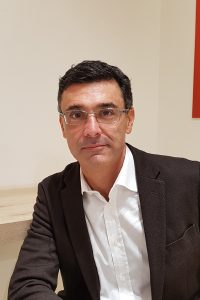
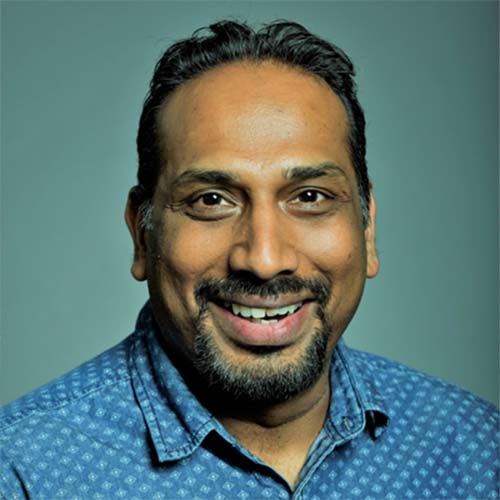
Victoria Time is Professor of Sociology & Criminal Justice at Old Dominion University, specializing in risk analysis, homeland security, and emergency management. Her research develops computational frameworks for risk communication and assesses threats ranging from natural disasters to cybersecurity. Recent publications focus on AI-enhanced risk messaging (2025), climate impacts on supply chains (2022), and validation methodologies for hierarchical models (2019). Her work integrates software engineering with mixed-methods research to address complex security challenges.
William T. Smale, PhD, is a Professor at Trent University's School of Education and Professional Learning in Peterborough, Ontario. His academic credentials include a HBPE, BSc, BEd, and MEd from the University of Alberta. He teaches undergraduate courses in Educational Law, Ethics, Professional Conduct, and Classroom Management, alongside graduate courses in Research Methods and School Law. His research explores critical issues in educational systems, with primary focus areas including: Educational law and policy frameworks Administrative challenges in school settings Early school leaving and its societal impacts Deviance prevention strategies Early childhood intervention methodologies Analysis of his scholarly publications reveals consistent themes in educational jurisprudence, policy reform, technology regulation in schools, and comparative international education systems. His recent works demonstrate heightened focus on digital ethics, cannabis legalization impacts, and balancing student rights with institutional responsibilities. Dr. Smale has received numerous prestigious awards recognizing teaching excellence and research impact, including: School of Education Award for Excellence in Teaching (2019) Canadian Policy Research Student Award (2002) 5 Celebration of Teaching awards from University of Alberta 3 Trent University Faculty Merit Awards (2005, 2009, 2018) Multiple OSSTF fellowships for educational research He has contributed to significant grant initiatives, including multi-year provincial projects supporting educational pathways for youth in Crown wardship, receiving over $75,000 annually. His collaborative research teams address systemic educational challenges through policy analysis and intervention strategies.
Andrea Detti is a Professor at the Department of Electronic Engineering, University of Rome Tor Vergata. His research focuses on computer networks, particularly Information-Centric Networking (ICN), Cloud Computing, and Software Defined Networks (SDN). He has coordinated major EU projects like Fed4IoT and BONVOYAGE, addressing IoT and Intelligent Transport Systems. He serves as Associate Editor for IEEE Transaction on Network and Service Management and has guest-edited special issues on ICN. His teaching includes courses on Internet Technologies, Mobile Wireless Networks, and Cloud Computing, emphasizing hands-on labs with Linux, Cisco routers, and OpenStack. Key projects include leadership roles in EU initiatives such as ICN2020, GreenICN (energy-efficient ICN), and OFELIA (ICN over SDN). He coordinates industrial projects with Telecom Italia and SSI/Finmeccanica on publish-subscribe paradigms in MANET and DTN. His research spans ICN scalability, adaptive video streaming, and satellite communication optimizations. Publications (80+) cover ICN architecture, SDN integration, and network performance modeling. He actively participates in conferences and standardization efforts, contributing to the evolution of future Internet architectures.
René Ryman is an Assistant Professor in the Department of Economics and Management at the American University of Paris, specializing in international business, economic growth, and business sustainability. His work bridges academic research and practical consulting, particularly in strategic development for startups and corporations. He holds a D.B.A. in International Business Management and has conducted postdoctoral studies at the University of Southern California. Education: B.S. in Business Administration, Elmhurst College Executive MBA, Lake Forest Graduate School of Management Masters of International Studies, Josef Korbel School of International Studies, University of Denver D.B.A. in International Business Management, University of Sarasota (Argosy University) Postdoc: AACSB Bridge Program, University of Southern California Research emphasizes international business strategies, economic sustainability, and privacy policy implications in the digital age. He critiques systemic failures in healthcare, insurance practices, and U.S. foreign aid efficacy. Courses taught include International Business, Strategic Management, and Marketing in a Global Environment across multiple academic terms. Publications span critiques of healthcare policy, insurance industry ethics, and the role of digital platforms in political engagement. His work often highlights systemic inequities and corporate accountability.
Aditya Johri is a tenured Professor of Information Sciences & Technology in the College of Engineering & Computing at George Mason University (GMU). He directs the Technocritical Research on AI, Learning & Society Lab (trailsLAB) and is an affiliate faculty in multiple departments, including Computer Science and Civil Engineering. His research focuses on how technology shapes learning in formal and informal settings, with a strong emphasis on AI ethics, algorithms, and data ethics in engineering education. Affiliations: School of Computing, College of Engineering & Computing; GMU's Institute for Digital InnovAtion (IDIA). Educational Background: PhD (Learning Sciences & Technology Design, Stanford University), MS (Georgia Tech), MA (University of Georgia), BE (Delhi College of Engineering). Research Contributions: Editor of the International Handbook of Engineering Education Research (2023) and co-editor of the Cambridge Handbook of Engineering Education Research (2014), which won a 2015 Best Book Award. His work is funded by NSF grants, including an Early CAREER Award and projects on AI ethics and generative AI in education. Awards & Recognition: 2022 University Teaching Excellence Award (High Impact Teaching), Fulbright-Nokia Distinguished Chair (2021–2022), and multiple best paper awards. He also led the NSF-funded project creating role-play case studies for AI ethics education. Grants: Over $20M in NSF/USDA funding for the AI Institute for Resilient Agriculture (AIIRA), and leadership in projects like COALESCE (context-aware cyber-agricultural systems). Advising & Mentorship: Supervised over 20 PhD and MS students, with notable advisees including Dr. Yinan Sun (Postdoc) and graduates like Dr. Hon Jie Teo (CUNY). His mentorship earned the 2022 OSCAR Mentoring Excellence Award. Labs & Collaborations: trailsLAB explores AI ethics, learning technologies, and societal impacts. Collaborations include Aalto University (Finland), Technical University of Munich, and the Leverhulme Center for the Future of Intelligence (Cambridge).
Shafique Chaudhry is an Assistant Professor of Information Systems and Operations at the Reh School of Business, Clarkson University. He holds a Master's in Computer Science from the University of Punjab, Pakistan, and a PhD from Ajou University, Korea. His postdoctoral research at University College Cork, Ireland, preceded his faculty roles in Saudi Arabia and Oman. His research focuses on Data Analytics, IoT, and Machine Learning, with applications in cybersecurity, smart grids, and healthcare. He has authored over 30 peer-reviewed articles and holds two international patents. Notable awards include IITA Korea's research award and Dhofar University's Best Researcher award (2015). Dr. Chaudhry teaches courses such as Applied Data Analytics, Machine Learning, and Database Design. His work spans IoT security frameworks, sensor network optimization, and policy compliance systems. Recent trends in his publications emphasize hybrid ML techniques for IoT security, environmental sensor calibration, and pediatric neurosurgery outcome analysis. Education : MSc Computer Science (Punjab University), PhD (Ajou University) Patents : Two international patents (details not specified) Lab/Teams : Active in IoT, cybersecurity, and smart systems research groups
Christopher Baker-Beall is a Senior Lecturer in Crisis and Disaster Management at Bournemouth University's Disaster Management Centre, where he serves as Programme Leader for the MSc in Disaster Management. He teaches units including Management of Man-Made Disasters, Foreign Policy Analysis, and Crisis Management. His research examines EU counter-terrorism policies, radicalization processes, and crisis management frameworks, with current projects analyzing pandemic responses for cyber crisis preparedness and counter-terrorism strategy evolution. Core interests include security discourse, border control securitization, and disaster governance. Baker-Beall's publications demonstrate consistent focus on terrorism studies and crisis management, with recent work emphasizing: Empirical analyses of terrorist perpetrator profiles and online radicalization pathways Critical discourse studies of EU security frameworks Policy evaluations of UK counter-terrorism strategies He has supervised 7 PhD students to completion including Dr. Katerina Krulisova (sexual violence discourse) and Dr. Gareth Mott (cyberterrorism securitization), and currently mentors 3 doctoral candidates researching disaster risk reduction and public policy. As co-convenor of the BISA Critical Terrorism Studies Working Group (2011-2015), he helped shape interdisciplinary security discourse. His grant involvement includes the AFTERCAB project (GCRF, 2020) examining crisis response systems.
Dr. Emma Kavanagh is an Associate Professor of Sport Psychology and Safe Sport at Bournemouth University, with dual HCPC registration as a Sport and Exercise Psychologist and chartered scientist. Her work focuses on safeguarding, athlete welfare, and addressing interpersonal violence in sport, particularly in online contexts. She chairs the British Association of Sport and Exercise Sciences (BASES) Integrity Advisory Group and contributes to international initiatives such as the IOC Safeguarding Consensus Statement (2025). Education: PhD: The Dark Side of Sport (Bournemouth University, 2014) MSc in Sport Psychology (Brunel University, 2006) PGCE in Higher Education Teaching (2009) Research Interests: Dr. Kavanagh’s research critically examines abuse in sport, including cyber-abuse, gender-based violence, and systemic safeguarding failures. Her work bridges psychology, sociology, and policy, with a focus on athlete protection and organizational integrity. She collaborates globally, including with the International Research Network on Violence in Sport (IRNOVIS) and Laval University’s Research Chair in Sport Security. Awards: BASES Fellowship (2024) for contributions to sport science and safeguarding Grants & Projects: Australian Research Council: Creating Safer Sport Communities (2025) BASES Safeguarding Workshops (UK-wide athlete protection training) Labs & Networks: Member of IRNOVIS, NSPCC Sport England Advisory Group, and IOC Safeguarding Task Force. Leads sport psychology support for Team England at Commonwealth Games (2026).
Roman Sidortsov is an Associate Professor of Energy Policy at the University of Cambridge's Scott Polar Research Institute (Churchill College). He holds a PhD in Polar Studies/Geography from Cambridge, an LL.M in Environmental Law (summa cum laude) from Vermont Law School, and legal degrees from Irkutsk State University. His research focuses on international and comparative energy law/policy with emphasis on Russia and the U.S., energy security/justice, Arctic energy development, and risk governance in the energy sector. He serves as associate editor for Energy Research and Social Science . Education background includes: PhD in Polar Studies/Geography, University of Cambridge (2016) LL.M in Environmental Law, Vermont Law School (2012) Juris Doctor, Vermont Law School (2008) Bachelor's/Master's in Law, Irkutsk State University (1999) Research emphasizes sustainable energy transitions and energy justice, addressing geopolitical dimensions of energy systems and Arctic development challenges. His work has been funded by Vermont State, Cambridge Trust, Norwegian Ministry of Foreign Affairs, and other entities. He maintains affiliations with the U.S.-Russia Energy Law Partnership, Arctic Centre's Extractive Industries Working Group, and the Institute for Energy and the Environment at Vermont Law School. His recent articles examine Arctic energy governance complexities, energy justice frameworks, and sustainable development challenges in regions like Ukraine and northern Michigan. Over 30 publications since 2011 reflect sustained focus on energy policy intersections with law, environment, and geopolitics. Current research initiatives include pumped hydro storage infrastructure repurposing and cyber-security for energy systems in the European High North.
Jasmin Wachter is a Researcher at the Institute for Artificial Intelligence and Cybersecurity at Alpen-Adria-Universität Klagenfurt. Her work focuses on interdisciplinary research at the intersection of cybersecurity, machine learning, and game theory. She holds a Diplom-Ingenieur (Dr.) and dual undergraduate degrees (BSc, BA), reflecting her multidisciplinary background. Her research interests span critical areas such as IT security, data science, cryptology, and risk management. She contributes to advancing methodologies for secure systems, adversarial modeling in cybersecurity, and ethical AI frameworks. Her recent publications highlight innovations in attack graph modeling, security game theory applications, and human-robot collaboration safety protocols. While currently affiliated with the Faculty of Technical Sciences, her work emphasizes both foundational research and practical solutions for modern cybersecurity challenges. She is actively involved in the institute's research initiatives, though no specific awards or student advisement roles are documented in the provided materials.
Bryan Clark is a Senior Fellow and Director of the Center for Defense Concepts and Technology at the Hudson Institute. He specializes in naval operations, electronic warfare, autonomous systems, military competitions, and wargaming. Clark previously served in the U.S. Navy, including roles as a submariner and in strategic planning, and held positions at the Center for Strategic and Budgetary Assessments. His academic background includes an MS in National Security Studies from the National War College and a BS from the University of Idaho. His research focuses on defense strategy, technological innovation in warfare, and China's military capabilities. Awards include the Department of the Navy Superior Service Medal and Legion of Merit. Key contributions include advocating for modernizing defense procurement, leveraging commercial technology for military applications, and addressing challenges in electromagnetic spectrum operations. He frequently participates in high-profile events discussing Taiwan's defense posture, shipbuilding, and defense industrial base reforms. His work emphasizes dissuading adversaries through innovative strategies and adaptive military systems.
Dr. Hossein Abroshan is a Senior Lecturer and Course Director for MSc Cyber Security at Anglia Ruskin University. With 25+ years in academia and industry (banking, telecom, manufacturing), he directs the Cyber Security, Networking, and Applications Research Group blending technical expertise with cyberpsychology. Research examines human factors in phishing susceptibility, industrial IoT vulnerabilities, and geopolitical cyber threats. Recent projects include CyberASAP-funded OT ransomware detection (£17K) and sustainable cloud storage solutions. Publications analyze pandemic-era phishing psychology and NFC payment risks. As Vice-Chair of IEEE UK-Ireland Computational Intelligence Chapter, he influences cybersecurity standards. Certifications include CISM and ISO27001 lead auditor, with industry implementations of NIST CSF and ISA/IEC 62443 frameworks.
Christian Kaunert is a Professor in the Department of Policing and Security at the University of South Wales' Faculty of Life Sciences and Education. His work bridges strategic communication, cybersecurity, and counter-terrorism with emerging technologies like AI and the Metaverse. Key focus areas include digital infrastructure protection, ethical AI governance in healthcare, and geopolitical security dynamics. Research interests emphasize counter-radicalization strategies, legal frameworks for sustainable development, and smart city technologies. His publications explore intersections between technology, law, and security with a focus on global challenges like cyber threats, nuclear proliferation, and environmental policy. Notable projects include analysis of Meta and Google's counter-extremism initiatives, legal implications of AI in healthcare, and geopolitical strategies in Middle East conflicts. Kaunert's work often addresses ethical dilemmas arising from rapid technological adoption in security and governance sectors.
Dr. Alexander Pfeiffer holds dual roles as Head of the Emerging Technologies Experiences Lab and Research Associate at the Center for Applied Game Studies, University for Continuing Education Krems. His work focuses on emerging technologies like blockchain, AI, and gamification in education, cybersecurity, and sustainability. Active in both academic research and applied projects, he leads initiatives such as the ZKPG+ project exploring zero-knowledge proofs in corporate sustainability and the ESPORTS EU-funded study on competitive gaming's societal impact. His research bridges disciplines including digital identity management, cybercrime prevention, and innovative educational paradigms. Key projects include: ZKPG+ (2025–2026): Gamifying sustainable corporate goals via zero-knowledge proofs ESPORTS (2025): Analyzing esports' cultural and economic dimensions FROG (2024–2025): Investigating gaming's future societal roles Publications highlight transformative technologies like AI-driven assessments, blockchain in credentialing systems, and climate-conscious e-commerce solutions. As a principle investigator, he drives grant-funded projects totaling over €5M across EU, FFG, and federal grants. His lab develops practical tools such as the Green e-Commerce size-sensing technology and blockchain-based gamification platforms for education. Current research emphasizes: Ethical AI integration in learning environments Metaverse's educational and sociological implications Cybersecurity challenges in digital gaming ecosystems Labs/Teams: Leads the Emerging Technologies Experiences Lab and collaborates with industry partners on applied tech solutions. Serves as academic advisor to interdisciplinary teams developing gamified assessment tools and digital identity frameworks.
Benjamin Aziz is an Associate Professor at Buckinghamshire New University, where he leads courses in Software Engineering, Cyber Resilience, and Computer Science. Previously, he was a Senior Lecturer at the University of Portsmouth's School of Computing (2010-2023) and worked as a Senior Research Scientist at Rutherford Appleton Laboratory. He holds a Ph.D. in Computer Science from Dublin City University (2003) and an M.Sc. in Networks and Distributed Systems from Trinity College Dublin (1999). His research focuses on formal methods, cybersecurity, IoT systems, and data-driven approaches to systems security. Key affiliations include Fellow of Advance HE and memberships with IEEE, IET, BCS, and ERCIM. He has contributed to EU projects like GridTrust and Consequence, and serves as Associate Editor for Wiley's Security and Communication Networks journal. His work spans over 160 peer-reviewed publications and two books, emphasizing formal analysis of protocols, steganography detection, and incident response metrics. Research interests include: Cybersecurity frameworks for IoT and cloud systems Formal specification and verification of security protocols Data-driven approaches for anomaly detection Attribute-based access control models Recent articles explore requirements engineering matrices, healthcare monitoring logic models, and Korean police dataset analysis. He has advised on cyber resilience strategies and contributed to tools like Trusty for social network data sharing.