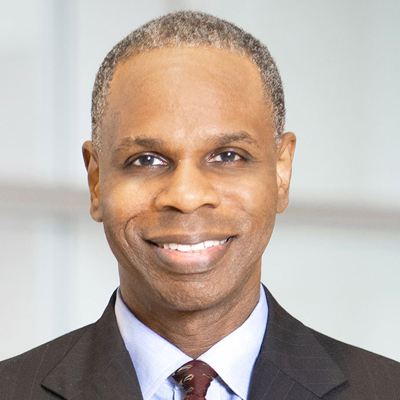
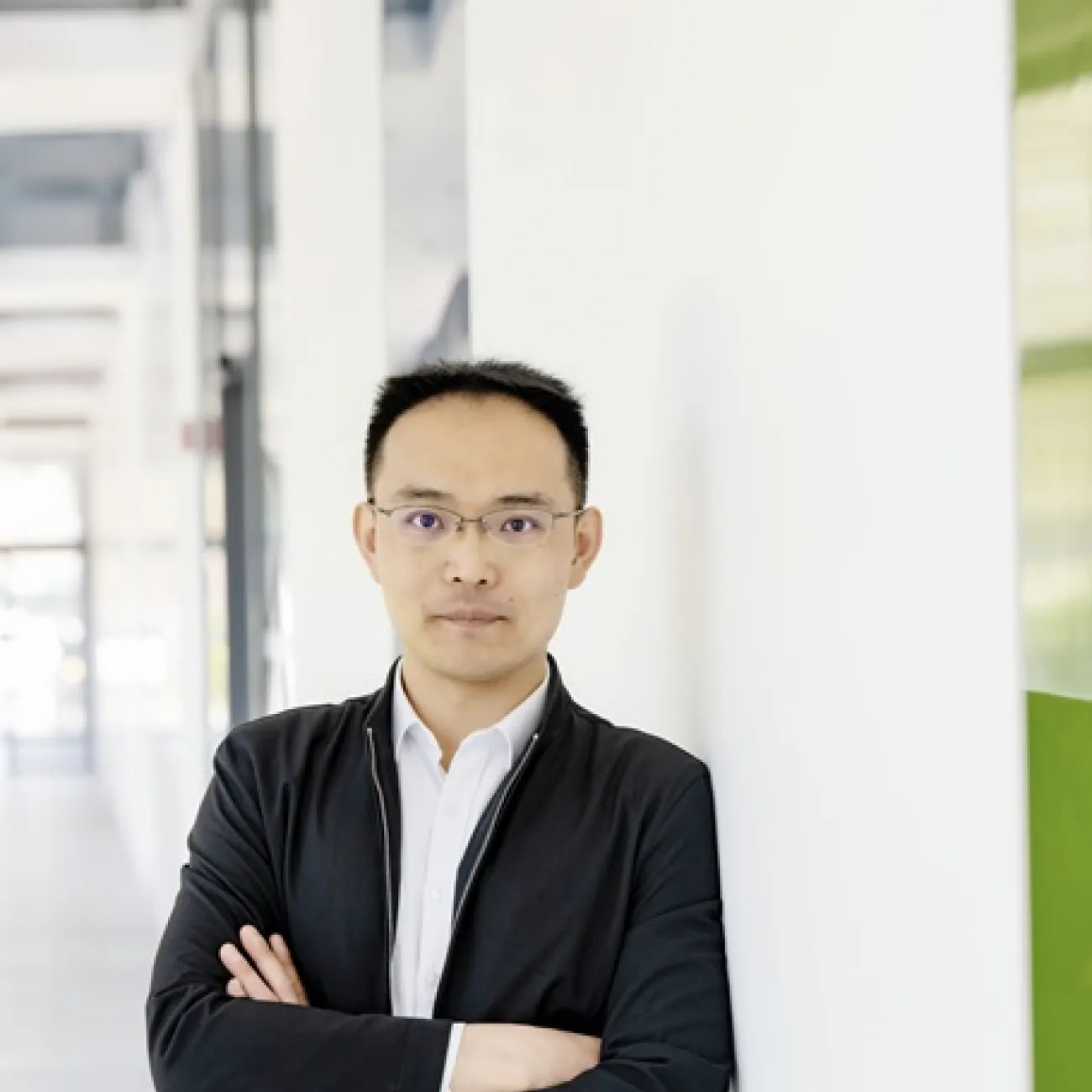
Jukka Sihvonen is an Assistant Professor at the Department of Accounting, Aalto University School of Business. His expertise spans financial accounting, digital transformation, and artificial intelligence in finance. He teaches and supervises master’s and doctoral programs in financial accounting, Big Data, and business technologies, and contributes to executive education. PhD in Finance (University of Vaasa, 2013) Visiting scholar at Norwegian School of Economics, Copenhagen Business School, Umeå University, Goethe University, European Central Bank, and Bank of Finland His research interests focus on digital transformation in accounting, AI applications, climate risk disclosures, cybersecurity, and servitization in business models. Recent publications address rare earth investments, LGBTQ+ policies, audit digitalization, and supply chain leadership. His 15 most recent articles highlight interdisciplinary trends in AI-driven finance, ESG compliance, and digital risk management. Key journals include European Accounting Review, International Review of Financial Analysis, and Industrial Marketing Management. Scientific Awards: Researcher of the Year (2021) Teacher of the Year (2022) AFAANZ Best Paper Award (2022) EFA Outstanding Paper Award (2011)
Rainer Böhme is a Professor at the University of Münster, Germany. His research focuses on cyber security, cryptography, steganography, digital forensics, and blockchain technology. He has made significant contributions to understanding cyber risk quantification, central bank digital currencies (CBDCs), and the socio-technical challenges in cryptocurrency systems. Key areas of research include steganalysis (analysis of hidden data in digital media), forensic techniques for neural network inference pipelines, and the economic implications of cyber insurance. He actively contributes to conferences like the Financial Cryptography Workshops (FC) and the Workshop on Information Hiding and Multimedia Security (IH). Böhme's work bridges theory and practice, addressing real-world issues such as privacy in CBDCs, adversarial attacks on AI systems, and the role of law enforcement in cryptocurrency markets. His recent studies explore the security implications of image orientation in JPEG files and the detection of privileged parties in blockchain transactions. He has collaborated with institutions like the University of Vienna and ETH Zurich, and his research has been published in top-tier venues such as IEEE Transactions on Information Forensics and Security and the ACM Conference on Computer and Communications Security (CCS).
Gabriele Baratto is an Assistant Professor of Criminology at the Faculty of Law, University of Trento, where he is also a senior researcher in the eCrime research group and a member of the Centre for Security and Crime Sciences (CSSC), a joint initiative with the University of Verona. He teaches courses including Digital Criminology, Transnational Organized Crime, Urban Security, and Financial Crime, and serves as an academic specialist for the UNICRI-UPEACE LL.M. in Cybercrime and Cybersecurity. PhD in International Studies (Criminology), University of Trento (2019, cum laude) Master’s Degree in Law, University of Trento (2013, 110/110 with honors) LL.M. in Cybercrime, Cybersecurity and International Law (cum laude), UNICRI-UPEACE-CSSC Scientific High School Diploma, Giorgio Dal Piaz, Feltre (2006) His research focuses on the intersection of crime and digital society, with expertise in cybercrime, human trafficking, migrant smuggling, hate speech, counterfeit goods, urban security, and financial crime. He investigates how digital technologies transform criminal behaviors and how law enforcement and prevention strategies can adapt. His work emphasizes multidisciplinary approaches combining criminology, law, and information science. Baratto has led and contributed to numerous EU-funded research projects such as qAID (Asset and Interest Disclosure), EU CYBER VAT (VAT fraud), HATEMETER (online anti-Muslim hate), and www.surfandsound.eu (human trafficking). His recent publications and conference presentations explore deepfake pornography, conversational AI for victim support, digital human trafficking, and organized cybercrime. His work bridges academic research with practical policy and law enforcement applications. Best Workshop Presentation 2018, Italian Society of Criminology He has advised government bodies and law enforcement, including the Trento Public Prosecutor, Guardia di Finanza, and EUROPOL. He has delivered guest lectures at universities in Italy, Spain, Switzerland, and the UK, and conducted training for police, public officials, and educators on topics like cyberbullying, human trafficking, and digital crime. He serves as a reviewer for journals such as Trends in Organised Crime and Humanities & Social Sciences Communications , and was a guest editor for a special issue on cybercrime. Baratto is actively involved in public engagement and knowledge transfer, participating in seminars, workshops, and public events on restorative justice, prison reform, and digital risks. Through his startup Intellegit, he applies research to real-world security challenges. His work consistently emphasizes the societal impact of digital crime and the need for innovative, interdisciplinary solutions.
Vallari Chandna is a Professor of Management and Associate Dean at the Austin E. Cofrin School of Business, University of Wisconsin-Green Bay. She holds a Ph.D. in Organizational Theory (2016) and MBA (2011) from the University of North Texas, along with a BA.LL.B. (Honors) from RSTMN University, India (2007). Her research focuses on strategy, entrepreneurship, and sustainability, with particular interests in digital entrepreneurship, temporary organizations, cybersecurity, degrowth, and inter-organizational relationships. Education: Ph.D. in Organizational Theory, University of North Texas (2016) MBA in Organizational Behavior and Human Resources, University of North Texas (2011) BA.LL.B. (Honors) from RSTMN University, India (2007) Her research has appeared in journals like Journal of Business Research , Technovation , and Business Horizons . She explores topics such as crowdfunding equity, digital ecosystems, and sustainable enterprise frameworks. Vallari actively collaborates with students on research, including co-authoring book chapters and conference papers. Her 2023-2025 publications examine: Gender disparities in crowdfunding Strategic control in organizations Value co-creation in platform ventures Regulatory compliance for crowdfunding Cybersecurity challenges for startups Temporal organization frameworks Notable award: Current Young Professionals of Green Bay Future 15 (2023) for professional and community impact. She contributes to academic governance as former Chair of the Marketing & Management Department (2019-2022), former Chair of the MS-Management program (2019-2022), and active participant in university committees including Faculty Senate. Vallari serves as Associate Editor for the International Journal of Project Management and Productivity Assessment and sits on editorial boards for journals on sustainable entrepreneurship and strategic decision sciences.
Dr Duncan Hodges is a Senior Lecturer in Cyberspace Operations at Cranfield University, affiliated with the Centre for Electronic Warfare Information and Cyber within Cranfield Defence and Security. His research spans cybersecurity, digital identity, offensive cyber operations, and natural language processing applications in security. His research interests include: Identity in cyber and natural spaces Offensive cyber activity and information warfare Natural Language Processing in cybersecurity Insider threat detection Smart home and IoT security Hodges' recent publications (2015–2022) reflect a strong focus on behavioral biometrics, identity cues, privacy, and cyber-enabled crime. His work combines technical innovation with social science insights, especially in understanding human factors in cybersecurity. Key themes include keystroke dynamics, smart home vulnerabilities, and personality inference from digital behavior. Scientific Awards and Fellowships: ESRC NCRM Fellow on Digital Identity Visitor at the Alan Turing Institute Research Leadership and Grants: Lead PI on EPSRC project: 'People Powered for Desirable Social Outcomes' CO-I on EPSRC project: enabling sensitive disclosures via conversational agents Two projects funded by the Centre for Research and Evidence in Security Threats (CREST) Collaborations with EPSRC, ESRC, Innovate UK, and Defence Science and Technology Labs (DSTL) Labs and Research Groups: He is part of the Information Operations Group at Cranfield and collaborates with the Cyber Security Centre at the University of Oxford and the Alan Turing Institute .
Patrick Mignault is a Full Professor at the Faculty of Law, Université de Sherbrooke, and co-director of the Master's program in Business Law and Enterprise Risk (DARE). He holds a Doctorate in Law from Université de Montréal, alongside advanced degrees in Actuarial Mathematics and Finance from Université Laval. As a member of the Quebec Bar since 2002, he specializes in business law, governance, economic analysis of law, and financial risk management. His research focuses on retirement regimes, corporate governance, financial risk management , and the regulation of emerging technologies in finance . He actively contributes to the Entrepreneurial Legal Clinic and the Legal Innovation Laboratory at his faculty. Notable affiliations include membership in the Centre de recherche interdisciplinaire en cybersécurité de l’IUdeS , the Canadian Climate Law Initiative , and chairing the AMF Consumer Advisory Committee . He served as Associate Dean of Research and Graduate Studies from 2016-2019. Scientific Awards : Fondation du Barreau grant (2017-2018) His recent work explores AI governance frameworks , cybersecurity risk management , and ESG integration in pension funds , with publications in leading journals like McGill Law Journal and R.G.D.
Dr. Stavros Shiaeles is an Associate Professor in Cybersecurity at the Faculty of Technology , University of Portsmouth, and Co-Director of the Portsmouth AI and Data Science Centre (PAIDS) . With over 130 publications and 3000+ citations, he specializes in cybersecurity, applied AI, and threat mitigation frameworks. Academic Qualifications : PhD in Electrical and Computer Engineering (Democritus University of Thrace, 2013), MEng in Electrical and Computer Engineering (Democritus University of Thrace, 2007), MBA in Human Resource Management (University of Plymouth, 2016), and PG Cert in Academic Practice (University of Plymouth, 2017). Research Interests span cybersecurity, malware detection, blockchain, 6G networks, AI/ML applications, digital forensics, and post-quantum cryptography. His work addresses threats in IoT, financial systems, and critical infrastructure while exploring SDG4 (Quality Education) through cybersecurity training. Recent publications emphasize AI-driven anomaly detection (e.g., ransomware behavior analysis, 6G traffic monitoring), deepfake forensics, synthetic image attribution, and hybrid blockchain/AI security architectures. He also curates datasets for malware analysis and synthetic media classification. Scientific Awards : IEEE SMC TCHS Outstanding Service Award (2021). Grant Funding : Over €18M secured in EU Horizon 2020 grants, including €8M as Principal Investigator for the ongoing XTRUST-6G project. Active in KTPs, consulting, and research commercialization opportunities.
Professor Carol Hsu is a leading academic in the Discipline of Business Information Systems at the University of Sydney Business School . Holding a Ph.D. in Information Systems from the London School of Economics, she has held academic positions at institutions including City University of Hong Kong, National Taiwan University, and Tongji University. Research Focus: Institutional influences on information systems, digital transformation, and information security management. Editorial Roles: Senior Editor at MIS Quarterly , Journal of Strategic Information Systems , and Information & Management . Professional Leadership: Vice President of Communications for the Association of Information Systems. Her recent research explores: Smart technology applications for aging populations Employee behavior in cybersecurity contexts Zero trust security models Digital resilience during crises like the pandemic Methodologically, she specializes in qualitative approaches and action research, with publications in top-tier journals like MIS Quarterly , Information Systems Research , and Journal of the Association for Information Systems . Key Grants: 2023: 'Cracking the Code: Unraveling Conversational Smishing Attacks' (Ignition Grant) 2022: 'Combating Smishing: Theorizing and Designing Intervention Strategies' (Business School Pilot Grant)
Michael D. Kimbrough is a Professor and Area Chair in Accounting and Information Assurance at the Robert H. Smith School of Business, University of Maryland. He joined in 2010 after eight years at Harvard Business School. His research focuses on corporate financial reporting, with emphases on voluntary disclosure practices and intangible investment accounting. He holds a B.A. in Economics from Washington University in St. Louis and a Ph.D. in Accounting from Indiana University. Educations: B.A. Economics (Washington University), Ph.D. Accounting (Indiana University) His research explores cybersecurity implications in financial information systems, AI's impact on analyst performance, and the intersection of legal leadership with financial transparency. Key areas include the strategic costs and benefits of corporate transparency, consumer responses to earnings reports, and mitigating earnings overstatement risks through legal expertise in leadership roles. Recent work includes the AI-powered Analysts study (2023) showing how AI improves analyst forecasts, and collaborations on cybersecurity policy at UMD forums. He serves on the editorial board of The Accounting Review and received the LeRoy J. Herbert Fellowship. He secured $150K in 2023 for an AI Initiative in capital market research. Prior experience includes work as a CPA with Price Waterhouse, advising manufacturing and tech clients.
Chiara Crovini is an Associate Professor at Aalborg University Business School, part of The Faculty of Social Sciences and Humanities. She is affiliated with the Accounting Research Group and the Green Societies initiative. Her research focuses on risk management, sustainability reporting, and the convergence of financial and management accounting. She has received grants from SIDREA, ICAS, EFRAG, and participates in projects like 'Green Transitions in Port of Aalborg' and 'Sustainability Reporting: Case studies in Aalborg companies.' Chiara holds a Ph.D. from the University of Turin (2017) with a thesis on risk management in SMEs, and has taught courses such as 'International Accounting and IFRS' and 'Financial Statement Analysis' at Aalborg University. She has also lectured at the University of Turin, Politecnico di Torino, and Pforzheim Business School. Her pedagogical interests include digital inquiry methods and student engagement in problem-based learning environments. Her research explores topics like integrated reporting quality, ESG media coverage, and carbon accounting challenges. She has published in journals such as International Journal of Innovation and Learning and Journal of International Financial Management & Accounting , and presented at conferences like the European Sustainability Accounting & Reporting Conference. Chiara’s work contributes to UN Sustainable Development Goals, particularly in education and sustainability. She has received awards including the Best Reviewer Award 2020 and Premio Migliori Laureati 2013/2014. Her current projects involve investigating internal sustainability reporting practices through the AAUBS Sustainability Lab and the SSH Talent Programme.
Dr. Michael McShane is a Professor in the Department of Finance at Old Dominion University's Strome College of Business. His research focuses on Enterprise Risk Management (ERM), Cyber Risk Management and Insurance, and Property-Casualty Insurance. He has secured significant federal and private grants, including a $1.2M Digital Twin project for cyber-insurance evaluation. Education: Ph.D. in Finance, University of Mississippi (2007) M.B.A., Western Kentucky University (2001) B.S. in Electrical Engineering, University of New Mexico (1983) His recent work examines cyberattack impacts on firm value, sustainability reporting efficacy, and flood insurance in climate-vulnerable regions. Key trends include transdisciplinary approaches, cyber-insurance, and parametric insurance solutions for emerging risks. Scientific Awards: EV Williams Fellowship (2019, 2016, 2014) Outstanding Tenured Faculty Teaching Award (2016) Shining Star Award (2018) Highly Commended Award (2015) McShane cofounded the Emergent Risk Initiative (ERI@ODU) in 2009 and is affiliated with ODU's Climate Change and Sea Level Rise Initiative (CCSLRI) and Center for Cybersecurity Education and Research (CCSER). He has advised numerous RMI students and collaborates with organizations like Google Cloud and Rivian Automotive.
Eugenio Benincasa is a Senior Researcher in the Cyberdefense Project with the Risk and Resilience Team at the Center for Security Studies (CSS) at ETH Zurich. His work focuses on cybersecurity policy with particular attention to Asia-Pacific cybersecurity issues, China's cyber ecosystem, and the application of international law to cyberspace. His educational background includes: MA in International Affairs from Columbia University in New York with a focus on international security and conflict resolution Executive Master in Cybersecurity from LUISS University in Rome BA in Politics, Philosophy and Economics from LUISS University in Rome One-semester exchange program at Sciences Po University in Paris during undergraduate studies Benincasa's research spans multiple critical areas in cybersecurity, with particular emphasis on China's offensive cyber ecosystem, the applicability of international law to cyberspace, and cyber non-proliferation. His work analyzes ASEAN-EU cybercrime cooperation, Japan's cyber defense capabilities, and the role of regional organizations in building cyber resilience. He has conducted extensive research on how different Asia-Pacific countries have managed cybersecurity challenges and pandemic responses, identifying transferable best practices. His publications reveal a strong focus on practical cybersecurity policy solutions, with particular attention to cross-border cooperation mechanisms, cyber attribution transparency, and regional cybercrime frameworks. Benincasa has examined how countries like Taiwan, South Korea, Singapore, Japan, New Zealand, and Australia have approached cybersecurity challenges, identifying effective strategies in early action, technological innovation, and community-based measures. His notable contributions include analyses of: The gaps in ASEAN-EU cybercrime cooperation and recommendations for harmonizing cybercrime laws Japan's cyber defense limitations and proposals for vulnerability disclosure processes China's offensive cyber ecosystem through hacking contests and bug bounty programs The application of international law to AI-enhanced disinformation campaigns Benincasa has held diverse professional experiences that inform his research perspective, having worked as a Government Officer at the Italian Presidency of the Council of Ministers, a Research Fellow at the Pacific Forum, and a Crime Analyst at the NYPD. He has also completed internships at the EU Delegation to the UN, Morgan Stanley's Financial Crimes Unit, and the Asia-Pacific Center for Security Studies.
Wade Davis is an Associate Professor of Business Law in the Department of Accounting & Business Law at Minnesota State University, Mankato's College of Business. He teaches courses including Legal Environment of Business, Contracts, Employment Law, Environmental Law, and International Law, with a focus on practical legal applications in corporate settings. Educational Background: Juris Doctorate from University of Iowa, Master's of Arts from Arizona State University, and Bachelor's of Arts from California State University Sacramento. Professional Affiliations: Licensed Attorney in Minnesota’s State and Federal Courts, Eighth Circuit Court of Appeals, and Minnesota State Bar Examiners' Alternative to Pathways to Bar Admission Committee. His research spans business law, trade secrets, copyright, and defamation, often using case studies to explore legal frameworks in corporate and digital contexts. Recent publications analyze fair use in digital media, corporate raiding in the tech industry, and trade secret protection strategies. Earlier works address employment law, environmental regulations, and contractual damages. He has received recognition as a Visiting Scholar at Haaga-Helia University of Applied Sciences and was named "Minnesota Attorney of the Year" by Minnesota Lawyer. Active in community engagement, he serves as a Conciliation Court Referee for Blue Earth County and participates in the University Honors Council.
Hong Yu is an Adjunct Professor at the University of Massachusetts Amherst, affiliated with the Center for Intelligent Information Retrieval and the Biomedical Informatics Natural Language Processing (BioNLP) Laboratory. Her research focuses on computational biology, bioinformatics, and biomedical applications of information retrieval, natural language processing, and human-computer interaction. She has developed systems like AskHERMES (a biomedical Q&A tool) and NoteAid (to aid patient comprehension of medical records). Education includes a PhD in Biomedical Informatics from Columbia University, M.Ph. in Physiology and Cellular Biophysics, and degrees in Physiology and Biomedical Engineering from institutions in China. She has led NIH-funded projects and serves on the editorial board of the Journal of Biomedical Informatics. Research awards include the NLM predoctoral training grant and recognition as one of six 'Star Trainees' for NLM's 175th anniversary. Her work has been featured in Science, Nature, and the Pulitzer-winning Milwaukee Journal Sentinel. Current interests emphasize privacy in geospatial data, ethical AI, and reimagining GIScience education. Grants: Multiple NIH-funded projects. Labs: Center for Intelligent Information Retrieval, BioNLP Lab. Service: Co-chair of biomedical NLP sections at major conferences.
Dr. Feng Wang is a Lecturer in Law and member of the Institute of Maritime Law at Southampton Law School. He holds a PhD in Marine Insurance Law from the University of Exeter and LLM in Maritime Law from the University of Southampton. His research focuses on insurance law, marine insurance, maritime law, and law & technology intersections, particularly exploring the lex maritima framework as a self-regulatory system. Education History: PhD (Marine Insurance Law), University of Exeter LLM (Maritime Law, Merit), University of Southampton LLB (First Class), Dalian Maritime University BBA (International Shipping Management), Dalian Maritime University Research Interests: Regulatory evolution of maritime commercial activities Cyber risks in shipping insurance Blockchain applications in maritime contracts Comparative analysis of Chinese and English insurance law Awards: BILA Article Prize (2014) UK Maritime & Commercial Law Mooting Competition Winner (2014) Advising & Projects: Supervising 3 PhD students in Law Contributed to PRC Ministry of Transport's Chinese Maritime Law reform (2018) Consultant for insurance industry practitioners like MS Amlin Labs/Teams: Active member of the Institute of Maritime Law, collaborating on lex maritima theory and maritime regulatory frameworks.