Dr. Aurelien Baillon is a Professor of Economics of Uncertainty at the Erasmus School of Economics , Erasmus University Rotterdam, specializing in the Department of Applied Economics . His research focuses on individual decision-making under risk and ambiguity, combining empirical and theoretical approaches to understand probability elicitation and expert opinion aggregation. Key research areas: Behavioral Economics, Risk Attitudes, Bayesian Modeling Major projects: Bayesian Markets , Personal Model of Trumpery , Malakoff Humanis Chair His recent publications explore ambiguity theories , cybersecurity decision-making , and linguistic deception detection . Notable grants include the ERC Starting Grant (2016) and NWO Vidi Grant (2014). Collaborations span institutions like BRiO , HITS Institute , and GATE . The Datavisualization project with Alice Havrileck demonstrates his interdisciplinary approach to uncertainty analysis.
Martin Mullins is Professor in Risk and Insurance at the Kemmy Business School, University of Limerick, where he co-leads the Emerging Risk Group. He holds dual affiliations as Visiting Professor at Vicomtech Foundation (Basque Country, Spain) and member of both the Centre for Emerging Risk Studies and Lero – the Irish Research Centre for Software. His cross-institutional roles include serving as data ethicist for the Central Bank of Ireland and teaching risk/ethics modules for Ireland's national MSc in Artificial Intelligence. His research centers on the convergence of emerging technologies and risk governance, with specific expertise in AI ethics for insurance applications, cyber risk transfer mechanisms, and ethical implications of autonomous systems. Recent work examines trust deficiencies in generative AI for high-stakes insurance decisions, efficacy of cyber insurance markets, and gamified training for financial crime detection – consistently bridging theoretical frameworks with regulatory practice. Analysis of his 2024 publications reveals three dominant trends: (1) Critical examination of AI's role in insurance underwriting, particularly trust barriers in ChatGPT applications; (2) Structural analysis of cyber insurance markets with focus on German regulatory models and reinsurance solutions; (3) Innovation in financial crime detection through behavioral training methodologies. These outputs demonstrate his interdisciplinary approach spanning technology ethics, risk modeling, and regulatory policy. Professor Mullins has secured significant research funding through four EU Commission projects including VIDAS and Cloud-LSVA (funded under MG3.6 and ICT 16 calls), investigating risk metrics and privacy frameworks for assisted driving systems. His work actively contributes to United Nations Sustainable Development Goals related to responsible technology development and ethical innovation. He co-leads the Emerging Risk Group at University of Limerick, collaborating with Lero on software risk initiatives and with Vicomtech Foundation on Basque-region technology ethics projects. Current engagements include advising the European Insurance and Occupational Pensions Authority (EIOPA) as member of their Digital Ethics in Insurance Expert Group.
Stefan Rass is a Professor at the Institute of Networks and Security within the Faculty of Engineering & Natural Sciences at Johannes Kepler University Linz (JKU), where he leads the LIT Secure and Correct Systems Lab. As Principal Investigator for FFG-funded projects including reSilienz (digital supply chain resilience, 2023–2025) and ITPUK (AI signature verification, 2022–2024), he bridges theoretical game theory with practical cybersecurity solutions for critical infrastructures and robotics systems. His research spans game-theoretic security models (patrolling games, defense-in-depth strategies), quantum cryptography (QKD network architectures), and cyber deception frameworks like Honeyquest for measuring honeypot effectiveness. Recent work addresses robotics security benchmarking (RobotPerf), cryptographic instruction chaining for control flow protection, and risk assessment methodologies for interdependent infrastructures. His mathematical decision-making approach integrates bounded rationality and stochastic modeling to solve real-world security challenges. Professor Rass actively shapes the field through program committee roles (ARES 2023), peer reviews, and invited talks on security transparency. His current projects focus on cost-benefit-aware monitoring for cyber-physical systems and quantum key distribution standardization, reflecting Austria’s strategic priorities in digital resilience. The LIT Secure and Correct Systems Lab under his direction develops foundational theories while deploying tools for industrial applications, particularly in critical infrastructure protection and secure robotics workflows.
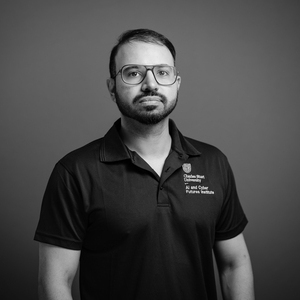
Dr. Ibrar Yaqoob serves as a Senior Research Fellow and Program Lead for the Smart and Resilient Supply Chain strand at the Artificial Intelligence and Cyber Futures Institute (AICF) at Charles Sturt University. He leads a research team comprising PhD students and postdoctoral fellows, and previously held research positions at Khalifa University in the UAE and Kyung Hee University in South Korea. Dr. Yaqoob holds a PhD in Computer Science from Universiti Malaya (2017) and has been a Visiting Academic at the University of Cambridge. His research focuses on blockchain, NFTs, and metaverse applications for healthcare, supply chain and logistics, wireless networks, IoT, and smart cities, with additional expertise in mobile edge-cloud computing and big data. Dr. Yaqoob has published over 100 research articles with more than 24,000 citations and an h-index of 58, with 98.9% of his publications appearing in Q1 journals. His recent publications demonstrate a strong trend toward practical blockchain implementations across diverse sectors including healthcare data management, sustainable supply chains, and smart city infrastructure. His work frequently combines blockchain with emerging technologies like NFTs, metaverse applications, and large language models to solve complex real-world problems in supply chain transparency, medical data security, and sustainable development. Ranked in the world's top 0.1% of researchers for three consecutive years (2023-2021) as a Highly Cited Researcher Listed among the World's top 2% scientists for five consecutive years (2020-2024) 2024 IEEE Consumer Electronics Magazine Best Paper Award (1st Place) 2024 Vice Chancellor's Researcher of the Year Commendation 2024 AICF Research Excellence Award 13 highly cited papers (top 1%) and 21 most downloaded articles Dr. Yaqoob serves as Chief Investigator on multiple significant research projects including the AgriTwins project (AUD $2.38 million), Trustworthy Operations and Supply Chain Management project (AUD $10,000), and Decentralized AI Juries project (AUD $13,875). He actively mentors PhD students and postdoctoral researchers while serving on editorial boards for prestigious journals including IEEE Network Magazine, Future Generation Computer Systems, and IEEE Access. His research team at the AICF Institute focuses on bridging emerging technologies with practical applications to address real-world challenges in supply chain resilience and sustainability.
Professor Gareth Peters is the Janet & Ian Duncan Endowed Chair of Actuarial Science and holds the Chair in Statistics for Risk and Insurance at the Department of Statistics & Applied Probability, University of California Santa Barbara (UCSB). His research focuses on statistical solutions for risk and insurance, with emphasis on actuarial science, financial engineering, environmental data analysis, and cybersecurity risk. He has received notable recognition including the 2024 IFoA Peter-Clark Prize, the oldest actuarial award established in 1891. His academic contributions span advanced statistical modeling techniques for financial markets, climate-related risk analysis, and healthcare analytics. Notable projects include developing methodologies for green bond valuation, cyber insurance frameworks, and machine learning applications in audiology and speech disorders. He has pioneered software tools such as CovRegpy for covariance regression and DivFolio for portfolio divestment analysis. Educations: Advanced degrees in statistics and actuarial science (specific details not provided) Professional Memberships: Fellow of multiple academic societies including the Royal Statistical Society and Institute of Mathematics and its Applications Research interests include: Statistical causality in financial and environmental time series Mortality modeling incorporating long-memory processes Quantifying climate change impacts on energy consumption Machine learning for cybersecurity risk mitigation His recent work emphasizes interdisciplinary applications of statistics in climate finance, sustainable investing, and precision agriculture. Over 2020-2025, his publications explore topics ranging from municipal green bonds to vocal analysis for Parkinson’s diagnostics. Awards: 2024 IFoA Peter-Clark Prize Elected Member of ISI (International Statistical Institute) IEEE Senior Member Labs/Initiatives: Develops open-source software packages for statistical analysis (e.g., AdvEMDpy, PyKronecker) and contributes to regulatory frameworks via tools like AuditChain for blockchain-based trading audits.
Henry H. Willis is Associate Director of the Meselson Center, Senior Policy Researcher at RAND, and Professor of Policy Analysis at the RAND School of Public Policy. His work focuses on reducing risks from biological threats, critical infrastructure, climate change, and terrorism through rigorous policy analysis and risk management frameworks. Ph.D. in Engineering and Public Policy, Carnegie Mellon University M.S. in Environmental Engineering, University of Cincinnati B.A. in Chemistry, University of Pennsylvania Willis is a leading expert in risk analysis, with research spanning biosecurity, homeland security, energy security, environmental management, and public health preparedness. His work integrates engineering, policy, and systems thinking to evaluate national preparedness for chemical, biological, nuclear, and radiological threats, as well as climate and disaster risks. He has developed analytical frameworks for biosurveillance, infrastructure resilience, and terrorism risk modeling. His recent publications focus on catastrophic cyber risk insurance, wastewater surveillance sustainability, food-energy-water security, soft target protection, and risk-based decisionmaking in public health and homeland security. These works reflect a consistent theme of applying quantitative risk analysis to inform national and international policy. Member, Council on Foreign Relations Committee Member, Science and Governance Committees of the Society for Risk Analysis Willis has testified before Congress, advised U.S. and international government agencies, and served on National Academy of Sciences committees. His prior experience includes program evaluation at the White House Office of Management and Budget and infrastructure design as a water and wastewater engineer. He leads research initiatives on strategic planning at DHS, border security, and energy resilience, often advising on grant programs and regulatory impact analysis. He is affiliated with the Meselson Center and has directed programs within the RAND Homeland Security Research Division, including the Strategy, Policy, and Operations Program and the Infrastructure, Immigration, and Security Operations Program. His work supports public safety decisionmaking through tools like the Pardee RAND Food-Energy-Water Index and risk maturity assessments.
Arne Dekker is a researcher at the Institute and Policlinic for Sex Research and Forensic Psychiatry at Universitätsklinikum Hamburg-Eppendorf (UKE). His work focuses on gender medicine, digital health interventions, and prevention of sexual violence , particularly through interdisciplinary projects like i2TransHealth and SAFERSEXTING. Academic Affiliation: Institute and Policlinic for Sex Research and Forensic Psychiatry, UKE Research: Transgender health economics, digital media education for sexual violence prevention, forensic psychiatry His research interests include: Cost-effectiveness analysis in transgender care Digital education programs addressing sexual violence Forensic psychiatry and law enforcement challenges Epidemiology of gender-diverse population health outcomes Recent publication trends highlight: Economic evaluations of remote transgender health programs Interdisciplinary approaches to digital media education Psychological distress mitigation via telemedicine Cross-national analysis of child sexual exploitation policing Key scientific collaborations include projects under funding lines like "Sexualized Violence in Educational Contexts" and partnerships with institutions in Germany, Portugal, and Sweden.
Dr. Michael McShane is a Professor in the Department of Finance at Old Dominion University's Strome College of Business. His research focuses on Enterprise Risk Management (ERM), Cyber Risk Management and Insurance, and Property-Casualty Insurance. He has secured significant federal and private grants, including a $1.2M Digital Twin project for cyber-insurance evaluation. Education: Ph.D. in Finance, University of Mississippi (2007) M.B.A., Western Kentucky University (2001) B.S. in Electrical Engineering, University of New Mexico (1983) His recent work examines cyberattack impacts on firm value, sustainability reporting efficacy, and flood insurance in climate-vulnerable regions. Key trends include transdisciplinary approaches, cyber-insurance, and parametric insurance solutions for emerging risks. Scientific Awards: EV Williams Fellowship (2019, 2016, 2014) Outstanding Tenured Faculty Teaching Award (2016) Shining Star Award (2018) Highly Commended Award (2015) McShane cofounded the Emergent Risk Initiative (ERI@ODU) in 2009 and is affiliated with ODU's Climate Change and Sea Level Rise Initiative (CCSLRI) and Center for Cybersecurity Education and Research (CCSER). He has advised numerous RMI students and collaborates with organizations like Google Cloud and Rivian Automotive.
Professor Subhajit Basu is a leading academic at the University of Leeds , holding the position of Professor of Law and Technology within the School of Law . His work bridges Law, Artificial Intelligence, Big Data, and Emerging Technologies , with a focus on the Global South . He has authored influential books including Privacy and Healthcare Data (Routledge, 2016) and Global Perspectives on E-Commerce Taxation Law (Ashgate, 2008). PhD, Liverpool John Moores University LLB, Calcutta University Called to the Bar in 1998, specializing in Corporate Law in India Research Interests span Regulation of Emerging Technologies, AI Governance, Health Data Privacy, Autonomous Systems, and Online Harm . His recent projects include CoR: Sextortion in the Age of Blockchain and Deepfakes (Naif Arab University, 2025–2026) and Autonomy and Moral Agency in Bioethics (WBNUJS, 2024–2025). He previously led EU Horizon projects like PASCAL (2019–2023) on Connected and Autonomous Vehicles. Scientific Awards include the Hind Rattan (Jewel of India, 2020) and fellowships from the Royal Society of Arts and Higher Education Academy . His editorial leadership includes Editor-in-Chief of the International Review of Law Computers and Technology and associate roles on five journals. Notable Grants include funding from Naif Arab University (Saudi Arabia), EU Horizon 2020, EPSRC, and the Atlantic Philanthropies. He has provided consultancy to the National Cybercrime Research Centre (Poland), the Government of Saudi Arabia on AI frameworks, and The Dialogue (India) on IT Rules.
Christine Eriksen is a Research Professor at the Institute of Geography , University of Bern (Switzerland), leading the Geographies of Disasters research group focused on wildfire resilience. She holds an Honorary Associate Professor title at the School of Geography and Sustainable Communities , University of Wollongong (Australia). Her academic journey includes a PhD in Human Geography (University of Wollongong, 2010), an MA from King's College London (2004), and a BA from SOAS (2003). Research Interests: Eriksen specializes in the social dimensions of disasters, particularly wildfire coexistence, gendered vulnerability, and climate adaptation. Her work bridges cultural norms, political agendas, and environmental history to enhance community resilience. She has authored two books and over 100 publications. Recent Research Trends: Her articles (2022–2025) emphasize wildfire resilience in Europe, cyber security social dimensions, and marginalized groups' inclusion in disaster policies. Key themes include policy reform, interdisciplinary frameworks, and equity in risk management. Awards: Resilient Australia Awards (2013, 2018), Women of Impact (2016), and World Social Science Fellow (2013). Grants: SNSF Consolidator Grant (2023–2028) for the FiRES project, ARC Discovery grants for bushfire and underinsurance studies. Teaching: Coordinated courses on disaster geographies and guest-lectured on wildfire hazards and Indigenous fire knowledge. Labs/Teams: Leads the FiRES project team at the University of Bern, collaborating internationally on wildfire resilience strategies.
Dr. Isaac Kofi Nti is an Assistant Professor in the School of Information Technology at the University of Cincinnati, with over 16 years of interdisciplinary research experience in applied machine learning, health informatics, cybersecurity, and data governance. His work emphasizes responsible AI deployment in high-impact domains including healthcare, finance, and education. He concurrently holds affiliations with Ghanaian institutions (University of Energy and Natural Resources and Sunyani Technical University) and serves as a Visiting Assistant Professor at Cincinnati until 2024. Education PhD in Computer Science, University of Energy and Natural Resources, Ghana (2021) MSc in Information Technology, Kwame Nkrumah University of Science and Technology, Ghana (2016) BSc Computer Science, Catholic University of Ghana (2011) Higher National Diploma in Electrical & Electronic Engineering, Sunyani Technical University, Ghana (2007) Research Focus Dr. Nti develops lightweight, explainable AI systems for cybersecurity, healthcare diagnostics, agricultural optimization, and educational technology. His research integrates secure data analytics, ethical AI frameworks, and cloud-based learning infrastructures. Current projects explore generative AI in education, predictive modeling for disease outbreaks, and blockchain applications for health data verification. Publication Trends His 60+ publications (2022-2024) demonstrate strong emphasis on ensemble learning methods, healthcare AI applications, and cybersecurity innovations. Recent works frequently utilize hybrid models (LSTM/XGBoost/StackNet) for fraud detection, disease prediction, and renewable energy forecasting. Awards & Grants Provost Office Strategic Collaborative Faculty Team Award (2024-2025): $19,200 for AI integration in higher education Faculty Development Grant (2023-2024): $10,038 for emerging technology training Faculty Incentive Awards for Research (CECH, UC 2022-2024) Teaching & Service Teaches graduate/undergraduate courses in machine learning, cybersecurity, and data technologies. Leads multiple university committees including PhD Admissions Review and Applied Research teams. Professional memberships include ACM, IEEE, and AAAI.
Mark J. Browne is a Professor and Chair of the School of Risk Management at the Peter J. Tobin College of Business, St. John’s University. He holds the Robert Clements Distinguished Chair and is an Associate Member of the Munich Risk and Insurance Center. Previously, he held the Gerald D. Stephens CPCU Chair at the University of Wisconsin-Madison. His expertise spans risk management, insurance, and employee benefits, with a focus on regulatory policy, cyber risk, and health care reform. He has advised businesses and testified before the U.S. Senate on flood insurance post-Hurricane Katrina. Education: PhD, MA, and BS in Risk Management and Insurance from the University of Pennsylvania's Wharton School. Research Interests: Behavioral economics in insurance markets, underwriting cycles, privacy concerns in insurance, and flood insurance policy. His research appears in journals like the Journal of Risk and Insurance and Geneva Papers on Risk and Insurance . Awards include the Shin Award for Research Excellence and multiple teaching accolades. He serves on international advisory boards for risk research institutions. Teaching includes executive leadership courses in risk management and global insurance market dynamics. He has collaborated with media outlets such as the Wall Street Journal and Bloomberg BusinessWeek.
Dr. Feng Wang is a Lecturer in Law and member of the Institute of Maritime Law at Southampton Law School. He holds a PhD in Marine Insurance Law from the University of Exeter and LLM in Maritime Law from the University of Southampton. His research focuses on insurance law, marine insurance, maritime law, and law & technology intersections, particularly exploring the lex maritima framework as a self-regulatory system. Education History: PhD (Marine Insurance Law), University of Exeter LLM (Maritime Law, Merit), University of Southampton LLB (First Class), Dalian Maritime University BBA (International Shipping Management), Dalian Maritime University Research Interests: Regulatory evolution of maritime commercial activities Cyber risks in shipping insurance Blockchain applications in maritime contracts Comparative analysis of Chinese and English insurance law Awards: BILA Article Prize (2014) UK Maritime & Commercial Law Mooting Competition Winner (2014) Advising & Projects: Supervising 3 PhD students in Law Contributed to PRC Ministry of Transport's Chinese Maritime Law reform (2018) Consultant for insurance industry practitioners like MS Amlin Labs/Teams: Active member of the Institute of Maritime Law, collaborating on lex maritima theory and maritime regulatory frameworks.
Professor Vasilis Katos is a Professor in Cyber Security at Bournemouth University, specializing in digital forensics, incident response, and intellectual property security. With over 160 publications and extensive industry experience as an Information Security Consultant, he serves as an expert witness in criminal courts in both the UK and Greece. His research has significant impact in digital forensics for intellectual property infringement investigations through collaborations with the EU Intellectual Property Office (EUIPO) and UNICRI. Professor Katos holds a Diploma in Electrical Engineering from Democritus University of Thrace, an MBA from Keele University, and a PhD in Computer Science (network security and cryptography) from Aston University. He is a certified Computer Hacking Forensic Investigator (CHFI) with extensive practical experience in cybersecurity. His research primarily focuses on digital forensics and incident response, with recent emphasis on intellectual property infringement investigations, IoT security, blockchain applications, and traffic prediction systems. His work bridges academic research with practical security applications, particularly in intellectual property protection and smart city security frameworks. Professor Katos has coordinated significant research projects including Illegal IPTV in the European Union and IP Infringement on online trading platforms, funded by the EUIPO Observatory. His extensive publication record shows strong trends in digital forensics, cybersecurity for intellectual property protection, IoT security, and increasingly in smart city security frameworks. The research demonstrates a progression from foundational cybersecurity work to specialized applications in intellectual property protection and circular economy security models, with recent incorporation of AI and machine learning techniques for threat intelligence and traffic prediction. Certified Computer Hacking Forensic Investigator (CHFI) Editorial Board Member of Computers & Security Journal Professor Katos has successfully supervised multiple PhD students including Amalia Damianou (Digital Forensics in Smart, Circular Cities), Christos Iliou (Machine Learning Based Detection and Evasion Techniques for Advanced Web Bots), and Mohammed Al Qurashi (Intrusion Detection for IoT). He has secured significant research funding including the ECHO project (European network of Cybersecurity centres), IDEAL-CITIES, and multiple EUIPO-funded initiatives focusing on intellectual property protection. His work connects with the Centre for Intellectual Property Policy & Management (CIPPM) at Bournemouth University, where he contributes to research on intellectual property in emerging technologies. Professor Katos maintains active collaborations with international organizations including UNICRI and the EU Intellectual Property Office, focusing on practical applications of digital forensics in intellectual property protection.
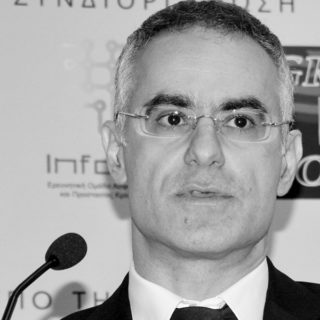
Prof. Christos Xenakis is a Professor at the Department of Digital Systems of the University of Piraeus, where he has been a faculty member since 2007. He is also the director of the Postgraduate Degree Programme on "Digital Systems Security" and a member of the Systems Security Laboratory at the University of Piraeus. Prof. Xenakis received his B.Sc. in Computer Science in 1993, M.Sc. in Telecommunication and Computer Networks in 1996, and Ph.D. in 2004, all from the Department of Informatics and Telecommunications at the University of Athens. His research interests focus on systems, networks and application security . He has participated in numerous European (ACTS, ESPRIT, IST, AAL, DGHOME, Marie Curie, Horizon2020) and National research programs, coordinating several Horizon2020 projects including CUREX, SealedGRID, INCOGNITO and SECONDO. He has also served as Principal Investigator for Horizon Europe projects like ENTRUST and ERATOSTHENES. Prof. Xenakis has authored over 90 publications in peer-reviewed journals and international conferences, focusing on cybersecurity topics such as blockchain security, smart contracts, self-sovereign identity, adversarial machine learning, smart grid security, cyber insurance, phishing detection, wireless security, and authentication protocols. He has served on editorial boards of several scientific journals including Computers & Security , Computer Communications , and IET Information Security . He is also a member of the steering committee of the European Cyber Security Challenge and leader of the Hellenic Cyber Security Team.