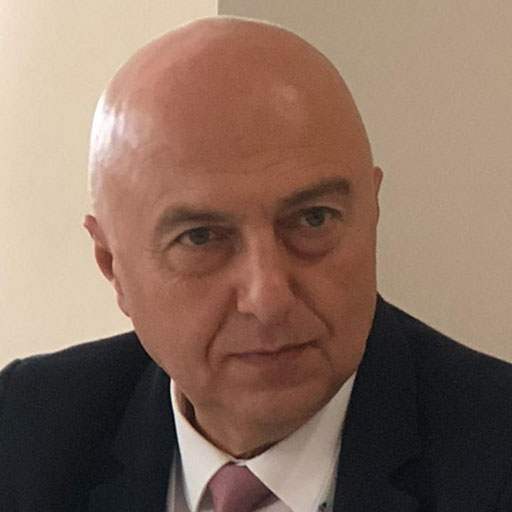
Prof. Dr. Sakibe Nalan BÜYÜKKANTARCIOĞLU is a Professor at Çankaya University, Faculty of Arts and Sciences, Department of Translation and Interpreting Studies (English). She previously served as Professor (2007–2019), Associate Professor (2000–2007), and Assistant Professor (1997–2000) at Hacettepe University, Department of English Linguistics. PhD in English Linguistics (Hacettepe University, 1991) MA in English Language Teaching (Middle East Technical University, 1985) BA in English Teaching (Istanbul University, 1978) Her research spans Linguistics, Cognitive Linguistics, Discourse Analysis, Psycholinguistics, Sociolinguistics, Translation Studies , with a focus on figurative language, interjections, political discourse, and endangered languages. She received the European Language Award (2011) and has supervised numerous PhD and MA theses, including work on Turkish idioms, gender representation, and language awareness. A prolific editor and conference participant, she has contributed to interdisciplinary projects and publications on Turkish sociolinguistics.
Prof. Nurten BİRLİK is a faculty member at the Middle East Technical University (METU), affiliated with the Department of Foreign Language Education under the Faculty of Education. She holds a Professor academic rank and maintains an active affiliation as of the last update in April 2022. Her educational background includes a B.A., M.A., and Ph.D. in English Language and Literature from Hacettepe University (1992, 1995, 2000), followed by a postdoctoral fellowship at Mary Immaculate College, University of Limerick (2004-2005). Research interests focus on literary analysis across multiple traditions and theories: British Modernist Poetry , Romantic Poetry , Contemporary Literary Theory , Lacanian Criticism , Ecocriticism , and the study of Modern Turkish Novel and Poetry . These areas reflect her expertise in both comparative literature and critical theory. While no recent articles are listed in the provided materials, her research trends suggest ongoing engagement with interdisciplinary literary studies, poststructuralist theory, and cultural analysis through the lens of environmental criticism and psychoanalytic frameworks. No scientific awards or grants are explicitly mentioned in the profile. She has not listed formal advisees in the provided information, though her role as a professor likely involves teaching and mentoring responsibilities. Affiliated with the Department of Foreign Language Education, her work contributes to language pedagogy and literature curriculum development in higher education contexts.
Ozcan Ozturk is a Professor in the Computer Science and Engineering and Electronics Engineering programs at Sabancı University's Faculty of Engineering and Natural Sciences. Previously, he held professorships at Bilkent University and adjunct roles at North Carolina State University. His expertise spans heterogeneous computing, parallel systems, processor architecture, and compiler optimization. He earned his Ph.D. from Penn State University, with prior academic roles at the University of Florida and internships at Intel and Marvell. Education: Ph.D. in Computer Science and Engineering (2007), Pennsylvania State University M.S. in Computer Engineering (2002), University of Florida B.Sc. in Computer Engineering (2000), Bogazici University Research interests include accelerator technologies, GPU-based systems, multicore processors, and compiler optimizations. His work focuses on improving parallelization efficiency, energy optimization, and reliability in heterogeneous architectures. He leads funded projects like 'Machine Learning for Compiler Flags' and 'Graph Accelerator Design'. Notable awards include the Bilkent Teaching Award (2019), BAGEP (2018), and HiPEAC Paper Award (2016). He serves on editorial boards of IEEE and ACM journals and chairs major conferences like ASPLOS and ICS. Grants and collaborations include partnerships with Huawei, Intel, NVIDIA, and TÜBİTAK. He advises over 20 students and has supervised projects in safety-critical systems, FPGA accelerators, and compiler-directed optimizations. His lab develops domain-specific architectures, including RISC-V extensions for graph processing.
Assoc. Prof. Dr. Sema Alaçam Doğan has been affiliated with Istanbul Technical University since 2014, serving as an Associate Professor in the Department of Architecture . She has held administrative roles including Deputy Head of Department and Erasmus Coordinator. Education : PhD in Informatics in Architectural Design (2008-2014), MS in Informatics in Architectural Design (2005-2008), and BS in Architecture (1999-2005) from Istanbul Technical University. Her research explores Computational Design , Artificial Intelligence in Architecture , and Sustainable Material Innovation . She investigates digital tools for heritage preservation, daylight optimization in BIM, and cognitive development in architecture students. Recent publications analyze AI-assisted design literacy , machine learning for Sinan mosques , and environmental comfort in Harran houses . Her work integrates algorithmic frameworks with sustainable practices. Scientific awards include multiple ITU Publication and Performance Awards (2021-2024), FABFEST Prizes , and the 2024 Artemis Educator Award from NASA. Active projects like "Physical Computation in Architectural Drawing" and "Robotic Fabrication with Recycled Wind Turbine Blades" demonstrate her leadership in computational and sustainable research.
Hamza Salih Erden is an Associate Professor (Docent) at the Informatics Institute of Istanbul Technical University in Turkey. His research focuses on energy optimization in data centers, thermal management systems, and computational fluid dynamics applications. With over 34 research outputs and an h-index of 12, he leads projects in energy-grid integration and carbon-aware load management. Research Focus Dr. Erden's work centers on improving energy efficiency in technological infrastructure through: Advanced cooling techniques for data centers Integration of thermal energy storage systems Computational fluid dynamics modeling Demand-response optimization for smart grids AI-driven monitoring of energy systems Publication Trends Recent works (2022-2025) demonstrate strong focus on sustainable energy technologies, particularly optimization of data center operations through thermal management innovations, integration of renewable energy solutions, and AI applications for system monitoring. Economic assessments of energy-saving techniques feature prominently. Awards and Recognition Technical Paper Award (2016) Multiple International Scientific Publication Incentive Awards (2017-2021) Poster Award (2012) Graduate Student Grant (2007) Projects and Funding Leads multiple energy research projects including: Carbon-aware load management in data centers (2025) Grid-integrated energy system modeling for data centers (2021-2023) CFD analysis of CRAH bypass methods (2018-2020) Economizer applications in Turkish data centers (2016-2017)
Prof. Dr. Seyhan ÖZTÜRK is an Associate Professor at Kafkas University's Faculty of Economics and Administrative Sciences, Department of Accounting. She has held full-time academic positions since 2010, progressing from Research Assistant to Associate Professor (2019–present). She also serves as the Head of the Accounting Department. Education: PhD in Accounting and Finance, Atatürk University (2011–2015) Master's in Business Administration, Istanbul University (2005–2011) Bachelor's in Business Administration, Istanbul University (2005–2009) Research Interests: Her work centers on Accounting Ethics, Forensic Accounting, and Internal Control, with applications in sustainability, corporate governance, and digital transformation. She explores ethical dilemmas in accounting, fraud detection methodologies, and the impact of regulatory frameworks on financial transparency. Publications: Her recent articles (2020–2025) emphasize sustainability accounting, financial performance analysis, and technology's role in accounting education. Themes include ESG metrics, bibliometric studies on climate accounting, and ethical challenges in SME financial reporting. Advising & Grants: She has supervised 16+ graduate students (PhD/Master’s) in topics like accounting ethics and financial modeling. She led a research project (2019–2021) testing bankruptcy prediction models on the Borsa Istanbul exchange.
Duygu SALMAN ÖZTÜRK is an Assistant Professor at Boğazici University's Department of Tourism Administration. She holds a Ph.D. in Organization Studies from Bilgi University (2014), an M.A. in Industrial/Organizational Psychology from City University of New York (2003), and a B.A. in Tourism Administration from Boğazici University (2000). Her research focuses on diversity management, socio-cultural impacts of tourism, equality in the tourism industry, organizational culture, and emotional labor. Ph.D., Organization Studies, Bilgi University (2014) M.A., Industrial/Organizational Psychology, City University of New York (2003) B.A., Tourism Administration, Boğazici University (2000) Her research spans organizational psychology and tourism studies, examining intersections between gender, labor dynamics, cultural heritage, and sustainable development. She has led projects on implicit bias, human factors in cybersecurity, and diversity management frameworks. Her 2024 article on gender and gig economy tourism labor highlights contemporary trends in precarious work environments. Scientific awards include the Best Doctoral Paper Award (2008). She has supervised PhD student Serra Yağış and collaborated with scholars like Prof. Dr. Burak Güçlü and Prof. Dr. Bengi Ertuna. Her teaching portfolio includes undergraduate and graduate courses such as Diversity Management, Organizational Behavior, and Qualitative Research.
Can Güler is an Assistant Professor in the Department of Lifelong Learning and Adult Education at the Faculty of Education, Anadolu University, Turkey. Previously, from 2002 to 2023, he served as a Lecturer in the Department of Distance Education at the Faculty of Open Education, Anadolu University. His academic career spans over two decades with continuous contributions to open and distance education systems. His educational background includes: Bachelor's degree in Computer and Instructional Technologies Education, Anadolu University (2002) Master's degree in Distance Education, Institute of Social Sciences, Anadolu University (2007) Ph.D. in Distance Education, Institute of Social Sciences, Anadolu University (2022) Güler's research centers on open and distance learning methodologies, educational technology integration, and instructional material development. He specializes in video-based learning systems, interactive media design, and gamification strategies for enhancing learner engagement. His work addresses practical challenges in digital content creation and accessibility for diverse learner demographics, particularly adult populations. Analysis of his publication trajectory reveals consistent innovation in multimedia applications for distance education, with recent emphasis on generative AI awareness among educators and interactive video transformation techniques. His research frequently employs design-based methodologies and institutional case studies from Anadolu University's open education infrastructure. Scientific Awards: None mentioned in available sources. Advising and Grants: No information provided regarding student supervision or research funding in current documentation.
Melih Sefa YAVUZ is an Assistant Professor in the Department of Finance and Banking at Istanbul Beykent University, Faculty of Economics and Administrative Sciences. He has been actively contributing to academic and administrative duties, including serving as Deputy Director of the Institute and working in the Strategy Development and Planning Department. His teaching responsibilities include Investment Analysis and Portfolio Management, Digital Finance, and Financial Statement Analysis, all delivered in Turkish. His research interests span a wide range of topics in finance and economics, including digital finance, blockchain technology, ESG performance, firm performance, digital literacy, financial decision-making, and macroeconomic influences on equity markets. These interests are reflected in his extensive publication record in both national and international peer-reviewed journals. His recent scholarly work focuses on the impact of ESG performance on financial outcomes, behavioral aspects of financial decisions, digital transformation in finance, and the interplay between blockchain initiatives and stock prices. He frequently collaborates with scholars such as Gozde Bozkurt, Hasan Sadik Tatli, and Mehmetcan Suyadal, producing empirical studies grounded in Turkish and international financial markets. Dr. YAVUZ has published in journals such as the Journal of Entrepreneurship, Management and Innovation, EMAJ: Emerging Markets Journal, and Turkish Studies - Economics, Finance, Politics. His work appears in databases including ESCI, TR INDEX, EBSCO, and JournalPark. He has also contributed to scientific books on sustainable finance, digital transformation, and public procurement. Scientific Awards: No awards mentioned in the provided text. He advises and collaborates with various researchers and co-authors, though no formal PhD or Master’s students are listed. He does not appear to have led any externally funded grants explicitly mentioned in the text. He is involved in academic administration and curriculum development, particularly in digital finance and investment-related courses. There is no mention of specific labs or research centers, but his work suggests engagement with digital finance and financial market research teams.
Prof. Dr. Yavuz Yakut serves as full-time Professor and Head of the Department of Physiotherapy and Rehabilitation at Hasan Kalyoncu University's Faculty of Health Sciences since 2016. Previously, he held academic positions at Hacettepe University from 1985 to 2016, progressing from Research Assistant to Professor, while concurrently serving on national committees including the Ministry of Health and Ministry of Finance Budget Implementation Commissions (1997-2003) and YÖK Physiotherapy Sub-Commission (2013-2016). His educational foundation includes a Bachelor's (1984), Master's (1987), and PhD (1990) in Physiotherapy and Rehabilitation, all completed at Hacettepe University. Yakut's research demonstrates exceptional breadth across rehabilitation science, with concentrated expertise in biomechanics and scoliosis rehabilitation . His work significantly advances neurological rehabilitation for conditions like multiple sclerosis and cerebral palsy, while pioneering applications in burn rehabilitation and orthotics/prosthetics . Recent publications reveal strategic integration of biopsychosocial models and telerehabilitation , particularly addressing pandemic-related challenges and chronic disease management across diverse populations. Analysis of his 2023-2025 publications shows consistent interdisciplinary innovation: validating cross-cultural assessment tools (e.g., Turkish translations of scoliosis and ADL questionnaires), developing novel exercise protocols (dance therapy, cognitive exercise therapy), and investigating rehabilitation responses in complex cases including HIV, rheumatic diseases, and post-earthquake trauma. His methodology frequently combines biomechanical analysis with patient-centered outcomes, demonstrating particular rigor in controlled trials for spinal deformities and burn recovery. His leadership extends beyond direct research through committee roles shaping national rehabilitation policy and educational standards, including his current departmental leadership and recent systematic review on physiotherapy distance education during pandemic disruptions.
Can ÖZCAN is an Assistant Professor and Head of the Industrial Design Department at İzmir University of Economics (IUE) since 2006. He holds a PhD in Semiotics from Dokuz Eylül University and is the Director of EKOTAM Design Research and Application Center. His academic career includes roles at Izmir Institute of Technology and Yeditepe University, where he contributed to department establishment and curriculum development. Education: B.ID (Middle East Technical University), MSc/PhD (Dokuz Eylül University, Semiotics) Research focuses on Design Project Management, History of Industrial Design, Design Education, and Semiotics. He explores design's role in crime prevention, cultural industries, and food packaging through projects like 'Secure Urban Environments by Design' and 'Menemen Pottery Development Model'. Administratively, he led EKOTAM (2011–present) and managed industry collaborations in product/service design, brand development, and franchising. His courses include advanced topics in design management, semiotics, and design history. Notable projects include EU-funded urban security frameworks and brand identity studies for Turkish agricultural products. He has advised over a dozen graduate theses on topics ranging from yacht design to sustainability in cities.
Mustafa ÇETİN serves as an Assistant Professor at the Department of Philosophy and Religious Sciences within the Faculty of Theology at Artvin Coruh University, Turkey, since 2023. His academic work bridges critical theory with practical religious pedagogy, focusing on transformative approaches to Islamic education in contemporary Turkish contexts. His educational background includes: PhD in Philosophy and Religious Sciences, Recep Tayyip Erdogan University (2014-2022) Master's in Philosophy and Religious Sciences, Recep Tayyip Erdogan University (2011-2013) Bachelor's in Theology (distance education), Ankara University (2008-2010) ÇETİN's research centers on critical pedagogy in religious education, examining intersections with character development, historical philosophy (particularly Rousseau), and spiritual formation. His work challenges conventional frameworks through critical analysis of Turkish religious curricula and Ottoman educational texts, while exploring democratic values in theology programs. Recent scholarship investigates accreditation standards for Islamic studies and archetypal representations of religious educators. His eight publications (2012-2024) reveal an evolving trajectory from foundational studies on democratic attitudes to contemporary analyses of program accreditation, unified by a commitment to decolonizing religious pedagogy. Key trends include applying critical theory to Turkish religious education contexts and historical-spiritual dimensions of Islamic pedagogy. Recognition includes: Young Scientist and Artist Award, Kocaeli University (2009) He has secured significant research funding including TÜBİTAK project "Grounding Religious Education on Critical Pedagogy" (2018) and ethnographic study "Artvin Folk Beliefs" (2012). His teaching portfolio spans graduate courses like "Posthumanism and Religious Education" and undergraduate instruction in character education, critical thinking, and teaching methods, reflecting applied commitment to pedagogical innovation. Professional development contributions include national workshops on digital learning methodologies and religious education techniques, extending his scholarly impact to practitioner communities.
Prof. Dr. Ahmet ÖZMEN is a Professor at Sakarya University's Faculty of Computer and Information Sciences, Department of Software Engineering. He has held various administrative positions including Head of the Software Engineering Department (2019-2028) and Director of the Computer Research and Application Center (2019-2022). With extensive experience in academia since 1991, he has made significant contributions to computer vision, traffic monitoring systems, and sensor technologies. Sakarya University: Professor (2019-present), Associate Professor (2011-2019) Dumlupınar University: Assistant Professor (2001-2011), Research Assistant (2000-2001, 1993-1998) Istanbul Technical University: Research Assistant (1991-1993) Prof. ÖZMEN's research spans computer vision applications for traffic monitoring, indoor air quality systems, parallel computing, and sensor technologies. His work bridges theoretical computer science with practical engineering applications, particularly in developing vision-based systems for nighttime vehicle detection, traffic flow monitoring, and environmental sensing. His interdisciplinary approach combines machine learning, image processing, and embedded systems to solve real-world problems in transportation and environmental monitoring. His publication record shows a clear evolution from parallel and distributed systems in his early career to computer vision and sensor applications in recent years. The majority of his recent work focuses on traffic monitoring systems using computer vision techniques, particularly for nighttime conditions, and indoor air quality monitoring systems using sensor networks. His research demonstrates strong industry and societal relevance, with applications in smart transportation, environmental protection, and educational technology. TÜBİTAK Publication Awards (2006, 2008, 2009, 2010) Physical implementation award from TÜBİDER (2008) Microsoft Certified Professional Certificate (2005) YÖK overseas study scholarships (1993, 1998) Elginkan graduate scholarships (1990, 1991) Prof. ÖZMEN has supervised numerous graduate students across multiple institutions, with a focus on practical engineering problems. His research has been supported by various projects including TÜBİTAK projects, institutional research grants, and industry collaborations. He has led significant research initiatives in traffic monitoring systems, indoor air quality monitoring, and educational technology platforms. His administrative leadership has included directing research centers and shaping curriculum development in software engineering. His work has involved establishing research teams focused on computer vision applications, sensor network development, and educational technology. These teams have produced numerous publications, developed practical systems, and trained the next generation of computer engineers. Current research directions include advanced traffic monitoring systems using deep learning and multi-camera setups for urban planning applications.
Prof. Esra Şengelen Sevim is an active faculty member at Istanbul Bilgi University, affiliated with the Department of Mathematics within the Faculty of Social Sciences and Humanities. She currently holds the academic rank of Professor and has been instrumental in shaping academic programs, serving as Head of the Department of Mathematics, Vice Dean of the Faculty, Program Coordinator of Financial Mathematics, and Director of the Graduate Program in Mathematics. PhD in Mathematics, Istanbul Technical University, 2010 MSc in Mathematics, Istanbul Technical University, 1996 Her research interests span Mathematics, Financial Mathematics, Applied and Pure Mathematics, with a strong emphasis on interdisciplinary applications in finance and modeling. Her academic trajectory reflects deep engagement with both theoretical and applied aspects of mathematical sciences. Although no specific publications are listed in the provided text, her sustained involvement in research is evident through international fellowships and visiting positions at institutions such as Indiana University-Purdue University and Fudan University. Scientific Awards and Recognitions: Visiting Scholar, Indiana University-Purdue University, Indianapolis, IN, USA (2015) Visiting Scholar, Indiana University-Purdue University, Indianapolis, IN, USA (2014) Research Fellowship, Fudan University, Shanghai, China (2013) Visiting Scholar, Indiana University-Purdue University, Indianapolis, IN, USA (2012) Postdoctoral Research Fellowship, Indiana University-Purdue University, Indianapolis, IN, USA (2010-2011) Prof. Sevim has played a significant role in academic leadership and mentorship through her coordination of graduate programs, Erasmus exchange initiatives, and departmental administration. While formal advisees are not listed, her directorship of the Graduate Program in Mathematics suggests active supervision of Master’s and possibly PhD students. She has not received externally funded grants in the provided text, but her international fellowships indicate competitive research support. She is involved in institutional and academic development through her roles as Erasmus Coordinator and program director, contributing to internationalization and curriculum design in mathematical sciences.
Zehra Keser Özmantar serves as Associate Professor in the Department of Educational Sciences at Gaziantep University's Faculty of Education, specializing in educational management and administration. Her academic journey spans over 15 years with progressive roles from Research Assistant to current faculty position. Her educational foundation includes: Doctorate in Educational Sciences (2011), Gaziantep University Master's in Educational Sciences (2007), Gaziantep University Licence in Classroom Teaching (2003), Hacettepe University Professor Özmantar's research critically examines educational leadership through multiple lenses including crisis management in earthquake-affected schools, talent management in public education, and ethical decision-making processes among school principals. Her work frequently employs qualitative methodologies to explore systemic challenges in Turkish educational institutions while addressing global themes like refugee teacher integration and 21st-century skill development. Her publication portfolio (2017-2025) reveals a strategic evolution from foundational studies on Turkish education problems toward contemporary crises including emergency remote teaching and earthquake zone management. Key thematic clusters emerge around leadership development, accreditation systems, and neoliberal policy impacts on school choice. Her recognition includes: European Commission European Innovative Teaching Award (2022) YÖK Public Abroad Education Scholarship (2010) She has mentored 11 graduate students through doctoral and master's theses addressing critical issues like female administrators' conflict resolution and problem-solving competencies. Her research leadership extends to three major projects including an EU-funded initiative on inclusive school heritage and TÜBİTAK-supported work on applied school leadership development. Through her role as visiting researcher at University of Nottingham and participation in international conferences, she maintains active cross-border scholarly engagement while contributing to national education policy discussions through workshops like Gaziantep 2023 Education Vision.