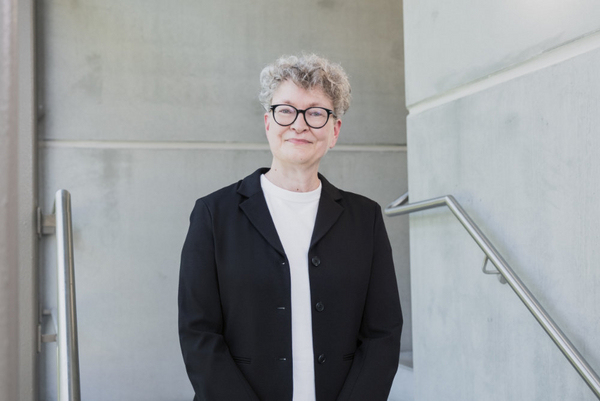
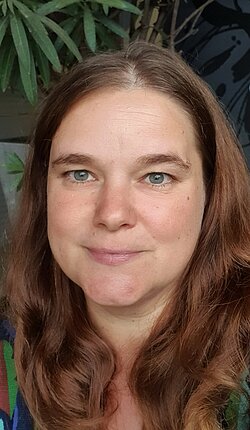
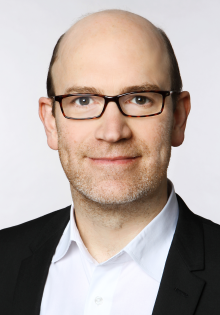
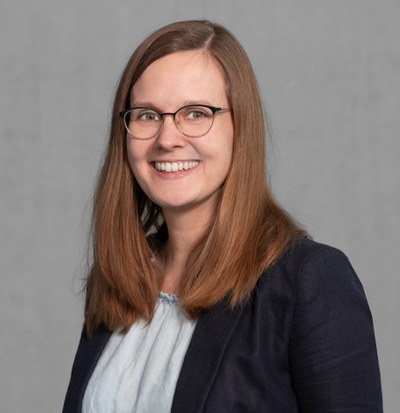
Elke Reichmann is a Professor at Evangelische Hochschule Ludwigsburg , specializing in Early Childhood Education and Pedagogy . Her work focuses on transitions between kindergarten and primary school, cooperative learning models, and empirical social research in early education contexts. Current roles: Professor for Early Childhood Education and Pedagogy Research areas: Transition studies, intercultural education, curriculum design for early learners Her publications emphasize: 2020: Intercultural contexts in German schools abroad 2019: Institutional collaboration between daycare and primary education 2015: Language promotion strategies in practical settings 2014: Managing heterogeneous learning groups and spatial pedagogy 2012: Foundational elements of early education didactics 2011: Attitudinal impacts of transition programs She leads the PartiGanzStut research project on participation in all-day schools in Stuttgart.
Anja Reinmuth serves as a Researcher at the Department of Philosophy, University of Flensburg, where she teaches the seminar ‘Teaching philosophy in school contexts’ for Spring Semester 2025. Her institutional role includes direct engagement with philosophy education methodology at the university level while maintaining active ties to secondary education through her position at Fördegymnasium Flensburg. Education: English and Philosophy studies at Ernst-Moritz-Arndt University of Greifswald (Mecklenburg-Vorpommern) Additional studies at University of Glasgow (Scotland) and Widener University (Chester, PA, USA) Traineeship at IGS Gera Second state examination for teaching at grammar schools through Gera Teacher Training College (Jena branch, Thuringia) Research Focus: Dr. Reinmuth specializes in developing analytical skills through language-based methodology in ethics education, particularly for 11th-grade curricula. Her work extends to gifted education programs, extracurricular learning location integration, and expert involvement strategies in classroom settings. She actively designs enrichment courses for Schleswig-Holstein’s educational system with emphasis on practical philosophy teaching applications. Professional Leadership: As head of philosophy at Fördegymnasium Flensburg, she oversees departmental operations while serving as a training teacher for English and Philosophy educators. Her course leadership in Schleswig-Holstein’s enrichment programs demonstrates commitment to advancing specialized pedagogical techniques beyond standard classroom environments.
Barbara Stauber is a full-time Professor of Social Pedagogy at the University of Tübingen , Faculty of Economics and Social Sciences, Institute of Educational Science, Department of Social Pedagogy. Since 2007 she has held the chair and, together with Prof. Andreas Walther (Goethe University Frankfurt), serves as spokesperson of the DFG Research Training Group “ Doing Transitions – Formen der Gestaltung von Übergängen im Lebenslauf ”. Education and Career 1982–1989: Studies in Political Science and Philosophy, University of Tübingen 1995: Doctorate (Dr. phil.), University of Tübingen – Lebensgestaltung alleinerziehender junger Frauen 2003: Habilitation, University of Tübingen – Junge Frauen und Männer in Jugendkulturen Since 1990: Freelance researcher, IRIS – Institut für regionale Innovation und Sozialforschung Since 1995: Founding member and researcher, tifs – Tübinger Institut für frauenpolitische Sozialforschung Since 2007: Professor of Social Pedagogy, University of Tübingen Research Interests Barbara Stauber’s work centres on biographical transitions in youth and young adulthood, analysed through intersectional lenses of gender, racism and social inequality . She combines reconstructive qualitative methods with transdisciplinary theory to investigate: Youth cultural practices (alcohol & drug use, media, peer cultures) Migration-related transitions (education, work, family formation) Professional support and counselling in transition processes Policy evaluation and prevention programmes Her current DFG-funded graduate college “ Doing Transitions ” (2017-ongoing) examines how transitions are actively shaped in contemporary society across sites in Tübingen and Frankfurt. Research Projects & Funding DFG Research Training Group “Doing Transitions” (2017-) Evaluation “Jugend im öffentlichen Raum – Prävention von riskantem Alkoholkonsum” (2014-2020, Ministry Baden-Württemberg) Crystal-meth use among women (2016-2021, Federal Ministry of Health) “Transition Processing” – counselling services in labour-market transitions (2015-2017, DFG) Labour-market integration of refugees (Hans-Böckler-Stiftung) Regional analysis of right-wing populism & racism (Rosa-Luxemburg-Stiftung) EU projects GOETE, UP2YOUTH, FATE, YOYO, Misleading Trajectories (FP4–FP7) Supervision & Mentoring Stauber currently supervises 14 doctoral candidates within “Doing Transitions” and has successfully mentored 26 completed doctorates and 3 habilitations . Her mentees investigate themes ranging from educational failure and communal living to gender transitions, migration, and biographies of care-leavers. Editorial & Network Roles Co-editor, book series “Übergangs- und Bewältigungsforschung” (Juventa) & “Sociology of Youth Studies Series” (Vienna) Member, scientific boards of DJI project “LSBT*Q Youth in VET”, TIMA project “Lebenshunger”, kit project “Care Leaver” Commission member, DGfE Social Pedagogy & DGS Youth Sociology sections Co-coordinator, Spring/Summer Schools on Qualitative Research, University of Tübingen
Lisa Loloma Froholdt is a researcher at the Department of Public Health, Faculty of Health Sciences, University of Southern Denmark (SDU), where she serves as Head of Research and leads the Research Unit for Maritime Health and Technology (MHT). She has previously held academic positions as Associate Professor at the World Maritime University and Senior Researcher at Chalmers University of Technology. Her educational background includes a Ph.D. in Human Factors, an MA in Educational Psychology, and a Diploma in Psychology. Ph.D. in Human Factors MA in Educational Psychology Diploma in Psychology Lisa's research centers on human factors, psychology, and occupational health in the maritime industry. Her key interests include mental health, intercultural communication, user-device interaction, learning processes, and socio-cultural dynamics. She has led major projects on seafarer welfare, anti-corruption, diversity and inclusion (MAR-DEI), and social sustainability in maritime operations. The 15 most recent publications reflect a strong focus on seafarer well-being, including cardiovascular health, motion sickness, mental health, diversity, and policy development. Her work spans public health, occupational medicine, organizational behavior, and maritime safety, with increasing attention to gender equality, inclusion, and ethical labor practices. Lisa has been involved in significant research projects such as the IFT-Seafarers Trust MARI-WEL project, INTEREG Northern Maritime University, and SDU Maritime Research Platform. She has also contributed to policy through technical papers for the International Maritime Organisation and public commentary on seafarer rights and workplace conditions. She actively supervises students and teaches courses in public health and maritime safety. Her leadership in establishing research units and facilitating international workshops underscores her role in advancing maritime health research and education.
Akkon University of Applied Sciences for Human SciencesGermany
Prof. Dr. Günter Thiele is a full Professor of Non-Profit Management at Akkon University of Applied Sciences Berlin. He has held previous academic positions at Alice Salomon University of Applied Sciences Berlin as Professor of Business Administration and Health Management, and at the Catholic University of Freiburg as Professor of Hospital Management and General Business Administration. His teaching focuses on social economics, nursing labor market, care economics, and nursing management within programs such as Nursing Management BA and Management in Emergency Response B.Sc. Research Interests: His research spans social economics, care economics, health management, and the socio-economic dimensions of nursing and healthcare systems. He investigates the economic valuation of care, workforce dynamics in nursing, hospital management, and the impact of policy reforms. His work critically examines the application of economic models in healthcare and advocates for increased social investment in the care sector. Publication Trends: His recent scholarly contributions focus on systemic reform in long-term care, re-municipalization of services, governance in the care sector, and the professionalization of nursing. His publications frequently appear in policy-oriented journals and edited volumes, reflecting his engagement with both academic and practical dimensions of healthcare management and social policy. Professional and Advisory Roles: Vorsitzender des Stephanus Hospizdienstes e.V., Berlin (since 2017) Vertrauensdozent der Hans-Böckler-Stiftung, Düsseldorf (since 2001) Former board member and chair of supervisory bodies at Diakonie Krankenhaus Freiburg and Diakonie Kork Epilepsiezentrum Education and Background: He holds a Diplom in Economics from the University of Hanover, a Mag.rer.publ. in Administrative Sciences from the German University of Administrative Sciences Speyer, and a doctorate from Bielefeld University on the economics of the care system. His professional experience includes roles in hospital administration and research at institutions such as the German Hospital Institute and the Federal Employment Agency’s Institute for Labor Market Research. Research Stays: He has conducted research at Boston College School of Nursing, University of Illinois at Chicago College of Nursing, and the Institute for Labor Market and Vocational Research at the Federal Employment Agency.
Prof. Dr. Nikola Sakač is affiliated with the Faculty of Chemical Engineering and Technology at the University of Zagreb, Croatia. His research spans analytical chemistry, sensor development, food safety, and sustainable methodologies in science and education. He actively collaborates with researchers across Europe, particularly in Croatia, Italy, and Slovenia. His research interests focus on analytical and environmental chemistry , particularly in developing potentiometric sensors , microfluidic systems , and green analytical methods . His work addresses real-world challenges in food safety (e.g., mycotoxin detection), water quality monitoring , and promoting sustainability in higher education . Nikola Sakač employs advanced materials such as nanocomposites and ionic liquids in sensor design. The recent publications show a strong trend toward interdisciplinary research, combining chemistry, engineering, and environmental science. His work integrates nonlinear modeling, biosensing, and sustainable technologies, reflecting a commitment to innovation and environmental responsibility in scientific practice. Scientific Awards: No awards explicitly mentioned in the provided text. Advising and Grants: While no students or grants are listed, his frequent co-authorship with early-career researchers and participation in multidisciplinary projects suggest active mentorship and potential grant involvement in EU or national research programs related to food safety and environmental monitoring. Labs and Teams: Nikola Sakač is likely part of research teams focused on analytical chemistry and sensor development at the University of Zagreb, possibly collaborating with the Department of Food Technology and environmental engineering groups. His work with microfluidics and biosensors indicates engagement with advanced instrumentation and sustainable lab practices.
German Institute for Adult Education – Leibniz Centre for Lifelong LearningGermany
Alexandra Ioannidou is a Researcher at the Deutsches Institut für Erwachsenenbildung (DIE), where she serves in the Internationalization Board Department. She has held this position since 2017 and previously served as Operational Head of the Departments 'Programs and Participation' and 'Teaching, Learning and Consulting' at DIE from 2015-2016. Her career spans multiple international organizations and academic institutions, with significant leadership roles including Managing Director and Board Member of the European Society for Research on the Education of Adults (ESREA) from 2019-2023. Her educational background includes: Diploma in Philosophy, Pedagogy and Psychology from Aristotle University of Thessaloniki Postgraduate studies in adult education at Leibniz University of Hannover (Dipl. Päd.) Doctorate on 'Governance in the transnational space – International educational monitoring for lifelong learning' from Eberhard Karls University of Tübingen Dr. Ioannidou's research focuses on international comparative education, governance structures in continuing education, and the internationalization of education policy, particularly in basic education, vocational training, and lifelong learning. Her work examines institutional frameworks, participation patterns, and policy implementation across different national contexts, with special attention to how governance mechanisms shape educational opportunities and outcomes. Her recent publications reveal a strong emphasis on educational governance, policy implementation, and the political economy of adult learning systems. She investigates how different welfare regimes influence participation in adult education, the impact of automation on skills development needs, and the regulatory frameworks governing continuing education. Her research often employs comparative methodologies to identify effective policy approaches across European and international contexts. Dr. Ioannidou holds multiple leadership positions in professional organizations: Member of the Education Policy Working Group 'Europe' (since 2017) Member of the Leibniz Working Group 'Europe' (since 2018) Member of the Leibniz Working Group 'International Affairs' (since 2018) Member of the Board of Trustees of DVV International (since 2019) Member of ASEM Research Network 4 'National Strategies for Lifelong Learning' (since 2020) She has contributed significantly to research projects including CLEAR (Comparative analysis of Learning systems in Europe and Asia) and ALE-in-ISI (Adult Learning and Education in International Statistical Information). Her work bridges academic research and policy development, with particular emphasis on evidence-based approaches to strengthening adult and continuing education systems globally.
German Institute for Adult Education – Leibniz Centre for Lifelong LearningGermany
Beate Bowien-Jansen is a Scientific Associate at the German Institute for Adult Education – Leibniz Centre for Lifelong Learning , focusing on adult education research and practice. Her work emphasizes financial literacy , basic education , and the digitalization of learning processes , with a particular interest in integrating low-literacy individuals into educational frameworks. Education: Part-time B.A. in Educational Science (2009–2015, Fernuniversität Hagen) Part-time M.A. in Education and Media eEducation (2016–present, Fernuniversität Hagen) Bowien-Jansen's research explores digital tools for financial literacy (e.g., the MONETTO gamified learning platform) and collaborative strategies for professionalizing educators. She has contributed to understanding how augmented reality , workplace learning , and multiplier networks can enhance basic education access and effectiveness. Her publications, including anthologies and peer-reviewed articles, examine work-oriented basic education , interdisciplinary collaborations , and gamification in adult learning . She has co-edited study materials on financial literacy and participated in projects like CurVe II, linking debt counseling to broader educational transitions. Scientific Contributions: Co-development of MONETTO, a financial literacy game Analysis of augmented reality applications for low-literacy learners Framework for workplace-based basic education programs Investigation of multiplier strategies in literacy outreach Evaluation of North Rhine-Westphalia's Alphanetz coordination center Integration of financial literacy with consumer education Bowien-Jansen collaborates extensively with colleagues like Michael Tröster and Eleni Mania, contributing to both practical guides and theoretical advancements in adult education. Her work bridges academic research with actionable strategies for policymakers and practitioners.
German Institute for Adult Education – Leibniz Centre for Lifelong LearningGermany
Linda von Sobbe is a Researcher at the German Institute for Adult Education (DIE) since 2023, focusing on digitalization-related professionalization of teachers and cognitive linguistics. She holds an M.A. in German Linguistics and a B.A. in German and International Literatures from the University of Tübingen , where she completed her PhD in 2022 in the SFB 833 "Meaning Constitution" project on Language Processing and Time Cognition. Her research prioritizes amodal mental representations of linguistic meaning, grounded cognition theories, and the psychological dimensions of time perception.
Volker Goerick serves as a Researcher at Westfälische Hochschule within the Department of Computer Science I, Faculty of Computer Science and Communication. His office is located in room A4.2.05 at Neidenburger Str. 43, 45897 Gelsenkirchen, with contact details including telephone 0209/9596-480 and fax 0209/9596-460. He actively participates in the Departmental Council and operates under the supervision of Prof. Dr. Leif Meier. His research concentrates on Software Engineering, Applied Computer Science, and Software Technology, directly aligning with the department's core focus on practical informatics applications and software development methodologies. These interests reflect the institution's emphasis on industry-relevant technical solutions within computer science education. As a member of Prof. Dr. Leif Meier's research team, Goerick contributes to the department's operational framework through his Departmental Council role, supporting academic governance and curriculum development initiatives within the Faculty of Computer Science and Communication.
Florian Engel serves as a Research Associate at the INTEX Lab within the Institute of Sport Science at the University of Würzburg's Faculty of Humanities. He additionally holds the position of Program Coordinator for the Master of Science in Exercise Science and Training program and provides student advisory services. Dr. Engel's research centers on exercise physiology adaptations across diverse populations with particular emphasis on youth sports. His work spans several key domains: Optimizing training and recovery protocols for children, adolescents, and adults Performance testing methodologies for young athletes and sedentary children Analysis of legal ergogenic aids including compression clothing and verbal encouragement Assessment of reliability and validity of wearable sensor technology in sports applications Conducting systematic reviews with meta-analyses to synthesize research findings As Program Coordinator, Dr. Engel oversees curriculum development and academic guidance for the Master's program. His research bridges theoretical exercise science with practical applications in athletic training and performance enhancement, with particular attention to developmental considerations across age groups. Dr. Engel maintains an active scholarly presence with a dedicated publication list and ResearchGate profile, reflecting his contributions to exercise science literature. His consultation hours for students are available by arrangement, demonstrating his commitment to personalized academic mentorship.
Dr. rer. nat. Sabine Gerstner is a Senior Lecturer (Akademische Oberrätin) at the Department of Biology Didactics within the Faculty of Biology at the University of Würzburg. She serves as Managing Director of the Department of Biology Didactics, Chair of the Biology Teacher Examination Board, and member of the Management Board of the M!ND Center at the University of Würzburg. Education: Diploma in Biology (University of Würzburg, 2000-2006), PhD in Biology Didactics (University of Bayreuth, 2006-2009) Key Roles: Part-time Lecturer, Educational Researcher, Teacher Training Advisor Dr. Gerstner's research focuses on science education methodologies, particularly: Concept mapping as assessment and learning tool Hands-on vs. teacher-centered instruction Digital learning platforms (e.g., HOBOS platform) Cognitive achievement and motivation in science classes Interdisciplinary approaches in biology education Environmental education frameworks Her academic work shows a consistent focus on improving science education through interactive methods and digital technologies, with publications spanning from 2007-2021. Notable contributions include studies on concept mapping for knowledge consolidation and comparative analyses of instructional approaches. Dr. Gerstner contributes to teacher training programs as: Academic advisor for biology students Developer of didactic frameworks Organizer of educational workshops Participant in curriculum development Advocate for evidence-based teaching practices She works at the Didactics and Language Center, Campus Hubland Nord, and her research has involved collaborations with institutions like the University of Bayreuth and Friedrich Verlag.
Oliver Reis is a Professor at the Institute for Catholic Theology within the Faculty of Cultural Studies at the University of Paderborn. His work focuses on Religious Education with Special Consideration of Inclusion , integrating systematic theology, didactic methodologies, and empirical research in teacher training. Education: Abitur (1990) 1. Staatsexamen in Catholic Theology for Primary Education (1996) 1. Staatsexamen in Catholic Theology and Philosophy for Gymnasium (2005) Dr. phil. in Systematic Theology (2003) Dr. theol. in Religious Education (2013) His research spans systematic theology , transformation of theological content for education , and empirical studies on teacher competency development . Recent publications explore topics like praxeological analyses of Catholic schools, SoTL methodologies, and interdisciplinary approaches to inclusion. Scientific Awards: Dissertationspreis 2003 for his first dissertation on sustainability and theology Reis has held leadership roles in editorial projects such as the Jahrbuch für eine konstruktivistische Religionsdidaktik and served in university self-governance committees. He is active in academic societies like the Deutsche Gesellschaft für Hochschuldidaktik and Europäische Gesellschaft für Katholische Theologie .
Dr. Anna Tobies is a Scientific Associate at the University of Koblenz, Department of Education System and School Development Research. She holds a PhD in Education (2023) and a Master of Education (2017) from Ruhr University Bochum, specializing in English, Protestant Religious Studies, and Educational Sciences. Education: PhD in Education (2018-2024) - Ruhr University Bochum Master of Education (2015-2017) - Ruhr University Bochum Bachelor of Arts (2010-2014) - Ruhr University Bochum Her research focuses on religious education methodologies, teacher training retention, and early literacy practices. She has published work on reading aloud in kindergarten settings and biographical factors in teacher training dropouts. Scientific Awards: PhD scholarship recipient - Evangelical Study Center Villigst (2019-2023)
Mirko Schürmann is a Researcher at the Department of Psychology within the Faculty of Arts and Humanities at Paderborn University, Germany. He serves as a Research Assistant at the Chair of Work and Organizational Psychology ( Arbeits- und Organisationspsychologie ) and is actively involved in the LLV HD project (Teaching-learning associations in degree programs containing mathematics - across universities and digital Teaching). His research centers on educational psychology and mathematics education, with specialized focus on quantitative research methods and statistical data analysis. Schürmann investigates support measures for mathematics learning in higher education, particularly during study entry phases, and develops frameworks for effective university mathematics teaching. His work integrates psychological principles with pedagogical innovation to address student success challenges in STEM contexts. Analysis of Schürmann's publications (2022-2024) reveals consistent focus on the WiGeMath and LLV HD projects. Key trends include digital assessment tools (STACK tasks), goal-framing of mathematics support programs, and framework models for university teaching. These works demonstrate interdisciplinary synthesis of psychology, mathematics education, and higher education research, emphasizing evidence-based interventions for student retention and learning effectiveness across institutional contexts. Schürmann delivers specialized instruction through workshops on statistical data analysis with SPSS for BA/MA graduates and quantitative methods seminars for doctoral students ( Quantitative Methoden für Doktoranden ). His teaching portfolio also includes health psychology, social psychology, and introductory psychology courses, with particular emphasis on methodological rigor and practical application of statistical principles. He operates within Paderborn University's Chair of Work and Organizational Psychology as part of the LLV HD project team, collaborating with researchers across multiple universities to examine teaching-learning dynamics in mathematics education. His office is located at Warburger Str. 100, Room H4.326, Paderborn (33098).