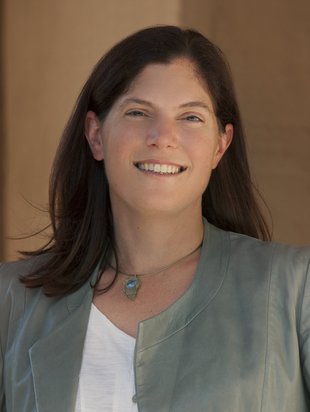
Stacey Garrett (she/her/hers) is an Associate Professor in the Counseling, Family Therapy, and Higher Education Department at Appalachian State University’s Reich College of Education. Her research focuses on diversifying higher education through qualitative exploration of faculty, staff, and students of color’s experiences. She advises graduate students across certificate, master’s, and doctoral programs delivered both online and in-person. Member of the Reich College of Education Mentoring Guild Advocate for faculty professional and personal growth Emphasizes institutional leadership strategies for recruitment/retention of diverse faculty Her work highlights challenges like pandemic-era community disruption and burnout prevention through mentorship. Key research themes include Black women faculty navigation, culturally responsive teaching, and systemic barriers faced by marginalized groups in academia.
Prof. Dr. Arndt Brendecke is a Professor of Early Modern History at Ludwig-Maximilians-Universität München (LMU), holding the Chair for Early Modern History since 2011. He serves as a spokesperson for the Collaborative Research Centre 1369 ‘Cultures of Vigilance’ and has held leadership roles such as Dean of LMU’s Faculty of History and Arts (2021–2023) and Director of LMU’s History Department (2013, 2014, 2019). His academic career includes visiting professorships at the Université Paris 1 (Panthéon-Sorbonne) and the German Historical Institute in London. Brendecke’s research focuses on early modern political and colonial history, with a particular emphasis on Spain’s empire, knowledge politics, and vigilance cultures. Education: PhD in Modern History (1999), LMU Munich Habilitation in Modern History (2008), LMU Munich Research Interests : Brendecke explores the intersection of knowledge, power, and governance in early modern Europe, especially in Spanish colonial contexts. His work on ‘vigilance cultures’ examines how societies historically managed attention and surveillance. Key themes include colonial administration, archival practices, and the conceptual history of modernity. Awards and Roles : He is a member of the Bavarian Academy of Sciences and Humanities (2024), Academia Europaea (2016), and the LMU Centre for Advanced Studies. He co-edits major journals like Historische Zeitschrift and has led major research initiatives, including the Collaborative Research Centre 573 (2007–2009) and ProMoHist doctoral program (2012–2023). Grants and Advisory Roles : Funded projects include the Goethe-Institute’s translation of his habilitation thesis. He advises institutions such as the Bavarian Academy of Sciences and the Munich Centre for Global History. His work bridges historical scholarship with global perspectives, emphasizing the empirical dimensions of early modern empires. Labs/Teams : Leads the Collaborative Research Centre 1369, exploring vigilance as a cultural and historical phenomenon. Collaborates with international networks like the ‘Network of Early Modern Senses’ and the ‘Cooperation Network of European Routes of Emperor Charles V’.
LaRonda M. Lockhart-Keene is an Assistant Professor of Occupational Therapy at Widener University. She holds dual roles in clinical practice and academia, specializing in dementia care and occupational justice. With over 20 years of clinical experience across diverse settings including NICU, geriatric care, and HIV/addiction services, she actively mentors students in community-based practice. Bachelor of Science in Occupational Therapy (1997), Temple University Postprofessional Doctorate in Occupational Therapy (OTD, 2017), Philadelphia University (now Thomas Jefferson University) Her research focuses on teaching pedagogy, clinical reasoning, and bridging police-community relations through healthcare. She previously served as Program Director at Thomas Jefferson University’s OTA program and held adjunct roles at Penn State Berks and Philadelphia University. Professional leadership includes chairing POTA’s Commission on Justice, Equity, Diversity, and Inclusion. Her work emphasizes occupational justice and trauma-informed approaches, with publications exploring adjunct faculty readiness and student clinical reasoning development.
Meltem ŞENOL BALABAN is an Associate Professor in the Department of City and Regional Planning at Middle East Technical University (METU), Ankara, Turkey. She holds a dual PhD in City and Regional Planning (METU, 2009) and Urban Engineering (University of Tokyo, 2012). Her academic career includes roles as Director of METU Disaster Management Implementation and Research Center (since 2018), Minor Program Coordinator, and Board Member of the Applied Ethic Research Center. She specializes in disaster risk management, urban resilience planning, GIS-based modeling for evacuation/shelter optimization, and climate change adaptation in urban contexts. Her research focuses on flood risk mitigation in riverine cities, institutional frameworks for cultural heritage protection (e.g., UNESCO sites), and earthquake resilience strategies. Notable projects include developing Turkey's provincial risk reduction guidelines, a climate change risk assessment framework (CRAFT) for cultural heritage, and international cooperation initiatives like the UK-funded CRAFT and NET projects. She has authored over 40 peer-reviewed publications and supervised 10+ theses. Key contributions include GIS-based evacuation models for Istanbul, comparative studies of UK/Japan/Turkey disaster policies, and post-disaster resilience assessments. Awards include JICA Scholarship (2009-2012), ProVention Research Grant (2007-2008), and multiple international recognitions for her work on urban risk reduction. Her teaching portfolio includes courses on GIS in planning, disaster management principles, and urban resilience strategies.
Mélanie Ouvry is an Associate Professor and Dean of Faculty at MBS Education since 2017. With over 15 years of experience in higher education, she has held roles as program director for specialized master's programs, department head for marketing and interim management, and served as a communication strategy consultant at Publicis Group. Her research focuses on consumer behavior, retail dynamics, and cross-cultural marketing experiences. Her academic expertise includes strategic marketing, buyer behavior analysis, and advertising strategy. Key research themes explore multi-store shopping behaviors, consumer experience valuation, loyalty mechanisms, and the cognitive dimensions of retail environments. She has conducted extensive studies in retail distribution systems, communication strategies, and tourism-related consumer behavior in historical commercial districts like the Medina of Sousse. Her publications span topics from grocery shopping decision-making to television audience engagement, reflecting her interdisciplinary approach bridging marketing, cognitive science, and cultural studies. Teaching responsibilities include advanced marketing strategy courses and consumer behavior analysis modules.
Professor Richard Thomas is Head of the School of Culture and Communication at Swansea University and holds a Professorship in Media within the department of Media, Communications, Journalism and Public Relations. He is a globally recognized academic in political communication and media research, co-authoring Reporting Elections: Rethinking the Logic of Campaign Coverage , and leading research on alternative media’s role in democracy. His work has been funded by the Economic and Social Research Council (£517,000 project on online political media), influencing 21st-century journalism practices. Research interests span political communication, media methods, and the treatment of elections in alternative media. He employs content analysis and critical discourse analysis to study media framing of economics, politics, and conflict. Recent work explores right-wing media perspectives and UK election coverage. Grants & Impact : Co-led a £517k ESRC project (2019–2022) analyzing alternative political news online. His research informs media regulators and has been published in top journals like International Communication Gazette and Journalism . He is a Fellow of the Higher Education Academy and advises global journalism programs through his role as Global Chair of the Erasmus Mundus Joint Degrees Advisory Board. Teaching & Leadership : Teaches modules on media analysis and 21st-century journalism. Serves on Swansea University Senate and Faculty Leadership. Supervises PhDs on topics like Nigerian activism, gender in sports journalism, and Saudi Arabia media narratives. Publications : Over 30 peer-reviewed articles and books, including works on Brexit media coverage, BuzzFeed’s election reporting, and cricket’s cultural history. Recent focus areas include media literacy via YouTube essays and the BBC’s election role.
Huynh-Nhu (Mimi) Le is a Professor in Clinical/Community Psychology at George Washington University. Her research focuses on developing interventions to prevent perinatal depression among low-income Spanish- and English-speaking pregnant women and new mothers, with an emphasis on cultural adaptation and integration into primary care settings. She leads the Mothers and Babies: Mood and Health Research Program, addressing underserved populations in the U.S. and internationally. Education: Ph.D. in Clinical Psychology from the University of Illinois at Urbana-Champaign (1997). Research interests include culturally tailored mental health interventions, feasibility of mental health screening in primary care, and global maternal mental health. Her work aims to improve mental health outcomes for marginalized families through evidence-based strategies. Lab affiliation: Mothers and Babies Lab, located at 2013 H Street NW, Room 519, Washington, DC.
Professor Jonathan Adams holds a Chair in Archaeology at the University of Southampton's Department of Archaeology. He leads the Centre for Maritime Archaeology (CMA), established in 1997, and teaches at both undergraduate and postgraduate levels. His career spans over 30 years, including pivotal roles in the Mary Rose excavation and foundational work in deepwater maritime archaeology. Adams specializes in the Black Sea region, focusing on environmental change impacts on prehistoric populations, maritime connectivity, and naval technology's role in state-building. Affiliations: Centre for Maritime Archaeology, Southampton Marine and Maritime Institute Key Projects: Black Sea Maritime Archaeology Project (since 2015), Ships of State (with Södertörn University) Education: BA in Archaeology & Ancient History (Durham University), DPhil in Maritime Archaeology (Stockholm University). His research integrates ship science, oceanography, and historical analysis. He currently supervises seven PhD students and has mentored over 500 graduates through the MA/MSc in Maritime Archaeology program launched in 1995. Research Interests: Chronology of environmental change in the Black Sea Maritime connectivity across historical periods Role of naval architecture in early modern state development
Victoria J. Orphan is the James Irvine Professor of Environmental Science and Geobiology at Caltech, where she directs the Center for Environmental Microbial Interactions. Her research investigates microbial processes in anaerobic ecosystems including deep-sea methane seeps, hydrothermal vents, and coastal sediments using interdisciplinary approaches combining molecular biology, stable isotope techniques, and geochemistry. Her laboratory focuses on: Microbial partnerships in methane cycling Ecophysiology of uncultured archaea and bacteria Viral ecology in marine environments Biogeochemical impacts of microbial communities Blue carbon sequestration in seagrass ecosystems Professor Orphan has developed innovative methods including BONCAT-FISH and nanoSIMS for studying microbial activity in environmental samples. Her research group maintains active field programs in Monterey Canyon and hydrothermal vent systems, and develops high-pressure incubation systems for studying deep-sea microbes. She teaches courses on microbial ecology and evolution, and mentors graduate students through the Geobiology and Environmental Science programs.
Dr. Catríona Clutterbuck is a Lecturer in the School of English, Drama and Film at University College Dublin (UCD), where she has been a core faculty member since 1996. Her academic work centers on modern and contemporary Irish poetry, with a strong emphasis on gender, ethics, faith, and aesthetics in literature. She has made significant contributions through publications, teaching, and academic service. Research Interests: Her research spans modern and contemporary Irish poetry , women’s poetry , gender and nation , subjectivity and ethics , memory and mourning , and creative writing . She explores the intersections of personal and national identity, particularly in the works of poets like Eavan Boland, Seamus Heaney, and Thomas Kinsella. The most recent articles (2021–2024) demonstrate a consistent focus on emotional and ethical dimensions in Irish poetry, especially themes of grief, vulnerability, faith, and the role of art in processing loss. Her work frequently engages with female poets and feminist reinterpretations of national narratives, employing close textual analysis and cultural criticism. Scientific Awards: College of Arts and Humanities Award for Teaching Excellence (2018) Foreign and Commonwealth Scholarship Award (1993) Graduate Scholarship (1993) Postgraduate Studentship (1992) Advising and Grants: While no specific PhD advisees are listed, she has coordinated postgraduate modules such as Dissertation Research Methods and Irish Poetry: Representing Self and Other , indicating active involvement in graduate supervision. She has served as an external examiner for PhD theses and undergraduate programs at multiple institutions, reflecting her recognized expertise. There is no mention of research grants in the provided text. Labs and Teams: No formal research labs are mentioned. However, she has been an active member of academic communities, including the Committee for the Study of Anglo-Irish Literature at the Royal Irish Academy and editorial boards for journals like Irish University Review .
Dr. Ivan Grigoriev is a Lecturer in Russian Politics at King’s Russia Institute, part of the School of Politics & Economics within the Faculty of Social Science & Public Policy at King’s College London. His research focuses on judicial politics, business-state relations in Russia, post-Soviet reforms, and constitutional dynamics. He teaches courses such as 7YYR0002, 6YYR0002, and 4YYR0001, and supervises PhD studies on Russian political topics like federalism, elections, and business-state interactions. Grigoriev’s research interests span constitutional courts under authoritarianism, the structure of Russian society, and international organizations’ roles in post-Soviet governance. His work appears in journals like Post-Soviet Affairs , Russian Politics , and Democratization . His recent publications analyze topics such as elite dynamics in color revolutions, EU leadership programs in Eurasia, and the role of law clerks in Russia’s Constitutional Court. While no specific awards are mentioned, his contributions were noted at King’s annual awards events in 2024. Grigoriev’s advising focuses on Russian political phenomena, including authoritarian modernization and labor reforms. His research often bridges theoretical frameworks with empirical analysis of institutional adaptations under autocracy.
Kevin Mackie is Professor and Chair of the Department of Civil, Environmental and Construction Engineering (CECE) at the University of Central Florida’s College of Engineering. He has been a faculty member since 2006, advancing from assistant to full professor, and previously served as associate chair and interim department chair. His leadership includes spearheading departmental improvements in culture, workload policy, and digital accessibility. Education: Ph.D. in Civil Engineering, University of California, Berkeley (2004) M.S. in Civil Engineering, University of California, Berkeley (2000) B.E. in Engineering, Cooper Union, New York (1998) His research focuses on structural engineering , particularly in bridge engineering , performance-based seismic design , nonlinear analysis , and advanced materials for infrastructure repair . He integrates analytical, numerical, and experimental methods to assess and improve the resilience of civil infrastructure under extreme loads. His work addresses critical challenges in soil-structure interaction, seismic retrofitting, and the use of composites and smart materials. The 15 most recent publications reflect a strong emphasis on nonlinear modeling , seismic performance , and computational structural analysis of bridges and tall buildings. Key themes include fiber-based modeling, contact-friction problems, soil-structure interaction, and probabilistic assessment, demonstrating a consistent trajectory toward resilient and sustainable infrastructure systems. Scientific Awards: Faculty advisor of the year (2022, 2021, 2019) – ASCE East Central Branch and Florida Section Technical Contribution Leader Award Winner (2021) – ASCE East Central Branch Distinguished faculty member at UCF (2018) – Department of Housing and Residence Life Arthur N.L. Chiu Award for excellence as faculty advisor (2018) – Chi Epsilon Honor Society Mackie has been a dedicated mentor, supervising 11 doctoral , 18 master’s , and over 30 undergraduate students . His research has been funded by the National Science Foundation , U.S. Department of Transportation , Caltrans , FDOT , and industry partners. He has published nearly 200 papers and been cited over 7,000 times. He led the reaccreditation of CECE’s undergraduate programs and established the accelerated bachelor’s-to-master’s pathway. He leads the Structures Laboratory at UCF and collaborates with multidisciplinary teams on infrastructure resilience. His vision includes expanding graduate programs, strengthening industry partnerships, and diversifying the Senior Design curriculum to reflect real-world engineering challenges.
Cees B.M. van Riel is a visiting professor in the Department of Business-Society Management at Rotterdam School of Management (RSM), Erasmus University. He previously served as a professor of corporate communication and is a globally recognized expert in reputation management, employee alignment, and corporate branding. His research focuses on corporate communication , organizational identity , employee alignment , and industry reputation . He investigates how organizations build and maintain strong reputations through strategic internal and external communication, particularly during periods of change or crisis. His work bridges academic theory and practical application, influencing both scholarly discourse and corporate practice. His recent publications, including a 2023 article on museum-corporate sponsorships, demonstrate a sustained engagement with themes of mutual value creation, stakeholder management, and reputation dynamics. His body of work consistently addresses reputation management , organizational change , impression management , and corporate branding across diverse sectors. Editor-in-Chief of Corporate Reputation Review Founder of the Reputation Forum The Netherlands (RfN) Founding Director of RSM's International Executive Master Programme in Corporate Communication Co-founder of the Reputation Institute Professor van Riel has supervised numerous academic works and has led major educational initiatives. He has been actively involved in global reputation rankings, including the Forbes-published Annual Reputation Institute Study. His consultancy work with multinational corporations such as ING, Philips, and Shell underscores his impact beyond academia. He has also held editorial and speaking roles, contributing significantly to the dissemination of management knowledge. He is central to a research network focused on corporate communication and reputation, with collaborations spanning multiple countries and institutions. His leadership in founding academic programs and professional forums highlights his role in shaping the field.
Denise Neary is a Professor and Doctoral Studies Coordinator at the Royal Irish Academy of Music (RIAM), overseeing doctoral supervision and research methods in musicology. Previously, she was Senior Lecturer at Canterbury Christ Church University, UK. She organizes international guest lectures at RIAM and actively participates in academic societies such as the Society for Musicology in Ireland (SMI) and Performance Research Ireland. Her research focuses on 17th- to 19th-century music in Ireland and Britain, particularly church music and artistic research. She has supervised numerous doctoral dissertations, including studies on Beethoven, Schubert, and Irish choral traditions. Affiliations: RIAM (current), SMI (Council Member since 2009), RILM National Committee of Ireland. Educations: Extensive academic background in musicology, with research concentrated on historical performance practices and institutional music history. Her research interests span Irish musical heritage, cathedral music in England, and the evolution of artistic research methodologies. Recent work includes exploring performance as academic practice and the role of music in 17th-century Irish parish churches. She has contributed to major publications like the Encyclopedia of Music in Ireland (2013) and presented at international conferences on topics such as ‘Artistic Research in Music’ (2018). Denise has supervised over 20 doctoral students since 2010, specializing in performance analysis of classical and contemporary works. She also serves on advisory boards for Irish Musical Studies and collaborates internationally on projects like the ‘Doctors in Performance’ conference series. Labs/Teams: Leads the Doctoral Studies Program at RIAM, fostering interdisciplinary research in musicology and performance.
Eetu Mäkelä is a Professor of Digital Humanities at the University of Helsinki, leading the research group at the Helsinki Centre for Digital Humanities. He focuses on computational methods in humanities and social sciences, including datafication and interdisciplinary collaboration. He serves as Technical Director of DARIAH-FI and a Research Programme Director at the Helsinki Institute for Social Sciences and Humanities. Currently, he heads the preparatory group for the Helsinki Liberal Arts and Sciences Bachelor’s Programme. His research emphasizes technological and theoretical foundations of computational research, with notable contributions to linked open data, sociolinguistic analysis, and historical text mining. He has developed widely used tools like Recon, Palladio, and Octavo, which are employed in academic and public sectors. His work has garnered over 20 awards, including best paper and open science recognitions. Key areas of expertise include digital humanities methodologies, data integration, and open science practices. He actively contributes to teaching, designing courses such as 'Methods for Digital Humanities' and demonstrating innovative pedagogical approaches. His recent projects involve analyzing 18th-century philosophical texts and sociolinguistic change using computational methods. Awards: Multiple best paper awards, open data awards, and open science awards. Grants/Advising: Leads research initiatives funded by the Academy of Finland and other bodies. Mentors interdisciplinary research teams but no specific student names listed. He maintains active roles in academic infrastructure, including the DARIAH-FI initiative and the Helsinki Institute’s datafication program. His work bridges technical innovation with humanities scholarship, emphasizing practical, enduring systems for academic and public use.