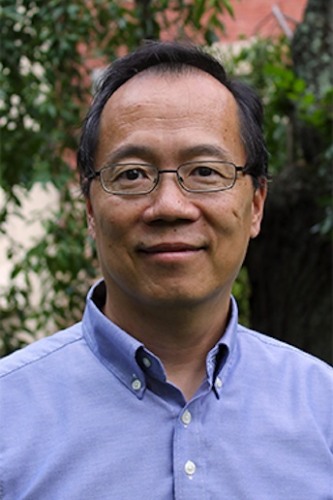
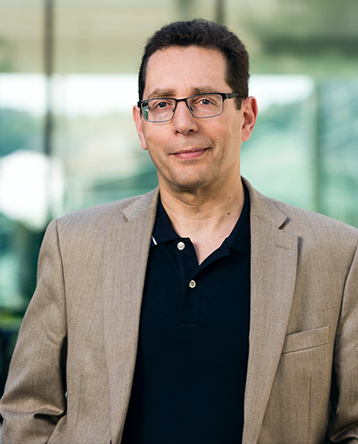
Daniel J. Sheffield is an Associate Professor in the Department of Near Eastern Studies at Princeton University, serving as Director of Undergraduate Studies. He holds a Ph.D. in Iranian and Persian Studies from Harvard University (2012). Previously, he held positions at the University of Washington and as a Link-Cotsen Postdoctoral Fellow at Princeton's Society of Fellows. His research focuses on the religious, intellectual, and social history of the medieval and early modern Persian-speaking world, with specialties in exchanges between Safavid Iran and Mughal India, Zoroastrian communities, and the transmission of ideas from Late Antiquity to Early Modernity. His current work explores language, translation, and religious thought, exemplified by his manuscript Cosmopolitan Zarathustras and an upcoming project on translation and toleration in Safavid and Mughal contexts. Teaching includes undergraduate courses on Iranian history, graduate seminars on Persian historiography, and ancient Iranian language instruction. He organizes a Classical Persian reading group for students. His recent publications appear in major edited volumes on Zoroastrianism and philology. Award-winning educator and researcher, he is affiliated with the Behrman Faculty Fellows program. Beyond academia, he enjoys cooking, accordion playing, and family life with his young child.
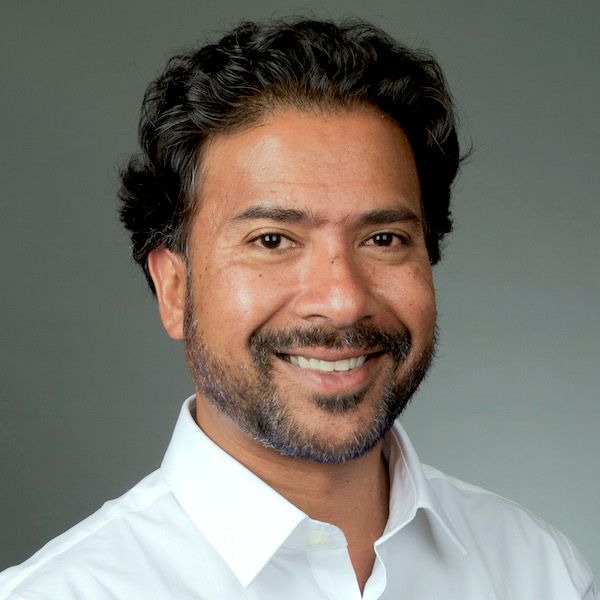
Dr. Paul W. Mulvey is the Alumni Distinguished Undergraduate Professor of Human Resource Management and Director of Undergraduate Programs in Business Administration at North Carolina State University's Poole College of Management. He holds a PhD in Human Resource Management and Organizational Behavior from The Ohio State University and a Bachelors in Psychology from Lehigh University. His career includes teaching roles at Ohio State and the University of Connecticut before joining NC State. His research focuses on reward systems, work teams, leadership, recruitment, and retention. He has consulted with over 60 organizations and delivered executive education programs. Notable publications include works on organizational trust, compensation systems, and team dynamics. Mulvey is a recipient of multiple teaching awards, including NC State’s Outstanding Teaching Award and is a member of the Academy of Outstanding Teachers. Education: PhD (1991, Ohio State), BA (Lehigh) Expertise: Work team processes, compensation systems, organizational culture, leadership toxicity Labs/Initiatives: Faculty Director of BSBA Program, involved in the Enterprise Risk Management Initiative and Technology Commercialization Mulvey’s work has been featured in media such as NPR and USA Today. His research spans organizational behavior, leadership, and HRM, with over 30 years of academic and applied contributions.
Zhenchao Qian is a Professor of Sociology and Research Associate at the Population Studies and Training Center (PSTC) at Brown University. His research focuses on social demography, stratification, and family dynamics, particularly examining marriage patterns, immigrant integration in the U.S., and social change in China. He holds a Ph.D. from the University of Pennsylvania and previously served as faculty at Ohio State University and Arizona State University, including a term as department chair at Ohio State. His work analyzes 'who marries whom' and the societal implications of marital and cohabitation choices, exploring how factors like education, race, and nativity influence union formation. He also investigates racial identity among interracial couples' children and family transformations in urban China. Qian has received grants from NIH, Russell Sage Foundation, and other institutions, totaling over $4.5 million in funding. Awards include AAAS Fellowship and membership in the Sociological Research Association. Qian’s research emphasizes the intersection of demographic trends and social inequality, with recent studies addressing immigrant wealth disparities, marital assimilation patterns, and the consequences of economic restructuring on family structures. His current projects include analyzing union history impacts on midlife health and training demography scholars through NIH-funded programs.
Kamal Sen is an Associate Professor in the Department of Biomedical Engineering at Boston University, serving as Director of the Natural Sounds and Neural Coding Laboratory and Director of Admissions and Recruitment for Master’s Programs. He holds a PhD and MA in Physics from Brandeis University and a BA in Physics from Bates College. His research focuses on understanding how neurons encode natural sounds, particularly in the auditory cortex. Key areas include neural coding efficiency, hierarchical auditory processing, and the role of learning in shaping receptive fields. He developed the BOSSA algorithm to address sound segregation challenges in noisy environments, with applications for hearing aid technology. Sen’s work integrates electrophysiological techniques with theoretical approaches from signal processing, information theory, and systems theory. His lab explores neural discrimination of behaviorally relevant sounds and models cortical processing dynamics using computational frameworks. Recent studies investigate parvalbumin neuron contributions to temporal coding and cortical noise reduction in complex auditory scenes. His publications span neural circuit modeling, fNIRS applications in BCI, and biomimetic algorithms for auditory scene analysis. Research highlights include exploring schizophrenia-related gene effects on neural circuits and developing 3D neurosphere models for Parkinson’s disease.
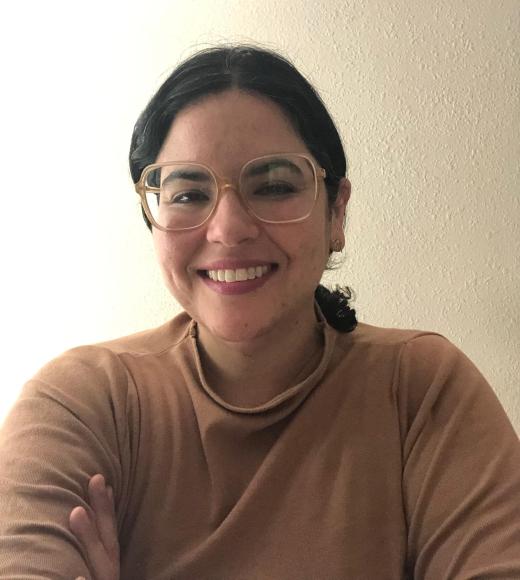
Rana Jaleel is an Associate Professor in the Department of Gender, Sexuality, and Women's Studies at the University of California, Davis, within the College of Arts & Sciences. She holds multiple leadership roles, including Chair of the Cultural Studies Graduate Group, Chair of the Designated Emphasis in Feminist Theory and Research, Faculty Advisor for the Sexuality Studies Minor, and Co-Director of HATCH: The Feminist Arts & Sciences Initiative. She is also a 2021–2024 College of Arts & Sciences Dean's Faculty Fellow. Education: Ph.D. in American Studies, New York University J.D., Yale Law School MFA in Poetry, University of Michigan, Ann Arbor Rana Jaleel’s research centers on the politics of evidence, examining how harm is recognized or erased in legal, cultural, and political contexts. Her work critically engages with reproductive labor, race, gender, sexuality, property, and international law. She draws from feminist theory, critical ethnic studies, legal studies, and decolonial thought to interrogate the intersections of power, knowledge, and violence. Her interdisciplinary approach is reflected in her contributions across law, cultural studies, and creative writing. Her publications and editorial projects reveal a strong focus on racial capitalism, settler colonialism, queer/trans of color critique, and feminist legal theory. She explores how international legal frameworks for sexual violence are shaped by imperial and racial power. Her work frequently appears in journals such as Critical Ethnic Studies Journal , Cultural Studies , and Brooklyn Law Review . She has co-edited special issues on democracy, gendered citizenship, and racial capitalism, demonstrating a commitment to collective scholarly work. Scientific Awards: Author of Color First Book Award from Duke University Press for The Work of Rape Rana Jaleel is actively involved in academic service and mentorship. As Co-Director of HATCH and leader of the Write the Future! Lab, she fosters creative and critical scholarship among undergraduate students, particularly from women/queer/trans of color and transnational feminist perspectives. She serves on the Editorial Collective and Board of The Critical Ethnic Studies Journal and is a member of the American Association of University Professors’ Committee A on Academic Freedom and Tenure. Her leadership extends to admissions and curriculum development in interdisciplinary programs. She is co-editing a forthcoming issue of South Atlantic Quarterly on 'Queer/Trans of Color Transits and the Global Imaginaries of Racial Capitalism' and continues to develop projects that bridge creative practice, legal critique, and feminist theory.
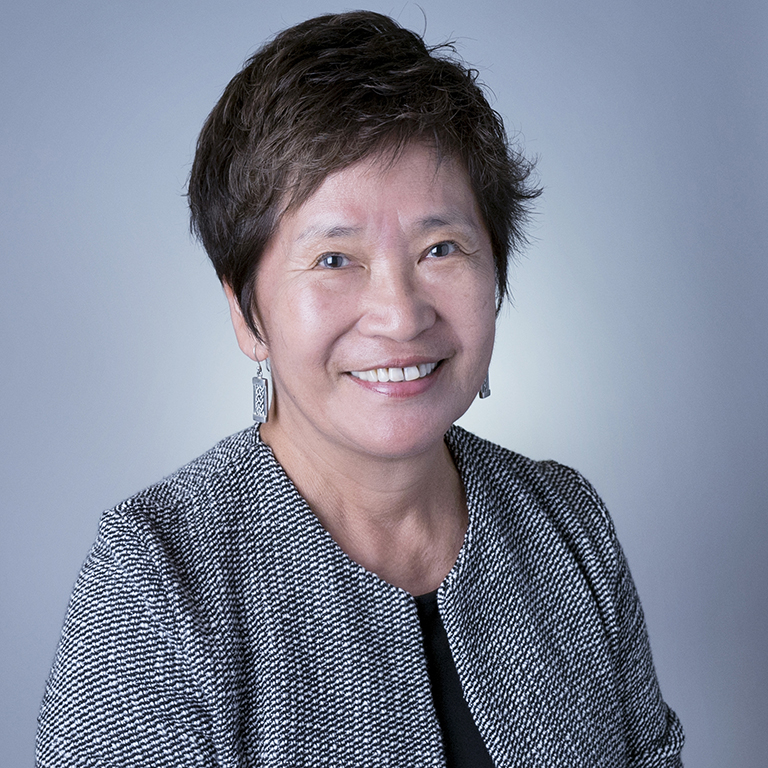
Seung-kyung Kim serves as the Korea Foundation Professor in the Department of East Asian Languages and Cultures and Director of the Institute for Korean Studies at Indiana University's School of Global and International Studies. Previously, she held leadership roles at the University of Maryland including Chair of Women’s Studies, Director of the Center for East Asian Studies, founding Director of the Asian American Studies Program, and Acting Associate Dean for the College of Arts and Humanities. Her research centers on gender dynamics in social movements, examining women's roles as workers and their interactions with state structures. She investigates transnational migration under globalization, with particular focus on family experiences and educational outcomes, while developing feminist frameworks for understanding social transformation. This interdisciplinary work bridges Korean Studies, Gender Studies, and Global Migration Studies through empirical analysis of South Korean contexts. Recent publications (2020-2021) reveal a trajectory emphasizing critical area studies methodology, transnational feminist theory, and institutional analysis of Korean Studies development. Her work consistently connects micro-level family dynamics with macro-level globalization processes, particularly through examinations of kinship systems, educational migration (Kirŏgi families), and state-society negotiations in East Asia. No scientific awards, prizes, or fellowships were documented in the provided materials. The available records indicate no explicitly listed graduate students or advisees. No research grants, funding sources, or sponsored projects were specified in the source text, though her directorship of the Institute for Korean Studies implies administrative oversight of research initiatives. As Director of the Institute for Korean Studies, Kim leads a major research hub promoting interdisciplinary scholarship on Korea within Indiana University's School of Global and International Studies. Her previous directorship of Maryland's Center for East Asian Studies demonstrates sustained leadership in building academic infrastructure for area studies, while her founding of the Asian American Studies Program highlights commitment to intersectional research frameworks.
Professor Athina E Markaki serves as Professor of Materials & Biomedical Engineering in the Department of Engineering at the University of Cambridge, leading research in advanced biomaterials and tissue engineering solutions for regenerative medicine with emphasis on vascularization and tubular scaffold development for human conduit replacement. Her academic credentials include a Diploma in Metallurgical Engineering (8.6/10) from the National Technical University of Athens and a PhD in Materials Science from the University of Cambridge. Markaki's research program centers on vascularisation techniques for clinically relevant tissue dimensions and tubular scaffolds to replace diseased or damaged human conduits, integrating biomaterials science with regenerative medicine principles. Key applications span liver tissue engineering, neural crest-derived stem cell differentiation, and vascular graft development, with strong translational focus on orthopaedic and cardiovascular medical devices. Analysis of her recent publications reveals dominant trends in biomimetic scaffold design, particularly collagen-based tubular structures and hydrogel systems for vascularized tissue constructs. Her work demonstrates interdisciplinary convergence of AI-driven retinal assessment, glioblastoma modeling, and self-healing cementitious materials, with consistent emphasis on clinically applicable regenerative solutions for liver, bone, and neural tissues. Her distinguished scientific contributions are recognized by major awards: Rosetrees Trust 2017 Interdisciplinary Award European Research Council (ERC) Starting Grant (2010) Advanced EPSRC Fellowship (2005) De Montfort Award at SET for Britain National Event (2004) Young Scientist Prize 2003 (5th Euromech Solid Mechanics Conference) Multiple academic excellence awards from Greek foundations Markaki directs a well-funded research program including ERC and EPSRC grants, mentoring graduate students in tissue engineering while teaching core engineering curricula covering plastic deformation, fracture mechanics, and medical materials design. Her group maintains strong industry and clinical partnerships to advance regenerative technologies. Her laboratory, accessible via http://www-memti.eng.cam.ac.uk/, specializes in vascularized tissue constructs and tubular scaffolds using laser-based manufacturing, biomimetic design, and hydrogel engineering to address critical challenges in tissue replacement and disease modeling.
Norman Sadeh is a Professor in the School of Computer Science at Carnegie Mellon University (CMU), where he has made significant contributions to cybersecurity, privacy, and AI research. He has co-founded and co-directed several groundbreaking graduate programs at CMU, including the Privacy Engineering Program (2012-present), the Ph.D. Program in Societal Computing (2003-2013), and the MBA track in Technology Strategy and Product Management (2005-2017). Carnegie Mellon University, School of Computer Science Software and Societal Systems Department CyLab Security and Privacy Institute Manufacturing Futures Institute Dr. Sadeh received his Ph.D. in Computer Science at CMU with a major in Artificial Intelligence and a minor in Operations Research. He holds an M.Sc. in computer science from the University of Southern California and a BS/MS degree in electrical engineering and applied physics from the Free University of Brussels (Belgium) as 'Ingénieur Civil Physicien.' Professor Sadeh's research spans cybersecurity, online privacy, Human-AI Interaction, AI governance, mobile computing, the Internet of Things, user-oriented machine learning, and language technologies. He is particularly known for his pioneering work on AI-based privacy enhancing technologies, including privacy assistants, automated privacy compliance tools, and NLP-based privacy solutions. His work has influenced the design of privacy features at major technology companies including Apple, Google, and Facebook/Meta, as well as privacy policies at regulatory agencies like the Federal Trade Commission and the California Office of the Attorney General. Analysis of his recent publications shows a strong focus on practical privacy solutions, particularly in mobile and IoT contexts, with an emphasis on making privacy more usable and understandable for end users. His work bridges technical innovation with policy implications, addressing both the technological and human aspects of privacy protection. 2018 Outstanding Entrepreneur of the Year award from the Pittsburgh Venture Capital Association Test of time award by the AAAI Conference on Web and Social Media (ICWSM) Gartner Group's Magic Quadrant leader in Security Awareness Computer-Based Training for 4 consecutive years Deloitte's Technology Fast 500 recognition for 3 consecutive years Professor Sadeh has advised numerous students, including PhD candidates like Aerin (Shikhun) Zhang, whose dissertation focused on understanding diverse privacy attitudes. His research has been funded through various grants, including NSF SaTC projects, and has resulted in technologies that protect tens of millions of users worldwide. He also founded Wombat Security Technologies, which was acquired by Proofpoint in 2018 and whose technologies are used by over 75% of Fortune 100 companies. Professor Sadeh leads several research initiatives including the Privacy Engineering Program, the Usable Privacy Policy Project, the Personalized Privacy Assistant Project, and CMU's Privacy Infrastructure for the Internet of Things. His Mobile Commerce Lab and E-Supply Chain Management Lab have produced influential research that has been commercialized by major organizations including IBM, Raytheon, Boeing, and the U.S. Army.
Cate Almon is an Associate Professor in the Department of English at Temple University's College of Liberal Arts , where she has taught since 2014. She also serves as the Associate Director of the First Year Writing Program. Her research focuses on student retention , plagiarism , and language assessment for English Language Learners (ELLs). Expertise : First Year Writing, Plagiarism, Retention, Linguistics Contact : calmon@temple.edu Her work explores intersections of academic integrity, linguistic diversity, and institutional support systems. Notably, she has published on topics like textual borrowing ethics, ELL college persistence, and linguistic factors in academic engagement, with presentations at conferences such as the Symposium on Second Language Writing and Interactions and Interfaces Linguistics Conference.
Florent Pouponneau is a Professor at Toulouse Capitole University, affiliated with the Institute of Space, Territorial, Cultural and Communication Law (IDETCOM). His research centers on political science, particularly focusing on French foreign policy, nuclear non-proliferation, bureaucratic dynamics in international interventions, and European security frameworks. 2015 : Published research on French nuclear non-proliferation policy. 2022 : Co-edited a book analyzing the French intervention in Mali through bureaucratic and political lenses. Repeated Collaborations : Frequently works with scholars like Johanna Siméant-Germanos and Grégory Daho on diplomatic and military policy topics. His publications highlight the intersection of domestic bureaucratic struggles and international policy outcomes, with a focus on France's role in nuclear diplomacy and military interventions. His methodological approach often integrates fieldwork and sociological analysis of institutions. Key themes across his work include: Nuclear non-proliferation and export policy French diplomatic practices in conflict zones Bureaucratic constraints on foreign policy decisions European Union security governance International intervention dynamics
Dr. Douglas Crawford serves as an Associate Professor of Management and International Business at Oral Roberts University (ORU), where he is also an alumnus. His teaching philosophy integrates compassionate instruction, academic rigor, and spiritual guidance to transform student lives within ORU's mission-driven environment. His academic credentials include: PhD in Organizational Leadership from Regent University MS in Industrial and Labor Relations from West Virginia University Bachelor's degree from Oral Roberts University Executive Leadership Coaching certification from Georgetown University Organizational Development training from Columbia University Dr. Crawford's research centers on leadership decision-making effectiveness and change leadership dynamics , drawing from 15+ years of multinational corporate experience. His work examines cross-cultural leadership behaviors that drive organizational success or failure, with emphasis on global branding strategies and human resource development in international markets. Industry insights from executive roles inform his exploration of how spiritual principles intersect with modern business leadership. As an active faculty member, he mentors students in management and international business programs. His pre-academic career included strategic leadership positions across three multinational corporations and entrepreneurial operation of a successful farm business, providing practical context for classroom instruction.
Olga Kokshagina serves as an Associate Professor in Innovation & Entrepreneurship at The University of Sydney, with adjunct research appointments at Monash University's Emerging Technology Lab and the UNU Hub - Learning Planet Institute. She is also an active member of the French Digital Council. Her research program investigates technology-mediated collaboration in complex innovation systems, focusing on healthcare transformation, deep tech commercialization, and co-design methodologies. Kokshagina has led high-impact projects with global institutions including the World Health Organization, OECD, STMicroelectronics, Vall d’Hebron Hospital, and Roche, demonstrating strong translational research capabilities. Her scholarly work centers on value-based healthcare innovation, digital platform governance, and AI-enhanced collaborative systems. She examines how organizational capabilities evolve during technological transitions, particularly in healthcare ecosystems, and investigates regulatory frameworks for algorithmic control in digital markets. Kokshagina's research bridges theoretical innovation management with practical applications, evidenced by her co-founding of Ninti—an initiative advancing women's health in workplace environments—and her Open Covid-19 crowdsourcing campaign that mobilized global expertise during the pandemic. Analysis of her 2021-2025 publications reveals a cohesive trajectory examining innovation in socio-technical systems. Key themes include value digitalization in healthcare, mission-oriented interdisciplinary collaboration, and the impact of big data on technology management. Her work consistently addresses grand challenges through mixed-methods approaches, spanning conceptual frameworks in journals like Research Policy to applied studies in Technovation and R&D Management, with increasing focus on quantum readiness and AI-augmented learning systems. No scientific awards are documented in the provided materials. Kokshagina currently holds a 2025 research grant for "Co-designing societal readiness and scenario building for quantum" through the University of Sydney Nano Institute/Catalyst program. While no student supervision activities are mentioned, her collaborative projects involve multi-institutional teams across industry, government, and academic sectors. Kokshagina maintains active roles within the University of Sydney Nano Institute and contributes to international policy discourse through the French Digital Council. Her Ninti initiative exemplifies her commitment to human-centered innovation, while ongoing collaborations with healthcare providers like Roche and Vall d’Hebron Hospital demonstrate sustained engagement with real-world implementation challenges in value-based care systems.
Alison Galvani is the Burnett and Stender Families Professor of Epidemiology at Yale School of Public Health and Yale School of Medicine, where she serves as founding director of the Center for Infectious Disease Modeling and Analysis (CIDMA). Her interdisciplinary work bridges epidemiology, evolutionary ecology, and health economics to inform public health policies for diseases including HIV, Ebola, influenza, and COVID-19. Her research focuses on optimizing vaccination strategies and healthcare interventions through mathematical modeling. Recent studies examine SARS-CoV-2 transmission dynamics, RSV vaccine impact, and integration of social determinants into infectious disease models. She has pioneered frameworks for conflict-induced migration analysis and pharmaceutical policy evaluations. Notable scientific awards include the Bellman Prize, Blavatnik Award for Young Scientists, and Guggenheim Fellowship. Her publications span top journals like The Lancet , Nature Communications , and PNAS , with media coverage in major outlets and policy references.
Naomi Rogers, Ph.D. (She/Her) is Professor of the History of Medicine in the Section of the History of Medicine and the Program in the History of Science and Medicine at Yale University. She holds courtesy appointments in the History Department and the Women's, Gender and Sexuality Studies Program, and serves on Yale's Dean's Advisory Council for LGBTQI Affairs. Professor Rogers teaches undergraduate, graduate, and medical students, regularly lecturing on the history of AIDS, reproduction, health economics, eugenics, nutrition, disability, and health activism. Professor Rogers' educational background includes: PhD in History from University of Pennsylvania (1986) MA from University of Pennsylvania (1986) BA in Music from Melbourne University (1980) BA with Honors from Melbourne University (1979) Her research focuses on 20th and 21st century history of medicine with emphasis on health inequities and social justice. Professor Rogers' historical interests span gender and health, disease and public health, disability studies, feminism, alternative medicine, health policy, and health activism. Her work critically examines the intersection of medical practices with social movements, particularly how marginalized communities have challenged medical orthodoxy throughout American history. She has published extensively in journals such as American Journal of Public Health, Bulletin of the History of Medicine, Journal of Medical Humanities, Radical History Review, Social History of Medicine, and Women and Health. Professor Rogers' recent scholarship demonstrates a consistent focus on the historical dimensions of contemporary health issues, particularly vaccine politics, abortion history, and community health activism. Her publications reveal patterns of resistance to medical authority, the role of race and gender in shaping health outcomes, and the historical roots of current health justice movements. Her work bridges academic history with public engagement, as evidenced by her frequent media commentary on COVID-19 and other health issues in outlets including BBC Radio, CNN, Huffington Post, National Public Radio, New York Times, Wall Street Journal, and Washington Post. Among her notable recognitions: AAHN's Lavinia L. Dock Award for Exemplary Historical Research for 'Polio Wars: Sister Kenny and the Golden Age of American Medicine' (2014) Presenter of the AAHM's Garrison Lecture: 'Radical Visions of American Medicine: Politics and Activism in the History of Medicine' (2017) Professor Rogers has been actively involved in academic leadership and mentoring. She has served as Director of Graduate Studies for the 2022-23 academic year, Chair of the Women's Faculty Forum, and Liaison to the Committee on Status of Women in Medicine. Her service extends to editorial boards including the Journal of the History of Medicine and Allied Sciences since 2018. She has also contributed to public understanding of medicine through consultations for documentaries including 'The Polio Crusade' (PBS), 'On the Basis of Sex' (Focus Features), and 'War on Science' (in process). Currently, Professor Rogers serves on the Medical School's OBGYN 'Dobbs' Sessions Planning Committee, which has organized webinars for the Yale community, and was co-organizer of the history-themed session 'Rooted in History: Abortion, Law and American Health Care.' She is working on her book project 'Health Radicalism and the Humanization of American Medicine' (under contract with Oxford), examining critics of medical orthodoxy since 1945 including civil rights, consumer, and feminist activists. She also conducts ongoing research on antisemitism in American medicine in the decades before and after World War II.
Ziad Majed serves as Associate Professor and Program Coordinator for Middle East Pluralities within the Department of History and Politics, holding the Elliott E. Burdette Professorship of Middle Eastern Studies. His academic focus centers on Lebanese, Syrian, and broader Arab political affairs, with sustained engagement in civil society reform campaigns since 1994. His educational foundation includes: PhD in Political Sciences from IEP - Sciences-Po, Paris DEA in Political Sciences from IEP - Sciences-Po, Paris MA in Arabic Literature from the American University of Beirut BA in Economics from the American University of Beirut Majed's research critically examines political transitions, civil society dynamics, and democratization challenges across the Arab world. His work demonstrates deep expertise in Lebanese consociationalism, Syrian revolutionary movements, and the interplay between foreign occupation and local authoritarianism, consistently addressing themes of state failure and resistance. Analysis of his 15 most recent publications reveals a clear trajectory from Arab Spring studies toward contemporary analysis of counter-revolutionary processes, Russian and American geopolitical interventions, and the fragmentation of state authority in Syria and Lebanon. The corpus maintains rigorous focus on occupation politics, sectarian governance crises, and regional power rivalries. Professor Majed actively contributes to public discourse as Coordinator of The Arab Network for the Study of Democracy and opinion writer for Al-Quds Al-Arabi, while serving on boards of Lebanese, Syrian, and French cultural institutions and lecturing internationally at major festivals and conferences.