LK Bertram is an Associate Professor in the Department of History at the University of Toronto, specializing in 19th-century North American history with a focus on migration, gender, sexuality, and colonialism. Her work bridges academic research and public engagement, particularly through social media algorithms (TikTok, Instagram) for combating digital disinformation. Clio Prize-winning author (2020) 2022 SSHRC Insight Grant recipient Public history campaign curator (9 million+ views) Her research spans colonial institutions, sex work economies, and material culture, with publications on Icelandic diaspora, Arctic militarization, and immigrant food traditions. She teaches courses like HIS199 History and Social Media and HIS417 Histories of Sex Work , emphasizing hands-on learning via exhibitions and artifact workshops. Recent projects explore how social media algorithms can amplify quality historical data, including the viral @socialforscholars initiative. Her work connects historical narratives to contemporary debates on disinformation, cultural appropriation, and legal frameworks.
Dr. Silvia VESCO is an Associate Professor in the Department of Asian and North African Studies at Ca' Foscari University of Venice, where she specializes in Japanese art history, particularly Edo-period visual culture, ukiyo-e prints, illustrated books, and the works of Katsushika Hokusai. She is actively involved in research, teaching, and cultural curation, with a strong focus on Italian collections of Japanese art and cross-cultural artistic dialogues between Japan and the West. Education: PhD in History of Indian and East Asian Art, Ca' Foscari University of Venice (1999) Master in Art & Archaeology, SOAS, University of London (1995) Degree in Oriental Languages and Literatures, University of Venice (1993, with honors) Her research interests encompass Japanese aesthetics, museum studies, and the global reception of Japanese art. She has led major digitization projects for the Museum of Oriental Art in Venice and contributed to the development of its new museological framework. Her scholarly work reveals a consistent focus on Hokusai, Edo-period print culture, and the philosophical dimensions of Japanese visual forms. The recent publications highlight a deep engagement with Hokusai’s pedagogical works, the aesthetics of emptiness, and contemporary reflections on nature in post-Fukushima Japan. Her interdisciplinary approach bridges art history, cultural studies, and museum practice. Scientific Recognition: Finalist, Premio Nazionale per la divulgazione scientifica 'Giancarlo Dosi' (2020) Japan Foundation Fellowship (1997) Postgraduate scholarship from the University of Venice (1994) She has supervised numerous MA theses, served on PhD committees, and mentored students in Japanese art history. Her research has been supported by grants from the Japan Foundation and institutional collaborations with museums and cultural centers. She is a referee for VQR, Edizioni Ca' Foscari, and international journals, and serves on the scientific committees of several academic and museum publications. Labs and Teams: Scientific Committee, Museum of Oriental Art, Ca' Pesaro, Venice Scientific Committee, Edizioni Ca' Foscari Coordinator, Scientific Committee for Ca' Foscari Japanese Studies, Arts and Literature Member of the editorial board of 'Venezia Arti' and 'Quaderni del Polo museale del Veneto'
Jeff B Murray serves as Professor and Department Chair in the Department of Marketing at the Sam M. Walton College of Business, University of Arkansas, teaching in the full-time MBA, Executive MBA, and Marketing Doctoral programs. His leadership extends to international doctoral seminars across Europe and Australia, reflecting his scholarly influence. His academic foundation includes a Ph.D. from Virginia Tech. His research program examines critical marketing, interpretive consumer research, and philosophy of science through frameworks like Consumer Culture Theory and Transformative Consumer Research. Murray's scholarly contributions reveal a trajectory from foundational critical theory toward contemporary applications in arts markets, sustainable fashion, and digital consumption. His work consistently bridges philosophical inquiry with empirical consumer phenomena, emphasizing emancipatory interests and societal transformation. Recent publications demonstrate growing interdisciplinary engagement with sociology, anthropology, and sustainability studies. Outstanding All-Around Professor Award (2002) Charles and Nadine Baum Faculty Teaching Award (2002) Editorial board service for leading journals including Journal of Consumer Research He mentors doctoral students now holding faculty positions globally, with recent workshops in Germany, France, and Scandinavia highlighting his international impact. His professional engagements span the American Marketing Association, Association for Consumer Research, and American Sociological Association, where he contributes to critical theory development through initiatives like Consumer Culture Theory. Murray maintains active scholarly networks through Transformative Consumer Research and regularly presents at international conferences, advancing critical perspectives on marketing's societal role.
Judit Bodnar is a Professor in the Department of Sociology and Social Anthropology at Central European University (CEU), affiliated with the Doctoral School of History. Her research spans urban theory, political economy of globalization, public space, and the cultural dimensions of capitalism. She actively contributes to academic discourse through publications and editorial roles. Research Interests: Urban theory and history Modernity and capitalism (comparative and historical) Uneven development Public space and public art Political economy and culture of globalization Sharing economy and digital platforms Food and politics Her recent work focuses on the transformation of public and private boundaries in the context of digital platforms like Airbnb and home restaurants, as well as the racial and spatial segregation of Roma communities in urban Europe. She critically examines the legacies of 1968 as a global moment and the gentrification of urban spaces such as Chicago’s Cabrini Green. The publication trends reflect a deep engagement with urban sociology, political economy, and cultural critique, especially in the context of neoliberalism, digital transformation, and global inequality. Her work bridges historical analysis with contemporary urban challenges. Editorial Role: Co-editor, Critical Historical Studies , University of Chicago Press Academic Events: Privacy Goes Public: Airbnb, Home Restaurant and the Reconfiguring of Public and Private in the Sharing Economy (November 24, 2021) Racial Cities: The Segregation of Roma in Urban Europe (October 5, 2017) She advises doctoral students in the Doctoral School of History and supervises research on urban and historical sociology. Her work is supported by interdisciplinary collaborations and engagement with global scholarly networks. She is involved in critical urban research, often linking theory with social justice concerns. Labs and Research Groups: Active participant in urban sociology and globalization research clusters at CEU Contributor to transnational dialogues on the right to the city and urban commons
Rhonda Hadi is an Associate Professor of Marketing at the Saïd Business School, University of Oxford. She is also a Fellow of Green Templeton College and an Associate Editor at the Journal of Consumer Psychology , serving on editorial review boards for Journal of Consumer Research , Journal of Marketing Research , and Journal of the Academy of Marketing Science . Her research focuses on emerging technologies reshaping consumer experiences, including augmented reality, AI, and wearable/mobile computing. She explores crossmodal perception, cultural influences on consumer behavior, and sensory-driven decision-making. Rhonda teaches the Core Marketing course for the MBA programme and contributes to Executive MBA, Diploma in AI for Business, and executive education courses. Her engagements span industry collaborations with Fortune 500 firms, startups, and non-profits, emphasizing practical applications of her research. She is a key member of the Oxford Future of Marketing Initiative , fostering academic-industry partnerships for thought leadership. Her research interests prominently feature technology-augmented consumer behavior , particularly in multisensory interactions (e.g., haptics, temperature, scent) and how cultural contexts modulate these responses. She has pioneered studies on anthropomorphic products, chatbot ethics, and the psychological impact of digital tools like AR and the Metaverse. Rhonda received the John Elliot Teaching Award and regularly engages with media outlets like the BBC to disseminate her findings. She has delivered over 50 invited talks globally, addressing North America, Asia, Africa, and Europe. In advising and grants, she mentors students across MBA and executive programmes and secures funding via Oxford’s initiatives. Her work intersects with the Major Programme Management and Private Equity Institute , though direct grant references are not explicitly detailed. She actively participates in interdisciplinary teams at Oxford Saïd, such as the Oxford Future of Finance and Technology Initiative and the Social Thermoregulation Project , integrating insights from psychology, technology, and business strategy.
Jakob Klein is a faculty member in the Department of Anthropology and Sociology at SOAS University of London. His research focuses on the anthropology of food, with emphasis on Chinese and Asian culinary cultures, ethical consumption, heritage politics, and the interplay between state policies and market forces in shaping food systems. Klein's work explores themes such as: Culinary modernity and identity in China State-led food security initiatives (e.g., potato promotion) Heritage commodification of regional foods Buddhist vegetarianism and changing meat consumption Alternative food movements in postsocialist contexts His publications demonstrate consistent focus on: Cultural adaptation of global food trends Political economy of dietary change Ethnographic analysis of food practices across urban/rural divides He has supervised doctoral research on food tourism in Istria, gastronomic reinvention in Bulgaria, and cultural capital in Chinese leisure industries.
Krishnendu Ray is a Professor of Food Studies and Director of the Food Studies PhD Program at New York University's Steinhardt School of Culture, Education, and Human Development. He holds a Ph.D. in Sociology from SUNY Binghamton (2001) and a master’s in Political Science from Delhi University, India. Prior to NYU, he served as faculty and Acting Associate Dean for Curriculum Development at The Culinary Institute of America. Roles: Professor, Director of Food Studies PhD Program, Chair of the Department of Nutrition, Food Studies, and Public Health (per external sources). Research Focus: Immigrant culinary practices, globalization of food, ethnic restaurants, urban food cultures, and the sociocultural dimensions of taste. His work bridges sociology, anthropology, and public health, examining how food shapes identity, migration, and urban spaces. Notable publications include The Ethnic Restaurateur (2016) and The Migrant’s Table (2004). He co-edits special issues on topics like street vending and global cities, highlighting food’s role in cultural exchange and urban transformation. Recent articles (2020–2025) explore global Asias, resilient immigrant cooking, and the intersection of food studies with contemporary crises. His research frequently engages interdisciplinary methods, including ethnography and historical analysis.
Alicia Orea Giner is a Professor at the Faculty of Economics and Business Sciences of Rey Juan Carlos University, specializing in sustainable tourism and social justice. Her research focuses on Generation Z's sustainable consumption practices in food tourism, AI integration in hospitality, and ethical dimensions of tourism. She co-authored the award-winning article The way we live, the way we travel: generation Z and sustainable consumption in food tourism experiences , recognized with the 2024 Emerald Literati Outstanding Paper Award. Her work bridges sustainability, technology, and cultural studies. Key themes include feminist methodologies in tourism research, transformative travel through ecofeminism, and post-pandemic food tourism trends. She explores AI applications in service robots, wellness tourism's mental health connections, and marginalized communities' roles in culinary tourism. Recent studies address LGBTQ+ tourism challenges, stakeholder participation in World Heritage sites, and ghost tours' cultural narratives. Awards highlight her contributions to sustainability and social justice in tourism. Awards: 2024 Emerald Literati Outstanding Paper Award Research Foci: Food Tourism, AI Ethics, Feminist Tourism Studies, Cultural Heritage Management Labs/Teams: No specific lab mentioned; collaborates across interdisciplinary tourism research networks.
Maria Reyes Baztán serves as College Assistant Professor in Spanish at the University of Cambridge's Faculty of Modern and Medieval Languages and Linguistics, where she is also Jean Sybil Dannatt Fellow in Modern and Medieval Languages and Director of Studies MML at Girton College. Her academic journey began with undergraduate studies at the Universitat de València, followed by postgraduate work at the University of Warwick where she completed both her MA and PhD. Dr. Reyes Baztán's research critically examines the intersection of nationalism and anticolonialism, with particular focus on the Basque Country and Cuba. Her groundbreaking work challenges Eurocentric approaches to nationalism by highlighting transnational ideas that emerged outside Europe. She is currently completing her first monograph under contract with Liverpool University Press, which explores anticolonial language and rhetoric within Basque nationalism from the 1890s to 1930s. Her additional research on food and nation-building has garnered media attention from major outlets including The Times. Her scholarly contributions span multiple publications including articles in the Journal of Contemporary History (2023) and Journal of Latin American and Iberian Studies (2021), with forthcoming work in the Routledge Companion to Language and Food. Her research on Cuban history has been informed by fieldwork in Eastern Cuba, reflecting her commitment to both theoretical and experiential understanding of the cultures she studies. As an educator, Dr. Reyes Baztán has taught Spanish and Latin American culture across several UK institutions including the University of Nottingham (2021-22) and University of Reading (2022-23), where her exceptional teaching was recognized through student nomination for a teaching award. Her teaching expertise covers multiple course papers including SP1, SP4, and SP5 within the Cambridge curriculum.
Renée Desjardins is an Associate Professor at the Translation School of the University of Saint-Boniface. Her work bridges Translation Studies , Digital Humanities , and Food Studies , with a focus on multilingual communication in digital spaces. She teaches courses in general and specialized translation, translation theories, and academic/professional writing. Her research explores the role of translation in: social media and the creator economy Canadian cultural identity and linguistic policy food studies and culinary discourse pandemic communication strategies Desjardins has secured significant grants from SSHRC and CRSH for projects like Translation in the Creator Economy and Translation as a Framework for Analyzing Social Media . Her work has been recognized with the 2022 University of Saint-Boniface Research Excellence Award . Key trends in her recent publications include: the intersection of translation and social justice analysis of digital geographies in translation methodologies for translating pandemic-related content theoretical frameworks for social media and inter-semiotic practices Awards: 2022 - Research Excellence Award, University of Saint-Boniface Her outreach includes keynote presentations at international conferences on topics like Translation and Social Media , Crisis Translation , and Linguistic Inclusion , reflecting her commitment to public engagement and interdisciplinary collaboration.
Elaine Gerber is an Associate Professor of Anthropology at Montclair State University (MSU), affiliated with the College of Humanities and Social Sciences. Her research focuses on the intersection of disability studies, medical anthropology, and food systems, emphasizing disability as a social construct. She holds a PhD from UCLA and has conducted extensive fieldwork on disability culture, accessibility, and food insecurity. Education: PhD, Anthropology, University of California, Los Angeles (1999) MA, Anthropology, University of California, Los Angeles (1999) BA, Anthropology, University of Michigan, Ann Arbor (1989) Research Interests: Disability studies and cultural anthropology Food insecurity among disabled populations Audio description and accessibility Intersection of race, gender, and disability Her work bridges theory and practice, including community-based participatory research projects like the #EatDis initiative examining barriers to food access for disabled individuals. Notable publications explore disability identity, food as a site of resistance, and the built environment's impact on marginalized groups. Awards & Grants: Recipient of the 2018 Society for Applied Anthropology Fellowship, Chateaubriand Fellowship (1996), and Montclair State’s “Best Professor” recognition (2019). Funded projects include a Robert Wood Johnson Foundation grant ($100k) on physical activity barriers for people with disabilities. Teaching & Service: Teaches courses on disability studies, medical anthropology, and food studies. Founded MSU’s Disability Caucus and volunteers with organizations like the Reelabilities Film Festival. Served as President of the Society for Disability Studies (2007–2009). Labs/Teams: Leads the #EatDis research project and collaborates with the World Institute on Disability on food education initiatives.
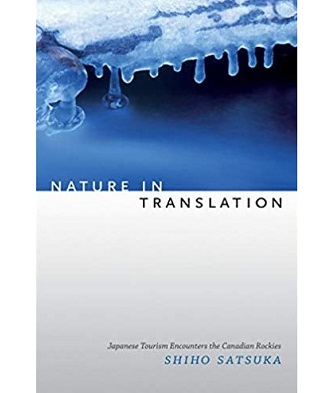
Shiho Satsuka is an Associate Professor of Anthropology at the University of Toronto, Canada, specializing in sociocultural anthropology with regional expertise in East Asia and North America. Her research focuses on the politics of knowledge production , cultural translation of nature , and capitalism-environment relations . She is currently developing a book project titled The Charisma of Wild Mushrooms: Undoing the Long Twentieth Century , examining how mushroom science can destabilize industrial modernity. Ph.D. in Anthropology (University of California, Santa Cruz, 2004) Her ethnographic work spans: Transnational translation of ecological knowledge in Japanese tourism (book: Nature in Translation , Duke 2015) Satoyama forest revitalization movements Matsutake mushroom's role in reimagining interspecies coexistence Comparative studies of Canadian multiculturalism and Japanese coexistence models Publications demonstrate trends in: Multispecies entanglements Environmental knowledge pluralism Decolonizing scientific frameworks Ontological multiplicity in cultural analysis Anthropocene ethnography Collaborative research methodologies Awards and grants include: SSHRC Insight Grant (2016-2022) for Matsutake Worlds research Carson Fellowship (2012) at Rachel Carson Center She supervises graduate students in areas of environmental anthropology and science studies while maintaining a collaborative research network across Japan, North America, and Europe.
Lisa Heldke is a Professor in the Department of Philosophy at Gustavus Adolphus College and an affiliated faculty member in Gender, Women and Sexuality Studies. She has been a longstanding contributor to the academic community, teaching courses such as Modern Philosophy, American Philosophy, Feminist Philosophy, Critical Race Theory, and specialized seminars on food and eating. Her interdisciplinary work bridges philosophy with social justice, education, and culinary ethics. B.A. in Music and Philosophy from Gustavus Adolphus College M.A. and Ph.D. in Philosophy from Northwestern University Her research centers on American Philosophy , Feminist Philosophy , Critical Race Theory , and most notably, the Philosophy of Food . She critically examines food adventuring, colonialist attitudes in cuisine, and the ethical dimensions of eating. Her work explores how food shapes identity, community, and moral responsibility. Her recent and forthcoming publications reveal a deepening inquiry into biological interdependence—particularly parasitism and mutualism—suggesting a novel ontological framework rooted in eating relationships. This innovative direction reflects her ability to connect everyday practices with profound philosophical questions. Lisa Heldke’s scholarly contributions include influential books such as Exotic Appetites: Ruminations of a Food Adventurer and Philosophers at Table: On Food and Being Human , as well as co-editing Oppression, Privilege and Resistance . She is also on the editorial board of The Encyclopedia of Food and Agriculture Ethics (Springer). While specific details about student advising are not listed, her long-standing teaching career and mentorship through seminars suggest active engagement with students. She has no listed scientific awards in the provided texts, but her sustained publication record and editorial roles indicate significant recognition in her field. She is deeply involved in experiential learning, combining her philosophical inquiries with hands-on activities like baking bread in a backyard mud oven and studying sustainable agriculture. Her current research promises to expand the boundaries of philosophical thought by integrating ecological and biological realities into metaphysical and ethical frameworks.
Cynthia Marie Gordon, Ph.D., is a Professor in the Department of Linguistics at Georgetown University's College. Her academic focus centers on discourse analysis, intertextuality, and digital communication. She examines how meaning is constructed through language use in both online communities and family interactions, with particular attention to identity formation and cultural contexts. Research areas include digital food discourse, social media ideologies, and sociolinguistic frameworks. Publications emphasize methodological approaches to discourse analysis and the interplay between language and cultural practices. Her work bridges traditional linguistic theory with modern digital communication studies, exploring how technology mediates interpersonal and cultural expression. While no specific grants or awards are listed, her research demonstrates sustained engagement with contemporary communication challenges.
Aisha Khan is a Professor in the Department of History at New York University, affiliated with the College of Arts and Sciences. Her research focuses on intersections of race, religion, and colonialism in the Atlantic world, particularly examining Asian and African diasporas in the Americas, indenture systems, and the carceral state. She holds a PhD in Anthropology from CUNY Graduate School, with earlier degrees from San Francisco State University. Education: PhD, Anthropology, City University of New York Graduate School M.A. Anthropology, San Francisco State University B.A. Anthropology, San Francisco State University Research interests span Atlantic studies, racial capitalism, and the prison industrial complex. Recent work emphasizes carceral state dynamics and ritual practices in diaspora communities. Her 2022 Annual Review of Anthropology article analyzes mass incarceration frameworks, while her 2021 Harvard book explores obeah rituals' racial dimensions. Publications demonstrate thematic coherence around three axes: 1) carceral systems' sociopolitical impacts, 2) religious practices as identity markers in diaspora communities, and 3) colonial legacies in labor systems. Subfields include Caribbean Islam studies, postcolonial ethnography, and transnational race theory. Awards include the Dr. Martin Luther King Jr. Faculty Award and NEH fellowships. Grants include NYU Center for the Humanities awards supporting research on diaspora studies. She leads NYU's Prison Education Program and collaborates with the Hagop Kevorkian Center for Near Eastern Studies. Active in academic service, she chairs panels on abolitionist studies and delivers keynote addresses globally on topics like 'Islam in the Caribbean.' Her work bridges historical analysis with contemporary social justice concerns through interdisciplinary anthropological frameworks.