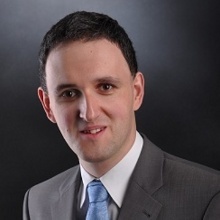
Christof Paar is a Professor of Embedded Security at Ruhr University Bochum's Faculty of Computer Science. His work focuses on hardware security, cryptography, and embedded systems security. He leads the Embedded Security Group within the CASE Cluster of Excellence (Cyber Security in the Age of Large-Scale Attacks), addressing cutting-edge challenges in hardware Trojans, side-channel attacks, and cryptographic engineering. His research spans FPGA and IoT security, with contributions to physical-layer security, wireless jamming defenses, and tamper-resistant systems. Research Interests: Paar's expertise lies in hardware-software co-design for security, with a focus on embedded systems. His work includes analyzing vulnerabilities in FPGAs, developing countermeasures against side-channel attacks, and exploring physical-layer security mechanisms. He also investigates the human factors in hardware reverse engineering and the implications of adversarial machine learning on security systems. Notable Work: Recent publications highlight breakthroughs in detecting hardware Trojans across CMOS generations, breaking industry-standard IP protection mechanisms (IEEE 1735), and proposing novel defenses like IRShield against adversarial wireless sensing. His group actively contributes to standards for secure embedded systems and IoT devices, emphasizing practical implementations.
Prof. Bryan Ford leads the Decentralized/Distributed Systems (DEDIS) lab at EPFL. He focuses on secure decentralized systems, including blockchain technology, privacy, and systems security. He earned his Ph.D. from MIT and held faculty positions at Yale University and EPFL. His work spans distributed consensus protocols, peer-to-peer networking, and privacy-preserving systems. Key projects include QuePaxa (timeout-free consensus), UIA (global connectivity for mobile devices), and MedCo (secure healthcare data sharing). He advises numerous PhD students and contributes to open-source projects like Bitcoin collective signing and privacy networks like Riffle. Education: Ph.D., MIT; Postdoctoral work at Yale Research interests include blockchain scalability, consensus algorithms, and cryptographic privacy. His lab develops systems like TRIP for coercion-resistant voting and F3B to mitigate blockchain front-running. His work on NAT traversal and peer-to-peer protocols (e.g., STUN/ICE) remains foundational in network architecture. He emphasizes practical, auditable security solutions such as CertiKOS and atomic cross-chain transactions (Atom). Notable contributions: CoSi (collective signing), OmniLedger (sharded blockchain), and privacy-preserving protocols like PURBs (Protected Unsealable Recursive Boxes). His lab collaborates with Swiss Post to audit e-voting systems and designs democratic cryptocurrencies like PoPCoin.
Vijay Laxmi is a Professor in the Department of Computer Science and Engineering at Malaviya National Institute of Technology (MNIT) Jaipur, India. With over a decade of active research publication from 2014-2024, Dr. Laxmi has established themselves as a prominent researcher in network security, Android security systems, and Network-on-Chip architectures. Their work demonstrates consistent collaboration with Manoj Singh Gaur and numerous doctoral students at MNIT Jaipur. Dr. Laxmi's research interests span Network Security, Android Security, Malware Analysis, Network-on-Chip Architectures, Routing Protocols, Side-Channel Attacks, Wireless Networks, and Mobile Security. Their work bridges theoretical security frameworks with practical implementations, particularly in mobile and embedded systems. Recent publications indicate a growing focus on AI-based security approaches including GAN applications for fuzzing and deep learning for image dehazing. The research trajectory shows increasing sophistication in security analysis techniques, evolving from basic malware detection to advanced side-channel attack analysis and sophisticated network security protocols. Recent publications demonstrate expertise in both theoretical frameworks and practical implementations with applications in real-world security challenges. Dr. Laxmi has mentored numerous graduate students including Vineeta Jain, Anugrah Jain, Sonal Yadav, Mohit Singh, and Gaurav Singal, who appear as co-authors across multiple publications. Their collaborative network extends to researchers at international institutions, indicating strong academic connections beyond their home institution.
Krishna Gummadi is a Scientific Director and Professor at the Max Planck Institute for Software Systems (MPI-SWS) in Germany, where he leads the Networked Systems Research Group. He also holds a professorship at the University of Saarland, demonstrating his dual commitment to research and academic instruction in computer science. His educational background includes: Ph.D. in Computer Science and Engineering from the University of Washington (2005) B.Tech. in Computer Science and Engineering from the Indian Institute of Technology, Madras (2000) Gummadi's research spans networked and distributed computer systems with a current focus on social computing systems. His work addresses critical challenges in algorithmic fairness, privacy in social media, trustworthiness of online identities, and information dissemination in social networks. He approaches these problems through interdisciplinary methods combining user-centric studies, data-centric analysis, and systems-centric design to create practical solutions that enhance fairness, transparency, and user control in online platforms. His methodology integrates large-scale observational studies, computational modeling, and system implementation to tackle complex human-computer interaction challenges at societal scale. His recent publications reveal a strong emphasis on fairness in algorithmic decision making, with significant contributions to quantifying and addressing discrimination in machine learning systems. His work bridges computer science, social science, and ethics, creating frameworks for fair classification, understanding media bias, and developing privacy-preserving techniques that maintain functionality while protecting user data. The research demonstrates a progression from technical system design to addressing societal implications of computing systems. Among his notable scientific achievements: ERC Advanced Grant in 2017 for 'Foundations for Fair Social Computing' Test of Time Awards at ACM SIGCOMM and AAAI ICWSM Casper Bowden Privacy Enhancing Technologies (PET) and CNIL-INRIA Privacy Runners-Up Awards IW3C2 WWW Best Paper Honorable Mention Multiple Best Paper awards across prestigious conferences Gummadi has advised numerous PhD students and postdoctoral researchers who have gone on to prominent positions in academia and industry. His ERC Advanced Grant has supported extensive research into fair social computing, while his leadership in major conferences (including serving as General Chair for ICWSM 2016 and Program Chair for WWW 2015) has shaped research directions in the field. His teaching portfolio includes courses on Distributed Systems, Human-Centered Machine Learning, and Social Media Analysis. He leads the Networked Systems Research Group at MPI-SWS, which has developed several publicly available systems including tools for fair classification, privacy risk assessment, trust evaluation in social media, and information diet management. The group's work bridges theoretical advances with practical implementations that address real-world challenges in social computing, with numerous software releases and datasets made available to the research community.
Dr. Janis Nötzel is a senior researcher at the Chair of Theoretical Information Technology (Technische Universität München) and leads his independent Emmy Noether research group. Previously, he held a postdoctoral position at Universitat Autónoma de Barcelona and contributed to 5G practical implementations at TU Dresden's 5G Lab. His research spans quantum information theory, physical layer security, and machine learning applications. Key focuses include Quantum channel capacities under adversarial conditions Entanglement-assisted communication Quantum software frameworks (QuNetSim, QuReed) Interplay between classical and quantum communication Security analysis for 6G networks Resource optimization in quantum systems Recent publications (2023-2025) showcase innovations in Quantum satellite communication architectures Hybrid quantum-classical clustering algorithms Photonic processor instability modeling Covert capacity of compound channels Quantum key distribution resilience Free-space Bessel beam communication He actively collaborates with 6G-life research hub and contributes to quantum network simulation tools. Grants include funding from DFG (Leibniz Program), BMBF (6G-life, Q.Link.X), and StMWi (6G Zukunftslabor Bayern).
Prof. Dr. Matthias Weidlich is a faculty member at Humboldt University of Berlin within the Institute of Computer Science under the Faculty of Mathematics and Natural Sciences . His research focuses on Process Mining , Complex Event Processing , and Data Privacy with applications in Business Process Management and Scientific Workflows . Research Interests: Business Process Management and Process Mining Complex Event Processing and Stream Data Analysis Data Privacy and Security in Process Systems Scientific Workflow Systems and User Behavior Heterogeneous Network Embeddings Algorithm Design and Optimization Recent Publications (2023-2025) demonstrate expertise in: Efficient stream processing techniques Privacy-preserving process mining frameworks Scientific workflow analysis tools Graph neural network applications Multi-modal data integration Adaptive querying systems Contact: Office: Unter den Linden 6, 10099 Berlin Phone: 030 2093-41277 Email: matthias.weidlich@hu-berlin.de Web: hu.berlin/data
Prof. Ilia Polian serves as Head of the Institute of Computer Engineering and Chair of the Hardware-Oriented Computer Science (HOCOS) department at the University of Stuttgart. His leadership spans research, teaching, and institutional coordination across multiple high-impact projects. Prof. Polian's research focuses on developing circuit and system architectures based on both traditional and novel principles, including neuromorphic, stochastic, and approximate architectures. His second major research focus is systematic design methodology and design automation, with particular emphasis on safety and reliability properties of developed systems. Current research directions include quantum computing engineering, secure mixed-signal neural networks, and resource-efficient stochastic circuits for near-sensor computing applications. His recent publications demonstrate strong trends in quantum computing (particularly circuit partitioning and compilation for multi-QPU architectures), hardware security (including memristive cryptographic implementations), and AI-driven approaches to hardware testing and reliability. These works bridge fundamental computer architecture research with practical industrial applications. University of Stuttgart's Publication Prize for Paper on Partitioning of Quantum Circuits Prof. Polian actively supervises doctoral students including Devanshi Upadhyaya, and leads significant research grants such as the DFG Priority Program Nano Security which he coordinates. His department offers numerous thesis and research opportunities for students interested in cutting-edge hardware research. The Hardware-Oriented Computer Science department maintains strong collaborations with industry partners including IBM, Infineon Technologies, and Advantest, as well as academic institutions through the IQST Graduate School and QuantumBW initiatives.
Prof. Tim Güneysu is a full Professor and Head of the Security Engineering department at the Faculty of Computer Science, Ruhr-Universität Bochum. He serves as Vice Dean for Strategy and Finances (since 2023) and previously as Speaker of the Horst-Görtz Institute for IT-Security (2020-2023). His academic journey includes roles as Associate Professor at the University of Bremen (2015-2017) and Assistant Professor at Ruhr-Universität Bochum (2011-2015). He also holds positions at the German Research Center for Artificial Intelligence (DFKI) and has conducted postdoctoral research at UMass Amherst. His research focuses on Security-by-Design principles, CAD for Security, and countermeasures against physical attacks. He emphasizes efficient cryptographic implementations and system-level hardware security. Key areas include post-quantum cryptography, side-channel resistant designs, and secure embedded systems. He has contributed over 200 publications in top venues, with recent work on FPGA-based cryptographic accelerators, secure hardware extensions (e.g., KeyVisor), and post-quantum algorithms for IoT. His research themes include agile signature acceleration, fault attack mitigation, and hardware-software co-design for security. Notable projects include CONVOLVE (edge-AI security) and QuantumRISC (quantum-safe systems). His work bridges theoretical cryptography with practical hardware implementations, emphasizing real-world security applications.
Prof. Dr. Jörg Schwenk is a Professor and Chair of Network and Data Security at Ruhr-University Bochum's Faculty of Computer Science. He has held this position since 2003 and serves as Deputy Managing Director of the university's Computer Center. From 2007 to 2010, he was Managing Director of the Horst Görtz Institute for IT Security. His office is located at Universitätsstr. 150, 44801 Bochum (Room MC 4/110), with contact via email at joerg.schwenk@rub.de. His research focuses extensively on practical aspects of information security, particularly in: Cryptographic protocol analysis (TLS, SSH, Noise Protocol) Web and browser security vulnerabilities (XS-Leaks, DOM security) Document security flaws in PDF, OOXML, and OpenDocument formats Email encryption weaknesses and authentication mechanisms Network security implementations and powerline communications Recent publications demonstrate a strong emphasis on discovering and mitigating critical vulnerabilities in widely used protocols and file formats. His work frequently involves developing automated analysis tools (e.g., TLS-Anvil, XSinator) and reveals systemic security issues in standards implementations. Research outputs consistently target top-tier security venues (USENIX Security, CCS, NDSS) with findings that directly impact real-world systems. Schwenk leads a research group at the Horst Görtz Institute focusing on network and data security. The group maintains an active publication record in applied cryptography and systems security, frequently collaborating with industry partners to address emergent threats. His team's work on TLS vulnerabilities (ALPACA, Raccoon attacks) and document security (PDF/OOXML signature flaws) has significantly influenced protocol designs and standardization efforts.
Andrew Ho is an active academic researcher with publications spanning computer science, electrical engineering, and interdisciplinary applications. His recent work focuses on hybridizable discontinuous Galerkin methods for plasma simulations (2024) and AI/LLM applications in scholarly knowledge organization. 2025: Project Alexandria (LLM for copyright-free knowledge) 2024: Hybridizable DG plasma methods, GPU-accelerated kinetic simulations 2023: Low-resource translation techniques 2022: Multimodal VR interfaces 2003-2006: High-speed serial link transceivers and radiography artifact detection His research interests include: Computer science applications in plasma physics and medical imaging LLM-based scholarly knowledge graphs and literature reviews High-speed communication systems Educational technology implementations Co-authors include Vladimir Stojanovic (Stanford, 2003-2005), Carl W. Werner (2003-2005), and Genia Vogman (GPU plasma simulations, 2024).
Peter Schwabe is a scientific director at the Max Planck Institute for Security and Privacy and holds academic positions as a part-time professor for cryptographic engineering in the Digital Security Group at Radboud University, Faculty of Science, and as an adjunct professor in the Faculty of Computer Science at Ruhr University Bochum. His career spans multiple prestigious institutions including Academia Sinica and National Taiwan University. Dr. Schwabe's research focuses on cryptography, particularly post-quantum cryptography, cryptographic engineering, and implementation security. His work addresses critical challenges in secure cryptographic implementations, side-channel resistance, and the transition to quantum-resistant algorithms. He has made significant contributions to NIST's post-quantum cryptography standardization project, particularly with CRYSTALS-Kyber which was selected for standardization in July 2022. His publication record shows a strong emphasis on practical implementations of cryptographic algorithms, formal verification of security properties, and addressing real-world security challenges. Recent work centers on verifying Kyber implementations, protecting against Spectre variants, and developing high-assurance cryptographic software. Dr. Schwabe has received significant recognition in the field, serving as an elected member of the IACR Board of Directors and participating in various steering committees including the IACR CHES and RWC Steering Committees. He also serves on advisory boards for several security-focused companies. As an advisor, he has supervised numerous PhD students working on cutting-edge cryptographic research, with recent graduates focusing on post-quantum cryptography, side-channel resistance, and formal verification of cryptographic implementations. His research group actively contributes to both theoretical advances and practical implementations in cryptography.
Dr. Rachel Player is a Senior Lecturer in the Department of Information Security at Royal Holloway, University of London . Her research focuses on post-quantum cryptography, lattice-based cryptographic schemes, homomorphic encryption, and quantum algorithm applications in cryptanalysis. She holds a PhD in Information Security from Royal Holloway, supervised by Prof. Carlos Cid and Prof. Sean Murphy. Education: PhD in Information Security, Royal Holloway, University of London (supervisors: Prof. Cid & Prof. Murphy) Research Interests: Rachel explores cutting-edge areas in cryptography with a focus on privacy-preserving technologies. Her work bridges theoretical advancements and practical implementations, particularly in homomorphic encryption and post-quantum security protocols. Recent efforts emphasize applying quantum algorithms to cryptanalytic challenges. Professional Activities: Rachel actively contributes to standards development in cryptography, including organizing HomomorphicEncryption.org meetings and participating in ISO/IEC JTC 1/SC 27/WG 2 (cybersecurity standards). She also serves as an editor for the Designs, Codes and Cryptography journal. Labs/Teams: Collaborations include the PolSys team at Sorbonne Université (Paris) and the EU H2020 PROMETHEUS project. Current research is anchored in Royal Holloway's Information Security Department.
Mario Berta is a Professor of Physics at RWTH Aachen University’s Institute for Quantum Information, with an honorary Visiting Reader position at Imperial College London’s Department of Computing. His research focuses on mathematical aspects of quantum information science, including quantum communication theory, cryptography, and algorithms. He leads a group funded by the ERC Starting Grant QEntropy, exploring entropy’s role in quantum information. He actively recruits PhD/postdoc researchers and organizes workshops like the Mathematics of Quantum Information conference at RWTH Aachen and Beyond IID 13 in Munich. Education: PhD in Theoretical Physics from ETH Zurich. Prior roles include Senior Research Scientist at Amazon Web Services’ quantum computing division and Postdoctoral Researcher at Caltech’s IQIM. He has pioneered quantum Gibbs sampling algorithms for the Fermi-Hubbard model and contributed to quantum error correction and complexity theory. His work bridges theoretical foundations with practical implementations, emphasizing resource analysis and algorithm optimization. Research interests span quantum algorithms’ computational complexity, entanglement theory, and information-theoretic security. He explores topics like quantum channel coding, hypothesis testing, and distributed quantum protocols under communication constraints. His group’s activities include organizing international workshops and collaborations with institutions like ML4Q and EPSRC. Funding sources include the European Research Council, RWTH’s Exploratory Research Space, and the EPSRC. He advocates for open-access science, as seen in his German-language article Algorithmen für neue Hardware . His work aims to advance quantum technologies through rigorous mathematical frameworks and experimental feasibility analysis.
Stefan Wildermann is a Professor at Friedrich-Alexander-Universität Erlangen-Nürnberg (FAU), where he leads the Reconfigurable Computing Group within the Chair of Computer Science 12 (Hardware-Software Co-Design) in the Department of Computer Science. He has maintained continuous research activity at FAU since 2006, progressing from researcher to his current leadership position. Dr. Wildermann earned his Diploma degree in Computer Science from FAU in 2006 and completed his doctorate (Dr.-Ing.) in Computer Science at the same institution in July 2012. His academic career has been entirely rooted at FAU, demonstrating a strong institutional commitment and progression through the ranks. His research spans multiple cutting-edge areas in computer science and engineering, with particular emphasis on reconfigurable systems and hardware-software co-design. Wildermann's work in edge computing explores efficient processing at the network periphery, while his research in organic computing investigates self-organizing systems that can adapt to changing environments. His expertise extends to optimization techniques for embedded systems, applying game theory principles and convex optimization methods to solve complex resource allocation problems. More recently, he has integrated reinforcement learning approaches to enhance system adaptability and performance. His teaching portfolio includes courses on event-driven systems, computer engineering fundamentals, embedded systems, and hardware-software co-design. Analysis of Wildermann's publication record from 2021-2025 reveals a strong focus on hardware acceleration, security, and embedded systems. His work demonstrates consistent evolution from foundational research in reconfigurable architectures toward practical applications in IoT, robotics, and secure computing. A significant portion of his recent work addresses near-data processing using FPGAs for database acceleration, while maintaining parallel research streams in side-channel security analysis and energy-efficient embedded systems design. His publications frequently appear in top-tier conferences including DATE, FPL, ASP-DAC, and HOST, reflecting strong recognition within the computer architecture and embedded systems communities. Wildermann has held significant leadership roles including Head of the Reconfigurable Computing Group since 2015 and previously served as Head of the Self-organizing Systems Group (2012-2015) and Lab Leader of the Automotive Lab within the Embedded Systems Initiative (2016-2020). His research has been consistently funded through multiple projects investigating invasive computing, reconfigurable architectures, and embedded systems design methodologies. Currently based in Room 02.116 at Cauerstr. 11, 91058 Erlangen, Wildermann continues to lead active research in the Hardware-Software Co-Design group, supervising projects that bridge theoretical computer science with practical hardware implementation challenges.
Prof. Dr. rer. nat. Rainer Leupers is a faculty member at RWTH Aachen University, chairing the Department of Software for Systems on Silicon. His research focuses on embedded systems, hardware-software co-design, virtual prototyping, and security in computing-in-memory architectures. He has published extensively on RRAM accelerators, logic locking, and neuromorphic security. Chair of Software for Systems on Silicon Research in hardware security and deep learning accelerators Recent publications on cross-tool virtual frameworks and thermal side-channel attacks His work bridges system-level modeling with practical security implementations, emphasizing reliability and performance in heterogeneous computing environments. Key trends in his 2025-2023 articles include compute-in-memory optimization, neural network inference efficiency, and security vulnerabilities in emerging hardware. Awards and formal recognitions are not explicitly detailed in the provided materials. He has not directly mentioned advising students or research grants in the given text fragments. The chair's contact information includes an office at ICT Cube 1, Electrical Engineering, Aachen, with direct email and website links.