CHAN Wei Xuan Timothy is a Sheridan Fellow at the Faculty of Law, National University of Singapore. He holds an LLM from Harvard Law School and an LLB (Hons) from NUS, and is currently pursuing a doctorate at Harvard focusing on property theory and private law theory. His research bridges traditional legal doctrines with emerging technologies, particularly in cryptoassets, blockchain, and digital property rights. Before joining academia, he practiced commercial litigation with a focus on banking disputes and joint venture conflicts. His work has been published in leading journals such as the Modern Law Review and Legal Studies , and cited by the UK Law Commission. Timothy teaches Equity & Trusts at NUS and contributes to debates on technology law, fiduciary duties, and property theory. His recent publications analyze cryptoasset regulation, DeFi frameworks, and NFT legalities, reflecting his commitment to addressing contemporary legal challenges posed by digital innovation.
Dr. Christina Allen is a Senior Lecturer at Curtin Law School, part of the Faculty of Business and Law at Curtin University. She holds a PhD and Master’s in Taxation Law from the University of Western Australia and is a Fellow of the Advanced Higher Education. As the academic representative of the Taxation Centre of Excellence at CPA Australia, her work bridges tax law and interdisciplinary fields like technology and digital economy policy. Her research focuses on tax law drafting, fiscal policy, international taxation, and the implications of digital economies on tax systems. She has held visiting positions at institutions worldwide, including the University of Cape Town and Vienna University of Economics and Business. Allen is a recognized scholar in crypto taxation, corporate residence rules, and tax compliance strategies in the digital age. Major awards include the Prime Minister’s Australia Asia Endeavour Award (2013) and multiple Dean’s Colleague Awards for Research and Innovation. She has secured grants such as the 2024 EU Erasmus Project and the 2022 Curtin HASS Grant. Her teaching spans postgraduate courses in international taxation, GST, and superannuation law. Key contributions include analyzing tax challenges posed by decentralized finance (DeFi), crypto-to-crypto transactions, and the Subject-to-Tax Rule (STTR) in Nigeria. Her work emphasizes tax policy reforms in response to global digitalization and cross-border tax governance.
Eleonora Igorevna Leskina is an Associate Professor and Leading Researcher at the Faculty of Law, Department of Digital and Biolaw at the National Research University Higher School of Economics (HSE) in Moscow, where she has been employed since 2024. Previously, she served as an Associate Professor at Saratov State Law Academy in the Department of Information Law and Digital Technologies (2020-2024) and the Department of Labor Law (2017-2020). She holds a Candidate of Law degree from Saratov State Law Academy (2012) with a dissertation on "Axiological aspects in civil procedural law" and a Jurisprudence degree from Saratov State Academy of Law (2009). Dr. Leskina's research focuses on the intersection of law and emerging technologies, with particular expertise in Big Data regulation, artificial intelligence legal frameworks, personal data protection, blockchain applications, and digital labor relations. Her work addresses critical challenges in data governance, including synthetic data usage, sustainable data turnover, and the legal implications of metaverse environments. She has made significant contributions to understanding the legal regimes of data in various contexts, from healthcare to environmental protection. Her scholarly output demonstrates a consistent focus on contemporary digital law challenges, with numerous publications in leading Russian legal journals and edited volumes. Recent work examines the legal support for synthetic data in AI development, characteristics of Big Data legal regimes, and sustainable data turnover frameworks. Her research shows a clear trajectory toward addressing the most pressing regulatory questions emerging from technological advancement, particularly in the Russian legal context. Gratitude from the Ministry of Justice of the Russian Federation (2023) for effective assistance in solving tasks assigned to the Ministry of Justice, contribution to legal science and education, and training of highly qualified legal personnel Dr. Leskina actively participates in national and international academic discourse, regularly presenting at major conferences including the International Scientific and Practical Conference "Legal Regulation in the Era of Artificial Intelligence" in Samarkand (2025), where she presented on synthetic data for AI development. She has also participated in the Moscow Innovative Legal Forum, conferences at Lomonosov Moscow State University, and the State Duma roundtable on court fees. Her work bridges academic research with practical policy development in the rapidly evolving field of digital law.
Omry Ross is an Associate Professor at the Department of Computer Science, University of Copenhagen. His research focuses on Programming Languages and Theory of Computation, with significant contributions to decentralized finance (DeFi), blockchain technology, and algorithmic governance. Research Interests: Decentralized Finance (DeFi) and Smart Contract Systems Blockchain Protocol Design and Cryptoeconomics Programming Language Theory and Formal Verification Token Governance in Decentralized Autonomous Organizations (DAOs) Algorithmic Game Theory and Market Mechanisms Recent publications highlight his work in AI moderation of online communities, compliance reporting in DLT systems, and MEV optimization in multi-block scenarios. His research bridges theoretical computer science with practical applications in financial cryptography. Scientific Awards: Nasdaq Nordic Foundation Grant (2021) Omry Ross collaborates extensively with researchers in blockchain and DeFi, including contributions to the Financial Cryptography and Data Security workshops.
Prof. Dr. Matthias Lehmann is a tenured Professor and Chair for Private Law, International Private Law, and Comparative Law at the University of Vienna (Austria), leading the Department for European, International and Comparative Law. He concurrently holds positions as Professor for European and Comparative Business Law at Radboud University (Netherlands) and Guest Professor at Sorbonne Université (France). His academic journey includes tenures at Martin-Luther-Universität Halle-Wittenberg (Germany), University of Bonn, and visiting roles at Stanford University and Oxford University. Lehmann's education includes a D.E.A. from Université Panthéon-Assas (Paris II), a Doctor iuris from Friedrich-Schiller-University Jena (summa cum laude), an LL.M. from Columbia University (Harlan Fiske Stone Scholar), and a J.S.D. from Columbia University. His research focuses on cross-border financial law, comparative business law, and international dispute resolution mechanisms, with recent emphasis on blockchain and digital asset regulation. He has received prestigious awards including the German Research Foundation grant and Feodor Lynen Scholarship. His academic leadership includes roles as Department Director at the University of Bonn and membership in key institutions like the European Law Institute (ELI) and European Banking Institute (EBI).
Adam J. Levitin is a Professor at Georgetown University Law Center, where he specializes in bankruptcy law, financial regulation, consumer protection, securitization, and housing policy. His scholarly work has significantly influenced debates on mortgage markets, cryptocurrency regulation, and the structure of financial systems. He is a prolific author with over 80 scholarly papers and extensive citations in legal and economic literature. Georgetown University Law Center – Professor, Faculty Member His research interests span Bankruptcy Law , Financial Regulation , Consumer Law , Securitization , and Cryptocurrency . He has published extensively on topics such as the housing bubble, payment systems, digital wallets, and the role of clearinghouses in derivatives markets. His work often combines legal analysis with economic modeling, contributing to both doctrinal and empirical legal scholarship. The 15 most recent articles reflect a consistent focus on systemic financial risks, regulatory gaps in emerging technologies, and the intersection of law and economics in financial markets. Key trends include critiques of bankruptcy venue manipulation, analysis of custodial risks in cryptocurrency, and evaluations of consumer contract enforcement. His scholarship frequently appears in top-tier law reviews such as the Texas Law Review , Georgetown Law Journal , and Yale Journal on Regulation . Levitin has not been explicitly mentioned as receiving formal scientific awards in the provided texts, but his high citation count and SSRN rankings indicate significant scholarly impact. He has collaborated with prominent legal scholars such as Susan M. Wachter, William W. Bratton, and Tara Twomey. While no formal advising relationships or grants are detailed in the text, his role as a leading academic in financial law suggests active mentorship and research leadership. His affiliation with Georgetown Law Center includes contributions to public policy debates, particularly through testimony and regulatory commentary. Levitin is actively engaged in shaping modern financial regulation, with recent work addressing digital currencies, municipal insolvency, and the integrity of consumer contracts. His scholarship continues to influence both academic discourse and regulatory practice in the United States.
Gerry Tsoukalas is an Associate Professor in the Information Systems Department at Boston University's Questrom School of Business . He is also a Visiting Professor at IMD Switzerland , Senior Fellow at the Wharton School , and Research Fellow at Cornell University's FinTech Initiative . PhD, Stanford University (2013) His research focuses on digital platforms , blockchain economics , and AI/ML applications in operations and finance. He co-founded the Crypto and Blockchain Economics Research Forum (CBER) , exploring topics like decentralized governance, tokenomics, and supply chain innovation. Recent publications examine blockchain scalability , privacy-preserving analytics , and tokenized financial systems . Awards include Dean’s Research Scholar and recognition by Thinkers50 Radar 2025 . He teaches business analytics at executive, graduate, and undergraduate levels . Affiliated with labs/teams: CBER Forum , Luohan Academy , and Harvard Business School research collaborations.
Dr. Alexandros Seretakis is an Assistant Professor of Law at Trinity College Dublin's School of Law, specializing in financial regulation, fintech, and alternative investment funds. He holds a law degree from Aristotle University of Thessaloniki, an LL.M. in Banking and Finance from University College London, and an LL.M. in Corporation Law from New York University. He is a qualified lawyer in Greece and New York, with prior roles including consultant for a US investment firm and expert at the European Court of Auditors. His research focuses on digital finance regulation, blockchain, central bank digital currencies, and corporate governance. He contributes to global media like the Financial Times and advises on EU financial policies. Seretakis co-founded Trinity's interdisciplinary MSc in Law and Finance program and serves on bodies like Blockchain Ireland Legal Working Group and the Digital Euro Association. Education: LL.B., Aristotle University of Thessaloniki LL.M., Banking & Finance Law, University College London LL.M., Corporation Law, New York University PhD, University of Luxembourg Awards: 2023: Fellowship of Trinity College Dublin 2021: Master in Arts (jure officii), University of Dublin 2010-11: NYU Dean's Merit Scholarship Professional Roles: Adjunct Lecturer, University of Luxembourg and Institute of Bankers Ireland Expert, European Court of Auditors Member, Digital Euro Association His research explores fintech innovation, CBDCs, and regulatory harmonization in EU financial markets. Recent work addresses gaps in digital financial regulation and the evolving role of blockchain in securities markets. He advises on emerging technologies' legal frameworks and corporate governance reforms. Active in academic leadership, he directs Trinity's MSc in Law and Finance and supervises PhD candidates researching investment fund regulation and fintech. His work bridges legal scholarship with practical policy solutions for evolving financial ecosystems.
Lee A Reiners is a Lecturer at the Department of Economics (Trinity College of Arts & Sciences) at Duke University, with concurrent affiliations at Duke Law. He directs the Climate Risk Disclosure Lab and co-organizes the annual Digital Assets at Duke conference. His expertise spans financial regulation, cryptocurrency policy, climate-related financial risks, and cybersecurity frameworks. Education: M.P.P. from Duke University (2011), BSc in Business Economics (summa cum laude) from University of St. Thomas Professional Background: 5 years at Federal Reserve Bank of New York, former faculty at Saint Peter’s University, Iraq War veteran Grants: NSF-funded IUCRC Planning Grant (2024-2025), Environmental Defense Fund grant on international climate finance (2021-2022) Reiners’ research focuses on integrating emerging financial technologies and climate change considerations into regulatory frameworks. His recent publications analyze stablecoin policy, crypto legislative challenges, and SEC disclosure rules. He has testified before U.S. Congress on cryptocurrency regulation and contributes to media outlets including The Wall Street Journal and The New York Times . As an active participant in regulatory discourse, Reiners has appeared on Marketplace for stablecoin legislation discussions and presented at institutions like Brookings and GW Regulatory Studies Center. He serves on the CFA Institute’s Capital Markets Policy Council and contributes to interdisciplinary projects such as American Predatory Lending .
Dr. Zakwan Jaroucheh is a Lecturer at the School of Computing Engineering and the Built Environment , Edinburgh Napier University (ENU). With a PhD in Context-Aware Pervasive Computing from ENU (2012), he combines academic expertise with over seven years of industry experience as a Principal Security Engineer at Dell SecureWorks. Research focuses: Blockchain Technologies , Cybersecurity , Internet of Things , and Decentralized Systems Supervises PhD students in areas like DeFi compositions, blockchain authentication, and secure microservices Secured £485,000 in grants from The Data Lab, Scottish Enterprise, and CyberASAP Developed LastingAsset - a blockchain-based solution for combating phone call fraud His publications in IEEE , Personal and Ubiquitous Computing , and Springer address key challenges in decentralized authentication , privacy-preserving mechanisms , and blockchain security . Current work explores blockchain's transformative potential in value exchange and information sharing.
Narmin Nahidi is a researcher at the University of Exeter's Department of Accounting and Finance , with recent publications in Corporate Finance , Digital Rights Management , and Mergers & Acquisitions . Active in Financial Technology and Blockchain Governance , her work bridges Information Asymmetry with Corporate Governance . Research Trends across 11 papers from 2022-2025 show expertise in DRM's dual role in M&A due diligence Media coverage effects on takeover deals Tokenized asset portfolios for sovereign wealth FinTech investment dynamics post-Brexit Blockchain governance challenges .
Professor Urs Lendermann is a distinguished legal scholar specializing in European Banking and Commercial Law at the Deutsche Bundesbank University of Applied Sciences since 2014. He also serves as Head of the Module "Financial, Regulatory and Legal Environment" for the Diploma of Advanced Studies in Banking at the University of Zurich. Previously, he worked as a Senior Specialist at the Swiss Financial Market Supervisory Authority (FINMA) from 2010-2013, focusing on solvency and capital requirements for banks. Doctorate in Law (PhD) from the University of Zurich (2012) Second State Examination in Law (Bar Exam) at the Higher Regional Court in Coblenz (2006) First State Examination in Law at the Higher Regional Court in Cologne (2004) Law Studies at the Universities of Münster, Lausanne and Cologne Trained as a Bank Clerk, First rank in 1999, Honors from the Chambers of Industry and Commerce in North Rhine-Westphalia Professor Lendermann's research focuses on critical challenges in financial regulation, particularly the "too-big-to-fail" problem in the financial sector, regulating systemically important banks, bank insolvency legislation, recovery and resolution planning, hybrid capital instruments, and the legitimacy of "soft law" used by international standard setters. His work bridges theoretical legal analysis with practical regulatory implementation challenges. His extensive publication record reveals a consistent focus on banking regulation evolution, with recent emphasis shifting toward emerging challenges including sustainable finance (evidenced by his 2023 work on "greenium" in German green securities), digital finance regulation, and the theoretical underpinnings of bank resolution mechanisms. His 2025 article "Automated bail-in: eliminating regulatory restraints" represents the cutting edge of his current research on improving bank resolution frameworks. As a scientific advisor to the International Association of Deposit Insurers (IADI) and the European Parliament, Professor Lendermann actively contributes to shaping international financial regulatory frameworks. He regularly lectures at prestigious institutions including the University of Zurich, Frankfurt School of Finance, and various central bank training programs worldwide, demonstrating his influence across academic, regulatory, and practitioner communities. His professional activities extend to significant editorial contributions, including co-editing the Commentary on the German Investment Firms Act (WpIG) and contributing to major commentaries on the German Banking Act (KWG) and Capital Requirements Regulation (CRR). These works represent authoritative references in German financial regulatory practice.
Viktor Manahov is a Reader in Finance at the University of York, specializing in FinTech, cryptocurrency markets, and machine learning applications in finance. His research examines high-frequency trading, market efficiency, and the economic impacts of cybersecurity events in digital asset markets. Recent publications investigate relationships between cryptocurrency prices and market sentiment, particularly following major security breaches. His work combines empirical analysis with computational methods to model market behaviors. Manahov teaches courses on FinTech and Advanced Investment Management, supervising PhD students researching cryptocurrency markets and algorithmic trading strategies.
Asst. Prof. Dr. Pınar Çağlayan Aksoy is an Assistant Professor in the Civil Law Department at Bilkent University, currently on sabbatical leave. Her research focuses on cutting-edge legal challenges posed by emerging technologies, particularly in AI, blockchain, and digital finance. She holds a prominent position in academic and policy discussions around data privacy, smart contracts, and regulatory frameworks for cryptocurrencies and NFTs. Her research interests span AI’s implications for financial regulation, blockchain applications in supply chains and commerce, and the legal treatment of digital assets. She has also contributed to comparative analyses of property and intellectual property laws in civil vs. common law jurisdictions. Recent work highlights trends in global regulatory approaches to smart contracts, NFT copyright issues, and the intersection of AI with consumer protection. Her scholarship emphasizes balancing innovation with legal safeguards in rapidly evolving digital ecosystems. No scientific awards are explicitly listed in the provided materials. Her advising activities and grants are not detailed in the text. She contributes to Bilkent’s academic community through teaching and research in civil law modernization amid technological advancements.
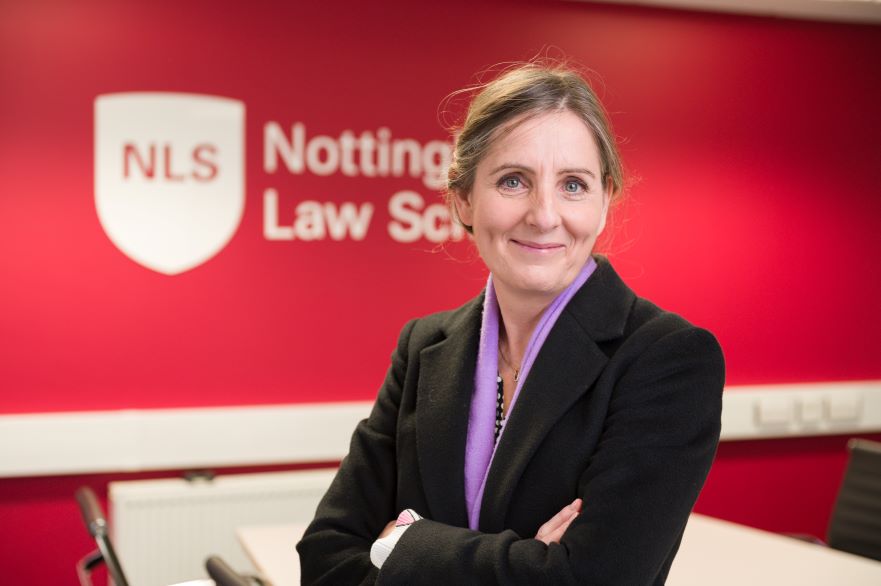
Professor Paula Moffatt is a leading academic in banking and insolvency law at Nottingham Law School , Nottingham Trent University. She serves as Director of External Engagement and contributes to postgraduate legal education as a Professor of Teaching and Practice . Her work focuses on bank insolvency, secured transactions, and digital asset regulation. University College London (Law Degree) Her research explores conflicts of laws in intermediated securities, EU financial regulation, and crypto-assets in insolvency contexts. She has presented at international conferences including INSOL International and the European Securities and Markets Authority. Recent publications address crypto-asset regulation in restructuring (2023–2025), bank recovery frameworks (2021–2015), and settlement finality. Key subfields include digital asset governance, cross-border insolvency coordination, and financial intermediary accountability. She holds a Senior Fellowship of the Higher Education Academy and contributes to legal scholarship through editorial roles (e.g., Lightman and Moss) and advisory positions with the City of London Law Society and CERIL. Her external engagements include designing training programs for the European Investment Bank.