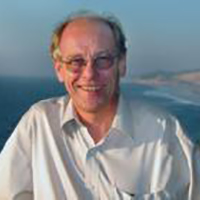
Steven Constable is a Professor of Geophysics at the Institute of Geophysics and Planetary Physics (IGPP) within the Scripps Institution of Oceanography at UC San Diego. He specializes in electrical conductivity studies of Earth’s crust and mantle, seafloor instrumentation development, and geophysical data analysis. His research focuses on understanding tectonic processes, subduction zone dynamics, and marine geohazards through electromagnetic methods. Education: B.S., University of Western Australia Ph.D., Australian National University Research Interests: Electrical conductivity of crust and mantle Seafloor instrumentation development Magnetotelluric and controlled-source electromagnetic (CSEM) methods Subduction zone fluid dynamics CO 2 sequestration monitoring Mid-ocean ridge magmatism Grants & Collaborations: NSF-NERC Collaborative Research: Magnetotelluric imaging of plume-ridge interactions (Galapagos) Magnetotelluric Investigation of the Salton Trough (MIST) Experiment PI-LAB Experiment at the Equatorial Mid-Atlantic Ridge Labs & Teams: He leads the Marine Electromagnetics Lab , developing cutting-edge instrumentation for marine geophysical surveys. His team collaborates globally on projects ranging from Arctic permafrost assessment to subduction zone imaging.
Professor Atilla Ansal is a distinguished academic in Civil Engineering at Özyeğin University's School of Engineering, where he has served as a full-time professor since March 2012 and previously as the Founding Chair of the Civil Engineering Department from 2012-2019. With an extensive career spanning over five decades, Professor Ansal has held prominent positions at Istanbul Technical University, Bogaziçi University's Kandilli Observatory and Earthquake Research Institute, and has served as a visiting professor at numerous international institutions including Northwestern University, University of California, and Tokyo University. Northwestern University, 1978 (Doctorate) Civil Engineering, Istanbul Technical University, 1969 (Master's) Civil Engineering, Istanbul Technical University, 1969 (Bachelor's) Professor Ansal's research focuses on Earthquake Geotechnical Engineering, Soil Dynamics, Seismic Hazard Analysis, Landslide hazard analysis, Seismic Microzonation, and Laboratory and In-Situ Testing of Soil Properties. His work has significantly advanced our understanding of soil behavior under seismic loading, site response analysis, and seismic microzonation methodologies. His research has direct applications in urban planning, earthquake risk mitigation, and performance-based seismic design. Professor Ansal has pioneered approaches to site-specific earthquake characterization and developed methodologies for seismic microzonation that have been implemented in numerous Turkish cities and adopted internationally. His extensive publication record demonstrates consistent contributions to earthquake engineering, with recent work focusing on probabilistic seismic microzonation, 2D basin effects, site-specific response analysis, and performance-based design approaches. His research shows a clear evolution from fundamental soil behavior studies to practical applications in urban risk assessment and mitigation. 7th Prof.N.Ambraseys Lecturer (2024), European Association for Earthquake Engineering 15th Nonveiller Lecturer (2017), Croatian Geotechnical Society Third Prof.Dr. Rıfat Yarar Lecturer (2015), Turkish Civil Engineers Association Third Ord.Prof.Dr. Hamdi Peynircioglu Lecturer (1988) Professor Ansal has advised 15 PhD students and 27 Master's students, shaping the next generation of earthquake engineers. His leadership extends to editorial roles as Editor-in-Chief of the Springer journal 'Bulletin of Earthquake Engineering' since 2002 and Editor-in-Chief for the Springer book series on 'Geotechnical, Geological and Earthquake Engineering'. He served as Secretary General (1994-2014), President (2014-2018), and Vice President (2018-2022) of the European Association for Earthquake Engineering, significantly influencing the field internationally. His work has been supported by numerous grants from Turkish government agencies, international organizations including UNESCO, and collaborative research projects across Europe. Professor Ansal has been instrumental in establishing geotechnical monitoring systems in Istanbul, including vertical arrays for site response analysis. His leadership in the 'Earthquake Master Plan for Istanbul' and 'Seismic Microzonation for Municipalities' projects has created critical infrastructure for earthquake risk management in Turkey's most populous city. His work with GeoIst, Geotechnical Earthquake Engineering and Consultancy Inc. has translated academic research into practical engineering solutions for seismic risk mitigation.
Professor Martin Van Kranendonk is the Head of School at the School of Earth and Planetary Sciences (EPS), part of Curtin University's Faculty of Science and Engineering. He holds a portfolio role in the Office of the Provost. His research focuses on early Earth history, astrobiology, and the geological processes that shaped microbial life. He leads investigations into ancient stromatolites, hydrothermal systems, and the environmental conditions conducive to life’s origins. Van Kranendonk’s work spans over four decades, with a strong emphasis on the Pilbara Craton and other Archaean-Proterozoic terrains. His studies integrate geochemistry, sedimentology, and geobiology to unravel the co-evolution of life and Earth’s systems. He collaborates globally, contributing to Mars sample return mission planning and astrobiological studies of extraterrestrial environments. Key research themes include: 1) Early Earth geochemical and tectonic evolution; 2) Microbial biosignatures in ancient rocks; 3) Hydrothermal systems as life’s incubators; and 4) Planetary habitability. His publications emphasize interdisciplinary approaches, linking field geology with cutting-edge analytical techniques. Recent articles highlight advancements in understanding prebiotic chemistry, mantle evolution, and microbial adaptation in extreme environments. While no awards are explicitly listed, his contributions have significantly impacted astrobiology and Archaean geology. He oversees research teams and advises projects at Curtin’s EPS, fostering collaborations across disciplines. Van Kranendonk’s work has implications for both Earth science and planetary exploration, bridging the gap between ancient terrestrial records and future space missions.
Colin Jackson is an Assistant Professor in the Department of Earth and Environmental Sciences at Tulane University's School of Science & Engineering. He leads the High Temperature and Pressure (HiTaP) Laboratory, researching chemical reactions governing planetary evolution under extreme conditions using experimental techniques. His work focuses on geochemical processes during planet formation and differentiation. Dr. Jackson holds a Ph.D. from Brown University (2014) and a B.S. from the University of California, Santa Cruz (2008). His primary research interests include: Solid Earth geochemistry and petrology High-pressure experimental techniques Planetary formation and evolution Magma ocean dynamics Volatile element distribution in terrestrial planets His recent publications demonstrate a focus on geochemical modeling of planetary formation processes, experimental studies of element partitioning under extreme conditions, and interpretation of lunar geological data. Research trends include magma ocean crystallization, core-mantle differentiation, volatile cycling, and noble gas systematics. The HiTaP Laboratory provides research opportunities for students interested in experimental planetary science. Dr. Jackson encourages student involvement in high-pressure synthesis experiments and geochemical analysis techniques.
Professor Patrice Rey is a faculty member at the School of Geosciences, The University of Sydney. He holds the rank of Professor and specializes in geodynamics, tectonics, and landscape evolution. With an international career spanning 12 institutions across three continents, his research focuses on continental rifting, mantle dynamics, metamorphic processes, and the interplay between climate and tectonics. Notable projects include studies on Australia’s geological history, the formation of precious opal, and the dynamics of early Earth geodynamics. His work bridges field geology, numerical modeling, and geophysical analysis. Key research themes include gravitational collapse in cratons, the role of isostasy in fold belt evolution, and the impact of dynamic topography on sedimentary systems. He has contributed to interdisciplinary projects such as the Perseverance Mars mission, highlighting connections between Earth’s geology and Martian surface processes. Recent publications emphasize continental crust evolution, landscape dynamics, and the integration of virtual reality tools in geological education. He leads research teams funded by grants like the Australian Research Council (DP22 and LP20 projects), focusing on mineral systems and Proterozoic rift basins. His media presence includes BBC documentaries and NOVA series, showcasing his expertise in continental evolution and planetary geology.
Eva Enkelmann is an Associate Professor at the University of Calgary's Department of Earth, Energy, and Environment. She leads research on orogenic systems evolution using geo- and thermochronology methods. Educational Background: PhD Geology, TU Bergakademie Freiberg, 2005 MSc Geology and Paleontology, University of Freiberg, 2001 Her research examines mountain belt evolution across spatial scales, focusing on interactions between tectonic forces and surface processes. She specializes in multi-method dating of mineral grains and thermochronologic method development. Current projects include geothermal potential assessment in the Liard Basin (NWT), Cu-porphyry exploration in British Columbia, and rock exhumation studies in Yukon. Recent publications focus on methodological advances in detrital thermochronology, including laser ablation (U-Th-Sm)/He dating, zircon triple-dating, and novel data analysis techniques for complex thermal histories. Scientific Awards: Fellow, Geological Society of America (2022) Outstanding Achievements Award, Faculty of Science, University of Calgary (2023) She teaches courses on global tectonics, structural geology, and field methods, including the Canadian Cordillera Field School.
Brandon Schmandt is a Professor in the Department of Earth, Environmental and Planetary Sciences at Rice University, where he leads research using seismology to investigate Earth systems. His work integrates interdisciplinary approaches, data science, and numerical modeling to study tectonic processes, magmatic systems, and environmental interactions. His educational background includes a PhD in Geological Sciences from the University of Oregon (2011) and a BA in Environmental Studies from Warren Wilson College (2006). Dr. Schmandt's research focuses on seismology, tectonics, volcanology, and surface processes , with emphasis on seismic imaging of subsurface structures. His group employs innovative time-series analysis and field projects to resolve geologic history and contemporary Earth dynamics, particularly examining fault zones, magmatic reservoirs, and deep convective processes. Key methodologies include dense seismic arrays and machine learning applications. Analysis of his recent publications (2023-2025) reveals dominant trends in seismic event discrimination (earthquakes vs. explosions), magmatic system imaging (Yellowstone, Cascades), and global mantle structure studies. There is strong emphasis on induced seismicity, machine learning applications, and high-resolution imaging of Earth's discontinuities using dense arrays. His distinguished honors include: Aki Award of the AGU Seismology Section GSA Donath Medal AGU Macelwane Medal Body Dr. Schmandt directs an active research group conducting field projects across diverse settings including the Raton Basin, Yellowstone, Antarctica, and the Caribbean. While specific student advisees and grant details aren't provided in available materials, his group's work involves collaborative data collection, advanced computational modeling, and development of novel seismic analysis techniques applicable to both natural and anthropogenic seismic sources. The research program maintains focus on magmatic systems beneath volcanic regions, induced seismicity mechanisms, and global mantle structure using dense node arrays and interdisciplinary approaches to address fundamental questions in Earth dynamics.
Antonio Simonetti is an Associate Professor at the University of Notre Dame in the Civil & Environmental Engineering & Earth Sciences department, affiliated with the College of Engineering. He leads the Isotope Geochemistry Laboratory and MITERAC facility, focusing on nuclear forensics, geochronology, and isotope geochemistry. His research spans high spatial resolution analysis of Earth materials, lunar studies, and bioarchaeological mobility tracing. Ph.D., Carleton University (1994) M.S., McGill University (1989) B.S., McGill University (1986) Research interests include: Nuclear Forensics: Developing microanalytical techniques for post-detonation materials and source attribution. Geochronology: Dating igneous and biogenic materials using U-Pb and other isotopic systems. Isotope Geochemistry: Investigating mantle-derived carbonatites and environmental pollution tracing. Bioarchaeology: Using Sr, Nd, Pb isotopes to study ancient human migration in Nubia and the Nile Valley. Recent trends in his publications highlight interdisciplinary applications of isotopic analysis across nuclear materials, lunar science, and archaeological studies. His group employs LA-MC-ICP-MS for high-resolution chemical and isotopic mapping. Students and collaborators span graduate, undergraduate, and international PhD candidates, with projects on uranium isotope signatures, carbonatite petrogenesis, and isotopic tracing of ancient civilizations. Current students include Julia Rufener (lunar KREEP analysis), Jiahua Wu (nuclear fuel cycle signatures), and Bennett Schmitt (REE mineralization in carbonatites). Labs and teams: Directs the Isotope Geochemistry Laboratory and MITERAC facility, supporting advanced ICP-MS and laser ablation analyses. Collaborates with institutions in Brazil, Turkey, China, and Ireland on geological and archaeological projects.
Emily M. Peterman is an Associate Professor of Earth and Oceanographic Science at Bowdoin College, currently on leave for the 2025–2026 academic year. She specializes in studying mountain belt evolution and micro-to-nanoscale mineral processes using petrology, geochemistry, and geochronology. Her lab employs advanced techniques like SEM, EBSD, and cathodoluminescence to analyze mineral recrystallization and deformation. Education: PhD, University of California, Santa Barbara (2009) BA, Geology and Spanish, Middlebury College (2004) Universidad SEK, Segovia, Spain (2003) Research Interests: Peterman investigates tectonic processes through mineral-scale analysis, focusing on metamorphic reactions, crustal evolution, and nanoscale trace element mobility. Her work bridges structural geology with geochemical methods to decode Earth's dynamic history. Publications: Her recent articles emphasize Appalachian tectonics, nanogeochronology, and metamorphic petrology. Trends show strong focus on integrating field geology with atom-scale microscopy to resolve complex orogenic processes. Grants & Collaborations: NSF Tectonics Grant (2020–2023) for hosting the 6th Structural Geology and Tectonics Forum. NSF Petrology Grant (2017–2023) for ultrahigh-pressure metamorphism research in Greece/Bulgaria with UMass-Amherst. Co-directs Bowdoin's SEM Lab with EDS/EBSD/CL capabilities, supporting >600 students.
Nadja Drabon is an Assistant Professor of Earth & Planetary Sciences at Harvard University's Faculty of Arts and Sciences. She leads the Drabon Group , focused on understanding early Earth habitability through crustal processes and environmental changes. Her research integrates stratigraphy, geochemistry, and field studies of ancient geological formations like the Barberton and Pilbara cratons. Education: B.S. in Geological Sciences, Free University of Berlin (2011) Ph.D. in Geological and Environmental Sciences, Stanford University (2018) Research Interests: Drabon examines: Formation of Hadean/Archean crust via zircon and detrital mineral analysis Impact events' influence on early life and environments Archean tectonic processes using sedimentary and geochemical proxies Labs & Collaborations: Her lab coordinates with institutions globally, focusing on fieldwork in Australia and South Africa. She actively seeks PhD students for projects analyzing early Earth crustal evolution and biosphere interactions.
Paul A Kapp is a Professor in the Department of Geosciences at the University of Arizona. His expertise spans continental tectonics, regional geology, structural-stratigraphic analysis, and eolian processes, with a focus on Asia and Cordilleran orogenic systems. Fieldwork includes geologic mapping, kinematic analysis of structures, and stratigraphic section measurements across Precambrian to Quaternary rock types. University: University of Arizona Department: Geosciences Email: pkapp@arizona.edu Research interests emphasize quantifying timing and rates of tectonic processes via geochronology and thermochronology. Key themes include Tibetan Plateau uplift, lithospheric dynamics in collisional zones, and eolian-landscape interactions. His work integrates field observations with analytical methods to understand orogenic plateau formation and paleoelevation reconstruction. Recent publications highlight tectonic-climate feedbacks, mantle melting mechanisms in Tibet, and crustal deformation in the North American Cordillera. Articles often address geodynamic modeling, basin evolution, and isotopic dating applications, reflecting a multidisciplinary approach to orogenic and sedimentary systems.
Peter C. Lippert is an Associate Professor in the Department of Geology & Geophysics at the University of Utah , with research spanning paleomagnetism, tectonics, and environmental magnetism. His work connects geological time scales to climate dynamics, orogenic processes, and urban pollution monitoring. BS (2003) and PhD (2010) in Earth sciences Postdoctoral training at University of Arizona and UC Santa Cruz Research focuses include: Antarctic ice age cyclicity and Earth's orbital influences Hydrothermal alteration effects on paleomagnetic records in Tibet Magmatism during Mongol-Okhotsk Ocean closure Magnetofossils as climate proxies for rapid warming events Evergreen needle magnetization for urban pollution mapping Recent publications highlight collaborations across 50+ international institutions , with methodological innovations in site-level paleomagnetic analysis and FORC-PCA magnetofossil discrimination. His 15 most recent articles (2020–2024) address tectonic reconstructions, geomagnetic field evolution, and climate-ocean interactions. He serves on the Magnetics Information Consortium (MagIC) Steering Committee and has received the Taft-Nicholson Summer Faculty Fellow award. Teaching emphasizes Earth science as a philosophy, with courses on structural geology, dynamic Earth systems, and field research.
Sandro Conticelli is a Full Professor of Igneous and Metamorphic Petrology at the University of Florence, Italy, and Director of the Institute of Environmental Geology and Geoengineering (CNR-IGAG) in Rome. He has held leadership roles, including President of the Geological Society of Italy since 2018 and Editor-in-Chief of the Italian Journal of Geosciences since 2010. His academic career spans over three decades, with previous positions at the University of Basilicata and international postdoctoral fellowships in Canada, Germany, and the U.S. He earned a Laurea in Geology (cum laude) from the University of Florence in 1983 and a Ph.D. in Mineralogy and Petrology from Florence and Perugia Universities in 1988. His research focuses on volcanic and magmatic systems, isotope geochemistry, and the application of analytical techniques to study geological and agricultural matrices. Key research interests include: volcanic processes in Italy, Spain, Greece, and other regions; mantle geochemistry; analytical methods (XRF, ICP-MS, TIMS); and isotope geochemistry for tracing agricultural products like wine. He has authored/co-authored over 120 peer-reviewed articles, with a h-index of 49. Conticelli has received prestigious awards, including the 2016 Luigi Tartufari Prize for Geosciences and the 1991 Angelo Bianchi Prize for Young Petrologists. He serves on editorial boards of major journals and international scientific societies, contributing to advancing volcanology, geochemistry, and petrology. His work bridges fundamental geoscience with applied research, such as geochemical tracing of terroir in wines and olive oils, and investigating CO 2 emissions from active volcanoes like Etna. He leads interdisciplinary projects involving international collaborations, emphasizing both field-based and laboratory analytical approaches.
Brandon Schmandt is a Professor in the Department of Earth and Planetary Sciences at the University of New Mexico. His research focuses on geophysics, seismology, tectonics, structural geology, and volcanology. He holds a Ph.D. from the University of Oregon (2011). His research group specializes in seismic imaging methods to study subsurface structures related to tectonic and magmatic processes. They analyze seismic data from both fieldwork and public archives, with applications to earthquake mechanics, magma storage, and explosion discrimination. Recent work emphasizes continental magmatic systems, induced seismicity in the Raton Basin, and Yellowstone's magmatic architecture. Collaborative projects include seismic array deployments and machine learning applications for signal analysis. No scientific awards are explicitly listed in the provided texts. His advising includes undergraduate and graduate students such as Wilgus, Stairs, and Maguire. No specific grants or labs are mentioned beyond his departmental affiliation.
Kip Hodges is a Foundation Professor at the School of Earth and Space Exploration, Arizona State University (ASU). He leads the Group 18 Laboratories, focusing on noble gas isotope geochemistry and planetary geology. His work integrates field, laboratory, and theoretical approaches to study mountain formation, planetary processes, and impact events. His research interests span Earth Systems, Planetary Geoscience, Continental Tectonics, Earth Surface Processes, Cosmochemistry, and Planetary Geochemistry. He examines the geodynamic evolution of mountain belts like the Himalaya and Tibetan Plateau, utilizing thermal-kinematic modeling and noble gas isotope data. His planetary research includes lunar and Martian geochronology, impact crater analysis, and strategies for human-robotic collaboration in planetary exploration. Key projects include studies on the thermal evolution of terrestrial/extraterrestrial materials, diffusivity of noble gases, and the dynamics of continental subduction. His work contributes to understanding mountain-building, impact history of the Solar System, and future exploration missions. He directs the Group 18 Laboratories, renowned for innovative noble gas isotope geochemistry techniques to constrain thermal histories of terrestrial and extraterrestrial samples. The lab's work includes studies on noble gas diffusivity in planetary materials.