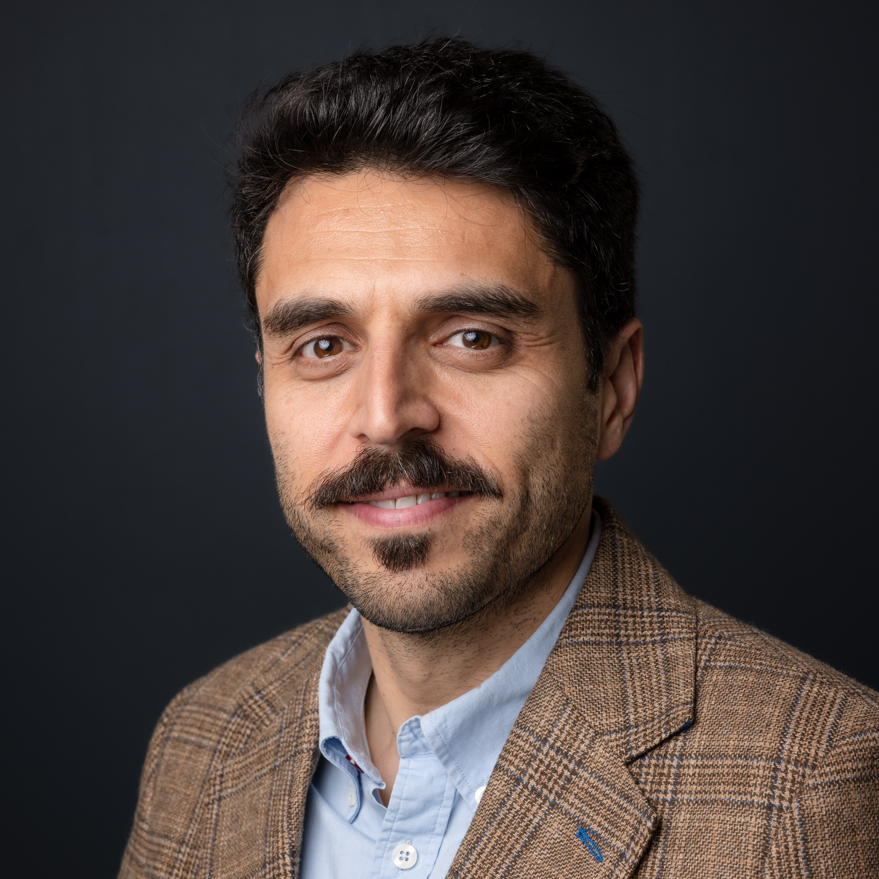
Associate Professor Mohsen Kalantari is a Geospatial Engineering academic at the University of New South Wales (UNSW) School of Civil and Environmental Engineering , with concurrent roles as co-founder of the startup Faramoon . His career spans roles at the University of Melbourne's Department of Infrastructure Engineering and Victorian government's land administration initiatives through DELWP. Education : PhD in Geomatics Engineering (2008, University of Melbourne), Master of GIS Engineering (2004), Bachelor of Surveying Engineering (2001) His research bridges geospatial engineering with construction automation , focusing on 3D cadastre , BIM-GIS integration , and smart cities . Recent publications show trends in underground land administration , digital twins , and LADM standard implementations . Scientific Awards : National educational recognition (2019), Victorian educational grants (2018), and prestigious fellowships (2012) As a supervisor , he guides PhD candidates in topics ranging from BIM for waste management to underground cadastral systems . His industry engagement includes partnerships with the United Nations , Open Geospatial Consortium , and Singapore Land Authority .
Dr. Divya Jayakumar Nair serves as Senior Lecturer in the School of Civil and Environmental Engineering at the University of New South Wales (UNSW), where she also holds the position of Associate Dean International – South Asia for UNSW Engineering. Her academic work is centered at the Research Centre for Integrated Transport Innovation (rCITI), focusing on transportation systems, network optimization, and disaster management applications. Dr. Nair's research interests span transportation engineering, disaster management, and urban mobility systems. Her work investigates complex network design problems, particularly in pre-disaster evacuation planning, transportation resilience, and food rescue logistics. She employs advanced analytical methods including traffic equilibrium modeling, network optimization techniques, and data-driven approaches to solve real-world transportation challenges with significant societal impact. Her recent publications demonstrate a strong focus on transportation resilience during disasters, with particular attention to equity considerations in pre-event planning. Dr. Nair's research shows how transportation networks can be optimized to improve emergency response while ensuring equitable access to safety for all population segments. Her work bridges theoretical network optimization with practical applications in urban environments facing climate-related challenges. Dr. Nair collaborates extensively with leading researchers in transportation including S. Travis Waller, Vinay V. Dixit, David Rey, and Taha Rashidi. Her collaborative approach spans multiple institutions and addresses pressing challenges in urban transportation systems worldwide.
Olga Kokshagina serves as an Associate Professor in Innovation & Entrepreneurship at The University of Sydney, with adjunct research appointments at Monash University's Emerging Technology Lab and the UNU Hub - Learning Planet Institute. She is also an active member of the French Digital Council. Her research program investigates technology-mediated collaboration in complex innovation systems, focusing on healthcare transformation, deep tech commercialization, and co-design methodologies. Kokshagina has led high-impact projects with global institutions including the World Health Organization, OECD, STMicroelectronics, Vall d’Hebron Hospital, and Roche, demonstrating strong translational research capabilities. Her scholarly work centers on value-based healthcare innovation, digital platform governance, and AI-enhanced collaborative systems. She examines how organizational capabilities evolve during technological transitions, particularly in healthcare ecosystems, and investigates regulatory frameworks for algorithmic control in digital markets. Kokshagina's research bridges theoretical innovation management with practical applications, evidenced by her co-founding of Ninti—an initiative advancing women's health in workplace environments—and her Open Covid-19 crowdsourcing campaign that mobilized global expertise during the pandemic. Analysis of her 2021-2025 publications reveals a cohesive trajectory examining innovation in socio-technical systems. Key themes include value digitalization in healthcare, mission-oriented interdisciplinary collaboration, and the impact of big data on technology management. Her work consistently addresses grand challenges through mixed-methods approaches, spanning conceptual frameworks in journals like Research Policy to applied studies in Technovation and R&D Management, with increasing focus on quantum readiness and AI-augmented learning systems. No scientific awards are documented in the provided materials. Kokshagina currently holds a 2025 research grant for "Co-designing societal readiness and scenario building for quantum" through the University of Sydney Nano Institute/Catalyst program. While no student supervision activities are mentioned, her collaborative projects involve multi-institutional teams across industry, government, and academic sectors. Kokshagina maintains active roles within the University of Sydney Nano Institute and contributes to international policy discourse through the French Digital Council. Her Ninti initiative exemplifies her commitment to human-centered innovation, while ongoing collaborations with healthcare providers like Roche and Vall d’Hebron Hospital demonstrate sustained engagement with real-world implementation challenges in value-based care systems.
Professor George Buchanan is a leading researcher in human-computer interaction and digital libraries at RMIT University . His work bridges information science, digital humanities, and health informatics, focusing on usability in sensitive contexts like healthcare and misinformation. Deputy Dean, Research at RMIT University Former Director, University of Melbourne iSchool Research Interests: Digital information interaction Health and aging informatics Disinformation analysis Mobile interface design Digital library systems Key Contributions: Developed mobile web usability benchmarks, spatial hypertext tools, and thermal feedback interfaces. Currently seeking PhD students for 2025 projects on digital browsing and view change dynamics. Awards: Over twenty best paper awards and Honorary Life Fellow of the Royal Society of Arts. Advising: Accepting Masters/PhD supervision in information interaction and digital health domains.
Dr. Zhen Peng is a Research Fellow at Curtin University's School of Civil and Mechanical Engineering, part of the Faculty of Science and Engineering. He holds an ARC Early Career Industry Fellowship (2025–2028), focusing on developing cost-effective bridge monitoring systems using computer vision and edge computing in collaboration with Main Roads WA. His work bridges structural engineering, IoT/edge computing, and machine learning to enhance infrastructure safety. Dr. Peng earned his PhD from Curtin University (Chancellor's Commendation, 2022). His research emphasizes structural dynamics, nonlinear damage detection, and mobile crowdsensing frameworks for infrastructure monitoring. He has published extensively in top journals like Engineering Structures and Structural Control and Health Monitoring , receiving notable awards such as the 2023 Best Paper Award and a Gold Medal in the China Postdoctoral Innovation Competition. His current projects include deploying IoT-driven systems for real-time bridge condition assessment and training students via available 2025 PhD scholarships. Dr. Peng teaches courses in civil engineering and structural analysis, contributing to both academia and industry through innovation in smart infrastructure technologies.
Yan Wang is a Full Professor in the School of Computing at Macquarie University, Australia. He obtained his PhD from Harbin Institute of Technology (HIT), China, and has been at Macquarie since 2003 following a postdoctoral fellowship at the National University of Singapore. His research focuses on trust management, recommender systems, social networks, and services computing, with a strong emphasis on applications in cyber security and data analytics. Wang has published extensively in top-tier venues like AAAI, IJCAI, and IEEE Transactions, and has led over 25 research projects, including current initiatives like Trust-Oriented Data Analytics in Online Social Networks (DP230100676) and Combating Fake News on Social Media (2020–2023). He has received prestigious awards such as the IEEE TCSVC Outstanding Service Award (2017) and the Vice-Chancellor’s Excellence in Research Supervision Award (2014). He serves on editorial boards of journals like IEEE Transactions on Services Computing and has organized major conferences including IEEE ATC2013 and IEEE CLOUD2017. His work bridges theoretical advancements in machine learning and practical challenges in social computing, edge computing, and federated learning. Affiliations: School of Computing, Data Horizons Research Centre, Frontier AI Research Centre Key Projects: Trust-Oriented Data Analytics in Online Social Networks (2023–2026) Combating Fake News on Social Media (2020–2023) Research Themes: Recommender systems, graph learning, fake news detection, and trust management in distributed systems. Wang’s recent work explores causal representation learning, cross-domain recommendations, and privacy-preserving techniques in edge computing environments.
Dr. Eila Erfani is a Senior Lecturer at the School of Information Systems and Technology Management (SISTM) within the UNSW Business School. She leads the Cybersecurity Management major and Business Analytics programs. Dr. Erfani holds a PhD in Information Systems from Macquarie University, alongside a Master of Systems Engineering and Bachelor of Engineering. Her research focuses on ethical AI integration, cybersecurity governance, and leveraging machine learning for sustainability challenges. Notable areas include: AI ethics in healthcare and finance IoT-driven safety systems Open innovation platforms Big data analytics for sustainable supply chains Publications span applications of machine learning in lithium markets, bioleaching optimization, and drowning detection technologies. She has also extensively studied social media's psychological impacts, including addiction risks and mental health consequences. Recent work includes developing mHealth applications for senior wellness and cancer patient support. Her teaching emphasizes bridging technical capabilities with ethical responsibility, preparing students for roles in cybersecurity management and data-driven decision-making. Current research explores AI's role in achieving UN Sustainable Development Goals through triple-bottom-line approaches.
Associate Professor Mitchell Harley is a leading expert in coastal erosion and hazards at the University of New South Wales (UNSW) , specifically within the Faculty of Engineering and School of Civil and Environmental Engineering . His work combines innovative technologies like CoastSnap (a global citizen science initiative) and CoastSat (satellite imagery analysis) to advance coastal monitoring and forecasting. Education: BEng (Environmental) and BSc (Oceanography/Meteorology) from UNSW (2004), PhD in Civil Engineering (2009) Supervision: Currently mentoring 7 PhD/MPhil students in areas like AI for rip current detection and satellite shoreline modeling Research Focus: Coastal erosion mechanisms, real-time hazard forecasting, and climate change impacts on shorelines. Key technologies include smartphone-based monitoring , satellite remote sensing , and machine learning . Recent Publications (2022-2025) demonstrate expertise in: Multi-decadal shoreline prediction Wave climate downscaling Citizen science applications AI for coastal safety ENSO-driven erosion patterns High-resolution satellite monitoring Scientific Recognition: CoastSnap: UN Ocean Decade Action Scientia Associate Professorship Collaborations: Leads initiatives like the Narrabeen-Collaroy Beach Survey Program (50-year dataset) and Coastal Imaging Research Network . Advises on national Coastal Storm Hazard Warning Systems .
Xiaoyu Sun is a Lecturer in the School of Computing at Australian National University (ANU), specializing in Software Engineering with a focus on Mobile Software Engineering and Intelligent Software Engineering. She holds a PhD from Monash University (2023) and a Bachelor's degree in Computer Science from Beijing Normal University (2016). Her research emphasizes applying static code analysis, dynamic testing, and NLP techniques to enhance software security and reliability, particularly in Android systems. Current projects include tools for detecting compatibility issues and privacy leaks in mobile apps. Her research interests span code generation frameworks (e.g., A^3-CodGen), security management in open-source projects, and AI-enhanced software development practices. Collaborations with tech giants like Bytedance and Alibaba highlight her industry engagement. Xiaoyu is Co-Investigator in the Tech4HSE project (2025-2027), developing AI-based monitoring systems for workspace safety. She has published in top venues including ICSE, ASE, and IEEE Transactions on Software Engineering. Her work bridges academia and industry, addressing challenges in mobile app security, code reuse efficiency, and developer toolchain innovation. Ongoing efforts focus on AI-driven solutions for software engineering tasks and fostering transparent privacy practices in open-source AI applications.
Dr. Xiaoye Liu is a Senior Lecturer in the School of Surveying and Built Environment at the University of Southern Queensland, specializing in Surveying and Spatial Science. Their research focuses on spatial data quality, remote sensing applications, and geospatial technologies for environmental and disaster management. Dr. Liu holds a PhD from Monash University, preceded by a MAppIT from Monash, and degrees from Wuhan University. Education: Bachelor of Engineering (BEng), Wuhan University Master of Engineering (MEng), Wuhan University Master of Applied Information Technology (MAppIT), Monash University Doctor of Philosophy (PhD), Monash University Research interests include LiDAR data analysis, crowdsourced data credibility assessment, and spatial modeling for environmental conservation and disaster response. Dr. Liu’s work bridges GIS applications with ecological monitoring, particularly in rainforest ecosystems and wildlife habitat studies. Research Trends in Publications: Recent work emphasizes crowdsourced data quality (VGI/CSD), LiDAR-derived environmental modeling, and machine learning applications in spatial science. Key themes include geospatial data fusion, disaster management automation via SDI, and biodiversity tracking through spatial analytics. Advising and grants information is not explicitly detailed in the provided data. Dr. Liu’s contributions include collaborations on projects such as bilby habitat modeling and Hendra disease spatial epidemiology.
Dr. Xiangmin Zhou is a Senior Lecturer at the School of Computing Technologies, RMIT University, located at City Campus Australia. His research focuses on artificial intelligence, data management, distributed computing, and multimedia systems. He actively supervises Masters and PhD students in areas such as fairness-aware task recommendation in spatial crowdsourcing and adaptive multi-participant analytics. His teaching interests include social media analysis, multimedia databases, query optimization, and cloud data management. Dr. Zhou’s research interests span information systems, AI-driven recommendation frameworks, privacy-preserving techniques, and distributed computing solutions. His work emphasizes context-aware systems, ethical AI, and scalable data processing. Recent publications highlight innovations in federated learning, privacy preservation, and social media-based disaster detection. He is open to supervising students interested in his core research areas and collaborative projects. Dr. Zhou’s academic contributions include developing novel algorithms for recommendation systems, social media analysis, and real-time event detection. His projects often bridge theory and practice, addressing challenges in spatial crowdsourcing, video novelty detection, and multi-platform coordination. His work aligns with RMIT’s focus on technology-driven solutions for societal challenges.
Dr. Alireza Moayedikia is a Lecturer in Information Systems at the School of Business, Law and Entrepreneurship, Swinburne University of Technology. His research focuses on Artificial Intelligence, Machine Learning, and Data Science, with expertise in social network analysis, natural language processing, and back-end software development. He has over ten years of professional experience in AI and ML, emphasizing data preparation for machine learning tasks. Research Interests: Dr. Moayedikia’s work spans optimization algorithms for crowdsourcing, microtask management, and feature selection. His recent contributions include advancements in matrix factorization, dynamic payment systems for microtask platforms, and community detection in attributed networks. His methodologies often integrate swarm intelligence (e.g., bee colony optimization) and probabilistic models. Publications: His 19 publications reflect a strong focus on AI-driven solutions, including contributions to data-driven healthcare systems and green logistics. His articles address challenges in sparse data handling, worker reliability estimation, and multi-criteria decision-making frameworks. Grants: He contributed to the SCOPE 3 research contract (2020–2021), developing prototypes for tracking Green House Gas emissions in last-mile delivery systems. Labs/Teams: Collaborates within interdisciplinary teams at Swinburne, focusing on applied AI and sustainable logistics solutions.
Dirk H.R. Spennemann is an Associate Professor in Cultural Heritage Management at Charles Sturt University, affiliated with the School of Agricultural, Environmental and Veterinary Sciences and the Gulbali Research Institute. He holds a PhD from the Australian National University and an MA from Johann Wolfgang Goethe Universität, and is a registered postgraduate supervisor. His academic base is at the Albury/Wodonga campus, where he lectures in Cultural Resource Management and Historic Ecology at both undergraduate and postgraduate levels. Research Interests: Dirk is an internationally recognized leader in Micronesian history and heritage, with extensive fieldwork across the Indo-Pacific. He is a pioneering figure in the emerging field of heritage futures , which applies futurist theories to explore how cultural heritage may evolve in contexts such as space exploration, robotics, digital materiality, and generative AI. His work critically examines the interplay between heritage values, management processes, and public engagement. He also investigates sensory and intangible heritage, digital heritage, and the cultural appropriation of Indigenous Australian motifs. His recent publications (2023–2025) reveal a strong trend toward interdisciplinary research at the intersection of heritage, technology, and sensory experience. Topics include the use of social media for citizen science, AI bias in digital content, sensory methodologies for heritage documentation, and the ephemeral heritage of political elections. These works demonstrate a consistent focus on contemporary and emergent forms of heritage, often employing innovative digital and mixed-methods approaches. Partnership Stewardship Award for Cultural Resources, Pacific West Region, US National Park Service (2001) Governor's Humanities Award for Excellence in Research and Publication, Commonwealth of the Northern Mariana Islands (2004) CSU Vice-Chancellor's Award for Teaching Excellence (1995) CSU Vice Chancellor's Award for Research Excellence (1996) Dirk has supervised numerous postgraduate students and has been involved in significant research collaborations with institutions such as the US National Park Service, UNESCO, and the Pacific Islands Museums Association. He has conducted training workshops on conservation techniques and provided technical advice on cultural resource management across the Pacific and Alaska. His research has been supported by extensive publication output—over 400 peer-reviewed papers, 24 books, and 100+ technical reports—and he maintains active engagement with policy and public discourse through media contributions. He is also involved in external advisory roles for heritage preservation in the Marshall Islands and Palau. Dirk leads or contributes to research teams focused on sensory heritage, digital heritage, and heritage futures. His recent datasets and collaborative projects indicate an active research group exploring generative AI, urban cultural landscapes, and multisensory experiences. His work bridges academic research, professional practice, and public engagement, positioning him at the forefront of contemporary heritage studies.
Hugh Forehead is an Honorary Senior Fellow at the University of Wollongong's School of Science. His research focuses on low-cost environmental monitoring technologies, particularly in water quality, air pollution, and biodiversity. He specializes in real-time sensing solutions for aquaculture and urban environments, including initiatives like the SMART Fire Hydrants map, which won the 2017 IoT Service Innovation Award. His work integrates agent-based modeling, spatial data analysis, and web mapping across disciplines such as marine ecology and public health. PhD: University of Western Australia/CSIRO BSc (Hons): University of Tasmania Research interests include pollution reduction using plastic waste, community engagement in environmental stewardship, and the ecological benefits of aquaculture. He has led projects on green infrastructure for urban cooling and air quality improvement, funded by organizations like the Future Drought Fund and South32. Notable achievements include developing the iOyster sensor system for aquaculture and investigating native vegetation's role in mitigating urban heat and air pollution in Wollongong and Liverpool. He has supervised two PhD students to completion and currently oversees research on microplastics biodegradation. Awards: 2017 Service Innovation Award (IoT category) Grants include the 'iOyster: Drought Resilient Oyster Farming' project and studies on PFAS contamination post-bushfires. He contributes to interdisciplinary collaborations, bridging engineering, environmental science, and public health initiatives.
Shadi Jaradat is a Researcher at Queensland University of Technology (QUT) in Australia, affiliated with the School of Civil & Environmental Engineering. He holds a PhD in Civil & Environmental Engineering and a Master’s degree in Computer Science from the University of Queensland. His research focuses on data analytics, deep learning, NLP, and traffic safety, particularly leveraging AI techniques to enhance transportation safety through crash narrative analysis and multimodal data fusion. Shadi’s PhD research explores Deep Natural Language Processing-based mining of crash narratives , aiming to uncover insights for improving traffic safety. His academic background bridges computer science and civil engineering, enabling interdisciplinary approaches to real-world challenges. Key research areas include crash severity analysis, cyberattack detection in industrial systems, and multimodal data applications for traffic safety. His recent publications emphasize AI-driven methodologies for traffic safety, such as text mining for crash patterns, GPT models for multimodal analysis, and vision transformers for infrastructure inspection. Shadi collaborates with the Centre for Data Science at QUT, advancing data-driven solutions in transportation and cybersecurity domains. While no scientific awards are listed, his work demonstrates impactful contributions to traffic safety and AI applications. Shadi actively engages in cross-cultural crash analysis and contributes to projects addressing urban mobility challenges through advanced analytics.