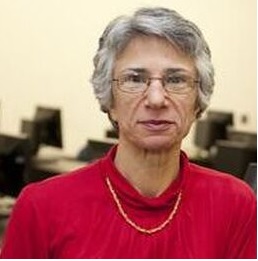
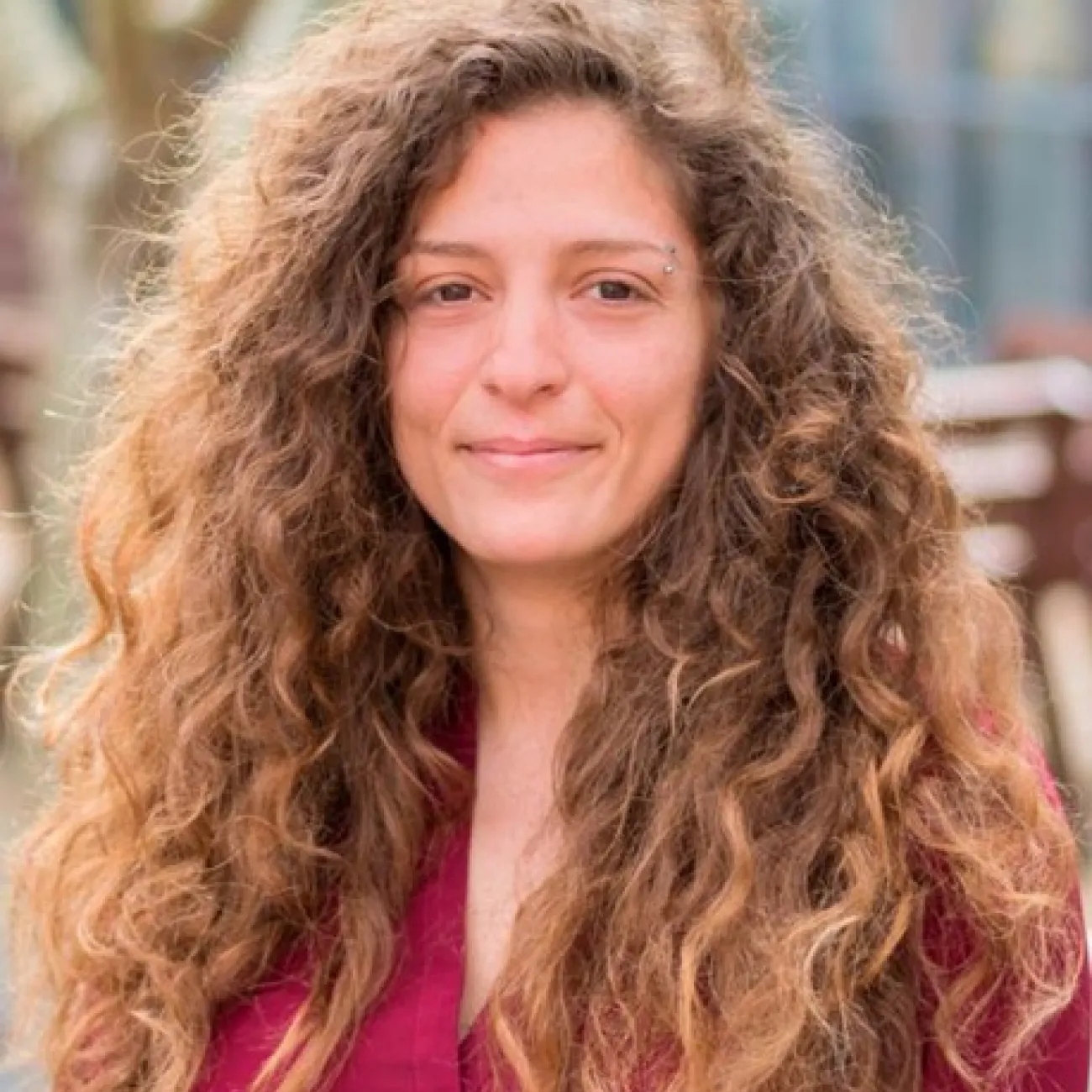
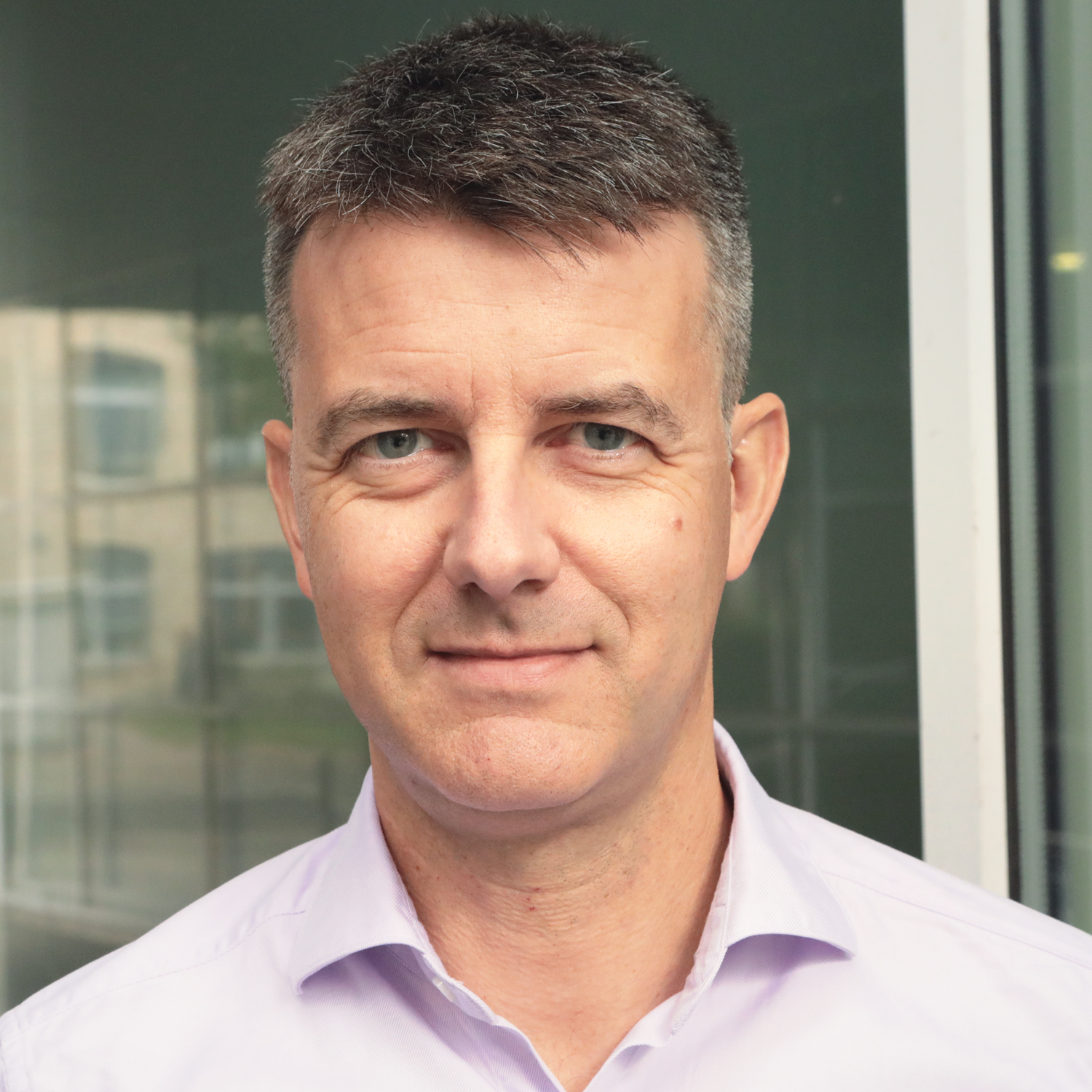
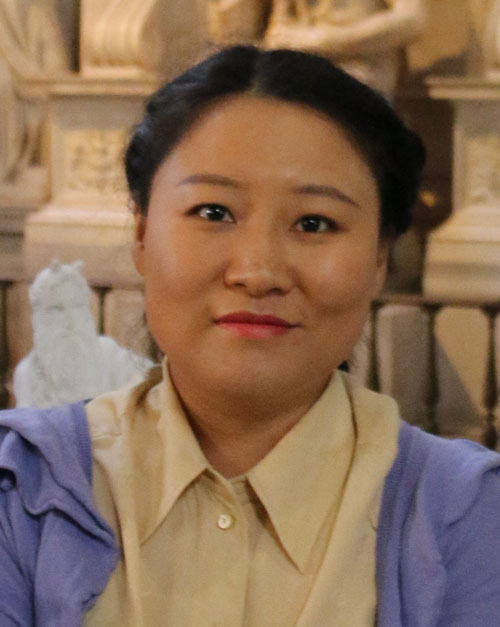
Dr. Jinan Fiaidhi is a Professor of Computer Science at Lakehead University, Canada since 2001. She served as Graduate Coordinator for the MSc and PhD programs in Computer Science and Biotechnology. She holds adjunct positions at the University of Western Ontario. Her academic journey includes degrees from Essex University (PgD, 1983) and Brunel University (PhD, 1986). She has held academic roles at institutions like Sultan Qaboos University and Philadelphia University prior to Lakehead. Her research focuses on Thick Data Analytics , Deep Learning , and Collaborative Learning , with applications in healthcare, medical imaging, and AI-driven diagnostics. She is a Professional Engineer (PEng) in Ontario and a Senior Member of IEEE. She chairs the IEEE Special Interest Group on Big and Thick Data for eHealth and founded the International Journal of Extreme Automation and Connectivity in Healthcare (IJEACH) as its Emeritus Editor-in-Chief. Her research is funded by NSERC and MITACS grants. Key projects include developing frameworks like QL4POMR for problem-oriented medical records and applying thick data analytics to Crohn’s disease, ulcerative colitis, and cataract severity analysis. Education: PhD in Computer Science, Brunel University (1986) PgD in Computer Science, Essex University (1983) Awards: None explicitly listed, but holds professional designations: PEng, IEEE Senior Member, ISP (CIPS), and MBCS (Chartered Computing). Grants: NSERC, MITACS (specific projects unspecified). Labs/Teams: Leads IEEE eHealth initiatives and collaborates on projects involving thick data analytics in healthcare interoperability and extreme automation.
Serafeim Chatzopoulos is a Researcher at the Information Management Systems Institute (IMSI) of the ATHENA Research Center since 2014 and a software engineer at OpenAIRE AMKE since 2022. He holds a PhD in Computer Science from the University of the Peloponnese (2022), an MSc in Computer Systems, and a BSc in Informatics and Telecommunications from the University of Athens. His research focuses on data mining, scientific databases, scientometrics, and big data management, with notable contributions to systems like OpenAIRE Graph and BIP! Finder. His work emphasizes improving academic search engines, citation analysis, and researcher assessment tools. Key projects include developing algorithms for expert recommendation (VeTo toolkit), impact-based literature search (BIP! Finder), and scalable data science tools like SciNeM and SmartDataLake. He has collaborated on EU and national research initiatives, leveraging technologies such as Apache Spark, Java, and React.js. Chatzopoulos has co-authored over 30 publications in venues like TPDL, WWW, and VLDB, addressing challenges in scientific impact measurement, metadata integration, and open science infrastructure. His PhD dissertation explored data mining in scholarly networks under Prof. Christos Tryfonopoulos' supervision. He remains active in advancing tools for academic transparency and reproducibility, including narrative CV frameworks and article deduplication systems.
Assoc. Prof. İbrahim Akin Özen holds an Associate Professor position at the Faculty of Tourism, Nevşehir Hacı Bektaş Veli University. He has been with the institution since 1995, progressing through roles including Lecturer (1995-2014), Doctoral Lecturer (2018), and current Associate Professor since 2022. His academic journey includes a doctorate in Tourism Management from Sakarya University (2017) and an MSc in Information Systems via distance education. Education: Economics (1996), Industrial Electronics (1989) Current Administrative Role: Member of Kapadocia University Management Board Research focuses on tourism technology applications, gastronomy tourism, and customer sentiment analysis. He has authored/co-authored books like Advances in Hospitality and Tourism Information Technology (2021) and Valorising Underground Built Heritage in Cappadocia (2023). Publications analyze hotel technology impacts, Airbnb interactions, luxury boutique hotels, and women-led restaurants in Cappadocia. His work bridges technology with cultural heritage preservation through data analytics approaches. Advises three ongoing master's theses on hamburger enterprises, destination branding, and sustainable gastronomy. Active in international conferences presenting innovations in tourism education and heritage management.
Dr. Crystal El Safadi is an Associate Professor in Maritime Archaeology at the University of Southampton, specializing in ancient seafaring, geospatial data, and maritime heritage preservation. She leads research on Bronze Age and Neolithic maritime mobility, leveraging GIS, remote sensing, and computational modeling. Her work spans projects like the MarEA initiative and the Eastern Mediterranean Experimental Seafaring, addressing threats to underwater cultural heritage in regions like the Middle East and North Africa. She teaches modules on GIS for Archaeology and Ancient Mediterranean Seafaring, and supervises PhD students in archaeology. Research Groups: Centre for Maritime Archaeology, Southampton Marine and Maritime Institute Current Projects: Investigating ancient Levantine harbors, maritime heritage data integration in the eastern Mediterranean Her research emphasizes interdisciplinary approaches, combining digital archaeology with fieldwork in Lebanon, Cyprus, Spain, and beyond. She actively participates in international initiatives on climate change impacts and heritage conservation, contributing to global discussions on maritime cultural heritage management. External Roles: Invited speaker on topics ranging from women in maritime archaeology to climate change and coastal heritage
Nikolaos Geroliminis is a Full Professor at École polytechnique fédérale de Lausanne (EPFL) holding multiple appointments across the institution. He serves as Full Professor at the Urban Transport Systems Laboratory (LUTS) within the School of Architecture, Civil and Environmental Engineering (ENAC), Full Professor at SGC-ENS (Teaching), and Full Professor at SHS-ENS (Teaching). Additionally, he is a Member of the Diversity Office at ENAC (DOENAC), PhD program committee member for both Civil and Environmental Engineering and Robotics, Control and Intelligent Systems doctoral programs, and Head of Unit for the ENAC Academic Evaluation Committee. Dr. Geroliminis received his Diploma in Civil Engineering from the National Technical University of Athens (NTUA) in 2003, followed by an M.S. in Civil and Environmental Engineering from the University of California, Berkeley in 2004, and completed his Ph.D. in Civil and Environmental Engineering from UC Berkeley in 2007. Prior to joining EPFL, he served as an Assistant Professor in the Department of Civil Engineering at the University of Minnesota. His research primarily focuses on urban transportation systems with particular emphasis on traffic flow theory, control, and optimization of large-scale networks. His work spans multiple domains including public transportation, logistics, ride-hailing systems, drone-based traffic monitoring, and the Macroscopic Fundamental Diagram (MFD) concept. Dr. Geroliminis has pioneered research using drone swarms for traffic monitoring through the pNEUMA experiment, which has generated high-resolution traffic data for studying congestion propagation, lane-changing behavior, and emission patterns. His recent work increasingly addresses emerging mobility systems including autonomous vehicles, electric vehicle charging management, and urban air mobility. His publication record demonstrates a clear evolution from fundamental traffic flow theory toward increasingly complex multimodal transportation systems. Recent publications (2023-2025) show strong emphasis on drone-based traffic monitoring, optimization of ride-sharing systems, integration of public transit with ride-hailing services, and applications of artificial intelligence to traffic forecasting and control. His work consistently bridges theoretical developments with practical applications for improving urban mobility. ERC Starting Grant 'METAFERW: Modeling and controlling traffic congestion and propagation in large-scale urban multimodal networks' Dr. Geroliminis serves as Associate Editor for Transportation Research Part C and is on the editorial boards of Transportation Research Part B, Transportation Letters, and Journal of ITS. He is actively involved in multiple doctoral programs at EPFL and serves on the Transportation Research Board's Traffic Flow Theory Committee. His research has been supported by the Swiss National Science Foundation, Board of the Swiss Federal Institutes of Technology, European Union, and Innosuisse – Swiss Innovation Agency. As head of the Urban Transport Systems Laboratory (LUTS), Dr. Geroliminis leads a research team focused on developing sustainable transportation solutions through innovative modeling approaches. His laboratory has been instrumental in conducting large-scale field experiments like pNEUMA, which employs drone swarms to collect unprecedented traffic data. The lab's work bridges transportation engineering, control theory, and data science to address pressing urban mobility challenges.
Dr. Swati Mishra is an Assistant Professor at McMaster University's Faculty of Engineering, Department of Computing and Software, specializing in Human-Computer Interaction , Machine Learning , and Explainable AI . With 9 years of industry experience and a PhD in Information Science from Cornell University, she focuses on designing interactive AI systems for healthcare, computational journalism, and museum engagement. PhD: Cornell University (Bloomberg Data Science Fellowship) MSc: Computer Science (Cornell), Human-Computer Interaction (Indiana University) Her research explores Machine Teaching , Concept-Based Explanations , and Human-Centered AI , with publications in ACM SIGCHI, CSCW, UMAP, and IEEE VIS. Her lab develops tools to bridge human cognitive models with AI systems, emphasizing transparency and usability. Recent projects include: Risk Analysis Dashboard for FDA clinical trial documentation Gestural interaction systems for museums Interactive Transfer Learning tools She has received a Best Paper Award at ACM SIGCHI and held industry roles in AI product development. Contact: mishrs23@mcmaster.ca | Personal Website | Office: ABB C-531
Fabrizio Gilardi is a Professor of Policy Analysis at the Department of Political Science, University of Zurich . His research bridges digital technology, AI, and political science , with prior work on regulation, policy diffusion , and gender in politics . He leads the ERC-funded PRODIGI project on Problem Definition in the Digital Democracy and an SNF project on improving online public discourse. Education & Affiliation : PhD in Political Science, former positions at ETH Zurich. Research Focus : Digital transformation of democracy, AI's societal impact, computational methods for policy analysis. Recent Publications highlight trends in AI ethics , social media's role in politics , and LLM applications for text analysis. Key themes include hate speech moderation , gender bias in media , and digital governance frameworks . Collaborations span teams at ETH Zurich, University of Zurich, and international institutions. He organizes the Digital Democracy Workshop and mentors researchers through projects with co-authors like Gloria Gennaro , Emma Hoes , and Maël Kubli .
Dylan Walker is an Associate Professor at Chapman University within the George L. Argyros College of Business and Economics , specifically in the Department of Business and Economics . His research bridges digital analytics with public health applications, focusing on social media engagement patterns and antimicrobial resistance (AMR) awareness. Education: B.E.E. from Stevens Institute of Technology B.S. from New York University PhD from Stony Brook University His work employs advanced computational methods to analyze social media behavior, particularly through the @AntibioticResis Twitter bot. Key research areas include digital epidemiology , network modeling , and public health informatics . Recent studies examine AMR content consumption, Twitter engagement metrics, and partisan behavior in social media interactions. Notable findings from his Twitter analysis include: WHO critical priority pathogens ( Acinetobacter baumannii , Pseudomonas aeruginosa ) significantly increase URL clicks Shorter paper titles correlate with higher engagement Academic attention differs from general public interest in AMR research Twitter bots enable fast dissemination of scientific content to healthcare professionals While no personal scientific awards are explicitly mentioned in the provided texts, his collaborative research receives institutional support from organizations like the Biotechnology and Biological Sciences Research Council and Wellcome Trust. The work has broader implications for science communication strategies, demonstrating how digital platforms can enhance public health awareness and research dissemination.
Professor Gianluca Demartini is a Professor in Data Science and an ARC Future Fellow at the School of Electrical Engineering and Computer Science, Faculty of Engineering, Architecture and Information Technology at the University of Queensland, Australia. He also serves as an affiliate of the Centre for Enterprise AI. His research focuses on human-in-the-loop artificial intelligence systems with applications for public good, bridging structured knowledge graphs and unstructured text analytics to address societal challenges. Dr. Demartini earned his Ph.D. in Computer Science from Leibniz University of Hannover in Germany in 2011, with a focus on Semantic Search. His academic journey includes positions as a Lecturer at the University of Sheffield (UK), post-doctoral researcher at the eXascale Infolab at the University of Fribourg (Switzerland), visiting researcher at UC Berkeley, junior researcher at the L3S Research Center (Germany), and intern at Yahoo! Research (Spain). His research interests span four major interconnected domains: Misinformation (studying human interaction with misinformation and AI-based mitigation strategies), Crowdsourcing and Human Computation (improving efficiency of human-in-the-loop systems), Big Data Analytics (designing scalable algorithms for large datasets), and AI for Public Good (applying AI for societal and environmental benefits). His work consistently addresses real-world challenges in information quality, human-AI collaboration, and ethical technology deployment. Analysis of Professor Demartini's recent publications reveals a clear trajectory toward addressing misinformation through sophisticated human-AI collaboration frameworks, with increasing emphasis on cognitive aspects of fact-checking, data bias management, and strategic application of large language models. His research bridges theoretical advances in information retrieval with practical applications for societal challenges, particularly in media literacy, online safety, democratic discourse, and environmental conservation. Professor Demartini has received numerous prestigious awards recognizing the quality and impact of his work: Best Paper Award at ACM SIGIR International Conference on the Theory of Information Retrieval (ICTIR) in 2023 Best Paper Award at AAAI Conference on Human Computation and Crowdsourcing (HCOMP) in 2018 Best Paper Awards at European Conference on Information Retrieval (ECIR) in 2016 and 2020 Best Demo award at International Semantic Web Conference (ISWC) in 2011 Honorable Mention Award at CSCW 2020 (Top 2% of submissions) As an active supervisor, Professor Demartini currently guides PhD students working on cutting-edge topics including Retrieval Augmented Generation, Human-in-the-Loop Decision Systems for Online Safety, Human-Centred Artificial Intelligence for Democracy, and Bias in Data Pipelines. His research program is generously funded through multiple major grants: ARC Future Fellowships (2025-2028): PBIAS - A Principled Approach to Data Bias Management Swiss National Science Foundation (2022-2025): Large-Scale Political Participation: Issue Identification, Deliberation, and Co-creation ARC Training Centre for Information Resilience (2021-2026) Previous funding from Wikimedia Foundation, Meta, Google, and Facebook for projects on misinformation detection and human-AI collaboration Professor Demartini's work sits at the critical intersection of human computation, information retrieval, and AI ethics. Through extensive collaborations with industry partners including Facebook, Google, Microsoft, Yahoo!, IBM, SAP, and The National Archives (UK), he has developed practical systems that address real-world challenges in misinformation detection, data quality, and human-AI collaboration. His research group actively explores how to make AI systems more transparent, accountable, and beneficial for society through principled human-in-the-loop approaches that leverage both machine intelligence and human expertise.
Bastian Kordyaka is an Assistant Professor at the School of Business and Economics within Åbo Akademi University. His work focuses on gameful design, user typology, and behavioral dynamics in digital environments. Research Interests : Location-based games • Toxicity in online gaming • Crowdsourcing • Game design elements • Behavioral economics • Human-computer interaction Recent publications analyze topics including AI's role in creative design, character preferences in competitive games, and gacha game addiction. His work appears in premier conferences like HICSS and specialized journals such as Computers in Human Behavior Reports .
Dorothy Lianlian Jiang is an Assistant Professor in the Department of Decision & Information Sciences at the C. T. Bauer College of Business, University of Houston. She also serves as Co-Director of the Bauer Human-Centered AI Institute, reflecting her leadership in AI-driven business research. Research Interests: Her work centers on digital platform design and strategy, healthcare IT, human-AI interaction, and business analytics. She employs rigorous methodologies including econometrics, natural experiments, machine learning, and lab experiments to study how information systems affect consumer behavior, organizational outcomes, and public policy. The recent articles highlight a consistent focus on the societal and behavioral implications of digital platforms and AI systems. Her work spans healthcare transparency, review moderation, consumer decision-making under information abundance, and the unintended consequences of quality disclosure. Her publications appear in top journals such as Information Systems Research , MIS Quarterly , and Journal of Operations Management , indicating high scholarly impact. Scientific Contributions: Active contributor to leading journals as author and editorial board member (ISR, 2024–present) Research funded by major review cycles at premier journals (ISR, Management Science) Focus on real-world policy and platform design implications Advising & Research Leadership: While formal student advisees are not listed, she leads multiple ongoing research projects with co-authors, many of which are in advanced stages of peer review. Her role as Co-Director of the Human-Centered AI Institute positions her at the forefront of interdisciplinary AI research in business contexts. She mentors junior researchers through collaborative projects and editorial engagement. Labs & Teams: As Co-Director of the Bauer Human-Centered Artificial Intelligence Institute, she plays a central role in shaping research agendas that bridge AI technology and human-centered business applications. The institute fosters cross-disciplinary collaboration and supports research on ethical AI, platform governance, and digital transformation.
Associate Professor William Yeoh is a prominent academic at Deakin University 's Faculty of Business and Law , specifically within the Deakin Cyber Research and Innovation Centre . He also holds an Adjunct Professor position at University Tunku Abdul Rahman Malaysia (UTAR) and has previously served as Deputy Dean (R&D and Postgraduate Programs) at UTAR's Faculty of ICT. PhD in Information Systems, University of South Australia Graduate Certificate of Higher Education, Deakin University His research spans business intelligence & analytics, cybersecurity, metaverse, blockchain, AI, and information systems , with a focus on human-centric cybersecurity and education innovation . He has led groundbreaking projects like CyberNinjas (cyber safety in the metaverse) and State of Data and Analytics Maturity in Australian Organisations . His 15 most recent publications highlight trends in blockchain for real estate , cybersecurity frameworks , and social media analytics , reflecting his interdisciplinary expertise. Awards include IBM Faculty Awards , ICT Educator of the Year Gold , and Researcher of the Year from AISA. Supervision : 7 completed PhDs, including a finalist for Alfred Deakin Best PhD Medal Labs & Teams : Leads Deakin's Cyber-AI Theme and Co-Directs the Business & Technology Research Theme
Lan Luo is a Professor of Marketing at the University of Southern California's Marshall School of Business, where she conducts cutting-edge research at the intersection of artificial intelligence and marketing. She holds a Ph.D. in Business (Marketing) from the University of Maryland and maintains a dual impact in academia and industry through her role as an Amazon Scholar for Global Media Entertainment Business. Ph.D., Business (Marketing), University of Maryland Professor of Marketing, USC Marshall School of Business Amazon Scholar, Global Media Entertainment Business Her research centers on the applications of artificial intelligence in digital platforms and new product design , with additional interests in consumer behavior, blockchain in creative industries, and market demand forecasting. She leverages advanced data analytics and machine learning to study hiring dynamics on freelance platforms, media selection optimization, and even the predictive power of user-generated photos on restaurant survival. The recent publications highlight a strong trend in AI-driven marketing analytics , digital platform optimization , and consumer-centric product innovation . Her work integrates fuzzy logic, support vector machines, and large-scale optimization models to solve real-world marketing challenges, often published in top-tier journals such as Marketing Science and Production and Operations Management . Dr. Luo has received numerous accolades for her research and teaching excellence: John D.C. Little Award Donald R. Lehmann Award (twice) Paul E. Green Award Finalist (twice) Ph.D. Mentoring Award Golden Apple Award (twice) Dr. Jagdish Sheth Award (first woman recipient) She plays a vital role in academic leadership as Vice President of Practice for the INFORMS Marketing Science (ISMS) community, Associate Editor for Marketing Science and International Journal of Research in Marketing , and Senior Editor for Production and Operations Management . At USC, she mentors Ph.D. students and teaches advanced courses in marketing analytics and strategic modeling, including MKT-566 and MKT-615. Her industry experience leading the Amazon Studios Science team further enriches her academic contributions, bridging theory and practice in media and entertainment analytics. Dr. Luo leads research initiatives exploring how consumer-posted images can serve as leading indicators of business success, such as in her Tommy Talk on Yelp photos predicting restaurant survival. Her lab-like research environment integrates interdisciplinary methods from computer science, statistics, and behavioral economics to advance marketing science.
Panagiotis G. Ipeirotis is a Professor and George A. Kellner Faculty Fellow at the Department of Technology, Operations, and Statistics at the Leonard N. Stern School of Business, New York University. He is also affiliated with the Center for Data Science and the Computer Science department at NYU. His work bridges computer science, data science, and business analytics, with a focus on integrating human and machine intelligence. PhD in Computer Science, Columbia University (2004) MSc in Computer Science, Columbia University (2001) BSc in Computer Engineering & Informatics, University of Patras, Greece (1999) His research centers on crowdsourcing, human-AI collaboration, online labor markets, and social media analytics . He is widely recognized as a pioneer in human computation and has developed foundational techniques for ensuring data quality in crowd-sourced environments. His interdisciplinary work combines insights from computer science, economics, and social psychology to model user behavior and improve decision-making systems. His recent publications explore algorithmic fairness in hiring, theoretical voting models in crowdsourcing, and the economic impact of user-generated content. These works reflect a consistent trend toward building robust, ethical, and scalable human-machine systems that enhance data quality and decision accuracy across domains. Notable scientific awards include: Lagrange Prize in Complex Systems (2015) SIGKDD Test of Time Award (2020) NSF CAREER Award Best Paper Award at WWW 2011 Best Paper at SIGMOD 2006 Multiple best paper recognitions in Management Science and KDD Professor Ipeirotis has led significant research initiatives, including a $1.5 million Google Research Grant to integrate crowdsourcing with machine learning for visual search. He advises graduate students and contributes to academic leadership through editorial and collaborative roles. His work has been featured in prominent media outlets such as Forbes, WIRED, and Bloomberg Businessweek, highlighting its real-world impact. He is actively involved in research labs and initiatives at NYU, particularly those focused on data science, behavioral research, and computing. His affiliations with the Center for Research Computing and the Center for Behavioral Research underscore his interdisciplinary approach to solving complex problems at the intersection of technology and human behavior.
Panagiotis Traganitis is an Assistant Professor in the Electrical and Computer Engineering (ECE) Department at Michigan State University (MSU), where he joined in August 2022. Previously, he was a Postdoctoral Researcher at the University of Minnesota’s Signal Processing in Networking and Communications (SPiNCOM) group under Prof. Georgios B. Giannakis. His research focuses on statistical signal processing, machine learning, crowdsourcing, weak supervision, and network science, with applications in big data analytics and distributed learning. Education: Ph.D. in Electrical Engineering, University of Minnesota (2019), Thesis: Scalable and Ensemble Learning for Big Data M.Sc. in Electrical Engineering, University of Minnesota (2015), Thesis: Large-scale Clustering using Random Sketching and Validation Diploma in Electrical & Computer Engineering, National Technical University of Athens (2013), Thesis: Reinforcement Learning Methods for Cognitive Radio Networks Research Interests: His work spans statistical learning, blind ensemble methods, weak supervision, subspace clustering, and graph-based algorithms. Current projects include blind ensemble learning, adversarial detection in crowdsourcing, and self-supervised learning. Awards & Honors: Gerondelis Foundation Graduate Scholarship (2015) Finalist, CAMSAP 2017 Student Paper Award Eurobank’s Award of Excellence in Greek Nationwide University Entrance Exams (2007) Teaching & Mentorship: He has served as a teaching assistant for courses on statistical methods and nonlinear optimization at the University of Minnesota. He is currently seeking motivated Ph.D. students to join his research group. His lab focuses on advancing robust, scalable learning algorithms with real-world applications. Labs & Collaborations: Active member of the SPiNCOM research group, collaborating on projects related to signal processing, machine learning, and network science.