Dr. Chengmo Yang is a Professor in the Department of Electrical and Computer Engineering at the University of Delaware, with a joint appointment. She received her PhD and MSc in Computer Science from the University of California, San Diego, and a BSc in Microelectronics from Peking University, China. PhD, University of California, San Diego MSc, University of California, San Diego BSc, Peking University, China Her research focuses on enhancing security, reliability, non-volatility, and energy efficiency in embedded systems, cyber-physical systems (CPS), and Internet-of-Things (IoT). She leads the Computer Architecture, Reliability, and Security (CARES) group and has authored over 70 peer-reviewed publications. Recent publications emphasize neural network accelerators, non-volatile memory (NVM) optimization, and security frameworks for embedded systems. Her work explores fault tolerance, wear leveling, and side-channel attack mitigation in NVM-based FPGAs, STT-RAM, and SSDs. National Science Foundation Career Award (2013) University of Delaware Mid-Career Faculty Excellence in Scholarship Award (2020) Best paper award at ICESS (2019) Three best paper nominations at DAC, DATE, and GLSVLSI (2019) Dr. Yang serves as Associate Editor for IEEE TCAD and ACM TODAES. She is the Diversity & Inclusion Representative for IEEE CEDA and has organized numerous conferences including Technical Program Chair for CODES-ISSS 2022. Her lab has hosted current and former students like Fanruo Meng (PhD candidate), Fateme Hosseini (Qualcomm), and Patrick Cronin (Intel), focusing on graduate-level research in hardware security and reliability.
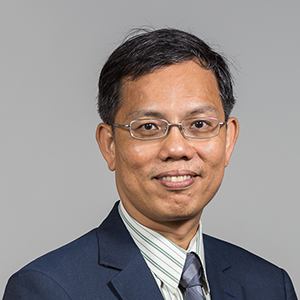
CHAN Mun Choon is a Professor at the School of Computing, National University of Singapore (NUS) , where he directs the NUS-NCS Joint Laboratory for Cyber Security . He previously worked at Bell Labs (1997-2003) and holds a PhD from Columbia University (1997). His research spans systems and networking with specific interests in mobile computing, software-defined networking, and cyber-physical systems . PhD, Electrical Engineering (1997), Columbia University M.Phil., Electrical Engineering (1993), Columbia University MS, Electrical Engineering (1993), Columbia University BS, Computer & Electrical Engineering (1990), Purdue University His recent work focuses on 5G network architecture , data center fault debugging , and energy-efficient mobile sensing . He has published over 100 papers and holds 7 US patents , including cache-based compaction techniques with 210+ citations. His projects include fronthaul slicing for 5G, network-wide packet history frameworks, and participatory indoor localization. Scientific recognition includes: Best Paper Awards: IEEE ICNP 2019, ACM SOSR 2019, ICDCN 2016 Best Demo: IPSN 2016 Distinguished Member, INFOCOM TPC (2016, 2020, 2021) He serves as Vice-Dean, Graduate Studies and Vice-Dean, Academic Affairs at NUS Computing, and has graduated 21 PhD students . His lab develops solutions for network security , latency-sensitive applications , and mobile sensing .
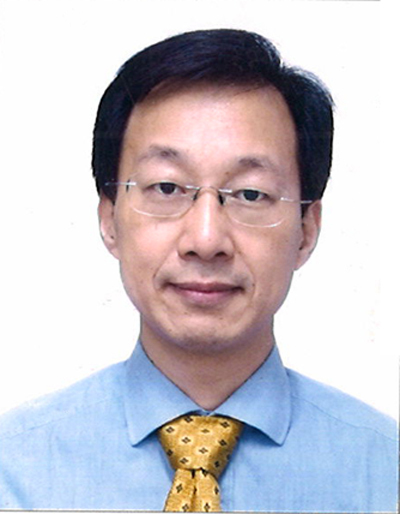
Zhang Daqing is a Professor at Peking University (Boya Chair Professor since 2014) and Full Professor at Telecom SudParis, France (2007–present). Previously, he held roles such as Department Head at the Institute for Infocomm Research (2004–2007) and Research Scientist positions in Singapore and Italy. He earned his Ph.D. in Physics from the University of Rome 'La Sapienza' in 1996. His research focuses on urban computing, context-aware systems, wireless sensing, and big data analytics. His work has been cited over 14,400 times with an H-index of 59. Key awards include the IEEE Fellow (2019) and multiple best paper awards at conferences like ACM UbiComp and IEEE UIC. Zhang has served as General Chair for 17 international conferences and is an associate editor for journals such as IEEE Pervasive Computing and ACM Transactions on Intelligent Systems. His contributions to context modeling have significantly impacted pervasive computing and service computing communities.
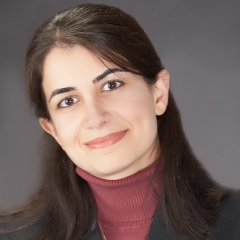
Professor Yasamin Mostofi is a faculty member in the Department of Electrical and Computer Engineering at the University of California, Santa Barbara. She is also affiliated with the Department of Computer Science and the Center for Control, Dynamical Systems and Computation. Her work bridges wireless systems, robotics, and machine learning. PhD, Stanford University MS, Stanford University MS, Sharif University of Technology Research Interests : Her lab focuses on wireless systems and autonomous agents , developing novel mathematical models for RF sensing and communication-aware robotics. Current directions include WiFi/millimeter wave/6G-based imaging and analytics, networked robotics for cellular systems, human-robot collaboration, and machine learning integration. Recent Publications : Her work spans through-wall crowd analytics , robot-assisted connectivity , and vision-aided wireless sensing , with applications in smart health, security, and retail optimization. Key trends include cross-modal integration (WiFi and vision), synthetic data generation, and real-world clinical validation. Scientific Recognition : Presidential Early Career Award for Scientists and Engineers (PECASE) Antonio Ruberti Prize, IEEE Control Systems Society NSF CAREER Award IEEE Region 6 Outstanding Engineer Award IEEE Fellow (2020) Advising and Leadership : She mentors PhD students in systems research, with graduates joining leading companies like Qualcomm and Google. She co-founded NPJ Wireless Technology (Nature Portfolio) and serves on editorial boards including IEEE Transactions on Control of Network Systems .
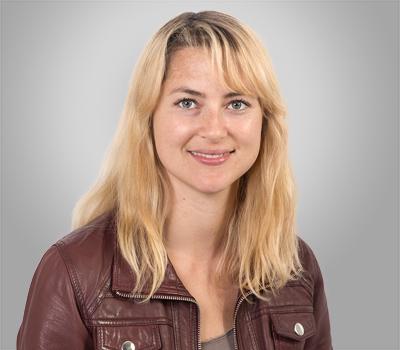
Heather Knight is an Assistant Professor in the Department of Electrical Engineering and Computer Science at Oregon State University, part of the College of Engineering. Her research focuses on social robotics and human-robot interaction, emphasizing non-verbal communication and the design of non-anthropomorphic robots. She directs the CHARISMA Research Lab, which applies principles from performing arts to enhance robot charisma through expressive motion and interaction design. Dr. Knight holds a Ph.D. in Robotics from Carnegie Mellon University (2016), and dual M.S. degrees in Robotics (Carnegie Mellon) and Electrical Engineering & Computer Science (MIT, 2008), alongside a B.S. in Electrical Engineering from MIT (2006). She also leads Marilyn Monrobot, a robot theater company producing comedic performances and an annual Robot Film Festival. Her work bridges technical innovation with societal impact, exploring how robots can better communicate intent through motion and interaction. Notable contributions include the 'Sanitizerbot' project for playful public health support and the development of Laban-based motion frameworks for expressive robotics. Awards include being named to Forbes' 30 Under 30 in Science (2011) and her TED talk on robot comedy. Key Research Themes: Multi-robot formations, expressive motion design, human-robot social dynamics, and ethical integration of AI in robotics. Recent Projects: VR storytelling with social robots, service robots in workplace environments, and motion-based affective communication. Her articles span topics from robot humor generation to industrial light communication systems, reflecting a commitment to both foundational research and applied solutions for human-robot coexistence.
Habib Ullah is an Associate Professor in Data Science at the Norwegian University of Life Sciences (NMBU), Norway, where he conducts research at the intersection of computer vision and machine learning. He is affiliated with the Institute of Data Science under the Faculty of Science and Technology. He has previously held academic positions at COMSATS University Islamabad, Pakistan, and the University of Ha'il, Saudi Arabia, and served as a postdoctoral researcher at The Arctic University of Norway. Educational Background: PhD in Information and Communication Technology (Computer Vision), University of Trento, Italy (2011–2015) MSc in Electronics and Computer Engineering, Hanyang University, South Korea (2007–2009) BSc in Computer Systems Engineering, NWFP University of Engineering and Technology, Pakistan (2002–2006) Habib Ullah's research is primarily focused on computer vision and machine learning, with applications in aquaculture, agriculture, and human behavior analysis. He investigates underwater fish feeding sounds using audio classification, develops zero-shot learning models for recognizing unseen classes, and applies deep learning to detect stress in salmon via skin dot patterns. He also explores AI-driven controlled environment agriculture, leveraging sensors and automation for optimal crop growth. His work emphasizes practical AI solutions for real-world challenges in environmental and biological domains. The recent publications highlight a strong trend in leveraging deep learning for zero-shot and semi-supervised learning, particularly in computer vision tasks such as sea ice classification, crowd anomaly detection, and agricultural monitoring. His research spans remote sensing, biomedical signal processing, and human activity recognition, demonstrating interdisciplinary versatility. The keywords reflect a focus on robust feature representation, knowledge transfer, and model generalization. Scientific Awards and Funding: Industrial PhD grant 'Advancing Controlled Environment Agriculture AI' from The Research Council of Norway (Project number 354125, 2 million NOK, 2024) Team member (Coordinator-Participant) in the Battery Cell Assembly Twin (BatCAT) project funded by Horizon Europe (7 mEuro, 2023–2027) Development of an AI-Based Image Analysis System for Monitoring Plant Status (Funding: 1.8 mNOK, starting 2025) Habib Ullah actively supervises PhD projects and contributes to academic service through editorial and organizational roles. He has served as an Associate Editor for IEEE Access, Guest Editor for MDPI Remote Sensing, and Editor of the Springer book Machine Learning Techniques and Sensor Applications for Human Emotion, Activity Recognition, and Support (ML-SHEARS) . He has also been a Track Chair and Program Committee Member for several international conferences, reflecting his leadership in the academic community. His research is supported by significant grants and collaborative projects, indicating strong institutional and international engagement. He is involved in multiple research teams and projects, including the BatCAT project on battery manufacturing and AI applications in controlled environment agriculture with RIFT LABS AS. His lab work integrates deep learning, sensor fusion, and data analytics for environmental and biological monitoring systems.
Jo Wood is Professor of Visual Analytics in the Department of Computer Science at City, University of London, where she has been employed since January 14, 2000. Her work bridges computer science, geographic information science, and human-computer interaction, focusing on innovative methods for visualizing complex spatial and behavioral data. Her research interests center on visual analytics , information visualization , and geovisualization , with applications in transportation, public health, crisis response, and citizen science. She investigates how interactive visual interfaces can support exploratory data analysis, decision-making, and storytelling, particularly through small multiples, faceted views, and sketch-based rendering techniques. The trends in her recent publications reflect a consistent focus on user-centered design , spatial data abstraction , and interactive exploration of multivariate datasets. Her work often integrates real-world behavioral data such as GPS tracks, cycling patterns, and crowd-sourced information to build meaningful visual narratives and support analytical reasoning. Throughout her career, Jo Wood has contributed significantly to the advancement of visual analytics through high-impact publications in top-tier venues such as IEEE Transactions on Visualization and Computer Graphics and Computer Graphics Forum. Her collaborations with researchers like Jason Dykes and Aidan Slingsby highlight her role in a vibrant research community. She has supervised numerous research projects and mentored students in visualization and geospatial analytics, though specific names are not listed in the provided text. Her work has been supported by various research grants, particularly in domains involving urban mobility, energy modeling, and crisis informatics, though grant details are not specified here. Jo Wood has also contributed to the design of visual analytics systems for applications including disease spread modeling, bicycle-hire scheme monitoring, and persuasive technology for health and leisure, demonstrating a strong commitment to impactful, interdisciplinary research.
Stephanie Gil is an Assistant Professor of Computer Science at the Harvard John A. Paulson School of Engineering and Applied Sciences. Her research focuses on artificial intelligence, robotics, and distributed systems, particularly addressing challenges in multi-agent coordination, resilience to adversarial attacks, and wireless communication for autonomous systems. She leads the REACT Lab, advancing research in resilient multi-robot networks and cyber-physical systems. Her work integrates machine learning, control theory, and wireless sensing to solve problems such as whale tracking via autonomous robots, proactive multi-robot routing, and decentralized exploration without explicit information exchange. She has received prestigious awards, including the DARPA Young Faculty Award (2024) and the Amazon Research Award (2021). Key research areas include resilient distributed optimization, trust-centered coordination in multi-agent systems, and leveraging wireless signals (e.g., WiFi-CSI) for sensing and bearing estimation. Her contributions span both theoretical frameworks and practical implementations, with a focus on real-world applications like autonomous rideshare routing and environmental monitoring. Dr. Gil’s research also explores trust and cybersecurity in dynamic networks, with publications on crowd vetting, malicious robot detection, and adaptive communication strategies. She collaborates on interdisciplinary projects, such as Project CETI, combining AI and robotics for ecological studies.
Dr. Mao Shan is a Senior Research Fellow at the Australian Centre for Robotics, part of The University of Sydney. He holds a PhD from The University of Sydney (2014) and has held research positions at Nanyang Technological University (2016-2017) and the Australian Centre for Robotics (2014-2016). His research focuses on autonomous systems, V2X communication, cooperative perception, and sensor fusion. Current students include Yaoqi HUANG, Henry LYU, Zhenxing MING, Nguyen TRAN, Tzu-yun TSENG, and Yupeng WANG. His work spans robotics, intelligent transportation systems, and control systems. Recent publications emphasize 3D object detection, cooperative perception frameworks, and autonomous navigation. He has contributed to the development of the University of Sydney Campus Dataset for robust autonomy testing and led cooperative perception projects funded by iMOVE CRC (2018). His research bridges theoretical advancements with practical applications in autonomous vehicles and multi-robot systems. Labs and affiliations include the Australian Centre for Robotics and the Intelligent Transport Systems Group. His interdisciplinary approach integrates probabilistic modeling, sensor fusion, and machine learning to address challenges in autonomous systems.
Michela Bertolotto is a Professor in the School of Computer Science at University College Dublin (UCD). Her research focuses on spatio-temporal data modeling, GIScience, and applications of geospatial technologies in fields like urban planning and health informatics. She leads a research group and has supervised 19 PhD and 8 MSc students. Her work includes innovations in LiDAR-based flood risk visualization, semantic web quality assurance, and open-source spatial data analysis. Bertolotto has held roles including College Lecturer at UCD (2000–2006) and postdoctoral research positions at the University of Maine and University of Genoa. Education: BSc and PhD in Computer Science from the University of Genoa (1993, 1998). Professional achievements include over 100 publications, 24 grants (e.g., Science Foundation Ireland-funded Urban ARK project), and editorial roles at journals like the International Journal of Geographical Information Science. Awards include the UCD President's Research Award (2001) and NATO Postdoc Fellowship (1998–1999). Research interests span map personalization, volunteered geographic information (VGI), and geospatial data quality. Her lab develops tools like the LAMSkyCam (low-cost sky imaging system) and dynamic flood risk viewers. She chairs international conferences and serves on program committees for GIScience events.
Suining He is an Assistant Professor at the University of Connecticut (UConn)'s School of Computing, leading the Ubiquitous and Urban Computing Lab since 2019. Previously, he was a postdoctoral research fellow at the University of Michigan's Real-Time Computing Lab (2016–2019). He holds a Ph.D. in Computer Science from the Hong Kong University of Science and Technology (2016) and a B.Eng. in Mechanical Design from Huazhong University of Science and Technology (2012). His research focuses on Cyber-Physical Systems (CPS), Smart & Connected Communities, Human-Centered Computing, and Urban Computing Cyberinfrastructure, with emphasis on mobility, equity, and AI-driven solutions. He has received prestigious awards including the NSF CAREER Award (2023), Google Research Scholar Program Award (2021), and recognition as a Stanford Top 2% Scientist (2020–2024). His work spans interdisciplinary grants from NSF, USDA, Google, NVIDIA, and industry partners. Recent publications explore autonomous driving simulation, equity-aware mobility prediction, and urban crowd activity modeling. Teaching excellence is reflected in his 2020 UConn Provost Award. He advises on reinforcement learning, CPS, and mobile computing, with openings for 2025/2026 PhD students. His lab collaborates on socially-conscious AI, privacy-preserving learning, and location-based services with industrial impact.
Gamze Z. Dane is a tenured Assistant Professor at the Department of Built Environment of Eindhoven University of Technology (TU/e), affiliated with EAISI Mobility and EAISI Health. She leads the Digital City Program (2020-2024) and specializes in decision-support systems, GIS, urban informatics, and data analytics for sustainable urban development. Her research integrates citizens into urban decision-making using digital tools like VR twins and data-driven approaches. Education: PhD in Urban Planning, MSc in Geographical Information Systems (GIS) and Decision Making. Research Interests: Focuses on human-environment interaction, transdisciplinary urban projects, and the impact of digitalization on cities. She develops tools for public participation and uses big data to analyze citizen behavior and urban experiences. Projects: Principal Investigator for EU/national projects involving cities like Eindhoven, Bologna, and Lisbon. Notable projects include UBeX Urban Behavior eXtended reality lab (2024-2026) and ROCK (2017-2020). Awards: Cuperusprijs 2020 (2nd place for student thesis) Drivers of Change Exhibition 2021 ISPRS International Journal Cover Story (2020) Teaching & Innovation: Coordinates courses like Smart Cities and Urban Redevelopment. Developed online teaching materials using VR, drones, and mobile apps. Guest lectures at Istanbul Technical University and visiting scholar at National University of Singapore. Labs & Networks: Leads the UBeX lab exploring immersive technologies for urban analysis. Active in academic networks including Urban Planning journals and international conferences.
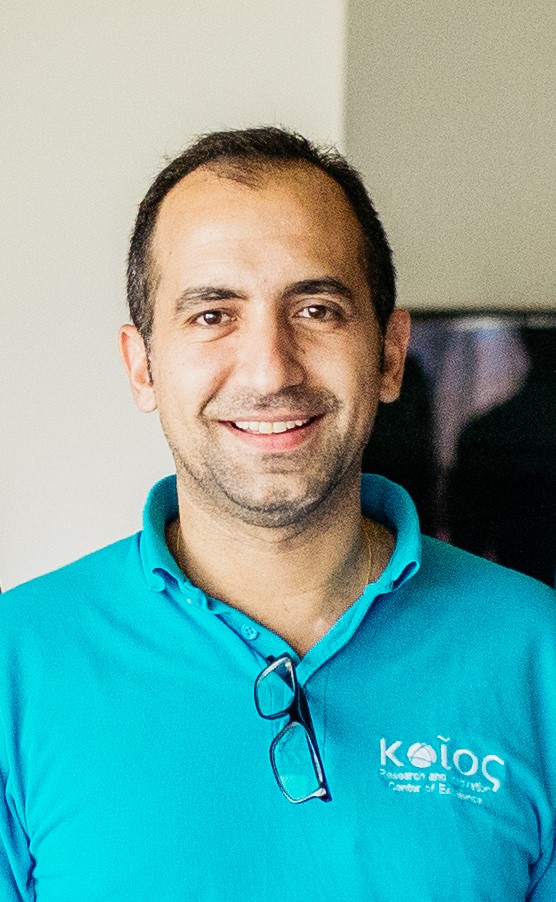
Panayiotis Kolios is an Assistant Professor at the Department of Computer Science, University of Cyprus (UCY). Previously, he served as a Research Assistant Professor at the KIOS Research and Innovation Centre of Excellence (2013–2024) and a Visiting Lecturer at UCY. He holds a BEng and PhD in Telecommunications Engineering from King’s College London (2008 and 2012, respectively). His research focuses on networked intelligent systems, emergency management using AI and UAV technologies, and cyber-physical systems. Education: BEng in Telecommunications Engineering, King’s College London, 2008 PhD in Telecommunications Engineering, King’s College London, 2012 Research Interests: His work centers on autonomous systems, intelligent transportation, and emergency management. Key areas include AI-driven disaster response, UAV-based surveillance, and algorithmic optimization for critical infrastructure. He develops solutions for real-time situational awareness and decision-support in emergencies. Recent work trends show a focus on multi-UAV coordination, disaster management platforms (like AIDERS), and AI applications in emergency response. His team’s 2023 win in the Cooperative Aerial Robots Inspection Challenge highlights advancements in UAV inspection algorithms. Scientific Awards: First Prize in Cooperative Aerial Robots Inspection Challenge (CDC 2023) Grants and Advising: He has secured over €40 million in EU and industrial grants, leading projects like PREDICATE, SWIFTERS, and AIDERS. His team advises on emergency response strategies and has trained first responders through EU-funded programs such as the Exchange of Experts training. Labs and Teams: He leads the Security and Emergency Response Group at KIOS CoE and established the Cyprus Civil Defence Aerial Observation Unit. His team collaborates with institutions like the Cyprus Police and Fire Service to operationalize UAV technologies in disaster scenarios.
Prof. Dr. Janick Edinger is a Professor of Distributed Operating Systems at the Department of Informatics, Faculty of Mathematics, Informatics and Natural Sciences, University of Hamburg, Germany. He leads a research group focused on distributed, context-aware, and adaptive computing systems, with a strong emphasis on edge computing, computation offloading, and assistive technologies. Education: PhD in Computer Science, University of Mannheim Studies at National Taiwan University Studies at University of Alberta, Canada Research stays at University of British Columbia, Hong Kong Polytechnic University, and Georgia State University, USA His research explores how edge computing and computation offloading can enable efficient, privacy-preserving processing of sensor and video data close to their sources, particularly in dynamic environments. He investigates the integration of autonomous and heterogeneous systems—such as drone fleets and mobile devices—into scalable middleware platforms for real-time monitoring and decision-making in logistics and industrial operations. His work also emphasizes societal impact, contributing to accessible routing, adaptive interfaces, and crowd-sourced mapping. The recent publications reflect a strong trend in edge computing, federated learning, privacy-preserving analytics, and assistive technologies. Topics include WebAssembly-based offloading, emotion prediction via eye tracking, real-time traffic detection, and predictive maintenance in Industry 4.0, showcasing a blend of foundational systems research and applied human-centered computing. Scientific Awards: PerCom 2021 Mark Weiser Best Paper Award Best Paper Award at IEEE PerCom 2021 for 'Voltaire: Precise Energy-Aware Code Offloading Decisions with Machine Learning' Prof. Edinger actively advises students and leads research projects involving grants and collaborations. His team includes PhD candidates and researchers working on middleware, edge systems, and context-aware applications. He has served on conference program committees, such as shadow PC member for EuroSys 2021, and publishes in top venues including IPDPS, PerCom, CHIIR, and COMPSAC. Labs and Teams: He leads the Distributed Operating Systems research group at the University of Hamburg, where he mentors students and collaborates on projects involving edge computing, IoT, and adaptive systems.
Rajesh Krishna BALAN is a Full-Time Professor at the School of Computing and Information Systems (SCIS) at Singapore Management University (SMU) . His research focuses on Human-Machine Collaborative Systems , Pervasive Sensing , and Health & Wellbeing technologies. Based in Singapore, he leverages mobile computing to address urban sustainability and quality-of-life challenges. PhD from Carnegie Mellon University (2006) Specializes in WiFi sensing , VR/AR , and health monitoring Advises PhD students in areas like urban mobility , empathetic design , and cyber-physical systems Beyond academia, BALAN's work bridges ubiquitous computing and public health , with applications in ageing populations , mental health analytics , and smart city optimization . His recent publications highlight cross-disciplinary approaches to sleep analysis , group behavior modeling , and contactless physiological sensing . BALAN actively contributes to educational technology through projects like Technology-Enhanced Learning frameworks. He is also a mentor in collaborative research areas including biomedical informatics and lifestyle monitoring , with a focus on mobile GPU optimization and low-power systems .