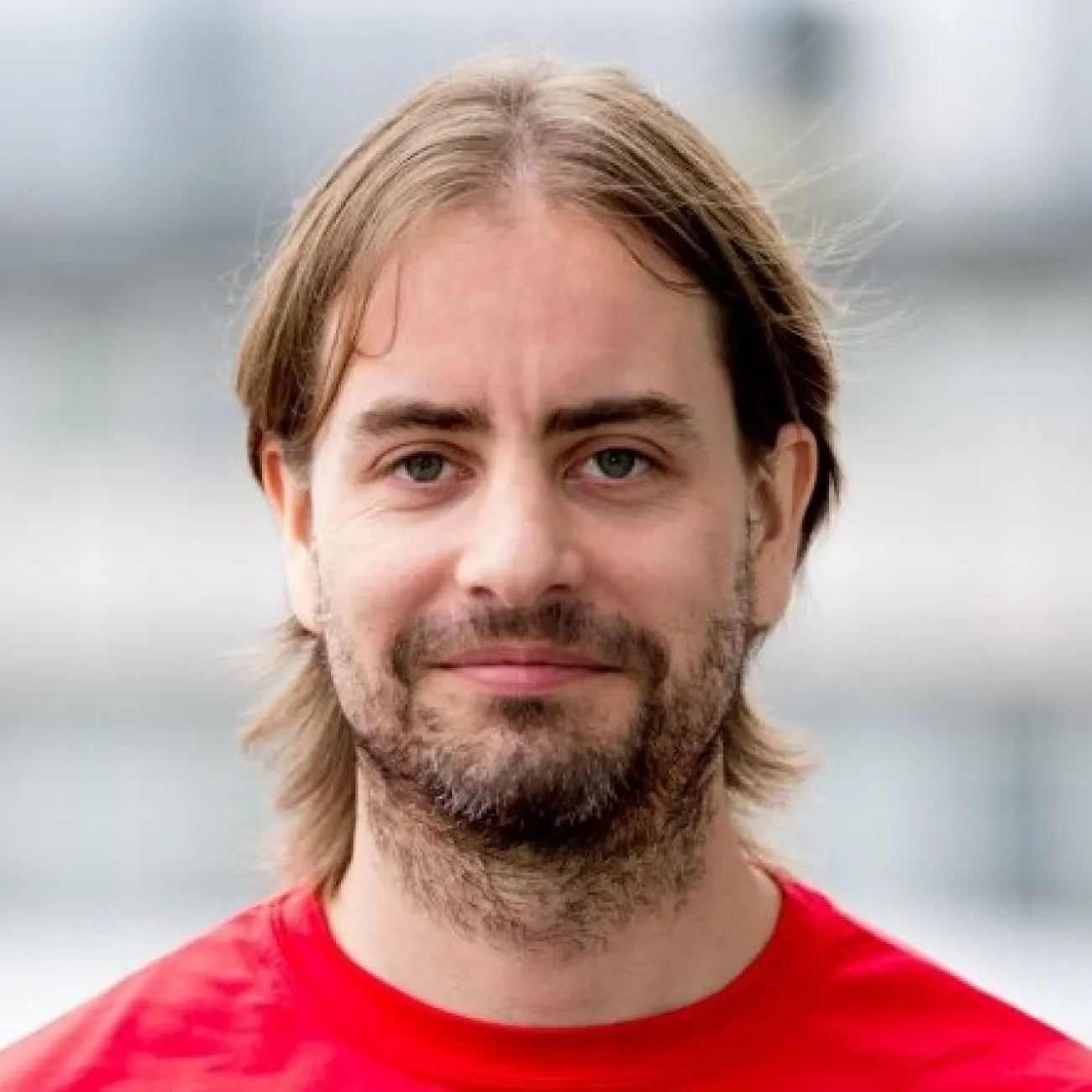
Rajesh Krishna BALAN is a Full-Time Professor at the School of Computing and Information Systems (SCIS) at Singapore Management University (SMU) . His research focuses on Human-Machine Collaborative Systems , Pervasive Sensing , and Health & Wellbeing technologies. Based in Singapore, he leverages mobile computing to address urban sustainability and quality-of-life challenges. PhD from Carnegie Mellon University (2006) Specializes in WiFi sensing , VR/AR , and health monitoring Advises PhD students in areas like urban mobility , empathetic design , and cyber-physical systems Beyond academia, BALAN's work bridges ubiquitous computing and public health , with applications in ageing populations , mental health analytics , and smart city optimization . His recent publications highlight cross-disciplinary approaches to sleep analysis , group behavior modeling , and contactless physiological sensing . BALAN actively contributes to educational technology through projects like Technology-Enhanced Learning frameworks. He is also a mentor in collaborative research areas including biomedical informatics and lifestyle monitoring , with a focus on mobile GPU optimization and low-power systems .
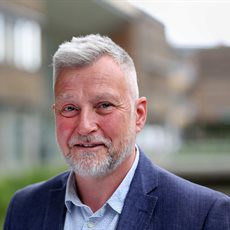
Professor David Thomas holds the position of Professor in Computer Engineering at the University of Southampton's Electronics and Computer Science Department. His research focuses on the intersection of software and hardware, particularly leveraging FPGAs for novel digital architectures and event-driven computing. He has a notable academic trajectory, having previously served as a Lecturer and Senior Lecturer at Imperial College London before joining Southampton in 2021. Dr. Thomas is actively involved in supervising PhD students and contributes to interdisciplinary research projects funded by the EPSRC, such as the SONNETS initiative exploring scalable event-triggered systems. Education: BSc in Computer Science (Imperial College London), PhD in Digital Architectures (Imperial College London). Postdoctoral roles included Research Associate and Research Fellow at Imperial's Department of Computing. Research Interests: Event-driven computing, FPGA-based systems, high-level synthesis, and high-performance computing. His work emphasizes practical implementations of theoretical models, such as custom processors and application-specific accelerators. Current projects include optimizing random number generation for FPGAs and exploring meta-programming techniques for hardware design. Advising and Grants: Supervises multiple PhD students in areas like neuromorphic computing and algorithm optimization. Active in securing funding for distributed system architectures and FPGA-based solutions. Labs/Teams: Member of the Cyber Physical Systems research group. Collaborates with interdisciplinary teams on projects like POETS (Partially Ordered Event-Triggered Systems) for large-scale parallel computing.
Julian Berger is a postdoctoral researcher at the Max Planck Institute for Human Development in the Center for Adaptive Rationality , where he explores how to enhance decision-making through hybrid human-AI systems. He is also a fellow of the Joachim Herz Foundation and has received funding from the Foundation of German Business and the Danish Data Science Academy. Education: M.A. Psychology in Business and Economics, Universidade Catolica Portuguesa (2021) B.A. Politics, Administration and International Relations, Zeppelin Universität (2018) His research spans human-AI collaboration , collective intelligence , and interpretable machine learning . A recurring theme in his work is developing methods to combine human expertise with AI capabilities for accuracy in domains like medical diagnostics , credit scoring , and football analytics . He has authored publications in high-impact venues such as PNAS , Nature Human Behavior , and Science and Medicine in Football . Scientific awards and funding include: Fellowship for interdisciplinary economics, Joachim Herz Foundation (2024) PhD funding from the Foundation of German Business (Stiftung der deutschen Wirtschaft) Research grant from the Danish Data Science Academy His recent article trends emphasize ensembling techniques that leverage complementary human and AI errors, algorithmic fairness, and practical heuristics like Hybrid Confirmation Trees. These works demonstrate significant improvements in diagnostic accuracy and decision cost-efficiency. Beyond academia, Berger works as a consultant and ML engineer with Simply Rational , focusing on interpretable models for financial and sports analytics. His work bridges theoretical research with real-world applications, prioritizing fairness, transparency, and human accountability in AI systems.
Dr. Todd D. Murphey is a Professor of Mechanical Engineering at Northwestern University's Robert R. McCormick School of Engineering and Applied Science. He serves as Director of Transformative Research and Director of the Master of Science in Robotics Program at Northwestern, leading initiatives in computational dynamics, control systems, and robotics. His work bridges engineering, neuroscience, and biomedical applications, with a focus on developing systems that interact effectively with humans and their environments. Dr. Murphey received his Ph.D. in Control and Dynamical Systems from the California Institute of Technology in 2002, with a thesis titled "Control of Multiple Model Systems." Prior to that, he earned a B.S. in Mathematics, summa cum laude, from the University of Arizona in 1997. Dr. Murphey's research centers on computational methods in dynamics and control, with applications spanning neuroscience, health science, robotics, and automation. His work in the Interactive & Emergent Autonomy Lab focuses on computational models of embedded control, biomechanical simulation, dynamic exploration, and hybrid control. The group develops mathematical approaches that lead to orders of magnitude improvement in computational efficiency for real-time implementation. Key application areas include assistive exoskeleton control, stabilization of energy networks, bio-inspired active sensing, entertainment robots, robotic exploration, and software-enabled stroke rehabilitation. Analysis of Dr. Murphey's recent publications reveals a strong emphasis on human-swarm interaction, algorithmic matter, and control of cyber-physical systems in uncertain environments. His work increasingly integrates information theory with physical systems, exploring how both autonomous and biological systems interact with environments to learn and improve behaviors. Recent trends show growing applications in rehabilitation technology, with particular focus on human-machine interaction in biomedical devices and embodied intelligence. Dr. Murphey has received numerous honors and awards for his contributions to robotics and engineering: Named Director of Transformative Research at Northwestern University (2025) Appointed IEEE Robotics and Automation Society Vice President of Publication Activities (2022) Co-recipient of Best Paper Award for IEEE Transactions on Robotics (2020) Appointed to Air Force Scientific Advisory Board (2019) Recipient of ABB Best Student Paper Award for CPL-SLAM research (2019) Cole-Higgins Award from Northwestern Engineering (2015) Dr. Murphey has supervised numerous graduate students including Taosha Fan, Giorgos Mamakoukas, and Ian Abraham, with research spanning robotic exploration using electrosense and mechanical contact, human-in-the-loop control, and shared control for rehabilitation devices. His lab has secured significant funding from the National Science Foundation, DARPA, and industry partners including Siemens and Ekso Bionics, supporting research in algorithmic matter, emergent behavior, and human-swarm collaboration. The Interactive & Emergent Autonomy Lab, led by Dr. Murphey, investigates how both autonomous systems and biological systems interact with their environments to learn and improve behaviors. Current projects include active learning and data-driven control, active perception in human-swarm collaboration, algorithmic matter and emergent computation, control for nonlinear and hybrid systems, cyber physical systems in uncertain environments, harmonious navigation in human crowds, information maximizing clinical diagnostics, reactive learning in underwater exploration, robot-assisted rehabilitation, and software-enabled biomedical devices. The lab collaborates with researchers across Northwestern and institutions including Georgia Tech, MIT, and industry partners.
Scott McCabe is a Professor of Marketing at Birmingham Business School, University of Birmingham. He earned his PhD from the University of Derby in 2001, focusing on visitor motivations in the Peak District National Park, and holds an MA in Leisure and Tourism Studies from the University of North London (1993) and an HND in Leisure Studies from the University of Salford (1991). Current co-editor in Chief of the Annals of Tourism Research Editorial board member of Tourism Management Elected fellow of the International Academy for the Study of Tourism (2019+) His research spans social tourism , responsible tourism , tourist emotions , and socio-linguistic methodology , with significant work on wellbeing outcomes from supported holidays for disadvantaged families. He has contributed to Annals of Tourism Research , Journal of Travel Research , and other top-tier journals. Recent publications address topics like qualitative research sampling , tourism theory , dark tourism motivations , and smart destination engagement . His work combines tourism policy critique , consumer behavior analysis , and methodological innovation . Scientific awards include fellowships and leadership roles in international tourism research committees. He has served as VP for the International Sociological Association's Tourism Research Committee and co-chairs the Academy of Marketing's Tourism Marketing SIG.
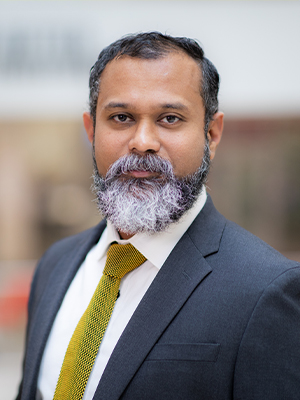
Isuru Godage is an Assistant Professor in the Department of Engineering Technology & Industrial Distribution at Texas A&M University's College of Engineering. He holds affiliated faculty positions in Mechanical Engineering and Multidisciplinary Engineering. His work focuses on advanced robotics systems, particularly soft robots, continuum arms, and their applications in surgery and blockchain-based collaboration. He earned a B.Sc. (Hons) in Electronic and Telecommunication Engineering from the University of Moratuwa, Sri Lanka (2007), and a Ph.D. in Robotics, Cognition, and Interaction Technologies from the University of Genova – Italian Institute of Technology, Italy (2013). Research Interests: Soft robots and continuum robots Modular robotic systems MRI-compatible surgical robotics for intracerebral hemorrhage evacuation Motion planning and control of underactuated systems Blockchain-enabled trustless collaboration between humans and robots His publications emphasize dynamic control of soft robotic arms, kinematic modeling of continuum systems, and bio-inspired designs for medical and industrial applications. Recent work explores locomotion strategies for soft quadrupeds and snake-like robots, alongside innovations in decentralized robotic data frameworks. Dr. Godage has secured grants such as the NSF CAREER Award (2021) focused on transformable soft robots and collaborative projects with the National Robotics Initiative (NRI). His research bridges robotics mechanics, control theory, and emerging technologies like blockchain for swarm robotics.
Dr. Kezhi (Ken) Li is an Associate Professor of AI in Healthcare at the Institute of Health Informatics, University College London (UCL). He leads the AI for Health research group and has established himself as a leading expert in applying artificial intelligence to solve complex problems in healthcare, with over 130 publications in leading journals (total impact factor greater than 400). Dr. Li earned his Doctor of Philosophy from Imperial College of Science, Technology and Medicine in 2013, followed by research positions at the Medical Research Council (2015-2017), University of Cambridge (2014-2015), and Royal Institute of Technology (KTH) (2013-2014). His academic journey reflects a consistent trajectory from technical AI research toward increasingly healthcare-focused applications. Dr. Li's research focuses on solving physiological, medical, clinical, and operational problems in healthcare using AI techniques. His specific expertise includes AI in healthcare using electronic health records (EHR), biomedical time series analysis using monitors/wearables, diabetes management, large language models (LLM) in healthcare (especially mental health), patient flow optimization, and digital health with federated learning. His work bridges the gap between cutting-edge AI methodologies and practical healthcare applications, with a strong focus on improving patient outcomes and healthcare system efficiency. Analysis of Dr. Li's publication history reveals a strong emphasis on diabetes management technologies, particularly blood glucose prediction systems using advanced neural network architectures. More recently, his work has expanded into mental health applications of large language models, blockchain-based federated learning for healthcare data, and mortality prediction in critical care settings. His research demonstrates a clear evolution from purely technical AI development toward increasingly clinically impactful applications, with growing emphasis on explainability, privacy preservation, and real-world implementation challenges. Dr. Li has received numerous prestigious awards recognizing his contributions to healthcare AI: Best Application Award of IEEE Global Blockchain Conference (2025) Fellow of British Computer Society (2025) Fellow of the Royal Society for Public Health (2024) Healthcare Partnership of the Year category at the London Higher Awards (2024) ECR Promising Project Award (2023) Gallivan Award finalists (2022) Stylianos Kalaitzis PhD Award Winner (2022) HDR UK Team of the Year (COVID-19) Award (2021) As an educator, Dr. Li serves as the Director of MRes study (AI-enabled Healthcare Systems) at UCL. He leads multiple key modules including Healthcare Artificial Intelligence Journal Club, Dissertation in Artificial Intelligence Enabled Healthcare, and Advanced Machine Learning for Healthcare. His supervision extends across dissertation projects and junior researchers in his AI for Health group. His research has been supported by various grants, including those from HDR UK, focusing on translating AI innovations into practical healthcare solutions. Dr. Li leads the AI for Health research group (https://ai4hucl.github.io/ai4h_webs/), which comprises researchers with diverse expertise in machine learning, healthcare systems, and clinical domains. The group maintains strong collaborations with healthcare providers and industry partners to ensure their research addresses real-world healthcare challenges and can be effectively translated into clinical practice.
Yan Huang is an Associate Professor of Business Technologies at the Tepper School of Business, Carnegie Mellon University. She holds a Ph.D. in Information Systems and Management from Carnegie Mellon University (2013) and a B.Sc. (with honors) in Information Systems and Management from Tsinghua University, Beijing, China (2009). Prior to joining Carnegie Mellon University, she served as an Assistant Professor of Technology and Operations at the University of Michigan–Ann Arbor, Ross School of Business (2013-2018). Her educational background includes: B.Sc. (with honors) in Information Systems and Management, Tsinghua University, Beijing, China (2009) Ph.D. in Information Systems and Management, Carnegie Mellon University, Pittsburgh, United States (2013) Dr. Huang's research examines the economic and social impacts of technologies and identifies effective designs and policies for technology-enabled markets and platforms. She employs economic theories, structural modeling, statistical modeling, machine learning methods, and an understanding of the underlying technologies in her research. Her recent work focuses on the economics of artificial intelligence (AI) and machine learning (ML), with particular attention to algorithmic fairness, transparency, and collusion. She is among the first to bring economic and social perspectives to research on fair ML. Additionally, she studies digital platforms and online markets, examining how firms can leverage data-driven strategies to optimize pricing, personalization, and user engagement. Her recent publications demonstrate a strong focus on the intersection of AI/ML with economic principles, particularly in areas like algorithmic bias, pricing strategies, and platform regulation. A significant portion of her work examines how machine learning algorithms impact financial lending decisions, housing markets, and content creation platforms. Her research methodology frequently combines structural econometric modeling with empirical analysis of real-world data, providing both theoretical insights and practical implications for platform design and policy. Dr. Huang has received several prestigious awards for her scholarly contributions: AIS Senior Scholar Best Publication of 2023 Award for "Algorithmic Transparency with Strategic Users" Runner Up, Best Paper Published in Information Systems Research for 2021 for "Crowds, Lending, Machine, and Bias" INFORMS Information Systems Society Sandy Slaughter Early Career Award Finalist, Best Student Paper Award, CIST 2021 for "Human-Algorithmic Bias: Source, Evolution, and Impact" Pounds Fellowship As an active member of the academic community, Dr. Huang serves on various committees at CMU including the MSBA Curriculum Review Committee and the Tepper School Strategic Plan Task Force. She has also held editorial positions for Management Science, Information Systems Research, and the International Conference on Information Systems. Her teaching portfolio includes courses on Human and Algorithmic Bias, Modern Data Management, and PhD-level instruction at the Tepper School.
Federico Toschi is a Full Professor at Eindhoven University of Technology (TU/e), holding joint appointments in Applied Physics and Mathematics and Computer Science departments. His research focuses on multi-scale transport phenomena, combining statistical physics, fluid dynamics, and computational methods. He leads projects in the 4TU Centre for Multiscale Phenomena and EAISI. Education: PhD in Physics (University of Pisa, 1998) and academic background at Scuola Normale Superiore di Pisa. Interdisciplinary expertise in fluid dynamics turbulence, Lagrangian turbulence, crowd dynamics, and Lattice Boltzmann methods. Recipient of APS Fellow (2015), Euromech Fluid Mechanics Fellow (2012), and Ig Nobel Prize for Physics (2021). Research emphasizes turbulence modeling, pedestrian dynamics, and active matter, with applications in environmental flows and crowd management. His work bridges computational innovations with experimental validations. Recent articles explore kinetic data-driven turbulence modeling, pedestrian flow optimization, and turbulence effects in biological systems. Projects include digital twins for seismicity modeling and rarefied gas dynamics. Teaches fluid mechanics, computational physics, and chaos theory courses. Founded Flow Matters Holding BV, applying research to practical solutions.
Dae-Jin Lee is an Assistant Professor at IE University’s School of Science and Technology, specializing in statistical modeling and data science. Previously, he served as a Research Line Leader at the Basque Centre for Applied Mathematics (BCAM) and coordinated the Knowledge Transfer Unit in Data Science/AI. His academic background includes a Ph.D. in Mathematical Engineering (2010) from Universidad Carlos III de Madrid and postdoctoral research at CSIRO (Australia). His research focuses on statistical methods for complex data, including penalized splines, tensor product smooths, and applications in biomedicine, epidemiology, environmental science, and sports analytics. He has led multidisciplinary projects funded by public and industry grants, collaborating globally with experts across fields like engineering, medicine, and biology. Key research themes include predictive modeling for health outcomes (e.g., SARS-CoV-2 pneumonia severity), sports injury prevention, and AI in healthcare. His work integrates machine learning with traditional statistical techniques, addressing real-world challenges like pedestrian dynamics simulations and automated medical diagnostics. He is actively involved in scientific organizations, including the Spanish Biostatistics Society and the Statistical Modelling Society. His recent publications highlight innovations in growth curve modeling, AI ethics, and spatiotemporal data analysis, reflecting his commitment to advancing both theoretical and applied statistics.
Dr. Jeffrey Morgan is a Researcher at Cardiff University's School of Social Sciences, specializing in multidisciplinary research at the intersection of computer science, social science, and geography. His work emphasizes human-computer interaction, visualization, and big data analytics. He holds a Research Software Engineer role, combining technical expertise with academic inquiry. Key research interests include AI-driven patent analysis, IoT applications in rural citizen science, and geospatial Twitter demographics. He has contributed to studies on Hadoop infrastructure optimization and social media conflict detection, often collaborating with institutions like Xiamen University and the University of Bremen. His publications span topics like energy-efficient big data processing, digital geography of Welsh identity, and scalable social media analysis frameworks. Notable projects include COSMOS (a cloud-based social media analysis platform) and studies on post-devolution cultural narratives in Wales. Award-winning work includes computational Twitter analysis for detecting online community tensions and geotagging behavior patterns. His research often bridges technical innovation with societal impact, addressing challenges in rural technology deployment and digital sociology.
Ruth Baker is a Professor of Applied Mathematics at the University of Oxford and a key member of the Mathematical Institute . Her work bridges mathematics, computational modeling, and biology to address complex developmental systems. Research Interests : Developing mathematical frameworks for cell and tissue-level biological processes Integrating computational and statistical methodologies with experimental data Exploring data-driven modeling for multidisciplinary collaboration Scientific Awards : Simons Investigator (2024-2029) Royal Society Wolfson Research Merit Award (2017-2022) FIMA (2021) FRSB (2020) Leverhulme Research Fellowship (2017-2019) London Mathematical Society Whitehead Prize (2014)
Professor Ioannis Katakis is a Faculty Member at the University of Nicosia, where he is affiliated with the School of Sciences and Engineering and the Department of Computer Science. He has held various academic positions across multiple institutions including Aristotle University of Thessaloniki, University of Cyprus, Cyprus University of Technology, Open University of Cyprus, Hellenic Open University, Athens University of Economics and Business, and National and Kapodistrian University of Athens. His educational background includes a PhD in Machine Learning for Automated Text Classification (2005-2009), a Master's in Information Systems (2005-2007), and a Bachelor's in Computer Science (2000-2004), all from Aristotle University of Thessaloniki. Professor Katakis specializes in several cutting-edge areas of computer science and data analysis. His primary research interests include Mining Social, Web and Urban Data , Sentiment Analysis and Opinion Mining , Data Streams , and Multi-label Learning . His work bridges theoretical machine learning approaches with practical applications in social media analysis, healthcare informatics, privacy protection, and smart city technologies. He has published extensively in top venues including CIKM, ECML/PKDD, IEEE TKDE, and ECAI. His recent publications demonstrate a clear trend toward applying machine learning techniques to real-world problems with societal impact. He has focused on areas such as GDPR compliance in smart devices, sentiment analysis in crowd-sourced content, healthcare applications including drug reaction classification and brain disease monitoring, and privacy protection in wearable technologies. His work often involves multi-modal data analysis and addresses challenges in data streams and multi-label classification. Professor Katakis has made significant contributions to his field, with his research cited over 4,200 times. He serves as an Editor for the journal Information Systems and has edited four special issues in journals such as DAMI and InfSys. He regularly contributes to the academic community by serving on program committees for major conferences including ECML/PKDD, WSDM, DEBS, and IJCAI, and by reviewing for prestigious journals like TPAMI, DMKD, TKDE, TKDD, JMLR, TWEB, and ML. He has been actively involved in European research projects, notably serving as Quality Assurance Coordinator and Senior Researcher for projects such as VAVEL (www.vavel-project.eu) and INSIGHT (www.insight-ict.eu). His grant activities demonstrate a strong focus on collaborative, interdisciplinary research with practical applications in urban data management, social media analysis, and healthcare informatics. He has organized three workshops at major conferences (ICML, ECML/PKDD, EDBT/ICDT) and has extensive experience translating research into practical applications through his involvement in European projects.
Professor David Abbink is a Full Professor of Haptic Human-Robot Interaction at Delft University of Technology, holding a joint appointment between the Department of Cognitive Robotics in the Faculty of Mechanical Engineering and Industrial Design Engineering since November 2023. He founded the Delft Haptics Lab and co-founded the Cognitive Robotics Department in 2017. Abbink leads the transdisciplinary research and innovation centre FRAIM, which was awarded the prestigious NWO Stevin Premie (Dutch Nobel Prize equivalent) in June 2024. Trained as a mechanical engineer specializing in biomechanics, Abbink's research focuses on human behavior adaptations when interacting with autonomous systems. He has published over a hundred scientific articles on human-robot interaction, haptics, shared control, tele-operation, driver assistance systems, and sensorimotor control. His research has been funded by industry partners (Nissan, Boeing, Renault), RVO (Brightsky project 2022-2026), and the Dutch Science Foundation NWO through personal grants (VENI 2010-2014, VIDI 2015-2019). Abbink's recent work centers on worker-robot relations as an academic focus, collaborating with organizations like Erasmus Medical Centre for nursing work, Schiphol and KLM for baggage handling, and KLM Engine Repair Services for maintenance work. He also serves as scientific director for the Centre for Meaningful Human Control, launched in October 2024. His work bridges engineering, social sciences, and practical applications to responsibly shape the future of work with emerging robotic capabilities. NWO Stevin Premie (2024) Best IEEE SMC journal paper on Cybernetics (2019) Top 25 scientific talents according to New Scientist (2015) Best teacher of Faculty 3mE (2013, 2014) Best teacher of Department of BioMechanical Engineering (seven consecutive years) Abbink has supervised over 110 MSc students and 11 PhD students. His educational contributions include developing the Master Programme in Robotics at TU Delft and receiving international recognition for his course 'The Human Controller.' He is also a prominent science communicator, featured on national television, radio, and major Dutch newspapers, and has delivered lectures at venues like The Royal Institution and Lowlands Festival. Despite his academic commitments, Abbink maintains a drummer persona, having recorded four albums and performed over 400 shows across three continents between 1999-2014.
João Paulo Costeira is an Associate Professor at the Department of Electrical and Computer Engineering, Instituto Superior Técnico (IST), Lisbon. He holds a PhD in Electrical and Computer Engineering from IST (1995) and was a Visiting Scientist at Carnegie Mellon University's Robotics Institute (1991–1995). His research focuses on Computer Vision, 3D Reconstruction, and Structure from Motion, with contributions to object recognition, robotics, and multimedia analysis. Education: PhD in Electrical and Computer Engineering, IST (1995); Visiting Scientist, CMU Robotics Institute (1991–1995). Roles: Coordinator of the Signal and Image Processing Group (SIPg), Co-director of the Carnegie Mellon|Portugal Dual PhD Program in ECE and Robotics (2007–2018), and Scientific Director of Carnegie Mellon|Portugal (2014–2018). Research Interests: João's work emphasizes 3D reconstruction from video, rigid and non-rigid motion analysis, and applications in robotics and urban surveillance. He has pioneered methods for motion segmentation and robust correspondence problems in computer vision. Publications: His recent work includes advancements in apple counting systems, rotation averaging for robotics, and domain adaptation for traffic density estimation. These contributions highlight his expertise in real-world computer vision challenges. Awards: None explicitly listed. However, his extensive publication record and academic leadership reflect significant scholarly impact. Advising & Grants: Supervised 13 PhD students, many co-advised with CMU faculty. Active in projects like CityCam (vehicle counting) and MultiDrone (robotics collaboration). Funded by FCT, EU, and industry partnerships. Labs/Teams: Leader of the Signal and Image Processing Group (SIPg) at ISR. Involved in NETSyS program for networked systems and robotics.