Muntadher Fadhil Sallal is a researcher affiliated with the University of Portsmouth, Department of Computing and Informatics, United Kingdom. His academic work focuses on blockchain technology, Bitcoin network security, and performance optimization, with additional research interests in e-voting systems utilizing distributed ledger technology. Education: PhD in Computer Science, University of Portsmouth, UK (2018) Research Interests: Dr. Sallal's research primarily investigates the intersection of blockchain technology and network security, with a specific focus on Bitcoin network architecture and performance metrics. He explores methods to enhance propagation delay through clustering strategies and node protocol analysis. Additionally, his work extends to implementing blockchain-based solutions for secure e-voting systems with verifiability features, as well as innovative applications in 6G network spectrum management and industrial autonomous robot security. Publication Trends: His publications demonstrate expertise in blockchain performance analysis, with 15 recent works examining network optimization, security frameworks for decentralized systems, and verifiable voting mechanisms. Key research areas include cryptocurrency network topology, latency reduction in peer-to-peer systems, and blockchain-based infrastructure for secure digital processes.
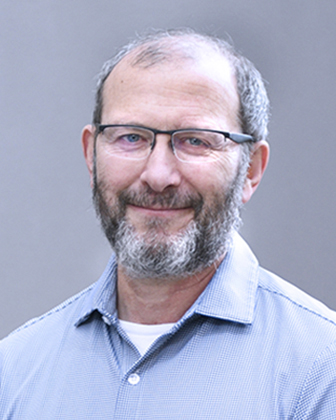
Igal Szleifer is a Professor at Northwestern University in the Department of Chemistry, holding the Christina Enroth-Cugell Professorship in Biomedical Engineering and affiliated with the Chemistry of Life Processes Institute (CLP). His interdisciplinary work bridges medicine, biology, chemistry, physics, and materials science through molecular modeling of biointerphases. His academic foundation includes: B.Sc. in Chemistry from Hebrew University of Jerusalem, Israel Ph.D. summa cum laude from Hebrew University of Jerusalem, Israel Professor Szleifer develops theoretical frameworks to study molecular-scale interactions between synthetic materials and biological systems. His research group focuses on predicting how molecular factors govern biocompatibility, enabling rational design of drug carriers and biomaterials. This dual approach combines fundamental understanding of interfacial phenomena with practical engineering applications, consistently through experimental-theoretical collaborations. His 2011 publications reveal dominant trends in computational biophysics and soft matter, with recurring themes in nanoparticle design, membrane biophysics, and responsive polymer systems. These works demonstrate how molecular simulations translate to macroscopic material properties, particularly in drug delivery and biosensing contexts. No specific awards are documented in the source material, though his research appears in high-impact journals including Journal of the American Chemical Society and Biophysical Journal. Professor Szleifer maintains active collaborations with experimental labs across disciplines and has supervised graduate students. His grant-supported research emphasizes predictive modeling as a tool for materials innovation, particularly in biomedical applications requiring precise molecular control. As a core member of the Chemistry of Life Processes Institute, he contributes to Northwestern's interdisciplinary ecosystem focused on chemistry-driven life sciences research.
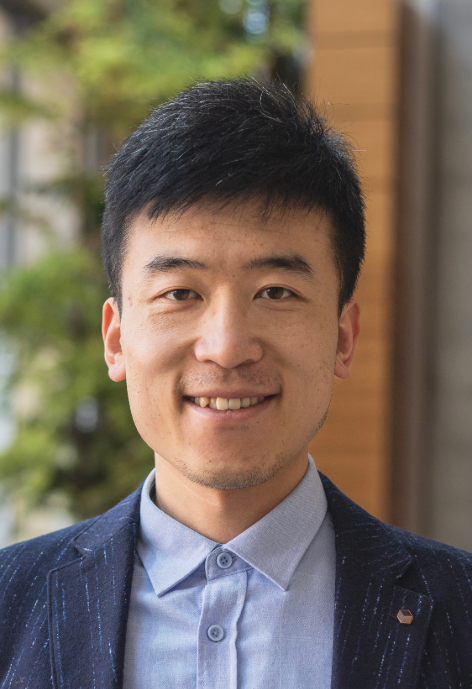
Dr. Pei Li is an Assistant Professor in the Department of Civil and Architectural Engineering and Construction Management at the University of Wyoming. Her research focuses on advancing safety and mobility through the development of digital, intelligent transportation systems that can sense traffic, predict future conditions, and make decisions. She bridges transportation engineering with cutting-edge technologies including digital twins, AI, and V2X communication systems. Dr. Li's educational background includes: B.Eng in Logistics Engineering from Tongji University (2015) M.Eng in Communication and Transportation Engineering from Tongji University (2018) M.S. in Smart Cities from University of Central Florida (2020) Ph.D. in Civil Engineering from University of Central Florida (2021) Dr. Li's research spans multiple domains in intelligent transportation systems. Her primary interests include Digital Twins, Artificial Intelligence, Transportation Safety, and Human Factors. She develops models that leverage deep learning, computer vision, and sensor technologies to create innovative solutions for traffic management and crash prevention. Her work often addresses the challenges of real-time decision making in complex transportation environments, with particular emphasis on pedestrian safety, autonomous vehicle systems, and connected infrastructure. Dr. Li's publication record shows a progression from basic vehicle maneuver detection using smartphone sensors to sophisticated digital twin applications and explainable AI for autonomous systems. Her recent work (2024-2025) demonstrates expertise in large language models for transportation, federated digital twin frameworks, and physics-informed trajectory planning. She frequently employs advanced techniques including deep reinforcement learning, attention mechanisms, and natural language processing to address complex transportation safety challenges. Dr. Li maintains an active research presence through multiple platforms including ResearchGate, LinkedIn, GitHub (as PeiLi-Sandman), and Google Scholar. Her GitHub profile shows contributions to self-driving car projects, including implementations of particle filters, MPC controllers, and other autonomous vehicle technologies from the Udacity Self-Driving Car Engineer Nanodegree program. Dr. Li is actively recruiting students for her research group, with opportunities available for those interested in digital twins, artificial intelligence, transportation safety, and human factors research. She appears to be establishing a robust research program at the University of Wyoming focused on intelligent transportation systems, with particular emphasis on making transportation safer through advanced computing technologies.
Prof. Fabio Gasparetti is a tenured Full Professor at the Department of Civil, Computer and Aeronautical Engineering of the University of Rome 3 , Italy. His academic profile spans Machine Learning , Recommender Systems , and Educational Technology , with a strong focus on Cultural Heritage digitization and Social Media analytics. He is affiliated with the university's AI Lab (a website currently under construction). Email: fabio.gasparetti@uniroma3.it Phone: 0657333212 Location: Via Vito Volterra 62, Rome Research Interests revolve around: Contextual Recommender Systems for cultural and educational domains Social Network Mining for community detection and user modeling Machine Learning Applications in aerospace engineering and e-learning Temporal Analysis of MOOC dynamics and behavioral patterns Prerequisite Modeling for educational content sequencing Cultural Ecosystems in digital pandemic contexts Recent Publications (2021-2025) demonstrate interdisciplinary synergy between Computer Science and Humanities domains, particularly in: Machine Learning for aerospace physics Multimodal LLMs in art interpretation Social data-driven cultural personalization Graph-based educational community monitoring Cross-platform museum positioning Migration discourse analysis
Vishnu Prabhu is an Assistant Professor at the University of Central Florida , affiliated with the School of Modeling, Simulation and Training. His research focuses on data-driven decision-making in healthcare , health systems modeling , and IoT solutions to improve patient, clinician, and system outcomes. He previously served as an Assistant Professor at UNC Charlotte. Prabhu employs simulation and stochastic modeling to tackle public health challenges such as Emergency Department Crowding and Healthcare-Acquired Infections . He also explores Extended Reality (AR/VR) , wearables , and non-pharmacological interventions for pain and mental health management, conducting multiple clinical trials in these areas. His recent publications and projects emphasize hybrid modeling , digital health tools , and workforce optimization in healthcare systems. Prabhu has secured grants for initiatives like ED-SHIFT (NIOSH/CDC) and AI applications for pneumonia detection (NSF SBIR). Education : Ph.D. and M.S. in Industrial Engineering (Clemson University), B.Tech. in Mechanical Production Engineering (University of Kerala). Projects : Co-Investigator for ED-SHIFT, Principal Investigator for AI-driven pneumonia detection, Co-Founder of NSF SBIR Phase I.
Guido Cantelmo is an Assistant Professor at the Technical University of Denmark (DTU) within the Department of Technology, Management and Economics, specifically in the Division of Transport's Section for Transport Systems Modelling. His research leverages big data analytics and machine learning to address complex transportation challenges, with expertise spanning traffic flow modeling, demand estimation, shared mobility systems, and urban network optimization. He maintains active collaboration with international cities including Copenhagen, Munich, and Tel Aviv-Yafo for empirical validation of his models. His research integrates computational techniques such as Graph Neural Networks, meta-learning, and physics-informed AI with transportation theory. Primary domains include: Dynamic traffic assignment using real-time data sources Machine learning for imbalanced mobility datasets Emission impact modeling of urban fleets Behavioral analysis of shared mobility adoption Large-scale simulation calibration frameworks Publication analysis (2022-2025) reveals dominant themes: data-driven demand estimation (37% of recent works), machine learning metamodeling (27%), shared mobility optimization (20%), and urban policy impact studies (16%). Methodological innovations include transfer learning for sparse data and multi-city validation approaches. No scientific awards or student mentoring relationships are documented in available sources. Similarly, no information exists regarding research grants, laboratory affiliations, or educational background.
Pascual Campoy Cervera is a Full Professor at the Universidad Politécnica de Madrid (UPM) and holds visiting professor positions at Delft University of Technology, Tongji University, and Queensland University of Technology. His work focuses on Control Systems , Machine Learning , and Computer Vision for Unmanned Aerial Vehicles (UAVs) . As Principal Investigator of the Computer Vision and Aerial Robotics group at UPM's Center for Automation and Robotics (CAR), he has led over 40 R&D projects with European, national, and industrial funding. Current affiliations: UPM, TU Delft, CAR-UPM Research themes: UAV autonomy, swarm robotics, embedded vision systems His research integrates cutting-edge technologies in image processing, control theory, and artificial intelligence to enhance UAV capabilities in unstructured environments. Recent projects include: Autonomous firefighting systems High-speed drone racing frameworks Swarm-based solar farm inspection Thrust vectoring for heavy UAVs Notable scientific awards include multiple international prizes at UAV competitions (IMAV12–17). His team has developed the Aerostack and Aerostack2 frameworks for aerial robotics, which address execution control, mission planning, and sensor fusion challenges.
Dr. Milad Haghani is a Senior Lecturer at the School of Civil and Environmental Engineering , UNSW Sydney , and holds an Australian Research Council (ARC) Discovery Early Career Researcher Award (DE210100440) for his work in crowd evacuation planning. He earned his PhD in Transport Engineering from the University of Melbourne and has held fellowships at the University of Sydney and University of Melbourne. His research spans transport safety, human factors, and meta-science, with particular emphasis on pedestrian dynamics and disaster preparedness. Education: PhD in Transport Engineering, University of Melbourne MSc in Transport Engineering, Sharif University of Technology BSc in Civil Engineering, Iran University of Science and Technology Research Themes: Crowd safety and evacuation modeling Transport psychology and road safety Econometric and choice modeling Meta-research and science of science Disaster mitigation and urban planning Behavioral interventions in safety Scientific Recognition: ARC DECRA Fellow (DE210100440, 2021-2024) His publications (15 most recent) cover topics including pedestrian behavior , crowd accident analysis , emergency evacuation optimization , and transport safety policy . As a DECRA Fellow, he leads projects on behavioral interventions in crowd management. His work intersects transport engineering , human psychology , and disaster response systems , with applications in urban design, public security perception, and emergency logistics. Dr. Haghani contributes to science of science through bibliometric analyses, examining research trends in fields like coronavirus studies , wildfire science , and digital health technologies . His methodological expertise spans discrete choice modeling and simulation-based research , including virtual reality applications for safety training.
Dr. Takayuki Ito is Professor at Nagoya Institute of Technology in the Computer Science & Engineering school. He earned his Doctor of Engineering from Nagoya Institute of Technology in 2000. His academic journey includes positions as a JSPS research fellow, associate professor at JAIST, and visiting scholar at prestigious institutions including USC/ISI, Harvard University, and MIT (visited twice). He has served as a board member of IFAAMAS (International Foundation for Autonomous Agents and Multiagent Systems). Dr. Ito's research primarily focuses on multi-agent systems, automated negotiation, argumentation frameworks, and AI-mediated discussion platforms. His work spans theoretical foundations of argumentation semantics to practical applications in sustainable development, urban planning, and online citizen engagement. He has developed the D-Agree platform for facilitating large-scale online discussions, with notable implementations in Afghanistan for municipal policy-making and SDG implementation. His publication record demonstrates significant contributions to understanding how AI can mediate human discussions, with experiments involving thousands of participants in countries like Afghanistan. His research shows how argumentative agents can improve responsiveness in discussions while also potentially polarizing debates by reinforcing initial stances. His work bridges theoretical computer science with practical social applications, particularly in contexts with challenging participation constraints. Board member of IFAAMAS Developer of D-Agree discussion support system Conducted large-scale experiments in Afghanistan with over 1,000 participants Expert in multi-agent negotiation protocols Dr. Ito's research has substantial implications for democratic processes, particularly in contexts where traditional face-to-face meetings are problematic due to security concerns, cultural restrictions, or pandemic conditions. His work demonstrates how AI mediation can overcome barriers to equal participation, especially for women and religious minorities in restrictive societies.
Illya Vakser is a Professor of Molecular Biosciences and founding Director of the Center for Computational Biology at the University of Kansas . His work focuses on molecular modeling of protein interactions and structural genomics , specifically developing methods for protein complex prediction and genome-scale interaction networks . PhD in Biophysics, Moscow State University (1989) Postdoctoral training: Weizmann Institute, Washington University, Rockefeller University Previous faculty: Medical University of South Carolina, SUNY Stony Brook Research emphasizes fast and robust structural modeling for large-scale protein interaction networks, including the development of the FFT docking algorithm and the CAPRI protein docking competition . Publications highlight genome-wide docking , energy funnel analysis , and variant mapping on protein structures. He teaches courses in computational biology and molecular modeling , maintaining the Vakser Lab as a hub for high-throughput structural bioinformatics and cell modeling research.
Ryuichiro Ishikawa is a Professor at the Faculty of International Research and Education, Waseda University , and a Visiting Researcher at the University of Tokyo. His research focuses on Game Theory , Experimental Economics , and Collective Intelligence Design , with a particular emphasis on asset market bubbles, mechanism design, and the economics of information. He has received accolades such as the Best Paper Award (2011) and the Education Contribution Award (2009) . Research Interests : Game theory, experimental asset markets, bounded rationality, epistemic logic, mechanism design, and collective intelligence. Key Projects : Analyzed how heterogeneous beliefs and cognitive abilities affect market dynamics, designed protocols for consensus-building in communication, and explored the role of higher-order beliefs in strategic decision-making. Awards : Best Paper Award, 12th International Conference on Global Business and Economic Development (SGBED), 2011 Education Contribution Award, University of Tsukuba, 2009 Publications : Authored 17 papers, including studies on asset market bubbles, dynamic game logic, and inductive learning theory, with citations on Scopus (129) and Google Scholar (375).
Dr. Marianthi Leon serves as Associate Professor of Collaboration and Digital Innovation within the Department of Engineering, Design and Mathematics at the University of the West of England's Faculty of Environment and Technology. She leads the Smart & Sustainable Infrastructures research group focused on Civil Engineering applications, driving digital transformation across multiple sectors through cutting-edge research initiatives. Her academic credentials include a Dip.-Ing. (Diplom-Ingenieur), MSc, and PhD in Management & Digital Technologies, complemented by professional recognition as a Fellow of the Higher Education Academy (FHEA) and registration with the Architects Registration Board (ARB). Dr. Leon's research program centers on digital innovation for multidisciplinary collaboration, with Digital Twins as the cornerstone technology. Her work bridges the Built Environment industry and emerging sectors through: Digital Twin implementation across healthcare, manufacturing, and infrastructure Advanced Building Information Modeling (BIM) protocols for collaborative design Integration of Industry 4.0 principles in sustainable engineering Disaster management frameworks using multi-stakeholder collaboration 3D acquisition technologies for heritage conservation and asset management Analysis of her 2020-2025 publications reveals a strategic evolution toward cross-sector Digital Twin applications, with increasing emphasis on healthcare robotics, sustainable manufacturing, and pipeline disaster management in Nigeria. Her work consistently addresses real-world implementation challenges in collaboration frameworks and digital transformation. Dr. Leon maintains an active research profile with significant industry networking capacity and a rising track record in securing collaborative R&D funding. Her leadership extends to: Mentoring engineering students through problem-based learning approaches Developing sustainable engineering education curricula Facilitating international research partnerships with UCL, RGU, and European institutions The Smart & Sustainable Infrastructures research team operates at the intersection of civil engineering and digital innovation, with ongoing projects in NHS facilities management, oil pipeline safety, and virtual commissioning of manufacturing systems through strategic collaborations with Politecnico di Milano, Aristotle University of Thessaloniki, and Strathclyde University.
Dr. Stavros Nousias is a researcher at the Chair of Computing in Civil and Building Engineering at the Technical University of Munich , focusing on applications of Artificial Intelligence in the Built Environment . His work bridges Knowledge Representation and Reasoning , Geometry Processing , and Machine Learning to advance construction informatics and digital twinning. Research Interests: AI for building evacuation prediction, technical drawing segmentation, BIM optimization, and respiratory disease modeling. Publications: 15+ peer-reviewed articles on topics including graph neural networks for construction simulations, pulmonary airflow analysis, and heritage site monitoring. Supervised Theses: Guided projects on AI-based BIM command prediction and robotized construction simulation . Labs: Active in the BIM-Lab and Robotic Fabrication Lab . Teaching: Co-instructor for courses like Artificial Intelligence in Engineering and Computation in Engineering 1 .
Dr. Cathy Ennis is a Lecturer in the School of Computer Science at Technological University Dublin (TU Dublin), where she has taught for 5 years. She delivers modules at undergraduate and postgraduate levels and supervises student research projects across all academic levels. Education: PhD in Computer Science, University of Dublin, Trinity College (2010) – Thesis: Plausible Crowd and Group Formations MSc in Cognitive Science, University College Dublin (2007) – First Class Honors BEng in Electronic Engineering, NUI Maynooth (2005) – Second Class Honors, Grade One Her research explores perceptually-driven techniques for virtual character animation, focusing on behavioral plausibility in game environments. Key interests include computational models for crowd simulations, graphics optimization for human perception, and applied gaming solutions for educational/training contexts. She integrates principles from computer graphics, cognitive science, and electronic engineering in her work. Dr. Ennis currently supervises or co-supervises multiple PhD candidates and guides MSc dissertation students. She leads research within the Applied Social Computing Research Group, concentrating on interactive virtual environments.
Paulo Noriega is an Assistant Professor at Universidade de Lisboa's Faculdade de Arquitectura, where he researches human-environment interactions through virtual reality. As Vice-Director of ergoUX Lab, he leads studies in cognitive ergonomics, emotional design, and safety systems. His affiliations include: Research Centre for Architecture, Urbanism and Design (CIAUD) Interactive Technologies Institute UNIDCOM/IADE ADUUX (Association of Development of Usability and UX) His research examines how environmental variables influence behavior across three levels: perceptual responses to stimuli like light/color, decision-making in architectural spaces, and emotional engagement. Current projects include FEELS (VR study of home office ergonomics) and VR applications for building safety design. Noriega's 130+ publications demonstrate consistent focus on VR methodologies applied to evacuation behaviors, automotive interfaces, and cultural heritage. Recent work explores multimodal alarms in emergencies (2025), non-anthropomorphic AI agents (2026), and tangible interfaces in vehicles (2024). Key trends include human factors in safety-critical systems, affective computing, and cross-cultural UX evaluation. He teaches extensively in Design programs, covering cognitive ergonomics, emotional design, and neuroscience applications. As supervisor, he has guided multiple master's and PhD theses in Design and Ergonomics. His funded research includes 9 grants from Fundação para a Ciência e a Tecnologia, focusing on VR's role in safety systems and environmental interaction studies. At ergoUX Lab, Noriega's team develops VR protocols for evaluating architectural spaces, emergency responses, and user experiences. The lab's multidisciplinary approach integrates psychophysics, biosensors, and behavioral analysis to advance human-centered design.