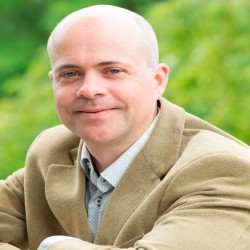
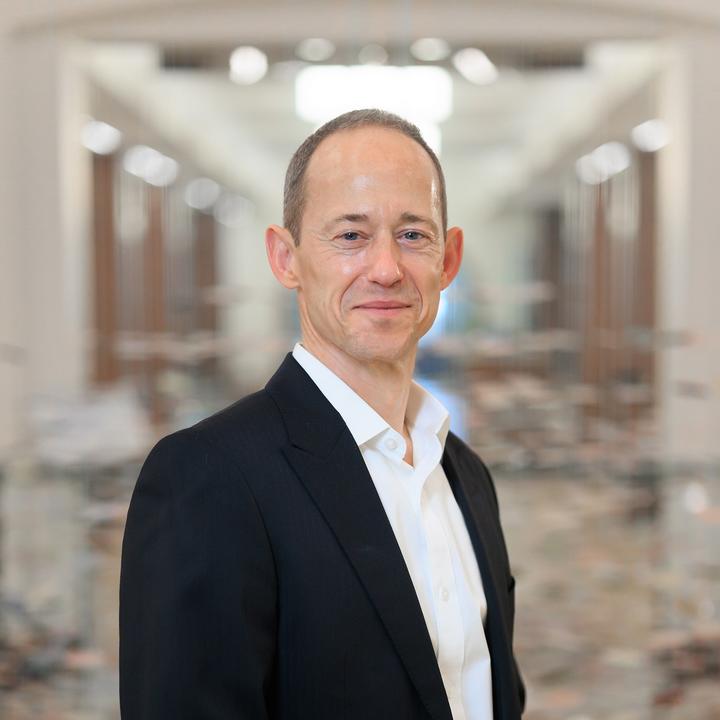
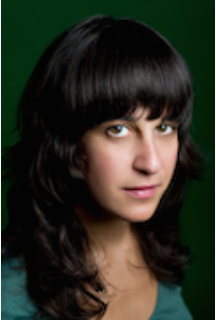
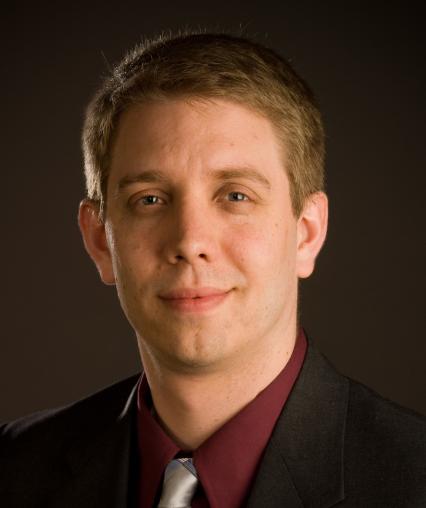
Brad Osborn is an Associate Professor of Music Theory at the University of Kansas, specializing in the analysis of popular music, particularly within the realms of music video aesthetics, electronic dance music (EDM), and rock genre studies. His research interrogates the intersections of sound, visual narrative, and cultural meaning in post-MTV era media. Research Focus: Music Video Analysis, Rock Harmonic Systems, EDM Structural Functions, Film/TV Music Theory Notable Themes: Through-composed Forms in Post-Rock, Timbre in Icelandic Music, Cognitive Salience in Audiovisual Media Recent publications examine terminally climactic forms in modern rock, transmedia analysis of music videos, and the subdominant tritone in visual media scoring. Osborn advocates for innovative pedagogical approaches integrating music video analysis and digital resources.
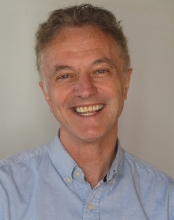
Paul Nuyujukian serves as an Assistant Professor of Bioengineering and Neurosurgery, with courtesy appointment in Electrical Engineering at Stanford University. He is a Faculty Scholar of the Wu Tsai Neurosciences Institute, directing the Brain Interfacing Laboratory where his team develops neural interface technologies for clinical applications in stroke and epilepsy. Education: MD, Stanford University (2014) PhD in Bioengineering, Stanford University (2012) BS, UCLA (2006) Dr. Nuyujukian's research integrates motor systems neuroscience with neuroengineering to decode brain activity during movement and recovery from injury. His laboratory pioneers brain-machine interface (BMI) platforms that translate neural signals into communication and control systems, with particular emphasis on intracranial EEG recording and real-time neural decoding. Current work focuses on developing clinically viable BMI solutions for neurological conditions through both preclinical models and human trials, advancing our understanding of neural population dynamics in health and disease. Recent publications reveal strong trends in intracranial EEG acquisition systems, seizure detection algorithms using information theory, and closed-loop BMI applications for ambulatory neuroscience. His work bridges fundamental neuroscience with clinical translation, particularly in epilepsy monitoring, chronic pain management, and neural prosthetics for paralysis. A notable emphasis exists on creating scalable, minimally invasive recording platforms that reduce clinical burden while maintaining high-fidelity neural data. Scientific Awards: No specific awards listed in provided materials As director of the Brain Interfacing Laboratory, Dr. Nuyujukian mentors students and collaborators in neural engineering research while securing grant funding for BMI development. His group maintains active collaborations with Stanford's Department of Neurosurgery and Neurology for clinical translation, with current projects including real-time decision-state decoding and personalized network mapping for pain management. The laboratory operates advanced facilities for both animal and human neural recording, emphasizing seamless integration of engineering innovation with clinical neuroscience. The Brain Interfacing Laboratory comprises multidisciplinary scientists and engineers developing next-generation neural interfaces. Current initiatives include the LiCoRICE platform for ambulatory neuroscience, seizure detection systems using compression-enabled entropy estimation, and ketamine's effects on hippocampal connectivity. The team actively participates in clinical trials for BMI applications in stroke rehabilitation and epilepsy, with strong partnerships across Stanford's medical and engineering schools to accelerate technology translation.
Theo van de Ven is a Professor and holds the Sir William C. Macdonald Chair in Chemistry at McGill University's Department of Chemistry. He serves as Director of the Quebec Centre for Advanced Materials (QCAM/CQMF). His research focuses on cellulose chemistry and its applications in novel materials, including nanocellulose-based composites, biodegradable products (e.g., straws, films), and advanced materials for drug delivery and environmental applications. His work also explores polyphenolic chemistry, such as lignin and tannic acid interactions with proteins in viral and neurodegenerative contexts. Van de Ven teaches CHEM 233 (Physical Chemistry for Engineers) and CHEM 585 (Colloid Chemistry), emphasizing phase boundary dynamics, electrochemistry, and surfactant science. His labs are located at the Pulp & Paper Building, with research emphasizing green chemistry and sustainable materials. His scientific contributions include pioneering work on hairy nanocellulose architectures and functionalized cellulose derivatives, earning recognition through prestigious awards. His research spans environmental and biomedical applications, including carbon fiber production from asphaltenes, silica/cellulose hybrids for catalysis, and tannic acid's role in protein interactions (e.g., SARS-CoV-2 and Alzheimer's). Collaborative efforts with industry and academia aim to bridge fundamental research with industrial applications, such as scalable cellulose-based filaments and films.
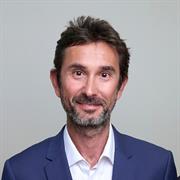
Dr. Dimitrios Anagnostou is an Associate Professor at Heriot Watt University's School of Engineering & Physical Sciences, affiliated with the Institute of Sensors, Signals & Systems (ISSS). He holds a Marie Skłodowska-Curie Fellowship and leads research in reconfigurable antennas, metamaterials, and biomedical sensing. He earned his PhD from the University of New Mexico (2005), followed by postdoctoral work at Georgia Tech and faculty roles at SDSMT before joining Heriot Watt in 2016. His research focuses on electromagnetic devices for aerospace, defense, and healthcare applications, including reconfigurable antennas, metamaterials, and AI-driven radar systems. He has published 169 papers and received 15+ awards, including the IEEE John D. Kraus Antenna Award and DARPA Young Faculty Award. Dr. Anagnostou serves as an Associate Editor for IEEE Transactions on Antennas and Propagation and actively contributes to conference committees. His lab specializes in antenna arrays, radar sensing, and functional materials like vanadium dioxide (VO₂). He supervises PhD students and supports interdisciplinary projects in sustainable RF electronics and medical imaging.
Dr Ruan Elliott is Dean of the Doctoral College and Senior Lecturer in Nutrition at the University of Surrey's School of Biosciences. He holds a PhD in Nutritional Metabolism (2017) and BA in Natural Sciences from Cambridge (1988). His research focuses on nutritional modulation of DNA repair mechanisms, functional genomics in nutrigenomics, and micronutrient homeostasis of iron, copper, selenium, and zinc. He has led studies on vitamin D efficacy, food bioavailability, and oxidative stress biomarkers. Education: PhD (University of Surrey, 1992), BA (University of Cambridge, 1988) Previous Roles: Senior Scientist (Institute of Food Research, 1994-2009), Postdoctoral Fellow (University of British Columbia, 1992-1994) His research integrates molecular biology and nutrition to address health impacts of dietary components. Recent work explores oat-based milk alternatives' sensory profiles, vitamin D supplementation efficacy, and DNA repair pathways in cardiovascular disease. He collaborates internationally on projects like the D2-D3 Study and NuGO initiatives. Publications emphasize translational research, including systematic reviews on insect protein efficacy and meta-analyses of vitamin D supplementation. His work bridges lab-based models (e.g., Caco-2 cells for iron studies) and clinical applications. No scientific awards were explicitly listed in the provided texts. He advises on doctoral training programs and has contributed to grant-funded projects like the University of Surrey's food and infection biosciences initiative (2024). Collaborations include studies on probiotics' immune effects and transcriptomic analysis of metabolic conditions.
Adrian Raine is a Professor at the University of Pennsylvania, holding joint appointments in the Departments of Criminology, Psychiatry, and Psychology. He is renowned for pioneering Neurocriminology, a discipline integrating neuroscience with criminological inquiry. His research focuses on biological underpinnings of antisocial behavior, including psychopathy, aggression, and violence. Raine directs the Mauritius Child Health Project, a 50+ year longitudinal study examining child development and health impacts on antisocial outcomes. He earned his B.A., M.A., and D.Phil. in Experimental Psychology from Oxford University and York University. His work employs advanced techniques like structural/functional brain imaging, neuroendocrinology, and transcranial stimulation. Key areas include nutritional interventions (e.g., omega-3 and vitamin D supplementation), autonomic nervous system functioning, and the biopsychosocial model of criminality. Raine's research highlights biological risk factors like low resting heart rate, diminished empathy, and brain abnormalities. He advocates for neuroscience-informed penal policies, emphasizing prevention over punishment. Recent studies explore bidirectional relationships between sleep quality and child behavior, as well as cross-cultural psychopathology patterns. Lab Focus: Biological interventions, antisocial behavior, and neurocriminology Key Projects: Mauritius Child Health Project, ABCD Study collaborations Techniques: fMRI, EEG, nutritional trials, behavioral assessments He develops validated clinical tools like the Schizotypal Personality Questionnaire (SPQ), Reactive-Proactive Aggression Questionnaire (RPQ), and Selfishness Scale (SQ). His work bridges basic science and practical applications in criminal justice and mental health systems.
Prof. Mahiar Max Hamedi is a Professor at KTH Royal Institute of Technology, affiliated with the CBH School and Digital Futures Faculty. His research focuses on developing sustainable functional materials for energy storage, advanced biosensors, and nanoelectronics. He leads the research project 'Democratizing Digital DNA Diagnostics' and is PI for innovations in portable diagnostics and next-gen batteries. His work integrates biomaterials like cellulose nanomaterials with synthetic nanomaterials (e.g., MXenes, CNTs) to address global challenges in energy and healthcare. Entrepreneurial ventures include co-founding Simplygon (acquired by Microsoft) and /SALT for tech upskilling. Active in Digital Futures, a cross-disciplinary center addressing societal challenges via digital tech. Research interests emphasize biohybrid systems, wearable devices, and sustainable energy solutions. His lab’s innovations include paper-based biosensors, compressible supercapacitors, and MXene-based materials. Over 50 peer-reviewed articles showcase advancements in material science and nanotechnology.
Enrique M. De La Cruz is the William R. Kenan Jr. Professor of Molecular Biophysics and Biochemistry and Head of Branford College at Yale University. He specializes in the study of actin cytoskeleton dynamics, molecular motor proteins, and nucleotide signaling enzymes. His research integrates biophysical, biochemical, and structural approaches to understand cellular mechanisms. Dr. De La Cruz holds a Ph.D. from Johns Hopkins University and completed postdoctoral training at the University of Pennsylvania. He has been recognized with prestigious awards, including Fellowships from AAAS and ASBMB, and is an advocate for minority participation in STEM. His lab collaborates with researchers globally and employs advanced techniques like cryo-electron microscopy and computational modeling. Education: Bachelor's in Biology (Rutgers University) Ph.D. in Biochemistry, Cell & Molecular Biology (Johns Hopkins University) Research Interests: Actin filament mechanics and cation effects Molecular motor protein interactions Structural biology of cytoskeletal proteins Awards: Fellow, AAAS (2022) ASBMB Inaugural Fellow (2021) Cell Press's 100 Hispanic/Latinx Scientists (2020) Grants & Advising: NSF CAREER Award (2006) Extensive NIH-funded research Labs & Collaborations: De La Cruz Lab at Yale Cross-disciplinary partnerships with institutions like Institut Curie and ESPCI Paris Tech
Dr. Daniel Perales Anaya is a Visiting Assistant Professor in the Department of Mathematics at Texas A&M University, affiliated with the College of Arts & Sciences. He completed his Ph.D. in 2022 at the University of Waterloo under the supervision of Alexandru Nica. His research focuses on Finite Free Probability, a field at the intersection of free probability, random matrices, combinatorics, and non-commutative probability. He also investigates infinitesimal freeness, hypergeometric polynomials, and cumulant theory. He organizes the Free Probability and Operators Seminar at Texas A&M University and maintains an active research profile with contributions to journals like Transactions of the American Mathematical Society and Constructive Approximation . His work bridges classical analysis, operator algebras, and combinatorial structures, often leveraging finite free convolutions and non-crossing partitions. Publications span topics including infinitesimal distributions, hypergeometric polynomial zeros, and S-transforms in finite free probability. His research has been supported by institutions such as the Simons Foundation and Birkhäuser.
Dr. Andrey Molotnikov is an Associate Professor in Additive Manufacturing and Director of the RMIT Centre for Additive Manufacturing at RMIT University's School of Engineering. His expertise spans additive manufacturing, computational materials science, and multi-material 3D printing. He leads a research team of 8 academics, multiple postdocs, and 10 PhD students, focusing on innovations like multi-material printing, high entropy alloys, and in-process quality assurance. Key research themes include architectured materials, computational modeling of solidification processes, and fatigue analysis of additively manufactured components. His work has resulted in over 80 publications (h-index 29) and several patents, with industry collaborations driving technology adoption. Recent publications (2022–2025) emphasize advancements in laser-based processes, defect detection via machine learning, and biomedical applications of additive manufacturing. He actively supervises research projects on topics such as hierarchical lattice structures and hybrid materials, supported by ARC grants and industry partnerships. Dr. Molotnikov’s labs and teams prioritize cross-disciplinary collaboration, aiming to bridge computational modeling with practical manufacturing solutions. His research addresses challenges in material compatibility, process optimization, and structural integrity of AM components.
Daan van Knippenberg is the Houston Endowed Professor of Management in Organizational Behavior at the Jones Graduate School of Business, Rice University. Previously, he held academic positions at Drexel University, Erasmus University Rotterdam, University of Amsterdam, and Leiden University, where he earned his Ph.D. His expertise spans leadership dynamics, diversity and inclusion strategies, team performance optimization, and creativity/innovation mechanisms. He focuses on understanding how leadership styles influence team effectiveness, particularly in diverse and crisis-prone environments. Research emphasizes: leadership authenticity and integrity, paradoxical leadership approaches, knowledge diversity impacts, and intergroup relational dynamics. He explores how organizational structures and leadership rhetoric affect collective creativity and innovation processes. His work bridges social psychology and management theory to address real-world organizational challenges. Recent articles highlight themes like leader behavior consistency, team voice dynamics, and innovation under constraints. Findings often reveal counterintuitive outcomes, such as how perceived leadership flaws can paradoxically boost certain team behaviors. No specific awards listed in current profile data. His advisory and grant activities remain unreported here. Active in advancing social identity theory applications to leadership contexts, emphasizing leader group prototypicality effects on team cohesion and performance.
Associate Professor Toby Pavey holds a position in the School of Exercise & Nutrition Sciences at Queensland University of Technology (QUT), within the Faculty of Health. His academic background includes a PhD in Sport and Health Sciences from the University of Exeter. He has held roles such as Research Fellow at The University of Queensland and Associate Research Fellow in Health Technology Assessment at the University of Exeter. His research focuses on physical activity, sedentary behavior, chronic disease prevention, and epidemiology, with expertise in systematic reviews and intervention design. Teaching includes units like Evidence-Based Practice in Exercise Science and Physical Activity and Health. His research projects include the League-FIT program targeting men’s health via rugby clubs, funded by an Australian Competitive Grant. Professional memberships span organizations like the International Society for Behavioral Nutrition and Physical Activity (ISBNPA) and editorial roles at BMC Public Health. Key contributions include studies on physical activity guidelines, shift work health impacts, and dietary interventions. His work emphasizes translational research to address public health challenges through behavioral and environmental interventions.
Peter J. Kohler is an Assistant Professor in the Department of Biology within the Faculty of Science at York University, Toronto. He is eligible to supervise graduate students in the Biology Graduate Program and leads the Kohler Visual Neuroscience Lab, which is part of the Centre for Vision Research at York University. His research lies at the intersection of cognitive neuroscience and visual perception, focusing on mid-level visual processing. This involves understanding how the brain, within the first few hundred milliseconds of visual input, constructs representations of shape, motion, location, and perceptual organization—including figure-ground segregation, grouping, and constancy. His work integrates functional MRI (fMRI) , electroencephalography (EEG) , and visual psychophysics to probe the neural mechanisms underlying these processes in humans. Recent publications reveal a strong focus on symmetry processing, perceptual grouping, numerical estimation, and multisensory integration. His work often involves advanced neuroimaging techniques and collaborative international research, particularly with teams in Belgium and Luxembourg. The articles span high-impact journals such as PNAS , Nature Communications , Current Biology , and Journal of Vision , indicating a robust and influential research program in visual neuroscience. Scientific Awards and Funding: NSERC Discovery Grant (awarded April 2020) VISTA Research Grant (funded June 2023) Prof. Kohler actively mentors students, including graduate students such as Rachel Moreau, Sara Chaparian, Yara Iskandar, Shaya Samet, and Shenoa Ragavaloo, as well as undergraduate researchers. His lab has presented at major conferences including the Vision Sciences Society (VSS) and the Lake Ontario Visionary Establishment (LOVE), where he joined the organizing committee in 2024. The Kohler Visual Neuroscience Lab also develops experimental tools, as evidenced by GitHub repositories for stimulus generation and behavioral testing using jsPsych.
Deborah Stein is a distinguished faculty member in the Department of Theatre and Dance at the University of California, San Diego (UCSD), where she teaches playwriting and theatrical collaboration. She is also Co-Artistic Director of Stein | Holum Projects (SHP), a collaborative laboratory for creating innovative performances. Her work bridges academic scholarship and professional theatre, with national commissions and festival premieres. BA, Swarthmore College MFA, Brown University (studied with Paula Vogel) Her research and creative practice focus on playwriting, experimental performance, and interdisciplinary collaboration . She explores narrative innovation through devised theatre, often working with ensembles and MFA students to create original works that challenge traditional forms. Her work emphasizes emotional depth, physicality, and social themes. The 15 most recent creative projects reflect a strong trend in collaborative, experimental, and socially engaged theatre . They span festival productions, commissioned works, and student collaborations, often developed in residency settings. Keywords include immersive storytelling, devised creation, and political resonance, with subfields ranging from physical theatre to identity exploration. Deborah has received numerous honors and grants supporting her artistic research: Drama Desk Award Nomination (CHIMERA) National Theatre Project Award (2015) NYSCA Grant Bush Artist Fellowship Two Jerome Fellowships McKnight Advancement Grant Alumna, New Dramatists She actively mentors MFA students, having co-created THE BITTER GAME with Keith Wallace and MOVERS + SHAKERS with graduate students. Her advising integrates creative development with academic rigor. She has secured external funding from NEFA, ArtsEmerson, and foundations to support collaborative projects. Her work has been developed in partnership with institutions such as Playwrights’ Horizons, HERE, and La Jolla Playhouse. Deborah leads creative research through Stein | Holum Projects, which functions as a performance laboratory. This collective has developed work at major venues including FringeArts, the Playwrights’ Center, and Perry-Mansfield, fostering a national network of experimental theatre makers.
Dr. Christopher S. Hlas is a Professor of Mathematics Education at the University of Wisconsin-Eau Claire within the College of Arts and Sciences Department of Mathematics. With a doctorate from the University of Iowa, he specializes in mathematics pedagogy, technology integration, and cross-disciplinary connections between math and foreign languages. Ph.D. in Mathematics Education (University of Iowa, 2005) B.S. in Mathematics and Computer Science (University of Iowa, 2001) His research focuses on teaching through problem solving , student motivation , and technology-enhanced mathematics instruction . He has developed innovative formative assessment probes and conducted extensive studies on homework design, flow theory, and creativity in K-12 education through grants like the ESEA Title II Mathematics and Science Partnerships. His work spans curriculum development, professional development for teachers, and mathematical modeling. Recent publications highlight his exploration of creativity assessment in language education and the application of game mechanics to classroom engagement. He serves as an AP Calculus Reader and Table Leader, while maintaining active roles in the Wisconsin Mathematics Council and National Council of Teachers of Mathematics. Bilingual education initiatives GeoGebra integration in geometry instruction Formative assessment frameworks Game-based learning strategies Scientific Awards CARE Award (2015) ACTFL Research Priority Grant (2010) Multiple teaching scholarships UWEC student-nominated award (2007) Outstanding teaching assistant recognition (2004) Mentoring over a dozen student research projects and securing more than $4 million in federal and state grant funding, Dr. Hlas has supervised numerous collaborative research initiatives. He maintains open-source educational tools like interactive Pascal's Triangle and rational functions resources at math.hlasnet.com while serving on multiple university committees and grant review panels.