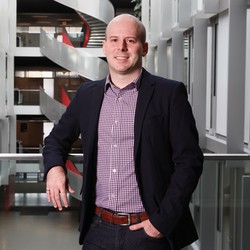
Ryan Heuser is an Assistant Professor in Digital Humanities at the University of Cambridge, specializing in computational approaches to literary and intellectual history, prosody, and artificial intelligence's impact on language. His work bridges data science, machine learning, and literary studies through digital methodologies. Doctoral training in Eighteenth-Century British Literature, Stanford University (2019) Founding member & Associate Research Director, Stanford Literary Lab Junior Research Fellow, King’s College Cambridge (2019-2022) Research interests span computational modeling of semantic revolutions, large-scale literary field analysis, and the intersection of digital methods with historical and intellectual studies. His book Explorations in the Digital History of Ideas (2023) co-edited with Peter de Bolla exemplifies this approach. Recent publications focus on historical semantics, metrical analysis, and digital mapping of emotions in literature, reflecting his interdisciplinary expertise in natural language processing, network theory, and literary data visualization. Currently leads teaching initiatives at Cambridge Digital Humanities and contributes to computational projects exploring textual rhythms and large language models.
Sigrid Schmalzer is a Professor of History at the University of Massachusetts Amherst, specializing in the history of science and modern China. She holds a Ph.D. in History and Science Studies from the University of California, San Diego (2004). Her research bridges the social, cultural, and political dimensions of science in China, with a focus on the intersections of agriculture, activism, and revolutionary movements. Schmalzer is the author of *Red Revolution, Green Revolution: Scientific Farming in Socialist China* (2016), winner of the Joseph Levenson Book Prize, and *The People's Peking Man: Popular Science and Human Identity in Twentieth-Century China* (2008), recipient of the Allan Sharlin Award. Her current projects include a book on agricultural heritage in the People’s Republic of China and leadership roles in organizations like the Critical China Scholars and Science for the People. She co-edits the *Activist Studies of Science and Technology* series for UMass Press, emphasizing socially engaged scholarship. Schmalzer also serves as Co-President of the MSP faculty union at UMass Amherst. Research interests span the history of science activism, transnational movements, and the legacy of Maoist science. Notable awards include the Freeman Book Award (2018) for her children’s book *Moth and Wasp, Soil and Ocean*, which integrates science education with historical narratives. Her work often critiques capitalist and authoritarian structures while advocating for science as a tool for justice and sustainability. Recent publications explore themes like agroecology, science policy, and the global dimensions of China’s scientific history. She teaches courses on modern China, science in society, and radical science movements, blending interdisciplinary approaches to engage students in critical analysis of historical and contemporary issues.
Sharese King is the Neubauer Family Assistant Professor of Linguistics at the University of Chicago, where she has taught since 2018. She earned her Ph.D. and Master's in Linguistics from Stanford University, focusing on language variation across African American communities. Her research bridges sociolinguistics, critical race theory, and phonetics to examine how African American speech is constructed, racialized, and socially evaluated. Education: Ph.D., Linguistics, Stanford University (2018) M.A., Linguistics, Stanford University Research Interests: Sociolinguistics Language Variation & Change African American Language Critical Race Theory Phonetic and experimental analysis Dialect and judicial systems Notable Contributions: Interdisciplinary studies on raciolinguistics and courtroom bias Analysis of /s/ articulation in intersectional contexts Reconceptualization of AAVE as AAL to emphasize linguistic diversity Fieldwork in Bakersfield, Rochester, and Chicago Publications in American Speech , Journal of Sociolinguistics , Language , and Nature Scientific Awards: Provost's Postdoctoral Fellowship Neubauer Family Assistant Professorship Labs & Projects: Co-founder of the Chicagoland Language Project
Dr. Balaraman Ravindran is a Professor and Head of the Department of Data Science and Artificial Intelligence (DSAI) at IIT Madras. He also leads the Robert Bosch Centre for Data Science & Artificial Intelligence (RBCDSAI) and the Centre for Responsible AI (CeRAI). His research focuses on reinforcement learning, geometric deep learning, and ethical AI deployment. Education includes a PhD from the University of Massachusetts Amherst (2004) and MSc from the Indian Institute of Science, Bangalore (1996). He holds prestigious fellowships from AAAI and INAE, and is an ACM Distinguished Member. Key contributions include work on class imbalance learning (e.g., TODUS algorithm) and applications in healthcare, transportation, and social networks. He has advised over 20 students and secured grants from Google, TCS Research, and others. Labs/Teams: Heads RBCDSAI and CeRAI, collaborates with TCS Research and Google.
Esther Duflo is the Abdul Latif Jameel Professor of Poverty Alleviation and Development Economics at the Massachusetts Institute of Technology (MIT), where she is affiliated with the Department of Economics within the School of Humanities, Arts, and Social Sciences. She co-founded and co-directs the Abdul Latif Jameel Poverty Action Lab (J-PAL) and holds the position of Chaire, Pauvreté et politiques publiques at the Collège de France. Duflo also serves as President of the Paris School of Economics, demonstrating her significant international influence in economic policy and research. Her educational background includes first degrees in history and economics from Ecole Normale Superieure, Paris, followed by a Ph.D. in Economics from MIT in 1999. This strong foundation has enabled her to become one of the most influential economists of her generation. Duflo's research focuses on understanding the economic lives of people living in poverty, with the explicit aim of informing effective social policy design and evaluation. Her work spans critical areas including health, education, financial inclusion, environmental sustainability, and governance. What distinguishes her approach is the rigorous application of randomized controlled trials to evaluate development interventions, bringing scientific precision to poverty alleviation efforts. Her research methodology has revolutionized how economists approach development questions, moving beyond theoretical models to evidence-based policy recommendations. Her scholarly output demonstrates remarkable breadth and impact, with publications spanning from technical academic papers to influential books for general audiences. Duflo's work consistently bridges the gap between academic research and practical policy applications, with recent publications addressing contemporary challenges including climate change adaptation, pandemic response, and economic policy for hard times. Her research trends reveal a deepening commitment to translating complex economic concepts for broader audiences while maintaining scholarly rigor. Sveriges Riksbank Prize in Economic Sciences in Memory of Alfred Nobel (2019, with Abhijit Banerjee and Michael Kremer) Princess of Asturias Award for Social Sciences (2015) A.SK Social Science Award (2015) Infosys Prize (2014) John Bates Clark Medal (2010) MacArthur 'Genius Grant' Fellowship (2009) Member of the National Academy of Sciences (2017) Duflo has supervised numerous graduate students and collaborated extensively with researchers worldwide through J-PAL, which has grown into a global network conducting field experiments across multiple continents. Her grant portfolio includes substantial funding from major foundations and government agencies supporting large-scale development research. Beyond traditional academic advising, Duflo has mentored a generation of development economists through J-PAL's training programs and field research opportunities. Her primary institutional home is the Abdul Latif Jameel Poverty Action Lab (J-PAL), which she co-founded at MIT. J-PAL has grown into a major research center with offices worldwide, connecting academic researchers with policymakers to ensure that program evaluations inform real-world decisions. Duflo also leads research teams at the Collège de France and the Paris School of Economics, creating a transatlantic network focused on evidence-based poverty reduction strategies.
Jonathan Rosa is Associate Professor in the Graduate School of Education, Center for Comparative Studies in Race and Ethnicity, and, by courtesy, Departments of Anthropology, Linguistics, and Comparative Literature at Stanford University. He serves as Director of Stanford's Program in Chicanx-Latinx Studies and has held leadership positions including President of the Association of Latina/o and Latinx Anthropologists of the American Anthropological Association. Dr. Rosa's educational background includes: Ph.D. in Sociocultural and Linguistic Anthropology from the University of Chicago (2010) M.A. in Sociocultural and Linguistic Anthropology from the University of Chicago (2006) B.A. in Linguistics and Educational Studies from Swarthmore College (2003) Dr. Rosa's research examines the co-naturalization of language and race as a key feature of modern governance, tracking colonially structured interrelations among racial marginalization, linguistic stigmatization, and institutional inequity. His scholarship centers on raciolinguistic ideologies, Latinx studies, and educational justice, with a community-based approach that develops tools for challenging systemic vulnerability. He investigates how race and language are jointly defined across historical, geopolitical, and institutional contexts, with particular focus on Latinx communities and educational settings. His recent publications demonstrate a consistent thematic focus on decolonizing linguistic and educational frameworks, challenging standard language ideologies, and examining the intersections of race, language, and power. The work spans multiple disciplines including sociolinguistics, anthropology, education, and critical race studies, increasingly emphasizing undoing raciolinguistics and addressing coloniality in language education and assessment practices. Dr. Rosa has received numerous prestigious awards for his scholarship: Distinguished Summer Scholar, Banks Center for Educational Justice, University of Washington College of Education (2024) Outstanding Book of the Year Award for "Looking like a Language, Sounding like a Race," American Association of Teaching and Curriculum (2022) First Book Award for "Looking like a Language, Sounding like a Race," American Association for Applied Linguistics (2021) Prose Award for Excellence in Language & Linguistics for "Looking like a Language, Sounding like a Race," Association of American Publishers (2020) Charles A. Ferguson Award for Outstanding Scholarship, Center for Applied Linguistics (2018) Dr. Rosa actively mentors doctoral students across multiple programs, serving as primary advisor for students researching race, ethnicity, language, and education. His research has been supported by major grants from the National Science Foundation, Andrew W. Mellon Foundation, Woodrow Wilson National Fellowship Foundation, and Ford Foundation. He collaborates extensively with community organizations, particularly in Chicago, to develop educational approaches grounded in decolonial praxis, focusing on how scholarship can serve as a platform for social transformation. Dr. Rosa co-directed Stanford's Center for Global Ethnography (2021-2023) and directed Stanford's Program in Chicana/o-Latina/o Studies (2020-2023). He serves on multiple editorial boards including Current Anthropology and Equity & Excellence in Education, and has held leadership positions in professional organizations including President of the Association of Latina/o and Latinx Anthropologists (2020-2022).
Adam Hollowell is an Adjunct Assistant Professor in the Program in Education at Duke University, where he also serves as Senior Research Associate at the Samuel DuBois Cook Center on Social Equity and Director of the Inequality Studies Minor. His teaching spans ethics, inequality studies, and history across Duke’s Kenan Institute for Ethics, Sanford School of Public Policy, and Department of History. Hollowell holds a Ph.D. from the University of Edinburgh (2009). His research focuses on inequality, higher education, public policy, and ethics, with notable work on pandemic impacts, telemedicine in education, and reproductive health access during crises. In Inequality Studies , Hollowell emphasizes understanding policies to drive social change, as highlighted in recent media coverage. His publications explore topics like student behavior shifts during the pandemic, telemedicine adoption in universities, and James Baldwin’s ethical challenges. He is a finalist for the Judith Deckers Prize (2024). Professionally, Hollowell leads projects such as Bass Connections on college contraception access and Story+ initiatives. His work bridges academia and public engagement, addressing systemic inequities through interdisciplinary approaches.
Antoine Bosselut is a Tenure Track Assistant Professor at École Polytechnique Fédérale de Lausanne (EPFL) in the School of Computer and Communication Sciences, where he leads the EPFL NLP group. His research focuses on developing AI reasoning agents that can model, represent, and reason about human and world knowledge, with applications in health, education, and global fairness. His research interests span multiple critical areas in modern AI: LLM Representations of Knowledge: Understanding what language models know and how they represent that knowledge internally Reasoning Algorithms: Developing methods to improve LLMs' reasoning capabilities through symbolic systems, neuroscience, and cognitive science Large-scale AI Development: Creating open-source foundation models with multilingual capabilities AI Democratization: Ensuring equitable access to AI technologies across different cultural and regulatory contexts His recent publications reveal a strong focus on the intersection of language models and cognitive science, with multiple studies examining how LLMs align with human cognition. He's also deeply engaged in practical applications of NLP technology, particularly in education and multilingual settings, as evidenced by his work on evaluating AI's impact on higher education and developing culturally-aware language models. His scientific achievements have been recognized with several prestigious awards: Outstanding Paper Award at NAACL 2025 ELLIS Scholar designation in 2024 Outstanding Paper Award at ACL 2023 Inclusion in Forbes 30 Under 30 list for Science & Healthcare in 2021 Bosselut actively mentors numerous PhD students across diverse NLP research areas and has secured significant recognition for his work in both academic and media circles. His lab has been featured in major publications including Communications of the ACM, The Atlantic, and Quanta Magazine, highlighting the societal impact of his research on commonsense reasoning and AI capabilities.
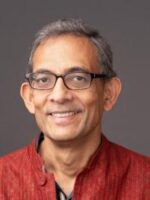
Abhijit Banerjee is a Professor in the Department of Economics at the Massachusetts Institute of Technology (MIT). His research focuses on development economics, public health policy, and social protection programs, particularly addressing poverty and inequality in low- and middle-income countries. He has conducted large-scale experiments evaluating interventions such as conditional cash transfers, universal basic income, and healthcare policies. Key areas of interest include the design and implementation of anti-poverty programs, behavioral economics, and the long-term health impacts of infectious diseases like COVID-19. His work often integrates experimental methods to assess policy effectiveness, with contributions to global health studies and economic development strategies. Notably, his research on the RECOVERY trial evaluates treatments for hospitalized COVID-19 patients, while other studies explore financial spillover effects of electronic government transfers in Indonesia and savings behavior interventions in Chile. Banerjee has collaborated on projects analyzing post-COVID-19 health outcomes, labor market dynamics in India, and the role of trusted messengers in public health communication during crises. Despite the breadth of his contributions, specific details about his educational background, grants, or lab affiliations are not explicitly provided in the source text.
Eric Van Young is a distinguished Professor of History at the University of California, San Diego (UCSD), specializing in colonial and 19th-century Latin American history, particularly Mexico. He has held significant roles, including Chair of the Department of History (2000-2004) and Interim Dean of the Division of Arts and Humanities (2007-2008). His research focuses on rural history, peasant movements, cultural history, and biographical studies of key figures like Lucas Alaman. He earned his B.A. from the University of Chicago (1967), M.A. and Ph.D. from UC Berkeley (1968, 1978). Education: B.A. (University of Chicago), M.A. & Ph.D. (UC Berkeley) Roles: Professor of History, Department Chair, Interim Dean His research explores Mexico’s colonial and early national periods, emphasizing rural economic structures, popular rebellions, and the intersections of culture and politics. Current projects include a biography of Lucas Alaman and a synthetic history of Mexico (1750-1850). He has authored numerous books, including Writing Mexican History (2012) and The Other Rebellion (2001), alongside over 100 articles. His work bridges economic and cultural historiography, offering critical insights into regional dynamics and the construction of national identity. Van Young’s scholarly contributions include editorial roles for journals and book series, as well as extensive peer review for academic publishers. His interdisciplinary approach addresses themes like messianic movements, state formation, and the legacy of colonial institutions in modern Mexico.
Jason D. Lee is an associate professor of Electrical Engineering and Computer Sciences (EECS) and Statistics at the University of California, Berkeley. Previously, he held academic positions at Princeton University as an associate professor, and was a research scientist at Google DeepMind. He completed his Ph.D. in Computational and Mathematical Engineering at Stanford University under the advisement of Trevor Hastie and Jonathan Taylor. For students and collaborators, his primary contact email is jasonlee@princeton.edu, though prospective students and postdocs are asked to include "filter_student" in the subject line. Ph.D., Computational and Mathematical Engineering, Stanford University (2015) B.Sc., Mathematics, Duke University (2010) Lee's research lies at the intersection of machine learning, statistics, and optimization, focusing on the theoretical foundations of artificial intelligence. His work addresses fundamental questions in deep learning, including optimization landscapes, representation learning, and reinforcement learning theory. He has made significant contributions to understanding how gradient descent operates in neural network training and has developed provably efficient algorithms for various learning scenarios. His ten most recent publications represent a diverse yet coherent body of work across machine learning theory, focusing on topics such as Gaussian multi-index models, transformer learning capabilities, shallow neural networks, and optimization techniques. These publications appear in top venues including COLT, ICML, NeurIPS, and JMLR. Among his notable accolades are: Samsung AI Researcher of the Year Award (2023) NSF Career Award (2022) ONR Young Investigator Award (2021) Sloan Research Fellow in Computer Science (2019) NIPS Best Student Paper Award (2016) Princeton Commendation for Outstanding Teaching (ECE538B) Lee has advised numerous students including Alex Damian, Wenhao Zhan, Eshaan Nichani, Tianle Cai, Zixuan Wang, and Yunwei Ren. Former advisees have gone on to positions at institutions like NYU Courant, Facebook AI Research, UW, MIT, Duke, and Microsoft Research. His research group and collaborators span multiple institutions, working on theoretical and applied aspects of machine learning and artificial intelligence, with a particular focus on the optimization and learning dynamics of neural networks and transformer models.
Professor Hutan Ashrafian is a clinician-scientist and surgeon at the University of Leeds Business School, holding dual roles as Professor of Research Impact and Senior Research Fellow at Imperial College London. His expertise spans AI in healthcare, metabolic surgery, and ancient history. He pioneered STARD-AI and QUADAS-AI guidelines for AI diagnostics, collaborated on AI-driven breast cancer screening with Google and NHS, and led global health policy initiatives. Ashrafian’s work bridges medicine, history, and philosophy, including his contributions to understanding historical figures’ medical conditions, such as King Tutankhamun’s epilepsy. He has authored over 550 publications, 12 books, and holds a PhD in computational physiology and an MBA with distinction. Awards include the Hunterian Prize and Wellcome Trust Fellowship. His research also explores AI ethics, quantum physics paradoxes, and art-based medical diagnostics. Education: PhD in Computational Physiology (Imperial College London) MBA (Warwick Business School) MD (University College London) Bachelor of Science in Immunology (University College London) Research Interests: Ashrafian’s work spans: AI in Medicine: Diagnostic algorithms, guideline development (STARD-AI/QUADAS-AI), and ethical frameworks. Metabolic Surgery: Bariatric interventions, gut microbiome, and obesity treatments. Ancient History: Medical analyses of historical figures (e.g., Tutankhamun, Julius Caesar) and art-based pathology identification. Philosophy: AI rights (AIONAI law), temporal paradoxes, and the Simulation Argument. Awards: Royal College of Surgeons Arris and Gale Lectureship Hunterian Prize Wellcome Trust Research Fellowship Advising & Innovation: Supervised >50 PhD students, co-founded Oxford Medical Products (weight loss tech), and serves as CSO at Flagship Pioneering’s Preemptive Health division. He advises on NHS digital transformation and global health policy. Labs/Teams: Leads AI initiatives at Imperial’s Institute of Global Health Innovation and collaborates with Google, NICE, and international institutions on health tech solutions.
Sophie Volpp is a Professor in the Department of East Asian Languages and Cultures and Comparative Literature at the University of California, Berkeley. Her research focuses on Chinese literature from the 16th to 19th centuries, with particular emphasis on theatricality, material culture, and literary objects. She is the author of *Worldly Stage: Theatricality in Seventeenth-Century China* (2011) and *The Substance of Fiction: Literary Objects in China, 1550-1775* (2022). Her current projects include a book on the National Peiping Library’s preservation efforts during the Sino-Japanese War and an analysis of referents in *The Story of the Stone*. Her scholarly work bridges literary analysis and cultural history, examining themes such as gender, power, and spectacle in late-imperial China. She has translated works by pre-modern women poets and dramatists, contributing to gender-centric scholarship in East Asian studies. Her publications span journal articles and edited volumes, addressing topics like Qing-era theatrical design, material circulation in classical novels, and cross-cultural influences in literary production. Her research has been published in venues such as *Harvard Journal of Asiatic Studies* and *Journal of Asian Studies*.
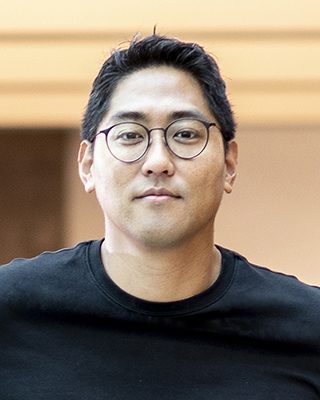
Sewoong Oh is a Professor at the Paul G. Allen School of Computer Science & Engineering at the University of Washington, where he has been faculty since 2019. His research focuses on the foundations of machine learning with particular emphasis on differential privacy, secure and robust machine learning, and federated learning. Prior to joining UW, he was at the Department of Industrial and Enterprise Systems Engineering at the University of Illinois at Urbana-Champaign from 2012-2019. He is affiliated with multiple NSF AI Institutes including ACTION (Agent-based Cyber Threat Intelligence and Operation), AI-EDGE (Future Edge Networks and Distributed Intelligence), and IFML (Foundations of Machine Learning). Oh received his PhD in Electrical Engineering from Stanford University in 2011 under Andrea Montanari, followed by postdoctoral work at MIT's Laboratory for Information and Decision Systems under Devavrat Shah. His educational background spans top institutions in theoretical computer science and electrical engineering. His research spans the critical intersection of machine learning security, privacy, and robustness. Oh's work addresses fundamental challenges in making AI systems reliable and trustworthy, with particular focus on defending against backdoor attacks, developing privacy-preserving algorithms, and creating efficient tokenization methods for language models. His recent SuperBPE work demonstrates how moving beyond traditional subword tokenization can significantly improve language model efficiency and performance. His research consistently bridges theoretical foundations with practical implementations, as evidenced by numerous open-source repositories containing production-ready code. Oh's publications reveal a consistent trajectory toward addressing security and privacy concerns in increasingly complex machine learning systems, with recent work focusing on language model tokenization, data-centric AI, and federated learning frameworks. His research shows strong interdisciplinary connections between theoretical computer science, statistics, and practical machine learning systems. ACM SIGMETRICS best paper award (2015) NSF CAREER award (2016) ACM SIGMETRICS rising star award (2017) GOOGLE Faculty Research Awards (2017, 2020) 2024 ICML Best Paper Award (for work by advisee Jon Hayase) Professor Oh maintains an active research group with numerous PhD students, postdocs, and undergraduate researchers. His students have secured prestigious positions at leading tech companies including Amazon, Google, and Snap, as well as academic appointments at institutions like University of Wisconsin-Madison and Shanghai Jiao Tong University. He has received substantial research funding through his participation in multiple NSF AI Institutes and industry research awards from Google. His lab maintains several active GitHub repositories implementing cutting-edge research in backdoor defense, robust statistics, and privacy-preserving machine learning.
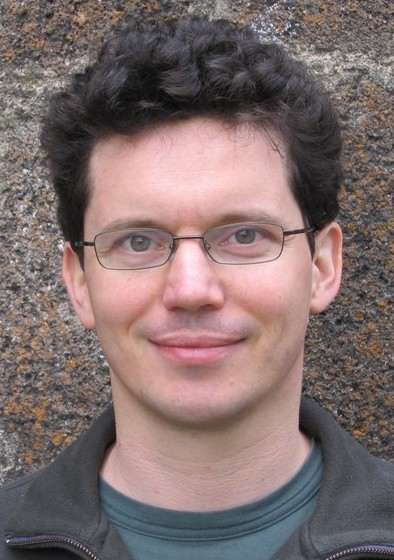
Wendelin Werner is a renowned mathematician and currently the Rouse Ball Professor of Mathematics at the University of Cambridge (since 2023). Previously, he held professorships at ETH Zürich (2013–2023) and the University of Paris-Sud in Orsay (1997–2013). His research focuses on probability theory, mathematical physics, and complex analysis, particularly Schramm-Loewner evolution and conformal invariance. He has received prestigious awards, including the Fields Medal (2006), SIAM George Pólya Prize (2006), and Fermat Prize (2001). His work bridges stochastic processes and geometric structures, with implications for statistical mechanics and critical phenomena. Werner studied at the École Normale Supérieure (1987–1991) and earned his PhD from Université Paris VI under J. F. Le Gall (1993). Early career positions included postdoctoral research at Cambridge (1993–1995) and roles at CNRS (1991–1993, 1995–1997). His academic contributions span stochastic geometry, critical systems, and random curves, with seminal papers on loop measures, percolation, and SLE. He has delivered major lectures globally, including at the International Congress of Mathematicians (IMC 2006) and the College de France's Cours Peccot. Werner’s honors include membership in the French Academy of Sciences (2008), the Berlin-Brandenburg Academy (BBAW), and the German National Academy Leopoldina. He is also an honorary fellow of Gonville and Caius College, Cambridge (2009). His research has advanced understanding of universal scaling limits in two-dimensional models, earning recognition as a leader in probability and mathematical physics.