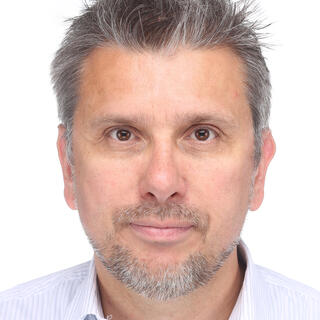
Dr. Frank Krueger is a full-time Professor at the School of Systems Biology , George Mason University, with dual affiliations in the Neuroscience Program and the Institute for Biohealth Innovation . A transdisciplinary researcher, he integrates social psychology, experimental economics, and social neuroscience to investigate the psychological and neurobiological mechanisms of social cognition and prosocial behaviors. Education: PhD in Cognitive Psychology (2001), Habilitation in Psychology, and Master's in Physics, all from German universities. His research leverages neuroimaging (fMRI, DTI, VBM), computational modeling, and behavioral experiments to study trust, reciprocity, empathy, and social bonding across diverse populations, including brain-injured patients and older adults. Recent work explores human-robot interaction, mental healthcare interventions, and the role of quantum mechanics in neurobiological systems. Current research trends focus on social trust dynamics , neural correlates of prosocial behavior , and interdisciplinary applications of AI and robotics . As Chief of the Social Cognition and Interaction: Functional Imaging (SCI:FI) lab, he leads studies on brain connectivity and psychopathic traits, with applications in PTSD treatment and neurofeedback therapies. Dr. Krueger has no listed scientific awards or advisees but maintains active leadership roles in multiple research centers, including the Center for Adaptive Systems of Brain-Body Interactions . His lab employs advanced machine learning and graph transformation techniques to decode complex social behaviors from neuroimaging data.
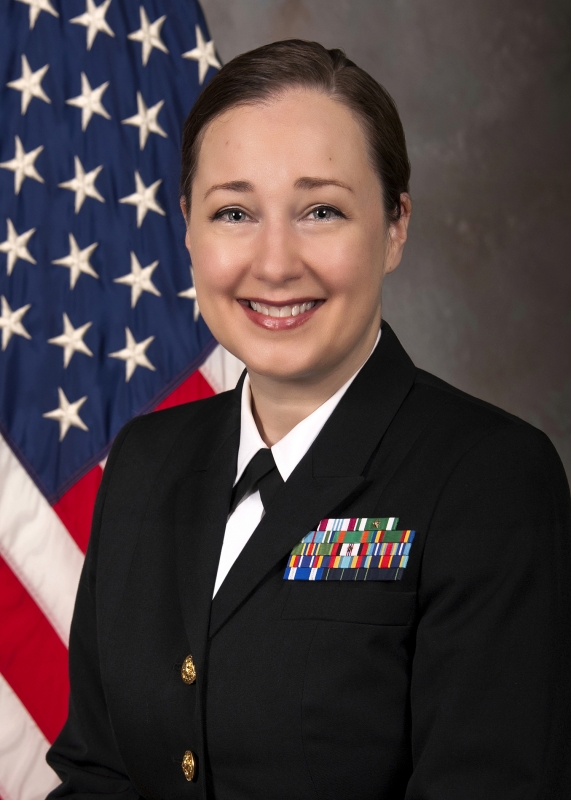
CAPT Tamara J. Worlton, M.D., serves as Professor of Surgery and Director of Global Surgery at the Uniformed Services University of the Health Sciences (USU) School of Medicine, where she also directs Surgical Operations at the Center for Global Health Engagement. A U.S. Navy Captain, she bridges military medical capabilities with civilian global health initiatives to address trauma disparities worldwide. Her educational foundation includes: B.S. in Biology from New Mexico State University M.D. from Uniformed Services University of the Health Sciences General Surgery residency at National Naval Medical Center MIS/Bariatric Fellowship at Cleveland Clinic, Ohio Graduate Certificate in Global Health and Global Health Engagement from USU Worlton's research pioneers military-civilian trauma system integration through the IMPACT Study (Integrated Military Partnerships and Civilian Trauma), focusing on scalable solutions for low-resource settings. Her work spans global surgery capacity building , disaster response innovation , and ethical frameworks for military medical engagements , with field experience across 12+ countries including deployments to Afghanistan, Djibouti, and humanitarian missions aboard USNS Comfort and Mercy. Her recent publications (2020-2024) reveal three critical trends: (1) Systematic analysis of naval hospital ship deployments as models for civilian disaster response, (2) Development of ethical protocols for military-civilian trauma partnerships, and (3) Technology-driven approaches like robotic-assisted surgery to enhance global surgical capacity. These works consistently target trauma system strengthening in Asia, Africa, and the Americas. Her recognition includes: Fulbright Alumni Ambassador (2024) Stepping Strong Innovator Award for IMPACT Study (2022) Fulbright Scholar to Sri Lanka (2022) As co-chair of the American College of Surgeons HOPE Education Committee, Worlton mentors military fellows through Harvard Medical School's Program for Global Surgery and Social Change while securing Fulbright and Stepping Strong grants. Her leadership in the IMPACT Study collaboration drives $1.2M+ in research funding focused on trauma system integration. Current initiatives include expanding the IMPACT model to Southeast Asia and developing standardized curricula for global surgery training in military medical education. She directs USU's Global Surgery Division and leads the IMPACT Study research team, collaborating with Harvard Medical School, the American College of Surgeons, and international partners across 8 countries to implement trauma system improvements through the Center for Global Health Engagement.
Michael Godhe is a Senior Lecturer and Associate Professor at Linköping University, affiliated with the Department of Culture and Society (IKOS) and the Department of Culture, Society, Design and Media (KSFM) within the Faculty of Arts and Sciences. His academic work focuses on the intersection of technology and culture, with special emphasis on robots, androids, and AI from a cultural and media historical perspective, as well as critical future studies. Godhe's research centers on representations of future images, exploring how anticipated futures are anticipated, written forward, and staged in speculative fiction (utopias, dystopias, science fiction, etc.) as well as in the public sphere. His work is characterized by four key concepts: expectations, anticipations, projections, and stagings. Together with Luke Goode from the University of Auckland, Godhe co-founded the interdisciplinary research field of Critical Future Studies (CFS), publishing the program text "Beyond Capitalist Realism – Why We Need Critical Future Studies" in Culture Unbound: Journal for Current Cultural Research. He also co-founded The Journal of Social and Cultural Possibilities with William Bridges IV and Luke Goode in 2022, focusing on humanities approaches to future studies. His publications span cultural representations of the future across science fiction, media history, and public discourse, with particular attention to how future visions manifest in utopian/dystopian narratives, space exploration, and technological development. His recent work examines Swedish science fiction, time conceptions in speculative fiction, and apocalyptic representations from biblical times to contemporary media. PhD in Theme Technology and Social Change, Linköping University (2003) Master's Degree in Intellectual and Cultural History, Uppsala University (1997) Research Networks and Leadership Godhe initiated the Swedish research network "Science fiction, fantasy and speculative fiction" with approximately 50 affiliated researchers. He is also involved with Linköping Space Studies in Humanities and Social Sciences (LSSH), which conducts interdisciplinary investigations of future visions within all aspects of space research and industry, and the LiU hub for apocalyptic and post-apocalyptic representations. His teaching in the Bachelor's program in Communication, Society, and Media Production (KSM) ranges from media history to special courses within the Futures Lab theme, where he uses methods from Critical Future Studies to engage students with future issues in light of technological development and contemporary crises.
Christopher Clements is an Associate Professor in Ecology at the University of Bristol's School of Biological Sciences, where he leads the Experimental Ecology & Conservation (EEC) research group. He is also a member of the Cabot Institute at the University of Bristol and holds a position as an SNSF postdoctoral fellow at the University of Melbourne's School of BioSciences. Dr. Clements received his PhD in Animal and Plant Sciences from the University of Sheffield (2010-2014) and has been an active member of the British Ecological Society since 2013. His research focuses on developing early warning signals of population and ecosystem collapse, experimentally testing conservation theory, tracking biodiversity change, understanding the effects of multiple stressors on biodiversity, and studying resilience and recovery in ecological systems. He employs a combination of mathematical modeling, small-scale experimental systems, and analysis of long-term population data to address critical questions in conservation biology. His work bridges theoretical ecology with practical conservation applications, with significant implications for protected area management and climate change adaptation strategies. Dr. Clements' recent work shows a strong emphasis on predicting population collapse through multivariate signals, understanding how climate change impacts species through extreme weather events, and developing novel methods for monitoring biodiversity using advanced technologies. His research increasingly integrates machine learning approaches with traditional ecological monitoring to improve forecasting of ecological tipping points, with applications ranging from freshwater ecosystems to terrestrial conservation. MULTI-STRESS: Quantifying impacts of multiple stressors (NERC, 2024-2027) CYBER: Cyanobacteria engineering for environmental restoration (BBSRC, 2024-2026) Do protected areas work? Tracking resilience and functional diversity (NERC, 2023-2027) Microcosm Experiments for Improved Species Distribution Models (ARC, 2023-2026) Timeline to collapse (NERC, 2020-2023) Dr. Clements leads the EEC group which focuses on synthesizing information from mathematical models, experimental systems, and field data to inform conservation decisions. The group has developed several innovative approaches for monitoring ecological communities and predicting critical transitions, including the EWSmethods R package for forecasting community-level tipping points. They collaborate with Bristol City Council to produce a wildlife index tracking biodiversity change in the city, demonstrating the practical application of their research to local conservation challenges.
Dimah Dera is an Endowed Assistant Professor at the Chester F. Carlson Center for Imaging Science, College of Science, Rochester Institute of Technology (RIT). She holds a Ph.D. and M.S. in Electrical and Computer Engineering, and an M.A. in Mathematics from Rowan University. Her research focuses on robust and trustworthy machine learning, integrating Bayesian theory and statistical signal processing into modern ML frameworks for healthcare, remote sensing, and surveillance systems. She is an NVIDIA Deep Learning Institute University Ambassador and active in IEEE Signal Processing and ACM SIGHPC. Dr. Dera has received prestigious awards including the NSF CRII Award (2023), NSF REU Supplement (2024), and IEEE Benjamin Franklin Key Award (2021). Her work emphasizes Bayesian uncertainty propagation for robust AI systems, with applications in sequential time-series analysis and medical imaging. Her scholarly contributions span robust image classification, uncertainty-aware neural networks, and Bayesian vision transformers. Teaching includes courses like Mathematical Methods for Imaging and Image Processing & Computer Vision II . She actively mentors students and leads research initiatives funded by NSF and industry collaborations.
Camilla Strøm serves as a Clinical Associate Professor within the Department of Clinical Medicine at the University of Copenhagen's Faculty of Health and Medical Sciences. Her clinical and academic work is based at the Capital Region of Denmark (Region Hovedstaden), with a physical address at Blegdamsvej 3, 2200 Copenhagen N, Denmark. This dual affiliation positions her at the intersection of academic research and clinical practice in Scandinavia's premier medical institution. Her research program centers on high-stakes perioperative challenges in complex head and neck procedures, with particular emphasis on robotic surgical integration and airway crisis management. Current investigations focus on optimizing tracheal intubation protocols for anatomically compromised patients and evaluating robotic surgery outcomes through systematic review methodologies. This work directly addresses critical safety gaps in surgical anesthesia where airway access and surgical precision are paramount. Analysis of her 2025 publications reveals a strategic focus on evidence synthesis for emerging surgical technologies. Both publications employ rigorous review frameworks to evaluate transoral robotic surgery outcomes and advanced intubation techniques, indicating her leadership in translating technical innovations into standardized clinical protocols. Her work bridges anesthesiology, surgical oncology, and biomedical engineering through collaborative research networks across Danish medical centers. No scientific awards or honors were documented in the source materials. While student mentorship activities are not explicitly detailed, her role as corresponding author on systematic reviews suggests involvement in graduate-level research supervision. No specific grant funding sources or project details were disclosed in the available documentation.
Chung Hwan Kim serves as an Assistant Professor in the Department of Computer Science at the University of Texas at Dallas, where he directs the Software & Systems Security Laboratory (S³ Lab). His research focuses on critical security challenges in cyber-physical systems, embedded devices, and cloud infrastructure, with recognition including the NSF CAREER Award and UT Dallas New Faculty Research Symposium Grant. His expertise spans Computer Systems Security , Cyber-Physical Security , and Software Security and Reliability , emphasizing practical solutions for robotic vehicles, autonomous systems, and trusted execution environments. Current projects address signal injection attacks, resilience testing, and confidential computing through innovative fuzzing frameworks and hardware-assisted protections. Recent publications (2020-2026) reveal three dominant research thrusts: (1) Security for autonomous/robotic systems ( DriveFuzz , IMUFUZZER ), (2) Trusted execution in constrained environments ( Vessels , GEVisor ), and (3) Automated vulnerability discovery ( HFL , TZ-DATASHIELD ), consistently appearing in top venues like IEEE S&P and USENIX Security. Key honors include: NSF CAREER Award (premier early-career recognition) UT Dallas New Faculty Research Symposium Grant Top 10 finalist for CSAW Best Applied Research Paper Award (2018) As principal investigator of the S³ Lab, Kim mentors graduate researchers and secures competitive funding for projects spanning robotic vehicle security, embedded systems hardening, and confidential computing. His teaching portfolio includes Operating Systems, Information Security, and specialized courses on CPS/IoT security. The S³ Lab develops deployable security tools like TZ-DATASHIELD for embedded data protection and IMUFUZZER for resilience testing of aerial vehicles, collaborating with industry partners to translate research into real-world solutions for autonomous systems and critical infrastructure.
Zhenyu Chen is a Full Professor and Director of the iSE Laboratory at Nanjing University, specializing in AI-driven software testing methodologies. His research bridges artificial intelligence and software engineering with dual focus areas: leveraging AI to enhance testing processes ( AI for Testing ) and validating AI/ML systems ( Testing for AI ). His research interests center on deep learning framework testing , crowdsourced testing optimization , and Large Language Model applications in verification . Recent work demonstrates innovative approaches to metamorphic testing of neural networks, LLM-based test report analysis, and security hardening of code models against backdoors. Key contributions include the development of mooctest.com and frameworks like DevMuT for mutation testing of deep learning APIs. His publication trajectory reveals evolving focus from crowdsourced testing (2018-2020) to deep learning system validation (2021-2023) and current emphasis on LLM-powered testing solutions. Major venues include ASE, ICSE, and ISSTA where he serves regularly on program committees.
Professor Yuan Miao is a distinguished academic at Victoria University (VU), serving as Professor in the College of Arts, Business, Law, Education & IT and Head of the Information Technology Program. With a PhD from Tsinghua University's Automation Department, his academic journey spans prestigious institutions including the University of Melbourne and Nanyang Technological University in Singapore before settling at VU where he has been Professor since January 2010, following his Associate Professorship from August 2004 to December 2009. Education: BSc, Shandong University, China MEng, Tsinghua University, China PhD, Tsinghua University, Automation Department, China Professor Miao's research centers on Large Language Models (LLMs) and Generative AI, where he has identified critical barriers in practical applications including limited memory length in systems like ChatGPT and Gemini, contradictory explanations, lack of local knowledge integration, and significant errors in text-data hybrid reasoning (up to 38%). His innovative solutions involve cognitive map graphs and rational intelligence models to create customized AI systems. His work spans diverse application areas including human knowledge modeling, multimodal interaction, healthcare analytics (particularly dementia detection), cybersecurity, and robotics powered by rational intelligence. Analysis of Professor Miao's recent publications reveals a strong focus on integrating LLMs with specialized knowledge domains across healthcare, cybersecurity, and social media analysis. His research consistently addresses practical limitations of current AI systems while developing novel frameworks for more reliable and context-aware applications. The interdisciplinary nature of his work is evident in publications spanning medical informatics, cybersecurity analytics, and educational technology. Scientific Recognition: Two articles in fuzzy cognitive map modeling ranked among top 10 most cited works since 2000 (Google Scholar 2000-2016) Development of adversarial dataset based on SQuAD 2.0 that reduced BERT and ELECTRA accuracy from ~90% to ORCID identifier 0000-0002-6712-3465 with 138 peer-reviewed publications Professor Miao actively supervises PhD and Master's students across diverse research topics including access control systems, healthcare analytics, cybersecurity, and social behavior analysis. His research has secured substantial funding from both industry giants (Microsoft, Amazon, Oracle, Google) and government bodies (Australia Research Council, Data61, Singapore's NRF), with recent projects including Digital Transformation for Construction Industry ($1.258 million), Western Health SharePoint Development ($68,000), and Big Data Analysis for Domestic Violence Research (US$100,000). His current grant portfolio demonstrates strong industry-academia collaboration addressing real-world challenges. Professor Miao leads research teams focused on rational intelligence systems that overcome current LLM limitations, with particular emphasis on creating practical AI solutions for healthcare, cybersecurity, and smart city applications. His work with Maribyrnong City Council on the Smart City at Footscray Park project ($850,000) exemplifies his commitment to applying advanced AI research to community-level challenges.
Marcel Voßhans serves as a Researcher and Technical Project Leader for the AMEISE Team (Project RAFT) at Esslingen University of Applied Sciences' School of Computer Science and Engineering. He teaches specialized courses including Perceptional Algorithms, ROS, Sensory Systems (LiDAR/Camera), Autonomous Driving & Simulation, and Automotive Functional Safety. Education: 2015-2018: B.Eng. in Electrical Engineering and Information Technology, Hochschule Hannover 2018-2020: M.Sc. in Applied Computer Science: Autonomous Systems, Hochschule Esslingen Research Focus: His work centers on Autonomous Driving and AI-driven perception systems , with critical contributions to infrastructure reliability and sensor fusion for automated vehicles. He investigates how conventional road infrastructure interacts with autonomous systems through SLAM technology and deep learning-based environment detection. Publication Trends: His recent works demonstrate a cohesive research trajectory addressing real-world autonomous driving challenges, particularly in vehicle classification using stereo vision (2020), infrastructure-vehicle interaction requirements (2020), and conventional infrastructure reliability validation (2021). These studies emphasize practical implementation of AI in automotive contexts with strong safety considerations. Professional Background: Combines industry experience from Daimler AG (Steer-by-Wire development) and Continental Teves AG (testing rig automation) with academic leadership in the AMEISE research team. His international experience includes academic work in Sweden and China.
Atanas Gotchev is a Professor of Signal Processing at Tampere University, Finland, where he leads the 3D Media Group and directs the Centre for Immersive Visual Technologies (CIVIT). He also serves as Chair of the Erasmus Mundus Joint Master Programme in Imaging and Deputy Director of the TAU Imaging Research Platform. Gotchev holds degrees from Technical University Sofia (M.Sc. in Electronics and Automation Engineering and M.Sc. in Applied Mathematics), the Bulgarian Academy of Sciences (PhD in Information Technologies), and Tampere University of Technology (D. Tech.). His research focuses on immersive imaging, 3D/light field imaging, computational optics, and image quality assessment. He has coordinated three Marie Sklodowska-Curie networks in light field imaging and serves as Senior Editor for IEEE Transactions on Image Processing and the Journal of Electronic Imaging. Gotchev has organized major conferences like the IEEE International Conference on Image Processing (2026) and chaired workshops on multimedia signal processing. Recent research emphasizes computational cameras, diffractive optics, and end-to-end design for metaoptics. He has a visiting professorship at the University of Utah (2023-2024) supported by Fulbright and Nokia Foundation grants. His work spans datasets like CIVIT and contributions to safety-critical applications in robotics and ITER projects.
Dr. Peter J. Robinson is an Honorary Research Fellow at the School of Electrical Engineering & Computer Science, The University of Queensland. His academic career spans over three decades, focusing on foundational research in programming languages, formal methods, and distributed systems. His work includes contributions to Qu-Prolog, a multi-threaded Prolog implementation, and TeleoR, a robotic task programming framework. Research interests include agent-based systems, blockchain security for aerospace applications, software verification, concurrent programming, and education technology. Notable projects include the Pedro publish/subscribe server and MyPyTutor, an interactive Python learning tool. He has collaborated on railway safety protocols and spacecraft control systems using blockchain. Publications span journals like Formal Aspects of Computing and conferences such as IEEE Symposium on Computers and Communications. Technical reports include work on unification algorithms and multi-agent verification frameworks. He has advised on projects involving IoT architectures and swarm intelligence simulations.
Shuo Li is a Professor in the Department of Macromolecular Engineering at ETH Zürich, Switzerland. His research focuses on innovative biomaterials, bioelectronic systems, and implantable medical devices. Key areas include bioresorbable materials for transient electronics, flexible/stretchable sensors, and soft robotics applications. His work integrates materials science with biomedical engineering to address challenges in tissue integration, real-time diagnostics, and programmable drug delivery. Recent projects emphasize wireless implantable sensors for continuous monitoring of physiological parameters such as blood flow, oxygen saturation, and pH levels in surgical flaps and organ grafts. He has pioneered 3D shape-morphing displays using liquid metal actuators and developed self-healing elastomeric switches for haptic interfaces. His research spans biomaterial synthesis, optoelectronics, and additive manufacturing of soft materials. Publications highlight advancements in bioresorbable platforms for drug delivery, light-controlled actuation systems, and optical probes for in vivo pharmacology. His interdisciplinary approach bridges material design, device fabrication, and clinical applications, with a focus on translating lab innovations into practical medical solutions. Advising and grants: No specific advisees or grant details listed in the provided text. However, his extensive publication record indicates active collaboration with research groups in bioelectronics, soft robotics, and biomedical engineering. Labs/Teams: Likely affiliated with ETH's Macromolecular Engineering lab and collaborate with multidisciplinary teams in materials science, robotics, and medical device development.
Dr. Maria A. Martin has been affiliated with the Potsdam Institute for Climate Impact Research (PIK) since 2008, initially as a doctoral student and later transitioning to a post-doctoral researcher. Since 2014, she has served as a Research Analyst within the Scientific Directors' Staff department. Her academic background includes a physics degree from the University of Potsdam and Université Pierre-et-Marie-Curie in Paris, where her doctoral thesis focused on synchronization in quantum-optical resonators. At PIK, she co-developed the Parallel Ice Sheet Model and conducted pioneering research on Antarctic ice-flow dynamics using numerical modeling techniques. Dr. Martin's research interests span climate modeling, glaciology, and environmental science, with a particular emphasis on understanding the mechanisms driving ice-sheet dynamics and their implications for sea-level rise. Her work integrates advanced computational models with observational data to address critical questions in climate science. Beyond technical contributions, she has engaged in science communication through initiatives like the children's podcast Pinselohr . Her professional network and collaborations are reflected in her participation in interdisciplinary projects at PIK, including contributions to policy advice and software development related to climate impact research. She holds an ORCID identifier (0000-0002-1443-0891) and maintains active involvement in academic discourse through peer-reviewed publications and institutional outreach activities.
Alberto Vale is an Assistant Professor in the Department of Electrical and Computer Engineering at the University of Lisbon's Instituto Superior Técnico. His research focuses on robotics, control systems, nuclear fusion engineering, and autonomous systems. He is affiliated with the Institute of Plasmas and Nuclear Fusion and teaches courses such as Control of Cyber-Physical Systems and Autonomous Systems . His work emphasizes remote maintenance systems for nuclear facilities, radiation detection technologies, and mobile robotics applications. Research interests include: Advanced control strategies for cyber-physical systems Development of autonomous systems for nuclear fusion facilities Radiation detection and localization using drones and mobile robots Path planning and navigation in constrained environments Recent publications highlight innovations in fusion diagnostics (e.g., reflectometry systems for DEMO), LIDAR-based SLAM techniques, and optimization of autonomous fleets for solar farm inspection. He has received the EDA Research, Technology, and Innovation Papers Award 2023 and the Best Presentation Award .