معرفی
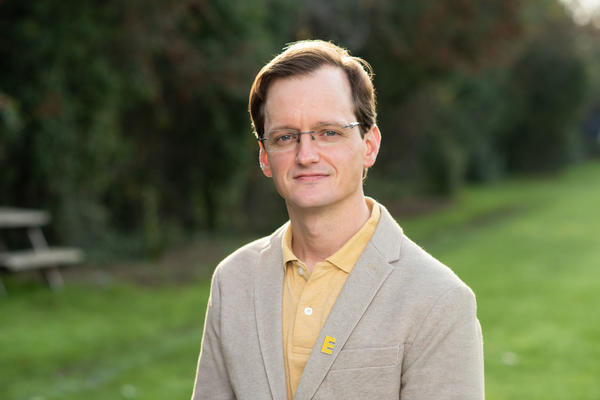
Christopher Clements is an Associate Professor in Ecology at the University of Bristol's School of Biological Sciences, where he leads the Experimental Ecology & Conservation (EEC) research group. He is also a member of the Cabot Institute at the University of Bristol and holds a position as an SNSF postdoctoral fellow at the University of Melbourne's School of BioSciences.
Dr. Clements received his PhD in Animal and Plant Sciences from the University of Sheffield (2010-2014) and has been an active member of the British Ecological Society since 2013.
His research focuses on developing early warning signals of population and ecosystem collapse, experimentally testing conservation theory, tracking biodiversity change, understanding the effects of multiple stressors on biodiversity, and studying resilience and recovery in ecological systems. He employs a combination of mathematical modeling, small-scale experimental systems, and analysis of long-term population data to address critical questions in conservation biology. His work bridges theoretical ecology with practical conservation applications, with significant implications for protected area management and climate change adaptation strategies.
Dr. Clements' recent work shows a strong emphasis on predicting population collapse through multivariate signals, understanding how climate change impacts species through extreme weather events, and developing novel methods for monitoring biodiversity using advanced technologies. His research increasingly integrates machine learning approaches with traditional ecological monitoring to improve forecasting of ecological tipping points, with applications ranging from freshwater ecosystems to terrestrial conservation.
- MULTI-STRESS: Quantifying impacts of multiple stressors (NERC, 2024-2027)
- CYBER: Cyanobacteria engineering for environmental restoration (BBSRC, 2024-2026)
- Do protected areas work? Tracking resilience and functional diversity (NERC, 2023-2027)
- Microcosm Experiments for Improved Species Distribution Models (ARC, 2023-2026)
- Timeline to collapse (NERC, 2020-2023)
Dr. Clements leads the EEC group which focuses on synthesizing information from mathematical models, experimental systems, and field data to inform conservation decisions. The group has developed several innovative approaches for monitoring ecological communities and predicting critical transitions, including the EWSmethods R package for forecasting community-level tipping points. They collaborate with Bristol City Council to produce a wildlife index tracking biodiversity change in the city, demonstrating the practical application of their research to local conservation challenges.