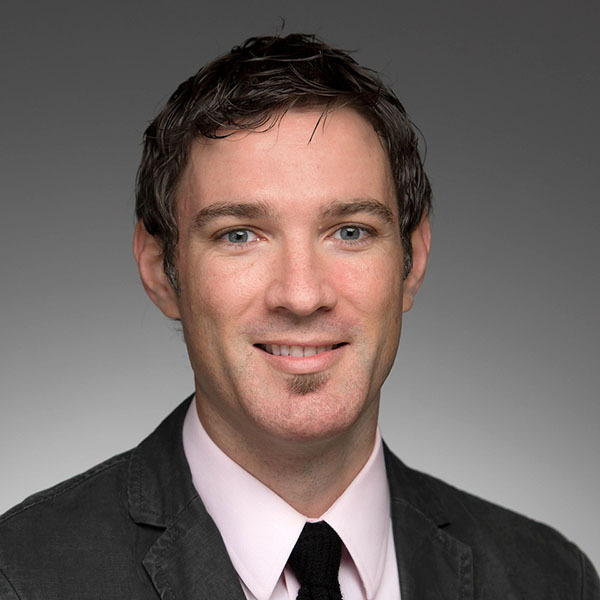
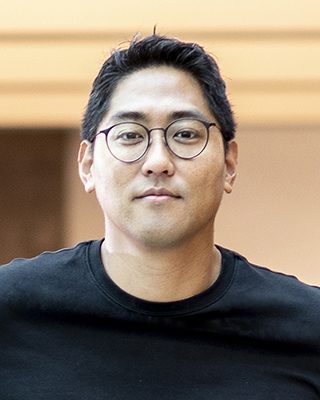
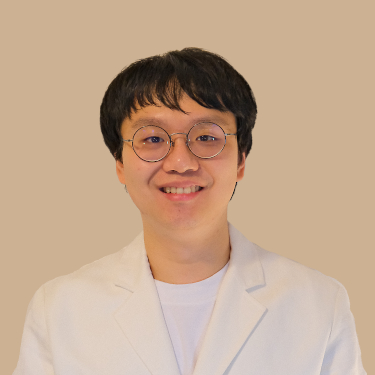
Crystal S. Rudds is an Assistant Professor in the Department of English at the University of Utah, specializing in African American literature and culture. Her research focuses on twentieth-century American and African American fiction, qualitative narratives about urban life and housing, Black Feminisms, and black geography/ecology. PhD in English from the University of Illinois at Urbana-Champaign (2016) MFA in Creative Writing from Indiana University-Bloomington (2004) BA in Communications with minors in French and Theatre from Wake Forest University (1999) Her scholarly work examines the intersection of literature and urban environments, particularly through public housing fiction. She uses interdisciplinary approaches combining qualitative research with literary analysis, emphasizing community engagement and the phenomenological experiences of residents in urban spaces. Her publications address topics like the historical context of public housing narratives and the concept of 'the black interior' as a framework for understanding spatial identity. Rudds has received prestigious honors, including the David D. Anderson Award for Midwestern Literary Studies and the Mary Blinn Poetry Prize. She is also a Faculty Research Fellow and Intersectionality Pedagogy Fellow at the University of Utah. Her teaching philosophy integrates experiential learning and community-focused methods, with courses such as African Amer Lit 2, Seminar in Lit. Study, and Studies Af Amer Lit. She emphasizes archival research, site visits, and performance-based learning to empower students as co-creators of knowledge.
Christopher Rea is a Professor of Modern Chinese Literature in the Department of Asian Studies at the University of British Columbia's Faculty of Arts. He serves as a faculty member and former Associate Head of the Department of Asian Studies, former Director of the Centre for Chinese Research, an associate of the Hong Kong Studies Initiative, and a Faculty Fellow of St. John's College. His academic journey includes a Ph.D. from Columbia University (2008) and a B.A. from Dartmouth College (1999). Rea's research focuses on the modern Chinese-speaking world, with particular expertise in Chinese literature, cinema, print culture, translation, and the cultural history of humor and deception. His scholarly approach bridges literary analysis, cultural history, and film studies, creating a distinctive interdisciplinary perspective on modern Chinese cultural production. He is particularly known for his work on Republican-era China (1912-1949), exploring how cultural forms evolved during this transformative period. His major publications reveal a trajectory from studies of humor and laughter in modern China ( The Age of Irreverence , 2015) to literary hoaxes and deception ( The Book of Swindles , 2017), Chinese cinema ( Chinese Film Classics , 2021), and research methodology ( Where Research Begins , 2022). His current projects include China on the Make: Stories of Chinese Deception and The Unfinished Comedy , a sequel to The Age of Irreverence . National Endowment for the Arts Translation Fellowship (2024) UBC Dean of Arts Mentorship Award (2024) UBC Killam Research Prize (2022) Joseph Levenson Book Prize (2017) Rea actively supervises graduate students and has developed significant digital resources, including the Chinese Film Classics project (chinesefilmclassics.org) featuring 40+ subtitled Chinese films and 22 video lectures, and a YouTube channel with over 250 videos on Chinese cinema and culture. His teaching extends to free online courses on The Modern Chinese Novel and early Chinese cinema, demonstrating his commitment to making scholarly resources accessible beyond traditional academic boundaries.
Crystal S. Rudds is an Assistant Professor of African American literature and culture in the Department of English at the University of Utah, specializing in twentieth-century American and African American fiction, urban life narratives, Black Feminisms, and black geography/ecology. She earned her PhD in English from the University of Illinois at Urbana-Champaign (2016) and MFA in Creative Writing from Indiana University-Bloomington (2004). Her research explores intersections between literary analysis and community engagement, focusing on urban spatiality, public housing representation, and black interiority. She has published works analyzing Frank London Brown and Jasmon Drain's housing narratives, digital archiving practices, and pedagogical identity evolution. Key grant activities include: Gathering, Sewing, Giving: Chronopolitics and Black Women's Quilting (TRIC/Mellon Foundation, 2023) Utah Presidential Leadership Fellowship (2023) Recognitions: David D. Anderson Award for Midwestern Literary Studies (2023) Mary Blinn Poetry Prize (2022) University of Utah Fellowships (2022) Teaching activities feature: Experiential learning with archival documents Historic site visits Performance-based literary analysis Community-focused pedagogy
Matthew Thomas Payne is an Associate Professor in the Department of Film, Television, and Theatre at the University of Notre Dame. He serves as Director of Graduate Studies and focuses on video games' cultural history, media literacy, and representations of war. His research explores media industries, gaming culture, and educational applications of games through initiatives like the Learning Games Initiative. Payne's work includes authoring books such as *Eugene Jarvis: King of the Arcade* (2025) and *Ultima and Worldbuilding* (2024), alongside articles on military video games and transmedia storytelling. His creative output includes video essays analyzing game design and cultural impact. Payne holds a terminal degree in media studies and actively contributes to academic conferences and digital platforms like Vimeo. Education: Ph.D. in Media Studies (assumed based on faculty role). Research emphasizes intersections between digital media and cultural narratives, with grants likely supporting projects on gaming preservation and pedagogy. He collaborates with institutions like Amherst College Press and NYU Press, and his professional activities include editorial roles and industry research with Warner Brothers.
Jerrica Ty Rowlett serves as an Assistant Professor of Communication and Language Studies within the College of Arts and Sciences at Bryant University, where she examines digital communication's societal implications through research and teaching in digital culture and social media dynamics. Education Ph.D., Florida State University M.A., Clemson University B.A., Georgetown College Her research program investigates identity formation, civic engagement, and digital inequity through critical analysis of social media platforms. She explores how digital environments shape interpersonal relationships, political discourse, and community building while addressing power dynamics in online spaces, with particular attention to abusive contexts, gender representation, and emotional experiences. Analysis of her publication record (2015-2024) reveals a consistent trajectory examining social media's evolving societal impact. Early work focused on educational applications and youth culture, progressing to sophisticated analyses of political meme culture, relationship dissolution in abusive contexts, and emotional contagion online. Her scholarship demonstrates increasing attention to social justice dimensions within digital communication. Scientific Awards No awards documented in current sources Advising and Grants Student advising details and research grant information are not specified in available materials, though her extensive publication record indicates active scholarly mentorship and research productivity. Labs and Teams No dedicated research laboratories or formal collaborative teams are mentioned in the provided information.
Sophie Volpp is a Professor in the Department of East Asian Languages and Cultures and Comparative Literature at the University of California, Berkeley. Her research focuses on Chinese literature from the 16th to 19th centuries, with particular emphasis on theatricality, material culture, and literary objects. She is the author of *Worldly Stage: Theatricality in Seventeenth-Century China* (2011) and *The Substance of Fiction: Literary Objects in China, 1550-1775* (2022). Her current projects include a book on the National Peiping Library’s preservation efforts during the Sino-Japanese War and an analysis of referents in *The Story of the Stone*. Her scholarly work bridges literary analysis and cultural history, examining themes such as gender, power, and spectacle in late-imperial China. She has translated works by pre-modern women poets and dramatists, contributing to gender-centric scholarship in East Asian studies. Her publications span journal articles and edited volumes, addressing topics like Qing-era theatrical design, material circulation in classical novels, and cross-cultural influences in literary production. Her research has been published in venues such as *Harvard Journal of Asiatic Studies* and *Journal of Asian Studies*.
Sewoong Oh is a Professor at the Paul G. Allen School of Computer Science & Engineering at the University of Washington, where he has been faculty since 2019. His research focuses on the foundations of machine learning with particular emphasis on differential privacy, secure and robust machine learning, and federated learning. Prior to joining UW, he was at the Department of Industrial and Enterprise Systems Engineering at the University of Illinois at Urbana-Champaign from 2012-2019. He is affiliated with multiple NSF AI Institutes including ACTION (Agent-based Cyber Threat Intelligence and Operation), AI-EDGE (Future Edge Networks and Distributed Intelligence), and IFML (Foundations of Machine Learning). Oh received his PhD in Electrical Engineering from Stanford University in 2011 under Andrea Montanari, followed by postdoctoral work at MIT's Laboratory for Information and Decision Systems under Devavrat Shah. His educational background spans top institutions in theoretical computer science and electrical engineering. His research spans the critical intersection of machine learning security, privacy, and robustness. Oh's work addresses fundamental challenges in making AI systems reliable and trustworthy, with particular focus on defending against backdoor attacks, developing privacy-preserving algorithms, and creating efficient tokenization methods for language models. His recent SuperBPE work demonstrates how moving beyond traditional subword tokenization can significantly improve language model efficiency and performance. His research consistently bridges theoretical foundations with practical implementations, as evidenced by numerous open-source repositories containing production-ready code. Oh's publications reveal a consistent trajectory toward addressing security and privacy concerns in increasingly complex machine learning systems, with recent work focusing on language model tokenization, data-centric AI, and federated learning frameworks. His research shows strong interdisciplinary connections between theoretical computer science, statistics, and practical machine learning systems. ACM SIGMETRICS best paper award (2015) NSF CAREER award (2016) ACM SIGMETRICS rising star award (2017) GOOGLE Faculty Research Awards (2017, 2020) 2024 ICML Best Paper Award (for work by advisee Jon Hayase) Professor Oh maintains an active research group with numerous PhD students, postdocs, and undergraduate researchers. His students have secured prestigious positions at leading tech companies including Amazon, Google, and Snap, as well as academic appointments at institutions like University of Wisconsin-Madison and Shanghai Jiao Tong University. He has received substantial research funding through his participation in multiple NSF AI Institutes and industry research awards from Google. His lab maintains several active GitHub repositories implementing cutting-edge research in backdoor defense, robust statistics, and privacy-preserving machine learning.
Dr. Frances Smith is an Associate Professor in Film Studies at the University of Sussex's School of Media, Arts and Humanities. She holds a PhD in Film and Television Studies from the University of Warwick (2013), an MA in Management from Durham University (2008), and a Master of Modern Languages in French/Italian from Manchester University (2007). Her research focuses on teen cinema, female authorship, Hollywood and European cinema, and gender studies, with current work on Céline Sciamma's Girlhood. She authored Rethinking the Hollywood Teen Movie (2017) and co-edited Refocus: The Films of John Hughes (2021). Teaching includes convening Analysing Film, American Teen Cinema, and Working with Film modules. She has taught Gender and Representation, British Cinema, and Study Skills. Her awards include Fellowship of the Higher Education Academy (2016). Active in PhD supervision focusing on teen cinema, female authorship, and gender in cinema. Publications span over 25 articles/chapters addressing topics like queer youth representation, transatlantic media comparisons, and directorial authorship in John Hughes and Amy Heckerling films. Research explores intersections of gender, space, and cultural identity in global popular cinema.
Huan Zhang serves as an Assistant Professor in the Department of Electrical and Computer Engineering at the University of Illinois Urbana-Champaign (UIUC), with affiliate appointments in the Department of Computer Science and the Coordinated Science Laboratory. His research focuses on building trustworthy AI systems with formal verification techniques to provide provable guarantees for safety-critical applications, particularly in machine learning and neural networks. Dr. Zhang received his Ph.D. in Computer Science from UCLA in 2020, advised by Professor Cho-Jui Hsieh. His academic journey includes an M.S. in Computer Engineering from UC Davis (2014) and a Bachelor of Engineering from Zhejiang University (2012). Prior to joining UIUC, he completed a postdoctoral fellowship at Carnegie Mellon University (2021-2023) with Professor Zico Kolter. Huan Zhang's research program centers on formal verification of machine learning systems, with particular emphasis on neural network verification, AI safety, robustness, and reliability. He pioneered the linear bound propagation-based verification framework that enables formal verification for networks with millions of neurons. His work spans five major research categories: formal verification of machine learning, training trustworthy ML models, machine learning safety and adversarial attacks, reinforcement learning safety, and optimization for scalable machine learning. His CROWN framework (NeurIPS 2018) established a foundational approach for neural network verification through efficient linear bound propagation. His recent publications demonstrate a strategic expansion from foundational verification techniques toward increasingly complex systems including large language models, vision-language models, and robotic control systems. The research trajectory shows a clear progression from theoretical frameworks to practical implementations with real-world applications, particularly in safety-critical domains. His work increasingly bridges formal methods with practical AI deployment requirements. Winner of International Verification of Neural Networks Competition (VNN-COMP) as team leader (2021-2024) Schmidt Futures AI2050 Early Career Fellowship ($300,000 research grant) Adversarial Machine Learning (AdvML) Rising Star Award (2021) IBM PhD Fellowship (2018) Dr. Zhang leads the development of α,β-CROWN, a neural network verifier that has won VNN-COMP 2021-2023, and auto_LiRPA, a PyTorch-based library for perturbation analysis on general computational graphs. He has mentored numerous graduate students from CMU, UCLA, UIUC, and Columbia University. His research is supported by significant funding including the Schmidt Futures fellowship and industry collaborations. He teaches courses including ECE 120, ECE 484, ECE 584, and ECE 598 HZ on topics ranging from computing fundamentals to safe autonomy and machine learning. Dr. Zhang maintains active research collaborations across multiple institutions and is affiliated with UIUC's Coordinated Science Laboratory. His work has significant implications for safety-critical AI applications in autonomous systems, healthcare, and other mission-critical domains where reliability guarantees are essential. He regularly gives guest lectures at institutions including Yale, Stony Brook, and the University of Nebraska Lincoln on formal verification techniques.
Prof. Kai S. Exner is a Professor of Theoretical Inorganic Chemistry at the University of Duisburg-Essen's Faculty of Chemistry and a member of the Zentrum für Medizinische Biotechnologie (ZMB). His research focuses on electrocatalysis , particularly optimizing electrode materials for energy applications such as batteries, electrolyzers, and fuel cells. He employs computational methods like ab initio calculations and microkinetic modeling to bridge theoretical insights with experimental and industrial applications, emphasizing sustainable catalyst design without relying on noble metals. His work integrates basic research with applied medical biotechnology through ZMB collaborations, though his primary affiliation lies in the Faculty of Chemistry. Exner has pioneered concepts like the electrochemical-step asymmetry index and free-energy span model, which are critical for screening electrocatalysts. His research group, 'Theoretical Inorganic Chemistry,' actively explores mechanisms behind oxygen and chlorine evolution reactions, emphasizing selectivity control and reaction pathway complexity. Exner received the Gottschalk-Diederich-Baedeker-Preis (2024) for advancing the energy transition through foundational electrocatalysis research. He leads Aktuelles Projekt funded by third-party grants and collaborates with facilities like the Analytics Core Facility Essen (ACE) and Imaging Center Campus Essen (ICCE). His advisory role focuses on guiding theoretical and computational approaches in electrochemistry, and he has established a reputation for interdisciplinary research connecting computational chemistry with practical energy solutions.
Ramsey McGlazer is an Associate Professor specializing in twentieth-century European and Latin American literature, film, and critical theory. His research engages with poetry, politics-aesthetics intersections, critical carceral studies, and feminist/queer/psychoanalytic frameworks. He holds a Ph.D. in Comparative Literature and Critical Theory from UC Berkeley (2015) and previously taught at the University of St Andrews and Brown University’s Pembroke Center. McGlazer’s work interrogates modernist critiques of progress, radical psychiatry movements, and the interplay between aesthetic practices and institutional critique. His acclaimed monograph Old Schools: Modernism, Education, and the Critique of Progress (2020) won the American Association for Italian Studies First Book Prize. Current projects include The Clinic and its Double , exploring mid-century radical psychiatry and avant-garde art. He serves as Senior Editor of Critical Times and Coeditor of Italian Culture , and has translated key works like Rita Segato’s The War Against Women . McGlazer’s writing appears in venues such as Los Angeles Review of Books and n+1 . Research interests span Surrealist provocations, Brazilian artist Lygia Clark’s propositions, and transnational feminist solidarities. His scholarship bridges literary analysis with critical engagements in carceral studies, postcolonial theory, and decolonial thought.
Emily C. Bartels is a Professor of English at Rutgers University specializing in early modern literature and culture, with particular expertise in Shakespearean and non-Shakespearean drama. She has served as director, and is now dean, of the Middlebury Bread Loaf School of English since 2010, a summer Master's program designed for K-12 English teachers. Professor Bartels received her BA from Yale University and both her MA and PhD from Harvard University. Her academic background positioned her to become a leading scholar in Renaissance literature studies. Her research examines questions of race, cross-cultural relations, gender, genre, and performance in early modern English drama. Professor Bartels is renowned for her groundbreaking work on Shakespeare's Othello and Christopher Marlowe's plays, analyzing how these texts represent cultural and racial difference. She has significantly contributed to postcolonial approaches to early modern literature, revealing how English drama engaged with global encounters and representations of the 'other' during the Renaissance period. Her scholarship demonstrates how early modern writers both reflected and shaped contemporary attitudes toward difference, particularly regarding race, religion, and national identity. Professor Bartels' publications reveal a consistent scholarly trajectory examining racial and cultural representation in early modern England. Her work spans from detailed analyses of specific plays like Hamlet and Julius Caesar to broader studies of how England conceptualized Africa and non-Christian cultures during the Renaissance. A recurring theme throughout her career is the analysis of how early English drama both reflected and shaped contemporary attitudes toward difference, particularly regarding race, religion, and national identity. Roma Gill Prize for Best Work on Christopher Marlowe (1993-94) for Spectacles of Strangeness: Imperialism, Alienation, and Marlowe Board of Trustees Fellowship for Scholarly Excellence (1993) School of Arts and Sciences Award for Distinguished Contributors to Undergraduate Education (2008 & 1993) Warren I. Susman Award for Excellence in Teaching (2008) Solmsen Fellowship at the Institute of Research in the Humanities, University of Wisconsin (1995) Black Atlantic Project fellowship from the Rutgers Center for Historical Analysis Professor Bartels has demonstrated exceptional commitment to both research and teaching excellence. She has developed innovative courses exploring the intersections of literature, history, and cultural studies, including undergraduate seminars on Othello and Hamlet, and graduate courses on Shakespeare Page and Stage. Her administrative role as dean of the Middlebury Bread Loaf School of English demonstrates her commitment to education beyond traditional university settings. Her fellowships from prestigious institutions indicate successful grant acquisition throughout her distinguished career. Professor Bartels has been actively involved with the Shakespeare Association of America and has collaborated with international scholars like Emma Smith of the University of Oxford. Her work has positioned her at the forefront of conversations about early modern literature, race studies, and postcolonial approaches to Renaissance drama, influencing how scholars understand the intersections of literature, race, and cultural identity in the early modern period.
Tijana Gajić is a researcher at Singidunum University in Belgrade, Serbia. She holds a Ph.D. in Philology (2020), an MA in English Language and Literature (2009), and a BA in the same field (2007) from the University of Belgrade. Her work focuses on the intersection of language education, digital tools, and critical pedagogy. Doctoral Studies: Philology , University of Belgrade (2017-2020) Master Studies: English Language and Literature , University of Belgrade (2008-2009) Bachelor Studies: English Language and Literature , University of Belgrade (2003-2007) Dr. Gajić’s research explores the impact of digital technologies on language acquisition, critical thinking development, and the sociopolitical dimensions of English language learning. She has published extensively on mobile applications like Duolingo, HelloTalk, and WordUp, analyzing their efficacy in modern pedagogy. Her recent publications (2024-2025) examine digital tools’ influence on language education, critical pedagogy in Serbian classrooms, and AI-driven language learning innovations. Earlier works (2020-2016) established her expertise in tandem learning, vocabulary enhancement via apps, and affective factors in language acquisition. Notable collaborations include partnerships with researchers like N. Maenza , A. Gagić , and J. Nikolić . While no specific grants or awards are mentioned, her involvement in conferences such as Sinteza and ELTA Serbia underscores her active role in advancing language education. Her 2022 book, Nastava stranih jezika i razvoj kritičkog mišljenja u eri neoliberalizma , synthesizes her critical pedagogy framework. Current projects likely continue her focus on digital transformation in language teaching.
Dr. James McDonald serves as a Lecturer and Research Fellow at the University of New South Wales (UNSW) within the School of Civil and Environmental Engineering's Water Research Centre (WRC). His work at the Vallentine Annexe (H22), Room 102, Kensington Campus focuses on advancing water treatment technologies and understanding contaminant behavior in water systems. His position bridges academic instruction with cutting-edge research in environmental engineering. McDonald's research spans multiple critical areas in water science and engineering, with particular emphasis on trace organic contaminants, membrane technologies, and advanced water treatment processes. His work investigates the fate and removal of pharmaceuticals, personal care products, and industrial chemicals in various water treatment systems. He has made significant contributions to understanding disinfection by-product formation, chiral inversion of pharmaceuticals, and the development of novel membrane technologies for improved water purification. His research combines experimental approaches with computational modeling to address complex water quality challenges. Analysis of McDonald's recent publications reveals a strong focus on emerging contaminants, particularly PFAS compounds and chiral pharmaceuticals, and their behavior in water treatment systems. His work demonstrates expertise in both conventional and advanced water treatment technologies, with increasing emphasis on sustainable approaches including green infrastructure and novel membrane processes. The interdisciplinary nature of his research connects environmental engineering, chemistry, microbiology, and materials science to address contemporary water quality challenges. McDonald actively collaborates with researchers across multiple institutions and has contributed to numerous significant studies on water quality and treatment. His work supports the development of more effective water recycling systems and safer drinking water supplies. While specific grant information isn't detailed in the available text, his extensive publication record suggests sustained research funding in water treatment technologies and contaminant fate studies. As part of UNSW's Water Research Centre, McDonald contributes to one of Australia's leading water research facilities. The WRC provides a collaborative environment for addressing complex water challenges through interdisciplinary research that integrates engineering, chemistry, and environmental science perspectives.
Rebecca Herissone is Professor of Musicology at the University of Manchester and a leading scholar in early modern English music. She co-edits the peer-reviewed journal Music & Letters and serves on editorial boards for the Purcell Society, Musica Britannica, and the Complete Works of John Eccles. Her research focuses on seventeenth-century creativity, material culture, and the ontological dimensions of music notation. Key research areas: Early Modern Music, Creativity, Source Study, Notation, Reception Major awards: Diana McVeagh Prize (2015), Westrup Prize (2007) Her recent work includes digital humanities projects on music preservation and critical editions of Purcell's operas. She has pioneered interdisciplinary approaches connecting musicology with drama, art, and literature, and currently leads research on Purcell's posthumous reception in the eighteenth and nineteenth centuries. Her teaching spans music historiography, performance practices, and advanced source analysis.