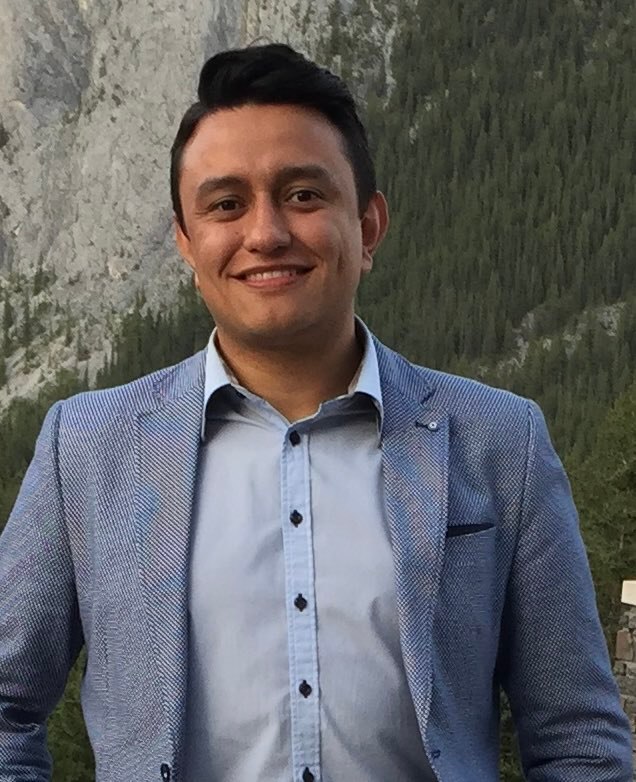
José Eduardo Villalobos Graillet is an Assistant Professor of Spanish at Idaho State University , specializing in Modern Peninsular Literature and Culture with a focus on visual culture (film and television) . He previously held a position as Spanish Instructor at Wilfrid Laurier University in the Department of Languages and Literatures. Research Areas : Spanish Film Studies, Spanish Medieval Literature, Latin American and Caribbean Studies, Teaching Spanish as a Foreign Language, Visual Culture, and Critical Pedagogy. His scholarly work examines film and television adaptations of 'La Celestina' , analyzing censorship dynamics across Francoist Spain, the Democratic Transition, and contemporary Spain. He also contributes to Spanish pedagogy , developing technological tools like Lang-8 for written expression and culturally immersive teaching units on topics such as winter festivals and Caribbean music. His publications span both critical academic analysis and methodological innovations for language instruction. Key Themes in Publications : Adaptation fidelity, political censorship, intercultural pedagogy, and the role of digital platforms in language learning.
Julie Rak is the HM Tory Chair and Professor in the Department of English and Film Studies at the University of Alberta. She holds a BA and PhD from McMaster University and an MA from Carleton University. Her research focuses on auto/biography, life writing, and nonfiction in North America, with specialties in gender, Canadian literature, and publishing studies. She has authored or co-edited numerous books, including False Summit: Gender in Mountaineering Nonfiction (2021) and The Routledge Introduction to Auto/biography in Canada (2023). Rak’s academic roles include interim Chair of the EFS Department (2023–2024) and leadership in the Stories of Change research group. She has received prestigious awards such as the J. Gordin Kaplan Award (2023) and the Killam Annual Professorship (2017–2018). Her research explores marginalized narratives, including Inuit literature and digital life writing, with a commitment to inclusivity and community engagement. Her teaching spans undergraduate and graduate courses on autobiography, gender theory, and Canadian literature. She actively supervises research projects and supports student initiatives like the Roger Smith Undergraduate Research Award. Rak’s work bridges academic rigor with public scholarship, with over 90 media engagements. Education: PhD in English, McMaster University MA in Canadian Studies, Carleton University BA in English, McMaster University Grants & Projects: SSHRC Insight Grant for Government Agents, Literary Agents: Inuit Books and Government Intervention, 1968–1985 Leadership in the Stories of Change initiative Awards & Honors: Fellow of the Royal Society of Canada (2022) Henry Marshall Tory Chair (2019–2025) 2024 Visiting Professor at Merton College, Oxford
Ryuko Kubota is a Professor in the Department of Language and Literacy Education at the University of British Columbia (UBC), Faculty of Education, since 2009. Her research spans critical applied linguistics , race and language education , and decolonial pedagogies . She has contributed extensively to understanding language ideologies , multicultural education , and critical literacies . Education: BA in English Linguistics, Rikkyo University (1980) MAT in TESOL, School for International Training (1987) PhD in Education, OISE/University of Toronto (1992) Her research interests focus on the intersection of race, language policies, and critical pedagogies. She examines neoliberal paradoxes in language learning, translingual practices , and antiracist engagement in global contexts. Her work addresses systemic inequities in English language education and immersion programs . Recent publications highlight critical approaches to World Englishes , AI-assisted writing , and raciolinguistic hegemony . These studies span interdisciplinary sub-fields including critical race theory , decolonial education , and language teacher identity . Scientific awards include the DSSA Award 2020 . She supervises graduate students like Charu Gupta (PhD) and collaborates with institutions such as the Language Sciences Institute at UBC. Her teaching includes courses on critical multicultural education and language politics .
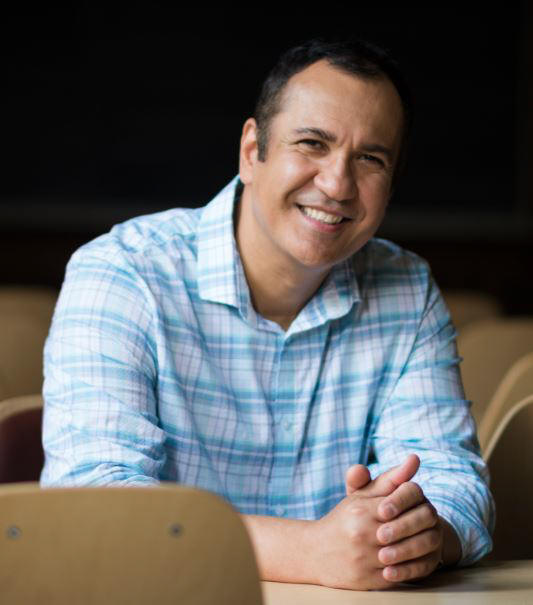
Romin W. Tafarodi is an Associate Professor in the Department of Psychology at the University of Toronto, where he researches cultured subjectivity and identity formation. He holds a B.A. from the University of Waterloo and a Ph.D. from the University of Texas at Austin. His work examines how societal symbols and institutional relations shape human individuality and interpersonal understanding, with secondary interests in metapsychology and philosophy of science. Research interests focus on: Self-consciousness as culturally-mediated subjectivity Contingencies of identity in social relations Cross-cultural perspectives on selfhood and personhood Philosophical foundations of psychological science His publications demonstrate consistent focus on cross-cultural identity, self-esteem mechanisms, and social perception, with frequent comparative studies between Eastern and Western societies. Recent works explore multicultural adjustment, implicit bias awareness, and narrative identity in diverse cultural contexts. Current and former graduate students include: Siobhan Flanagan (current) Tara Marshall Greg Bonn Jeff Yen Courses taught in 2024-2025: PSY197: The Extended Mind PSY428: Critical Psychology PSY425: Self and Identity
Dr. Hyunjung Shin is an Associate Professor in the Department of Curriculum Studies at the University of Saskatchewan's College of Education. Her work focuses on applied linguistics, EAL education, and critical pedagogy. She holds a Ph.D. from the University of Toronto (2010) in Curriculum, Teaching and Learning, with a specialization in Second Language Education. Her research explores topics such as transnational student experiences, neoliberalism in education, refugee language policies, and identity formation. Notable awards include the Government of Canada Post-doctoral Research Fellowship (2010-2011) and the BAAL International Scholarship (2010). Shin's publications challenge dominant narratives in language education, emphasizing critical perspectives on multilingualism and globalization. She has presented widely, including a TEDx talk on diversity in 2019. Her work integrates participatory action research and ethnographic methods to address systemic inequities.
Guofang Li is a Professor in the Department of Language and Literacy Education at the Faculty of Education, affiliated with the Centre for Early Childhood Education & Research (CECER). Her work centers on bilingual development and literacy education within multicultural contexts, particularly focusing on Chinese-Canadian communities. Her research interests include: Early bilingual development Family literacy practices Early literacy instruction methodologies Early education for minority learners Teacher education for multilingual classrooms Analysis of her 2021-2025 publications reveals a concentrated focus on Chinese-Canadian children's bilingual development, examining home literacy environments, digital technology impacts, and pandemic-related disruptions. She consistently advocates for equity-focused approaches in superdiverse educational settings, emphasizing translanguaging practices and critical perspectives on linguistic justice. Scientific Awards: No awards explicitly mentioned in source materials Advising and Grants: No specific student names or grant information provided in source materials Labs and Teams: Centre for Early Childhood Education & Research (CECER): An interdisciplinary hub facilitating collaborative research between academics, educators, and community partners focused on advancing evidence-based early childhood education practices through longitudinal studies and community-engaged projects.
Nicholas Ng-A-Fook is a Full Professor in the Faculty of Education at the University of Ottawa, where he has served as former Associate Dean of Graduate Studies and Director of Teacher Education and Indigenous Teacher Education Programs. His work is deeply engaged with the Truth and Reconciliation Commission's 94 Calls to Action, working in partnership with Indigenous communities and school boards to disrupt colonialism, systemic racisms, and inequalities in educational curricula. Dr. Ng-A-Fook's educational background includes a Ph.D. in Curriculum and Instruction from Louisiana State University (2006), an M.A. in Education (Multicultural Education) from York University (2001), a Graduate Diploma in Education (Secondary Science and History) from the University of Western Sydney (1998), and a B.A. in Classical Studies from the University of Ottawa (1996). His research interests span Curriculum Studies, History of Education (particularly oral history), Life-writing research (autobiography and narrative inquiry), Critical Youth Studies (focusing on first-generation immigrant and Indigenous youth), Community-based research, and Contemporary perspectives in philosophy, science and technology including AI, genomic education, and anti-racist science education. Dr. Ng-A-Fook approaches his work as a curriculum theorist who draws on life writing research methodologies to co-create culturally responsive, relevant, and relational curriculum with educators. Dr. Ng-A-Fook's publications reveal a strong focus on reconciliation education, decolonizing curriculum, and addressing systemic racism in educational contexts. His work increasingly engages with digital technologies and artificial intelligence from a critical, decolonial perspective, examining how these technologies intersect with historical and ongoing colonial structures. His research shows a clear evolution toward more interdisciplinary work connecting curriculum studies with Indigenous knowledge systems, technology studies, and social justice movements. Among his notable honors are the 2024 Coutts Prize, the Ted T. Aoki Distinguished Service Award (2018), and the R.W.B. Jackson Award for an outstanding article in the Canadian Journal of Education. He also serves as Director of the EdCan Network and was Past-President of the Canadian Society for the Study of Education. As a supervisor, Dr. Ng-A-Fook currently mentors several graduate students including Melissa Daoust, Lisa Ambaye, Bahareh Samsamiardekani, and Madelaine McCracken. He created the FooknConversation podcast to address educational challenges with colleagues, community activists, artists, education leaders, teachers, and politicians, and maintains the Canadian Curriculum Theory Project website as a resource for his research.
Sophie McCall is a Professor in the Department of English at Simon Fraser University (SFU), specializing in Indigenous literatures. Her research focuses on decolonization, resurgence, and the ethics of collaborative authorship, particularly examining how Indigenous writers challenge settler colonialism through storytelling. She holds a BA from Queen’s University, an MA from UBC, and a PhD from York University. McCall is the author of First Person Plural: Aboriginal Storytelling and the Ethics of Collaborative Authorship (2011), which received critical acclaim, and editor of foundational texts like Devil in Deerskins: My Life with Grey Owl (2014). She co-edits Read, Listen, Tell: Indigenous Stories from Turtle Island (2017) and directs SFU’s Masters of Arts for Teachers of English (MATE) program. Her work bridges literary criticism and activism, addressing residential school narratives, Indigenous-Black solidarity, and the politics of reconciliation. She co-chairs the Indigenous Voices Awards and leads SSHRC-funded projects exploring Indigenous-led literary collaborations. Key themes in her scholarship include textualizing orality, ethical representation, and multidisciplinary Indigenous arts. Awards: Gabrielle Roy Prize finalist (2011), Canada Prize finalist (2011) Projects: SSHRC-funded collaboration with NunatuKavut scholar Kristina Bidwell Roles: Director of MATE, Co-chair Indigenous Voices Awards McCall’s publications span scholarly articles, edited collections, and anthologies, emphasizing Indigenous agency in storytelling. Her teaching and research prioritize decolonizing methodologies and amplifying Indigenous voices across disciplines.
Kashif Raza is a Postdoctoral Fellow at the Department of Educational Studies (EDST) within the Faculty of Education at the University of British Columbia (UBC). His research focuses on multilingual education, TESOL (Teaching English to Speakers of Other Languages), language policies, and systemic issues in education, such as racism and immigration integration. He examines topics like racialized voter behavior, institutional racism in educational leadership, and the role of language in immigrant integration. His work often intersects with critical race theory, sociolinguistics, and policy analysis. Raza’s research spans diverse contexts, including Canadian, Gulf, and South Asian educational systems. He has explored challenges faced by immigrant professionals in healthcare, the impact of digital networks on political engagement, and the design of multilingual curricula. His contributions also include practical guidance for scholars, such as advice on publishing and navigating language policies in higher education. While his profile does not explicitly list educational credentials, his articles indicate deep engagement with global educational challenges. He has collaborated on projects addressing pandemic-era language education and climate action through EDST’s initiatives. No awards or grants are mentioned in the provided texts.
Dr. Laurel Young is a Professor in the Department of Creative Arts Therapies at Concordia University, specializing in music therapy with a focus on gerontology, palliative care, and neurodiverse populations. She holds certifications in the Bonny Method of Guided Imagery and Music (FAMI) and has over 23 years of clinical experience across geriatrics/dementia, oncology, HIV care, and developmental disabilities. Her roles have included Professional Leader of Creative Arts Therapies at Sunnybrook Health Sciences Centre and teaching positions at Wilfrid Laurier University and Temple University. Dr. Young’s research spans multicultural competence in therapy, ethical frameworks, and the intersection of music with health and well-being. Key themes include end-of-life care for dementia patients, singing groups for autistic adults, and bereavement support through music. She has published extensively in peer-reviewed journals and books, including editorial leadership for Barcelona Publishers’ Qualitative Inquiries in Music Therapy Monograph Series (2012–2013). Her work emphasizes bridging research and clinical practice, with a focus on marginalized groups such as older adults, individuals with disabilities, and those facing chronic illnesses. Awards include the 2014 CAMT Research & Publications Award and teaching accolades from Wilfrid Laurier and Temple Universities. Current projects explore AI-assisted therapeutic technologies and community-based music interventions.
Sean Brayton serves as an Associate Professor in the Department of Kinesiology & Physical Education at the University of Lethbridge, where he bridges cultural theory with critical analyses of visual media and embodied practices. His academic credentials include a Bachelor of Arts from the University of Lethbridge, a Master of Arts from the University of Alberta, and a Doctor of Philosophy from the University of British Columbia. Brayton's research interrogates intersections of race, labor, and the body within film and television narratives, with concentrated focus on comedy, science fiction, and melodrama genres. He examines how popular media constructs whiteness, represents migrant labor, and processes economic crises like the Great Recession through horror and reality television frameworks. His scholarship consistently applies critical multiculturalism and visual culture theory to deconstruct power dynamics in contemporary cultural production. His 15 publications from 2005-2013 reveal a cohesive scholarly trajectory analyzing racialized labor, embodiment, and identity in media. Brayton frequently investigates how comedy and horror genres negotiate multiculturalism, with recurring attention to whiteness, masculinity, and economic structures across diverse formats from children's cartoons to Hollywood blockbusters. Scientific Awards: None documented in available records. Advising and Grants: No graduate students or research funding details are specified in current institutional materials. Brayton operates within the Socio/Cultural Lab at the University of Lethbridge, which facilitates interdisciplinary research on cultural representations and social phenomena, as evidenced by his 2009 media appearance discussing zombie culture for CityTV's Your City segment.
Robinder P. Bedi is a Professor in the Department of Educational and Counselling Psychology, and Special Education at the University of British Columbia (UBC). He specializes in Counselling Psychology , with a focus on Cultural Psychology , Multicultural Counselling Competencies , and integrating Indigenous Psychologies into Western practices. His work addresses Counselling with Men and Masculinity , Folk Models of Illness , and Cultural Adaptation of Psychotherapy , particularly for Punjabi Sikh and Asian-Indian populations. Research Trends : Recent publications analyze the ideological underpinnings of Western psychotherapy , gender dynamics in Indian counselling , and program evaluations for immigrant/refugee trauma interventions . Subfields include implicit bias in Muslim mental health , substance use recovery metrics , and sexuality counseling pedagogy . Scientific Awards : Michael Smith Foundation for Health Research Scholar Award (2009) Green College Leading Edge Scholar (2015) Killam Laureate (2022) Canadian Psychological Association Fellow (2023) Advising : Mentored students such as Kesha Pradhan (PhD candidate), Syler Hayes (poster awardee), and Graham Haber (SSHRC awardee). His lab promotes multi-level mentorship and co-authorship opportunities. Labs : Leads the Counselling and Psychotherapy Research, Teaching, and Service (RTS) Lab at UBC, which emphasizes critical thinking , cross-cultural research , and integration of traditional healing methods .
Eunjung Lee is a Professor and the Factor-Inwentash Chair in Mental Health & Health at the Factor-Inwentash Faculty of Social Work, University of Toronto, where she also serves as the Associate Dean, Academic. She holds a Ph.D. from Smith College. Her research focuses on cross-cultural psychotherapy, clinical practice in community mental health, and simulation-based learning in social work education. She critically examines policy discourses affecting immigrants and refugees under neoliberalism, challenging traditional notions of multiculturalism. Lee teaches clinical courses in the MSW program and social work theory at the doctoral level, emphasizing culturally responsive practice and social justice. Research & Grants Explores anti-Asian racism, youth cannabis use, and technology’s role in mental health for marginalized groups. Recipient of grants including the Simulation-Based Learning in Social Work Education and Global Research Network for Student Mental Health . Teaching & Leadership Chairs the MSW clinical curriculum and mentors students in critical practice. Advances equity through academic leadership and policy advocacy. Labs & Initiatives Leads the Inlight Initiative for student mental health. Pioneers digital simulation tools for culturally competent practice.
Jennifer Kramer is an Associate Professor in the Department of Anthropology at the University of British Columbia, holding a joint position as a museum curator at the UBC Museum of Anthropology (MOA). Her work bridges sociocultural anthropology and critical museology, emphasizing Indigenous knowledge systems and decolonizing practices. She specializes in the visual and material culture of Northwest Coast First Nations, particularly the Nuxalk, Heiltsuk, Wuikinuxv, and Kwakwaka’wakw. Her research focuses on representation, cultural property, repatriation, and Indigenous modernity. Notable projects include collaborative exhibitions like *Kesu’: The Art and Life of Doug Cranmer* and *Shake Up: Preserving What We Value*, which integrate Indigenous epistemologies with museum practices. She has received prestigious awards for her co-edited volume *Native Art of the Northwest Coast: A History of Changing Ideas*, including the Canada Prize in the Humanities. Kramer’s teaching spans courses on Indigenous issues in BC, museum methods, and visual anthropology. Her current projects include co-curating the *Nuxalk Strong* exhibition (2022-23) and a book exploring Nuxalk Nation collaborations with museum collections. She has secured grants from the Smithsonian, Bill Holm Center, and Peter Wall Centre to advance Indigenous-led research on language, art, and cultural heritage preservation. Awards: Canada Prize in Humanities (2015), Jeanne Clark Award (2015), Melva J. Dwyer Award (2014) Grants: Smithsonian Recovering Voices, Bill Holm Center, Jacobs Research Council, Peter Wall Centre Key Collaborations: Nuxalk Cultural Coordinator, U’mista Cultural Centre, MOA exhibitions Her work prioritizes ethical relationality, Indigenous sovereignty, and the transformative potential of museums in addressing historical injustices.
Millie Creighton is an Associate Professor in the Department of Anthropology at the University of British Columbia, affiliated with the Faculty of Arts. She specializes in socio-cultural anthropology with a focus on Japan, Japanese descent communities (Nikkei), Korea, and inter-Asian relations. Her research explores identity formation, consumerism, popular culture, gender dynamics, minority issues, and work-leisure intersections. Creighton’s academic journey includes studies on Japanese department stores' cultural commodification, Ainu identity movements, and the socio-cultural impacts of global phenomena like the Korean Wave. She has received the Canon Prize (1999) for her 1998 article on Japanese craft tourism. Her work critically examines transnational cultural flows, such as how Japanese consumers engage with Korean popular culture and how disasters like the 2011 Tohoku earthquake shape commemorative practices. She also investigates civil society activism around Japan’s Article 9 and post-disaster environmental advocacy. Key themes in her publications include the negotiation of identity through performance (e.g., taiko drumming), the role of nostalgia in consumer behavior, and the political dimensions of cultural representation in tourism and media. She teaches courses on Japanese popular culture, globalization, and ethnographic methods. Affiliations: Department of Anthropology, Faculty of Arts Key Awards: Canon Prize (1999) Research Foci: Identity, consumerism, inter-Asian relations, gender studies