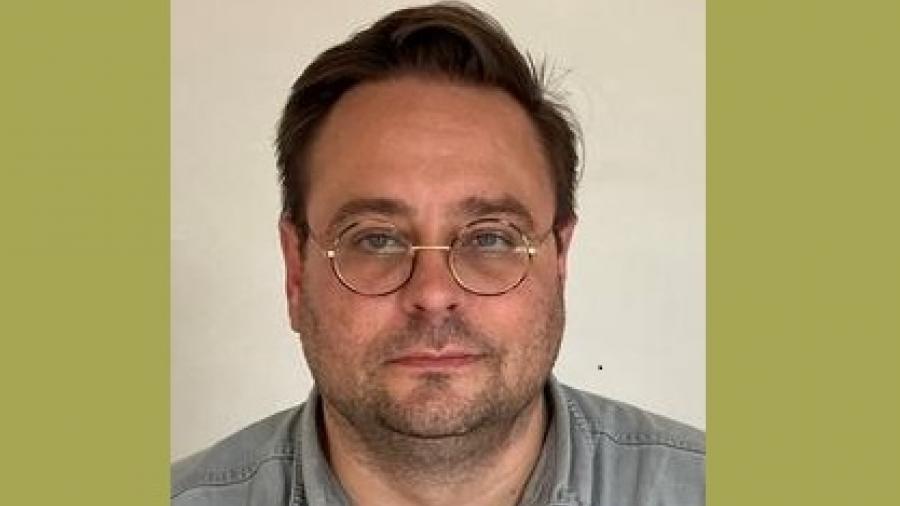
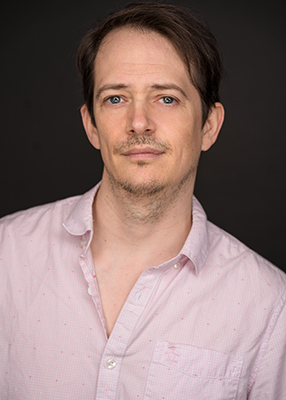
Anna Lukina is a Research Fellow in Law at the London School of Economics and Political Science and a PhD candidate at the University of Cambridge's Faculty of Law. Her research focuses on jurisprudence, legal history, and public law, with a specialization in Soviet legal systems, Nazi legal frameworks, and the philosophical underpinnings of 'evil law.' She holds a B.A. (Jurisprudence) and B.C.L. from the University of Oxford, and an LL.M. from Harvard Law School. Her doctoral work, Towards a Jurisprudence of Evil Law , examines the relationship between law and immorality in authoritarian regimes, funded by the Institute for Humane Studies, Modern Law Review, and Cambridge Law Journal. Key research areas include: Legal justifications for totalitarian regimes Resistance to morally corrupt legal systems Historical analysis of Soviet, Nazi, and antebellum U.S. legal structures Publications span legal-historical analyses of Soviet legal education, Schmittian dictatorship theory, and Kelsen's critiques of communist jurisprudence. She actively engages with legal theory through blogs like Legal Form and academic networks such as the Cambridge Legal Theory Discussion Group. Her work bridges theoretical jurisprudence and historical case studies, offering critical perspectives on law's role in enabling or resisting evil. Grants and fellowships support her exploration of legal systems' moral boundaries and their societal impacts.
Dr Alison Powell is an Associate Professor in the Department of Media and Communications at the London School of Economics and Political Science (LSE), serving as Programme Director for the MSc Media and Communications (Data and Society). Her research focuses on technology design, public sector technology, and digital futures. She is known for her book Undoing Optimization: Civic Action in Smart Cities (2021) and her participatory research method, data walking. From 2019–2023, she directed the JUST AI network, supported by the Ada Lovelace Institute and UKRI, advancing AI ethics research. Her work integrates critical theory, participatory methods, and interdisciplinary collaboration. Education: PhD in Communication from Concordia University (Canada), MA in Media Studies from Toronto Metropolitan University, and postdoctoral research at the Oxford Internet Institute. Prior to academia, she worked in the film and TV industry. Research interests include civic engagement in data-driven governance, ethical AI, and participatory urbanism. She has advised projects like Africa Just AI and Operationalising Ethics for AI, funded by Horizon Europe, AHRC, and the Open Society Foundations. Her articles address topics such as AI governance, urban light ecology, feminist research praxis, and the ethical implications of technology for marginalized communities. She contributes to blogs like Media@LSE and leads initiatives at Polis and the LSE’s Digital Futures for Children project. Grants and collaborations include work with Projects by IF, Open Rights Group, and the Human Data Interactions Network (EPSRC). She explores intersections of technology, justice, and sustainability, emphasizing equitable and inclusive innovation.
Zizi Papacharissi is a UIC Distinguished Professor of Communication and Political Science at the University of Illinois at Chicago (UIC), serving as Department Head of Communication. She is also a University Scholar and affiliate faculty at the Discovery Partners Institute (University of Illinois System). Her research explores the social and political implications of digital media, with a focus on affective publics, networked identities, and democratic processes. She holds a PhD from the University of Texas at Austin and has authored over 10 books and 80+ journal articles. Education: PhD, University of Texas at Austin (2000) in New Media Technologies and Political Communication MA, Kent State University (1997) in Communication Studies BA, Mount Holyoke College (1995) in Media Studies and Economics Research Interests: Dr. Papacharissi investigates how digital media shape political participation, identity formation, and public discourse. Key areas include affective publics (emotional dimensions of online activism), the role of social media in democracy, and the ethical implications of AI and connective technologies. Her work bridges communication studies, political theory, and sociology. Recent Contributions: Her 2021 book After Democracy explores post-democratic futures in the digital age. She edits Social Media & Society and collaborates with tech firms like Facebook/Meta and Tencent on media ethics and policy. Her research on #Egypt and #OWS movements highlights social media’s role in mobilizing protests. Awards & Recognition: 2018 Wayne Danielson Award (National Communication Association) 2015 Best Book Award (NCA Human Communication and Technology Division) High-Impact Scholar (University of Texas at Austin) Advising & Grants: While no student names are listed, her courses (e.g., Democracy in a Digital Age ) reflect her mentorship in critical media studies. She has secured grants from the National Academies of Science and the Institute of Medicine for projects on youth well-being and digital media. Labs & Teams: Her research lab focuses on digital media’s societal impact, collaborating with global institutions like the Oxford Internet Institute and the Harvard Kennedy School. She chairs UIC’s interdisciplinary Digital Media and Democracy initiative.
Peter Seele is a Full Professor at the Faculty of Communication, Culture and Society at Università della Svizzera italiana (USI). He is affiliated with the Center for Climate Finance and Sustainability (CCFS), Ethics and Communication Law Center (ECLC), and the Luxury Observatory Lugano (LOLugano). His research focuses on Corporate Social Responsibility (CSR), Business Ethics, Digital Ethics, Greenwashing, and Machinewashing. Dr. Seele holds dual PhDs in Economics (University of Witten/Herdecke, Germany) and Philosophy (University of Düsseldorf, Germany). He previously served as an Assistant Professor at the University of Basel and conducted post-doctoral research at the Institute for Advanced Studies in the Humanities (KWI) in Essen. His educational background includes studies at the University of Oldenburg and Delhi School of Economics, followed by two years as a business consultant in Frankfurt. His research explores ethical challenges in digitalization, sustainability, and technology. Notable themes include AI ethics governance, ethicswashing in corporate communication, and the interplay between blockchain and business ethics. Recent work addresses greenwashing trends, the ethical implications of algorithmic systems, and sustainable practices in luxury industries. Publications highlight critical analyses of digital ethics frameworks, sustainability backlashes, and the societal impact of emerging technologies. His interdisciplinary approach bridges philosophy, business studies, and environmental science, with a focus on practical solutions for ethical dilemmas in modern organizations. Peter Seele collaborates across academic and industrial sectors, emphasizing real-world applications of ethical theories. He advises on CSR strategies, digital transparency, and regulatory frameworks for sustainable business practices.
William Hurst is the Chong Hua Professor of Chinese Development in the Department of Politics and International Studies (POLIS) at the University of Cambridge . He is a Governing Body Fellow at Wolfson College and is affiliated with the Centre for Development Studies and the Centre for Geopolitics . Hurst has been a faculty member at the University of Cambridge since 2013. Prior to this, he held positions as a postdoctoral fellow at the University of Oxford and as an assistant professor at the Universities of Texas and Toronto. His research spans four major themes: labor politics , contentious politics , political economy , and the politics of law and legal institutions , with a regional focus on China and Indonesia . He is currently completing a book manuscript on the comparative politics of law and legal institutions in China and Indonesia since 1949, based on over a year of fieldwork in each country since 2006. Hurst’s publications reflect a deep engagement with the evolution of Chinese and Indonesian governance, labor rights, urban development, and legal reform. His work critically examines how authoritarian regimes manage legal institutions, labor unrest, and urban transformation, offering comparative insights into state-society relations in East and Southeast Asia. While no specific students or awards are listed in the provided text, Hurst’s academic trajectory and publication record indicate a strong commitment to both research and pedagogy in development studies and comparative politics.
Stephen Billings is an Associate Professor of Finance at the Leeds School of Business, University of Colorado Boulder, where he holds the Global Real Estate Capital Markets Chair position. He serves as the faculty director of the MS in Real Estate program and research director for the CU Real Estate Center. His work spans multiple research centers including the Center for Research on Consumer Financial Decision Making and the Michael A. Klump Center for Real Estate. Billings received his PhD in Economics from the University of Colorado, a MS in urban planning from the University of North Carolina, and a BS in economics from Georgetown University. Prior to joining CU Boulder in 2016, he was faculty at the University of North Carolina Charlotte with appointments in both economics and public policy, where he also served as faculty director for the real estate center. His research focuses on the intersection of housing, schools, neighborhoods and crime, addressing critical policy issues including the impact of public investment in light-rail transit on neighborhoods, school segregation's influence on academic achievement and crime, neighborhood gentrification causes, lead-based paint in low-income housing, and the effects of sea level rise and natural disasters on neighborhood sorting and household finances. Billings employs sophisticated analysis of large micro-datasets with studies based on data and policies in Charlotte, NC and Denver, CO. His work connects urban economics with public policy, demonstrating how neighborhood environments shape individual outcomes across multiple dimensions. Billings' recent publication record demonstrates a consistent focus on neighborhood effects, school choice impacts, crime economics, and housing market dynamics. His work frequently examines the intersection of race, housing, and economic outcomes, with particular attention to policy implications. He has developed innovative methodological approaches to studying residential amenities and neighborhood spillovers, with increasing attention to climate change impacts on housing markets. His research appears in top journals including The Quarterly Journal of Economics, American Economic Review: Insights, and Journal of Urban Economics. As an educator, Billings teaches undergraduate and masters classes in real estate finance and economics, as well as doctoral and masters level courses on cost-benefit analysis and statistical methods. He has extensive consulting experience conducting economic impact studies, including assessments of North Carolina's public higher education system, affordable housing needs in Colorado communities, and the economic effects of marijuana legalization on property markets. His practical policy work complements his academic research, creating a bridge between theoretical insights and real-world applications. Billings leads significant research initiatives through the CU Real Estate Center, where he directs studies examining the impact of business improvement districts and other urban development policies. His work bridges academic research with practical policy applications, making substantial contributions to our understanding of how housing, education, and neighborhood environments shape individual outcomes and community development. His December 2023 memo on the HUD Officer Next Door Program exemplifies his engagement with current housing policy issues.
Angelika Sjöstedt serves as Professor and Chair of Gender Studies within the Department of Humanities and Social Sciences at Mid Sweden University. Her academic leadership spans teaching across Bachelor's, Master's, and PhD programs in Gender Studies and Sociology, while actively contributing to institutional discourse through roles such as delivering the 2024 academic celebration lecture. She maintains significant engagement with contemporary academic freedom debates, notably co-organizing the 2024 seminar series addressing responsible internationalization amid the Gaza conflict. Her research profile reveals deep expertise in intersectional analysis of gender, settler colonialism, and labor precarity, particularly examining how chronic crises manifest in peripheralized regions. Recent work demonstrates acute responsiveness to geopolitical emergencies, with 2024 publications directly confronting academic complicity in genocide. Her methodological approach bridges ethnographic rigor with activist scholarship, evident in long-term collaborations like the Båskoes Sámi research network and Forum for Gender Research. Sjöstedt's scholarly trajectory shows consistent thematic development from early work on flexible knowledge-work subjectivity (2012) through nuanced examinations of rural resilience (2017-2020) to current urgent interventions in academic freedom. Her publications reveal distinctive geographic focus on Norrland's inland regions while maintaining transnational theoretical relevance, particularly regarding mining resistance movements and crisis management frameworks. The 2021-2024 output demonstrates accelerated engagement with acute political emergencies, signaling scholarly adaptation to escalating global crises. Professional networks constitute a critical dimension of her work, with sustained involvement in the Forum for Gender Research since at least 2015 and leadership in the Båskoes network advancing Indigenous research methodologies. Her editorial work on critical anthologies like Aktivism: En antologi om arbete för social och politisk förändring (2022) demonstrates commitment to bridging academic and activist knowledge production.
Elizabeth Blake is an Associate Professor of Russian and Division Coordinator in the Department of Languages, Literatures and Cultures at Saint Louis University's College of Arts and Sciences. Her research focuses on 19th-century Russian literature, particularly Dostoevsky and Tolstoy, with emphases on empire studies, exile cultures, and religious dialogues between Russian Orthodoxy and Polish/French Catholicism. She has published two major books: *Dostoevsky and the Catholic Underground* (2014) and *Travels from Dostoevsky’s Siberia* (2019). Her work bridges literary analysis with historical context, examining themes like human rights, cultural mobility, and gender roles. Blake teaches courses ranging from language proficiency to advanced topics in Russian literature and cinema, including *Russian and Soviet Cinema* and *Dostoevsky Through the Centuries*. She has received numerous grants including Mellon and Fulbright-Hays awards for research in Russia and Poland. Her academic career includes extensive reviews for journals like *Slavic Review* and *Canadian Slavonic Papers*, alongside professional involvement with organizations such as the North American Dostoevsky Society. Blake’s teaching excellence is recognized through awards like the Spirit of the Billiken Award (2016), reflecting her impact on both scholarship and student mentorship.
Richard Jochelson serves as Dean of Law at the Faculty of Law, University of Manitoba (Robson Hall), a position he has held since July 1, 2016. Previously, he taught criminal law for 10 years at the University of Winnipeg. Dr. Jochelson holds a Ph.D. in Law from Osgoode Hall Law School at York University, an LLM from the University of Toronto Faculty of Law, an LL.B. with Gold Medal from the University of Calgary Faculty of Law, and a B.Sc. in Zoology with Distinction from the same institution. He completed his legal training as a clerk at the Alberta Court of Appeal and Court of Queen's Bench before working at a major Canadian law firm. Dr. Jochelson's research program centers on critical issues in criminal justice and constitutional law, with primary interests in police powers jurisprudence, sexual regulation (particularly obscenity and indecency law), jury systems and representativeness, and legal pedagogy. His interdisciplinary approach bridges law with sociology and psychology, bringing empirical and theoretical rigor to legal scholarship. His work consistently addresses social justice concerns, examining how vulnerable populations interact with the justice system and how concepts like risk, precaution, and visibility shape legal decision-making. He has developed a distinctive methodology combining doctrinal analysis with empirical research on judicial behavior and jury decision-making. His recent publications reveal evolving scholarly priorities that respond to contemporary legal challenges. The 2025 article "Morbid Matters" addresses medical assistance in dying within federal corrections, while his 2024 works on youth terrorism cases and agnotology demonstrate expansion into new interdisciplinary territories. His longstanding commitment to police powers scholarship continues with "Ancillary Police Powers in Canada" (2024). The pandemic period saw significant contributions to understanding digital justice, mental health in legal education, and remote court proceedings. His criminal law scholarship maintains focus on jury representativeness, particularly regarding Indigenous inclusion following Bill C-75's elimination of peremptory challenges. Students' Teacher Recognition Award (CATL) - 2018 Dr. Jochelson has secured multiple SSHRC Insight Grants as both Principal and Co-investigator, demonstrating his ability to lead interdisciplinary research teams. His mentorship extends to junior academics and students, with several publications co-authored with emerging scholars. He has built significant research infrastructure, notably assembling nearly 40 interdisciplinary scholars across Canada for Robsoncrim.com, which has elevated the Criminal Law Edition of the Manitoba Law Journal to prominence as one of Canada's preeminent criminal law publications. As Dean of Law, Dr. Jochelson provides leadership in academic governance and legal education innovation. His service includes extensive committee work on academic affairs, workload policy, and hiring/tenure committees. His commitment to universal design principles informs both his teaching approach and administrative leadership, emphasizing accessibility and student-centered pedagogy that allows flexible evaluation methods tailored to individual learning preferences.
Dr. Nima Naghibi is a Professor of English at Toronto Metropolitan University, specializing in postcolonial and diasporic studies with a focus on Iran. She holds a PhD from the University of Alberta. Education: PhD in English, University of Alberta Research Interests: Explores postcolonial theory, diasporic literatures, trauma narratives, and human rights through the lens of immigrant/refugee experiences. Her work emphasizes Middle Eastern studies, particularly Iranian contexts, and the intersections of social justice with literary forms. Publications: Authored two monographs and contributed to journals like English Studies in Canada and Radical History Review . Her 2016 work Women Write Iran examines diasporic Iranian women's narratives, while earlier scholarship interrogates Western feminist frameworks in relation to Iran. Awards: No awards explicitly mentioned in the text. Advisees/Grants: No current advisees or grant details listed. She teaches courses related to life narratives and exile literature.
Shiri Azenkot is an Associate Professor at the Jacobs Technion-Cornell Institute at Cornell Tech and Cornell University, affiliated with the Information Science Department and Technion’s Computer Science Department. Her research focuses on accessibility innovations in emerging technologies, particularly addressing needs of people with vision impairments and neurodiverse populations. She holds a PhD from the University of Washington, advised by Richard Ladner and Jacob Wobbrock, and has been recognized with prestigious awards including the NSF Graduate Research Fellowship. Education: PhD in Computer Science & Engineering from University of Washington (advisors: Richard Ladner, Jacob Wobbrock). Research interests include VR/AR accessibility, assistive technology design, inclusive education tools, and ethical AI applications. Current projects explore social VR avatars for invisible disabilities, AR navigation aids, and AI moderation systems against ableist hate speech. Her work is funded by NSF, AOL, Verizon, and Facebook. Recent publications address video accessibility for ADHD users, AI-driven scene descriptions for blind users, and tactile learning materials co-designed with educators. She leads the XR Access initiative promoting inclusive virtual/augmented reality. Awards include the UW Graduate Medal (2020), NSF CRII Award (2017), and AT&T Labs Fellowship (2014). Her research bridges academic innovation with industry impact through collaborations with tech companies and disability advocacy groups.
Anupama Rao is Professor of History and MESAAS (Institute for Comparative Literature and Society) at Columbia University, with affiliations in Women's, Gender and Sexuality Studies and Human Rights. She is based at Barnard College, where she holds office hours and engages in interdisciplinary teaching and research. Her educational background includes a B.A. with honors from the University of Chicago and a Ph.D. from the Interdepartmental Program in Anthropology and History at the University of Michigan. Rao’s research spans South Asian history and anthropology , gender and sexuality studies , caste and race , social theory , comparative urbanism , and colonial genealogies of human rights . She is known for her groundbreaking work on anti-caste thought, particularly the political philosophy of B. R. Ambedkar, and for theorizing caste subalternity in modern India. Her scholarship critically examines the intersections of caste, gender, urban space, and political subjectivity. Her recent and ongoing publications reflect a deep engagement with global racisms, Cold War humanism, and justice futures. Key themes across her articles include Dalit aesthetics, subaltern urbanism, affirmative action, and the transnational dimensions of caste. Her work shows a consistent trend toward interdisciplinary, postcolonial, and decolonial frameworks that challenge Western-centric epistemologies. Fellow-in-Residence, National Humanities Center (2008–2009) Fellow, Center for Advanced Study in the Behavioral Sciences, Stanford (2010–2011) Fellow, REWORK, Humboldt University, Berlin (2014–2015) Global Humanities Institute Awardee, CHCI (2023) Rao has served as Senior Editor of Comparative Studies in South Asia, Africa, and the Middle East (2012–2021), President of the Society for the Advancement of the History of South Asia (SAHSA), and member of the South Asia Council of the Association for Asian Studies. She is Principal Investigator for the Mellon-funded Global Humanities Institute project Global Racisms, Cold War Humanism, and Just Futures (2022–2024) and co-directs Geographies of Injustice at Columbia’s Center for the Study of Social Difference. She has secured major research grants from the ACLS, NEH, SSRC, and Mellon Foundation. She advises and mentors graduate students, though specific names are not listed in the text. Rao directs the Institute for Comparative Literature and Society and convenes the Ambedkar Initiative, fostering interdisciplinary research and public engagement on caste, race, and justice. She leads and participates in multiple research collectives, including the Geographies of Injustice project and the Asian Spatialities initiative. She is deeply involved in institutional leadership through her roles at the Institute for Comparative Literature and Society and the Ambedkar Initiative, both of which serve as hubs for critical humanities research.
Kyung-Ho Cha serves as Junior Professor of Modern German Literature at the University of Bayreuth's Faculty of Languages & Literature within the Department of New German Literature. His academic journey includes studies at Bonn, Oxford, and Columbia University, followed by doctoral work at Technical University Berlin completed in 2010. His research centers on three interconnected domains: literature-science intersections with focus on evolutionary biology and Walter Benjamin's writings; literary representations of migration; and human rights discourse in contemporary literature. This tripartite framework informs his critical analysis of authors like Elfriede Jelinek and Fatih Akin. Cha's publications reveal consistent engagement with transnational themes, particularly examining German-Turkish cultural dynamics, refugee narratives, and ethical dimensions of literary representation. His work demonstrates methodological rigor in bridging literary analysis with philosophical and scientific discourse. German National Merit Foundation Fellowship DAAD Fellowship ICI Berlin Institute Fellowship DFG Fellowship Volkswagen-Foundation Support Harvard Mahindra Humanities Center Fellowship (2011-2012) Cha has directed significant research projects including the DFG-funded 'Seelenwanderung und literarische Kommunikation' at Freie Universität Berlin and contributed to the DFG Graduiertenkolleg 'Körper-Inszenierungen'. His editorial work on human rights literature demonstrates leadership in establishing interdisciplinary scholarly dialogues. Current research continues to explore migration narratives within the 'Future Migration' initiative at Bayreuth.
Elizabeth Bernstein is a Professor of Women's, Gender & Sexuality Studies and Professor of Sociology at Barnard College, Columbia University, where she has been a faculty member since September 2002. Her work bridges sociological theory with feminist analysis, focusing on the intersections of gender, sexuality, and political economy. Bernstein directs significant research initiatives including the Gender Justice and Neoliberal Transformations Working Group, a transnational collaboration among thirteen scholars examining gender justice in contemporary global contexts. She is currently developing a new book project titled "Imagining Immunity: Precarious Bodies and the Governance of Gendered Dis-ease," which explores immunological metaphors in understanding bodily risk and suffering. B.A., University of California, Berkeley M.A., University of California, Berkeley Ph.D., University of California, Berkeley Professor Bernstein's research focuses on the political economy of the body, gender, and sexuality, with particular attention to sexual commerce, sex trafficking, and neoliberal governance. Her work employs ethnographic methods to examine how intimate relations become sites of economic exchange and political regulation. She investigates how concepts of authenticity, freedom, and rights are mobilized in debates about sexual commerce and trafficking. Bernstein's scholarship critically engages with feminist theory, carceral politics, and transnational governance frameworks, challenging conventional approaches to sex work and trafficking that often reinforce punitive systems rather than advancing gender justice. Analysis of Bernstein's scholarly output reveals a consistent trajectory examining the intersections of gender, sexuality, and political economy within neoliberal frameworks. Her work demonstrates increasing attention to transnational governance mechanisms and their impact on intimate relations and bodily autonomy. A notable trend is her critical examination of how anti-trafficking campaigns often employ carceral logic that undermines feminist goals of gender justice. Her scholarship consistently challenges binary frameworks that position sex work solely as exploitation or liberation, instead analyzing the complex economic, political, and social dynamics that shape sexual commerce globally. Bernstein's research has received significant recognition through prestigious awards including: Distinguished Book Award, American Sociological Association, Sociology of Sexualities Section (2020) for "Brokered Subjects" Honorable Mention, Society for the Study of Social Problems Global Division Book Award (2019) Norbert Elias Prize, Norbert Elias Foundation (2009) Distinguished Book Award, American Sociological Association, Sex and Gender Section (2009) Her work has also been supported by major funding organizations including the Institute for Advanced Study, National Science Foundation, Social Science Research Council, AAUW, and Mellon Foundation. As a principal investigator along with Janet Jakobsen for the Gender Justice and Neoliberal Transformations Working Group, Bernstein leads a significant collaborative research initiative sponsored by the Barnard Center for Research on Women. Her grant portfolio demonstrates sustained support from major research institutions, reflecting the significance of her work in gender studies and sociology. While specific student advisees aren't listed in the available materials, her role as a full professor at Barnard College indicates extensive mentorship of undergraduate and likely graduate students in Women's, Gender & Sexuality Studies and Sociology. Bernstein co-leads the Gender Justice and Neoliberal Transformations Working Group, a collaboration among thirteen scholars working transnationally on questions of gender justice. This initiative represents a significant research collective examining how neoliberal policies reshape gender relations globally. Her work with the Barnard Center for Research on Women provides institutional support for this transnational feminist research network, facilitating scholarly exchange and collaborative publication projects that advance critical perspectives on gender, sexuality, and political economy.
William Brown is an Associate Professor of Film in the Department of Theatre & Film within the Faculty of Arts at the University of British Columbia. He earned his D.Phil. from the University of Oxford and joined UBC in January 2022 after teaching positions at the University of Roehampton, University of St Andrews, University of Oxford, and New York University Abu Dhabi. At UBC, he serves as Graduate Advisor for Cinema and Media Studies. His research spans multiple intersecting fields including film-philosophy, digital media, posthumanism, and critical race theory. Brown approaches cinema through both theoretical scholarship and practical filmmaking, creating works that blend fiction, documentary, and video essays. His academic contributions include numerous books that have shaped contemporary film theory, particularly exploring the relationship between cinema and philosophical concepts in the digital age. Brown's publications reveal a consistent trajectory toward understanding cinema's relationship with ecological thought, nonhuman perspectives, and decolonial approaches. His recent work focuses on navigating from the 'White Anthropocene' to the 'Black Chthulucene,' examining how cinema can represent and intervene in ecological crises while challenging dominant Western perspectives. Nominated for Best Monograph by British Association of Film and Television Studies Society (2018) Book Reviews Editor for Studies in European Cinema and Film-Philosophy Conference Report Editor for Cinema: Journal of Philosophy and the Moving Image Brown has supervised five PhD dissertations to completion, four of which successfully combined practice and theory. His teaching encompasses both film production and film history/theory. As an active filmmaker, he has created approximately 15 no-budget feature films that have received recognition from prestigious critics and festivals including Sight & Sound Films of the Year and American Online Film Awards. He is a frequent keynote speaker at international conferences and has presented at venues including the British Film Institute's Philosophical Screens series.