Prof.dr. R. Arthur Bouwman is a Full Professor at the Electrical Engineering department of the Eindhoven University of Technology and affiliated with the Eindhoven MedTech Innovation Center . His work bridges biomedical engineering and clinical medicine , focusing on physiological monitoring , medical imaging , and biomarker validation for real-time patient care. Education : Not explicitly detailed in the text His research emphasizes non-invasive diagnostics and AI-driven health monitoring , including video-based cardiac arrhythmia detection , sweat-based renal function analysis , and Doppler ultrasound optimization . Recent work explores causal inference in observational studies and automated early warning systems in surgical wards. Key article trends highlight biomedical signal processing , medical device innovation , and integration of wearables in perioperative care . Collaborations span institutions like Catharina Hospital and research centers across cardiovascular and renal domains.
Lisa Åkervall is an Associate Professor of Film Studies and Senior Lecturer at the Department of Cultural Sciences, University of Gothenburg. Her research bridges film theory, digital media, and cultural studies, with a focus on how neoliberal frameworks shape contemporary audiovisual experiences. Her core research explores: Cinematic affect and sensory transformation in digital environments Postcinematic aesthetics beyond traditional film formats Sound studies and voice modulation technologies Neoliberal cultural techniques in media production Digital subjectivity formation through social media platforms Publication analysis reveals consistent engagement with digital media transformations since 2015, evolving from foundational cinema studies toward critical examinations of networked identities, algorithmic aesthetics, and media ecologies in neoliberal contexts. Recent works (2021-2024) demonstrate intensified focus on gender performance, theatricality, and digital voice modulation.
Prof. Dr. Carolin Wienrich is a Professor of Psychology of Intelligent Interactive Systems at Julius-Maximilians-University Würzburg, Faculty of Human Sciences, and Co-director of XR HUB Würzburg since 2020. Her work bridges psychology, virtual reality, and human-computer interaction to understand human experiences in digital environments. Her educational background includes: 2010: Psychology Degree from Martin Luther University Halle/Wittenberg 2015: Interdisciplinary PhD from TU Berlin | Faculty of Traffic and Machine Systems Prof. Wienrich's research explores psychological aspects of presence, embodiment, and social interaction in XR systems. She investigates how device characteristics affect user experience, with applications ranging from workplace collaboration to therapeutic interventions. Her systematic review on psychological ownership of virtual objects has provided foundational insights into how users form emotional connections with digital assets. She has made significant contributions to understanding avatar embodiment effects on body image and self-esteem, as well as the impact of immersion levels on social presence and task performance. Analysis of her recent publications reveals several key research trends: Investigating cross-device collaboration and asymmetric interaction in virtual environments Exploring psychological ownership of virtual objects and environments Developing VR applications for therapeutic interventions in mental health Studying human-AI interaction dynamics in spatial computing environments Examining privacy, safety, and harassment issues in social VR Developing training approaches to improve user competence with intelligent systems Her notable awards include: 2020 Research Prize of the Faculty of Human Sciences (JMU Würzburg) 2019 Prize for Good Teaching Bavaria (Free State of Bavaria) 2018 Best Impact German Institute for Virtual Reality Best Poster award at IEEE VRW 2025 IDEATExR Best Paper award at IEEE VRW 2025 Prof. Wienrich actively engages with policy makers and the public, having presented to the Federal Commissioner for Data Protection and Information Security, participated in discussions at the German Ethics Council, and demonstrated her research to members of the German parliament. Her presentations cover critical topics such as the psychological consequences of the metaverse and human-centered AI interaction in virtual environments. As Co-director of XR HUB Würzburg, she leads an interdisciplinary initiative that connects researchers across psychology, computer science, and medicine to advance XR technologies and applications. The hub serves as a central platform for academic research, industry collaboration, and public engagement with extended reality technologies.
Dr. Tomasz Hollanek is a Postdoctoral Research Fellow at the Leverhulme Centre for the Future of Intelligence (LCFI) and an Affiliated Lecturer in the Department of Computer Science and Technology at the University of Cambridge. His work bridges AI ethics, critical design, and technology governance, focusing on social justice, environmental sustainability, and ethical human-AI interaction. He has contributed to EU AI Act toolkits, AI companion systems, and cross-cultural AI narratives through projects at Harvard, Oxford, and École Normale Supérieure. Affiliation: University of Cambridge (LCFI, Computer Science and Technology) Collaborations: École Normale Supérieure (ENS-PSL), Observatoire des humanités numériques Research Trends: His 2025 publications emphasize regulatory compliance for AI justice, critical AI literacy in journalism, and feminist design methodologies. Earlier works (2023-2019) explore cultural AI narratives, allocentric design for sustainability, and ethical challenges in griefbots.
Tolga ERDEM is a Researcher at Trakya University's Faculty of Economics and Administrative Sciences, Department of International Relations. Holding a PhD in International Relations (2020) and two bachelor's degrees (2012) with full scholarships, his work bridges cybersecurity, international security, and geopolitical dynamics. Key affiliations include editorial roles in security anthologies and presentations at international conferences. PhD: Cyberspace as a Power Competition Domain Master's Thesis: Europeanization & Religious Identity in Turkey-EU Relations Research spans cybersecurity , space weaponization , AI-driven security , and energy geopolitics . Recent 2024-2025 publications analyze Balkan cybersecurity, water security, and biosecurity frameworks. His 2023 book Uluslararası İlişkilerin Yeni Güç Rekabet Sahası: Siber Uzay established him as a digital geopolitics expert. Journal trends show 2023-2024 focus on UN disarmament policies for AI weapons, space diplomacy frameworks, and EU-Turkey energy dynamics. Conference papers (2024) examine Central Asian water security and Balkan cyber threats. Teaching since 2020, courses include World Conflict Regions , EU-Turkey Relations , and Contemporary International Issues . No scientific awards listed.
Gerald C. Kane is a Professor and the C. Herman and Mary Virginia Terry Distinguished Chair in Business Administration at the Terry College of Business, University of Georgia. He is a leading scholar in digital transformation, artificial intelligence ethics, and social media for knowledge management, with over 100 publications in top-tier journals including MIS Quarterly and Management Science. His educational background includes: PhD in Information Systems, Emory University, Goizueta Business School (2006) MBA in Computer Information Systems, Georgia State University, Robinson College of Business (2002) M. Div. in Theology, Emory University (1998) BA in Humanities, Furman University (1994) Professor Kane's research focuses on the social and ethical implications of artificial intelligence and machine learning, the success factors in digital transformation of legacy companies, and how organizations use digital tools to innovate through disruption (e.g., during the COVID-19 pandemic). He also explores social media for knowledge management across organizational boundaries and information systems in healthcare. His work provides critical insights for businesses navigating the digital era. His recent publications (2020-2025) demonstrate intense focus on AI ethics—particularly fairness and bias in machine learning algorithms—and the transformative impact of digital tools on organizational strategy and workplace design. Kane's research addresses digital strategy formulation challenges and post-pandemic workplace reinvention, reflecting his commitment to solving real-world organizational problems through technology-driven solutions. Professor Kane's contributions have been recognized with numerous prestigious awards: Davis-Dixon Impact Award, MIS Quarterly (2024) Axiom Business Book Awards Gold Medal (2021) Carroll School Coughlin Distinguished Teaching Award (2018) National Science Foundation CAREER Award ($500,000) (2009-2016) McKiernan Distinguished Fellow ($30,000), Boston College (2014-2016) Runner-up, Best Published Paper, Academy of Management (2015) U.S. Department of Defense Small Business Technology Transfer Award ($100,000) (2012) Professor Kane has secured significant research funding including a National Science Foundation CAREER Award and U.S. Department of Defense grant supporting his work on social media and knowledge management. His influential books 'The Technology Fallacy' and 'The Transformation Myth' have been translated into multiple languages and provide practical frameworks for digital transformation. While specific advisees are not documented, his role as former Senior Editor at MIS Quarterly and extensive publication record highlight his leadership in shaping information systems research.
Stefano Bracco is an Associate Professor in the Department of Naval, Electrical, Electronic, and Telecommunications Engineering (DITEN) at the University of Genoa, Italy, serving on both the Department Board and the School Council of the Polytechnic School. He teaches advanced courses including Energy Transition and Power Systems Management for Master's programs in Energy Engineering, Management for Energy and Environmental Transition (MEET), and Engineering for Natural Risk Management, covering critical topics in sustainable power systems and infrastructure modeling. His research focuses on power systems engineering with emphasis on microgrid optimization, renewable energy integration, and electric vehicle infrastructure. Key contributions include energy management systems (EMS) for active/reactive power control in microgrids, vehicle-to-grid/home technologies, and sustainable energy community design. His work addresses grid stability challenges, economic optimization of distributed energy resources, and resilience enhancement in critical facilities through advanced mathematical modeling and real-world case studies. Analysis of his 15 most recent publications (2024-2025) reveals consistent application of mixed-integer linear programming (MILP) for microgrid optimization across diverse contexts including university campuses, industrial sites, and Italian municipalities. Dominant trends include integration of electric vehicle charging infrastructure with renewables, uncertainty handling in renewable communities, and multi-scale control frameworks for automated transportation. His research bridges theoretical optimization with practical implementation, frequently using the Savona University Campus as a living laboratory for sustainable energy solutions. No scientific awards were mentioned in the provided information. The available text did not specify any advised students or research grants, though his extensive publication record suggests active research supervision and project leadership. While no dedicated laboratories are explicitly attributed to him, his work frequently involves the Savona University Campus infrastructure, including the CN MOST Laboratory and microgrid test facilities, indicating collaboration with existing university energy research platforms.
Thilo Stadelmann is the Founding Director of the Centre for Artificial Intelligence at the Zurich University of Applied Sciences (ZHAW) . A computer scientist by training, he earned his Doctor of Science degree from Marburg University, Germany, and has held engineering and leadership roles in the automotive industry before transitioning to academia. His research interests lie at the intersection of representation learning and the societal implications of artificial intelligence . He is particularly focused on understanding how AI systems can be designed to enhance human capabilities while addressing ethical concerns and societal challenges. Stadelmann is a prolific speaker and educator, delivering TEDx talks and lectures on topics such as "How Not to Fear AI" , "AI vs Human: Understanding the Fundamental Differences" , and "Decoding AI Fear: The Philosophy Behind It" . His work emphasizes the importance of demystifying AI and fostering a balanced perspective on its potential and limitations. His recent publications span a wide range of AI applications, from safety-critical network infrastructures and medical imaging to industrial process control and AI governance . Notable works include studies on AI risk assessment for public policy, document recognition, and the societal impact of AI technologies. Beyond his academic role, Stadelmann is actively involved in the digital ecosystem as a (co-)founder and senior leader in several organizations, bridging the gap between research and practical implementation in the AI space.
Dr. Sonja Isabel Veith is a Scientific Staff member at the Institute for Special Education, Faculty of Philosophy, Leibniz University Hannover. Her work focuses on research and teaching in the fields of scientific and technical education, with a strong emphasis on phenomenography and inclusive didactics. Phenomenographic Research Science Education Physics & Computer Science Teaching Biomedical Optics Artificial Intelligence Applications Educational Background: M.Sc. in Physics (minor: Meteorology), Leibniz University Hannover B.Sc. in Physics (minor: Computer Science), Leibniz University Hannover Fellow of the International Max Planck Research School on Gravitational Wave Astronomy Dr. Veith's research explores children's perceptions of physics concepts like sound, interdisciplinary science education, and racism-critical teaching methods. She has developed innovative didactic approaches for visualizing sound and integrating computational thinking in elementary education. Her publications show a consistent focus on: Phenomenographic analysis of science concepts Physics education in elementary schools Interdisciplinary teaching methods AI applications in sensor data analysis Historical and societal contexts in science Inclusive didactic frameworks Scientific Honors: Fellow of the International Max Planck Research School on Gravitational Wave Astronomy Dr. Veith has collaborated extensively across disciplines, working with institutions such as the Albert Einstein Institute and Laser Zentrum Hannover. Her career spans multiple domains including physics, computer science, biomedical optics, and educational theory.
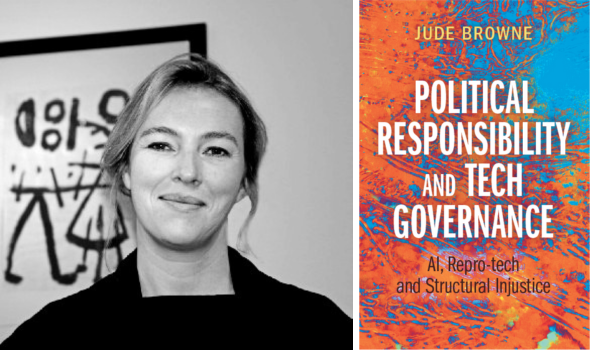
Professor Jude Browne serves as Head of the Department of Politics and International Studies (POLIS) at the University of Cambridge, while also holding the position of The Jessica and Peter Frankopan Director of the University of Cambridge Centre for Gender Studies (currently on leave from this role while serving as HoD). She is a Fellow and Director of Studies for Human, Social and Political Sciences (Part II) at King's College, Cambridge, demonstrating her deep integration within the university's academic structure. Professor Browne's research spans several interconnected areas of political theory and social justice. Her work focuses on political theories of equality , feminist theory , political responsibility , and structural injustice . She has increasingly examined the impact of technology on society , particularly how AI systems intersect with existing social inequalities. Her scholarship bridges theoretical political philosophy with practical policy concerns, addressing issues like public interest, rights frameworks, and regulatory approaches to emerging technologies. Analysis of Professor Browne's recent publications reveals a clear trajectory toward examining technology governance through feminist and structural justice lenses. Her work increasingly focuses on AI ethics, structural inequality in technological systems, and reconceptualizing political responsibility in digital contexts. She has pioneered feminist approaches to understanding who bears responsibility for ethical AI development, examining how structural factors shape technological outcomes beyond individual accountability. Her research demonstrates how algorithmic systems can perpetuate structural injustice while challenging traditional notions of responsibility in complex technological environments. Aaron Rapport Prize (inaugural winner) University of Cambridge Pilkington Prize Professor Browne has been actively engaged in public discourse on technology and society, appearing on the BBC Rethink Podcast and delivering the 2024 Alan Turing Lecture on "AI and Political Responsibility." Her research has attracted significant attention in both academic and policy circles, influencing discussions on gender equality, structural injustice, and technology governance. She has led collaborative research projects through the University of Cambridge Centre for Gender Studies and edited multiple influential volumes including "Feminist AI: Critical Perspectives on Algorithms, Data, and Intelligent Machines" (2023) and "What is Structural Injustice?" (2024).
Clare Snyder is an Assistant Professor in the Department of Technology, Operations, and Statistics at the Stern School of Business, New York University. Her research examines human behavior within AI-enabled service systems, focusing on dynamic interactions between workers, customers, and algorithms in operational contexts. Dr. Snyder earned her PhD from the Ross School of Business at the University of Michigan under advisors Samantha Keppler and Stephen Leider. Her primary research interests include human-AI collaboration in service environments, behavioral responses to algorithmic decision aids, and generative AI integration in educational workflows. She investigates how system load and algorithm quality jointly influence worker reliance, how teachers adapt generative AI tools like ChatGPT for K-12 tasks, and why fairness outcomes degrade when humans mediate algorithmic decisions. Her methodological approach combines controlled laboratory experiments with longitudinal field studies in real-world settings. Recent publications reveal critical nuances in human-AI systems: algorithmic efficiency gains emerge only under high workload and superior algorithm quality; generative AI adoption in education splits teachers into distinct usage clusters with varying productivity outcomes; and human deviations from fairness-designed algorithms paradoxically reduce overall equity. These findings challenge assumptions about AI implementation in service operations. Dr. Snyder's scholarly contributions have been recognized through: 2024 Service Science Best Student Paper Finalist for "Algorithm Reliance, Fast and Slow" 2024 Thomas W. Leabo Fellowship for academic and teaching excellence While her teaching portfolio includes Operations Management (TO 313) at Michigan Ross with high student evaluations, public sources contain no details about doctoral advising, grant funding, or laboratory affiliations.
Katya Drozdova is a Professor at Seattle Pacific University’s School of Business, Government, and Economics , with a joint appointment in Business, Information Systems, and Political Science. She holds a PhD and MPhil in Information Systems from NYU Stern School of Business and MA/BA in International Relations from Stanford University. Expertise in cyberpower, geopolitical strategy, counterterrorism, and asymmetric threat analysis Principal Investigator for the Mining Afghan Lessons from Soviet Era (MALSE) program funded by the U.S. Department of Defense Visiting Fellow at Stanford’s Hoover Institution and affiliate with the Empirical Studies of Conflict Project (ESOC) Her research combines information theory with security studies , focusing on: Strategic decision-making under uncertainty Human and technological network optimization in hostile environments U.S.-Russia relations and their geopolitical implications Early-warning systems for terrorist network detection Cybersecurity policy balancing civil liberties Recent publications analyze cyberpower (SAGE, 2017), asymmetric warfare (Journal of Cold War Studies, 2019), and geo-religious literacy in Russia (Routledge Handbook, 2022). Her work has been cited in Computational and Mathematical Organization Theory and Hoover Digest . Key affiliations include: NYU’s Alexander Hamilton Center for Political Economy Stanford’s Center for International Security and Cooperation (CISAC) Consortium for Research on Information Security and Policy (CRISP) funded by NSA Community engagements: Hosted Qatar’s Prime Minister Sheikh Abdullah Al-Thani (2016) Public dialogue with General Keith Alexander (2015) Interview with Secretary Madeleine Albright (2014)
Petra Hietanen-Kunwald serves as a Senior University Lecturer in the Department of Accounting at Aalto University. Her academic profile centers on dispute resolution systems, legal innovation, and the intersection of contract design with civil justice frameworks. Her research spans: Dispute Resolution and Mediation Proactive Contract Design Tax and Cross-Border Dispute Systems Legal Design and Digital Transformation Civil-Commercial Law Integration She investigates how ethical infrastructure and systems theory can optimize conflict management while maintaining procedural fairness. Analysis of her publication trajectory reveals escalating focus on digital dispute resolution (2020-2023), where she pioneers frameworks for AI-driven mediation and transaction design. Earlier works (2013-2019) established foundational critiques of mediation's legal status and explored Finnish civil justice reforms, demonstrating consistent commitment to elevating alternative dispute resolution within legal ecosystems. Key recognitions include: Developer in Education of the Year 2023 2021 JSCAN Best Paper Award for "Effective dispute prevention and resolution through proactive contract design" While specific grant details remain undisclosed, her collaborative publications with Helena Haapio, Maria Solarte-Vasquez, and Risto Koulu indicate robust international research partnerships. Her work directly informs European mediation policy and Finnish legal education curricula.
Elisabeth Staksrud is a Professor at the Department of Media and Communication, University of Oslo, specializing in children's digital experiences, online safety, and media regulation with over two decades of research output. Her expertise spans critical areas including: Children and youth's new media engagement Online risk assessment and regulatory frameworks Moral panic phenomena in digital contexts Censorship debates and freedom of expression Ethical research methodologies with minors She consistently bridges academic rigor with practical policy implications for digital childhood. Recent publications (2022-2025) reveal evolving trends toward platform governance, socio-ecological impacts of internet use, and nuanced parental mediation strategies. Her work integrates communication theory, developmental psychology, and public policy to address vulnerabilities in social media ecosystems while emphasizing children's rights and agency. Staksrud leads major international initiatives including EU Kids Online (2006-2014), EU Kids Online V (EUKO), and Platforming Families (PlatFams), alongside the completed research group Living the Nordic Model.
Denny Yu is an Associate Professor at the Edwardson School of Industrial Engineering, Purdue University. His work bridges human factors, neuroergonomics, and healthcare safety through advanced sensor systems and AI. Primary Affiliation : Edwardson School of Industrial Engineering, Purdue University Research Themes : Surgical ergonomics, autonomous vehicle human factors, cognitive workload assessment, multimodal physiological sensing Dr. Yu's research focuses on neuroergonomics and human-robot interaction , particularly in surgical and transportation contexts. His team develops sensor-based systems for workload monitoring, including: EEG-eye tracking fusion for situation awareness Wearable exoskeletons for surgical posture support Computer vision tools for lifting task risk analysis Smart infusion pump usability frameworks AI-driven surgical coaching systems Recent publications emphasize deep learning applications in soft tissue deformation estimation and real-time adaptive systems for robotic surgery augmentation. His work spans both occupational health (veterinary surgeons, airport workers) and medical device innovation domains.