
Dr. Jeewanie Jayasinghe Arachchige is a Lecturer in the Department of Computer Science at Vrije Universiteit Amsterdam, Faculty of Science. She teaches undergraduate courses including Bachelor Project Computer Science, Professional Development, and Software Engineering Processes for the academic year 2024–2025. Her research focuses on process mining , healthcare informatics , and data security . She applies process mining to analyze healthcare pathways and subpopulation treatment variations, develops explainable AI frameworks for predictive analytics, and examines data governance in emerging architectures like Data Lakehouses. Her work intersects legal informatics, particularly formalizing Sri Lankan civil court processes using ontology engineering. Recent publications highlight trends in balancing simplicity and complexity in process modeling, Industry 4.0 healthcare applications, and cybersecurity in model-driven web development. She has contributed to over 20 peer-reviewed articles since 2006, spanning topics from service-oriented architectures to value network analysis. Her teaching and research emphasize practical applications of IT in healthcare, legal systems, and enterprise environments. No ancillary activities are currently recorded.
جستجوی استاد راهنمای دانشگاهی
برای مسیر پژوهشیتان، استاد راهنما، استاد دانشگاه و پژوهشگر مناسب را پیدا کنید و با آنها ارتباط بگیرید.
نمایش ۱-۱۵ از ۲۸۹ استاد راهنما
اطلاعات پروفایلها از صفحات عمومی دانشگاهها گرفته شده و ممکن است بهروز نباشد.

Jakob Schoefferمشاهده پروفایل
استادیار
- Responsible AI
- Explainable AI
- Human-Centered AI
- +۶ مورد دیگر
Jakob Schoeffer is a tenure-track Assistant Professor in the Artificial Intelligence department at the Bernoulli Institute for Mathematics, Computer Science and Artificial Intelligence, Faculty of Science and Engineering, University of Groningen (Netherlands). His work focuses on the intersection of human decision-making and artificial intelligence, particularly in high-stakes contexts where fairness, transparency, and appropriate human-AI collaboration are critical. Dr. Schoeffer's research interests center on responsible and explainable AI, with specific focus areas including: Human-AI collaboration dynamics in decision-making processes Fairness perceptions and interventions in AI systems Appropriate reliance on AI recommendations Explainable AI techniques for high-stakes domains Transparency mechanisms that improve human-AI team performance Label indeterminacy issues in medical AI applications His recent publications (2023-2025) reveal a strong trend toward applying AI research in critical domains like healthcare (particularly neurological recovery prediction), while maintaining a rigorous focus on the human aspects of AI deployment. His work spans both theoretical foundations of human-AI interaction and practical implementations, often employing mixed-methods approaches that combine technical AI development with behavioral studies. Dr. Schoeffer actively collaborates with researchers across institutions including the University of Texas at Austin and has made significant contributions to top conferences in AI ethics, fairness, and human-computer interaction. His research has been featured in multiple news outlets and policy discussions, indicating real-world impact of his work on responsible AI development. Prior to his current appointment, Dr. Schoeffer was a Postdoctoral Research Fellow at the University of Texas at Austin. He received his PhD from the Karlsruhe Institute of Technology (KIT) in Germany with a dissertation titled "On the Interplay of Transparency and Fairness in AI-Informed Decision-Making." He also holds a master's degree in Operations Research from Georgia Tech and industry experience as a Senior Data Scientist at IBM.

Massimo Mischi is a Full Professor at the Faculty of Electrical Engineering of the Eindhoven University of Technology (TU/e) and chairs the Signal Processing Systems (SPS) Division , the largest division at TU/e with over 250 researchers. He founded the Biomedical Diagnostics (BM/d) Lab in 2012, which now includes 180 researchers and clinical/industrial advisors, focusing on biomedical signal processing for diagnostics and monitoring.
- Globalization Studies
- Chinese Cinema
- Urban Studies
- +۳ مورد دیگر
Prof. Dr. ir. BJ (Jeroen) de Kloet is a Professor of Globalisation Studies and Director of the Amsterdam Centre for Globalisation Studies (ACGS) at the University of Amsterdam 's Faculty of Humanities, Department of Media Studies. He has held visiting positions at institutions including Hong Kong Baptist University and has been actively involved in international academic collaborations across Asia and Europe. Key Research Areas: Globalization, Chinese cinema, urban studies, postcolonial theory, cultural politics Awards: Member of the Royal Netherlands Academy of Arts and Sciences (KNAW) in Social Sciences and Humanities (2023) Teaching: Engages in critical reflection on academic labor through seminars like 'How to survive the university?' His recent publications explore topics such as platformization, digital intimacies, and the politics of heritage-making. He has presented at major conferences in Venice, Hong Kong, Singapore, and Taipei, focusing on the intersection of creativity, control, and urban transformation.

Prof. Dr. Dennis Herhausen is a Full Professor of Marketing and Head of the Marketing Department at Vrije Universiteit Amsterdam’s School of Business and Economics. Previously, he held positions as Associate Professor at KEDGE Business School, Visiting Professor at the University of St. Gallen, and Assistant Professor at the University of St. Gallen. His research focuses on digital communication, customer journeys, multichannel management, and social media strategies, with publications in top-tier journals like the Journal of Marketing and Journal of Marketing Research. His work addresses critical issues such as online firestorm mitigation, complaint de-escalation, and gig economy communication. He has been awarded multiple prestigious prizes, including the 2021 CBSIG Consumer Research Award and the 2019 William R. Davidson Award. Education: PhD in Marketing from University of St. Gallen (2011) Teaching: Courses on Customer Experience Management, Survey Research Methods, and Thesis Guidance Research Interests: His work explores digital marketing strategies, customer-centric innovations, and the dynamics of online platforms. Recent studies address topics like business-to-investor marketing signals, privacy orientation measurement, and machine learning biases in marketing. He actively contributes to editorial boards of journals including Journal of Marketing and Journal of Interactive Marketing. Awards: 2021 CBSIG Consumer Research in Practice Award 2021 Retail & Pricing SIG Best Paper Award 2021 SERVSIG Best Services Article Award 2020 William R. Davidson Award Grants & Editorial Work: His research has been funded by national/international grants, and he serves on multiple editorial boards. Notable datasets include studies on online retailer strategies and virtual brand sabotage responses.
David Goretzkoمشاهده پروفایل
استادیار
Dr. David Goretzko is an Assistant Professor in the Department of Methodology and Statistics at Utrecht University's Faculty of Social and Behavioural Sciences. He leads the Measurement and Machine Learning Lab and specializes in the integration of data science techniques with psychometric theory. His academic journey includes: Ph.D. in Psychological Methods from LMU Munich (2020) M.Sc. in Statistics from LMU Munich (2018) M.Sc. in Psychology from LMU Munich (2016) B.Sc. in Physics from LMU Munich (2015) B.Sc. in Psychology from LMU Munich (2014) Dr. Goretzko's research primarily focuses on the intersection of machine learning and psychometrics. His work addresses critical challenges in factor analysis, measurement invariance, and model fit assessment. He develops innovative methods that combine traditional psychometric approaches with modern data science techniques, particularly in the areas of exploratory factor analysis trees, regularized factor analysis, and cost-sensitive machine learning applications in psychological assessment. His research has significant implications for improving the validity and reliability of psychological measurements across diverse populations. His recent publications reveal a strong trend toward integrating machine learning methodologies with traditional psychometric approaches. A significant portion of his work focuses on factor analysis techniques, particularly addressing the challenge of determining the appropriate number of factors. His research also extensively covers measurement invariance testing across multiple covariates using tree-based approaches, and he has made notable contributions to evaluating model fit in confirmatory factor analysis. The interdisciplinary nature of his work spans psychology, statistics, and computer science. Dr. Goretzko serves as an Associate Editor for the European Journal of Psychological Assessment and is an active reviewer for numerous prestigious journals including Psychological Methods, Behavior Research Methods, and Structural Equation Modeling. He also reviews grant proposals for major funding agencies such as the German Research Foundation (DFG), National Science Foundation (NSF), and Dutch Research Council (NWO). He currently holds a Project Grant from the German Research Foundation (DFG GO 3499/1-1) since 2021. His research program focuses on developing and validating new methodologies for psychological assessment that incorporate machine learning techniques while maintaining psychometric rigor. His work has practical applications in educational measurement, clinical psychology, and organizational assessment. Dr. Goretzko leads the Measurement and Machine Learning Lab at Utrecht University, which focuses on developing innovative methodologies that bridge the gap between traditional psychometrics and modern data science. The lab's research has particular relevance for improving measurement practices in cross-cultural research, educational assessment, and clinical psychology settings where measurement invariance and factor structure validation are critical concerns.

- Combinatorics
- Probability Theory
- Random Graphs
- +۵ مورد دیگر
Prof. Tobias Müller is a Professor at the Bernoulli Institute for Mathematics, Computer Science and Artificial Intelligence at the University of Groningen. His academic journey includes previous positions at Utrecht University, CWI (Centrum Wiskunde & Informatica), Tel Aviv University, and Eindhoven University of Technology, with a doctorate from the University of Oxford under Colin McDiarmid. His research focuses on combinatorics, probability theory, random graphs, percolation, discrete and stochastic geometry, and combinatorial game theory. He has contributed extensively to understanding complex networks, hyperbolic models, and geometric random structures. Research Interests: Random Graphs and Percolation Theory Discrete and Stochastic Geometry Hyperbolic Network Models Probabilistic Combinatorics Geometric Probability Graph Algorithms and Connectivity Notable Contributions: Analysis of Voronoi and Poisson-Voronoi percolation in hyperbolic planes. Studies on Mallows random permutations and their cycle structures. Research on component games and logical limit laws in graph theory. Investigations into the geometry and properties of random geometric graphs. Grants & Collaborations: Active in organizing workshops and conferences on random graphs and geometric networks, including the BIRS Workshop on Random Geometric Graphs and the STAR Workshops series. Labs/Teams: Member of the Bernoulli Institute’s research groups, focusing on stochastic studies, combinatorics, and algorithmic methods.

Masuma Shahidمشاهده پروفایل
استادیار
Masuma Shahid is an Assistant Professor and Lecturer at the Erasmus School of Law, specializing in International and European Union Law, with a dedicated research focus on LGBTQ+ rights, AI and human rights, and privacy law. She is affiliated with the International and European Union Law (IEUR) department and actively contributes to academic and public discourse on equality and digital governance. Assistant Professor, Erasmus School of Law Lecturer, International and European Union Law (IEUR) Co-Coordinator, LGBTQI+ Working Group, Berkeley Center on Comparative Equality and Anti-Discrimination Law Member, Diversity Platform, Erasmus School of Law Her research centers on the intersection of LGBTQ+ rights and artificial intelligence, queer data, equal marriage rights, European internal market law, competition law, and international human rights law. She employs critical legal theory to examine how legal systems address marginalization and digital discrimination. Her recent scholarly work includes a doctoral thesis on equal marriage rights litigation in major courts, publications on AI’s impact on LGBTQ+ communities, and authoritative textbooks on EU law. The articles reflect a strong trend in using comparative legal analysis to advocate for inclusive legal frameworks, particularly in digital and human rights contexts. She has been recognized through invitations to speak at academic forums and contribute to public debates on LGBTQ+ rights and AI ethics. Her media contributions highlight her role as a public intellectual in advancing legal inclusivity. Invited speaker on Queer Legal Theory and AI governance Expert commentator on LGBTQ+ rights in Dutch media Contributor to discussions on constitutional reforms for LGBTQIA+ and disabled persons Masuma Shahid advises on legal research and contributes to collaborative academic initiatives, particularly through her role at the Berkeley Center. While no formal grants are listed, her extensive publication and speaking record indicate active research funding and institutional support. She is involved in shaping policy discourse through academic and public engagement. She is a key figure in the LGBTQI+ Working Group at the Berkeley Center on Comparative Equality and Anti-Discrimination Law, contributing to an international network focused on anti-discrimination law and equality. Her work bridges academia, policy, and social justice advocacy.

Nando Sigona is Professor of International Migration and Forced Displacement and Director of the Institute for Research into Superdiversity (IRiS) at the University of Birmingham, UK. He serves within the School of Geosciences Human Geography and Spatial Planning in the Urban Geography department, where he leads significant research on migration policy and forced displacement. His research spans critical areas including undocumented migration, the migration-citizenship nexus, naturalisation and denaturalisation processes, Romani politics and anti-Gypsyism, EU asylum systems, Brexit impacts on European mobility, and child and youth migration. Sigona's work is characterized by its policy relevance and theoretical innovation in understanding contemporary migration governance. His recent publications demonstrate a clear trend toward examining the intersection of migration enforcement, digital platforms, and labor markets, particularly evident in his 2025 research on migrant food delivery riders in Birmingham. His scholarly output spans foundational theoretical works like The Oxford Handbook of Superdiversity (2022) to urgent contemporary analyses of migration enforcement in the gig economy. Sigona has received significant research funding including Horizon Europe support for the I-CLAIM project (Improving the living and labour conditions of irregularised migrant households in Europe), where he serves as co-Investigator and Scientific Director. His work has been published across leading journals including Sociology, Social Anthropology, Antipode, Journal of Ethnic and Migration Studies, and Ethnic and Racial Studies. Founding editor of Migration Studies (Oxford University Press) Lead editor for Global Migration and Social Change book series (Bristol University Press) Director of the Institute for Research into Superdiversity (IRiS) His recent blog posts and media commentary reveal active engagement with contemporary policy debates, particularly regarding Labour's immigration enforcement strategies targeting migrant workers in the gig economy. Sigona's research team has documented a 79% increase in immigration raids in Birmingham since Labour came to office, based on Freedom of Information data (FOI2025 07429).
Iryna Sushaمشاهده پروفایل
استادیار
- Data Collaboratives
- Digital Government
- Open Data
- +۵ مورد دیگر
Iryna Susha serves as an Assistant Professor in the Innovation Studies group within the Copernicus Institute of Sustainable Development at Utrecht University's Faculty of Geosciences. Her academic journey includes obtaining a PhD from Orebro University in Sweden, establishing her expertise in digital governance and data collaboration frameworks. Dr. Susha's research focuses on how organizations across different sectors can collaborate and leverage data to address 21st century societal challenges while contributing to sustainability goals. Her work spans digital government, open data initiatives, and data collaboratives for public good, with particular attention to cross-sector partnerships, data governance models, and the practical implementation challenges of data sharing initiatives. She has developed significant expertise in analyzing how data ecosystems can be structured to support societal benefits while navigating complex regulatory and organizational landscapes. Her publication record shows a clear evolution from early work on e-participation and open government data toward more sophisticated frameworks for data collaboratives and digital innovation for sustainability. The research demonstrates consistent engagement with practical implementation challenges while maintaining strong theoretical grounding in governance and organizational theory. Prizes & Grants (1) Dr. Susha actively supervises PhD candidates, currently guiding Dwayne Ansah's research on data donations for social good and Olafur Thorarensen's work on algorithmic decision systems in healthcare. She leads the "Digital Innovation" course where students develop critical understanding of digital innovations' societal and economic impacts. Additionally, she co-leads the Special Interest Group on Digitalization & AI for Sustainability (DAISY), which serves as a hub for interdisciplinary research on sustainable digital transformation. Her research connects with several major projects including the DATA ALLY project and Data Purchasing project, demonstrating practical applications of her theoretical work in real-world contexts. The DAISY group she co-leads provides an important forum for advancing research on sustainable digital innovation across disciplinary boundaries.

Fiona Sloothaakمشاهده پروفایل
استادیار
Fiona Sloothaak is an Assistant Professor at Eindhoven University of Technology (TU/e), affiliated with the Department of Mathematics and Computer Science, specializing in Stochastic Operations Research. She holds the Eurandom Assistant Professor title and contributes to the Stochastic Operations Research group. Her research focuses on cascading failures in complex systems, power grids, battery swapping networks, and stochastic processes. Education: Fiona earned a PhD in Stochastic Operations Research from TU/e in 2020 and completed a Master's in Mathematics (2015). Her doctoral thesis, Criticality in power networks: a probabilistic approach , explores cascading failures in power systems. Research Interests: Fiona’s work addresses systemic risk in infrastructure systems, including power grids and transportation networks. She investigates cascading failure dynamics, load balancing in battery swapping stations, and resource pooling strategies. Her studies often employ probabilistic modeling and queueing theory. Key Projects: She co-authored the MARCONI project (2019–2022), focusing on integrated planning for maritime logistics and service systems. This involved optimizing supply chain resilience and remote control tower operations. Scientific Award: Applied Probability Trust Prize (2020) Teaching: Courses include Stochastic Networks, Insurance and Credit Risk, and Probability and Stochastics 1. Grants: MARCONI project funding for maritime logistics optimization. Labs/Teams: Active in TU/e’s Stochastic Operations Research group and Eurandom institute. Collaborations span network topology analysis and interdisciplinary systems research.
Sara De Vuystمشاهده پروفایل
استادیار
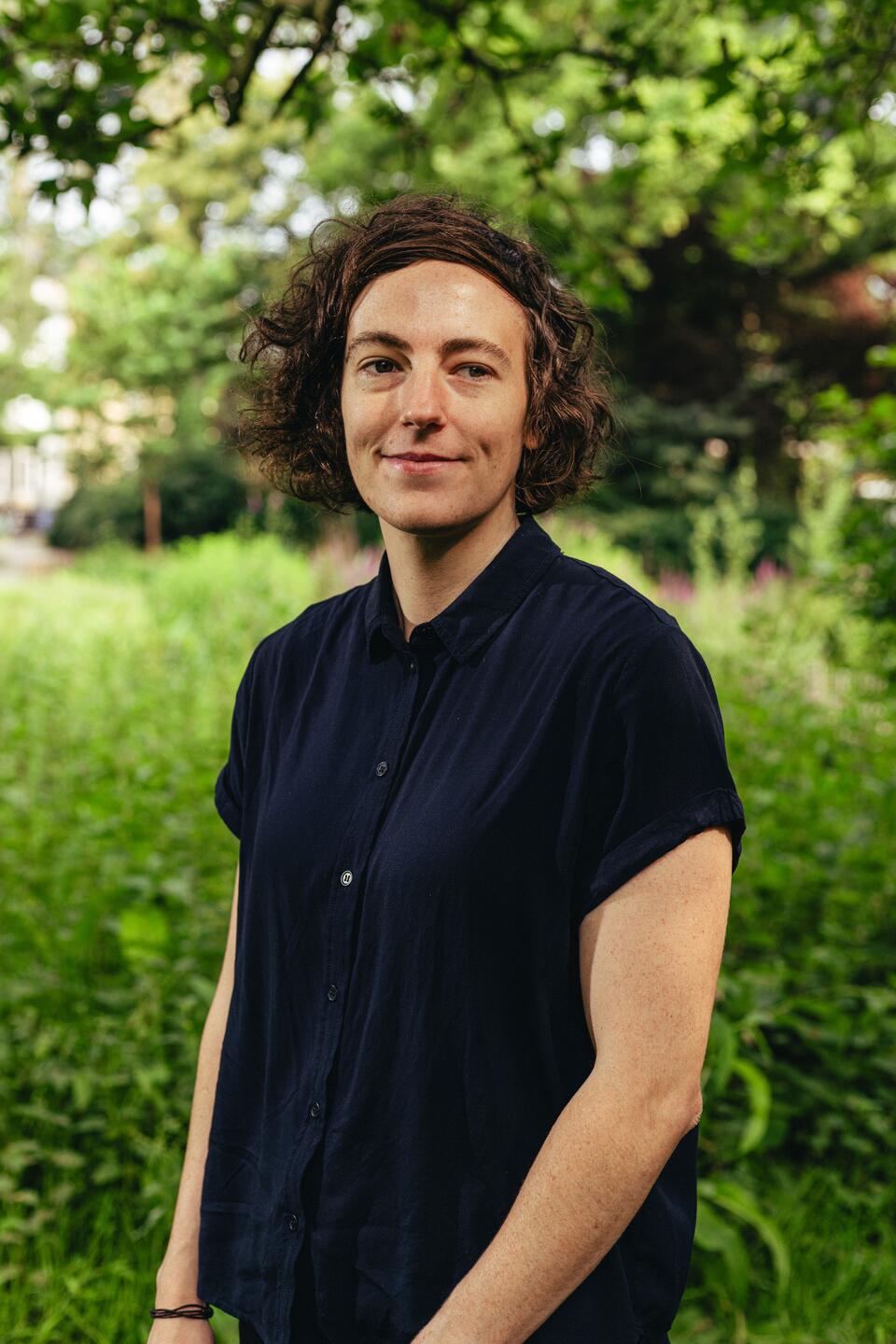
Sara De Vuyst is an Assistant Professor of Contemporary Visual Culture at Maastricht University’s Department of Literature and Art within the Faculty of Arts and Social Sciences. Her research focuses on feminist/queer media studies, ageing representations, and gender issues in media/journalism/technology. She previously held postdoctoral appointments at Ghent University (ERC project Later-in-Life Intimacies) and was a Visiting Professor at Vrije Universiteit Brussel. Education: PhD in Communication Studies (Ghent University) Professional Roles: Chair of ECREA’s Gender, Sexuality & Communication section National Coordinator for Global Media Monitoring (Belgium) Research Interests: Her work critically examines age/gender/sexuality intersections in media and art, with a focus on queer feminist resistance and digital spaces. She created the website LILI to challenge societal norms around ageing and identity. Key areas include: Queer ageing narratives Gendered digital journalism practices Feminist critiques of media representations Publications: Authored Hacking Gender and Technology in Journalism (2020), published widely in gender/media studies journals. Engages interdisciplinary methods combining quantitative/qualitative approaches. Advocacy: Actively addresses gender inequalities in media through policy work and educational initiatives. Serves as a thought leader in intersectional digital media ethics.
Karin van Esمشاهده پروفایل
دانشیار
Dr. Karin van Es is an Associate Professor in the Department of Media and Culture Studies at the Faculty of Humanities, Utrecht University. She serves as project lead for the Humanities at Data School and is an affiliate and impact liaison at the Centre for Digital Humanities. Her work bridges academic research and practical applications in the digital society, with a focus on collaborating with external parties on interdisciplinary projects. She is also part of the GenAI in Education Humanities taskforce at Utrecht University. Her research is situated at the intersection of television studies, software studies, and critical data and algorithm studies, with a particular focus on streaming video culture and industries. Her notable publications include the book The Future of Live (Polity Press, 2016) and co-edited volumes such as The Datafied Society (AUP, 2017), Situating Data (AUP, 2023), Collaborative Research in a Datafied Society (AUP, 2024), and Governing the Digital Society (AUP, 2025). She has published extensively in journals including Television & New Media , Media, Culture and Society , Critical Studies in Television , Social Media + Society , Big Data and Society , and First Monday . Dr. van Es's recent publications reveal a strong focus on the governance of digital platforms, AI ethics, and the impact of streaming services on media consumption. Her work increasingly examines the societal implications of datafication, with particular attention to educational contexts, public values, and methodological innovations for studying digital phenomena. She has pioneered approaches like "data walking" and "data donations" as research methods for understanding how people interact with digital platforms in everyday contexts. Her scholarship demonstrates a consistent commitment to critical technical practice that bridges theoretical insights with practical interventions in the datafied society. Editor of special issue "Critical Technical Practice(s)" for Convergence Organizer of "Innovative Methods for Video-on-Demand Research" workshop (2024) Speaker at ECREA 2024 conference on "Netflix Uncovered: Insights from Data Donations" Member of editorial board for Convergence journal Her media contributions include appearances on WORT 89.9 FM discussing "The Meaning of Live" (2022), participation in the "De Maatschappelijk Betrokken Docent" program (2022), and earlier contributions on topics like "Wat is beeldradio?" (2016) and "Live liveness in realtime" (2015). She leads the Media and Performance Studies research group and is deeply involved with the Data School at Utrecht University. Her work with the GenAI in Education Humanities taskforce focuses on understanding and shaping the integration of generative AI in educational contexts. Through her role at the Centre for Digital Humanities, she helps bridge academic research with practical applications in society, particularly around issues of data governance, digital literacy, and the societal impact of emerging technologies.
Marcus Gerholdمشاهده پروفایل
استادیار
Marcus Gerhold is an Assistant Professor in the Formal Methods and Tools group at the University of Twente's Faculty of Electrical Engineering, Mathematics and Computer Science. His research focuses on model-based testing for software reliability in critical infrastructures, particularly railway systems, alongside significant contributions to game design and programming language analysis. His educational background includes: PhD in Computer Science from University of Twente (2018): Choice and Chance: Model-based Testing of Stochastic Behaviour MSc in Mathematics from Friedrich Schiller Universität Jena (2013): Embeddings of Weighted Morrey Spaces BSc in Mathematics from Friedrich Schiller Universität Jena (2011): Entropy-, Approximation- and Kolmogorov Numbers on Quasi-Banach Spaces Gerhold's research integrates theoretical model-based testing with practical critical infrastructure applications . His work on railway conformance testing addresses EULYNX controller validation, while his game design research explores affective mirroring in NPCs and procedural dungeon generation. The code modernity analysis stream leverages static analysis to quantify legacy code evolution across languages like Python and PHP, revealing version identification challenges through deep learning. Publication trends show consistent focus on model-based testing methodologies (40%), railway safety applications (25%), and innovative game design/code analysis (35%). Recent work increasingly incorporates AI/ML techniques for UML assessment and Python version identification, while maintaining rigorous formal methods foundations. He actively mentors 63 students across all academic levels and contributes to major research initiatives: STORM_SAFE (ERDF, 2024): Daily Supervisor for WP1/WP2 on software reliability for critical infrastructures ZORRO (KIC grant, 2023): Daily Supervisor for WP4 on zero downtime in cyber-physical systems MISSION (MSCA RISE, 2021-2025): Interim coordinator (early 2024) for space systems modeling As part of the Formal Methods and Tools research group, Gerhold participates in European collaborations while serving on SAC-SVT 2024 and FormaliSE 2023 program committees.

- Legal Theory
- Bioethics
- Technology Law
- +۴ مورد دیگر
Britta van Beers is a Full Professor at Vrije Universiteit Amsterdam, holding positions in Legal Theory and Legal History within the Faculty of Law, as well as affiliations with the Kooijmans Institute, Law & Technology, and Boundaries of Law. Her research focuses on intersections between law, emerging technologies, bioethics, and human rights. She has authored over 70 publications since 2015, addressing topics like CRISPR governance, surrogacy regulation, and legal personhood in the age of biotechnology. Awarded multiple grants and prizes (specifics unspecified) Supervised 2 PhD theses Edited volumes on personalized medicine ethics and symbolic legislation Her work critically examines technological innovations' impact on legal frameworks, particularly in genetics, artificial intelligence, and reproductive technologies. Recent projects include analyzing human germline modification dialogues and ethical challenges in accessing biobanks for forensic purposes. Key contributions include redefining legal personhood in the context of posthuman technologies and advocating for explicit goals in public dialogues about gene editing. She frequently engages with policymakers, as seen in her contributions to Dutch parliamentary discussions on embryo law reforms.