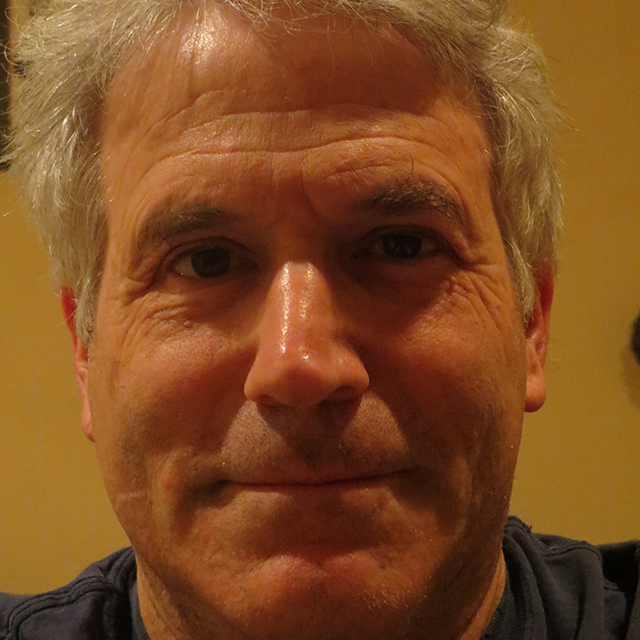
Pierre McKenzie is an Associate Professor in the Department of Computer Science and Operations Research at the University of Montreal, part of the Faculty of Arts and Sciences. He is a member of the LITQ (Laboratoire d'informatique théorique et quantique). His research focuses on computational complexity theory, finite automata, Boolean circuits, formal languages, and logic. He has advised numerous graduate and master's students, including Hugo Côté, Nathan Grosshans, and Michael Blondin. His work has been supported by grants from the Natural Sciences and Engineering Research Council of Canada (CRSNG), particularly in projects like 'Lower bounds and derandomizations for branching programs' (2018–2026). Research Interests: Computational complexity hierarchy separations Branching programs and circuit lower bounds Automata theory and its connections to circuit complexity Algorithmic and complexity aspects of counter systems Key Projects: Lower bounds and derandomizations for branching programs (Lead researcher, 2018–2026) THE COMPUTATIONAL COMPLEXITY OF POLYNOMIAL TIME PROBLEMS (Lead researcher, 2012–2019) Labs/Teams: Active member of LITQ, contributing to theoretical computer science research.
Adam White is an Assistant Professor in the Faculty of Science (Computing Science) at the University of Alberta. He serves as Director of the Alberta Machine Intelligence Institute and holds a Canada CIFAR AI Chair. As Principal Investigator of the Reinforcement Learning and Artificial Intelligence Lab (RLAI), his research focuses on continual learning, reinforcement learning, robotics, and knowledge representation. His educational background includes a PhD and MSc in Computing Science from the University of Alberta, and a BSc in Computer Science from the University of New Brunswick. Research interests span reinforcement learning algorithms, machine learning robustness, and applications in real-world systems like water treatment. Teaching contributions include courses on AI, reinforcement learning, and machine learning, along with creating the Reinforcement Learning MOOC on Coursera. Awards include the prestigious Canada CIFAR AI Chair recognition for contributions to artificial intelligence research.
Martha White is Associate Professor in the Department of Computing Science at the University of Alberta. Her research develops efficient reinforcement learning algorithms for sequential decision-making problems. Research investigates representation learning, sample-efficient methods, and stable function approximation. Recent work examines policy optimization without replay buffers, real-time recurrent learning, and transfer learning without performance degradation.
Mingcherng Deng serves as Associate Professor in the Stan Ross Department of Accountancy at Baruch College's Zicklin School of Business (City University of New York), where he teaches undergraduate accounting courses and supervises doctoral dissertations since 2013. His academic foundation includes: PhD in Accounting, Columbia University (2007) MPhil in Accounting, Columbia University (2004) MBA in Accounting and Finance, University of Illinois at Urbana-Champaign (1999) BS in Management Science, National Cheng Kung University, Taiwan Deng's research bridges accounting theory with practical applications in auditing, debt markets, and supply chains. He investigates how information asymmetry affects audit team dynamics, creditor-debtor relationships, and inter-firm supply chain coordination, employing game-theoretic modeling and empirical analysis to examine topics like audit partner assignment, debt covenant design, and social capital's impact on supplier profitability. His 2019-2025 publications reveal dual research streams: auditing (examining team diversity, internal controls, and labor markets) and debt contracting (analyzing information quality, risk-shifting, and seniority structures), with recent expansion into supply chain social capital dynamics. This interdisciplinary approach connects financial reporting precision with operational outcomes. His research recognition includes: Nine PSC-CUNY Research Awards (Cycles 44-54) Two Irving Weinstein Distinguished Scholar awards Curriculum Innovation Award (2019) Eugene M. Lang Junior Faculty Fellowship As active dissertation supervisor and grant recipient, Deng has secured eight PSC-CUNY grants ($26,000+ total) funding projects on audit risk disclosure, debt contracting mechanics, and supply chain information sharing. His service includes departmental executive committees, college-level curriculum redesign initiatives, and editorial review for The Accounting Review. Though not formally affiliated with a named laboratory, his cross-disciplinary collaborations with operations management and finance scholars manifest in multi-authored publications addressing real-world problems in audit quality and supply chain finance.
Kshitij Jerath serves as Associate Professor in the Department of Mechanical and Industrial Engineering, Robotics at the Francis College of Engineering, University of Massachusetts Lowell. His research focuses on self-organized dynamics in complex systems, multi-agent control, and robotic swarms, with significant contributions to traffic flow theory and sensor characterization. He directs the Emergent Dynamics, Control and Analytics Labs (EXALABS), advancing bottom-up control algorithms for minimal-intervention system guidance. Dr. Jerath's academic background includes: Ph.D. in Mechanical Engineering from Pennsylvania State University (2014), dissertation: 'Influential subspaces in self-organizing multi-agent systems' M.S. in Electrical Engineering from Pennsylvania State University (2011), thesis: 'Sensor noise modeling, characterization and simulation: An Allan variance tutorial' M.S. in Mechanical Engineering from Pennsylvania State University (2010), thesis: 'Impact of adaptive cruise control on the formation of self-organized traffic jams on highways' Bachelor's equivalent in Mechanical and Automation Engineering from Amity School of Engineering and Technology, India His research spans self-organized dynamics , multi-agent systems , and robotic swarm control , applying statistical mechanics principles to model emergent behavior in transportation networks and complex systems. Current work focuses on influencing macro-scale dynamics through minimal intervention by small agent subsets, with extensions to social ensembles and neural systems. His methodologies integrate control theory, network science, and machine learning for real-world applications in autonomous vehicles and system reliability. Recent publications (2023-2025) reveal strong trends in relational network applications for multi-agent learning, adaptive data granulation techniques, and human-swarm interaction frameworks. Key developments include database-inspired algorithms for sensor characterization, renormalization group approaches to traffic modeling, and fault-tolerant recovery mechanisms for robotic teams. These works demonstrate increasing convergence of control theory, database systems, and reinforcement learning in addressing complex system challenges. Dr. Jerath has received notable recognition including: Two Best Presentation awards at American Control Conference (2014, 2012) Kulakowski Travel Award from Penn State (2014) National Merit-cum-Means Scholarship from Indian Government (2013) 2nd place in ITS America Student Essay Competition (2012) His research is supported by grants including the CPS: Medium project 'Automated Discovery of Data Validity for Safety-Critical Feedback Control in Connected Vehicles' (2019) and a Graduate Teaching Fellowship from Penn State (2013). EXALABS maintains active collaborations with transportation agencies and robotics researchers to translate theoretical advances into practical applications. The Emergent Dynamics, Control and Analytics Labs (EXALABS) develops frameworks for modeling, quantifying, and influencing collective behavior across scales. Current projects include human-guided swarm control in virtual reality, traffic flow optimization using connected vehicle networks, and adaptive granulation techniques for large-scale sensor data. The lab employs interdisciplinary approaches combining control theory, statistical mechanics, and machine learning to solve problems in robotics, transportation, and system reliability.
Emre Akbas is an Associate Professor at the Department of Computer Engineering, Middle East Technical University (METU). He previously worked as a researcher at the Vision and Image Understanding Lab at University of California Santa Barbara (UCSB) and earned his PhD from University of Illinois at Urbana-Champaign (UIUC) under Prof. Narendra Ahuja. His academic journey includes MS and BS degrees from METU, where he ranked 1st in his undergraduate class. Education : PhD (UIUC), MS (METU), BS (METU) Honors : Young Scientist Award (2022), METU Thesis Awards (2023, 2022, 2020), Beckman Institute Cognitive Science/AI Award (2010) His research focuses on visual detection and machine learning, particularly addressing imbalance problems in object detection. He co-developed innovative methods like HoughNet, a generalized Hough transform for object detection, and formulated the Localization Recall Precision (LRP) metric for visual detection evaluation. His work spans deep learning, domain adaptation, and generative adversarial networks (GANs). Recent publications highlight his contributions to object detection metrics, ranking-based loss functions, and domain adaptation techniques. His research group has produced significant works at venues like CVPR, ECCV, and TPAMI, including the textbook Signals and Systems: Theory and Practical Explorations with Python (Wiley, 2024). Awards : Young Scientist Award (Science Academy, Turkey), METU Thesis Awards Grants : ERC Starting Grant (NONWESTLIT), TUBITAK Career Development Grant, AWS Cloud Credits As an advisor, he has guided multiple thesis awardees. His community service includes organizing ECCV and CVPR workshops and serving as a reviewer for top-tier conferences and journals.
Thomas Quint is a Professor of Mathematics at the University of Nevada, Reno (UNR), part of the College of Science's Department of Mathematics and Statistics. He holds a Ph.D. in Operations Research from Stanford University (1987) and has taught at UCLA, Yale, and the US Naval Academy. His research focuses on game theory, mathematical economics, and graph theory, with over 30 journal articles and two authored books. Quint’s work bridges theoretical foundations with applied problems in spectrum sharing, monetary systems, and cooperative games. Education: Ph.D. in Operations Research, Stanford University, 1987 M.S. in Operations Research, Stanford University, 1984 B.S. in Applied Mathematics, Harvard University, 1980 Research Interests: Quint’s primary areas include game theory (market design, cooperative/noncooperative strategies), graph theory (sphere-of-influence graphs, node selection), and monetary economics (commodity vs. fiat money systems). His recent work explores spectrum sharing policies and polycentric governance frameworks for wireless networks, applying game-theoretic models to incentivize collaboration. Publications Trends: His articles span foundational game theory (e.g., assignment games, core stability) to modern challenges like spectrum management. Notable contributions include a novel bridge rating system and analyses of gold demonetization’s economic impacts. Over 30 years, his work has transitioned from pure theory to applied policy analysis in telecommunications and monetary systems. Advising & Grants: While specific grant details aren’t provided, his interdisciplinary research suggests involvement in NSF or telecom-related funding. He has advised students in mathematics and operations research, though no formal advisee list is available. Collaborators include economists (e.g., Martin Shubik) and engineers (e.g., Murat Yuksel). Labs/Teams: No dedicated lab is listed, but his collaborations indicate work with wireless research groups and policy think tanks. He maintains an active presence in academic networks through publications and conferences.
Assoc. Prof. Dr. Seda Yanık Özbay is an academic at Istanbul Technical University (ITU), affiliated with the Department of Industrial Engineering and the Department of Business Administration within the College of Engineering. She holds a PhD in Industrial Engineering from ITU and has extensive professional experience spanning academia and industry. Education: PhD in Industrial Engineering, Istanbul Technical University (2006–2011) Master’s in Engineering Management (Thesis), ITU (2002–2004) Bachelor’s in Industrial Engineering, ITU (1995–1999) Research Focus: Her work integrates machine learning, optimization, and decision science with applications in healthcare systems, sustainable logistics, transportation engineering, and educational technology. Notable areas include AI-driven disease diagnosis, supply chain optimization, and stakeholder-oriented decision frameworks for distance education. Recent publications emphasize ensemble methods in medical diagnostics and multi-criteria approaches to public transportation design. Articles Trends: Her 2020–2024 work showcases growth in AI applications (e.g., coronary disease prediction) and sustainability-focused solutions (e.g., micro-credentials in e-learning). Collaborations often bridge technical domains like neural networks with societal challenges in healthcare and education. Awards: No specific awards listed. Advising & Grants: While advising details are not explicitly stated, her publications reflect collaborative research with graduate students and industry partners. Research activities include grants related to logistics optimization and smart transportation systems. Labs/Teams: Engaged in interdisciplinary groups at ITU’s Industrial Engineering Department, focusing on operations research and applied AI solutions.
Ludovic Goudenege is a CNRS Research Fellow assigned to the CentraleSupélec Mathematics Federation. His research focuses on stochastic partial differential equations (SPDEs), numerical analysis, and financial mathematics. He is affiliated with the Molecular and Macroscopic Energetics and Combustion Laboratory, contributing to interdisciplinary studies at the intersection of mathematics and applied sciences. His work spans theoretical and computational aspects of SPDEs, including stochastic processes, rare event simulation, and numerical methods for high-dimensional problems. Key applications include financial derivatives pricing (e.g., American options, variable annuities), risk management, and material science (e.g., phase field models for polymers). Collaborations with institutions like CNRS and CentraleSupélec underpin his interdisciplinary approach. Publications emphasize machine learning applications in finance, variance reduction techniques, and convergence analysis of numerical schemes for stochastic equations. Recent work explores non-Markovian systems, fractional noise models, and stochastic fluid dynamics. His research bridges fundamental mathematical theory with practical challenges in finance, engineering, and computational science.
Borzykh Dmitry Alexandrovich is an Associate Professor at the National Research University Higher School of Economics , affiliated with the Department of Applied Economics under the Faculty of Economic Sciences . He also serves as a Research Fellow at the International Laboratory of Stochastic Analysis and its Applications . With 18 years of scientific and teaching experience since joining HSE in 2006, he teaches advanced courses in probability theory, mathematical statistics, and econometrics at both undergraduate and graduate levels. Education: Candidate of Physical and Mathematical Sciences (2022, HSE), Master's in Economics (2006, HSE), Bachelor's in Economics (2004, HSE) Key research areas: financial econometrics , stochastic analysis , structural breaks in time series , and stochastic volatility models His recent publications focus on stochastic processes , structural break detection , and quantile function applications across financial and economic modeling. He has received multiple institutional awards, including Best Teacher (2014, 2016–2025) and formal gratitudes from HSE departments (2019, 2022). He provides consultations via email and holds office hours at Pokrovsky Boulevard campus (room S517).