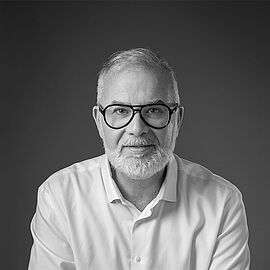
Nick Dunn is a Professor of Urban Design and Executive Director of Imagination, a design and architecture research lab at Lancaster University. He leads the Dark Design Lab, exploring nocturnal impacts on humans and non-humans. His roles include Ambassador for the Design Council and Director of DarkSky UK. His research focuses on urban futures, dark design, and more-than-human environments. Key projects include 'Rewilding the Night' and 'The Pavements Project'. He has authored books like Dark Futures: When the Lights Go Down and contributed to global exhibitions/conferences on urban darkness and sustainability. Research interests span: Future Cities, Night Studies, Smart Cities, and Public Spaces. Recent work emphasizes nocturnal ecologies, light pollution, and interdisciplinary design approaches. He has secured grants including E3 Sustainability Bridging Grants and REPLENISH (2020). His lab collaborations include DarkSky UK and the Design Council. Current projects address dark-sky preservation and urban biodiversity. Labs/Teams: Dark Design Lab, Imagination Research Lab, Lancaster Institute for Social Futures.
Barbara Adams is an Assistant Professor of Art, Design and Social Justice at Parsons School of Design, The New School . Her interdisciplinary research explores how art and design projects generate knowledge and political action, with a focus on social justice, ethics, and collaborative practices. She holds a PhD in Sociology from The New School for Social Research (NSSR), supported by a GIDEST fellowship, alongside an MA in Social Sciences (Pedagogical Sciences) from the University of Amsterdam. Her academic trajectory includes coordinating the Anthropology + Design Graduate Minor at NSSR and serving as Andrew W. Mellon Postdoctoral Fellow in Design at Wesleyan University. Research Interests : Adams investigates poetic and creative methods in social research, the ethics of engagement in socially oriented art/design projects, and speculative solidarity frameworks. She co-edits the journal Design and Culture and leads research at the Design for Social Innovation and Sustainability Lab (DESIS Lab). Publications & Impact : Her work spans topics like pandemic design responses, museum visitor experiences, and public library roles in democracy. Recent outputs include essays on proximity ethics (2023), pandemic improvisation (2021), and UNHCR’s speculative solidarity projects (2021). Awards : Andrew W. Mellon Postdoctoral Fellowship Teaching : Courses include Collab: Writing in Practice and Speculative Storytelling (Fall 2025). Lab Affiliations : DESIS Lab (Researcher), Parsons Faculty Hotseat (Office).
Michael Shanks is a Professor of Classics at Stanford University, affiliated with the Stanford Archaeology Center. He holds advanced degrees from institutions including the University of Cambridge (MA, PhD), Durham University (MEd), Gothenburg University (Doc), and Roskilde University (PhD). His research spans archaeological theory, heritage studies, design history, and the archaeology of Graeco-Roman urbanism. He is particularly known for integrating transdisciplinary approaches, such as 'Creative Pragmatics' and 'Design Foresight,' to bridge STEM and humanities education. Education: MA (Cambridge), MEd (Durham), PhD (Cambridge), Doc (Gothenburg), PhD (Roskilde) Research Themes: Archaeological theory, heritage studies, digital humanities, and the application of archaeological methods to modern design challenges. Shanks' work emphasizes active learning, interdisciplinary collaboration, and the role of creativity in navigating complex societal issues. His publications, such as The Archaeological Imagination (2012), explore the intersection of archaeology with contemporary culture and technology. He consults globally for organizations like Nissan Motor Company and the City of Rotterdam, advocating for 'applied archaeology' in urban and corporate contexts. His projects include the Stanford Archaeology Center and collaborations with institutions like the University of Southern Denmark and Roskilde University. Recent work focuses on redefining STEM education through frameworks like Creative Pragmatics , emphasizing agency, complexity thinking, and adaptive learning.
Professor Beatrice D'Ippolito holds the Chair in Strategic Management and Innovation at the University of York's York Management School, within the School for Business and Society. Her research bridges micro-level firm dynamics and meso-level industry evolution, focusing on knowledge creation, inter-firm collaborations, and digital transformation. She has conducted qualitative and archival studies across sectors including design-intensive industries, energy technologies, and research infrastructures in Europe. Education: PhD in Economics and Management of Innovation, University of Manchester (ESRC Fellowship) MRes, University of Manchester (ESRC Fellowship) MSc, Università Cattolica del Sacro Cuore, Italy BBA, University of Lancaster, UK Research Interests: Firm and industry-level knowledge systematisation Design as a strategic and innovative process Impact of digital technologies on creative industries Inter-firm collaboration and innovation ecosystems Her work explores how organizations leverage digital tools and design-driven approaches to innovate, with recent trends addressing climate adaptation strategies and the 'dark side' of business model innovation. She contributes to editorial boards of Research Policy and Journal of Management Studies . Grants and Projects: Principal Investigator for ESRC-funded project on skill mismatch at the BBC (2024-2026) Co-investigator for study on digital platforms in film distribution (2016-2017) Professor D'Ippolito advises PhD candidates in design and innovation management, emphasizing digital technologies' organizational impacts. She leads the 'Risk, Innovation, and the Economy' research theme and engages in global collaborations, including at the French GIANT campus and Tenerrdis cluster.
Stuart Candy serves as an Associate Professor in the School of Design at Carnegie Mellon University and directs Situation Lab. An internationally recognized foresight practitioner, artist, and educator, his work bridges strategic futures exploration with creative media practices, resulting in globally exhibited projects featured in The Economist, Wired, and the Discovery Channel. Research Interests: Candy pioneers experiential futures methodologies through hybrid media forms including design fiction, guerrilla theater, and live action role playing. His practice-centered approach transforms abstract future scenarios into tangible social experiences, focusing on democratizing futures literacy through participatory engagement. This work critically examines how narrative, embodiment, and play can reshape collective anticipation of possible futures. Awards: While explicitly described as "award-winning" for his innovative contributions to futures practice and design, specific honors are not enumerated in available materials. Advising and Grants: Current documentation provides no details regarding graduate student supervision or externally funded research grants. Leadership: As Director of Situation Lab, Candy leads a creative research studio producing immersive futures experiences deployed in museums, public spaces, and academic contexts worldwide. The lab functions as an experimental platform for developing new methodologies in applied foresight and participatory futures.
Simon Westergaard Lex is an Associate Professor in the Department of Anthropology at the University of Copenhagen, Faculty of Social Sciences. His research centers on sustainable economies, green transition, organizational change, and innovation, with regional focus on Scandinavia and Latin America. He is actively involved in interdisciplinary projects bridging public, private, and civil sectors. Education: Industrial Ph.D., Department of Anthropology, University of Copenhagen, 2013 MSc in Anthropology, Department of Anthropology, Aarhus University, 2008 BSc in Anthropology, Department of Anthropology, Aarhus University, 2006 His research interests include green transition, sustainable communities, organizational change, design and innovation, collaboration, and knowledge economy. He investigates how economic, social, and green values are negotiated in urban development and renewable energy systems, particularly in the context of citizen engagement and regenerative communities. The recent publications reflect a strong focus on the socio-political dimensions of the green transition, community resistance to renewable energy projects, interdisciplinary collaboration, and the design of sustainable and life-enhancing economies. His work combines ethnographic fieldwork with transdisciplinary collaboration, emphasizing co-production of knowledge. Scientific Awards and Grants: Principal Investigator, 'Engaging Communities in the Green Fuels Transition' (Innovation Fund Denmark, DKK 1.5M) Co-PI, 'SAMSKAB' (Velux, DKK 6.4M) Co-PI, 'RE-ANIMATE' (Independent Research Fund Denmark, DKK 6.2M) Co-PI, 'COMPASS' (Velux, DKK 6.2M) Co-PI, 'Smart Cities Accelerator' (EU, DKK 24.3M) Nominated for University of Copenhagen Innovation Prize 2019 Selected as international profile in Saint Gobain's Building Science Bulletin 2018 Lex supervises students in business and organizational anthropology and teaches courses such as 'Applied Anthropology' and 'Innovation & Co-creation'. He is a co-editor of the Journal of Business Anthropology and coordinates the 'Nature, Environment and Climate' research group. He is also involved in policy-relevant research through committees on sustainability and energy storage. Labs and Research Groups: CoNeXT (www.conext.ku.dk) Business and Organisational research group Research coordinator, 'Nature, Environment and Climate' group Member, Danish Center for Energy Storage (DaCES) steering committee
Dr. Andrea Zenker is Deputy Head of the Department of Policy and Society at Fraunhofer ISI, where she leads research on regional innovation systems and sustainability transitions. She holds a doctorate in geography from the Université de Strasbourg and an MBA-equivalent degree. Her research examines: Regional innovation policy instruments Cross-border knowledge transfer mechanisms Mission-oriented transformation strategies Cluster development in transitional economies Evaluation methodologies for research programs Recent publications focus on solution-oriented innovation processes, structural change policies, and the interplay between innovation governance and sustainability transitions. Her work typically combines qualitative and quantitative methods to analyze policy interventions across European regions.
Matthew Manos: Academic & Social Innovator Matthew Manos serves as Associate Dean for Academic Planning and Associate Professor of Practice in Design Strategy at the University of Southern California. He is the founder of verynice , a design strategy firm that provides free services to nonprofits, working with clients like Apple, UNICEF, and NASA. He previously chaired the Los Angeles Creative Advisory Board under Mayor Garcetti and designed curricula for the IYC high school initiative. His research focuses on creative facilitation tools in healthcare, education, and social entrepreneurship. Education Master of Fine Arts in Media Design Practices, ArtCenter College of Design Bachelor of Arts in Design Media Arts, UCLA Research & Impact Manos pioneers frameworks for equitable collaboration and strategic foresight . His work includes Models of Impact (a toolkit for social enterprises) and Comix from the Heart (healthcare storytelling via comics). His articles in Forbes , HOW Magazine , and academic journals address CSR, education reform, and design ethics. Awards & Recognition Golden Root Award (2013) for pro-bono leadership Forbes 30 Under 30 nomination LA Mayor’s Pro Bono Service Award (2014, 2018) Leadership & Outreach At USC, he oversees admissions, curriculum, and industry partnerships. He has lectured globally at institutions like Singularity University and Google, advocating for design-driven social change . Prior roles include adjunct professorships at CCA and ArtCenter, and teaching at Moscow’s Strelka Institute. Projects & Labs verynice : Pro-bono design services ($50M+ impact) Models of Impact : Used by 100,000+ practitioners Comix from the Heart : Patient-art collaboration in healthcare
Professor Mark Tewdwr-Jones is a globally recognized scholar in urban and regional planning at University College London (UCL), holding the position of Professor of Cities and Regions at the Centre for Advanced Spatial Analysis. He has held senior roles across four UK Russell Group universities and has advised governments, international bodies, and NGOs on urban development, policy, and innovation. His work focuses on governance, public engagement, digital connectivity, and sustainable urban strategies. He has authored 20 books, secured £25m in research grants, and supervised 30 PhD students. Education: MA (Birkbeck College, 2003), PhD (Cardiff University, 1998), Dip (UWCC, 1992), BSc (UWCC, 1990). His research integrates historical studies, applied economics, and human geography with contemporary challenges like urban foresight and infrastructure resilience. Key projects include Newcastle City Futures, a civic innovation platform mobilizing £150m investment and engaging 155,000+ citizens. His work bridges academia, policy, and practice, emphasizing co-design, digital tools, and inclusive participation. Advocacy and Grants: Advised UK parliamentary committees, UKRI, and international funding bodies. His grants include major projects on sustainable cities (SDG 11), innovation ecosystems, and university-city partnerships. Awards include top global citation rankings in urban planning. Labs/Teams: Directs UCL’s Centre for Advanced Spatial Analysis and co-founded Newcastle City Futures, exemplifying quadruple-helix collaboration between academia, government, business, and communities.
Sébastien Damart is a Professor at Paris-Dauphine University, affiliated with Dauphine Management Research (UMR CNRS) and leading the M-Lab research team. His work bridges integrative management, multi-criteria decision analysis (MCDA), and the application of science fiction to organizational theory. He has co-designed the Managerial Innovation Observatory at Paris-Dauphine and contributed to public decision-making frameworks through projects like PREDIT and ANR. His research emphasizes synthesizing diverse stakeholder perspectives in healthcare, public policy, and innovation management. Key research areas include integrative management (influenced by Mary Parker Follett), the role of science fiction in decoding organizational paradoxes, and methodologies for participatory decision-making. He has published extensively on healthcare organization dynamics, cognitive mapping for problem structuring, and the philosophical underpinn'tions of managerial concepts. Collaborations with scholars like Adam-Ledunois and Roy highlight his interdisciplinary approach. Notable initiatives include the creation of the Management Museum and the Red Team Défense program, which use narrative tools to explore organizational futures. His work with the Innovation Circle and presentations at EGOS, EURAM, and ISIRC conferences underscores his engagement with global management discourse.
Marcus Collins is a Clinical Assistant Professor of Marketing at the Ross School of Business, University of Michigan, and a former Head of Strategy at Wieden+Kennedy. His expertise bridges academic research and industry practice, focusing on cultural impact on consumer behavior and brand strategy. He holds a DBA from Temple University and degrees from the University of Michigan. Education: DBA in Marketing, Temple University (2021) MBA, University of Michigan (2009) BS and BSEMS, University of Michigan (2002) Research & Awards: Focuses on cultural contagion, consumer behavior, and brand strategy. Awarded Advertising Age’s 40 Under 40, Crain’s 40 Under 40, and Thinkers50 Radar Award. Authored For The Culture: The Power Behind What We Buy, What We Do, and Who We Want To Be . Notable Projects: Advised McDonald’s, Google’s “Real Tone” technology, and the Brooklyn Nets relocation. Jury member at Cannes Lions International Festival of Creativity.
Professor Paul Trott holds dual academic appointments as Professor of Innovation Management at the University of Portsmouth's Portsmouth Business School and Professor of Entrepreneurship and Innovation at the Technical University of Delft, Netherlands . His research focuses on innovation policy, corporate innovation strategies, and the management of technological change. With over £500,000 in research funding secured, his work includes projects such as analyzing product development opportunities for UK-based UPS manufacturing firms and aiding steel tube manufacturers in diversifying their customer base. Education: Holds a PhD from Cranfield University. Teaching experience spans universities in Germany, the Netherlands, and the United States. He has supervised over ten PhD students, contributing to academic mentorship in innovation disciplines. Research Interests: Innovation management, new product development (NPD), corporate foresight, technology management, and public sector innovation. His influential book Innovation Management & New Product Development (now in its 5th edition) is a global standard text. Grants & Projects: Principal Investigator for studies on UPS product development and steel tube diversification. Projects emphasize practical applications of innovation theory, including failure analysis, risk mitigation, and strategic foresight. Affiliations: Member of the Food Cultures in Transition research cluster and the Future of Law, Innovation and Technology Research Centre , demonstrating interdisciplinary engagement in innovation ecosystems.
Jan vom Brocke is a Professor at the University of Liechtenstein, specializing in Design Science Research, Business Process Management, and Information Systems. His work emphasizes the intersection of technology and organizational practices, focusing on process mining, blockchain applications, and digital innovation. He has co-authored over 300 publications and played a pivotal role in shaping the field through initiatives like the DESRIST conference series. Key research interests include design science methodologies, process-aware information systems, and the societal impact of emerging technologies. His contributions span theoretical frameworks for transparency in design research, practical applications of AI and blockchain, and strategies for sustainability transformations. As a conference organizer and academic leader, he has co-edited books and special issues, fostering collaboration across academia and industry. His work bridges technical innovation with organizational context, addressing challenges in digital transformation and complexity management.
Dr. Joost Vervoort is an Associate Professor of Transformative Imagination at Utrecht University's Copernicus Institute of Sustainable Development, part of the Faculty of Geosciences. He specializes in environmental governance, foresight methodologies, and the role of imagination in societal transformations. His research bridges ecology, gaming, and creativity to address complex sustainability challenges. Education & Experience PhD from Wageningen University (2010) 7-year tenure at the University of Oxford's Environmental Change Institute Current roles: Visiting Fellow at Kyoto's Research Institute for Humanity and Nature, Fellow of the Urban Futures Studio Research Focus Joost's work centers on three pillars: Leveraging gaming, music, and psychedelics as tools for societal imagination Impact of resonant actions on public futures visions (e.g., Fossielvrij campaign) Building infrastructures enabling participatory futures exploration Key Projects NWO Vidi 'Anticiplay' (games for better futures) H2020 'CreaTures' (creative practices for transformations) CGIAR Climate Futures project (150+ global foresight processes) Awards & Recognition Ecological Society of America's 2019 Innovation in Sustainability Science Award NWO Vidi Fellowship (2018) Teaching Develops innovative courses like 'The Sustainability Game' (collaboration with Utrecht University of the Arts) and 'Global Transformation Project' involving 30+ countries. Creative Endeavors In his spare time, he is the singer of black metal band Terzij de Horde, whose 2022 album ranked #6 in NRC's Dutch albums list.
Liliana Ovalle Piedra is a Senior Research Fellow at Northumbria University's School of Design Arts and Creative Industries. She actively collaborates with institutions like the Royal College of Art and participates in design research focused on human-computer interaction, smart cities, and speculative design. MA in 3D Design, Royal College of Art (2006) Her research explores intersections between technology, sustainability, and human/non-human interaction through innovative design practices. Recent outputs include exhibitions and publications about future urban ecosystems and experimental human-computer interaction frameworks. Collaborative outputs demonstrate strong engagement with interdisciplinary networks across the UK and international partners. Key themes include smart city development, speculative design methodologies, and embodied interaction paradigms. She contributes to academic discourse through conference presentations and publications, with recent work featured in ACM conferences and Oxford University Press publications.